
In the fast-evolving world of audiology technology, device reliability is not just a performance metric—it is a patient health imperative. As hearing aids shrink in size but increase in complexity, the engineering burden on the printed circuit board (PCB) reaches new heights. Selecting a manufacturing partner capable of handling ultra-miniature, high-density interconnect designs requires more than just checking a vendor list; it demands a rigorous assessment of quality management systems and technical precision.
The Critical Role of ISO 13485 Certification

Why ISO 13485 is the Non-Negotiable Standard
When manufacturing printed circuit boards for medical-grade hearing aids, there is zero margin for error. ISO 13485 is the internationally recognized quality management system (QMS) standard specifically tailored to the medical device industry. Unlike general ISO 9001 certification, ISO 13485 mandates rigorous documentation, risk management, and traceability protocols that are critical when dealing with life-sustaining or life-enhancing devices. Choosing a manufacturer without this certification exposes your project to catastrophic regulatory delays, product recalls, and compromised patient safety.
Key Pillars of Compliance in PCB Fabrication
- Risk-Based Decision Making
ISO 13485 requires manufacturers to implement risk management throughout the entire product realization process, ensuring that miniature PCB designs are validated for reliability in sensitive ear-canal environments. - Supply Chain Traceability
The certification mandates strict control over material sources. For ultra-miniature PCBs, this means every component, substrate, and chemical bath must be tracked to prevent contamination or the use of sub-par materials. - Design Controls and Process Validation
Manufacturers must demonstrate that their assembly processes—such as micro-soldering or component placement—are consistent and yield identical high-precision results every time, which is vital for miniaturized form factors.
| Feature | ISO 9001 (General) | ISO 13485 (Medical) |
|---|---|---|
| Focus | Customer Satisfaction | Patient Safety & Compliance |
| Documentation | Standard | Highly Comprehensive |
| Risk Management | Optional/General | Mandatory and Integrated |
| Traceability | Basic | Stringent/End-to-End |
Ultimately, certification is about more than just a badge on a website; it represents an audit-ready culture. When you partner with an ISO 13485-certified manufacturer, you are aligning with a facility that views compliance as a continuous operational requirement, effectively de-risking your path to market for high-stakes medical hearing aid devices.
High-Density Interconnect (HDI) Capabilities
Mastery of Micro-Via and Interconnect Technology
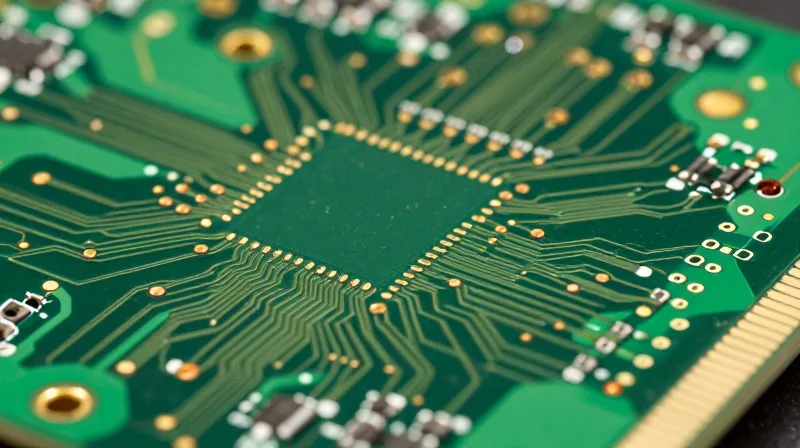
In the context of hearing aid miniaturization, standard PCB manufacturing methods are insufficient. The ideal manufacturer must demonstrate proficiency in laser-drilled micro-vias, typically ranging from 50 to 100 microns, to support high-density interconnect (HDI) structures. These vias are critical for enabling 'via-in-pad' technology, which reduces footprint size by allowing component placement directly over connection points.
| Feature | Standard PCB Requirement | Hearing Aid HDI Requirement |
|---|---|---|
| Micro-via Diameter | 150 microns+ | < 75 microns |
| Trace Width/Space | 4-6 mils | 1-2 mils |
| Layer Technology | Standard Thru-hole | Any-Layer HDI (ELIC) |
Evaluating HDI Manufacturing Competence
- Does the vendor utilize laser direct imaging (LDI)?
LDI is essential for achieving the registration precision required for sub-2-mil circuit patterns found in modern hearing aid devices. - Can the facility handle Any-Layer HDI (ELIC) architectures?
Every-Layer Interconnect (ELIC) technology allows for vertical interconnects between any two layers, which is vital for the extreme density required in ultra-miniature medical electronics. - What is the vendor's yield rate for fine-pitch BGA components?
The manufacturer should show documented success with components featuring pitches at or below 0.3mm to ensure long-term reliability in a moisture-prone environment like a hearing aid.
Material Selection for High-Density Form Factors
Beyond drilling and etching, the material substrate choice is paramount. High-stakes medical devices require laminates with low dissipation factors (Df) and low dielectric constants (Dk) to ensure signal integrity at the high frequencies used in modern wireless hearing solutions. Ensure your prospective manufacturer has experience with high-Tg (glass transition temperature) materials that can withstand the intense heat profiles of multiple reflow cycles associated with high-layer-count HDI boards.
Material Science and Biocompatibility Considerations

When manufacturing PCBs for ultra-miniature hearing aids, the material stack-up is not merely a performance consideration but a fundamental safety requirement. Because these devices are in constant contact with the ear canal's sensitive skin, manufacturers must adhere to ISO 10993 standards to prevent cytotoxic, sensitizing, or irritating reactions. Choosing the wrong substrate or an unverified solder mask can lead to severe regulatory rejection and long-term patient health risks.
Evaluating Biocompatible Substrates and Masks
The primary objective is to select materials that maintain structural integrity in a warm, moist, and often acidic environment. Manufacturers must verify that the PCB laminate and surface finish are free from hazardous substances such as halogenated flame retardants or phthalates, which are often prohibited under REACH and RoHS directives for medical equipment.
| Material Component | Biocompatibility Focus | Key Requirement |
|---|---|---|
| Substrate | Low Moisture Absorption | Meet ISO 10993-5 |
| Solder Mask | Non-Cytotoxic | Pass USP Class VI |
| Surface Finish | Corrosion Resistance | Nickel-free options |
Frequently Asked Questions on Material Compliance
- Why is USP Class VI testing critical for solder masks?
USP Class VI represents the highest standard for biocompatibility in medical devices, ensuring that the materials will not cause systemic toxicity or irritation when in prolonged contact with body tissues. - Should I mandate nickel-free finishes for hearing aids?
Yes. Nickel is a common allergen. Specifying ENIG (Electroless Nickel Immersion Gold) or ENEPIG requires careful validation to ensure the underlying nickel layer is fully encapsulated by a dense gold layer, or opting for silver-based finishes to minimize risk. - How do environmental conditions impact material selection?
Hearing aids operate in a high-humidity, high-salinity environment. Materials must have low coefficient of thermal expansion (CTE) and high moisture resistance to prevent galvanic corrosion and electrical leakage.
Evaluating Precision and Tolerance Standards
The Imperative of Micro-Precision
In the production of ultra-miniature hearing aid devices, even a deviation of a few microns can result in total functional failure. Manufacturers must demonstrate mastery over tight dimensional tolerances, particularly regarding trace widths, spacing, and registration accuracy. Selecting a partner for these high-stakes projects requires confirming their ability to maintain consistency at the sub-millimeter scale, where traditional PCB manufacturing standards often fall short.
Comparing Tolerance Standards
| Feature | Standard PCB Tolerance | Ultra-Miniature Medical Tolerance |
|---|---|---|
| Trace Width | +/- 20% | +/- 5-10% |
| Via Registration | 75 microns | < 25 microns |
| Board Edge/Profile | +/- 0.25 mm | +/- 0.05 mm |
Auditing Inspection and Quality Protocols
Beyond technical specifications, a manufacturer’s internal quality control framework determines the ultimate yield and safety of your device. An effective audit must focus on how the vendor validates these microscopic tolerances throughout the production lifecycle.
- How do you perform Automated Optical Inspection (AOI) on ultra-fine features?
A qualified partner should use high-resolution AOI systems capable of detecting sub-micron defects that standard optical equipment would miss. - What is your approach to Cross-Sectional Analysis?
The manufacturer must provide documented evidence of cross-sectional testing on coupons to verify internal plating thickness and registration accuracy. - Do you implement closed-loop feedback for process adjustments?
Advanced shops use real-time data monitoring to automatically adjust laser drilling and etching parameters before tolerances drift outside defined limits.
When vetting a vendor, demand a demonstration of their Statistical Process Control (SPC) reports. High-stakes medical manufacturing necessitates not just adherence to specifications, but a provable, repeatable process that minimizes variation across every production lot.
Scalability and Supply Chain Resilience

Transitioning from Prototyping to High-Volume Production
The most significant risk in high-stakes hearing aid manufacturing is the 'prototyping trap,' where a design succeeds in the lab but fails to maintain yield rates during high-volume production. An ideal manufacturing partner must demonstrate a seamless DFM (Design for Manufacturing) transition process that accounts for material availability, tool wear on micro-drilling equipment, and process repeatability across thousands of units.
Supply Chain Stability and Risk Mitigation
Medical device manufacturers cannot afford supply chain volatility. Resilience is built through redundant sourcing strategies and early-stage engagement with suppliers of niche materials, such as biocompatible substrates or specialized conductive polymers. You must evaluate whether your manufacturer maintains deep-tier vendor relationships to mitigate potential lead-time spikes.
| Scalability Factor | Prototyping Focus | Volume Production Focus |
|---|---|---|
| Tooling | Flexible, manual setup | Automated, standardized fixtures |
| Yield Monitoring | Visual inspection | AI-driven automated optical inspection (AOI) |
| Lead Times | Days (Expedited) | Weeks (Buffer-managed) |
| Material Sourcing | Small batch procurement | Volume-contracted supply chains |
Key Questions for Manufacturing Partners
- How do you manage BOM volatility?
Ensure they have a proactive obsolescence management program, particularly for the ultra-miniature components that are prone to short lifecycles. - Is your process equipment scalable?
Confirm that their laser drilling and plating lines can handle throughput increases without requiring a complete re-validation of your medical device certification. - What is your disaster recovery plan for critical path components?
Demand transparency regarding geographical diversification and multi-sourcing for substrates and specialized coatings.
Quality Management Systems (QMS) and Traceability

The Imperative of Full Component-Level Traceability
In the context of high-stakes medical devices, a manufacturer's Quality Management System (QMS) must extend beyond basic ISO 13485 certification. For ultra-miniature hearing aid PCBs, you require granular, component-level traceability. This ensures that every passive component, semiconductor, and substrate lot can be identified back to its source, providing a critical safety net in the event of a field failure or a broader market recall.
Comparing QMS Maturity Levels
| Feature | Standard EMS Provider | Medical-Grade Partner |
|---|---|---|
| Traceability Depth | Lot-level only | Individual component/reel level |
| Recall Simulation | Rarely performed | Annual mandatory audits |
| Documentation | Digital logs | Immutable, validated audit trails |
Frequently Asked Questions on Quality Standards
- Why is ISO 13485 insufficient on its own?
While ISO 13485 sets the baseline for a quality system, it does not mandate specific technical implementation strategies for ultra-miniature traceability. Your partner should demonstrate advanced internal processes for data logging that exceed these minimum standards. - How does traceability mitigate recall impact?
With full traceability, you can isolate specific production batches or component lots affected by a defect. This prevents the need for a total product recall, saving millions in costs and preserving brand integrity. - What evidence should I look for in an audit?
During vendor audits, inspect their 'Device History Record' (DHR) protocols. A mature manufacturer will provide a sample DHR that tracks a single board back to the exact date, time, and operator involved in every process step, including reflow profiles.
Technological Agility and Collaborative Design
The Strategic Value of Early DFM Engagement
In the world of ultra-miniature hearing aid electronics, engineering teams often face a critical bottleneck: the gap between theoretical design and physical reality. Engaging a PCB manufacturer for Design for Manufacturing (DFM) feedback early in the lifecycle transforms the vendor from a mere component supplier into a strategic engineering partner. By analyzing substrate properties, copper weight distributions, and thermal dissipation paths at the schematic stage, manufacturers can identify potential failure points before a single prototype is ordered.
Benefits of Integrated Design Cycles
- Risk Mitigation
Early review of pad geometry and trace routing minimizes the risk of micro-fractures during the reflow process, which is essential for devices subjected to daily physical stress. - Cost Efficiency
Identifying non-standard dimensions or tight tolerance requirements early allows the manufacturer to suggest alternatives that optimize material utilization without compromising medical performance. - Time-to-Market Acceleration
Eliminating design-loop cycles caused by manufacturability issues ensures the design is 'right the first time,' drastically shortening the R&D timeline for high-stakes medical launches.
Collaborative Design vs. Reactive Manufacturing
| Attribute | Reactive Approach | Collaborative DFM |
|---|---|---|
| Design Review | Occurs after design freeze | Embedded in design phase |
| Failure Detection | Discovered during prototyping | Simulated during pre-production |
| Iteration Costs | Very high due to re-tooling | Negligible software adjustments |
| Manufacturer Role | Order fulfillment | Design validation partner |
The most successful partnerships rely on transparent, iterative communication. A manufacturer capable of offering deep technical insights into micro-via reliability and material stack-ups provides the agility required to innovate in the ultra-miniature space. When evaluating potential partners, prioritize those who invite your design team to technical workshops rather than those who simply accept Gerber files as a static set of instructions.
Conducting an Effective Vendor Audit
The Anatomy of a Technical Audit
An effective audit for high-stakes medical devices must transcend basic ISO certifications to focus on the specific physical and operational realities of ultra-miniature PCB assembly. Engineers must evaluate whether the facility can maintain the necessary tolerances for sub-millimeter component placement and whether their cleanroom standards prevent the microscopic contamination that causes long-term device failure in hearing aids.
Key Focus Areas During On-Site Evaluation
| Evaluation Category | Target Metric for Hearing Aid PCBs | Critical Success Indicator |
|---|---|---|
| Micro-Component Placement | 01005 or 008004 chip scale | Automated Optical Inspection (AOI) sensitivity |
| Environmental Control | ISO Class 7 or 8 Cleanroom | Particle count log and humidity stability |
| Chemical Management | Bio-compatibility of residues | Ionic cleanliness testing reports |
Common Audit Questions for Manufacturers
- How do you handle micro-soldering precision?
Look for specific investment in high-speed, high-accuracy pick-and-place machines capable of sub-20 micron placement accuracy. - Can you demonstrate real-time traceability?
The manufacturer should be able to scan a single PCB serial number and immediately pull the specific solder paste batch, reflow profile, and operator ID used during its production. - What is your approach to rework for miniature boards?
Ask for their policy on rework; in high-reliability hearing aids, many firms prioritize scrap over rework to avoid thermal damage to adjacent ultra-fine components.
Documenting the Process
An audit is incomplete without a comprehensive scoring matrix. After the facility visit, map your findings against your internal risk assessment. If a vendor shows a gap in their environmental monitoring or cannot provide historical data on their first-pass yield for high-density interconnects, prioritize these issues in your contractual service level agreement (SLA) before authorizing a pilot run. This diligence transforms the audit from a procedural requirement into a robust risk mitigation strategy.
Selecting a manufacturing partner is a long-term strategic investment that directly impacts your product's performance and the quality of life for your patients. By prioritizing ISO certification, high-density technical expertise, and rigorous quality systems, you mitigate risk and ensure a successful product launch. Contact our engineering support team today to review your project requirements and see if our facility meets your standards for high-stakes medical production.
