
As buildings become smarter, the infrastructure controlling their climate must evolve. The rigid, legacy PCB designs that have powered HVAC systems for decades are no longer sufficient to handle the data-intensive demands of modern IoT integration. We explore the transition to high-density interconnect (HDI) technologies and how they facilitate the transition to predictive, energy-efficient smart building management.
The Evolution of HVAC Control Requirements

From Localized Regulation to Integrated Building Automation
Historically, HVAC control was defined by localized, rigid PCB-based logic. Controllers were designed to maintain specific setpoints through simple proportional-integral-derivative (PID) loops with minimal external input. However, the modernization of building codes—driven by initiatives like ASHRAE 90.1 and international decarbonization mandates—has transformed these requirements. HVAC systems are no longer isolated entities; they are now critical nodes in a vast Internet of Things (IoT) ecosystem, requiring real-time adaptability to occupancy patterns, weather forecasting, and grid-responsive energy pricing.
Shifting Regulatory Drivers
| Requirement Era | Primary Focus | Control Architecture | Data Capability |
|---|---|---|---|
| Traditional | Occupant comfort (thermal) | Discrete PCB components | None (Standalone) |
| Modern | Energy efficiency & Carbon footprint | Microprocessor-based/IoT | Bi-directional/Cloud-integrated |
Key Questions in Modern HVAC Compliance
- Why is simple PID control no longer sufficient?
Modern standards demand predictive capabilities and load-shifting functionality that traditional hardware-coded loops cannot achieve without external logic integration. - How do data privacy regulations affect HVAC design?
As HVAC controllers move toward cloud-based connectivity, hardware designs must now incorporate robust encryption and cybersecurity protocols to protect building data. - What is the role of sensor fusion in new requirements?
New mandates often prioritize demand-controlled ventilation (DCV), requiring HVAC controllers to process data from CO2, occupancy, and thermal sensors simultaneously to optimize indoor air quality.
Ultimately, the evolution of these requirements has rendered the 'black box' PCB design obsolete. Future-proof HVAC systems must now offer modularity, connectivity, and enough processing headroom to facilitate remote firmware updates and machine-learning-based optimization, ensuring buildings stay compliant long after the initial commissioning phase.
Limitations of Traditional PCB Assemblies in Modern Settings
The Performance Bottleneck of Legacy Architectures
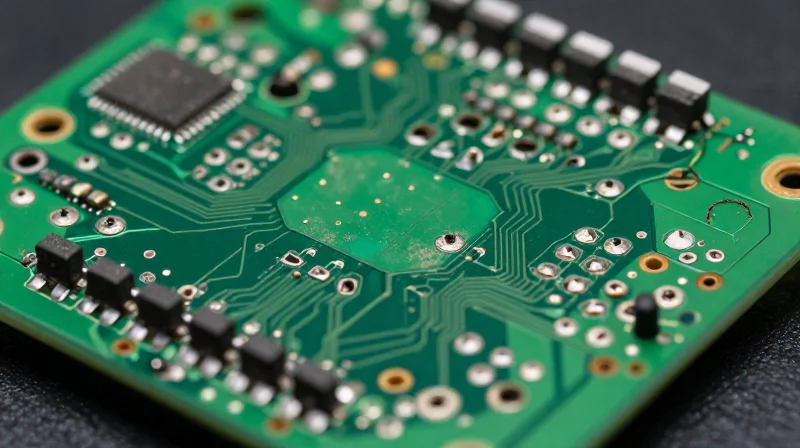
Traditional printed circuit board (PCB) designs in HVAC controls were historically engineered for static, hardware-defined functions. As building management systems (BMS) transition toward dynamic, AI-driven environments, these legacy designs face structural limitations that impede efficiency. The reliance on rigid, monolithic circuit structures often results in excessive heat dissipation, limited edge-processing power, and significant physical footprints that cannot adapt to the miniaturization trends of contemporary sensor-integrated HVAC units.
Comparison of Traditional versus Modern Integration Challenges
| Challenge Factor | Traditional PCB Limitation | Modern Smart Requirement |
|---|---|---|
| Thermal Management | Passive heat sinking; bulky components | Integrated thermal vias; high-efficiency cooling |
| Processing Capability | Low-clock speed; fixed logic | Real-time edge analytics; ML support |
| Connectivity | Isolated serial protocols (RS-485) | Unified wireless mesh; cloud telemetry |
| Physical Size | High-profile through-hole components | High-density interconnect (HDI) SMT |
Key Limitations FAQ
- Why do traditional boards struggle with heat?
Legacy boards typically utilize larger, less efficient power conversion stages that generate significant waste heat, which traditional packaging struggles to dissipate without large, space-consuming heat sinks. - How does data processing impact board life cycles?
Traditional boards often lack the computational overhead required for modern security encryption and over-the-air (OTA) firmware updates, necessitating complete hardware replacement rather than software-based feature upgrades. - Are traditional PCB layouts compatible with smart sensors?
Most legacy designs lack sufficient I/O density and standardized bus architectures to easily integrate the wide array of IoT sensors required for predictive maintenance and smart zoning.
The Rise of High-Density Interconnect (HDI) Designs
Defining HDI in HVAC Control Systems
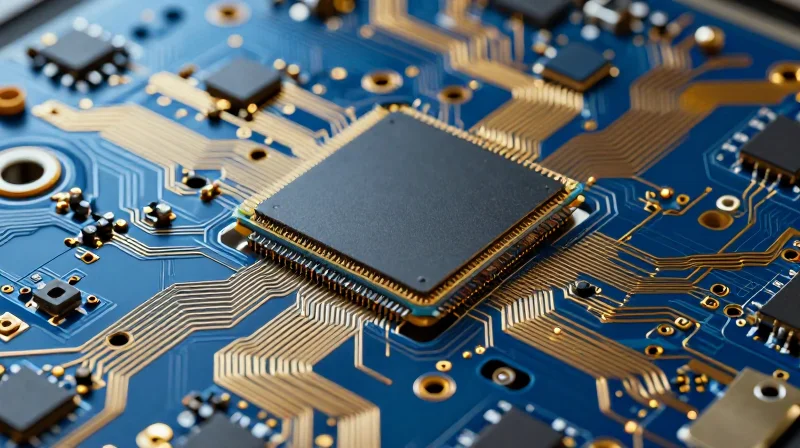
High-Density Interconnect (HDI) technology moves beyond standard PCB limitations by employing microvias, thinner traces, and tighter pad spacing. In the context of HVAC controllers, this allows engineers to integrate sophisticated microprocessors, advanced sensing arrays, and wireless communication modules onto a single board that would otherwise require multiple traditional assembly layers.
HDI vs. Traditional PCB Architecture
| Feature | Traditional PCB | HDI PCB |
|---|---|---|
| Via Technology | Through-hole | Laser-drilled Microvias |
| Trace Density | Low to Moderate | High to Ultra-high |
| Component Pitch | Standard (>0.5mm) | Fine (<0.3mm) |
| Space Efficiency | Baseline | 40-60% reduction |
Technical Advantages for Smart Building Integrations
The adoption of HDI in HVAC hardware directly facilitates the requirements of modern smart buildings. By reducing parasitic inductance and capacitance through shorter interconnect lengths, HDI designs provide the cleaner signal environments necessary for high-speed data protocols like BACnet/IP or Matter, ensuring that smart building sensors and HVAC actuators communicate with near-zero latency.
Frequently Asked Questions Regarding HDI Implementation
- Does HDI increase thermal management challenges?
While component density is higher, HDI allows for strategic placement of thermal vias and internal heat-spreading layers that can actually improve heat dissipation compared to legacy through-hole designs. - Is HDI cost-prohibitive for standard HVAC controllers?
While the per-unit cost of HDI fabrication is higher, it often lowers total system costs by consolidating multiple PCBs into one, reducing housing size requirements, and lowering assembly labor. - How does HDI improve wireless integration?
The miniaturization allows for better shielding and the placement of antennas in optimal positions relative to the ground plane, significantly improving RF performance for IoT-connected thermostats.
Integrating Sensor Fusion for Real-Time Efficiency

The Shift Toward Multi-Modal Sensor Fusion
Modern HVAC systems are moving beyond simple thermostat-based logic by incorporating sensor fusion—the process of aggregating data from thermal, air quality, motion, and ambient light sensors. By synthesizing these diverse inputs, the system moves from reactive control to predictive climate management. Unlike traditional PCBs that relied on isolated analog inputs, smart building architectures utilize high-speed digital buses to correlate environmental variables in real-time, significantly reducing energy waste by ensuring climate output perfectly matches instantaneous demand.
Comparative Metrics: Traditional vs. Smart Integrated Sensing
| Feature | Traditional PCB Design | Smart Sensor Fusion Integration |
|---|---|---|
| Data Source | Single point temperature input | Multi-modal environmental sensing |
| Processing Capability | Static logic loops | Edge-based predictive algorithms |
| Efficiency Impact | Baseline/Schedule-based | Dynamic/Real-time optimization |
| Connectivity | Proprietary/Wired | IoT-Native/IP-addressable |
Key Advantages of Real-Time Data Processing
- How does sensor fusion minimize energy consumption?
By identifying unoccupied zones via motion data and cross-referencing this with occupancy trends, the system dynamically adjusts setpoints rather than adhering to rigid, pre-programmed schedules. - What is the benefit of integrating air quality sensors?
Advanced systems utilize VOC and CO2 data to implement Demand Controlled Ventilation (DCV), which optimizes fresh air intake only when necessary, balancing indoor air quality with thermal regulation. - Why is edge processing critical in this integration?
Processing data at the sensor level reduces latency, allowing the HVAC unit to respond to environmental shifts in milliseconds, ensuring that peak load management is handled locally without relying on cloud-based round-trip latency.
The integration of sensor fusion requires robust hardware capable of handling high-speed data acquisition. The transition from legacy discrete components to compact, high-density PCBs allows engineers to place sophisticated microcontrollers and signal conditioners closer to the sensing elements, minimizing noise interference and maximizing the precision of every adjustment made to the HVAC operational state.
Enabling Predictive Maintenance via IoT Connectivity
Transitioning from Reactive Maintenance to Predictive Analytics
Modern HVAC architectures shift the maintenance paradigm by utilizing persistent IoT connectivity to stream real-time operational data to cloud-based diagnostic engines. By leveraging high-density PCB integration alongside edge computing, smart building controllers can now perform baseline performance analysis, identifying anomalous vibration, thermal spikes, or electrical fluctuations before they manifest as critical hardware failures.
Comparing Traditional Maintenance Models with IoT-Enabled Predictive Models
| Feature | Traditional PCB Approach | Smart IoT Integration |
|---|---|---|
| Maintenance Trigger | Fixed intervals or breakdown | Condition-based metrics |
| Fault Detection | Manual diagnostic testing | Automated real-time alerts |
| Data Accessibility | Local serial port connection | Cloud-based remote telemetry |
| Resolution Time | Extended (Wait for technician) | Minimized (Targeted repairs) |
Core Components of Predictive IoT Architecture
- Edge Processing Power
Modern PCBs utilize advanced microcontrollers that process raw sensor data locally to reduce bandwidth and enable instantaneous safety shutdowns. - Secure Cloud Handshake
Encrypted MQTT or CoAP protocols ensure that operational telemetry is safely transmitted to management dashboards without exposing the HVAC system to network vulnerabilities. - Machine Learning Integration
By aggregating historical data, systems learn the 'normal' operational signature of equipment, allowing for the immediate flagging of deviations that signify impending mechanical wear.
Operational Impact on Facility Management
Implementing predictive maintenance via IoT connectivity effectively bridges the gap between hardware and software. Rather than replacing parts based on age, facility managers can rely on data-driven insights to extend the lifespan of HVAC components, drastically lowering TCO (Total Cost of Ownership) and ensuring continuous uptime in sensitive environments.
Balancing Power Consumption and Processing Power
The Engineering Paradox: Compute Density vs. Power Budget
Modern smart building HVAC systems require increasingly sophisticated algorithms for real-time sensor fusion and predictive analytics, yet they are constrained by static or shrinking power envelopes. Traditional PCB designs often struggle with thermal dissipation and power draw, necessitating a paradigm shift toward low-power microcontrollers and dynamic power management architectures.
Strategic Hardware Comparison
| Feature | Traditional PCB Architecture | Smart Integration Design |
|---|---|---|
| Processing Logic | Fixed-cycle MCU | Multi-core SoC / Edge AI |
| Power Strategy | Always-on linear regulation | Dynamic voltage frequency scaling |
| Efficiency Focus | Component thermal management | System-level duty cycle optimization |
Techniques for Power-Efficient Compute
To reconcile heavy computational requirements with efficiency, engineers are shifting toward heterogeneous computing. This approach offloads complex data processing to dedicated low-power neural processing units (NPUs) while utilizing low-power sleep modes for the main application processor. By implementing intelligent duty-cycling, the controller remains in a low-power state until an event—such as a specific sensor threshold breach—requires an interrupt wake-up.
Frequently Asked Questions
- How does edge processing reduce power consumption?
By processing data locally at the sensor level rather than transmitting raw data streams to a central server, systems significantly reduce the power-intensive radio frequency (RF) transmission cycles. - Why is power gating important for HVAC PCBs?
Power gating allows individual subsystems or modules to be completely disconnected from the power rail when not in use, drastically minimizing leakage current in sophisticated multi-core designs. - Can smart integrations improve energy longevity?
Yes, by utilizing predictive maintenance algorithms, systems can avoid the power spikes associated with mechanical system faults, maintaining operation within optimal power consumption bands.
Strategic Considerations for HVAC Original Equipment Manufacturers
Aligning Manufacturing Strategies with Digital Transformation
For HVAC OEMs, the transition from legacy control logic to smart, cloud-connected architectures is not merely a technical upgrade but a business model transformation. To remain competitive, manufacturers must pivot from selling static hardware to delivering intelligent, service-oriented ecosystem platforms.
| Strategic Pillar | Legacy Approach | Modern OEM Strategy |
|---|---|---|
| Product Lifecycle | One-time hardware sale | Recurring software updates |
| Design Philosophy | Proprietary, isolated systems | Open, interoperable APIs |
| Market Focus | Operational efficiency | User experience and analytics |
Key Strategic Priorities
- Scalable PCB Architecture
Shift toward modular PCB designs that utilize generic baseboards with swappable connectivity daughter-cards to accommodate varying smart building protocols. - Cybersecurity by Design
Integrate Hardware Security Modules (HSMs) directly into control boards to protect data integrity and prevent unauthorized access in connected environments. - Data-Driven R&D
Leverage telemetry from installed fleets to inform future design iterations, prioritizing features that actually improve real-world energy efficiency metrics.
Frequently Asked Questions for OEM Leaders
- How do we bridge the gap between traditional reliability and rapid IoT cycles?
Implement a 'Dual-Core' strategy: keep the mission-critical control logic on a hardened, stable microcontroller while offloading connectivity and data processing to an application-focused processor. - Is custom ASIC development still viable?
Generally, no. The speed of smart building protocol evolution makes FPGA or system-on-chip (SoC) solutions more viable for maintaining long-term agility and firmware-upgradability.
The transition to IoT-integrated HVAC systems is not just an upgrade; it is a fundamental shift toward sustainable, data-driven facility management. By adopting high-density interconnect designs, manufacturers can ensure their systems are future-proof, efficient, and reliable. Ready to revolutionize your HVAC control systems? Contact our engineering team today to discuss your next-generation electronic design requirements.
