
In the race toward total factory automation, the choice of communication protocol is no longer just a technical detail—it is a strategic decision that determines the longevity and scalability of your entire operation. As Industry 4.0 accelerates, engineers face a crossroads between the long-range, low-power efficiency of LoRaWAN and the high-throughput, carrier-grade reliability of cellular standards like NB-IoT.
Understanding the Evolution of Industrial Connectivity

From Siloed Tracking to Real-Time Ecosystems
Industrial connectivity has undergone a fundamental metamorphosis. Historically, connectivity was synonymous with simple fieldbus protocols and point-to-point machine tracking, primarily used to monitor uptime or basic throughput. These legacy systems functioned in silos, often hindered by proprietary communication standards and limited bandwidth. Today, the focus has shifted toward the creation of comprehensive digital ecosystems. Modern smart manufacturing requires seamless bidirectional communication, where edge sensors, heavy machinery, and cloud-based AI platforms converge to enable predictive maintenance, digital twins, and autonomous decision-making.
Shifting Requirements in Industrial IoT
| Feature | Legacy Era | Modern IIoT Era |
|---|---|---|
| Connectivity Goal | Machine uptime tracking | Real-time process optimization |
| Data Architecture | Siloed fieldbus | Cloud-integrated mesh |
| Device Density | Low (Fixed hardware) | High (Massive IoT sensors) |
| Decision Making | Manual intervention | AI-driven autonomy |
Key Drivers of Connectivity Evolution
- Why has the demand for low-power wide-area networks increased?
As manufacturers deploy thousands of sensors across large facilities to monitor assets like vibration, temperature, and humidity, the need for energy-efficient, long-range connectivity has superseded the requirement for high-speed data transmission. - How does 5G and cellular technology impact smart factories?
Cellular evolution, particularly 5G, addresses the need for ultra-low latency and massive machine-type communications, enabling high-precision robotics and augmented reality applications that were previously impossible. - What role does interoperability play in modern ecosystems?
The move toward open standards like OPC-UA and MQTT ensures that data generated from heterogeneous hardware can be standardized for analytics, breaking down historical interoperability barriers.
The Core Architecture of LoRaWAN

The Chirp Spread Spectrum (CSS) Foundation
At the heart of LoRaWAN lies the Chirp Spread Spectrum (CSS) modulation, a physical layer technique that encodes information in chirps—pulses of varying frequencies. Unlike standard narrow-band technologies that struggle with high-interference industrial environments, CSS spreads the signal across a wider bandwidth. This not only makes the transmission highly resistant to multi-path fading and doppler effects but also allows the signal to be recovered even when it is buried beneath the noise floor, enabling connectivity through thick concrete walls and subterranean structures.
Network Topology and Communication Model
LoRaWAN utilizes a star-of-stars topology. End-devices are not associated with a specific gateway; instead, any gateway within range can receive a transmission and forward it to a central Network Server. This asynchronous 'ALOHA-based' protocol eliminates the overhead of handshake signaling, which is a major driver of battery depletion in cellular IoT networks.
| Feature | LoRaWAN Approach | Industrial Benefit |
|---|---|---|
| Modulation | Chirp Spread Spectrum | Deep indoor penetration |
| Connection | Asynchronous Star | Reduced device power draw |
| Interference | Wideband Spreading | High reliability in noise |
Key Architectural Advantages FAQ
- How does LoRaWAN achieve 10+ year battery life?
By utilizing an asynchronous architecture where devices sleep most of the time and only wake to transmit small packets, minimizing the energy-intensive handshaking required by cellular protocols. - Why is it better for indoor coverage than traditional Wi-Fi or LTE?
The low data rate and high processing gain of CSS allow the signal to maintain integrity through dense industrial materials like reinforced concrete and heavy machinery where higher frequency signals would be blocked.
The Rise of NB-IoT in Industrial Environments
The Rise of NB-IoT in Industrial Environments
As Industrial IoT ecosystems demand higher reliability and deeper integration with existing infrastructure, NB-IoT has emerged as a cornerstone technology for smart manufacturing. By operating within the licensed cellular spectrum, NB-IoT provides carrier-grade security and superior signal penetration, allowing manufacturers to maintain connectivity across complex metallic environments where traditional wireless protocols often falter.
Infrastructure Advantages of Cellular Connectivity
The primary advantage of NB-IoT lies in its ability to reuse existing LTE infrastructure. This eliminates the need for companies to deploy and maintain private gateways—a common pain point for non-cellular LPWAN implementations. The result is a simplified architectural footprint that excels in high-density industrial plants where interference is a significant concern.
| Feature | LoRaWAN | NB-IoT |
|---|---|---|
| Spectrum | Unlicensed | Licensed |
| Security | AES-128 bit | Carrier-grade SIM/LTE |
| Data Rate | Low (0.3 - 50 kbps) | Medium (Up to 250 kbps) |
| Latency | High | Low |
Frequently Asked Questions
- Why choose NB-IoT over private LoRaWAN networks?
NB-IoT is preferred when the facility requires lower latency, higher throughput for firmware-over-the-air (FOTA) updates, and the security guarantees provided by licensed telecommunications spectrum. - Does NB-IoT consume excessive power?
While slightly more power-intensive than LoRaWAN, NB-IoT employs Power Saving Mode (PSM) and Extended Discontinuous Reception (eDRX), allowing devices to remain battery-operated for several years. - Is NB-IoT effective inside metal-dense factories?
Yes, NB-IoT offers a 20dB coverage enhancement over legacy GPRS, providing excellent indoor penetration capability for deep-seated industrial sensors.
Comparative Performance: Bandwidth, Latency, and Power

Comparative Technical Performance
In industrial smart manufacturing, the choice between LoRaWAN and cellular standards like NB-IoT or LTE-M is governed by the specific requirements of the application. LoRaWAN excels in scenarios where long-range, low-data-rate communication is required from sensors that must operate for years on a single battery. Conversely, cellular-based LPWAN technologies offer higher throughput and lower latency, making them superior for mission-critical applications that demand reliable data delivery and real-time control.
| Feature | LoRaWAN | Cellular (NB-IoT/LTE-M) |
|---|---|---|
| Data Rate | 0.3 kbps to 50 kbps | Up to 1 Mbps |
| Latency | High (Seconds) | Low (Milliseconds to Seconds) |
| Battery Life | 10+ Years | 5 to 10 Years |
| Deployment | Private/Public Network | Licensed Spectrum/Carrier |
Operational Trade-offs
- How does bandwidth affect power consumption in smart manufacturing?
Higher bandwidth enables faster data bursts but requires more complex modulation and signal processing, which leads to higher peak current consumption; this is why cellular devices often require larger battery capacities than LoRaWAN nodes. - What dictates latency in industrial IoT deployments?
Latency is driven by the network architecture; LoRaWAN utilizes an ALOHA-based protocol which can lead to collisions and delays, whereas cellular networks provide scheduled access and synchronized handovers, ensuring deterministic latency. - Is hybrid connectivity becoming a industry trend?
Yes, many modern factories are adopting a tiered architecture, utilizing LoRaWAN for large-scale, non-critical sensor monitoring and cellular connectivity for bandwidth-heavy operational monitoring and predictive maintenance systems.
Cost of Ownership: Infrastructure vs. Subscription Models
Capital vs. Operational Expenditure
For industrial operators, the choice between LoRaWAN and Cellular connectivity is fundamentally a choice between owning the network infrastructure or renting it from a carrier. LoRaWAN deployments typically necessitate significant initial investment in gateways, proprietary server software, and RF site surveys. Conversely, cellular-based IoT (NB-IoT or LTE-M) shifts the burden to operational expenditure (OpEx), as factory owners pay recurring service fees per device, eliminating the need to manage infrastructure hardware.
| Cost Driver | LoRaWAN (Private) | Cellular (NB-IoT/LTE-M) |
|---|---|---|
| Initial Hardware | High (Gateways + Antennas) | Low (Standardized Modules) |
| Network Management | In-house IT labor required | Managed by Carrier |
| Scaling Costs | Diminishing per-node cost | Linear monthly subscription fee |
| Spectrum Access | Free (Unlicensed ISM) | Paid (Licensed Frequency) |
Financial Implications of Network Ownership
When scaling to thousands of sensors, the cost-benefit analysis often tips in favor of LoRaWAN. Because LoRaWAN operates in unlicensed spectrum, there are no ongoing per-device data fees, making it highly cost-effective for static, low-bandwidth monitoring applications. However, the hidden costs—such as site maintenance, firmware updates, and troubleshooting intermittent connectivity—can quickly inflate the TCO if the internal team lacks specialized RF expertise.
FAQs: Optimizing Connectivity ROI
- When is cellular subscription more cost-effective?
Cellular is ideal for highly mobile assets, geographically dispersed sites, or projects with a short lifecycle where the cost of deploying private infrastructure cannot be amortized over many years. - What are the hidden costs of private LoRaWAN?
Hidden costs include the necessity for redundant gateways, specialized staff training for network optimization, and the long-term risk of hardware obsolescence. - Can I hybridize these models to reduce costs?
Yes, many modern factories adopt a 'Best-of-Breed' approach: using private LoRaWAN for dense, low-power sensor clusters and cellular gateways as a backhaul or for critical, high-bandwidth equipment tracking.
Hardware Design Flexibility as a Competitive Edge
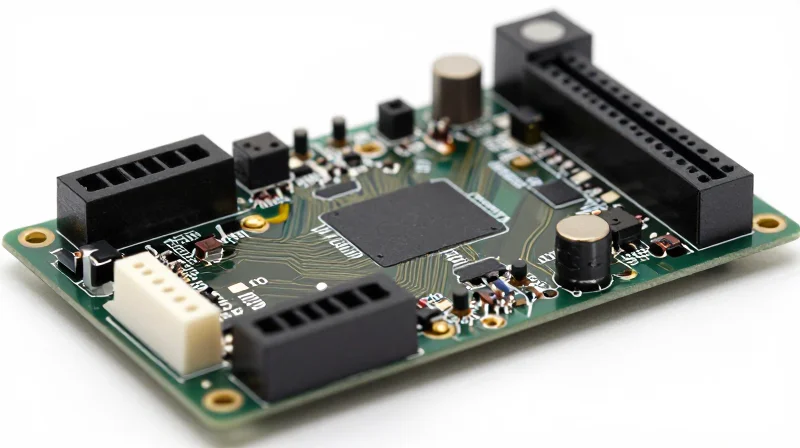
The Imperative of Hardware Agility
In the volatile landscape of industrial IoT, betting on a single connectivity protocol is a significant operational risk. Manufacturers are increasingly shifting toward hardware architectures that decouple the communication stack from the physical sensor or actuator layer, allowing for hot-swappable radio modules that can transition between LoRaWAN and cellular (NB-IoT/LTE-M) as infrastructure requirements evolve.
Design Considerations for Modular Connectivity
| Feature | Fixed Architecture | Modular Architecture |
|---|---|---|
| Lifecycle Longevity | Short (limited by radio tech) | Extended (radio upgradable) |
| Initial CAPEX | Lower | Higher |
| Deployment Flexibility | Static/Single Purpose | Adaptive/Multi-protocol |
| Maintenance Effort | Device Replacement | Module Replacement |
Navigating Protocol Transitions
- Why is module-based design superior to integrated chips?
Module-based designs allow engineers to update the radio front-end without redesigning the entire PCB, enabling quick pivots if a specific network provider changes their spectrum or protocol roadmap. - Does hardware modularity impact certification costs?
Yes, it creates a dual-layer requirement. Designers must certify the base host device once, while the radio modules carry their own pre-certifications, significantly reducing the burden of regulatory compliance during protocol migrations. - How does this approach handle long-term maintenance?
By utilizing standard internal interfaces like M.2, mPCIe, or proprietary mezzanine connectors, maintenance teams can update connectivity hardware during routine physical maintenance cycles without decommissioning the asset.
Ultimately, the competitive edge lies in the ability to pivot connectivity strategies without replacing the entire industrial asset. Organizations that prioritize hardware abstraction layers today will define the standards of manufacturing agility tomorrow.
Security Implications and Reliability Standards
Security Paradigms in Industrial Connectivity
The security architecture of an industrial IoT deployment is fundamentally defined by its network topology. LoRaWAN relies on a multi-layered cryptographic approach based on AES-128, prioritizing device-level authentication and end-to-end encryption within a private network ecosystem. Conversely, cellular connectivity—specifically 4G LTE and 5G—leverages decades of telecommunications standardization, incorporating SIM-based identity management, robust roaming security, and sophisticated signaling protocols that provide high-grade protection against spoofing and intercept attacks.
| Feature | LoRaWAN Security | Cellular (LTE-M/NB-IoT) Security |
|---|---|---|
| Encryption | AES-128 (Network & App sessions) | AES-256 (Robust air-interface) |
| Authentication | DevEUI and AppKey management | SIM/eSIM (EAP-AKA) |
| Threat Mitigation | Private network isolation | Carrier-grade firewalling |
| Management | Centralized Join Server control | Subscriber management systems |
Reliability Standards and Network Resilience
Reliability in manufacturing environments is measured by service uptime and the ability to maintain data integrity under electromagnetic interference. Cellular networks offer superior reliability through licensed spectrum usage, which minimizes packet loss from signal congestion. While LoRaWAN provides exceptional range and penetration, its reliance on the unlicensed ISM band necessitates careful frequency planning and duty-cycle management to ensure consistent performance in crowded factory environments.
Security and Reliability Frequently Asked Questions
- Is private LoRaWAN inherently more secure than cellular?
Private LoRaWAN allows for total control over data paths without traversing public carrier infrastructure, which reduces the attack surface for external threats but places the burden of security maintenance entirely on the manufacturer. - How does 5G impact Industrial IoT reliability?
5G introduces network slicing and Ultra-Reliable Low-Latency Communication (URLLC), which provide deterministic network behavior specifically designed for mission-critical industrial automation tasks. - What is the biggest threat to unlicensed spectrum connectivity?
The primary risk to LoRaWAN reliability is RF interference from other devices operating in the same unlicensed bands, which can lead to increased packet loss and communication failures.
Future-Proofing Your Industrial IoT Roadmap

Strategic Connectivity Selection
Selecting the right connectivity protocol is no longer about choosing a winner between LoRaWAN and Cellular, but rather about mapping specific operational requirements to the right network architecture. A successful roadmap acknowledges that industrial environments are inherently dynamic; thus, your infrastructure must support multi-protocol gateways that can ingest data from both low-power, wide-area networks and high-bandwidth cellular links.
| Requirement | LoRaWAN Strategy | Cellular (LTE-M/NB-IoT) Strategy |
|---|---|---|
| Data Volume | Best for low-frequency telemetry. | Ideal for rich sensor and diagnostic data. |
| Coverage | Best for campus/site-specific private networks. | Best for distributed or mobile assets. |
| Lifecycle | Lower TCO for long-term sensor monitoring. | Higher reliability for critical control loops. |
Building a Flexible IoT Foundation
To prevent technological obsolescence, adopt a modular hardware-agnostic strategy. Organizations should invest in edge gateways that utilize plug-and-play connectivity modules, allowing for protocol swaps without replacing the entire sensor array. By decoupling the application layer from the physical connectivity layer, manufacturers gain the flexibility to transition from private LoRaWAN deployments to public cellular networks as their operational footprint expands.
Frequently Asked Questions
- Is a hybrid architecture worth the increased initial complexity?
Yes. While hybrid models require more initial configuration, they provide critical redundancy and allow your infrastructure to scale with evolving data needs. - How do I ensure long-term firmware update capabilities?
Prioritize devices that support Over-the-Air (OTA) updates, regardless of protocol, as security patches and protocol tweaks are inevitable over a 5-10 year product lifecycle. - When should we transition from private gateways to licensed cellular?
Consider a transition when the cost of maintaining private gateway infrastructure exceeds the cost of a managed cellular subscription, typically seen when assets move beyond site-specific boundaries.
Selecting between LoRaWAN and cellular standards is not a binary choice, but a strategic alignment of your hardware with your long-term industrial goals. By prioritizing architectural flexibility today, you can ensure your systems remain relevant in an ever-shifting technological landscape. Contact our engineering consultants today to audit your connectivity strategy and build a future-proof foundation for your smart factory.
