
The demand for portable respiratory support has never been greater, pushing engineers to redefine the limits of medical device miniaturization. As we look toward the future of patient care, the heart of these portable oxygen concentrators—the printed circuit board (PCB)—must evolve to meet rigorous power, weight, and signal integrity requirements.
The Evolution of Medical PCB Requirements
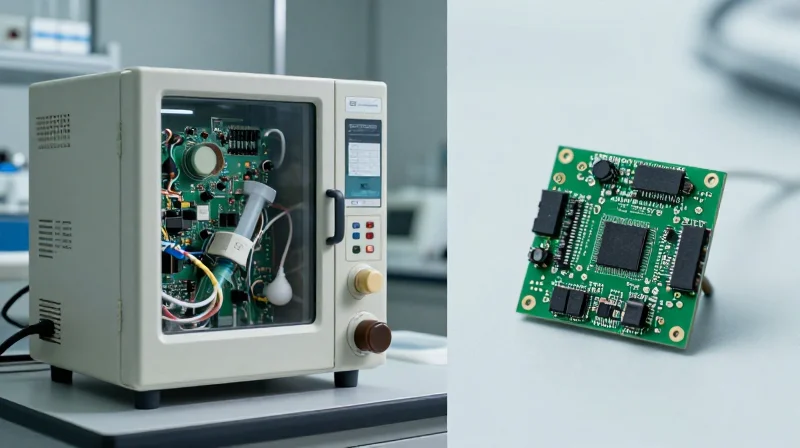
From Stationary Systems to Point-of-Care Portability
Historically, respiratory support equipment such as ventilators and oxygen concentrators were anchored by large, chassis-based designs where physical space was abundant. Today, the transition toward point-of-care diagnostics and wearable therapy devices has fundamentally altered the physical constraints of printed circuit boards (PCBs). Engineers are now tasked with packing sophisticated signal processing, power management, and wireless connectivity into architectures that are often 70% smaller than their predecessors.
Critical PCB Design Shifts in Respiratory Hardware
| Requirement | Legacy Systems | Next-Generation Portables |
|---|---|---|
| Board Density | Low to Medium | Ultra-High Density (HDI) |
| Form Factor | Large Multi-Board | Compact Flex/Rigid-Flex |
| Power Management | AC-Powered | Battery-Optimized Efficiency |
| Thermal Strategy | Active Forced Air | Conduction Cooling/Low Heat |
Core Engineering Challenges
- How does miniaturization affect signal integrity?
As components shrink and trace density increases, parasitic capacitance and crosstalk become significant risks, requiring advanced simulation and precision layer stack-ups. - Why is power efficiency the primary design driver?
Portable respiratory devices must balance long battery life with the constant demand for real-time sensor feedback and wireless data transmission, mandating low-power IC integration. - What role does thermal management play in modern PCBs?
Smaller enclosures offer less surface area for heat dissipation, making thermal vias and high-thermal-conductivity base materials essential for preventing component failure.
The Future of Board-Level Integration
The convergence of IoT connectivity and portable respiratory hardware requires an evolution in PCB materials. Designers are shifting toward halogen-free, high-Tg materials that offer superior mechanical stability during thermal cycling. By utilizing rigid-flex technology, manufacturers can eliminate bulky connectors and ribbon cables, directly reducing the total system volume while simultaneously increasing durability in field-use environments.
Flexible vs. Rigid-Flex PCBs: Space Optimization
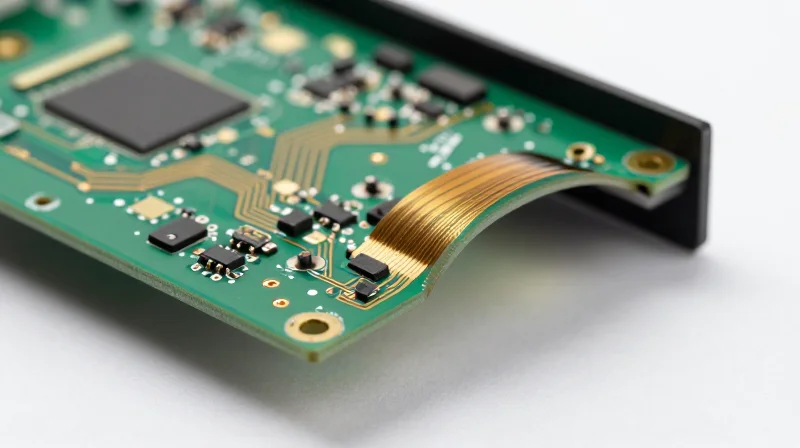
In the development of portable respiratory technology—such as smart nebulizers, wearable CPAP devices, and oxygen concentrators—space optimization is the primary engineering constraint. Unlike rigid PCBs, which dictate static, flat-plane designs, flexible and rigid-flex circuits allow engineers to conform electronics to the ergonomic contours of human-wearable housings, significantly reducing the overall device footprint.
Comparative Analysis: Rigid vs. Flexible Architectures
| Feature | Rigid PCB | Flexible PCB | Rigid-Flex |
|---|---|---|---|
| Spatial Efficiency | Low (Requires flat space) | High (Conformable) | Very High (3D optimization) |
| Mechanical Reliability | High (Vibration sensitive) | Excellent (Flexibility) | Excellent (Reduced connectors) |
| Weight/Volume | Bulkier | Ultralight | Optimized |
| Complexity | Simple | Moderate | High (Multi-layered) |
Strategic Advantages in Respiratory Device Design
The integration of rigid-flex technology facilitates a 'system-in-a-housing' approach. By replacing heavy cabling and bulky interconnects with integrated flexible segments, designers can fold the circuitry like origami within a compact casing. This not only mitigates the risk of connection failures—a critical requirement for life-sustaining medical equipment—but also leaves additional volume for larger battery cells or advanced sensor arrays.
Frequently Asked Questions
- How does rigid-flex technology improve device durability?
By eliminating the need for traditional board-to-board connectors and ribbon cables, rigid-flex designs reduce the number of potential failure points caused by mechanical shock or vibrations in mobile respiratory gear. - Can flexible circuits handle the high-speed signals required for modern respiratory sensors?
Yes. Modern flexible materials like polyimide offer excellent dielectric properties, allowing for high-speed signal integrity while maintaining a thinner profile than standard FR-4 substrates. - Is the production cost of rigid-flex PCBs prohibitive for portable medical devices?
While unit costs are higher, the reduction in assembly labor, cable management costs, and the ability to minimize total housing size often lead to a lower total cost of ownership in high-volume, high-value medical manufacturing.
Advanced Substrate Materials for Thermal Management

The Thermal Management Challenge in Respiratory Devices
As portable oxygen concentrators and ventilators shrink in size, power dissipation density increases exponentially. Traditional FR-4 substrates often fail to manage the heat generated by compact motor drivers and sensors, leading to performance degradation and shortened battery life. Transitioning to advanced materials like ceramic-filled polymers and Metal Core PCBs (MCPCBs) is now critical to maintaining device integrity.
Comparing Thermal Substrate Performance
| Material Type | Thermal Conductivity (W/mK) | Application Focus | Key Advantage |
|---|---|---|---|
| Standard FR-4 | 0.25 | Logic & Control | Low cost |
| Ceramic-Filled Polymer | 2.0 - 5.0 | Power Modules | Balanced thermal/mechanical |
| Aluminum Core (MCPCB) | 1.0 - 3.0 | Motor Controllers | Robust heat dissipation |
| Alumina Ceramic | 20.0 - 30.0 | High-Frequency RF | Extreme thermal stability |
Key Considerations for Material Selection
- Why is CTE matching important in respiratory hardware?
Medical devices undergo constant thermal cycling. Materials must have a Coefficient of Thermal Expansion (CTE) that closely matches the components to prevent solder joint fatigue and micro-cracking. - What role do ceramic-filled polymers play in portability?
They provide a lightweight, high-dielectric solution that effectively wicks heat away from sensitive microprocessors, allowing for a reduction in active cooling components like bulky heat sinks. - Does material selection impact regulatory certification?
Yes, high-performance substrates often have superior flammability ratings and dielectric properties, which simplify the path to IEC 60601-1 medical electrical equipment safety compliance.
Improving Power Efficiency via Layer Stacking

Minimizing Energy Waste Through Optimized Stack-ups
Layer stacking is no longer merely a method for routing complexity; it is a critical strategy for power integrity in battery-operated medical devices. By carefully planning the proximity of power and ground planes, designers can significantly reduce loop inductance and parasitic resistance. In respiratory hardware, where precision motors and sensor arrays draw power simultaneously, these efficiency gains are vital for maintaining clinical performance without rapid voltage sag.
Techniques for Power Optimization
- Reducing Via Resistance
Utilizing micro-vias and blind/buried via structures shortens current paths, reducing the resistive overhead that commonly drains battery power in high-current respiratory pump systems. - Optimizing Plane Capacitance
Thinning the dielectric layers between power and ground planes increases inter-plane capacitance, which helps suppress high-frequency noise and stabilizes voltage delivery, preventing energy-intensive switching transients. - Current Path Shortening
Strategic layer arrangement allows power delivery networks to be placed directly beneath high-draw components, minimizing copper trace length and the associated I2R energy dissipation.
| Design Strategy | Primary Benefit | Efficiency Impact |
|---|---|---|
| Staggered Via Stacking | Lower Resistance | High (Reduced thermal loss) |
| Increased Copper Weight | Improved Current Handling | Medium (Lower voltage drop) |
| Reduced Dielectric Thickness | Higher Plane Capacitance | High (Stable voltage ripple) |
Industry Trends in Power Distribution
The industry is shifting toward 'Power-First' stack-up designs, where the internal layer count is determined by electrical current requirements rather than just signal routing density. By integrating thick copper layers specifically for power distribution while keeping signal layers thin, manufacturers can achieve the necessary low-impedance path required for the rapid motor start-ups typical of portable ventilators.
Integrating Sophisticated Sensor Arrays
Architectural Challenges in Multi-Sensor Integration
Modern respiratory devices now incorporate arrays of flow, pressure, oxygen concentration, and humidity sensors. Integrating these into a portable form factor mandates a transition from traditional PCB layouts to high-density interconnect (HDI) designs. By employing micro-via technology and blind/buried vias, engineers can isolate sensitive analog sensor signals from high-speed digital processing lines, mitigating EMI (electromagnetic interference) that frequently compromises data integrity in life-critical monitoring equipment.
Comparative Analysis of Sensor Integration Methods
| Integration Method | Signal Integrity | Spatial Efficiency | Thermal Performance |
|---|---|---|---|
| Standard Rigid PCB | Moderate | Low | Limited |
| HDI Micro-via PCB | High | High | Moderate |
| System-in-Package (SiP) | Very High | Extreme | High |
Intelligent Airflow Control and Processing
Real-time intelligent airflow control requires instantaneous feedback loops where sensor data is processed by onboard microcontrollers (MCUs) to adjust motor speeds. This necessitates low-latency traces and robust power distribution networks (PDN). By utilizing thin-core laminates and optimized copper pour strategies, manufacturers can reduce the distance between the sensors and the processing core, effectively minimizing the latency in the control loop.
Frequently Asked Questions on Sensor Integration
- How does PCB layout impact sensor sensitivity?
Improper routing of traces near high-impedance sensors can lead to noise coupling; shielding and differential signaling are essential to preserve the sub-microvolt accuracy of modern respiratory sensors. - Why are rigid-flex PCBs preferred for sensor-heavy devices?
Rigid-flex designs allow for sensors to be placed on flexible limbs that conform to internal air paths, while the rigid sections house the main processing unit, maximizing housing volume utilization. - What is the role of advanced substrates in sensor thermal management?
Materials with high thermal conductivity prevent localized hot spots near sensitive sensor nodes, ensuring that temperature-dependent drifts do not occur in pressure or flow readings.
Reliability in Harsh Environments: Conformal Coating and Materials
Material Resilience in Portable Respiratory Systems
Portable respiratory devices are frequently subjected to challenging conditions, including high humidity levels in patient homes, thermal cycling from continuous operation, and accidental mechanical shocks. Ensuring hardware longevity necessitates a robust defensive strategy that combines advanced conformal coating techniques with material selection that adheres to strict medical-grade IPC standards, specifically IPC-CC-830B.
Comparison of Protective Conformal Coating Technologies
| Coating Type | Key Advantage | Best Application |
|---|---|---|
| Acrylic (AR) | Easy reworkability and moisture resistance | General respiratory electronics |
| Parylene (XY) | Superior chemical and moisture barrier | High-reliability sensor interfaces |
| Silicone (SR) | Excellent thermal stability and flexibility | Components near heating elements |
FAQs on Environmental Reliability
- Why is IPC compliance critical for respiratory PCBs?
IPC standards ensure that electronic assemblies maintain consistent performance under stress, mitigating the risk of device failure during critical patient care scenarios. - How does conformal coating improve sensor accuracy?
By preventing the formation of conductive paths due to condensation or particle buildup, coatings maintain high impedance paths, ensuring that sensitive airflow and oxygen sensors report accurate data. - Does coating material impact thermal management?
Yes, while coatings protect circuits, some thicker films can act as insulators. Designers must balance coverage with the thermal dissipation requirements of power-intensive MOSFETs and controllers.
The Role of Micro-via Technology in Miniaturization
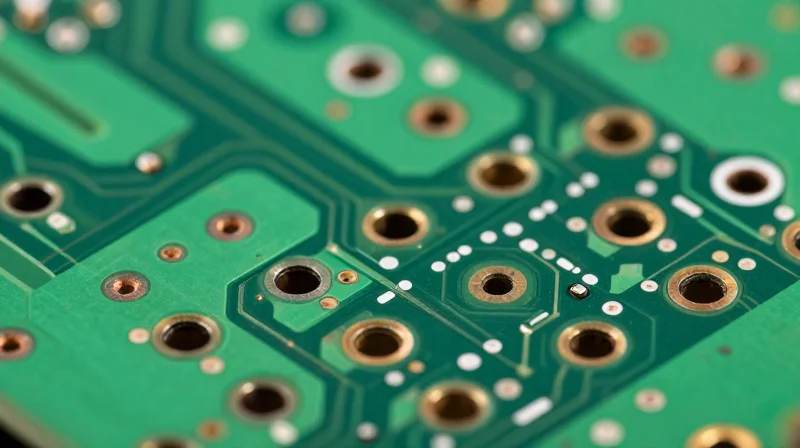
Enabling High-Density Interconnects for Respiratory Wearables
Micro-vias are essential for modern respiratory technology, as they allow for higher routing density in significantly smaller surface areas. By utilizing laser-drilled holes smaller than 150 micrometers, designers can transition signals between inner layers without the need for through-hole vias that consume valuable board space. This technological shift is critical for miniaturizing oxygen concentrators and portable ventilators, which require complex sensor-to-processor pathways within a strictly limited physical envelope.
Technological Evolution in Via Architecture
| Via Type | Spatial Efficiency | Design Complexity | Respiratory Application |
|---|---|---|---|
| Standard Through-Hole | Low | Simple | Legacy control boards |
| Blind Micro-via | High | Moderate | Integrated sensor arrays |
| Buried Micro-via | Maximum | High | Ultra-compact motor controllers |
Strategic Benefits for Medical Reliability
Beyond mere size reduction, the adoption of micro-via technology enhances signal integrity. By shortening the interconnect distance between the microcontroller and sensor interfaces, engineers can minimize inductance and capacitance effects that might otherwise distort sensitive breath-monitoring data. This precision is paramount for devices that rely on fast, accurate feedback loops for intelligent airflow control during critical patient care.
- How do micro-vias affect signal noise in respiratory sensors?
Shorter via structures significantly reduce signal impedance mismatch and crosstalk, leading to cleaner data transmission from pressure and flow sensors. - Does micro-via usage increase manufacturing costs?
While laser drilling and advanced materials increase the initial per-board cost, they enable smaller overall chassis sizes, leading to overall system cost reductions by decreasing the required enclosure and battery size. - Are there limitations to stacking micro-vias?
Designers must balance density with thermal management, as stacking multiple micro-vias can create localized heat concentrations that require careful copper-pour planning to mitigate.
Future-Proofing Through Design for Manufacturing (DFM)
Strategic DFM Implementation in Respiratory PCB Design
Future-proofing portable respiratory technology requires a paradigm shift from 'design-to-prototype' to 'design-to-scale.' By integrating DFM principles early in the development lifecycle, engineers can mitigate risks related to component scarcity, assembly errors, and testing bottlenecks, ensuring that sophisticated PCB architectures remain viable throughout their product life cycle.
Critical DFM Strategies for Medical Scalability
- Standardized Component Selection
Prioritize active parts with long-term availability profiles and multiple sourcing options to prevent supply chain disruption in critical medical respiratory hardware. - Design for Automated Assembly
Utilize grid-based layouts and standardized mounting footprints to maximize throughput on Surface Mount Technology (SMT) lines while minimizing the risk of automated optical inspection (AOI) false positives. - Embedded Design for Test (DFT)
Integrate comprehensive test points and Boundary Scan (JTAG) interfaces to facilitate rapid validation of complex sensor-to-processor signal paths without specialized tooling.
Comparative Analysis: Traditional vs. DFM-Optimized PCB Design
| Parameter | Traditional Design | DFM-Optimized Design |
|---|---|---|
| Component Sourcing | Single-source high-perf | Multi-source validated parts |
| Assembly Speed | Manual intervention required | High-speed robotic SMT |
| Scaling Risk | High-latency redesigns | Predictable manufacturing yield |
| Cost Profile | Expensive per-unit labor | Lower unit cost at scale |
Leveraging Digital Twin Technology
The evolution of DFM now extends into digital twin simulations. By creating a virtual replica of the PCB, manufacturers can predict thermal stresses and signal integrity issues under real-world respiratory loads before committing to expensive physical tooling. This proactive approach significantly reduces the time-to-market for iterative device updates.
As portable oxygen technology continues to push the boundaries of patient mobility, the selection of PCB materials and design architecture remains the single most critical factor in product success. By leveraging flexible circuits and advanced thermal substrates, manufacturers can deliver safer, more efficient devices. Ready to integrate these next-generation designs into your medical roadmap? Contact our engineering team today to optimize your project for the future.
