
As the global energy landscape undergoes a massive digital transformation, traditional utility infrastructure is struggling to keep pace. The integration of AI and edge computing requires a fundamental rethinking of hardware, specifically the PCB architectures that drive smart metering. This guide examines how we are bridging the gap between legacy reliability and modern high-density performance.
The Evolution of Smart Grid Hardware
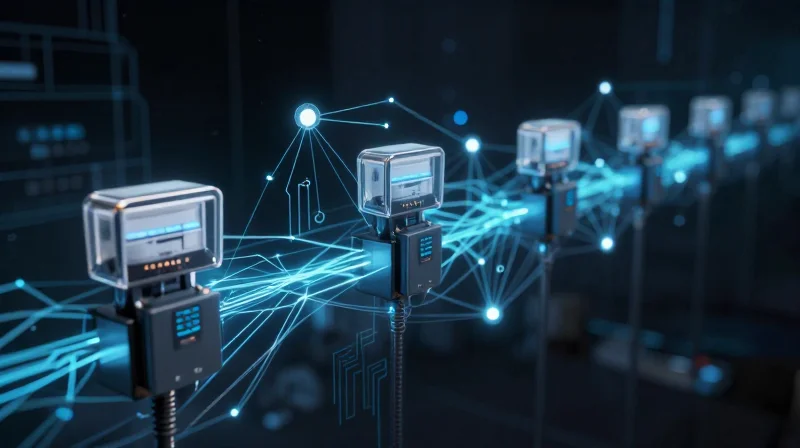
From Data Collection to Edge Intelligence
Historically, smart grid hardware served as simple telemetry devices, periodically reporting consumption metrics back to a centralized utility head-end. Today, this architecture has undergone a radical transformation. Modern smart meters are now sophisticated computing platforms utilizing powerful System-on-Chip (SoC) architectures, high-density PCBs, and robust connectivity modules. By moving intelligence to the edge, these devices can now perform local load shedding, identify phase imbalances, and detect unauthorized interference without requiring constant backhaul traffic.
Hardware Transformation Overview
| Feature | Legacy Grid Hardware | Modern Edge Nodes |
|---|---|---|
| Processing Power | Low-bit Microcontrollers | Multi-core ARM/RISC-V SoC |
| Data Handling | Periodic Batch Reporting | Real-time AI/ML Inference |
| Connectivity | Proprietary RF/PLC | 5G/LTE-M/NB-IoT/Wi-Fi 6 |
| PCB Design | Single-layer/Large Form | High-density Multi-layer (HDI) |
Key Hardware Advancements
- HDI PCB Fabrication
High-Density Interconnect (HDI) boards allow for the miniaturization of circuit footprints, enabling manufacturers to pack more sensors, memory, and connectivity radios into existing meter form factors. - Thermal Management
Increased processing density necessitates advanced thermal dissipation strategies, utilizing conductive adhesives and strategic copper pours to maintain longevity in extreme outdoor environments. - Security-First Silicon
Modern hardware integrates hardware security modules (HSM) and Trusted Execution Environments (TEE) directly into the SoC, ensuring that firmware updates and data transmissions remain immutable and encrypted.
This evolution is not merely about increasing raw processing power; it is about creating a resilient foundation for the distributed energy resource (DER) era. As households incorporate solar arrays and EV chargers, the smart meter functions as the gatekeeper of grid stability, necessitating hardware that is both flexible enough for future software-defined updates and robust enough to last for 15+ years of service.
The Role of Edge Computing in Energy Management

Decentralizing Grid Intelligence
The transition to edge computing in smart meters represents a shift from passive data logging to active grid management. By placing processing power at the network edge, smart meters can perform complex analytical tasks locally rather than relying on back-haul cloud processing. This shift is fundamental to achieving low-latency responses in volatile distribution networks, where millisecond decisions are required to balance energy supply and load demand.
Benefits of Edge-Based Energy Management
| Feature | Traditional Cloud Processing | Edge Computing Implementation |
|---|---|---|
| Latency | High (100ms+) | Low (<10ms) |
| Bandwidth Usage | High (Raw data upload) | Minimal (Actionable insights only) |
| Grid Security | Centralized vulnerability | Distributed, hardened nodes |
| Offline Resilience | Service interruption | Autonomous operation |
Enhanced Grid Security and Reliability
Edge computing significantly bolsters cybersecurity by localizing sensitive telemetry. Since raw data does not need to traverse a wide area network to reach a central server, the attack surface for potential interceptions is drastically reduced. Furthermore, edge nodes can execute security heuristics to detect anomalous power consumption patterns or cyber intrusions instantly, triggering self-isolation protocols before a threat can propagate through the larger smart grid architecture.
Frequently Asked Questions
- How does edge computing improve grid stabilization?
It allows smart meters to manage local voltage fluctuations and distributed energy resources (DERs) in real-time without needing a round-trip connection to the utility head-end. - Does edge computing replace the need for cloud infrastructure?
No, it complements the cloud; edge nodes handle time-critical processing, while the cloud remains essential for long-term historical data analysis and grid-wide planning. - What role does modern PCB design play in this shift?
Modern PCBs require higher thermal efficiency and increased computational overhead to support the high-performance system-on-a-chip (SoC) architectures necessary for edge processing.
Traditional Rigid-Board Architectures: Pros and Cons
The Limitations of Rigid PCB Architectures
While rigid PCBs have long been the industry standard for metering electronics, they are increasingly constrained by the physical form factors required by modern smart grid devices. As smart meters evolve to incorporate advanced communication modules, high-speed microcontrollers, and multiple sensing arrays, traditional rigid designs struggle with board space optimization and signal integrity challenges.
| Feature | Rigid PCB Capability | Modern Smart Meter Requirement |
|---|---|---|
| Space Efficiency | Low (Fixed 2D planar space) | High (Multi-layered 3D integration) |
| Signal Integrity | Moderate | Ultra-High (High-speed IoT data) |
| Flexibility | None | High (Non-conforming enclosures) |
| Thermal Management | Standard/Passive | Active/Advanced Dissipation |
Critical Trade-offs in Metering Design
- Why are rigid boards failing to support 5G/LTE-M connectivity?
Rigid boards suffer from excessive parasitic inductance and signal path limitations when accommodating the high-speed data transmission required for modern cellular IoT protocols, often leading to reduced RF performance. - How does thermal load impact reliability?
High-density processing cores in edge-enabled smart meters generate significant heat; rigid substrates often lack the thermal dissipation paths necessary to prevent localized hotspots that degrade sensor accuracy over time. - Is assembly speed a factor?
Traditional rigid layouts require complex cable harnesses to connect peripheral boards, increasing assembly time, weight, and the failure rate of mechanical interconnects.
Engineers must now balance the cost-effectiveness of traditional rigid manufacturing against the technical debt incurred by these physical limitations. As smart grid hardware moves toward smaller footprints and increased feature sets, rigid boards are becoming the primary bottleneck for innovation.
The Rise of High-Density Interconnect (HDI) Technology
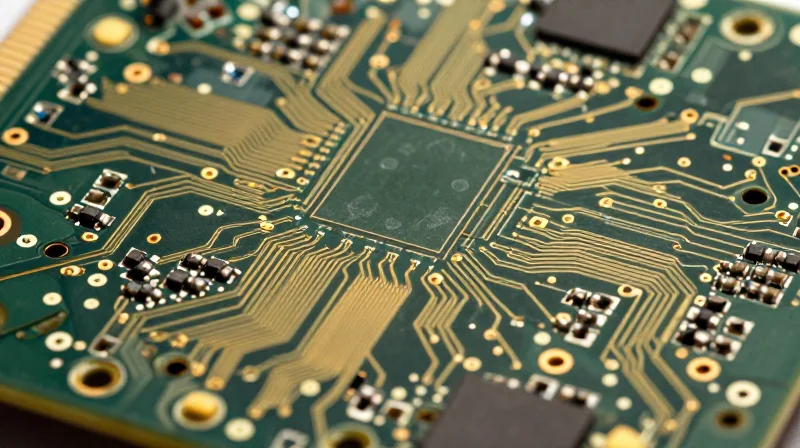
The Architectural Shift Toward HDI
As smart meters transition from simple data collection tools to complex AI-driven edge nodes, traditional PCB manufacturing processes have reached their physical limits. HDI technology addresses this by utilizing laser-drilled microvias, finer lines, and tighter spacing. This allows for a significantly higher density of electrical connections per square millimeter, which is crucial for integrating multi-core processors, advanced communication modules, and diverse sensor arrays within the strict footprint constraints of utility-grade enclosures.
Technical Advantages in Metering Infrastructure
| Feature | Standard Rigid PCB | HDI PCB |
|---|---|---|
| Via Technology | Through-hole (mechanical) | Microvia (laser-drilled) |
| Component Density | Moderate | Very High |
| Signal Integrity | Limited by length | Optimized for high-speed |
| Miniaturization | Bulkier design | Compact form factor |
Addressing Thermal and Signal Challenges
Beyond space savings, HDI supports better signal integrity by shortening electrical paths, which reduces electromagnetic interference (EMI) and signal attenuation—critical factors when handling high-speed data from IoT connectivity protocols like NB-IoT or LoRaWAN. Furthermore, the refined layer stacking in HDI boards facilitates improved thermal management, allowing heat to be dissipated more efficiently from high-performance power management ICs.
Frequently Asked Questions Regarding HDI
- Why is HDI preferred for modern IoT smart meters?
HDI allows for the reduction of the board's surface area while accommodating complex RF modules and processing units necessary for real-time edge computing. - Does HDI technology increase manufacturing costs?
While the per-unit cost of HDI boards is higher than standard boards, the ability to decrease the physical size of the meter casing and integrate more functionality often offsets these costs through material savings and system reliability. - How does HDI improve signal performance?
By using microvias, designers can place components closer together, significantly reducing the loop area and signal path length, which is vital for high-frequency smart grid communication signals.
Flexibility vs. Performance: Choosing the Right Substrate
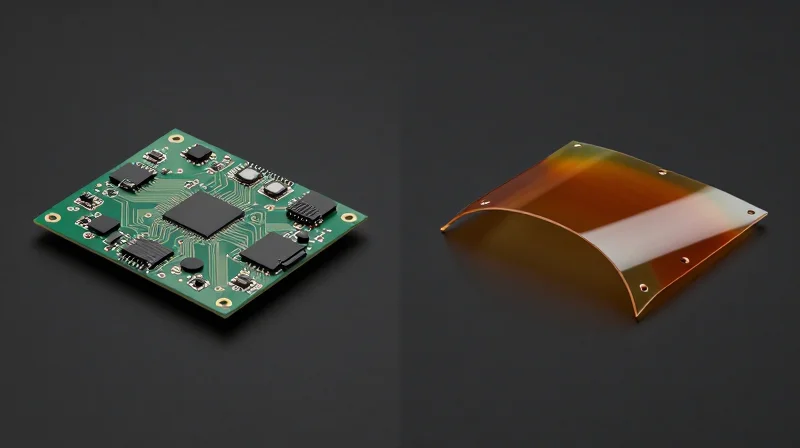
The Mechanical Dilemma: Rigid-Flex vs. Rigid
As smart grid enclosures shrink to accommodate urban aesthetics and utility pole mounting, the PCB is increasingly required to serve as a structural element. Rigid-flex substrates allow engineers to eliminate bulky cabling and connectors, effectively folding circuitry into complex 3D volumes. However, this flexibility introduces trade-offs in material stability and heat dissipation that can challenge high-performance IoT modules.
| Feature | Rigid PCB | Flexible/Rigid-Flex PCB |
|---|---|---|
| Space Efficiency | Low (limited to 2D) | High (3D form factors) |
| Thermal Management | Excellent (high mass) | Moderate (thinner dielectrics) |
| Reliability under vibration | High | Extreme (inherent dampening) |
| Manufacturing Cost | Low | High |
Technical Considerations for High-Frequency Smart Metering
When choosing a substrate, designers must evaluate the signal attenuation profiles of flexible base materials like Polyimide compared to traditional FR-4. While Polyimide offers superior thermal resistance and bending fatigue life, its dielectric constant stability at the high frequencies required for 5G-enabled smart grids is critical. Using hybrid designs—where rigid sections hold high-speed processors and flexible sections bridge data paths—is becoming the industry standard.
Frequently Asked Questions
- Does flexible PCB technology impede processor performance?
No, but it does demand more sophisticated signal integrity analysis. The variation in dielectric thickness in flexible circuits requires precision impedance matching to prevent signal reflections. - Why is rigid-flex preferred for smart meters despite higher costs?
The reduction in assembly time and the elimination of vulnerable solder-joint connectors often offsets the initial material cost, while providing greater durability in outdoor environments subject to thermal cycling. - How does substrate choice affect thermal performance?
Rigid substrates provide a larger thermal mass for heat sinking. In compact flexible designs, designers must integrate copper planes or specialized heat-spreading layers to prevent hot spots near the IoT transceiver.
Thermal Management Challenges in Compact IoT Designs
Thermal Dynamics in High-Density IoT Assemblies
As smart meters transition from simple data loggers to edge-computing hubs, the increased power density of integrated processing units creates significant thermal hurdles. Compact enclosures, often designed for aesthetics or narrow pole-mount constraints, limit natural convection. When HDI (High-Density Interconnect) layers are introduced to accommodate multi-radio connectivity (Cellular, RF Mesh, PLC), the heat flux increases dramatically, potentially shortening the lifespan of sensitive passive components and degrading signal integrity.
Comparative Thermal Management Strategies
| Strategy | Effectiveness | Implementation Complexity |
|---|---|---|
| Thermal Vias | High | Moderate |
| Aluminum Core PCBs | Excellent | High |
| Phase Change Materials | Moderate | Low |
| Heat Pipes/Sinks | Maximum | Very High |
Reliability Risks in Harsh Grid Environments
Smart meters are frequently installed in extreme weather conditions, ranging from desert heat to arctic cold. Internal heat generation combined with high ambient temperatures accelerates the oxidation of solder joints and triggers dielectric breakdown in board substrates. Effective thermal management must account for these environmental extremes, ensuring the PCB junction temperature remains within the MTBF (Mean Time Between Failures) safety margin defined for 15-to-20-year deployment lifecycles.
Frequently Asked Questions
- How do thermal vias impact high-speed signal integrity?
While essential for heat dissipation, improper placement of thermal vias can create impedance discontinuities, requiring careful stack-up design to maintain signal quality. - Is active cooling feasible in smart meters?
Active cooling, such as fans, is generally avoided due to mechanical failure rates and maintenance burdens, favoring passive heat spreading techniques instead. - How does PCB thickness influence heat dissipation?
Thicker boards offer more copper cross-section for heat conduction, but increase the overall size, forcing a trade-off between thermal efficiency and the desired form factor.
Integrating AI Hardware Accelerators into Smart Meters
The Evolution of Edge AI in Metering
As smart grids demand lower latency and increased data privacy, the shift from centralized cloud processing to decentralized edge processing is accelerating. By integrating AI accelerators—such as NPUs (Neural Processing Units) or low-power DSPs—directly onto the smart meter PCB, utility providers can perform real-time non-intrusive load monitoring (NILM) and instantaneous fault detection without transmitting raw granular data to the cloud.
Hardware Accelerator Comparison
| Accelerator Type | Primary Benefit | Power Consumption | Typical Use Case |
|---|---|---|---|
| MCU with DSP | Versatility | Very Low | Simple signal filtering |
| NPU (Neural Unit) | Performance | Moderate | Advanced load pattern AI |
| FPGA | Reconfigurability | High | Prototyping & Edge ML |
Technical Considerations for Implementation
Implementing AI hardware requires a careful balance between computational throughput and strict thermal envelopes inherent in compact smart meter enclosures. Engineers must prioritize high-efficiency power management integrated circuits (PMICs) to prevent localized hotspots that could degrade long-term PCB component reliability.
Frequently Asked Questions
- How does AI hardware impact PCB real estate?
Modern AI accelerators are increasingly available in System-in-Package (SiP) formats, minimizing footprint while maintaining high I/O density. - Is cloud connectivity still necessary with AI at the edge?
Yes, cloud connectivity remains vital for aggregating metadata, updating model weights, and long-term diagnostic reporting, even if primary processing is local. - What is the biggest challenge for AI integration in grids?
The primary challenge is maintaining power efficiency to ensure that AI features do not significantly increase the meter's overall power draw, which must remain within strict regulatory limits.
Future-Proofing Infrastructure: Strategic Design Recommendations
Architecting for Long-Term Scalability
Future-proofing smart grid infrastructure requires a shift toward modular design philosophies that decouple sensing hardware from communication modules. By adopting standardized interfaces such as M.2 or specialized mezzanine connectors, engineers can upgrade IoT connectivity protocols—from NB-IoT to future 6G iterations—without redesigning the core metrology circuitry.
Strategic Comparison: Design Approaches for Future-Proofing
| Strategic Pillar | Legacy Approach | Future-Proof Strategy |
|---|---|---|
| Component Lifecycle | Fixed integrated SoC | Modular communication daughter-cards |
| PCB Geometry | Rigid, fixed-form factor | Rigid-flex for adaptable chassis |
| Computing Power | MCU-only architecture | Edge AI accelerator integration |
| Firmware Strategy | Hardcoded binary updates | Containerized OTA microservices |
Essential Design Best Practices
- Adopt High-Tg PCB Materials
Utilize materials with higher Glass Transition temperatures to withstand increased thermal stress caused by high-density components and continuous operational demands. - Standardize Communication Interfaces
Implement universal serial interfaces to ensure that as IoT standards shift, physical connectivity remains compatible with next-generation radio modules. - Prioritize Over-the-Air (OTA) Robustness
Design memory architectures that support dual-bank flash configurations, allowing for safe, redundant remote firmware updates without the risk of 'bricking' critical grid nodes.
Frequently Asked Questions
- How do I balance initial costs with future-proofing needs?
Prioritize investment in high-quality, modular PCB substrates and standard interface connectors; the initial 15-20% cost increase is offset by avoiding wholesale meter replacement during technology transitions. - Is rigid-flex necessary for all smart meters?
No, but it is recommended for compact, high-density enclosures where airflow is restricted, as it allows for better component placement and reduced thermal concentration points.
The transition to a decentralized, AI-empowered grid demands more than just software innovation; it requires a leap in hardware engineering capabilities. By prioritizing HDI and flexible interconnect technologies, manufacturers can build smarter, more reliable utility systems. Ready to optimize your smart grid hardware design? Contact our engineering team today to discuss your next infrastructure project.
