
The logistics sector is at a digital crossroads. As global supply chains face unprecedented pressure, moving beyond legacy manual tracking to intelligent, PCBA-integrated RFID systems is no longer a luxury—it is a competitive necessity. This article explores the technological shift redefining asset visibility.
The Evolution of Supply Chain Tracking

From Static Barcodes to Dynamic RFID Monitoring
Supply chain management has historically relied on labor-intensive barcode scanning, which requires a direct line-of-sight and individualized manual interaction for each asset. As global logistics networks have expanded in complexity, this approach has become a bottleneck for real-time visibility. The evolution toward Radio Frequency Identification (RFID) technology signifies a paradigm shift from periodic, event-based logging to continuous, automated asset tracking, facilitating seamless data flow throughout the entire logistics ecosystem.
Comparative Analysis: Traditional Scanning vs. Modern RFID
| Feature | Barcode Scanning | RFID Tracking |
|---|---|---|
| Visibility | Line-of-sight required | Non-line-of-sight |
| Processing | One-by-one manual scan | Bulk, automated scanning |
| Data Capacity | Static, fixed ID | Read/Write and sensor integration |
| Scalability | Limited by human labor | Highly scalable via infrastructure |
Technological Drivers of Modern Logistics
The proliferation of smart logistics is anchored in the miniaturization and optimization of RFID Reader PCB designs. Modern hardware enables higher sensitivity and edge processing capabilities, allowing readers to filter noise in dense warehouse environments. This advancement ensures that data integrity is maintained even when tagging thousands of items in transit simultaneously.
- Why is PCB miniaturization critical for future RFID development?
Smaller, more efficient PCBs allow for integration into handheld devices, smart shelves, and autonomous mobile robots (AMRs), enabling ubiquitous data collection points. - How does edge processing change supply chain management?
By processing RFID signals locally on the reader hardware, logistics providers reduce latency and bandwidth strain on central cloud servers, facilitating instantaneous decision-making. - What role does interoperability play in current trends?
Emerging standards in RFID ensure that diverse hardware from multiple vendors can share data seamlessly, creating a unified 'digital thread' across different supply chain partners.
Anatomy of a Modern RFID Reader PCBA
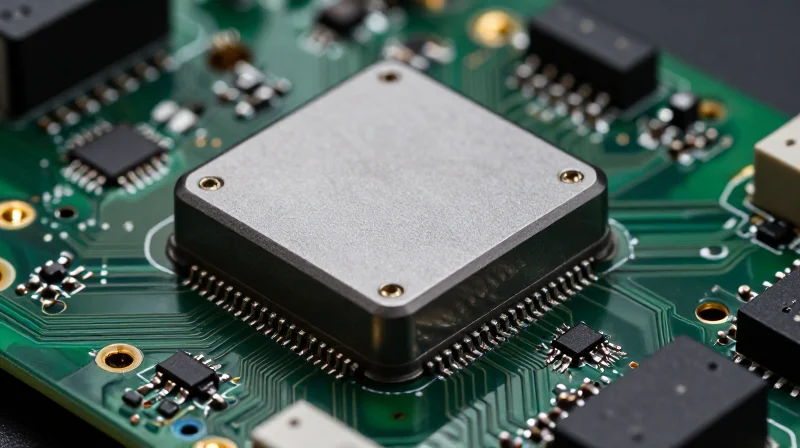
Core Components of High-Performance RFID Architecture
Modern RFID reader PCBAs have evolved into complex mixed-signal systems that balance sensitive radio frequency (RF) front-ends with high-speed digital processing units. The integration of System-on-Chips (SoCs) and specialized radio transceivers allows these boards to manage dense tag environments with minimal latency and high reading accuracy.
- RF Front-End
Comprises power amplifiers, filters, and circulators that manage signal transmission and reception, crucial for maintaining signal-to-noise ratios in noisy industrial environments. - Baseband Processor
The intelligence layer responsible for demodulating raw RF signals, performing protocol decoding, and managing communication with host systems. - Antenna Interface
Precision-engineered impedance matching networks that ensure maximum power transfer from the reader to the antenna array.
Design Considerations for Reliability
Achieving reliable read ranges requires stringent PCB layout practices, particularly regarding electromagnetic interference (EMI) management and thermal dissipation. Modern designs often utilize multi-layer stackups with dedicated ground planes to isolate sensitive analog paths from noisy digital clock signals.
| Feature | Legacy Design | Modern PCBA |
|---|---|---|
| Integration | Discrete components | Highly integrated SoC |
| Signal Processing | External FPGA | On-chip DSP/ARM Core |
| Thermal Management | Heatsinks (Passive) | Thermal vias/PCB heat-spreading |
| Footprint | Large/Bulky | Ultra-compact (SMD) |
Frequently Asked Technical Questions
- Why is PCB material selection critical for RFID readers?
High-frequency RF signals are susceptible to dielectric loss in standard FR4 materials; therefore, engineers often select specialized laminates like Rogers or Teflon-based substrates to ensure signal integrity at UHF frequencies. - How does multi-layer design impact read performance?
Multi-layer boards allow for optimal routing of trace impedance and effective shielding of RF paths, which directly reduces cross-talk and improves the reader's sensitivity to weak backscatter signals.
Legacy vs. Next-Gen: Why Hardware Architecture Matters
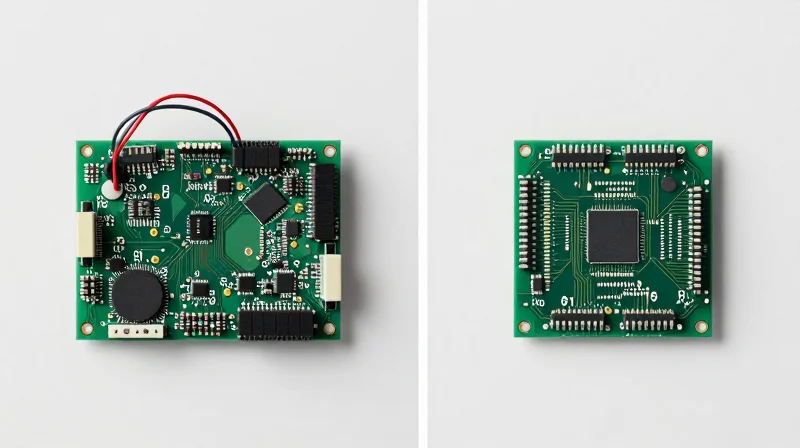
The Architectural Divide: Legacy vs. Next-Gen PCBA
Legacy RFID architectures typically relied on discrete, modular components that introduced significant signal latency and susceptibility to electromagnetic interference. In contrast, next-generation RFID reader PCBA designs utilize System-on-Chip (SoC) integration and advanced multilayer board materials to minimize parasitic capacitance and inductive noise, resulting in significantly higher read accuracy in dense warehouse environments.
| Feature | Legacy Architecture | Next-Gen PCBA |
|---|---|---|
| Integration | Discrete Components | System-on-Chip (SoC) |
| Signal Noise | High susceptibility | Low, filtered design |
| Data Throughput | Limited processing | High-speed digital signal processing |
| Form Factor | Bulky, modular | Compact, high-density |
Technical Drivers of Superior Throughput
The shift toward next-gen hardware is primarily driven by the need for real-time inventory visibility. Modern PCBs incorporate specialized RF front-ends that feature improved impedance matching and sophisticated harmonic filtering. By moving to six-layer or higher board stacks, engineers can effectively isolate power delivery networks from sensitive RF signal paths, enabling faster tag-to-reader communication speeds without the data corruption common in older hardware iterations.
Frequently Asked Questions
- Why is signal-to-noise ratio (SNR) better in new boards?
Next-gen boards use optimized copper trace geometry and integrated ground plane shielding to block external interference and internal crosstalk, providing a much cleaner signal path than legacy boards. - Does hardware architecture impact battery life for mobile readers?
Yes, current PCBA designs utilize low-power-consumption chipsets and high-efficiency voltage regulators that reduce energy waste, extending operational time significantly. - How does integration improve data throughput?
Reducing the distance between the antenna port, the receiver chip, and the processor minimizes signal loss, allowing for higher data transfer rates and faster inventory scanning cycles.
Real-Time Data Integration in the IoT Ecosystem
The Hardware-to-Cloud Bridge
Real-time data integration relies on the seamless transformation of analog radio frequency signals into actionable digital intelligence. Modern RFID reader PCBA designs incorporate high-performance edge processing and low-latency communication protocols, allowing logistics providers to transition from batch reporting to instantaneous, event-driven tracking. By offloading initial data filtering to the edge, these boards reduce the bandwidth burden on enterprise cloud platforms while maintaining the fidelity required for complex supply chain visibility.
Architectural Drivers of IoT Connectivity
| Feature | Legacy RFID Hardware | Next-Gen IoT-Ready PCB |
|---|---|---|
| Data Processing | Passive relay to central server | Edge-based filtering and analytics |
| Connectivity | Serial/Proprietary bus | Industrial Ethernet/MQTT/OPC-UA |
| Latency | High (batch processing) | Ultra-low (event-driven) |
| Integration | Isolated systems | Full cloud-native API compatibility |
Frequently Asked Questions: IoT and RFID Integration
- How does PCB architecture impact real-time data flow?
Modern PCBs use integrated microcontrollers and high-throughput FPGAs to filter noise at the antenna level, ensuring only clean, actionable tag data is transmitted to the IoT platform, preventing network congestion. - Can current RFID readers connect directly to cloud services?
Yes, next-generation RFID readers often include embedded firmware supporting standard IoT messaging protocols like MQTT or AMQP, allowing them to communicate directly with AWS, Azure, or private enterprise clouds. - Why is edge processing critical in smart warehouses?
Edge processing enables instant decision-making for autonomous guided vehicles and automated sorting systems, eliminating the latency inherent in sending raw data to a remote data center.
Critical Performance Metrics for RFID Systems
Selecting the right RFID reader hardware requires more than comparing price points; it necessitates a deep dive into technical performance metrics that dictate the reliability of real-time visibility. Key performance indicators (KPIs) act as the benchmarks for how effectively a PCB-level architecture handles signal integrity, environmental interference, and the rapid processing of high-density tag populations.
Primary Operational KPIs for RFID Hardware
| Metric | Definition | Operational Impact |
|---|---|---|
| Read Rate/Accuracy | Percentage of tags captured in a single pass. | Reduces labor-intensive manual exceptions. |
| Latency | Time elapsed between tag detection and data output. | Critical for high-speed conveyor belt sorting. |
| Anti-Collision Rate | Capability to inventory hundreds of tags simultaneously. | Prevents data bottlenecks in dense pallet loads. |
| Sensitivity (RSSI) | Minimum signal strength required for a successful read. | Determines effective read range and depth of coverage. |
Evaluating Hardware Reliability in Logistics
Modern PCB design shifts the focus from raw power to intelligent signal management. High-performance readers utilize advanced filtering circuits to combat electromagnetic interference (EMI) typical in warehouse environments. When auditing hardware performance, engineers must prioritize the following metrics:
- Signal-to-Noise Ratio (SNR)
A high SNR ensures that the reader distinguishes between legitimate tag responses and ambient electrical noise, minimizing false reads. - Processing Throughput
The reader's internal CPU must handle data at the edge to prevent transmission delays to the host IoT platform, ensuring real-time decision-making. - Thermal Stability
Operational consistency during prolonged heavy-load cycles prevents performance drift, which is a common failure point in lower-tier PCBA designs.
Frequently Asked Questions on RFID Performance
- Why is latency a critical concern for automated warehouses?
In automated logistics, hardware must trigger mechanical sorting systems within milliseconds; any delay results in shipment misrouting. - How does PCB architecture impact read sensitivity?
Better PCB design minimizes trace signal loss and optimizes impedance matching, allowing for longer read ranges without increasing power output.
Overcoming Implementation Challenges
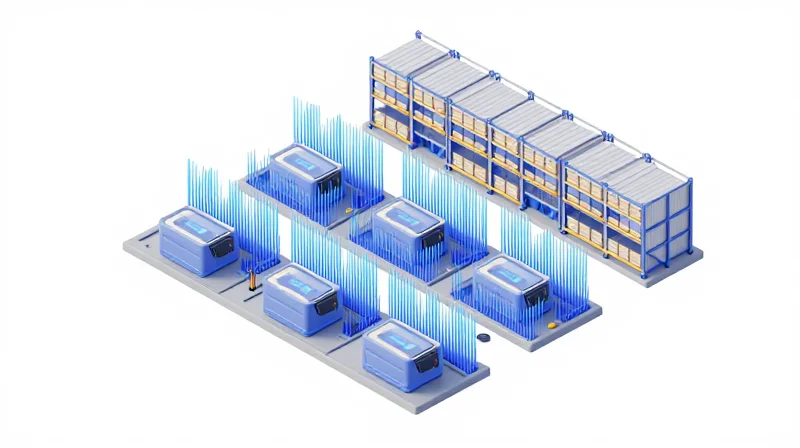
Navigating Environmental Interference
The primary barrier to successful RFID deployment in industrial environments remains electromagnetic interference (EMI) and signal reflection caused by metallic surfaces or high-density liquid storage. Modern PCBA designs mitigate these risks through advanced shielding techniques and adaptive filtering software that dynamically adjusts to environmental noise, ensuring read reliability in complex warehouse topographies.
Strategic Mitigation Strategies
| Challenge | Technical Mitigation | Strategic Impact |
|---|---|---|
| Multipath Interference | Circularly Polarized Antennas | Higher read accuracy near metals |
| Signal Saturation | Advanced Digital Filtering | Reduced false-positive reads |
| Power Instability | Regulated PoE Infrastructure | Improved hardware longevity |
Common Implementation Hurdles: FAQ
- How do we ensure interoperability between legacy WMS and new RFID hardware?
Utilizing standardized API-first middleware layers allows modern RFID readers to translate raw tag data into formats compatible with legacy Warehouse Management Systems without extensive custom coding. - Does higher antenna gain always equate to better performance?
Not necessarily; while higher gain increases read range, it also creates a narrower beam that can increase the risk of missing tags outside the focus area. Matching gain profiles to your specific rack or portal layout is critical. - What is the most effective way to scale an RFID footprint?
Adopting modular PCBA-based readers that support edge-computing capabilities reduces the load on central servers, allowing for a decentralized, plug-and-play expansion strategy.
Ultimately, the transition from pilot project to full-scale logistics automation hinges on the integration of robust, adaptive hardware that can function autonomously. By prioritizing intelligent PCBA design and scalable software architectures, enterprises can bypass traditional bottlenecks and unlock the full potential of smart logistics.
The ROI of Advanced Tracking Technology
Quantifying the Financial Impact of RFID Upgrades
The transition to high-performance RFID reader PCBs transforms logistics from a cost-center driven by reactive manual processes to a proactive, data-driven operation. By reducing human error, accelerating inventory cycle counts, and minimizing stockouts, organizations typically see a return on investment within 12 to 18 months of full-scale deployment.
| Performance Metric | Legacy Systems | Advanced PCB Infrastructure |
|---|---|---|
| Inventory Accuracy | 65% - 75% | 99.2%+ |
| Cycle Count Time | Days/Weeks | Hours/Minutes |
| Labor Costs | High (Manual Scanning) | Low (Automated Capture) |
| Shrinkage/Loss | Significant | Minimal |
Operational Efficiencies and Long-Term Value
Advanced PCBs do not just improve read rates; they extend the lifecycle of the infrastructure through superior heat dissipation and noise filtering, ensuring hardware reliability in harsh industrial environments. This reduction in maintenance frequency and hardware replacement cycles further amplifies the total economic value of the technology stack.
Frequently Asked Questions
- How does PCB quality impact overall system ROI?
High-quality PCBs reduce signal noise and electromagnetic interference, leading to fewer missed tags and preventing costly re-scanning operations or phantom inventory reads. - Is the high initial cost of advanced readers justified?
Yes, when considering the 'Total Cost of Ownership,' advanced readers reduce the need for redundant hardware and significantly decrease labor hours spent on manual reconciliation. - Can RFID infrastructure scale to support future IoT needs?
Modern high-performance boards are designed with modularity in mind, allowing businesses to integrate edge computing and real-time cloud analytics without needing a full system overhaul.
Future Trends: Edge Computing and RFID Synergy

The Edge-RFID Paradigm Shift
Traditionally, RFID systems relied on central cloud servers to process massive data streams, leading to inevitable bottlenecks and latency. By integrating edge computing directly into RFID reader PCBs, warehouses can now perform data filtering, aggregation, and initial decision-making at the device level. This architectural evolution ensures that actionable insights are generated in milliseconds, rather than seconds, providing a critical advantage in high-velocity logistics environments.
Comparative Analysis: Traditional vs. Edge-Enabled RFID
| Feature | Traditional RFID Systems | Edge-Enabled RFID Systems |
|---|---|---|
| Data Processing | Centralized Cloud | Local/On-Device |
| Latency | Moderate to High | Ultra-Low (Real-time) |
| Bandwidth Usage | High | Minimized |
| Decision Speed | Delayed | Immediate |
Key Advantages for Warehouse Automation
- Reduced Network Congestion
By processing raw RFID scan data locally, only relevant, refined events are transmitted to the backend, drastically reducing the load on enterprise networks. - Enhanced Reliability
Edge-computing capabilities allow RFID readers to continue operating and executing local logic during intermittent cloud connectivity or network outages. - Improved Security
Processing data at the edge minimizes the amount of raw data traveling across public networks, reducing the surface area for potential security breaches.
Future Outlook
As AI models become more efficient, we expect to see 'TinyML' (Micro Machine Learning) deployed directly onto RFID controller boards. This will enable smart readers to distinguish between routine inventory movements and anomalies—such as unauthorized access or misplaced assets—without needing instruction from a centralized system. The synergy between high-performance hardware and edge intelligence represents the next definitive frontier in the evolution of smart logistics.
Transitioning to modern RFID reader hardware is the key to unlocking true operational transparency and efficiency. By embracing PCBA-level innovation, logistics providers can future-proof their operations against increasing market demands. Contact our engineering team today to audit your current infrastructure and discover how we can elevate your logistics precision.
