
In the fast-evolving landscape of Industry 4.0, the humble load cell is undergoing a radical transformation. As industrial operations demand higher precision, faster data transmission, and proactive maintenance, the limitations of traditional analog systems are becoming a bottleneck. This article examines why the transition to smart, digital PCBA architectures is no longer just an upgrade—it is a competitive necessity for the modern factory floor.
The Evolution: From Analog mV Signals to Digital Data Streams

The Limitations of Legacy Analog Load Cells
For decades, the standard for weight measurement has been the strain-gauge-based analog load cell. These sensors output a low-level signal—typically measured in millivolts (mV) per volt of excitation—which is inherently susceptible to electromagnetic interference (EMI), radio frequency interference (RFI), and thermal drift. Because the analog signal is incredibly weak, it requires specialized cabling and precision amplifiers located close to the sensor, making traditional systems vulnerable to signal degradation over long cable runs.
Digital Transformation: Converting Data at the Source
Modern smart weighing systems address these vulnerabilities by integrating high-precision Analog-to-Digital Converters (ADCs) directly onto the load cell PCBA. By digitizing the weight data at the source—the load cell itself—the system converts fragile mV fluctuations into robust digital signals (such as RS-485, CANbus, or Ethernet/IP). This architecture effectively eliminates the 'long-wire' noise problems inherent in legacy designs, ensuring data integrity remains pristine from the moment of measurement to the controller.
| Feature | Analog Load Cell (mV) | Digital Load Cell (Bus) |
|---|---|---|
| Signal Robustness | Low (Susceptible to Noise) | High (Noise-Immune) |
| Distance Limitations | Short (Requires shielding) | Long (Digital transmission) |
| Diagnostics | None (Signal only) | Advanced (Self-monitoring) |
| Calibration | Manual / External | Electronic / Intelligent |
Key Considerations for the Transition
- Why is signal integrity improved in digital systems?
Digital systems convert the mV signal into a formatted data packet locally, which utilizes robust differential signaling or protocols that include error-checking, effectively ignoring the ambient electrical noise that would corrupt an analog signal. - Do digital load cells require higher power?
Yes, they require power to drive the onboard PCBA and ADC, whereas traditional load cells are passive. However, the trade-off is superior performance and simplified field maintenance. - Can I replace analog cells with digital ones easily?
Generally no; switching requires updating the interface hardware or controller, as digital systems communicate via specific fieldbus protocols that standard analog indicators cannot process.
Why Analog Load Cells Struggle in Industry 4.0
The Vulnerability of Millivolt Signal Transmission
The primary weakness of analog load cells lies in their reliance on low-level millivolt (mV/V) signals. Because these signals are extremely weak, they are highly susceptible to electromagnetic interference (EMI) and radio frequency interference (RFI) prevalent in industrial facilities. Any electrical noise generated by nearby motors, heavy machinery, or power lines is superimposed onto the weight signal, leading to inaccurate readings and potential safety hazards. Unlike digital systems that use encrypted or robust protocols, raw analog signals lack the inherent noise rejection required for the high-precision environments demanded by modern smart manufacturing.
Operational Constraints in Modern Scaling
| Constraint | Analog Impact | Digital Solution |
|---|---|---|
| Cable Length | Voltage drop/signal degradation | Data integrity over long distances |
| Calibration | Manual and time-consuming | Remote, automated self-calibration |
| Diagnostics | Hidden fault states | Predictive maintenance alerts |
Key Challenges in Industry 4.0 Integration
- Why do analog load cells struggle with cable length?
Analog signals suffer from resistive voltage drops over long cables, which cannot be easily compensated for without complex instrumentation, whereas digital signals maintain integrity via protocol-based communication. - What is the impact of calibration drift on analog systems?
Analog components are sensitive to environmental temperature fluctuations and component aging, leading to constant measurement drift that necessitates frequent, labor-intensive manual recalibrations. - How does lack of diagnostic data hinder Industry 4.0?
Analog load cells are 'dumb' devices that provide no metadata regarding health, such as over-limit events or sensor fatigue, making them incompatible with the predictive maintenance strategies essential for high-uptime smart factories.
The Architecture of a Modern Smart Load Cell PCBA
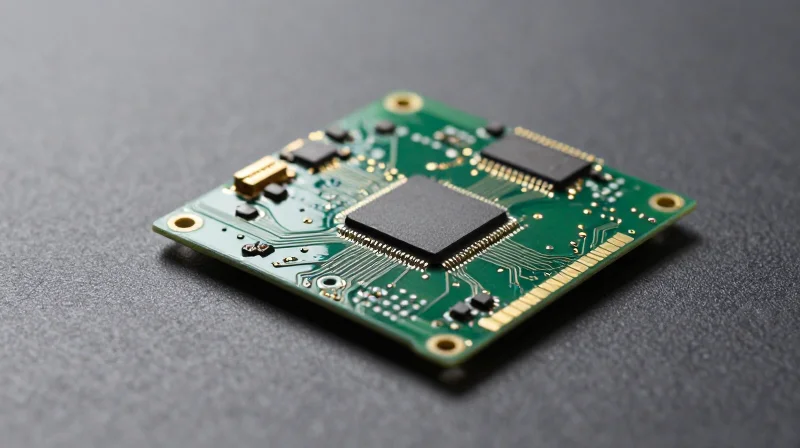
The architecture of a smart load cell PCBA moves beyond simple amplification, representing a sophisticated embedded system designed to maintain signal integrity from the strain gauge bridge to the factory network. By collocating sensing and processing, these PCBAs eliminate the degradation inherent in long-run analog cabling.
Core Architectural Components
At the heart of the smart load cell lies a modular design pattern that optimizes power consumption, signal resolution, and data throughput. The primary stages consist of signal excitation, high-resolution conversion, and intelligent signal processing.
| Component Module | Function | Key Specification |
|---|---|---|
| Precision ADC | Delta-Sigma conversion of mV signals | 24-bit resolution |
| Microcontroller (MCU) | Data processing and filtering | ARM Cortex-M series |
| Wireless/Bus Interface | Communication protocols | IO-Link, RS-485, BLE, or WiFi |
| Excitation Circuit | Voltage regulation for strain gauges | Low-drift reference |
Signal Processing and Filtering Strategy
Digital load cells employ advanced DSP (Digital Signal Processing) techniques directly on the PCBA. By performing moving average, FIR (Finite Impulse Response), and IIR (Infinite Impulse Response) filtering locally, the device provides a stable reading even in high-vibration environments, offloading the central PLC from performing computationally expensive noise cancellation.
Technical FAQs
- How is EMI mitigated on the board?
Engineers utilize multi-layer PCB stack-ups with dedicated ground planes, shielding for high-impedance sensitive traces, and integrated ferrite beads to suppress electromagnetic interference before it reaches the ADC. - What role does the MCU play in calibration?
The MCU stores non-volatile calibration parameters (gain, offset, and non-linearity coefficients) directly on-chip, enabling a 'plug-and-play' capability where the load cell maintains accuracy without requiring system-level recalibration during replacement. - Why are 24-bit ADCs the standard?
24-bit resolution provides the dynamic range necessary to capture minute weight changes (micro-strains) while simultaneously handling the high-scale capacity, ensuring no loss of measurement precision.
Enhanced Precision through Digital Signal Processing

Digital Signal Processing (DSP) transforms the smart load cell from a simple transducer into a self-correcting measurement instrument. By moving the Analog-to-Digital Conversion (ADC) as close to the strain gauge as possible—ideally on the same PCBA—the system effectively eliminates the long-distance transmission of fragile, low-voltage signals that are highly susceptible to Electromagnetic Interference (EMI) and RFI.
Real-Time Noise Mitigation and Filtering
Modern load cell PCBAs utilize sophisticated onboard firmware to perform real-time signal conditioning. By implementing hardware-level low-pass and notch filters, digital systems can isolate the gravitational weight signal from high-frequency mechanical vibrations or motor-induced electrical noise before the data ever leaves the sensor housing.
Thermal Compensation and Stability
One of the greatest advantages of digital integration is active thermal compensation. Smart PCBAs contain localized temperature sensors that allow the microcontroller to apply mathematical correction algorithms dynamically as ambient conditions change. This offsets the drift inherent in metallic strain gauges, ensuring accuracy across a wide operational temperature range.
| Feature | Analog Load Cell | Digital Smart PCBA |
|---|---|---|
| Signal Integrity | Low (High EMI risk) | High (Digital noise immunity) |
| Temp. Drift | Passive/Mechanical | Active/Software-corrected |
| Calibration | Manual/Potentiometer | Stored/Digital Profiles |
| Noise Filtering | External only | On-board DSP algorithms |
Frequently Asked Questions
- How does DSP affect system latency?
Modern microcontrollers perform these calculations in microseconds, ensuring that even with advanced filtering, the output remains fast enough for dynamic high-speed checkweighing applications. - Does digital processing replace mechanical gauge quality?
No, DSP compensates for systemic environmental drift, but a high-quality strain gauge remains the critical foundation for raw measurement sensitivity. - Can digital filtering be adjusted post-installation?
Yes, unlike fixed analog hardware filters, digital parameters can be reconfigured remotely via software to suit changing industrial environments.
Enabling Predictive Maintenance via IoT Integration
From Reactive Repair to Proactive Maintenance
Digital load cell PCBA technologies transform maintenance from a reactive, manual task into a proactive, data-driven strategy. By integrating edge computing and continuous diagnostic monitoring, these systems can identify mechanical fatigue, drift, or sensor degradation before they impact production output.
Core Diagnostic Indicators
| Diagnostic Metric | Predictive Significance | Failure Risk |
|---|---|---|
| Zero Drift | Permanent mechanical strain or moisture ingress | Accuracy loss/Calibration failure |
| Impedance Variance | Short circuits or physical sensor damage | System shutdown |
| Temperature Gradient | Thermal compensation logic drift | Measurement instability |
| Excitation Voltage | Cable integrity or power supply degradation | Intermittent connectivity |
IoT Integration and Real-Time Alerts
The integration of IoT communication modules within the PCBA architecture allows diagnostic data to be transmitted to centralized management platforms via protocols like MQTT or OPC UA. When the on-board processor detects values exceeding pre-set thresholds—such as unexpected structural shifts or voltage anomalies—the system triggers an automated alert, allowing maintenance teams to schedule interventions during planned shutdowns.
Frequently Asked Questions
- How does digital PCBA integration reduce maintenance costs?
By shifting from scheduled preventive maintenance (often replacing functional hardware prematurely) to condition-based maintenance, companies only service units when specific failure signatures are detected. - Can digital diagnostics detect environmental impact on load cells?
Yes, integrated sensors can monitor environmental variables like ambient humidity and temperature, alerting operators when conditions threaten the longevity of the load cell's hermetic seal or electrical connections. - Is real-time diagnostic data processing computationally heavy?
Modern smart PCBA architectures utilize dedicated low-power microcontrollers optimized for DSP tasks, ensuring that diagnostics run in the background without introducing latency to the weight measurement process.
Remote Monitoring and Cloud-Connected Scale Systems

The Shift to Cloud-Integrated Weighing
Unlike traditional analog load cells that require physical inspection and local display units, digital load cell systems act as intelligent IoT endpoints. By integrating wireless communication modules directly into the PCBA, these systems transmit weight data, calibration status, and diagnostic health telemetry to centralized cloud platforms. This architectural shift allows facility managers to monitor an entire fleet of scales from a single dashboard, regardless of geographical location, effectively turning static weighing equipment into active data assets.
Comparing Site-Based and Cloud-Connected Architectures
| Feature | Analog-Local Systems | Cloud-Connected Digital Systems |
|---|---|---|
| Data Access | On-site display only | Global real-time access |
| Fleet Management | Manual individual tracking | Centralized automated oversight |
| Diagnostics | Reactive site visits | Proactive remote alerting |
| Integration | Hardwired PLC only | API-ready cloud ecosystems |
Key Benefits of Cloud Connectivity
- How does cloud connectivity facilitate predictive maintenance?
Digital PCBAs continuously monitor excitation voltage, signal noise, and creep rates. When thresholds are breached, the system automatically triggers an alert to the cloud, allowing maintenance teams to address calibration drift before a total failure occurs. - Is data security a concern for cloud-connected scales?
Modern digital load cell architectures employ end-to-end encryption and secure handshake protocols between the sensor node and the cloud gateway, ensuring integrity and confidentiality of sensitive operational data. - What is the primary advantage for multi-site operations?
Standardized data formatting across all connected load cells allows for uniform reporting, simplified compliance auditing, and optimized inventory throughput across diverse geographical locations.
The integration of cloud-connected digital load cells transforms the weighing process from a mere measurement task into a data-driven strategy. By leveraging the continuous stream of metadata generated by advanced PCBAs, enterprises can optimize their logistics, minimize unexpected downtime, and maintain rigorous accuracy standards with minimal manual intervention.
Economic and Operational Benefits of the Digital Transition
Economic Impact and Long-Term Value
While analog systems often feature a lower initial purchase price for the load cell itself, the total cost of ownership (TCO) shifts decisively in favor of digital architectures over time. Digital PCBA integration minimizes the need for expensive high-precision cabling and complex junction boxes, reducing labor hours during initial installation and scaling. Furthermore, the inherent diagnostic capabilities of digital load cells allow facilities to move from reactive, costly repairs to a proactive, schedule-based maintenance model.
| Feature | Analog Load Cell System | Digital Load Cell System |
|---|---|---|
| Installation Complexity | High (Calibration required) | Low (Plug-and-play) |
| Signal Integrity | Susceptible to EMI/RFI | Robust digital transmission |
| Maintenance Cost | High (Frequent recalibration) | Low (Self-diagnostic) |
| System Downtime | Extended | Minimal |
Operational Efficiency and Scalability
Operational efficiency is the primary driver for industrial digital adoption. Digital PCBA technology enables each sensor to function as an independent node on the network. This decentralization prevents a single sensor failure from compromising the entire platform and provides granular data that can be used to optimize throughput and detect mechanical bottlenecks in real-time.
- How does digital technology reduce installation labor costs?
Digital systems utilize standardized digital buses that eliminate complex analog signal calibration and shielding requirements, allowing for rapid deployment and simple integration with existing plant PLCs. - Why is the TCO lower for digital load cells despite higher component costs?
The TCO is lower because digital cells offer extended lifecycles, reduced service visits through remote diagnostics, and significantly lower downtime costs compared to their analog counterparts. - Can existing analog infrastructure be retrofitted?
Yes, many modern digital PCBA conversion kits allow businesses to upgrade their legacy analog load cells to digital, providing the economic benefits of smart weighing without a total equipment overhaul.
Overcoming Integration Challenges for Legacy Facilities
Overcoming Integration Challenges for Legacy Facilities
Upgrading legacy weighing systems requires a strategic approach that balances digital transformation with the reality of existing physical infrastructure. The primary challenge lies in bridging the gap between aging hardware and high-precision digital PCBAs without requiring a complete overhaul of the mechanical scale structure.
Key Integration Strategies
- Hybrid Retrofitting
Utilizing digital signal converters to bridge analog load cells with modern digital controllers, allowing for partial modernization without replacing the entire load cell array. - Interoperability Protocols
Adopting standard industrial communication protocols like Modbus TCP or EtherNet/IP to ensure legacy control panels can communicate with new digital smart sensors. - Infrastructure Audits
Performing a thorough electromagnetic compatibility (EMC) survey before installation, as digital systems are often more sensitive to the electrical noise inherent in older factory environments.
Comparison of Migration Paths
| Migration Method | Technical Effort | Cost Impact | Data Precision |
|---|---|---|---|
| Full Replacement | High | High | Maximum |
| Smart Converter Integration | Moderate | Moderate | High |
| Parallel Digital Sensing | Low | Low | Moderate |
Addressing Common Technical Friction Points
Legacy facilities often suffer from cable degradation and ground loops that cripple digital signal integrity. During the transition, facilities should prioritize replacing legacy shielding and implementing dedicated power conditioning for the new digital PCBA modules. This ensures the high-speed data transmission required for modern smart weighing doesn't introduce noise-related latency into the production line.
The transition to digital load cell technology is clearly the key to unlocking the full potential of your industrial weighing operations. By embracing intelligent PCBA design, you move beyond mere measurement into a future of proactive management and real-time connectivity. Ready to future-proof your weighing systems? Contact our engineering team today to discuss how our smart PCBA solutions can transform your infrastructure.
