
The surveillance landscape is undergoing a tectonic shift. As data demands skyrocket, traditional camera hardware is struggling to keep pace, making way for the rise of AI-integrated PCBAs. This article explores how edge computing is turning static cameras into intelligent security assets.
The Architectural Shift in Surveillance Hardware
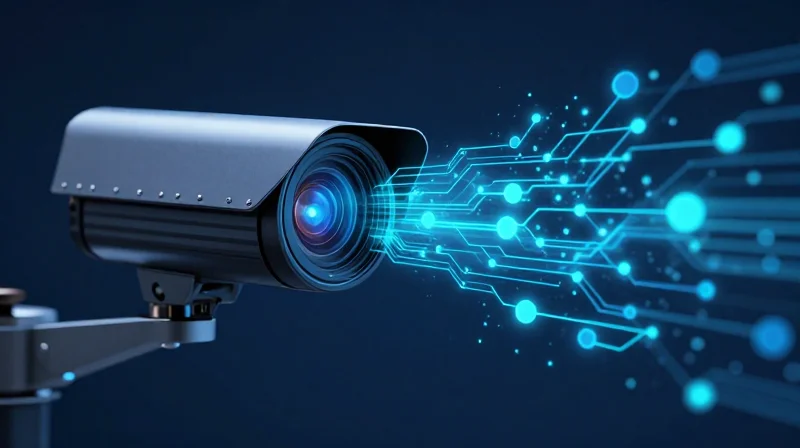
The Architectural Shift in Surveillance Hardware
Surveillance hardware is undergoing a fundamental transformation, moving away from simple image capture and transmission towards localized, high-compute environments. In legacy systems, the PCBA (Printed Circuit Board Assembly) acted primarily as a conduit, digitizing optical data for remote processing. Today's AI-integrated mainboards function as standalone computing nodes, embedding specialized hardware accelerators directly into the camera chassis to process complex visual data in real-time at the edge.
Moving from Centralized to Edge Intelligence
The paradigm shift is defined by the migration of logic from the Network Video Recorder (NVR) to the device itself. By offloading video analytics—such as object detection, behavioral classification, and facial recognition—to the edge, systems drastically reduce network latency and bandwidth dependency. This transition necessitates an evolution in PCB design, moving from basic SoC (System on Chip) integration toward architectures supporting dedicated Neural Processing Units (NPUs) and expanded volatile memory to handle deep learning inference.
| Feature | Conventional PCBA | AI-Integrated Mainboard |
|---|---|---|
| Primary Role | Data Capture/Streaming | Real-time Inference/Analysis |
| Processing Location | Remote Server or NVR | On-device (Edge) |
| Compute Architecture | General Purpose CPU | CPU + NPU/GPU Accelerator |
| Bandwidth Usage | High (Constant Upload) | Optimized (Metadata Only) |
Key Questions on Hardware Evolution
- Why is local AI processing more efficient than cloud processing?
Local processing eliminates the latency of transmission and drastically reduces total cost of ownership by minimizing the bandwidth required for streaming massive amounts of raw video to a central server. - What are the primary power requirements for AI mainboards?
AI-integrated boards require robust power management systems capable of handling the thermal output and energy spikes associated with constant NPU utilization, necessitating more advanced cooling solutions than legacy boards. - Does this shift make legacy hardware obsolete?
Legacy hardware remains viable for archival purposes, but for high-security applications, it lacks the agility to respond to security threats in milliseconds, rendering it increasingly inadequate compared to edge-AI counterparts.
Anatomy of a Conventional Security Camera PCBA
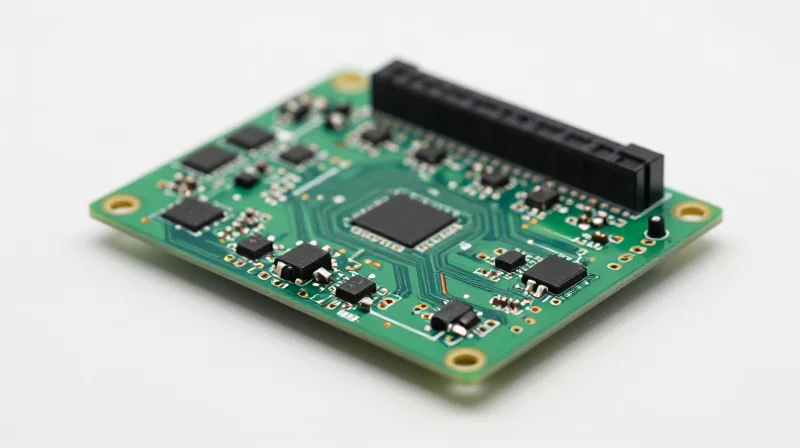
Core Architecture of Legacy PCBA Designs
Conventional security camera PCBAs are built around a modular philosophy that prioritizes simple image acquisition and transmission over localized computational tasks. Unlike modern AI-driven counterparts, these boards function primarily as 'dumb' conduits, capturing raw optical data and streaming it to a remote Network Video Recorder (NVR) or Digital Video Recorder (DVR) for processing. The architecture is dominated by a dedicated image sensor coupled with a basic ISP (Image Signal Processor) and a low-power system-on-chip (SoC) designed specifically for video encoding, such as H.264 or H.265 compression, rather than complex logic.
Critical Hardware Components
| Component | Function in Conventional PCBA |
|---|---|
| Image Sensor | Converts light into raw analog signals for digitization. |
| Encoding SoC | Handles basic video compression and protocol streaming. |
| DRAM/Flash Memory | Limited capacity used solely for firmware storage and buffering. |
| Power/I/O Modules | Basic support for PoE or analog power and simple alarm triggers. |
Functional Limitations of Conventional Systems
The primary drawback of this legacy architecture is its dependence on high-bandwidth throughput and centralized storage. Because the PCBA lacks a dedicated Neural Processing Unit (NPU) or sufficient RAM for localized deep learning models, it cannot perform real-time video analytics—such as object classification or behavior detection—at the edge. This forces the entire video stream to remain unanalyzed until it reaches the NVR, which creates significant network bottlenecks and increases the operational cost of managing storage systems.
- Why are conventional PCBAs restricted to streaming?
The architecture lacks the hardware acceleration required to run inference engines, meaning the onboard SoC is fully occupied by encoding and network transmission tasks. - Does legacy design influence power efficiency?
Yes; by avoiding complex AI processing, these boards consume significantly less power but also provide limited functionality in automated environments. - What is the biggest operational risk with this design?
Single point of failure; if the NVR or the network connection fails, the entire surveillance capability is rendered useless since the camera possesses no autonomous intelligence.
The Rise of AI-Integrated Mainboards
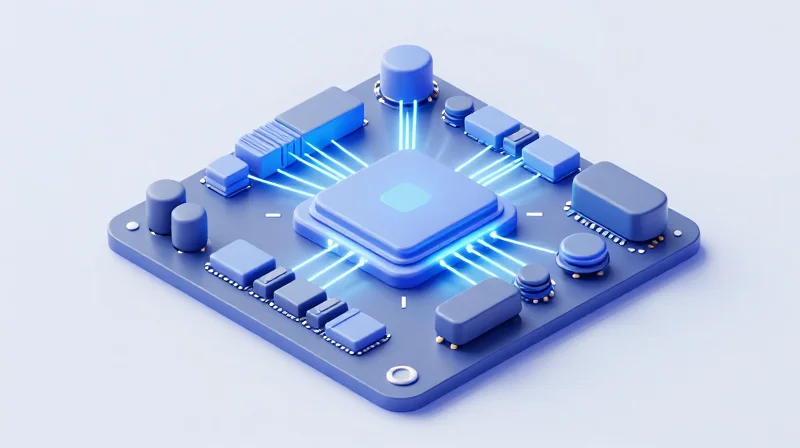
The Shift to Edge-Native Architecture
Modern surveillance mainboards are evolving from simple signal capture devices into sophisticated computing platforms. By incorporating advanced Neural Processing Units (NPUs) and high-performance System-on-Chips (SoCs) directly onto the PCBA, manufacturers are enabling complex deep learning models to execute locally at the source. This architectural shift significantly minimizes latency and reduces the dependency on high-bandwidth network transmissions to centralized servers or cloud environments.
Comparative Hardware Capabilities
| Feature | Conventional PCBA | AI-Integrated Mainboard |
|---|---|---|
| Processing Focus | Image encoding/transmission | Real-time object inference |
| Core Components | ISP + Basic ARM Controller | SoC + Dedicated NPU (TOPS) |
| Data Handling | Transmits raw stream to NVR | Metadata extraction at source |
| Bandwidth Usage | High (Constant bitrates) | Low (Event-triggered alerts) |
Key Advantages of Onboard AI Integration
- Reduced Latency
Processing data directly on the mainboard eliminates the round-trip time required to send video feeds to an external server for analysis. - Enhanced Privacy
By performing facial blurring or license plate masking locally, sensitive data never leaves the camera, aiding in GDPR and regional compliance. - Scalable Deployment
Distributed intelligence means the surveillance network does not suffer performance degradation as more cameras are added, as each unit carries its own compute budget.
As NPU silicon becomes more efficient, we are witnessing a move toward 'always-on' intelligent monitoring, where the camera serves as an active sensor node rather than a passive broadcast device. The hardware focus has transitioned from simply supporting higher resolutions to maximizing the 'TOPS' (Trillions of Operations Per Second) density, ensuring that even compact mainboards can handle multiple concurrent neural networks for classification, tracking, and behavior analysis.
Key Performance Metrics: Latency, Bandwidth, and Accuracy
The integration of AI-enabled System-on-Chips (SoCs) directly onto security camera motherboards marks a fundamental change in how performance metrics are measured. By offloading computational tasks to the edge, surveillance systems achieve real-time detection accuracy while drastically reducing the bandwidth consumption associated with cloud or NVR-dependent architectures.
Performance Metric Comparison: Legacy vs. AI-Integrated
| Metric | Conventional PCBA (Centralized) | AI-Integrated PCBA (Edge) |
|---|---|---|
| Latency | High (Network-dependent) | Ultra-Low (Local processing) |
| Bandwidth Usage | Continuous (High constant stream) | Event-Based (Low metadata streams) |
| Detection Accuracy | Limited (Post-processing latency) | High (Real-time edge analytics) |
Key Performance Drivers
- Why does edge-based AI reduce latency?
By processing video streams locally on the camera's NPU, the system eliminates the time-consuming round trip to a remote server, enabling near-instantaneous response times for threat detection. - How is bandwidth efficiency achieved?
Instead of streaming raw 4K video to a central recorder 24/7, AI-integrated mainboards stream only relevant object metadata or triggered events, reducing network load by up to 90%. - Does edge processing impact detection accuracy?
Edge AI allows for deeper algorithmic analysis without compression artifacts often found in network-transmitted footage, ensuring consistent detection accuracy regardless of network fluctuations.
Thermal Management and Power Consumption Challenges
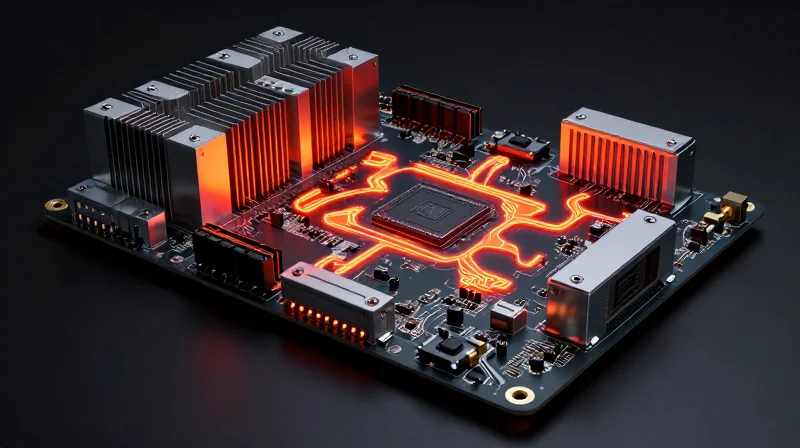
Thermal Management and Power Consumption Challenges
As security cameras transition from simple image capture devices to sophisticated edge-computing hubs, the thermal footprint of the mainboard has expanded significantly. Integrating high-performance SoCs (System-on-Chips) and NPUs (Neural Processing Units) into compact, weather-resistant enclosures creates a thermal bottleneck, as these components generate intense heat without the luxury of active cooling fans or large passive heat sinks found in traditional servers.
Impact on Design and Reliability
Excessive heat not only threatens the longevity of electronic components but also negatively impacts image sensor performance, potentially introducing thermal noise that diminishes AI inference accuracy. Engineers must balance the demand for high-compute performance against strict thermal thresholds while maintaining an IP67-rated sealed enclosure that restricts airflow.
| Parameter | Conventional PCBA | AI-Integrated Mainboard |
|---|---|---|
| Power Consumption | Low (2W - 5W) | High (10W - 25W+) |
| Heat Dissipation | Natural Convection | Thermal Bridge/Conductive Cooling |
| Enclosure Requirements | Standard Plastic/Metal | High-Efficiency Heat Spreading Chassis |
| Component Stress | Low | High (Thermal Cycling Risks) |
Frequently Asked Questions
- How do AI cameras prevent overheating without fans?
Modern AI mainboards utilize heat spreaders that interface directly with the camera's external metal housing, effectively turning the enclosure into a large passive radiator. - Why does power efficiency matter for edge AI?
Power efficiency is directly proportional to heat generation; higher efficiency enables higher AI performance within the thermal constraints of a sealed environment. - Does heat degrade AI detection performance?
Yes, thermal instability can cause the ISP (Image Signal Processor) to produce noisy data, which may lead to false negatives or misidentifications by the AI model.
Scalability and Future-Proofing with Intelligent Hardware
Beyond Static Hardware: The Shift to Software-Defined Surveillance
Legacy PCBAs are defined by their silicon constraints; once deployed, their utility is largely fixed to the capabilities inherent at the time of manufacture. In contrast, AI-integrated mainboards leverage high-performance SoCs with dedicated NPUs, allowing manufacturers to deploy algorithmic refinements long after the physical installation. This transition transforms security cameras from depreciating assets into evolving platforms that adapt to emerging security threats.
Comparison: Scalability and Lifecycle Management
| Feature | Conventional PCBA | AI-Integrated Mainboard |
|---|---|---|
| Update Capability | Firmware patches only | OTA algorithm & model updates |
| Feature Evolution | Stagnant until replacement | Adaptive via NPU software cycles |
| System Longevity | 3-5 years | 5-8+ years |
| Scalability | Hardware-dependent upgrades | Software-driven model deployment |
The Economic Advantage of Future-Proofing
Investing in AI-capable hardware fundamentally changes the Total Cost of Ownership (TCO). While the initial capital expenditure is higher due to advanced NPU integration, the reduced need for complete 'rip-and-replace' hardware cycles during routine system upgrades offers significant long-term savings. Organizations can refine their detection models—moving from simple motion detection to sophisticated behavioral analytics—without the labor-intensive costs of re-cabling or remounting hardware.
Frequently Asked Questions
- How does OTA updating protect hardware ROI?
OTA updates allow devices to receive optimized detection models, effectively refreshing the camera's utility and accuracy without requiring the user to purchase new physical hardware. - Are there limits to how far AI-integrated boards can scale?
Scaling is primarily limited by the onboard NPU's TOPS (Tera Operations Per Second) capacity; however, modern SoCs are engineered with headroom to handle increasingly complex neural networks for several years post-deployment. - Does this approach require frequent network downtime?
Modern AI-integrated boards utilize incremental delta updates, which significantly reduce the bandwidth required for OTA firmware deployment, ensuring minimal disruption to active surveillance monitoring.
Industry Use Cases: Beyond Perimeter Security

Expanding Surveillance Horizons
AI-integrated security camera mainboards have evolved from reactive observation tools into proactive business intelligence assets. By processing metadata at the edge, these devices translate visual input into actionable datasets, enabling complex automation that legacy PCBAs cannot support.
| Industry | AI Application | Hardware Requirement |
|---|---|---|
| Retail | Heat-mapping & Queue detection | High-throughput NPU |
| Traffic | Vehicle counting & Anomaly alerts | Real-time metadata processing |
| Industrial | PPE compliance & Hazard zone monitoring | Low-latency inference |
Frequently Asked Questions
- How does edge AI improve retail operations?
AI cameras analyze customer movement patterns without compromising privacy, allowing retailers to optimize store layouts and adjust staffing levels based on real-time foot traffic data. - Can these boards assist in workplace safety?
Yes, by integrating computer vision models, hardware can identify if workers are wearing required PPE or detect if personnel have entered restricted hazard zones, triggering instant automated shutdowns. - What makes AI mainboards superior for traffic management?
Conventional systems require offloading video to a server. AI-integrated mainboards perform classification locally, providing immediate traffic flow statistics even if the central network experiences downtime.
Strategic Considerations for Selecting Hardware Vendors
Evaluating Hardware Vendor Capabilities
Procurement teams must shift from traditional component-based purchasing to a partnership model that prioritizes silicon-level integration and software maturity. When evaluating potential vendors for AI-integrated mainboards, the focus must extend beyond mere physical durability to the vendor's competency in thermal management and high-speed signal integrity, which are critical for the stable operation of AI inference chips.
| Evaluation Criterion | Key Metric | Impact on Performance |
|---|---|---|
| PCB Fabrication | Layer Density & Signal Integrity | High-speed AI throughput |
| Chipset Longevity | NPU & SoC Roadmap | System updateability |
| Firmware Support | OTA Deployment Frequency | Cybersecurity & feature parity |
Critical Selection Factors for AI-Ready PCBAs
- How does vendor silicon strategy affect my ROI?
Vendors committed to open-architecture SoCs (System on Chips) ensure compatibility with third-party AI models, whereas proprietary locked-in platforms limit future scalability and increase long-term technical debt. - What should I look for in firmware support?
Prioritize vendors with a proven track record of over-the-air (OTA) update cycles; active firmware maintenance is the primary mechanism for patching AI security vulnerabilities and deploying model optimizations. - Are there specific manufacturing standards for AI boards?
Yes, look for ISO-certified facilities that maintain strict quality control on multi-layer PCB construction, as AI components are highly sensitive to thermal fluctuations and electrical interference.
Ensuring Long-term Supply Chain Stability
Strategic selection also involves assessing the vendor's supply chain resilience. Given the global volatility in semiconductor availability, ensure the vendor provides a clear roadmap for component sourcing. A reliable partner will offer transparent lead-time forecasts and maintain a validated secondary sourcing plan for critical AI accelerators, ensuring that your surveillance infrastructure remains operational despite market fluctuations.
The transition to AI-integrated PCBAs is no longer a luxury but a necessity for robust, scalable security systems. By reducing latency and bandwidth overhead, edge-based intelligence provides the foundation for the next decade of surveillance. Contact our engineering team today to learn how our latest AI-integrated camera solutions can upgrade your security infrastructure.
