Understanding Dual Run Capacitors: How They Power Your AC

2025.02.05

In the sweltering heat, our air conditioning systems stand as a testament to modern convenience. At the heart of their operation lies a seemingly simple yet crucial component: the dual run capacitor. Like a mini electrical powerhouse, this device provides the energy boost needed to get both the compressor and fan motors up and running smoothly. This article will demystify the world of dual run capacitors, exploring their purpose, how to select the right one, what to do when issues arise, and why it’s vital to maintain this small but significant part of your AC system.
What is a Dual Run Capacitor?

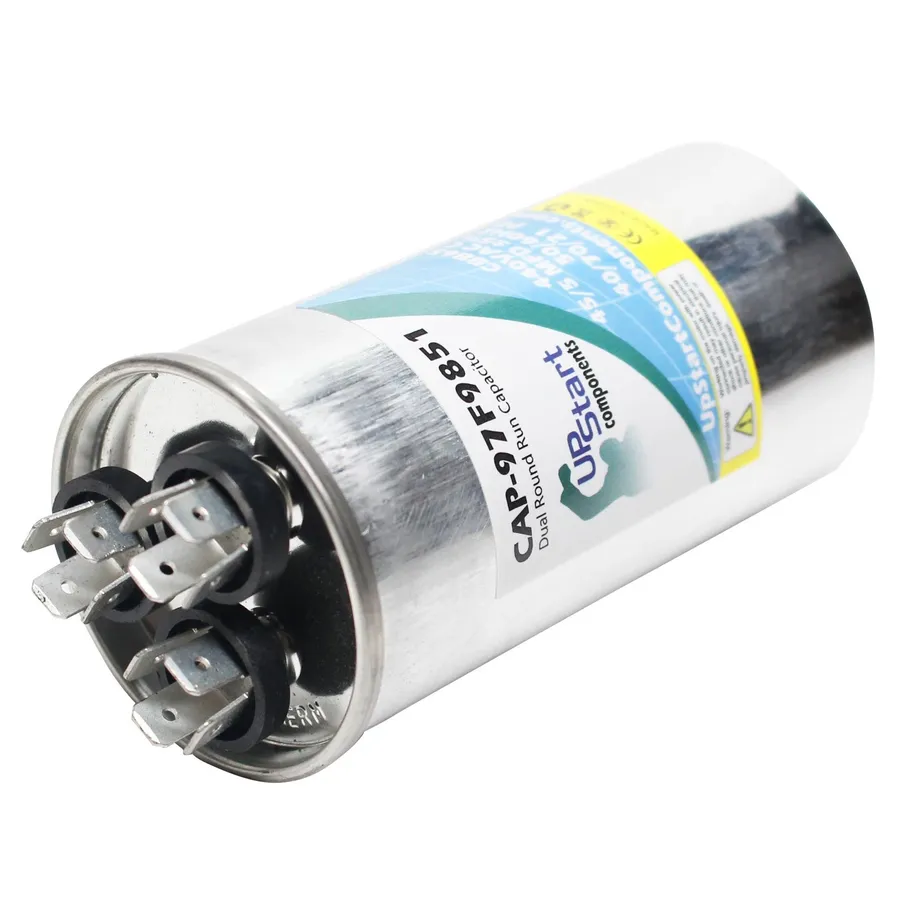
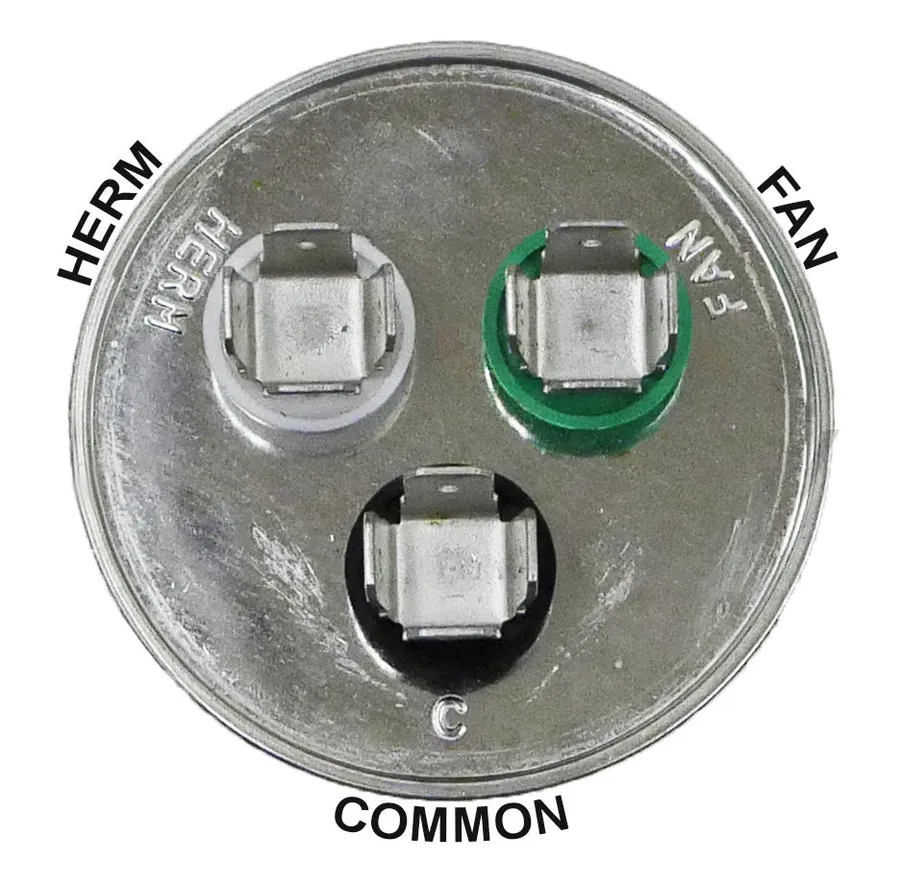
A cylindrical dual run capacitor with multiple terminals.
Dual Run Capacitor

A dual run capacitor is a critical electrical component in HVAC (Heating, Ventilation, and Air Conditioning) systems, specifically designed to energize both the compressor and the fan motor. Encased within a single housing are effectively two capacitors, each dedicated to powering a separate motor. This dual functionality is key to the efficient operation of many modern air conditioning units and heat pumps.
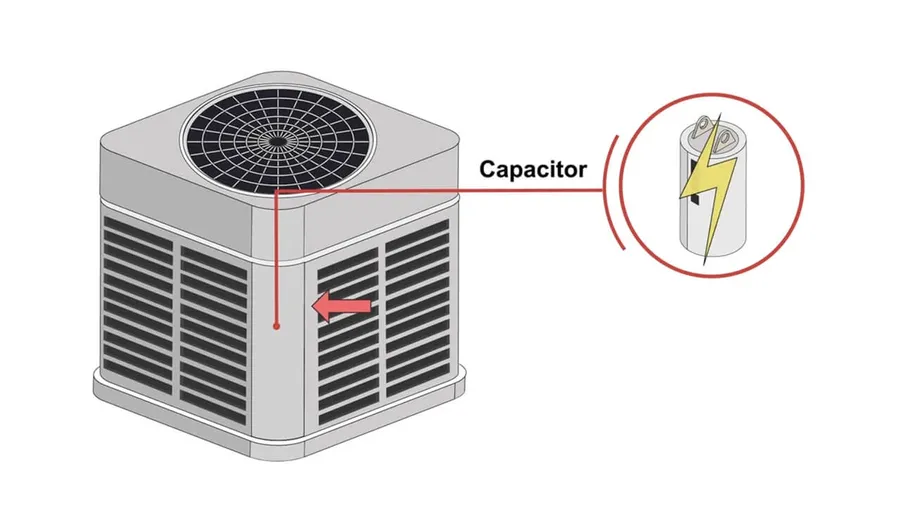
How Dual Run Capacitors Function in AC Systems

A dual run capacitor installed inside an air conditioner unit.
Capacitor in AC Unit

Dual run capacitors are critical components in air conditioning systems, serving as energy reservoirs that facilitate the efficient operation of both the compressor and fan motors. Their primary function involves storing electrical charge and releasing it strategically to enable the start-up and continuous running of these motors.

The process begins when the air conditioning system is activated. The dual run capacitor, having accumulated electrical energy, provides the initial surge of power necessary to overcome the inertia of the compressor and fan motor. This starting boost is essential since motors require significantly more power to start than they do to run continuously. Once the motors are running, the capacitor continues to deliver energy, maintaining efficient operation.

Essentially, the dual run capacitor is designed for a dual purpose, both as a starting capacitor and as a run capacitor. As a starting capacitor, it provides the high-energy jolt necessary to initiate motor rotation. As a run capacitor, it maintains a specific phase angle between the voltage and current, leading to smoother and more efficient running of the motors. Without the dual run capacitor, the motors would struggle to start, and their operation would be erratic and inefficient, if they would start at all.

FunctionPurpose
Start-UpProvides the initial high-energy surge to overcome motor inertia.
Continuous OperationMaintains the voltage and current phase angles for efficient motor operation.

Dual Run vs. Single Run Capacitors

A side-by-side comparison of a single run capacitor and a dual run capacitor.
Single vs Dual Capacitors

Dual run capacitors and single run capacitors serve different purposes in air conditioning systems, primarily differing in the number of motors they support. The core distinction lies in their capacity to energize either one or two motors simultaneously, influencing the overall system design and complexity.

FeatureDual Run CapacitorSingle Run Capacitor
Motor SupportPowers both the compressor and fan motorPowers only one motor
System ComplexityUsed in more complex AC systemsTypically used in less complex AC systems
Design EfficiencyMore compact and efficient due to dual functionalityLess compact since multiple capacitors may be required in the system
Replacement FeasibilityCannot directly replace a single run capacitor setup without modifying the electrical systemCan be replaced with an appropriately rated single run capacitor

Selecting the Correct Dual Run Capacitor

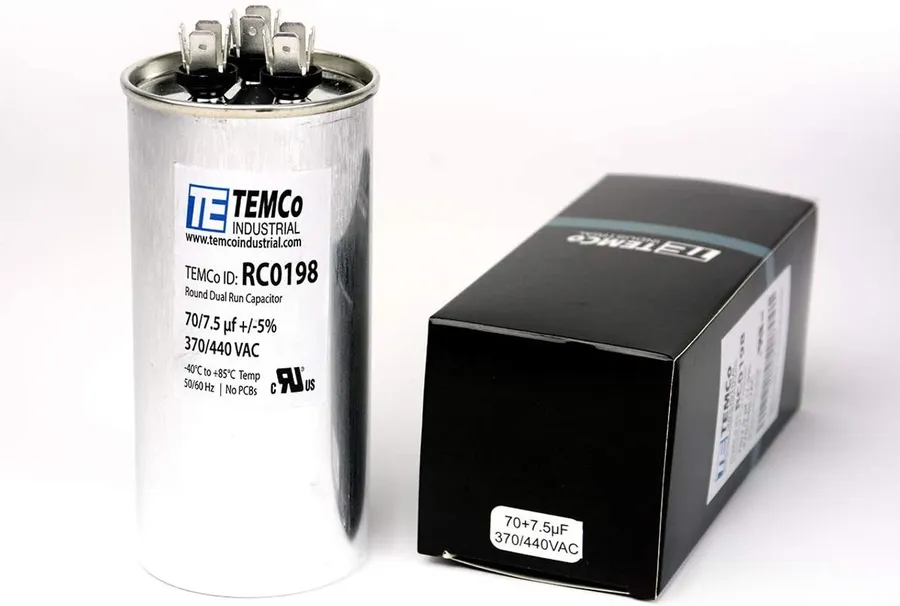
Close-up of a dual run capacitor showing its specification label.
Capacitor Specification Label

Accurately selecting a dual run capacitor is critical for optimal air conditioning system performance and longevity. This selection process primarily revolves around matching the capacitor's microfarad (µF) rating and voltage to that of the original component. Deviations from these specifications can lead to operational inefficiencies, system damage, or complete failure.

ParameterDescriptionImportance
Microfarad (µF) RatingMeasures the capacitor's ability to store an electrical charge.Must match the original capacitor. Using a significantly different value can cause motor damage or prevent operation.
Voltage RatingIndicates the maximum voltage the capacitor can withstand.The replacement capacitor's voltage rating should equal to or greater than the original. Using a lower rating is a safety hazard and can result in capacitor failure.
Physical DimensionsSize of the capacitor.Must fit within the designated compartment in the AC unit. Physical incompatibility can hinder installation.
  • Locate the Original Capacitor's Label
    The needed electrical ratings are printed on the capacitor label. The label will have the voltage (e.g., 370VAC, 440VAC) and the µF values for the compressor and fan, such as 45/5 or 50/7.5. These two values are usually separated by a forward slash (/). Ensure that the replacement capacitor has at least the same voltage and equal or higher µF rating.
  • Understand Tolerance
    Capacitors have a tolerance for their rated capacitance, which is typically ±5% or ±10%. A slight deviation from the original µF rating is acceptable, but using a significantly different value is not recommended.
  • Consider Physical Size and Terminal Configuration
    The replacement capacitor needs to fit physically in the AC unit's compartment. The terminal configuration should match the wiring for correct reconnection.

Troubleshooting a Faulty Dual Run Capacitor

A visibly damaged dual run capacitor showing signs of failure.
Damaged Capacitor

A malfunctioning dual run capacitor can manifest in several ways, primarily affecting the starting and running of your air conditioning system's compressor and fan motors. Early detection of these issues can prevent more significant damage and costly repairs. Understanding the symptoms of a faulty capacitor is crucial for effective troubleshooting.

  • AC Not Starting
    A primary sign of a failing capacitor is the inability of the AC unit to start. This is due to the capacitor's failure to provide the necessary initial energy boost to the compressor and/or fan motor.
  • Fan Motor Issues
    If the fan motor is not spinning properly, struggles to start, or spins slowly, it may be a sign that the fan section of the dual run capacitor is failing.
  • Humming Sound
    A persistent humming sound coming from the AC unit can indicate that the motor is trying to start but is unable to due to insufficient power from a failing capacitor.
  • System Shutdowns
    If your AC system starts and then quickly shuts down, it can indicate that the capacitor is failing to provide a consistent power supply.
  • Bulging or Leaking Capacitor
    Visually inspect the capacitor for physical damage. A bulging top or bottom, or any signs of leaking fluid, indicate capacitor failure.

If any of these symptoms are present, use a multimeter to check the capacitance values against those printed on the capacitor label to confirm failure. If the measured capacitance is significantly different from the rated value, the capacitor needs replacement.
Replacing a Dual Run Capacitor: A Step-by-Step Guide

A person replacing a dual run capacitor in an AC unit.
Capacitor Replacement

Replacing a dual run capacitor requires careful attention to safety and proper procedure to ensure the correct functioning of your AC system. This process should only be attempted if you have a basic understanding of electrical systems and are comfortable working with them; otherwise, consult a professional HVAC technician.

  1. Safety First: Power Disconnection
    Before commencing any work, completely disconnect the power supply to your AC unit at the circuit breaker. Double-check that the power is off by testing the unit's power switch to ensure no electrical current is present. This is paramount to preventing electric shock.
  2. Discharging the Old Capacitor
    Dual run capacitors store electrical charge, even when the power is off. To safely discharge it, use an insulated screwdriver to short the terminals by carefully touching the metal parts of the screwdriver to the capacitor's terminals. Note: Only use insulated tools for this procedure.
  3. Wire Marking and Disconnection
    Prior to disconnecting any wires from the old capacitor, meticulously mark each wire with tape or a marker, noting the specific terminal it is connected to. Take a photo of the wiring configuration, which can help avoid wiring errors during reassembly. Carefully disconnect the wires from the old capacitor.
  4. Installing the New Capacitor
    Connect the wires to the corresponding terminals on the new capacitor, ensuring each wire is connected to the correct terminal as per the markings and images taken earlier. Double check all connections for a snug fit.
  5. Powering Up and Testing
    Once all wiring is properly connected, restore the power supply to the AC unit at the breaker. Turn on the AC system and monitor its performance. Ensure the compressor and the fan are functioning smoothly without unusual noises or any other abnormal behavior. If the system does not operate correctly or generates strange noises turn the system off and contact a professional technician.

Dual Run Capacitor Lifespan and Maintenance Tips

Dual run capacitors, vital components in HVAC systems, typically exhibit a service life ranging from 5 to 10 years. This duration, however, is not absolute and is influenced by various operational and environmental factors. Proper installation and maintenance are key to achieving optimal longevity.

  • Typical Lifespan
    A dual run capacitor's lifespan generally falls between 5 to 10 years under normal operating conditions. However, this is a general guideline and should not be considered as a fixed service life.
  • Environmental Impact
    Exposure to extreme temperatures, particularly excessive heat, can accelerate capacitor degradation. Prolonged exposure to high temperatures can cause the internal components to break down, thereby shortening its lifespan.
  • Installation Quality
    Proper installation is essential for maximizing capacitor life. Improper installation, such as loose connections or physical strain on the capacitor, can lead to premature failure.
  • Proactive Maintenance
    Regular inspections and proactive maintenance can help to identify and correct issues before they lead to capacitor failure. This includes routine checks of the HVAC system and its electrical components by a certified professional.
  • Avoiding Overloading
    Ensure that the capacitor is operating within its rated specifications. Overloading the capacitor can lead to overheating and premature failure. This can be caused by a malfunctioning compressor or fan motor, both of which the dual run capacitor supports.
  • Professional Inspections
    Scheduling routine inspections of your AC unit by an experienced HVAC technician can help to identify potential capacitor issues early. Early detection can prevent more significant problems and extend the life of the capacitor and the overall AC system.

Frequently Asked Questions About Dual Run Capacitors

This section addresses common inquiries regarding dual run capacitors, providing concise and informative answers to help you understand their function, potential issues, and maintenance.

  • What is the primary function of a dual run capacitor in an AC system?
    A dual run capacitor serves as a vital component by providing the necessary electrical boost to initiate and maintain the operation of both the AC compressor motor and the fan motor. It effectively functions as two capacitors combined into a single unit, offering a compact and efficient solution for AC systems.
  • What are the typical signs that a dual run capacitor is failing?
    Several indicators suggest a failing dual run capacitor. These include an AC unit that fails to start, a fan that spins at a reduced speed or not at all, an unusual humming noise from the AC, or the system shutting down prematurely. These symptoms point to the capacitor's inability to properly store and release electrical energy.
  • What is the average lifespan of a dual run capacitor?
    The typical lifespan of a dual run capacitor ranges from 5 to 10 years. However, its actual lifespan can vary based on several environmental factors, including the ambient temperature and operating conditions. Proper installation and maintenance can help maximize its longevity.
  • How much does it typically cost to replace a dual run capacitor?
    The cost to replace a dual run capacitor includes the price of the component itself, which generally ranges from $20 to $100. Additional labor costs will apply if you hire a professional HVAC technician. These costs may also vary depending on location and the complexity of the replacement procedure.
  • Can I replace a dual run capacitor myself, or should I hire a professional?
    Replacing a dual run capacitor can be done DIY if you possess a strong understanding of electrical systems and safety procedures. However, improper handling can lead to risks of electrical shock or damage to the AC unit. If unsure or uncomfortable, it is advisable to hire a qualified HVAC technician for safe and correct replacement.
  • Is it possible to use a single run capacitor in place of a dual run capacitor?
    No, a single run capacitor cannot directly replace a dual run capacitor without making significant changes to the electrical system. Dual run capacitors are designed to power two motors (compressor and fan), while single run capacitors are meant for only one. Incorrectly substituting a single for a dual could cause damage to the system.
  • What should I do with an old dual run capacitor after replacement?
    Old dual run capacitors contain materials that require proper disposal. They should be taken to a designated recycling facility that handles electronic waste. Avoid discarding them in regular trash to protect the environment and comply with waste regulations.

Dual Run Capacitor Costs

The expense of replacing a dual run capacitor is influenced by both the component's cost, typically ranging from $20 to $100, and any labor costs if professional installation is chosen. These costs can vary based on the capacitor's specifications and the region. Additionally, many HVAC companies offer warranties on both the parts and the labor, which can provide long-term cost benefits by covering potential future failures.

Cost FactorTypical RangeNotes
Part Cost$20 - $100Varies based on capacitor specifications (microfarad rating, voltage) and brand.
Labor Cost$50 - $300Can vary significantly based on geographic location, technician rates, and complexity of the job.
WarrantyVariesMany HVAC companies offer warranties on both parts and labor, which can cover future costs of replacement or repair within a set time frame.
Additional costsVariesPotential additional costs may include diagnostic fees, emergency service fees, or additional parts (wire connectors, etc.)

Homeowners can choose to install a new capacitor themselves; however, it is recommended that a professional handle the job due to the dangers of electrical components. A professional ensures proper installation and can be held accountable for workmanship. Failure to properly install a dual run capacitor can cause damage to your AC unit, resulting in more expensive repair bills. In any case, check with your manufacturer or warranty documents before conducting any work on your HVAC unit.

The dual run capacitor is a small but mighty component that plays an integral role in the performance of your air conditioning system. Knowing what it does, how to maintain it, and what to do if it goes bad can help you ensure that your AC system runs efficiently and reliably. Regular maintenance of your HVAC system, including the dual run capacitor, is essential for the smooth operation of your air conditioning system. As technology evolves, future innovations in capacitor design could lead to even more efficient and long-lasting components, further improving the performance of air conditioning systems and their energy efficiency.


Anypcba