From the simplest LED circuit to the most complex computing devices, the fixed resistor plays a pivotal role. As a fundamental component in electronics, the fixed resistor's value does not change, ensuring consistent and stable current flow. In this article, we will delve into the world of fixed resistors, exploring their types, how they work, and their wide range of applications, bridging the gap between everyday technology and the underlying science.
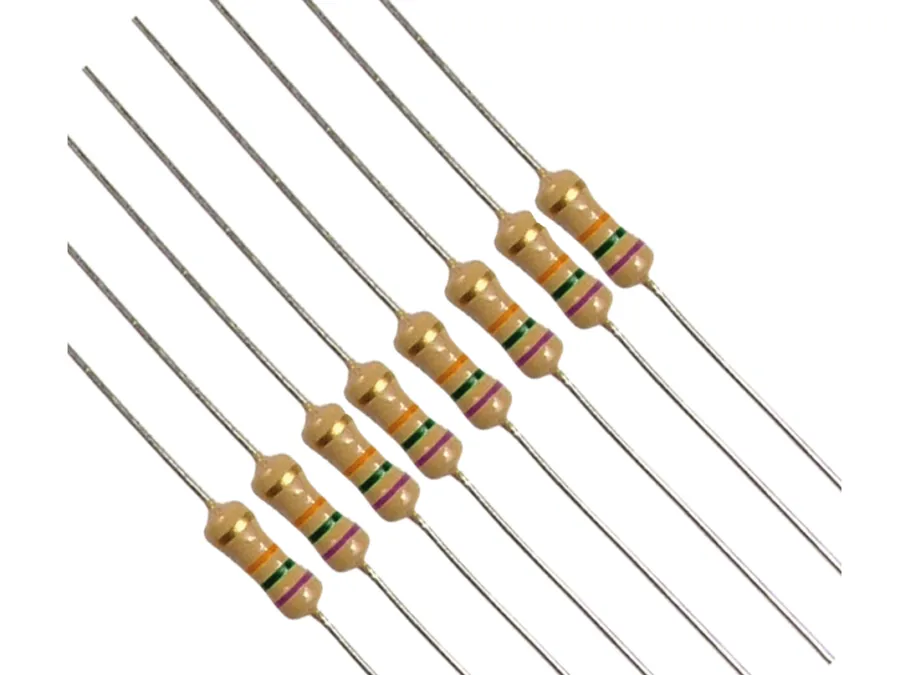
A fixed resistor is a fundamental electronic component designed to impede the flow of electrical current by a specific, unchanging amount. This characteristic distinguishes it from variable resistors, which allow for adjustable resistance. The consistent resistance offered by fixed resistors is essential for achieving predictable and reliable performance in electronic circuits.
Fixed resistors are characterized by several key parameters that determine their performance and suitability for various applications. These characteristics include resistance value, tolerance, power rating, temperature coefficient, and stability, each playing a crucial role in circuit design and operation.
| Characteristic | Description | Impact on Application |
|---|---|---|
| Resistance Value | The specific opposition to current flow, measured in ohms (Ω). | Determines the current and voltage relationships in a circuit. Crucial for proper circuit function. |
| Tolerance | The allowable deviation of the actual resistance from the stated value, often expressed as a percentage. | Indicates the precision of the resistor; lower tolerance means more accurate resistance. Affects the accuracy of the circuit operation |
| Power Rating | The maximum power a resistor can dissipate without damage, measured in watts (W). | Ensures the resistor can handle the expected electrical load. Exceeding this rating can lead to failure. |
| Temperature Coefficient | The change in resistance per degree Celsius (°C) change in temperature, expressed in parts per million (ppm/°C). | Indicates the stability of the resistance with varying temperatures. Important in environments with fluctuating temperatures. |
| Stability | The ability of a resistor to maintain its resistance value over time and under various operating conditions. | Critical for long-term circuit reliability. Degradation in stability can cause unexpected behavior and circuit failure. |
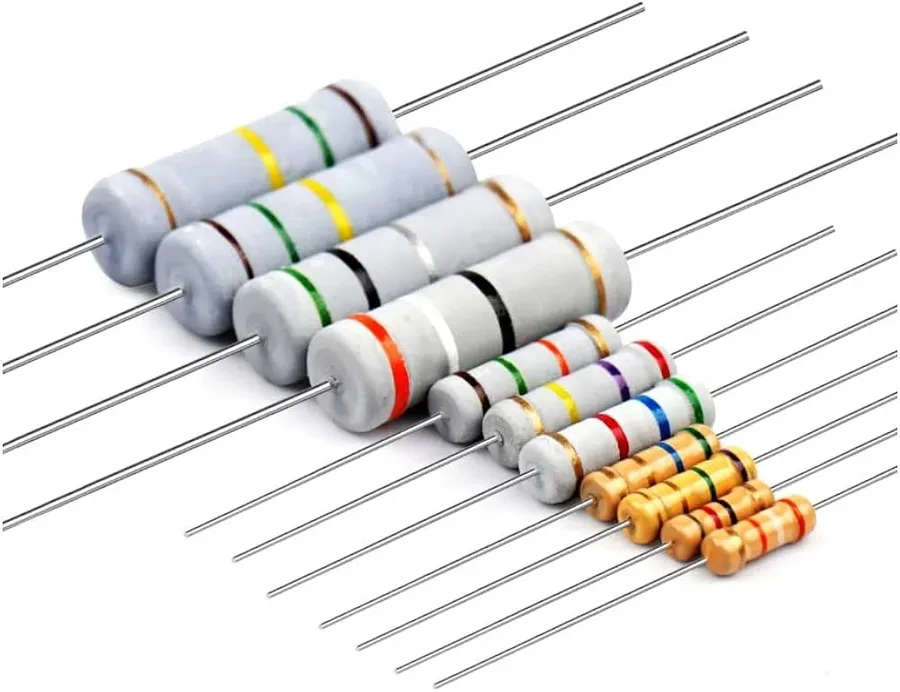
Fixed resistors are manufactured in various types, each with unique characteristics tailored for specific applications. This section explores the common types: carbon composition, metal film, wirewound, and thick film resistors, detailing their construction, advantages, and typical applications.
| Resistor Type | Construction | Advantages | Typical Use Cases |
|---|---|---|---|
| Carbon Composition | Made from finely ground carbon and binder material. | Low cost, high surge handling capability. | General-purpose applications, less precision-critical circuits. |
| Metal Film | Thin film of metal deposited on a ceramic substrate. | High precision, low noise, good temperature stability. | Precision circuits, audio equipment, medical devices. |
| Wirewound | Metal wire wound around a non-conductive core. | High power handling, excellent for high current applications. | Power supplies, motor controls, braking systems. |
| Thick Film | Thick layers of resistive paste on a ceramic substrate. | Small size, good for surface mount technology. | Compact electronics, consumer devices, mobile devices. |
Carbon composition resistors, one of the oldest types of resistors, are constructed from a mixture of finely ground carbon and a binder material. They are known for their simple construction and low cost, making them suitable for less precision-critical applications. Their tolerance is typically higher compared to other resistor types, meaning their actual resistance value can vary more from the stated value. However, they can withstand high surge currents, making them suitable for situations where a temporary large current may occur.
Metal film resistors are fabricated by depositing a thin film of metal onto a ceramic substrate. This method allows for a high degree of precision in controlling the resistance value, leading to lower tolerances and better temperature stability compared to carbon composition resistors. Additionally, metal film resistors exhibit lower noise characteristics, which is crucial in sensitive electronic circuits. These characteristics make them popular in precision circuits, audio equipment, and medical devices where accuracy and stability are critical.
Wirewound resistors are constructed by winding a metal wire around a non-conductive core, such as ceramic or fiberglass. These resistors excel in applications requiring high power handling capability, due to the relatively large surface area of the wire, which facilitates heat dissipation. They are also capable of operating at high current levels. However, a major limitation of wirewound resistors is their inherent inductance, which can affect circuit performance at high frequencies. Therefore, they are commonly used in power supplies, motor controls, and braking systems, where high power and current are needed and high frequency effects are less relevant.
Thick film resistors are characterized by their small size and suitability for surface mount (SMD) packages. They are made by depositing thick layers of a resistive paste onto a ceramic substrate. This makes them ideal for compact circuit board designs, and are a standard component in consumer electronics, mobile devices, and other applications where space is a premium. While they generally offer good performance, their tolerances and temperature stability can be less than those of metal film resistors.
Carbon composition resistors are among the oldest types of resistors, characterized by their simple construction, low cost, and relatively high tolerance. These resistors are typically made from a mixture of finely ground carbon and a non-conducting ceramic binder. The ratio of carbon to binder determines the resistance value, with more carbon resulting in lower resistance. Their construction makes them robust to high voltage surges, but at the cost of precision.
While they are not favored in high-precision or low-noise applications, their ability to withstand high voltage and pulse conditions makes them suitable for surge protection and power supply applications where absolute precision is not critical, such as some types of older or simpler circuitry.
Metal film resistors are a type of fixed resistor characterized by their superior performance in precision applications. Unlike carbon composition resistors, metal film resistors utilize a thin layer of metal, such as nickel alloys, deposited onto a ceramic substrate. This construction leads to significant improvements in several key areas, including accuracy, noise reduction, and thermal stability.
| Characteristic | Metal Film Resistors | Carbon Composition Resistors |
|---|---|---|
| Precision/Tolerance | High (typically ±1% or less) | Lower (typically ±5% or ±10%) |
| Noise | Low | Higher |
| Temperature Stability | Good (low temperature coefficient) | Poorer (higher temperature coefficient) |
| Construction | Thin metal film deposited on ceramic substrate | Carbon powder mixed with binder |
| Cost | Slightly higher | Lower |
| Common Use Cases | Precision circuits, audio equipment, instrumentation | General purpose circuits, less precision-critical applications |
The thin metal film allows for a more controlled resistance value and provides better stability against changes in temperature. The low noise characteristic makes them ideal for sensitive analog signal processing circuits. The typical manufacturing process involves sputtering or vapor deposition of the metal onto the substrate, followed by a precise trimming process to achieve the desired resistance.
Due to their enhanced characteristics, metal film resistors are widely preferred in applications where precision, stability, and low noise are critical requirements. These applications include medical devices, audio amplifiers, precision instrumentation, and measurement equipment. They are available in various sizes, power ratings, and temperature coefficients to suit different design requirements.
Wirewound resistors are constructed by winding a metallic wire, typically made of alloys like nichrome or constantan, around an insulating core. This construction allows them to handle significant power dissipation, making them suitable for high-power applications. However, their inherent coiled structure introduces inductance, which can be a disadvantage in high-frequency circuits.
| Characteristic | Description |
|---|---|
| Construction | Metallic wire wound around an insulating core. |
| Materials | Commonly nichrome, constantan, or similar alloys. |
| Power Handling | Excellent, suitable for high-power applications. |
| Inductance | Significant, due to the coil structure. |
| Accuracy | Good, typically ranging from 0.1% to 5% tolerance. |
| Stability | Good, but susceptible to changes due to temperature. |
| Frequency limitations | Not ideal for high-frequency applications due to inductance |
Wirewound resistors find applications in power supplies, braking systems for electric motors, and other high-current situations. The inductance of wirewound resistors can be mitigated to some degree with special winding techniques. Despite this, these devices generally are not used in sensitive high frequency circuits.
Thick film resistors are a prevalent type of fixed resistor, especially within the realm of surface mount technology (SMT). Their defining characteristics include a compact size and a construction method that allows for high-density placement on circuit boards, making them ideal for modern, miniaturized electronic devices. Unlike other types of resistors, thick film resistors leverage a ceramic substrate upon which a resistive film is deposited, typically through screen printing techniques.
Here's a breakdown of their key aspects:
| Feature | Description |
|---|---|
| Size | Very small, primarily SMD packages. |
| Construction | Resistive film on ceramic substrate. |
| Cost | Low cost due to manufacturing process. |
| Precision | Moderate, with tolerance typically between 1% and 5%. |
| Temperature Stability | Moderate, not as stable as metal film resistors. |
| Power Handling | Generally low to moderate. |
| Typical Applications | Consumer electronics, mobile devices, general purpose circuits. |
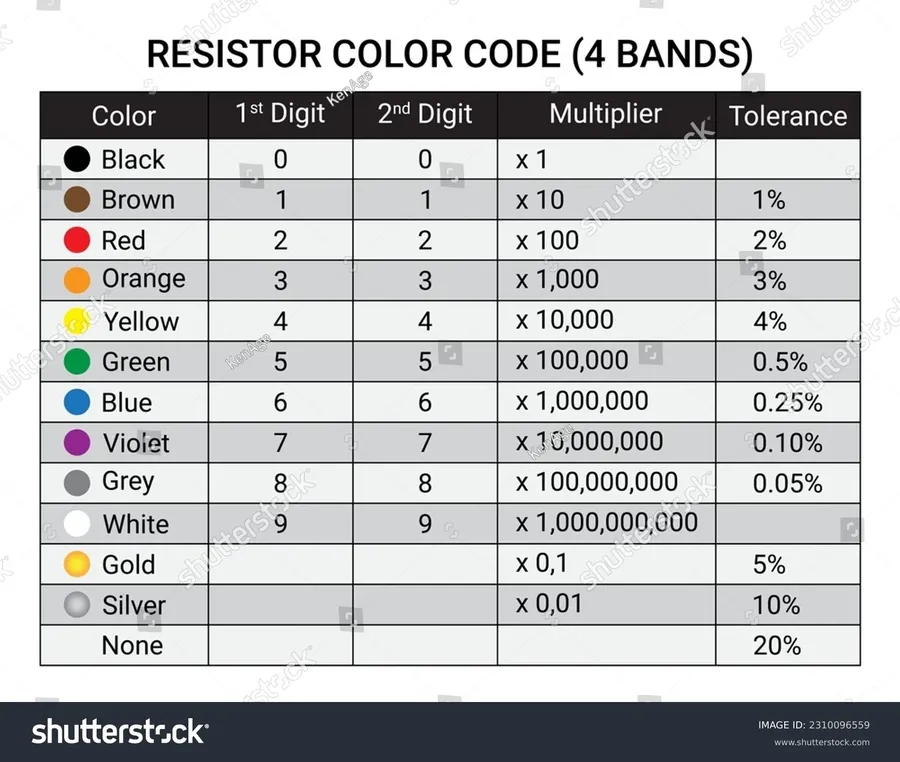
Fixed resistors are essential components in electronic circuits, and understanding their schematic symbols and color codes is crucial for circuit analysis and design. These standardized symbols and codes ensure consistent interpretation of circuit diagrams and resistor specifications.
The schematic symbol for a fixed resistor is typically a zigzag line. In some regions or older diagrams, it can be represented by a rectangle. Regardless of the representation, it universally signifies the presence of a component providing electrical resistance.
| Symbol Type | Description | Common Usage |
|---|---|---|
| Zigzag Line | Standard symbol representing resistance in most schematics. | Most modern circuit diagrams and simulations. |
| Rectangle | An older symbol for resistance. | Older schematics and diagrams, some regional variations. |
Color codes on fixed resistors provide a compact method for indicating their resistance value, tolerance, and sometimes the temperature coefficient. These codes use a series of colored bands, where each color corresponds to a numeric value or a multiplier.
| Band | Color | Digit/Multiplier | Tolerance (%) | Temp. Coefficient (ppm/°C) |
|---|---|---|---|---|
| 1st | Black | 0 | - | - |
| 1st | Brown | 1 | ±1 | ±100 |
| 1st | Red | 2 | ±2 | ±50 |
| 1st | Orange | 3 | - | ±15 |
| 1st | Yellow | 4 | - | ±25 |
| 1st | Green | 5 | ±0.5 | - |
| 1st | Blue | 6 | ±0.25 | - |
| 1st | Violet | 7 | ±0.1 | - |
| 1st | Gray | 8 | ±0.05 | - |
| 1st | White | 9 | - | - |
| 2nd | Black | 0 | - | - |
| 2nd | Brown | 1 | - | - |
| 2nd | Red | 2 | - | - |
| 2nd | Orange | 3 | - | - |
| 2nd | Yellow | 4 | - | - |
| 2nd | Green | 5 | - | - |
| 2nd | Blue | 6 | - | - |
| 2nd | Violet | 7 | - | - |
| 2nd | Gray | 8 | - | - |
| 2nd | White | 9 | - | - |
| 3rd | Black | x1 | - | - |
| 3rd | Brown | x10 | - | - |
| 3rd | Red | x100 | - | - |
| 3rd | Orange | x1,000 | - | - |
| 3rd | Yellow | x10,000 | - | - |
| 3rd | Green | x100,000 | - | - |
| 3rd | Blue | x1,000,000 | - | - |
| 3rd | Gold | x0.1 | - | - |
| 3rd | Silver | x0.01 | - | - |
| 4th | Gold | - | ±5 | - |
| 4th | Silver | - | ±10 | - |
| 4th | None | - | ±20 | - |
| 5th | Brown | - | - | ±100 |
| 5th | Red | - | - | ±50 |
| 5th | Orange | - | - | ±15 |
| 5th | Yellow | - | - | ±25 |
For example, a resistor with bands of red, violet, brown, and gold would have a resistance of 270 ohms with a 5% tolerance. The order of the bands matters. Usually the tolerance band is spaced further away from the other bands.
Fixed and variable resistors serve distinct purposes in electronic circuits, differentiated primarily by their ability, or lack thereof, to change resistance. Fixed resistors provide a constant resistance value, essential for establishing precise current flow and voltage division within a circuit, while variable resistors allow for the adjustment of resistance, enabling tuning and control functionalities.
| Feature | Fixed Resistors | Variable Resistors |
|---|---|---|
| Resistance Value | Constant, pre-determined value | Adjustable within a range |
| Function | Limit current, divide voltage, provide a specific resistance path | Adjust circuit parameters, control voltage or current, tuning |
| Examples | Carbon composition, metal film, wirewound, thick film | Potentiometers, rheostats, trimmers |
| Applications | General circuit use, current limiting, voltage division | Volume controls, sensor adjustments, calibration circuits |
| Construction | Typically composed of a resistive material with leads or terminals | Typically composed of a resistive element with a wiper or movable contact |
The selection between fixed and variable resistors depends heavily on the specific application's requirements. Fixed resistors are chosen when a precise and stable resistance value is needed for the function of a circuit, such as in a voltage divider or current-limiting application. Conversely, variable resistors are employed when an adjustable resistance is required, as seen in circuits where user input, calibration, or tuning is necessary.
This section addresses common inquiries regarding fixed resistors, aiming to provide clear and concise answers to typical questions about their functionality, characteristics, and applications.
The fixed resistor, with its unassuming appearance, is a cornerstone of electronics. By understanding its various types, characteristics, and applications, we gain a deeper appreciation for how this fundamental component enables the functionality of countless devices around us. As technology continues to evolve, fixed resistors will remain a vital building block for new innovations, ensuring precise and reliable electronic circuits. From basic hobby projects to complex industrial applications, the fixed resistor continues to be essential.

