In our modern world, the smooth operation of countless electrical devices relies on the often-unseen hero: the capacitor. Among various manufacturers, NGM capacitors stand out for their reliability in motor start and run applications. This article delves into the specifics of NGM capacitors, explaining their different types, their roles in various systems, and how to choose the correct one for your needs.
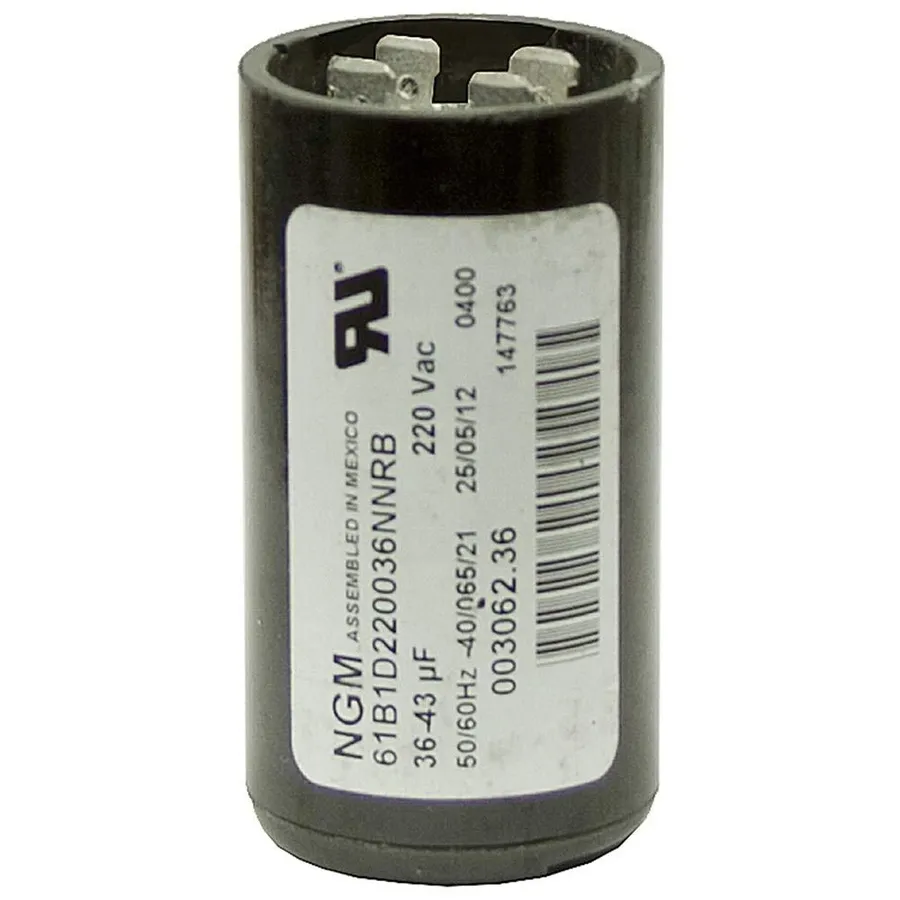
NGM is a manufacturer specializing in capacitors, particularly those designed for motor applications. With a reputation for quality and reliability, NGM produces a range of capacitors that are crucial for the effective operation of various electric motors, ensuring optimal performance and longevity. Their product line is well-regarded within the industry for its consistent performance in demanding environments.
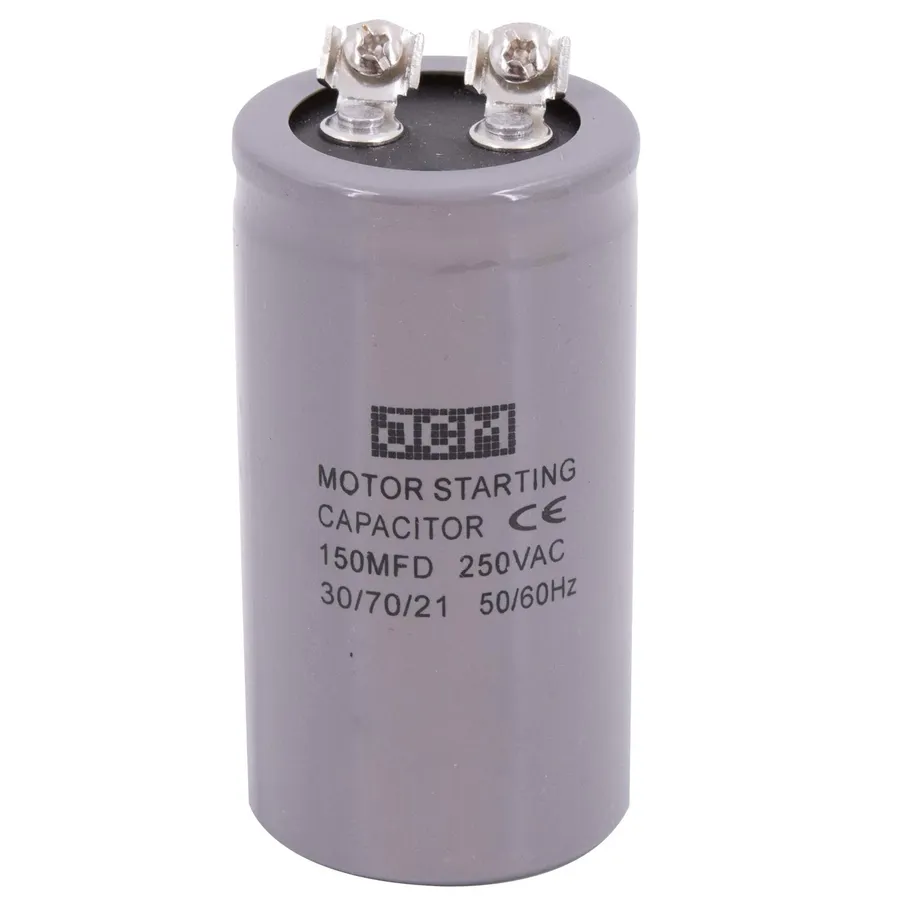
NGM motor start capacitors are crucial components designed to provide the initial torque required to start single-phase AC motors. These capacitors are not intended for continuous operation; instead, they momentarily boost the motor's starting power, facilitating a smooth and efficient start.
During startup, a single-phase motor's magnetic field isn't inherently rotating and needs help to initiate motion. The start capacitor creates a phase shift in the current, thereby inducing the necessary rotating magnetic field. Once the motor reaches a certain speed, a centrifugal switch disengages the start capacitor from the circuit, leaving the run capacitor to sustain the motor's operation. Without a properly functioning start capacitor, single-phase motors often fail to start or exhibit a low starting torque.
NGM offers a range of motor start capacitors, typically characterized by their higher capacitance and voltage ratings, specifically designed for intermittent use during the motor's startup phase. These capacitors are available in various capacitance values (e.g., 50-500 µF) and voltage ratings (e.g., 125VAC, 250VAC, 330VAC), tailored to match the specific requirements of different motor sizes and applications. The physical structure of the start capacitor is also adapted for intermittent high current use.
| Feature | Description | Typical NGM Values |
|---|---|---|
| Function | Provide initial torque for motor startup. | N/A |
| Operation | Engaged only during startup, then disconnected. | N/A |
| Capacitance Range | Higher capacitance for strong starting power. | 50 - 500 µF |
| Voltage Ratings | Rated for high startup voltages | 125VAC, 250VAC, 330VAC |
| Usage | Intermittent duty cycle, not designed for continuous operation. | N/A |
| Motor Type | Used in single-phase AC induction motors. | N/A |
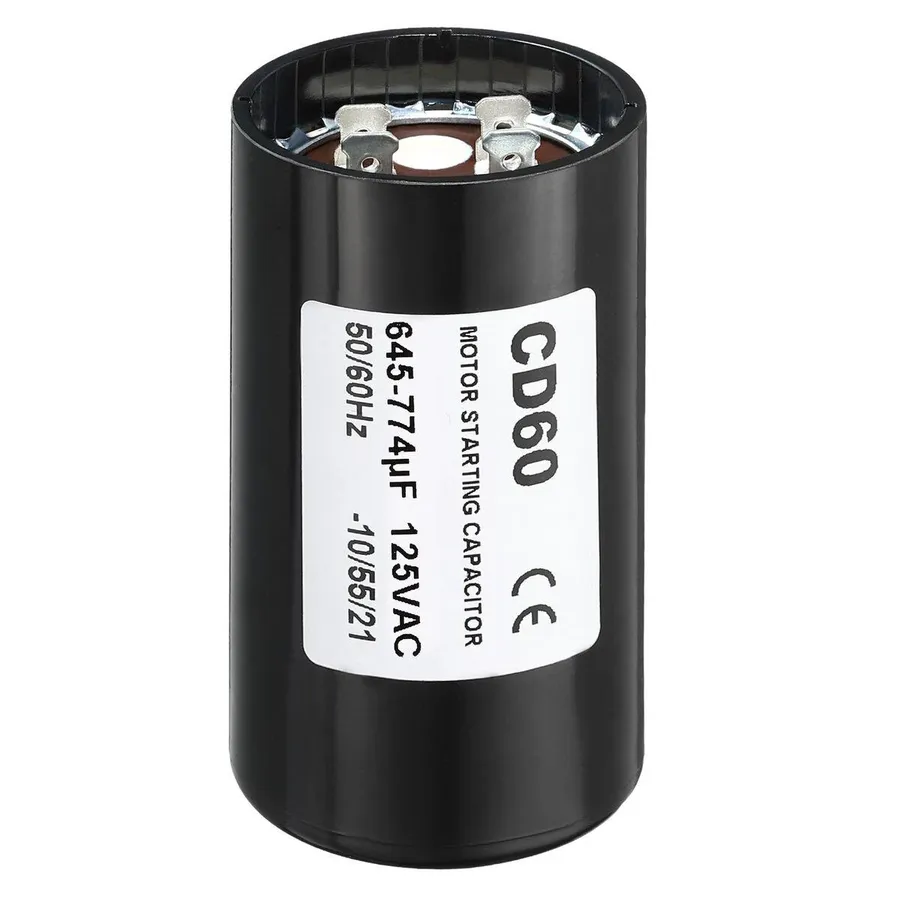
NGM run capacitors are essential components in single-phase AC motors, designed for continuous duty to maintain efficient motor operation after the start-up phase. Unlike start capacitors, which are briefly energized for initial torque, run capacitors remain in the circuit to enhance the motor's power factor, reduce energy consumption, and improve overall performance.
Run capacitors provided by NGM come in various shapes and voltage ratings, such as round and rectangular, to suit diverse application requirements. The appropriate voltage rating of the run capacitor must be matched to the system, and typically are lower than start capacitor voltage ratings as they run continuously. The correct selection of a run capacitor ensures optimal motor efficiency, reduces heat generation, and prolongs the life of the motor.
| Feature | Run Capacitor | Start Capacitor |
|---|---|---|
| Function | Maintains motor operation after start-up, improves power factor, enhances efficiency | Provides initial torque for motor startup |
| Duty Cycle | Continuous operation | Intermittent operation (short periods) |
| Circuit Role | Remains in circuit during motor run time | Switched out of the circuit after start-up |
| Voltage Rating | Rated for continuous operation voltage, generally lower compared to start capacitors | Rated for peak voltage during startup, typically higher than run capacitors |
| Capacitance | Typically lower capacitance ratings than start capacitors | Typically higher capacitance ratings to provide strong start-up torque |
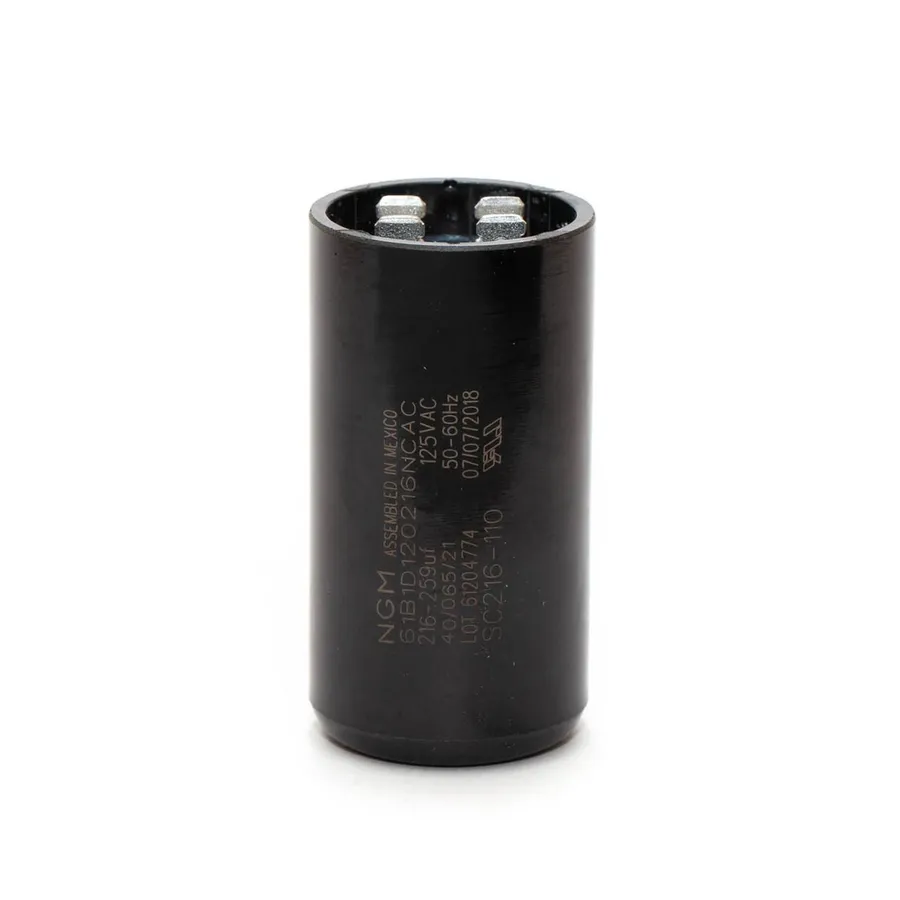
NGM manufactures a range of capacitors tailored for diverse single-phase motor applications, encompassing start, run, and dual-run configurations. These capacitors are critical components in ensuring the reliable and efficient operation of various systems, including HVAC units, pumps, and other motor-driven equipment. Each type is designed with specific electrical characteristics and physical forms to meet the unique demands of its application.
| Capacitor Type | Function | Typical Applications | Voltage Ratings (VAC) | Capacitance Range (µF) | Common Shapes |
|---|---|---|---|---|---|
| Start Capacitor | Provides a high-torque boost during motor startup. | Air compressors, refrigerators, power tools | 125, 165, 250, 330 | 20 - 500 | Cylindrical |
| Run Capacitor | Maintains continuous operation of the motor by improving the power factor. | HVAC systems, fans, pumps | 250, 370, 440 | 2 - 100 | Cylindrical, Rectangular, Oval |
| Dual Run Capacitor | Combines functions of start and run capacitors in one unit. | HVAC systems with multi-speed motors, heat pumps | 250, 370, 440 | 5/2.5 - 60/10 | Cylindrical, Oval |
The shapes of NGM capacitors vary to accommodate different mounting requirements and application constraints. Cylindrical capacitors are commonly used in both start and run configurations, while rectangular and oval shapes are frequently found in run and dual-run capacitors designed for space-constrained environments.
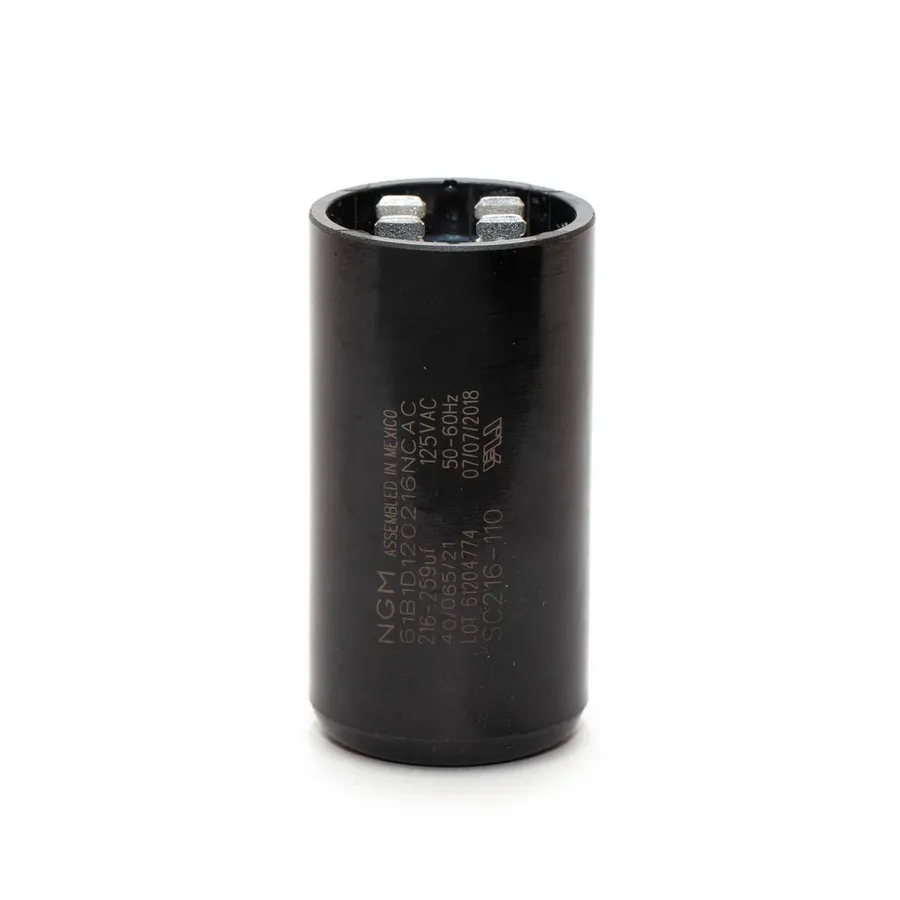
Selecting the appropriate NGM capacitor is crucial for ensuring optimal performance and longevity of motor-driven systems. This selection process hinges on several key electrical parameters and environmental considerations, each playing a vital role in the capacitor's function within the circuit. These parameters must be carefully matched with the requirements of the motor and the application to avoid premature failure and ensure efficient operation.
| Parameter | Description | Unit | Importance |
|---|---|---|---|
| Capacitance | The ability of the capacitor to store electrical charge. | Microfarads (μF) or MFD | Must match motor requirements for starting and running torque. Incorrect value can lead to motor damage or failure. |
| Voltage Rating | The maximum voltage the capacitor can safely withstand. | Volts AC (VAC) | Should exceed the circuit's maximum expected voltage to prevent breakdown. Under-rated capacitor can explode. |
| Frequency | The frequency of the AC power supply. | Hertz (Hz) | Typically 50Hz or 60Hz. Must match the power supply to ensure proper operation. |
| Temperature Rating | The range of operating temperatures the capacitor is designed to handle. | Degrees Celsius (°C) | Must operate within this range to maintain performance and prevent premature failure, especially in hot environments. Extreme temperatures can degrade performance. |
For example, a single-phase motor requiring a 30uF start capacitor at 250VAC will only perform optimally with an NGM capacitor that precisely matches those values. Substituting with a 20uF capacitor, for instance, would likely lead to a lack of starting torque, preventing the motor from starting, while using a capacitor with a voltage rating less than 250VAC could lead to capacitor failure. Therefore, it is essential to cross-reference existing capacitors and motor specifications to determine the suitable NGM replacement part.
Diagnosing issues with NGM capacitors is crucial for maintaining the performance and reliability of motor-driven systems. This section provides guidance on identifying common problems such as bulging cases, leakage, and operational failures, alongside practical steps for troubleshooting and determining when replacement is necessary.
When troubleshooting, it's important to understand that capacitors are prone to failure over time due to electrical stress, heat, and physical wear. These factors cause common symptoms that can indicate a problem. If any of the symptoms described below are present, then the capacitor may be faulty and need replacement.
| Symptom | Possible Cause | Troubleshooting Steps | Solution |
|---|---|---|---|
| Bulging Case | Excessive internal pressure due to electrolyte breakdown or overheating. | Inspect for physical distortion. Test capacitance and ESR (Equivalent Series Resistance) using a multimeter. | Replace the capacitor immediately as it can lead to further failure. |
| Leaking Electrolyte | Failure of the capacitor's seal due to physical damage or chemical degradation. | Visually check for wet spots or residue around the capacitor terminals or base. Avoid direct skin contact. | Replace the capacitor, as leakage can cause damage to other circuit parts and is a sign of failure. |
| Motor Fails to Start | Insufficient capacitance to provide the required starting torque, also a completely open circuit. | Verify that the capacitor is receiving power, measure the capacitance with a multimeter. Check for an open circuit. | Replace the capacitor if the capacitance is significantly below its rated value or if an open circuit is indicated. The new capacitor should have the same ratings as the original. |
| Motor Overheats or Operates Erratically | Incorrect capacitance value, Increased ESR of the capacitor, resulting in poor efficiency and high temperatures. | Use a multimeter to measure the capacitor's capacitance and ESR. Compare readings against specified values. | Replace the capacitor if readings are out of tolerance, as this can lead to decreased motor performance and potential overheating or damage. |
| Audible Humming or Buzzing | Loose connections or capacitor degradation. This is often a sign of increased ESR. | Check all capacitor connections, measure capacitance and ESR. Listen for abnormal sounds near the capacitor. | If connections are secure and the capacitance is significantly low or ESR is high, replace the capacitor. |
It's critical that when replacing a capacitor, that the new part exactly matches the original unit's specifications, including capacitance, voltage, and any temperature ratings and safety certifications, as using the wrong part can lead to premature failure of the motor or electrical system. Always ensure power to the unit is disconnected before performing any maintenance.
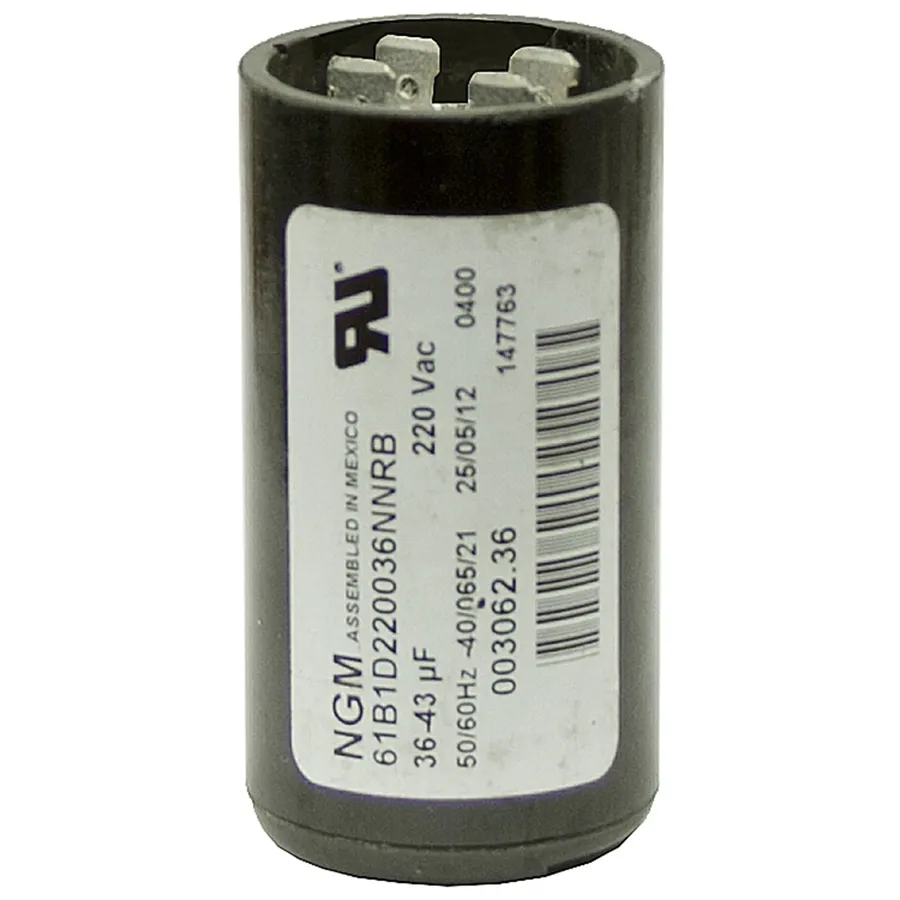
Replacing an NGM capacitor requires careful attention to ensure proper functionality and safety of the connected motor or electrical system. This section provides guidance on identifying suitable replacements and locating reliable sources for purchase, including online stores and local distributors.
When seeking a replacement, it is crucial to match the original capacitor's specifications, primarily the capacitance (measured in microfarads, μF or MFD) and voltage rating (VAC). These parameters are usually clearly marked on the capacitor's casing. It's also vital to consider the capacitor's function, whether it is a start, run, or dual-run capacitor, as these are not interchangeable.
NGM provides general cross-reference guides and specifications for their product range, allowing users to identify direct replacements. However, when a direct cross-reference is not available, parameters like capacitance, voltage rating, operational frequency and temperature ratings are key to choosing a replacement.
In addition to online retailers, many local electrical component suppliers may stock NGM capacitors. Local distributors often offer the added benefit of hands-on assistance and faster availability. When purchasing, confirm the capacitor's specifications and ensure it is rated for the specific application it will be used in. Always handle capacitors carefully to avoid damage or electrical shock.
This section addresses common questions regarding NGM capacitors, providing clear and concise answers to enhance your understanding and usage of these components.
NGM capacitors are crucial components in a variety of electrical systems, from powering essential appliances to supporting large-scale industrial machinery. Understanding their specific roles, especially the distinction between start and run capacitors, is crucial for ensuring optimal electrical performance and safety. By choosing and maintaining the right NGM capacitor, users can enhance the longevity and reliability of their equipment.

