Understanding the 100 Ohm Resistor: Price, Uses, and Alternatives
2024.12.31
In the world of electronics, resistors are fundamental components, and the 100 ohm resistor is a workhorse. From simple circuits to complex electronic systems, the 100 ohm resistor plays a crucial role. Understanding its price, various types, and applications is key for any maker or engineer. The price of a 100 ohm resistor can vary, and this article will explore the factors that influence it while delving into the versatile uses and alternatives available, linking the practicalities of electronics with everyday technology.
What is a 100 Ohm Resistor?
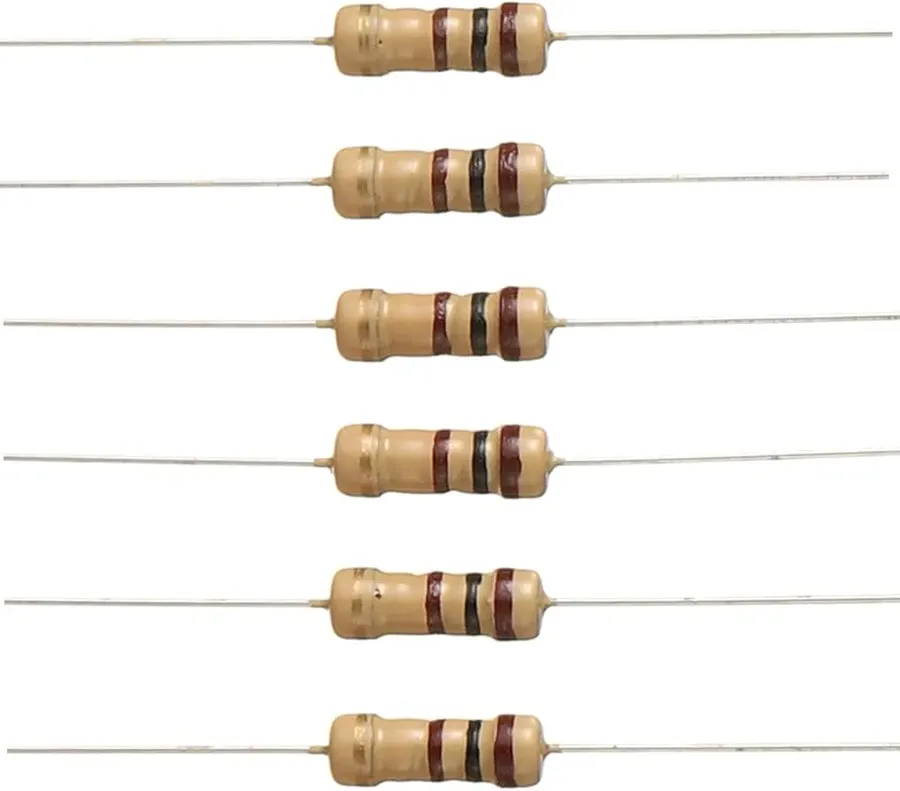
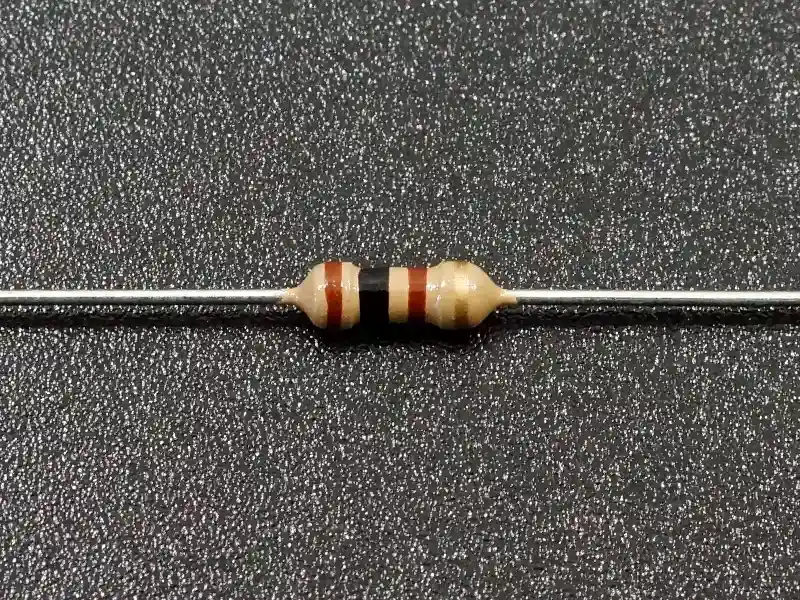
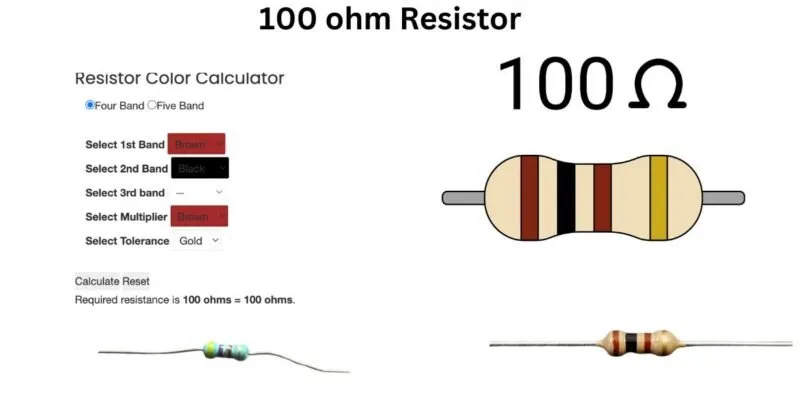
100 Ohm Resistor
A 100 ohm resistor is a fundamental electronic component designed to impede the flow of electrical current, with a specific resistance value of 100 ohms. This resistance is measured in ohms (Ω), which is a unit that quantifies how much a material opposes the passage of electric current. The core function of a resistor within an electrical circuit is to control current flow, converting electrical energy into heat due to the inherent resistance of the material. Understanding the relationship between resistance, voltage, and current is crucial when working with resistors, as defined by Ohm's Law. In essence, the 100 ohm resistor is a crucial component for managing and manipulating electrical currents.
Ohm's Law provides the framework for understanding the interaction between voltage, current, and resistance: V=IR , where V is the voltage (measured in volts), I is the current (measured in amperes), and R is the resistance (measured in ohms).
To fully grasp the function of a 100 ohm resistor, it is helpful to clarify the difference between ohms, voltage, and current. Voltage is the electrical potential difference that pushes current through a conductor, like the pressure in a water pipe. Current is the rate at which electrical charge flows through the conductor, analogous to the flow rate of water in a pipe. Ohms measures the property of the resistor that resists this flow of electrical current.
Types of 100 Ohm Resistors and Their Characteristics
Different Types of 100 Ohm Resistors
100 Ohm resistors are not monolithic; they come in various types, each with distinct characteristics that influence their performance, cost, and suitability for different applications. Understanding these differences is crucial for selecting the correct resistor for a given design. The primary differentiators lie in their construction materials, manufacturing processes, power handling capabilities, and precision levels.
Characteristic
Carbon Film Resistor
Metal Film Resistor
Wire-Wound Resistor
Material
Carbon particles bonded to a ceramic substrate
Thin film of metal alloy on a ceramic substrate
Resistance wire wound around a ceramic core
Tolerance
Typically 5% or 10%
Typically 1% or 2%
Varies, can be as low as 0.01%
Power Rating (Typical)
1/8W to 1/2W
1/8W to 1W
1W to hundreds of Watts
Temperature Coefficient
Higher, less stable
Lower, more stable
Very low, extremely stable
Accuracy
Lower
Higher
Very high
Cost
Lower
Moderate
Higher
Applications
General purpose, low precision needs
Precision circuits, audio, instrumentation
High power applications, heaters
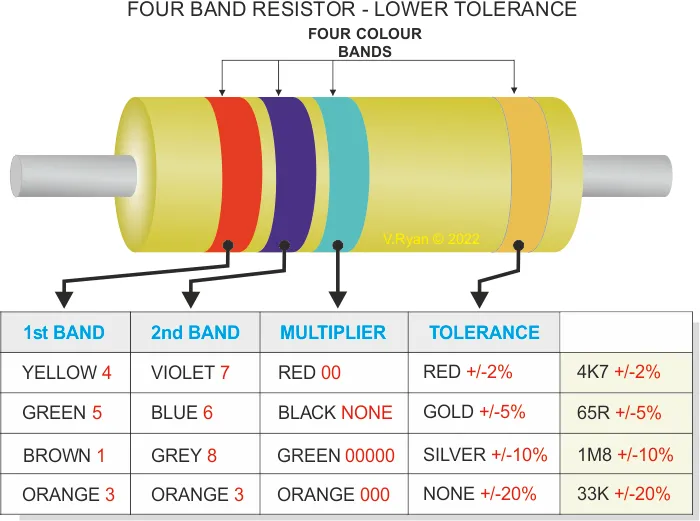
The power rating of a resistor signifies the maximum power it can dissipate without being damaged, and this is a critical factor in circuit design. The power rating is typically expressed in watts (W), and common values for 100-ohm resistors include 1/4W, 1/2W, 1W, and even much higher ratings for specialized applications. Always choose a resistor with a power rating that is higher than the calculated power dissipation to ensure reliable operation and prevent premature failure. Standard tolerances for resistors include 1%, 5%, and 10%, with tighter tolerance indicating higher precision in resistance value. Selecting the right tolerance depends on the precision required for your specific application.
Factors Affecting 100 Ohm Resistor Price
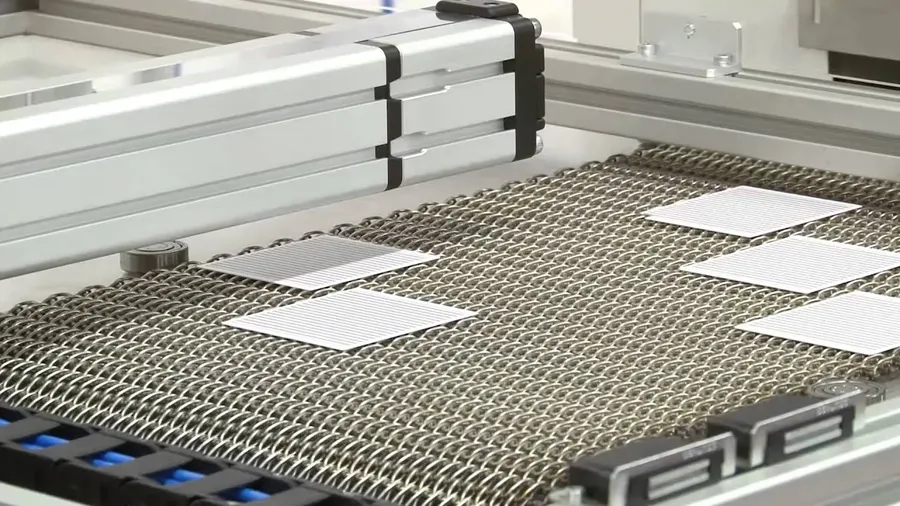
Resistor Production Line
The price of a 100 ohm resistor is influenced by several key factors, primarily encompassing its type, quantity purchased, tolerance, power rating, and the vendor supplying the component. Understanding these factors is crucial for making cost-effective purchasing decisions.
Factor
Description
Impact on Price
Type
Resistors are manufactured using different materials and methods. Common types include carbon film, metal film, and wire-wound.
Metal film resistors generally cost more than carbon film due to higher precision and stability. Wire-wound resistors, known for their high power handling capabilities, are typically the most expensive.
Quantity
The number of resistors purchased in a single order.
Bulk purchases usually result in significant price discounts due to economies of scale.
Tolerance
The accuracy of the resistor's actual resistance compared to its nominal value (100 ohms). Common tolerance levels include 1%, 5%, and 10%.
Resistors with tighter tolerances (e.g., 1%) are more expensive due to the increased manufacturing precision required.
Power Rating
The maximum amount of power that the resistor can safely dissipate without damage. Common power ratings include 1/4W, 1/2W, 1W, and higher.
Higher power-rated resistors are generally more expensive due to their larger size and more robust construction.
Vendor
The supplier or retailer from which the resistor is purchased.
Prices can vary significantly between different vendors. Online retailers may offer lower prices, while specialized electronic component suppliers might provide better quality and reliability.
Where to Buy 100 Ohm Resistors and How to Get the Best 100 ohm resistor price
Electronics Store Shelf
Acquiring 100 ohm resistors involves navigating a landscape of online marketplaces, specialized electronic component suppliers, and traditional brick-and-mortar stores. Each avenue presents distinct advantages and considerations regarding price, quality, and reliability. To secure the best value, it's crucial to evaluate these factors carefully.
When seeking to purchase 100 ohm resistors, consider the following retailers, which offer a variety of options in terms of price, quantity, and type:
Online Marketplaces Platforms like Amazon, eBay, and AliExpress offer a broad selection of 100 ohm resistors from various vendors. Prices can be competitive, but it's vital to scrutinize seller ratings and product reviews to ensure quality and authenticity. Delivery times and shipping costs can also vary significantly. These are great options if you need a small quantity of components and want them delivered quickly.
Electronic Component Suppliers Suppliers such as Jameco, Tayda, and ElectronComponents specialize in electronic components. These sources typically provide resistors in bulk, often with more detailed specifications and data sheets. They are preferred by professionals or hobbyists who need high-quality components, and are likely to be sourced by the original manufacturer, or a licensed reseller. Prices tend to be competitive, especially for larger quantities.
Brick-and-Mortar Stores Local electronics stores, and sometimes even hardware stores carry common resistor values. This is the most expensive option, but is a great choice if you need one, or just a few components immediately. These locations offer the advantage of immediate availability, but the price is generally higher. The selection may be limited, and it is highly unlikely you will be able to source precision components here.
To secure the best 100 ohm resistor price, consider the following:
Bulk Purchases Buying in larger quantities often results in lower per-unit costs. Evaluate your long-term needs to take advantage of bulk discounts.
Compare Prices Always compare prices across different vendors, taking into account shipping costs and taxes. It's important to consider overall cost and not just the lowest price on a single component.
Evaluate Quality Don't compromise quality for the lowest price. Check the resistor's specifications, such as tolerance and power rating, and ensure they meet your project requirements. Check the datasheet for information like temperature rating, and derating curves.
Consider Lead Times If time is a factor, confirm delivery times, and make sure you have sufficient time for the lead time of any components you order. Some suppliers may be located overseas and thus require significant lead times.
Common Applications of 100 Ohm Resistors
100 Ohm Resistor on PCB
100 Ohm resistors are fundamental components in electronics, fulfilling various critical roles such as limiting current, acting as pull-up or pull-down resistors, and facilitating signal conditioning. Their specific resistance value makes them ideally suited for a wide range of applications, from basic circuits to complex electronic systems.
Current Limiting A primary function of a 100 ohm resistor is to limit current flow in a circuit. By placing a 100 ohm resistor in series with a sensitive component, you reduce the amount of current that flows, preventing damage from overcurrent.
Pull-Up Resistors In digital circuits, 100 ohm resistors are commonly used as pull-up resistors. They ensure a defined high logic level when the input is not actively driven by another component. These resistors are often used in microcontrollers and digital logic circuits.
Pull-Down Resistors Similar to pull-up resistors, 100 ohm resistors can function as pull-down resistors, ensuring a defined low logic level when the input is not actively driven. This provides a stable reference point for digital signals.
Signal Conditioning 100 ohm resistors are also used in signal conditioning circuits to modify or optimize signals for specific purposes. This can include reducing signal noise, impedance matching, and attenuating or amplifying signals.
LED Current Limiting A common application of 100 ohm resistors is in series with LEDs. They limit the current passing through the LED, preventing it from being damaged by overcurrent. The precise resistance ensures the LED operates within its specified parameters.
Basic Transistor Circuits In basic transistor circuits, a 100 ohm resistor can be used in the base circuit to limit the base current, thereby controlling the transistor's operating point and overall circuit function.
For example, in a simple LED circuit powered by a 5V source, a 100 ohm resistor placed in series with the LED will significantly reduce the current to protect it. Similarly, in a microcontroller system, a 100 ohm pull-up resistor will provide a logic high signal to an input pin when no other signal is present, ensuring the stable operation of the system.
Frequently Asked Questions About 100 Ohm Resistors
This section addresses common queries about 100 ohm resistors, providing clear and concise answers to help users understand their properties, applications, and alternatives. By addressing these questions directly, we aim to clarify any confusion and ensure users can confidently select and utilize 100 ohm resistors in their projects.
What is the precise value of a 100 ohm resistor? The nominal value of a 100 ohm resistor is 100 ohms. However, due to manufacturing tolerances, the actual resistance of a 100 ohm resistor can vary within a specified range, typically indicated as a percentage of the nominal value. Common tolerance ratings include 1%, 5%, and 10%. For example, a 5% tolerance 100 ohm resistor may have a resistance ranging between 95 and 105 ohms.
What is the main purpose of a 100 ohm resistor in electronic circuits? A 100 ohm resistor is primarily used to control current flow within a circuit. It reduces current, generates heat, produces a voltage drop or sets specific operating conditions within the circuit. It can be used for a variety of functions, such as limiting current to protect sensitive components, establishing voltage dividers, and as a load resistor for a specific application.
What can I substitute for a 100 ohm resistor if one isn't available? If a 100 ohm resistor is unavailable, you can use a combination of other resistors to achieve the desired equivalent resistance. For example, two 200 ohm resistors in parallel will result in a 100 ohm resistance, and two 50 ohm resistors in series will also result in a 100 ohm resistance. Additionally, using a variable resistor set to 100 ohms can also be used. The alternative should be rated the same wattage or higher to prevent it from overheating and malfunctioning.
In what circumstances is a 100 ohm resistor preferred over a 1K ohm resistor? A 100 ohm resistor offers lower resistance compared to a 1K ohm (1000 ohm) resistor. This means a 100 ohm resistor will allow a higher current to flow through a circuit and produce a smaller voltage drop compared to a 1K ohm resistor. Selecting between a 100 ohm and a 1K ohm resistor depends on specific circuit requirements; for instance, current limiting in LED circuits may benefit from a 100 ohm resistor, while a pull-up/pull-down resistor might use a 1K ohm value. The specific application's requirements will dictate the appropriate resistance value.
Can 100 ohm resistors be used in automotive applications? Yes, 100 ohm resistors can be used in automotive applications, often in sensor circuits, lighting controls, and various electronic modules. However, it is essential to select a resistor with a sufficient power rating and tolerance to handle automotive environments, considering high temperatures and vibrations, which should be specified in the components datasheet.
Are all 100 ohm resistors physically the same size? No, the physical size of a 100 ohm resistor is determined by its power rating. A 1/4 watt 100 ohm resistor will be much smaller than a 10 watt 100 ohm resistor. Higher power ratings necessitate larger physical dimensions to dissipate heat effectively.
What impact does the tolerance rating of a 100 ohm resistor have on a circuit? The tolerance of a 100 ohm resistor indicates the precision of its actual resistance relative to its nominal value. For instance, a 1% tolerance resistor is more precise than a 5% tolerance one and this is important when precise resistance is important for accurate operation of the circuit. In more critical applications the tolerance rating should be considered more thoroughly, and could potentially use more precision resistors.
Alternatives to 100 Ohm Resistors
Different Value Resistors
While a 100 ohm resistor is a common value, situations may arise where it's unavailable or not perfectly suited for a specific circuit. In such cases, understanding alternative resistor values and techniques for combining resistors becomes essential. This section explores these alternatives and strategies.
It is often acceptable to use a resistor value that is near to the designed value, depending on the tolerances allowed for the specific applications
Using Higher Resistance Resistors If a slightly higher resistance is acceptable, resistors such as 120 ohms, 150 ohms, or even 220 ohms can be considered. The impact of a higher resistance is a reduction in current flow which may be desirable in specific cases such as current limiting applications
Using Lower Resistance Resistors If a slightly lower resistance is acceptable, you may consider using resistors such as 82 ohms or 91 ohms. The impact of a lower resistance is an increase in current flow, which must be carefully considered to ensure no damage to the circuit from excessive current.
Combining Resistors in Series When a precise value is needed, multiple resistors can be combined. In a series connection, the total resistance is the sum of the individual resistances (R_total = R1 + R2 + ... + Rn). For instance, two 50 ohm resistors in series will provide 100 ohms.
Combining Resistors in Parallel For a lower equivalent resistance, resistors can be placed in parallel. The formula to calculate the total resistance (R_total) of resistors in parallel is 1/R_total = 1/R1 + 1/R2 + ... + 1/Rn. For example, two 200 ohm resistors in parallel will give an equivalent resistance of 100 ohms.
When using these methods, it's critical to consider the power ratings of the individual resistors. The combined power dissipation must be within the limits of the resistors used, and calculations can be used to estimate the expected value for the final circuit performance.
Practical Tips for Using 100 Ohm Resistors
Using 100 ohm resistors effectively requires careful handling, proper soldering techniques, and informed selection based on the specific application requirements. Attention to these details ensures the longevity and optimal performance of the component within your electrical circuits.
Handling Precautions Avoid bending the resistor leads excessively as this can cause internal damage or weaken the leads. Use needle-nose pliers for manipulation and ensure your hands are clean and dry to prevent corrosion.
Soldering Best Practices When soldering, apply heat quickly and use the correct solder type. Avoid overheating the resistor, which can alter its resistance value or damage the component. A temperature-controlled soldering iron is recommended for precision. Ensure you have good ventilation to avoid inhaling soldering fumes.
Selection Guidelines Choose a 100 ohm resistor with the appropriate power rating. Select the correct resistor type (carbon film, metal film, or wire wound) based on application. Higher power applications require larger resistors. Consider the tolerance; 5% tolerance is suitable for most general projects, while precision applications may require 1% or 0.1% tolerance.
Safety Considerations Ensure that the circuit is powered off before handling or soldering any components. Wear safety glasses to protect your eyes from solder splatter. Be aware of electrostatic discharge (ESD) and use proper grounding to avoid damage to sensitive electronic components.
Storage Recommendations Store resistors in a dry, cool place away from direct sunlight. Proper storage will prevent oxidation and maintain the integrity of the component.
Component Orientation For through-hole resistors, it does not matter which direction the component is oriented since they are not polarized. Surface mount resistors can be identified based on packaging and labeling if necessary.
The 100 ohm resistor is a fundamental component with various applications and available at different 100 ohm resistor prices. By understanding its types, uses, price influences, and alternatives, you can make informed decisions for your projects. Whether you're a hobbyist or a seasoned engineer, this guide helps you navigate the world of 100 ohm resistors. When purchasing, always consider your project needs, quantity, and vendor, to ensure the best 100 ohm resistor price and quality. Keep exploring and innovating!