Understanding the 10k Resistor: Uses, Color Codes, and More
2025.01.20
In the world of electronics, the humble 10k resistor is a fundamental component, akin to a key ingredient in a recipe. Just as a 10k resistor carefully regulates current in a circuit, understanding its characteristics opens up a world of possibilities in both professional and hobbyist projects. This article demystifies the 10k resistor, explaining its role, color codes, and applications in everyday electronics. We'll also dive into practical considerations for choosing and sourcing the right 10k resistor for your needs.
What is a 10k Resistor?
10k ohm resistor
A 10k resistor, characterized by its 10,000-ohm (10 kilohm) resistance, serves as a fundamental component in electronic circuits, adept at controlling current flow. Its prevalent use stems from its practical resistance value, which effectively manages current in various applications without excessive power dissipation or causing undesirable effects.
Decoding the 10k Resistor Color Code
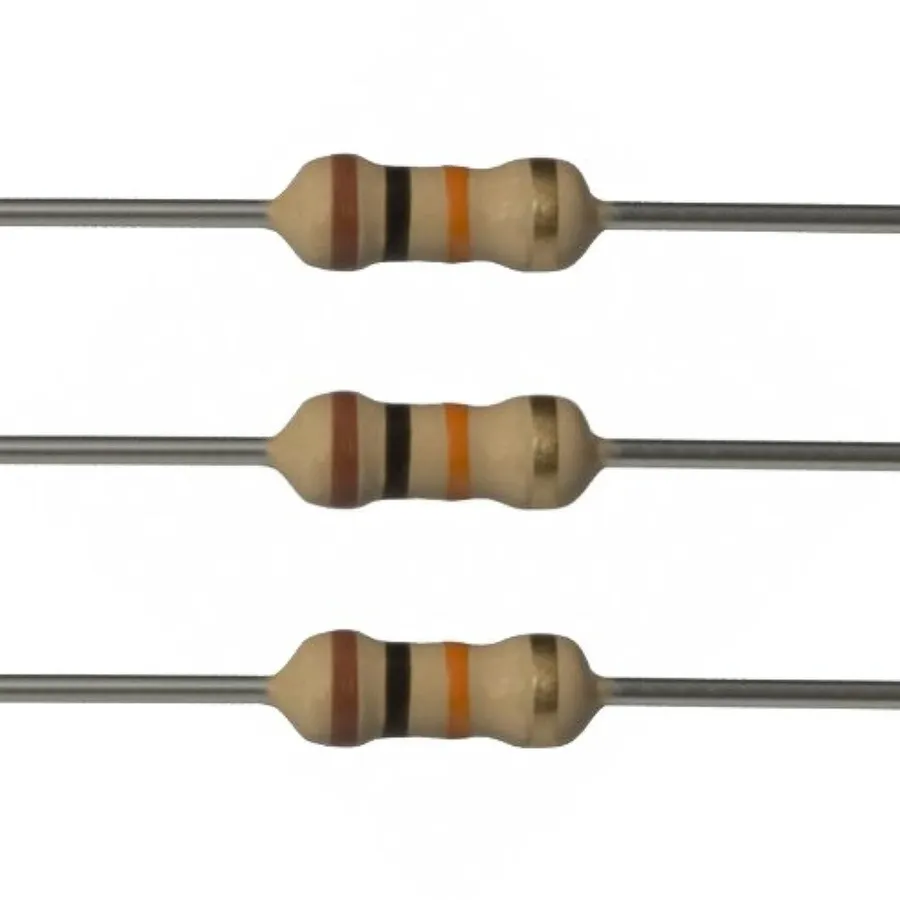
10k resistor color bands
The 10k resistor, a ubiquitous component in electronics, is typically identified using a four-band color code. This system allows for quick visual determination of the resistor's value and tolerance, crucial for efficient circuit design and troubleshooting. Understanding this color code eliminates the need for immediate multimeter measurements, streamlining the assembly process.
Band
Color
Digit/Multiplier
Tolerance
1st Band
Brown
1
-
2nd Band
Black
0
-
3rd Band
Orange
1000 (Multiplier)
-
4th Band
Gold
-
5%
Therefore, the color code brown, black, orange, and gold translates to 1, 0, multiplied by 1000, and a 5% tolerance, which equals 10,000 ohms (10kΩ) with a tolerance of ±5%. It is important to note that the first band is always the band nearest to the edge of the resistor body. This ensures accurate readings and avoids misinterpretation of the resistor's value.
Applications of the 10k Resistor
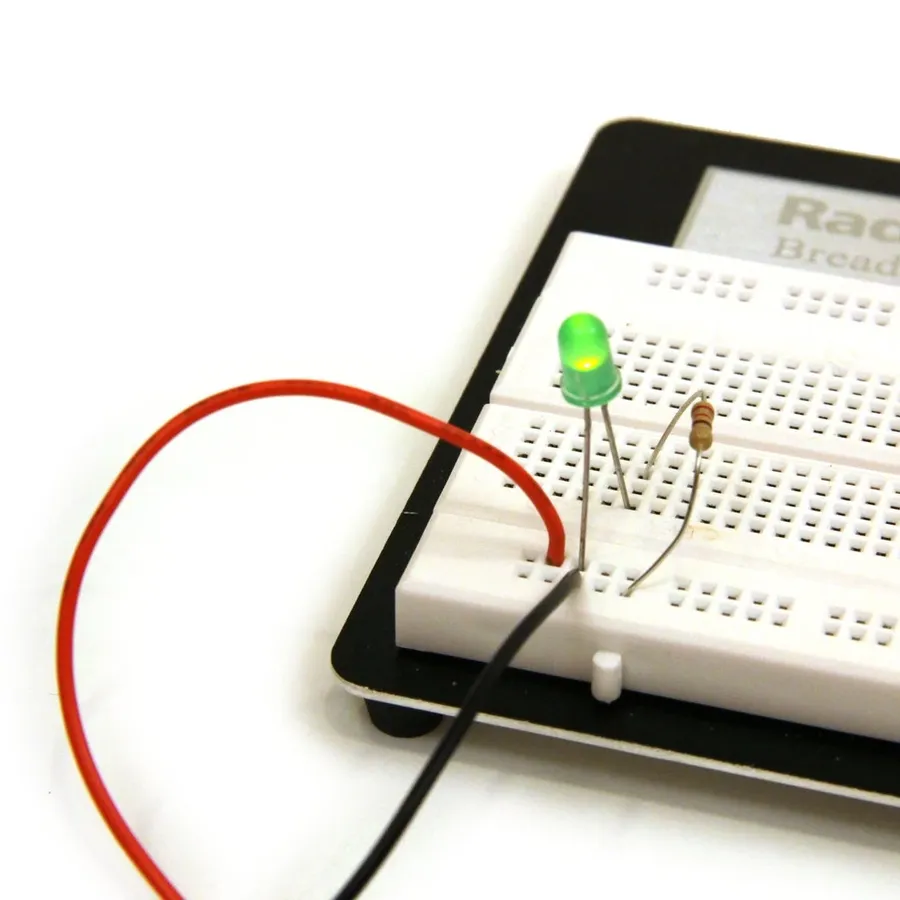
10k resistor on a breadboard
The 10k resistor's versatile nature stems from its resistance value, making it suitable for a variety of applications in electronic circuits. Its moderate resistance allows it to function effectively in roles such as pull-up and pull-down resistors, voltage dividers, and current-limiting for LEDs, among other applications.
Pull-up and Pull-down Resistors In digital circuits, 10k resistors are frequently used as pull-up or pull-down resistors. These configurations ensure a defined logic level (high or low) when an input signal is not actively driven. For example, in a microcontroller input, a pull-up resistor connected to the power supply will hold the input high by default, and when a button is pressed the input will be low. Using the 10k ensures a low current draw when the input is high, while providing enough current when low.
Voltage Dividers A 10k resistor can be paired with another resistor to create a voltage divider. These circuits are used to reduce a voltage to a desired lower level, which is commonly needed in sensor interfacing, signal conditioning, and analog circuitry. For instance, you can divide a 5V supply down to 2.5V by using two equal 10k resistors in series. The voltage is divided in proportion to the resistor values.
Current Limiting for LEDs While a 10k resistor can be used for current limiting, it's important to recognize that the 10k resistance value may be too high for many standard LEDs. For standard LEDs, lower resistance values such as 220 ohms to 1k ohms are often preferred for better brightness and efficiency. The high resistance of the 10k ohm value would lead to lower brightness in many LEDs applications. However, in some low-power or indication applications, it can be effective at preventing damage due to excessive current, while still providing a visual indication of functionality.
Sensor Interfaces 10k resistors are often used in conjunction with sensors. For instance, they can form a part of resistive sensor circuits for measurement purposes or in combination with temperature or light-dependent resistors.
Arduino Projects In Arduino projects, the 10k resistor is an ubiquitous component. It's frequently used in pull-up configurations for button inputs, voltage dividers for analog sensor readings, and for other general-purpose tasks where a moderate resistance value is required.
10k Resistors vs. Other Resistors
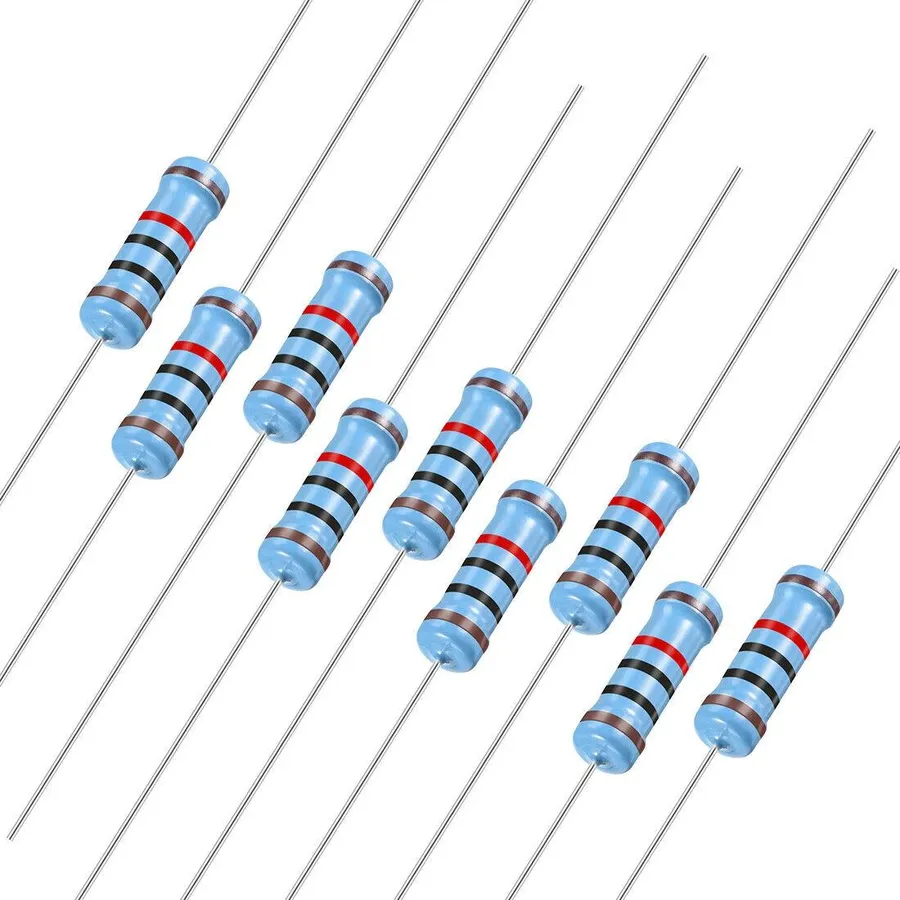
Different value resistors
While the 10k resistor is a staple in electronics, understanding its performance relative to other resistor values is crucial for optimal circuit design. This section details how 10k resistors compare with common values like 1k and 220 ohms, focusing on their specific applications and suitability within different circuit contexts.
Resistor Value
Typical Application
Pros
Cons
Suitability
10k Ohm
Pull-up/pull-down resistors, voltage dividers, LED current limiting (low current)
Good balance of current limiting and voltage division, relatively low power consumption
May not be suitable for high-current applications
Versatile for general-purpose use, ideal for digital logic and low-power circuits
1k Ohm
LED current limiting (higher current), general current limiting
Provides higher current limiting compared to 10k, good for moderately higher power LEDs
Higher power consumption, can lead to increased heat
Suitable for applications requiring higher current compared to 10k, such as brighter LEDs.
220 Ohm
LED current limiting (high current), general current limiting
Provides high current limiting, good for standard LEDs
Higher power consumption and heat generation, not ideal for low power circuits
Ideal for bright LEDs, and scenarios where higher current flow is necessary
The selection of a resistor value depends on the circuit’s specific requirements, including the required current limiting, voltage drop, and the desired power consumption.
Through-Hole vs. Surface Mount 10k Resistors
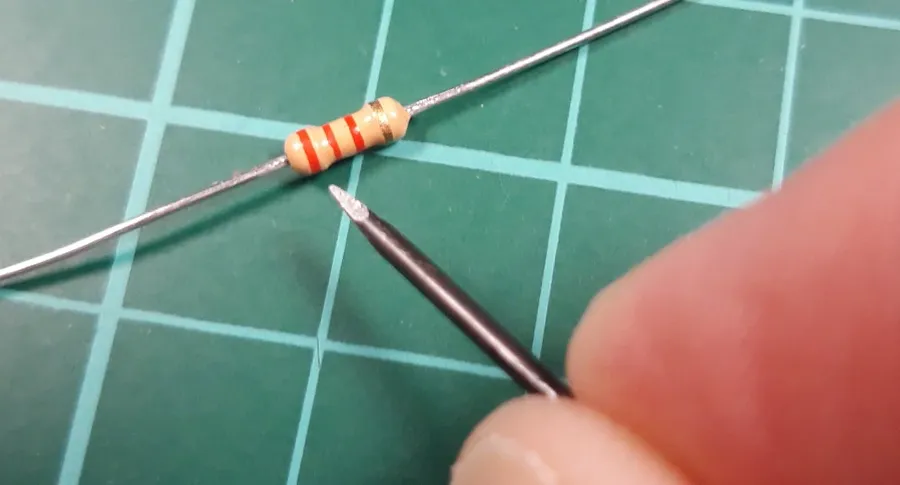
Through-hole and surface mount resistors
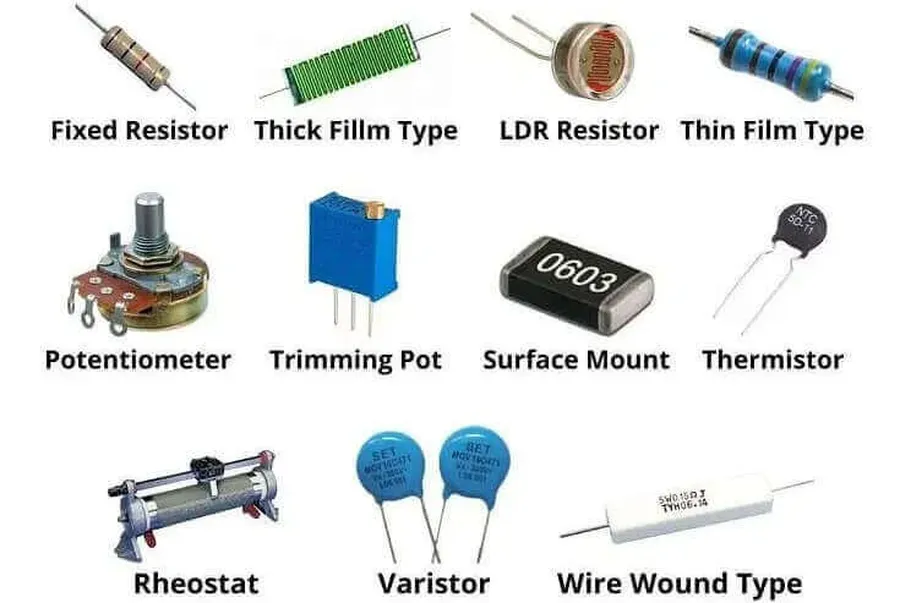
10k resistors are available in two primary mounting styles: through-hole and surface mount (SMD). The choice between these types significantly impacts their application, ease of use, and installation process. Selecting the appropriate style is crucial for efficient and reliable circuit design and assembly.
Feature
Through-Hole
Surface Mount (SMD)
Mounting Method
Leads inserted through holes in PCB
Soldered directly onto the surface of PCB
Size
Larger, bulkier components
Smaller, more compact components
Ease of Hand Assembly
Easier for manual soldering and prototyping
More challenging for manual soldering, requires precision and specialized tools
Robustness
More mechanically robust; less prone to accidental dislodging
More vulnerable to dislodging with physical stress
PCB Space Usage
Requires more space on PCB, due to holes and lead clearance
Saves PCB space and facilitates higher component density
Automation
Less suitable for automated assembly, except axial leaded components
Highly suitable for automated assembly using pick-and-place machines
Application
Ideal for prototyping, breadboarding, and educational use.
Ideal for mass production, compact designs, and miniaturized electronics
In summary, through-hole 10k resistors are favored in prototyping and educational settings where manual manipulation is common and robustness is valued. Conversely, SMD 10k resistors are the standard for mass-produced electronics where space efficiency and automated assembly are essential. The decision should be based on project requirements, manufacturing volume, and available equipment.
Frequently Asked Questions About 10k Resistors
This section addresses common queries regarding 10k resistors, providing detailed explanations to enhance understanding and practical application. We aim to clarify any confusion and offer clear guidance on their use.
What is a 10k resistor equivalent to in terms of resistance? A 10k resistor, often written as 10 kilohms or 10,000 ohms, provides a specific resistance of 10,000 ohms to the flow of electrical current. It is equivalent to a resistor that opposes current flow by this precise amount.
What is the standard color code for a 10k resistor? The standard four-band color code for a 10k resistor is: Brown (1), Black (0), Orange (3 zeros or * 10^3) , and Gold (5% tolerance). These bands represent the numerical value and the tolerance, respectively.
Can a 10k resistor be effectively used with LEDs? Yes, a 10k resistor can be used with LEDs, primarily as a pull-up or pull-down resistor. However, it is generally too large a value for current limiting directly with an LED; usually lower values like 220 ohms or 330 ohms are preferred for that purpose. If used in series, a 10k will likely not let enough current through for the LED to light up, and the LED would not be very bright as a result.
How much voltage does a 10k resistor drop? The voltage drop across a 10k resistor is not a fixed value; it depends on the current flowing through it, as defined by Ohm's Law (V=IR). If 1mA of current flows through the 10k resistor, then the voltage drop across the 10k resistor is 10 Volts, but the voltage drop will change linearly as the current flow changes. Without knowing the current, the voltage drop can not be calculated
Is a 10k resistor suitable for precision applications? While 10k resistors are versatile, their standard tolerance (often 5% with a gold band) may not be adequate for high-precision applications. For such purposes, higher precision resistors with tighter tolerances (e.g., 1% or 0.1%) might be needed. It depends on the specific project requirements.
What is the typical power rating of a 10k resistor? Common 10k resistors come in standard power ratings, such as 1/4 watt (0.25W), 1/2 watt (0.5W), and 1 watt. The required power rating for the resistor depends on the amount of current passing through it. It's essential to ensure the power rating is sufficient to prevent damage from overheating.
What are the common applications of 10k resistors in digital circuits? In digital circuits, 10k resistors are widely used as pull-up or pull-down resistors to define logic levels at digital inputs. They are often employed when an input may be left floating or in an undefined state and need a bias to ground or the voltage rail.
Where to Buy 10k Resistors
Electronic component shop
Purchasing 10k resistors from reliable sources is crucial to ensure quality and performance. This section outlines reputable online retailers, electronics component suppliers, and provides tips for avoiding counterfeit or substandard parts.
Key considerations when purchasing 10k resistors include the seller's reputation, pricing, and customer reviews. When sourcing 10k resistors, opting for established distributors, and well-known online platforms will greatly increase the probability of receiving the correct component.
Reputable Online Retailers Consider purchasing from established platforms such as Digi-Key, Mouser Electronics, and Arrow Electronics. These retailers offer a wide selection of electronic components from various manufacturers, along with detailed product specifications and datasheets. These companies provide certifications to ensure traceability, guaranteeing a high standard of manufacturing practices.
Electronics Component Suppliers For smaller quantities or less formal project applications, sources such as Amazon or Adafruit may be useful. However, users should pay close attention to seller ratings, and verify the authenticity of the components by cross-referencing datasheets where applicable.
Tips for Ensuring Quality and Authenticity Always check customer reviews and seller ratings. Avoid purchasing from unverified sources or sellers with limited or negative feedback. If possible, compare specifications with the manufacturer's datasheets. Be wary of prices that are significantly lower than the industry average, as this can indicate counterfeit products.
Potential Pitfalls and How to Avoid Them Beware of counterfeit parts, which often do not meet the required specifications and may lead to circuit malfunctions or even failures. Always purchase from authorized distributors and do not compromise on quality for the sake of lower prices. Verify the resistance value and tolerance of components when they are received with a multimeter.
Practical Tips for Using 10k Resistors
Effectively utilizing 10k resistors in electronic projects requires an understanding of practical parameters beyond their nominal resistance value. Factors such as tolerance, power rating, and accurate measurement are crucial for reliable circuit operation. These considerations help ensure that the 10k resistor performs as intended within the circuit.
Tolerance Levels Resistors are manufactured with a specified tolerance, indicating the permissible deviation from their stated resistance value. A 10k resistor with a 5% tolerance, for example, may have an actual resistance between 9.5kΩ and 10.5kΩ. Understanding and accommodating this variation is essential for proper circuit design.
Power Rating The power rating of a resistor specifies the maximum amount of power it can safely dissipate as heat without being damaged. 10k resistors are commonly available with power ratings ranging from 1/8 watt to 1 watt. Selecting a resistor with an adequate power rating based on the application is vital to prevent overheating and potential failure. Calculating the power dissipation is done using the formula P=I²R or P=V²/R.
Measurement Techniques While the color code provides a quick way to identify a 10k resistor, using a multimeter is the most reliable way to verify its actual resistance. When measuring, ensure the resistor is isolated from the circuit. It is important to select a suitable scale on the meter, and to account for the meter's own internal resistance when measuring very high resistance resistors.
Environmental Factors Environmental conditions like temperature and humidity can affect a resistor's performance. Changes in temperature can cause slight variations in resistance value, while excessive humidity may degrade certain types of resistors. Consideration of these factors is needed particularly in sensitive or harsh applications.
Proper Handling Resistors should be handled carefully to prevent damage to their leads or protective coating. Avoid bending the leads too sharply, and store resistors in a dry place to prevent oxidation. This is especially true with through-hole components.
From the basics of the color code to the practical tips and sourcing advice, this guide has explored the versatile nature of the 10k resistor, an unassuming component that powers so much of our technology. Just like how a 10k resistor ensures precise control in a circuit, understanding these basic principles is crucial for the success of any electronics project. Whether you're a seasoned engineer or a hobbyist just starting, the knowledge about the 10k resistor provides a foundation for building and understanding the electronic world. So, the next time you reach for a 10k resistor, you will have a deeper appreciation for the role that it plays.