In the vast universe of electronics, the humble resistor plays a pivotal role, much like the unsung heroes of our modern gadgets. Often appearing as small, color-banded cylinders, they are fundamental for current control. Among these, the 1/4 watt resistor is a workhorse for low-power projects. This article delves deep into understanding these ubiquitous components, exploring their power handling, typical applications, and considerations when choosing them for your projects, even comparing them to their 1/2 watt cousins. Imagine, this tiny 1 4 watt resistor is the gatekeeper of current flow in countless circuits, ensuring that the flow of electrons is as precise as a carefully calibrated stream, or you are using a 1 4 watt resistor in your next project.
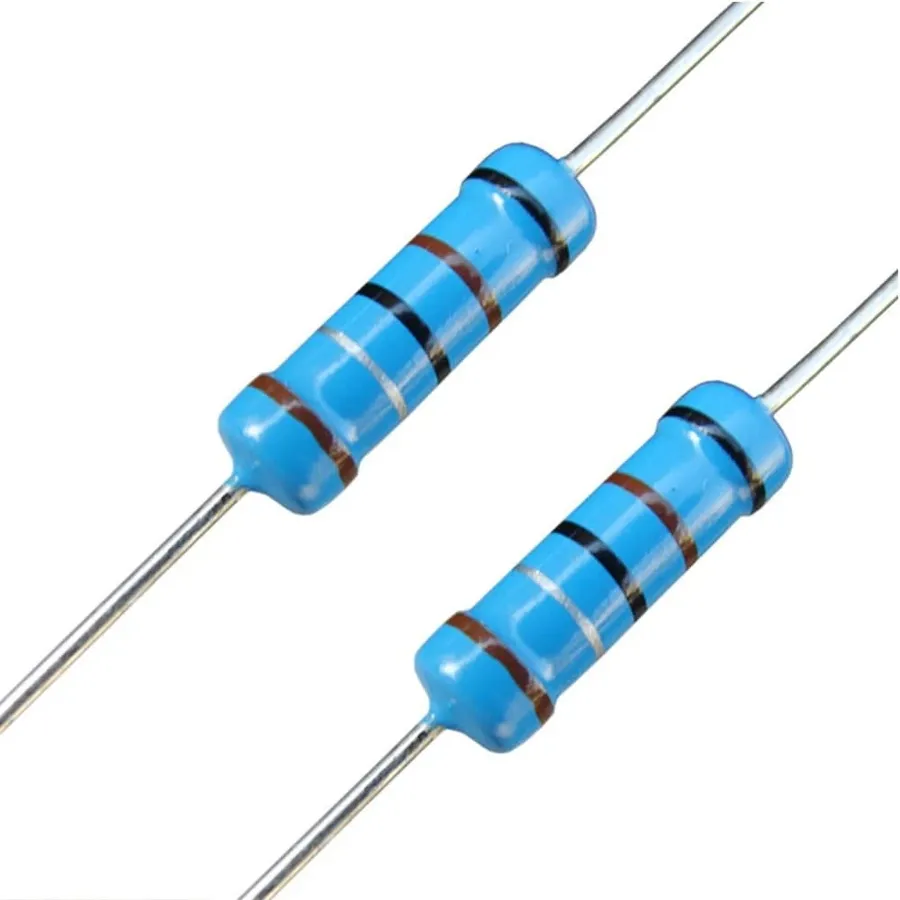
A 1/4 watt resistor is a fundamental electronic component designed to limit the flow of electrical current within a circuit, with a specified power dissipation rating of 0.25 watts. This power rating signifies the maximum amount of electrical energy the resistor can safely convert into heat without sustaining damage or altering its resistance value. Understanding this rating is crucial for ensuring the reliability and longevity of electronic circuits.
The '1/4 watt' specification of a resistor denotes its power rating, which is the maximum amount of electrical power it can safely dissipate as heat without being damaged. This rating is a critical parameter that ensures the reliable operation of electronic circuits. Understanding this specification is paramount to prevent component failure due to overheating.
Power dissipation in a resistor is governed by Joule's First Law, which states that the power (P) dissipated in a resistor is proportional to the square of the current (I) passing through it and the resistance (R) of the resistor itself (P=I²R). As electrical current flows through the resistor, it encounters resistance, and this interaction results in the conversion of electrical energy into thermal energy. This thermal energy manifests as heat. The power rating of 1/4 watt indicates that the resistor is designed to manage up to 0.25 joules of energy per second, with the excess energy being dissipated safely into the surrounding environment.
Exceeding the power rating of a resistor can lead to several undesirable consequences. Primarily, it will result in excessive heat generation within the resistor itself. When subjected to power dissipation beyond its rating, a 1/4 watt resistor's internal temperature can increase drastically, leading to changes in resistance value, premature failure, or even physical damage such as cracking, melting, or burning of the resistor's body. In extreme cases, this can potentially cause secondary component damage in the circuit and create fire hazards. Therefore, selecting components with appropriate power handling capacity, as indicated by their wattage, is crucial to guarantee long-term performance, reliability, and safety of electronic devices.
The current handling capability of a 1/4 watt resistor is not a fixed value; it is intrinsically linked to its resistance. Understanding this relationship is crucial for circuit design to ensure the resistor operates within its specifications. The power dissipated by a resistor, measured in watts, is a function of both the current flowing through it and its resistance. Exceeding the power rating of a resistor can cause it to overheat, leading to failure and potentially damaging other components in the circuit.
The fundamental relationship between power (P), current (I), and resistance (R) is defined by the formula: P = I²R. This equation allows us to calculate the maximum current a resistor can handle before exceeding its power rating. By rearranging the formula, we can solve for current: I = √(P/R). This transformation enables us to determine the maximum current (I) a 1/4 watt (P = 0.25W) resistor can handle for a specific resistance value (R).
| Resistance (R) | Maximum Current (I) for 1/4 Watt Resistor |
|---|---|
| 10 Ω | 0.158 A (158 mA) |
| 100 Ω | 0.050 A (50 mA) |
| 1 kΩ | 0.016 A (16 mA) |
| 10 kΩ | 0.005 A (5 mA) |
It's vital to note that these values represent the *maximum* current a 1/4 watt resistor can theoretically handle. In practical applications, it's good practice to operate resistors below their maximum power rating, typically at 75% or less, to provide a safety margin and enhance the longevity of the component. This ensures the resistor dissipates heat effectively and prevents premature failure. Consider the ambient temperature which can influence heat dissipation when selecting a resistor for an application.
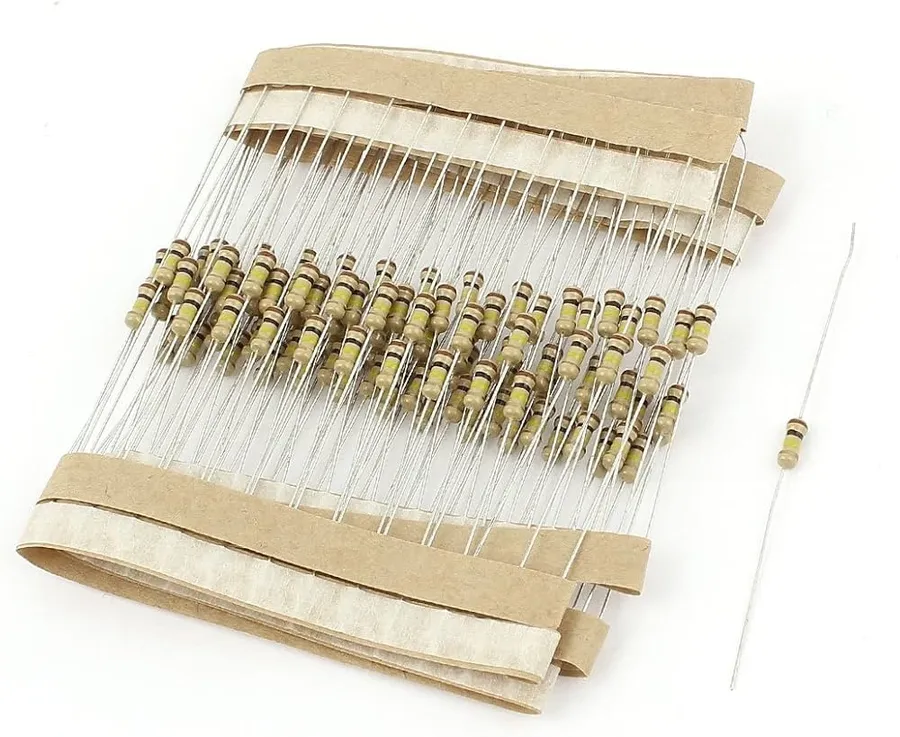
1/4 watt resistors are ubiquitous in low-power electronic circuits due to their compact size, cost-effectiveness, and adequate power handling for numerous applications. They are a staple component for hobbyists, engineers, and students alike, frequently appearing in diverse electronic assemblies.
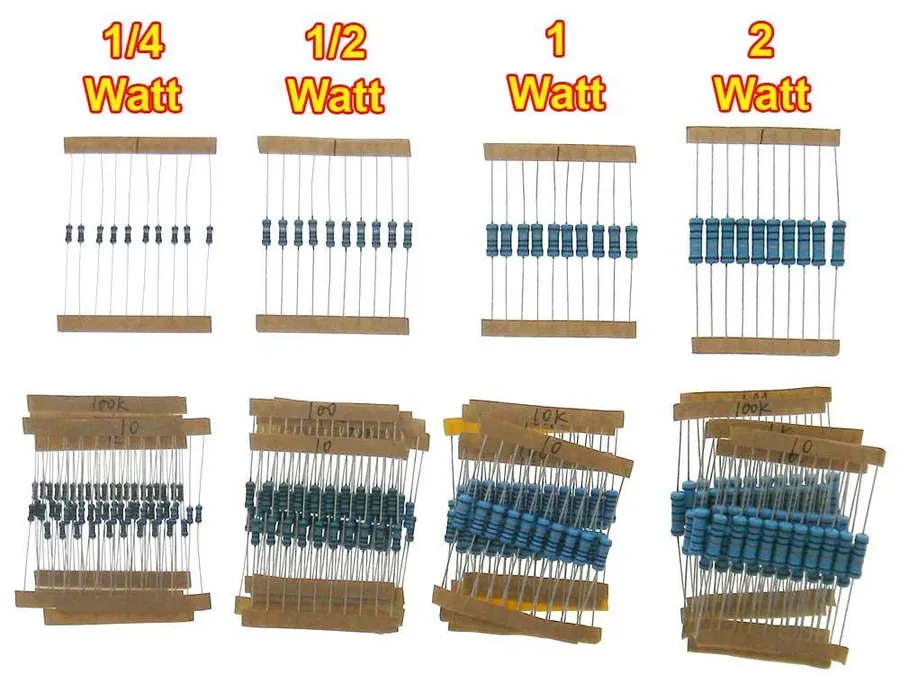
While both 1/4 watt and 1/2 watt resistors serve the fundamental purpose of limiting current in electrical circuits, their key differences lie in their power handling capabilities, physical dimensions, and consequently, their optimal applications. Selecting the appropriate wattage is paramount to ensure circuit safety and longevity.
| Feature | 1/4 Watt Resistor | 1/2 Watt Resistor |
|---|---|---|
| Power Handling | 0.25 Watts | 0.5 Watts |
| Typical Current Handling (at 100Ω) | 50mA | 70.7mA |
| Typical Current Handling (at 1kΩ) | 15.8mA | 22.4mA |
| Physical Size | Smaller | Larger |
| Heat Dissipation | Lower | Higher |
| Applications | Low-power circuits, signal processing, hobby electronics | Circuits with higher current or power requirements, power supplies |
The current handling capacity of a resistor is dictated by its power rating and its resistance value. A 1/2 watt resistor can handle twice the power, and therefore more current, compared to a 1/4 watt resistor at the same resistance. For example, a 100Ω 1/4 watt resistor can handle approximately 50mA, whereas a 1/2 watt variant can handle about 70.7mA. It's crucial to consider both power and current when selecting a resistor, as exceeding either limit can lead to component failure.
The size difference isn't just for space constraints. Larger 1/2 watt resistors also have a larger surface area, enhancing their ability to dissipate heat. This is a critical consideration as excess heat can significantly shorten a resistor's lifespan or potentially cause damage to the surrounding components.
In summary, a 1/4 watt resistor is suitable for low-power applications where space and heat generation are less of a concern. Conversely, the 1/2 watt resistor is recommended for applications with higher current or power requirements, where better heat dissipation is beneficial. Choosing between the two depends on a careful evaluation of the circuit's needs.
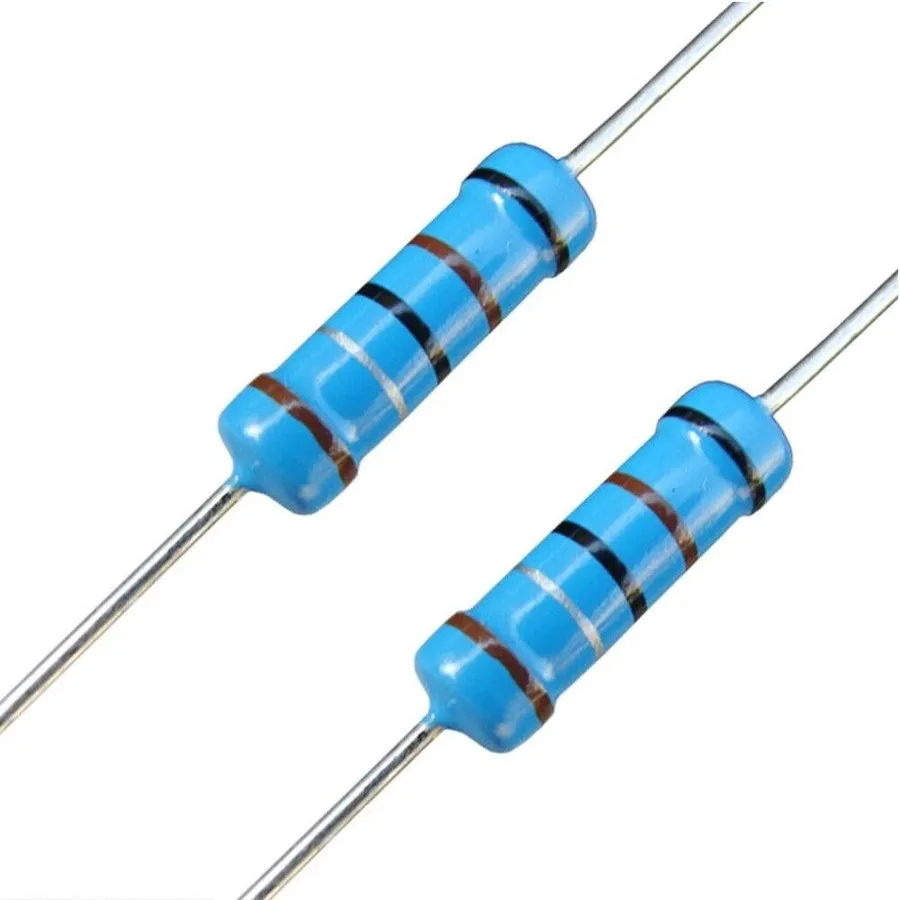
The physical size of a 1/4 watt resistor is standardized to facilitate its use in various circuit designs, primarily featuring a through-hole (PTH) package. While consistent dimensions are generally observed, slight variations may occur between manufacturers. The resistor's dimensions, though standardized, do not correlate directly with its resistance value or material composition, therefore visual size comparisons should not be used to determine specific electrical characteristics.
Choosing the appropriate 1/4 watt resistor for a circuit involves several crucial considerations beyond just its power rating. These include tolerance, resistance value, and material type, each influencing the performance and reliability of the circuit. A careful selection process ensures that the resistor operates within its design limits and contributes to the overall stability of the electronic system.
| Factor | Description | Impact on Circuit |
|---|---|---|
| Resistance Value (Ohms) | The specific resistance required for the circuit function. | Incorrect resistance values will cause the circuit to not operate as designed. |
| Tolerance (%) | The allowable deviation from the stated resistance value. Common values include 1%, 5%, and 10%. | Higher tolerance percentages lead to less precision in the circuit's performance, and therefore the circuit could operate outside of its specification. |
| Material Type | Whether the resistor is made from carbon film, metal film, or wire-wound. | Different materials have different temperature coefficients, noise characteristics, and precision. For example, metal film resistors provide better temperature stability than carbon film resistors. Higher-end circuits should use metal film or wire-wound resistors. |
Resistor color codes are a common way to identify the resistance value and tolerance of a through-hole resistor. These color bands on the resistor body follow a standard scheme defined by the Electronic Industries Alliance (EIA). Understanding this color code or using a datasheet is essential for accurate resistor identification and selection. For Surface mount resistors (SMD) the code is different, so check the datasheet for the specific SMD resistor.
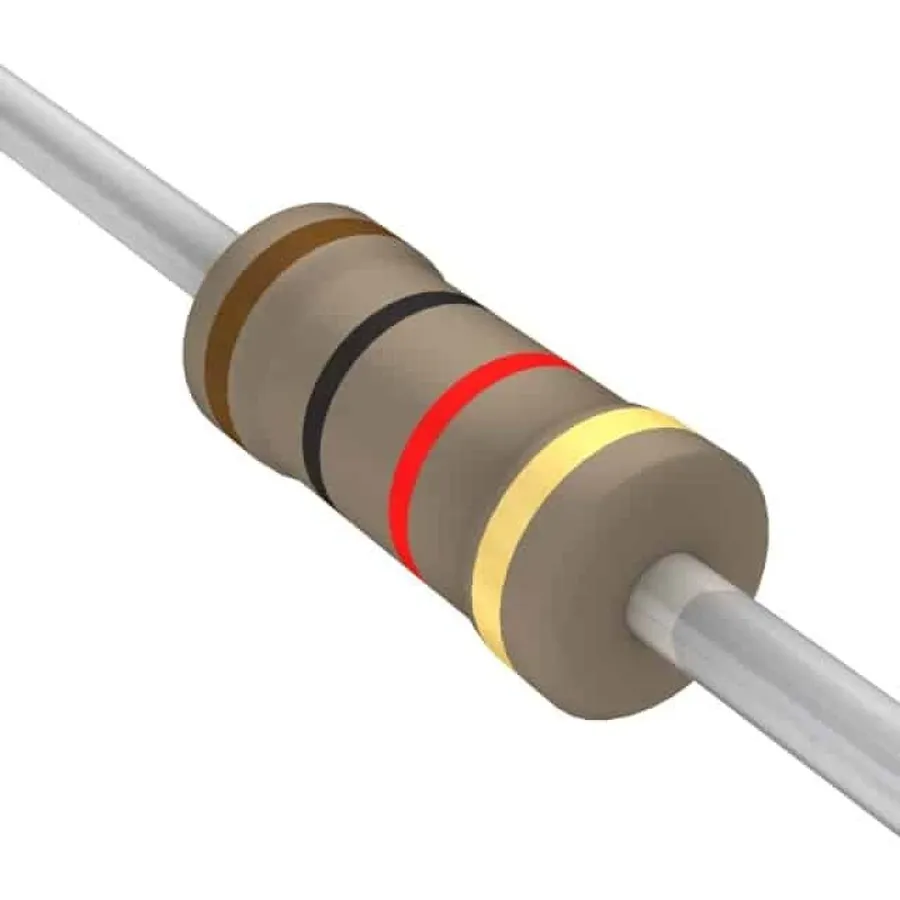
While a 1/4 watt resistor is suitable for many low-power applications, there are scenarios where substituting it with a 1/2 watt resistor is not only acceptable but often beneficial. This practice is primarily driven by the principle of over-specification, where using a component with a higher rating than required enhances the reliability and longevity of the circuit.
The crucial aspect to consider is that while a higher wattage rating is permissible, the resistance value must remain unchanged to maintain circuit functionality. Using a 1/2 watt resistor in place of a 1/4 watt resistor will not alter the circuit's electrical behavior, as the resistance is the key parameter for current and voltage manipulation.
Over-specification of the wattage is a generally safe practice as long as the resistance is correct. It is always advisable to ensure the replacement component has a higher power rating, but never a lower one, to maintain a safe operation and prevent component burnout.
Acquiring 1/4 watt resistors is generally straightforward due to their widespread use in electronics. They are available from a variety of sources, catering to different needs and budget considerations. Options range from large online retailers to smaller local shops, each offering distinct advantages.
When purchasing, verify the resistor's specifications: resistance value, tolerance, and wattage rating. Consider factors such as quantity needed, time constraints, and overall project budget to identify the most appropriate source. For bulk purchases, comparing prices from different vendors may yield significant savings. Always prioritize reputable suppliers to ensure the quality and reliability of the resistors.
The 1/4 watt resistor is truly a versatile component in the world of electronics, handling basic power needs in a range of circuits. Understanding its power rating, usage, and how it compares to other resistors like the 1/2 watt variant is paramount for effective circuit design. When a 1 4 watt resistor is the best choice it is essential for the design to work. As we look to the future, it's likely that these tiny titans of current control will remain indispensable, quietly powering the next generation of innovation. Choosing the right resistor, like understanding the capabilities of a 1 4 watt resistor, ensures the longevity and proper operation of electronic devices. Remember, that these small but powerful components are the fundamental building blocks of modern electronics.

