Like the silent but vital 4.7 ohm resistor in an electrical circuit, sometimes the smallest components play the biggest role. In our daily lives, from our smartphones to sophisticated electronic devices, these resistors regulate current flow. This guide will demystify the 4.7 ohm resistor, explaining its importance, variations, and practical applications, empowering you to select and use them effectively.
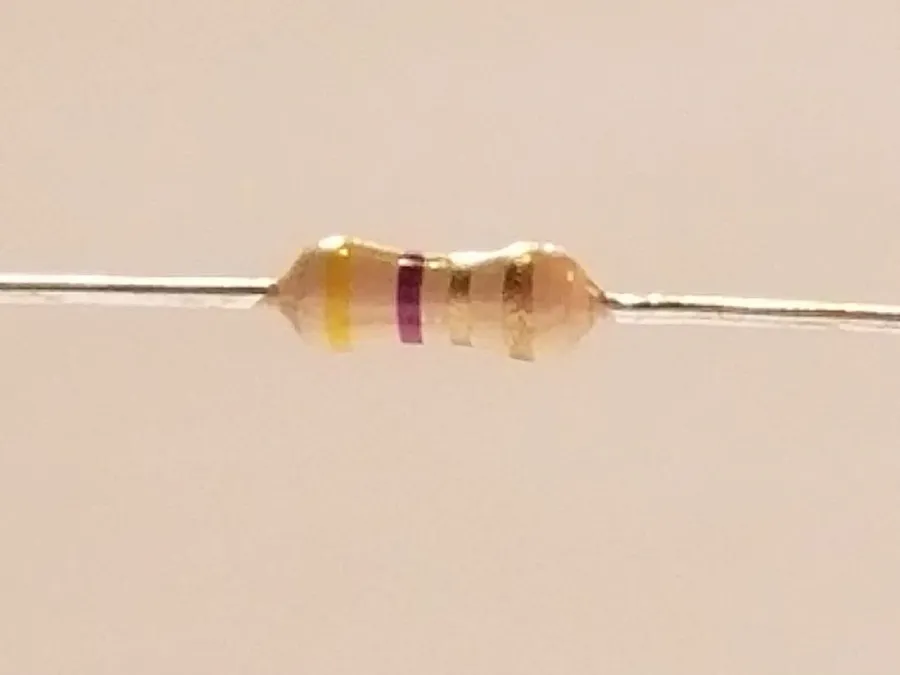
At the heart of electronics lies the concept of resistance, a property that opposes the flow of electrical current. The 4.7 ohm resistor, a component with a specific resistance of 4.7 ohms, serves as a crucial current regulator within circuits. By limiting the amount of current, it prevents damage to sensitive electronic components and ensures that circuits operate within their designed parameters, making it fundamental to the stability and functionality of countless electronic devices.
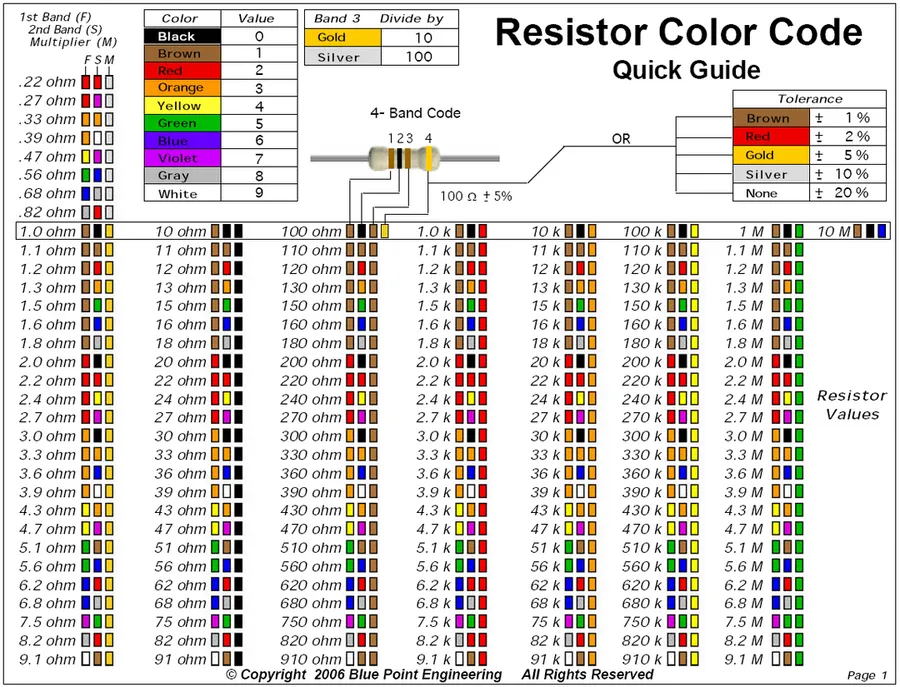
The 4.7 ohm resistor, a staple in electronics, is easily identified by its color code. This coding system allows for quick identification of the resistor's resistance and tolerance without the need for sophisticated measuring equipment. The standard color bands for a 4.7 ohm resistor are yellow, violet, gold, and gold, representing a 5% tolerance.
| Color Band | Digit/Multiplier Value | Tolerance |
|---|---|---|
| Yellow | 4 | N/A |
| Violet | 7 | N/A |
| Gold | x0.1 | N/A |
| Gold | N/A | ±5% |
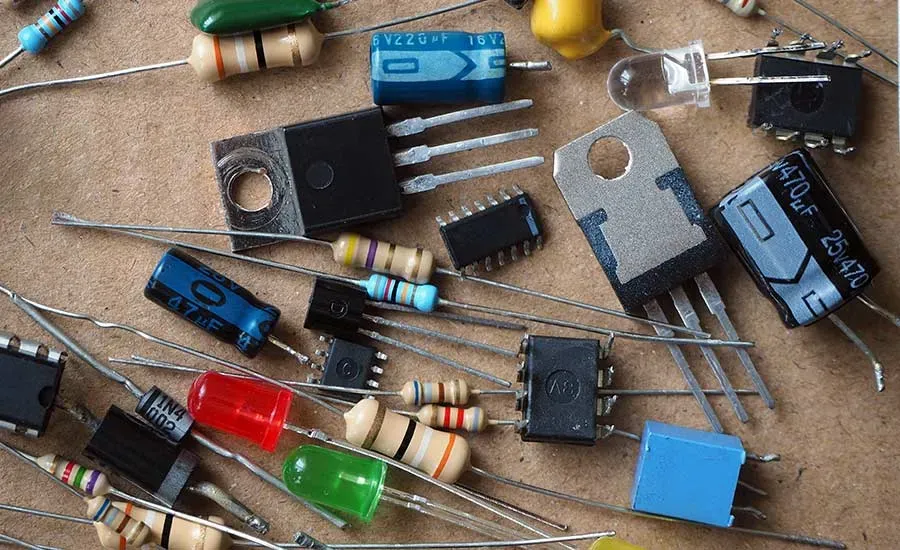
The selection of a 4.7 ohm resistor is not a one-size-fits-all decision; various types cater to different applications, each with distinct characteristics. Understanding these differences is crucial for optimal circuit design and performance. This section explores carbon film, metal film, metal oxide film, and wirewound resistors, detailing their unique properties, advantages, and typical use cases.
| Resistor Type | Construction | Typical Tolerance | Temperature Coefficient | Inductance | Typical Applications | Advantages | Disadvantages |
|---|---|---|---|---|---|---|---|
| Carbon Film | Carbon film deposited on a ceramic core | 5%-10% | High | Moderate | General purpose, low-cost applications | Low cost, readily available | High temperature coefficient, moderate noise |
| Metal Film | Thin metal alloy film deposited on a ceramic core | 1%-5% | Low | Low | Precision circuits, audio equipment | Low temperature coefficient, low noise | More expensive than carbon film |
| Metal Oxide Film | Metal oxide layer on a ceramic core | 1%-5% | Low | Very Low | High voltage, high power circuits | High temperature stability, Non-inductive | Higher cost than carbon and metal film |
| Wirewound | Wire wound around a ceramic core | 0.1%-5% | Low | High | High power applications, current sensing | High power handling capability, good precision | High inductance, large size |
Notably, metal oxide film resistors offer a distinct advantage in applications where residual inductance is undesirable, exhibiting virtually no inductive behavior. This feature is particularly valuable in high-frequency circuits where inductance can significantly affect performance. Furthermore, metal film resistors exhibit a lower temperature coefficient than carbon film resistors, making them ideal for applications requiring stability over varying temperatures. Wirewound resistors are most suitable when large power handling is needed, though, the higher inductance must be taken into account.
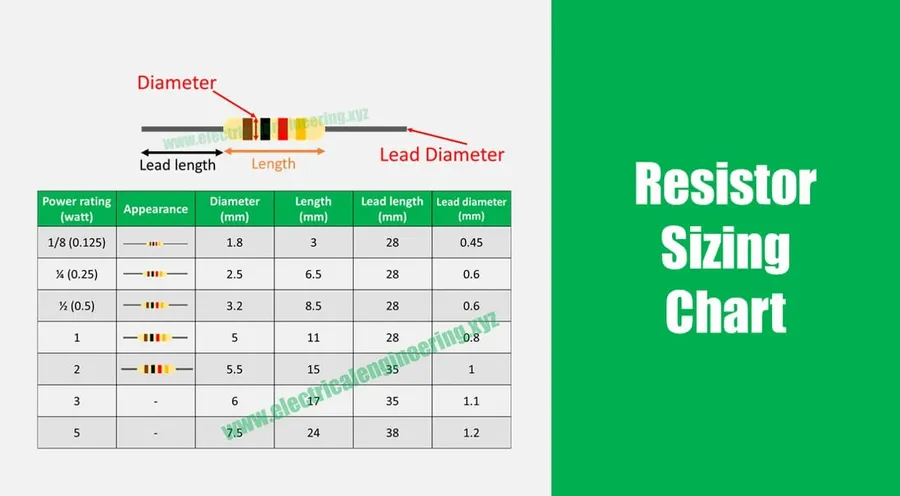
Selecting the correct power rating for a 4.7 ohm resistor is paramount for both circuit safety and optimal performance. The power rating, measured in watts (W), indicates the maximum amount of power a resistor can dissipate as heat without sustaining damage. Mismatched power ratings can lead to resistor failure, potentially causing circuit malfunction or even fire.
Resistors are available in various standard power ratings, including common values such as 1/8W, 1/4W, 1/2W, 1W, 2W, 5W, and 10W. The physical size of a resistor often correlates with its power rating, with higher wattage resistors typically being larger in size. The power rating is crucial because the electrical energy dissipated as heat, which is calculated using the formula P = I²R, needs to be managed by the resistor safely, where P is power in watts, I is current in amperes, and R is resistance in ohms.
To choose the appropriate power rating, it's essential to calculate or estimate the power dissipation in the circuit. For instance, if a 4.7 ohm resistor is expected to carry a current of 0.5A, it would dissipate power: P = (0.5A)² * 4.7Ω = 1.175W. In this scenario, selecting a 2W or 5W resistor would be necessary to ensure that the resistor is not operating near its maximum power rating. It's a good practice to choose a resistor that has a power rating significantly higher than what is calculated for the circuit to avoid overheating and premature failure.
| Power Rating | Typical Applications | Physical Size | Considerations |
|---|---|---|---|
| 1/8W (0.125W) | Low-power signal circuits, LED indicators | Very small | Good for low current, small size is a benefit |
| 1/4W (0.25W) | General-purpose circuits, basic hobby electronics | Small | Good balance of size and power handling |
| 1/2W (0.5W) | Slightly higher power circuits, audio signal paths | Medium | Handles more power than 1/4W |
| 1W | Medium power applications, power supplies | Medium to large | Suitable for moderate power dissipation |
| 2W to 5W | Higher power circuits, motor control, some power supplies | Large | Requires more board space due to larger size |
| 10W or Higher | High-power applications, heat sinks may be required | Very Large | Typically used for current control or braking resistors |
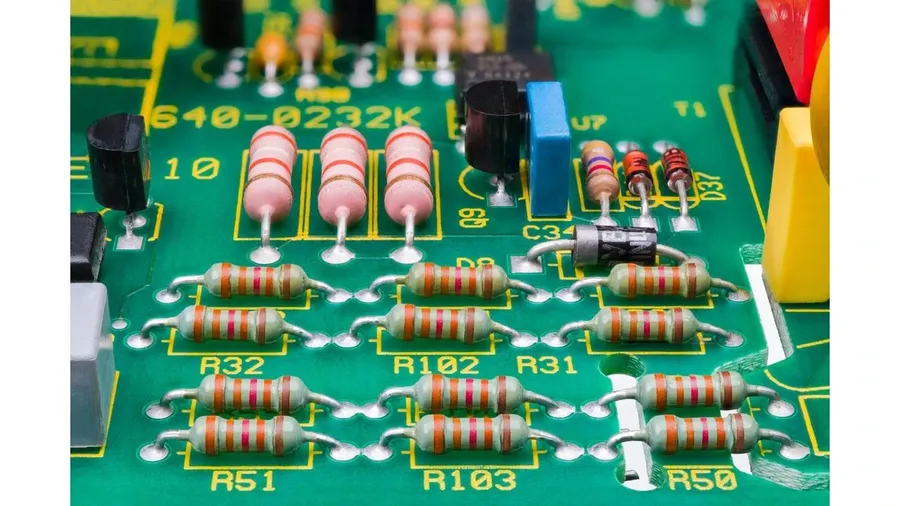
The 4.7 ohm resistor, while seemingly simple, plays a crucial role in diverse electronic applications. Its primary function is to regulate current flow, preventing damage to sensitive components and ensuring circuits operate as intended. This section explores its practical uses in audio circuits, LED circuits, and power supplies, as well as its behavior in series and parallel configurations.
Securing the correct 4.7 ohm resistor for your project is essential, and several options are available, ranging from large online marketplaces to specialized electronics suppliers. This section provides practical advice on where to purchase these components, and what to consider before making a purchase.
When purchasing 4.7 ohm resistors, several factors should be taken into account to ensure you are buying the right part.
This section addresses common issues encountered with 4.7 ohm resistors and provides solutions. Additionally, it clarifies frequently asked questions regarding their usage and specifications, ensuring a comprehensive understanding for practical applications.
Selecting the appropriate 4.7 ohm resistor requires a careful evaluation of various types, each with distinct characteristics, applications, and cost implications. This section provides a comparative analysis, emphasizing practical advice to guide the user in choosing the optimal resistor for their specific needs. Understanding the nuances between metal film, carbon film, and wirewound resistors is crucial for effective circuit design and functionality.
| Characteristic | Metal Film Resistor | Carbon Film Resistor | Wirewound Resistor |
|---|---|---|---|
| Resistance Tolerance | Typically 1% or 5% | Typically 5% or 10% | Typically 1% to 5% |
| Temperature Coefficient | Low, typically ±50 ppm/°C | Moderate, typically ±250 ppm/°C | Low, typically ±100 ppm/°C |
| Power Rating | Low to medium (e.g., 1/8W, 1/4W, 1/2W, 1W) | Low to medium (e.g., 1/4W, 1/2W, 1W) | Medium to High (e.g., 1W, 3W, 5W, 10W or higher) |
| Stability | High stability with low noise | Moderate stability with higher noise | High stability and low noise, but can be inductive |
| Typical Applications | Precision circuits, audio amplifiers, instrumentation | General-purpose applications, low-cost electronics | High-power applications, power supplies, braking resistors |
| Cost | Moderate | Low | Moderate to High |
| Pros | High precision, low noise, stable performance. | Low cost, suitable for general use. | High power handling, robustness |
| Cons | More expensive than carbon film resistors | Lower precision, higher noise, sensitive to temperature variations. | May have some inductance, higher cost, typically larger size. |
Practical Advice: For precision circuits, such as those found in instrumentation or audio amplifiers, a metal film resistor with its low tolerance and temperature coefficient is preferred. For general purpose applications with less stringent requirements, a carbon film resistor is a cost effective solution. In high-power applications, such as power supplies or motor controllers, a wirewound resistor is the best option. When choosing between 1/8W metal film or a 10W wirewound resistor, the primary factor should be the power demands of the circuit; using a resistor under its rated power value ensures reliability. Remember that the tolerance directly impacts performance, especially in circuits where small variations in resistance can be critical.
For advanced applications, understanding the temperature coefficient and precision of a 4.7 ohm resistor is crucial. These factors significantly impact circuit performance, especially in sensitive or high-performance electronics. Selecting the correct resistor with respect to these factors ensures circuit stability and optimal functionality.
The temperature coefficient of a resistor quantifies how its resistance changes with temperature variations, typically expressed in parts per million per degree Celsius (ppm/°C). For example, a resistor with a temperature coefficient of +100 ppm/°C will increase its resistance by 0.01% for every 1°C rise in temperature. Different resistor types have different temperature coefficients. Metal film resistors generally exhibit a lower temperature coefficient than carbon film resistors, making them the preferable option for environments with fluctuating temperatures. Wirewound resistors, while capable of handling higher power, can also have higher temperature coefficients, and may not be suitable for sensitive circuits where temperature stability is critical. The selection of a resistor based on its temperature coefficient is key to maintaining predictable circuit performance.
Tolerance, usually expressed as a percentage (e.g., 1% or 5%), indicates the allowable deviation of a resistor’s actual resistance from its stated value. In precision circuits, such as those found in medical devices or scientific instrumentation, a 1% tolerance resistor is often required to meet stringent accuracy requirements, since the resistor value is within a smaller deviation from the nominal value. In contrast, 5% tolerance resistors are generally suitable for less critical applications where a small variation in resistance has a negligible impact on the circuit operation, such as in some LED circuits. Selecting the appropriate tolerance is important to balance cost with circuit accuracy requirements.
The physical assembly of a resistor in a circuit also plays a role. Through-hole resistors, with their wire leads, are inserted into circuit boards and are ideal for prototyping and low-volume production. Surface Mount Devices (SMD) resistors, are smaller and are soldered directly onto the surface of circuit boards and are much better for high density and automated assembly. In precision circuits, SMD resistors are generally preferred for their smaller size, and improved performance characteristics, such as lower parasitics, compared to through-hole counterparts, making them suitable for modern miniaturized electronics. Choosing between SMD and through-hole resistors is generally dictated by the application requirements and assembly process.
The humble 4.7 ohm resistor, often overlooked, is essential to electronics, like a well-balanced musical note. From regulating current to optimizing audio output, its correct application is key. Remember, choosing the right type, power rating, and tolerance is critical for success. Just like how a 4.7 ohm resistor provides the right resistance, with proper knowledge, any electronics project can be just right.

