In the intricate world of electronics, the humble resistor plays a crucial role. Among them, the 2k resistor stands out as a common component found in a vast array of circuits, from basic LED drivers to complex audio amplifiers. Imagine the smooth flow of traffic on a highway – resistors like our 2k counterpart regulate the flow of electrical current, preventing overloads and ensuring the proper functioning of devices. In this article, we'll delve deep into the characteristics, applications, and selection criteria of the 2k resistor, providing clear and authoritative information for hobbyists and professionals alike.
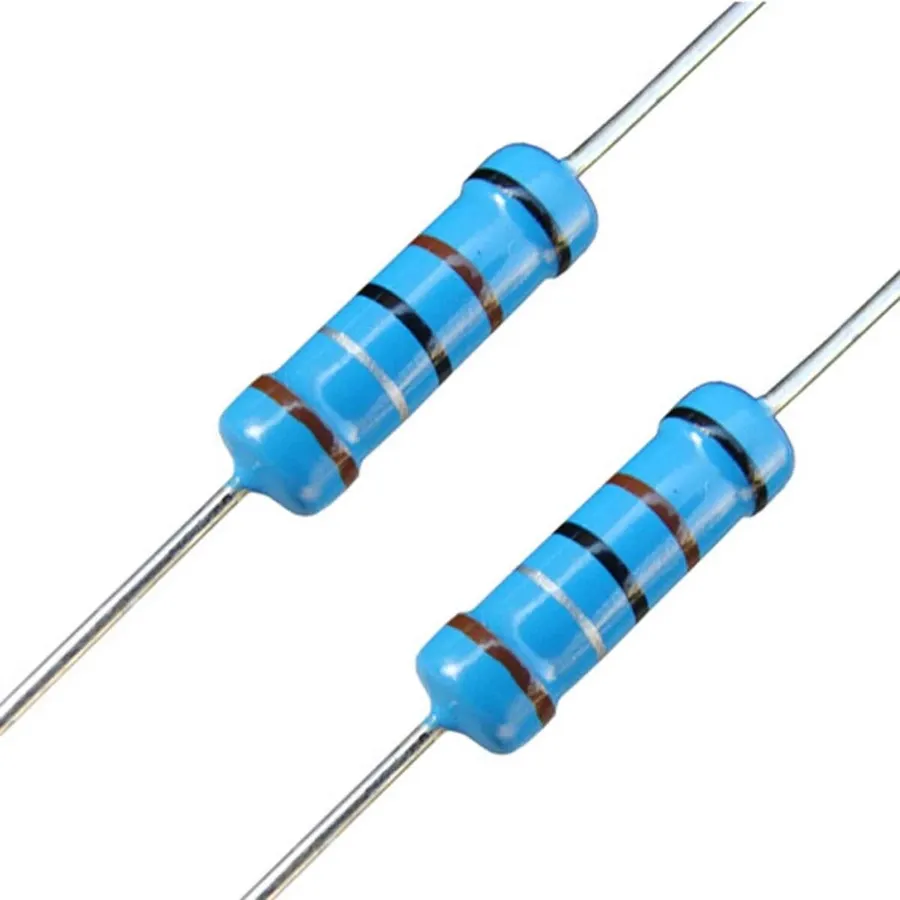
A 2k resistor, fundamentally, is a passive electronic component meticulously engineered to oppose the flow of electric current within a circuit, exhibiting a fixed resistance value of 2000 ohms. This opposition is crucial for controlling current and voltage levels within the circuit, thereby enabling specific functionalities.
The primary role of a resistor, such as a 2k resistor, is to limit current, convert electrical energy into heat, and establish precise voltage drops across circuit segments. Its inclusion in a circuit is not arbitrary; it's a deliberate design choice to achieve specific electrical behaviors.
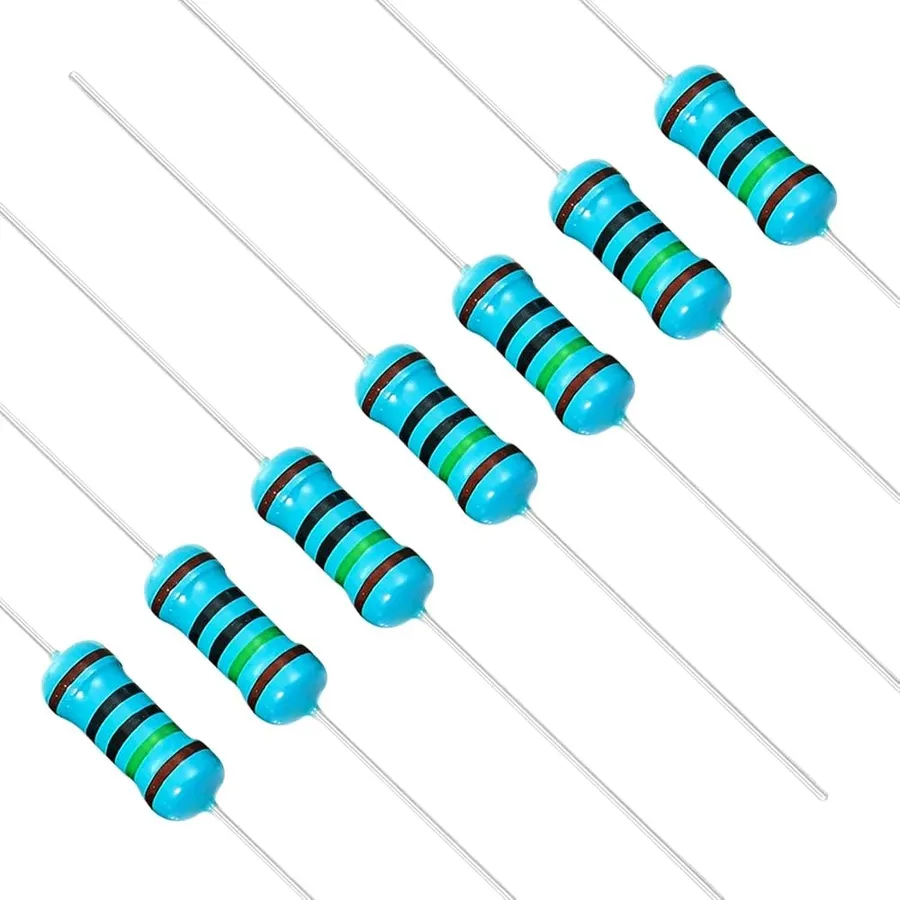
2k resistors, while all having a nominal resistance of 2000 ohms, come in various types, each with distinct characteristics tailored for specific applications. These variations arise from differences in their construction materials and manufacturing processes, influencing parameters such as tolerance, power rating, temperature coefficient, and cost.
| Resistor Type | Construction | Tolerance | Power Rating | Temperature Coefficient | Typical Applications | Cost |
|---|---|---|---|---|---|---|
| Carbon Film | Carbon film deposited on a ceramic substrate. | ±2% to ±10% | Low (e.g., 1/4W) | Moderate | General-purpose applications, hobbyist projects. | Low |
| Metal Film | Thin metal film deposited on a ceramic substrate. | ±0.1% to ±1% | Low to Moderate (e.g., 1/8W, 1/4W) | Low | Precision circuits, instrumentation, audio equipment. | Moderate |
| Wire-Wound | Wire wound around a ceramic or fiberglass core. | ±0.01% to ±5% | High (e.g., 1W, 2W, 5W) | Low | High-power applications, current sensing, load resistors. | Moderate to High |
| Surface Mount (SMD) | Thick or thin film deposited on a ceramic substrate. | ±0.1% to ±5% | Low (e.g., 1/10W, 1/8W) | Moderate | High-density circuits, automated assembly. | Moderate |
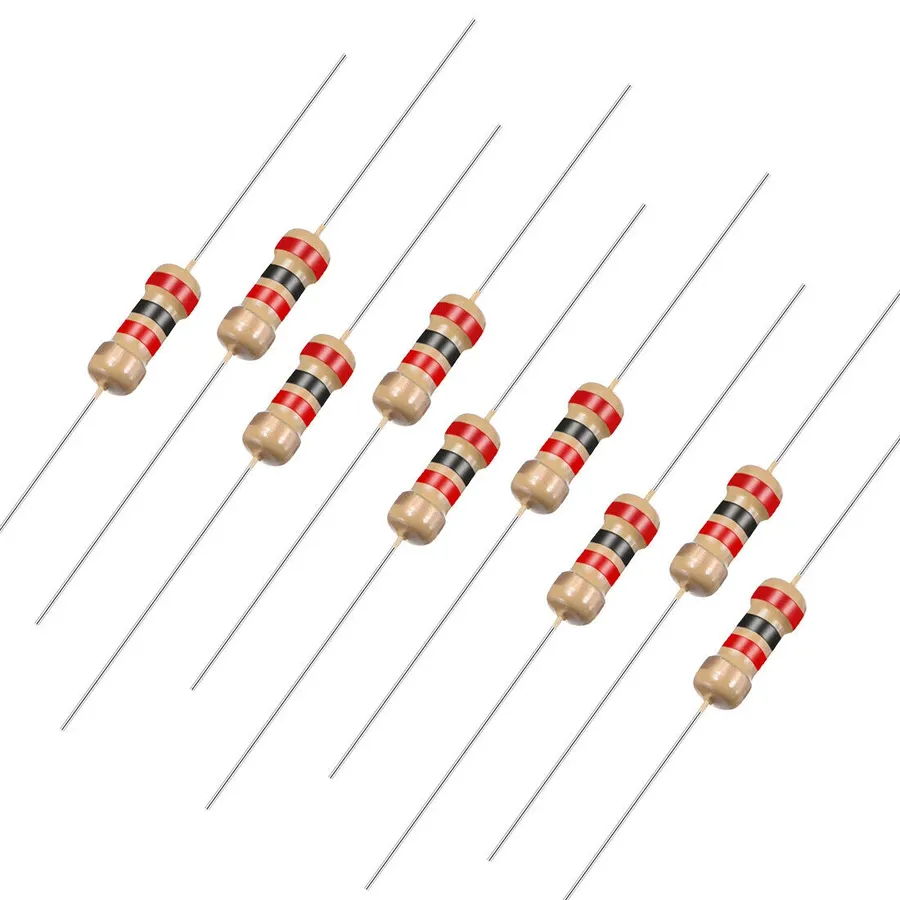
The 2k resistor, a component crucial in electronic circuits, is commonly identified through its color bands or, in the case of Surface Mount Devices (SMD), alphanumeric codes. These markings encode the resistance value, tolerance, and, in some cases, the temperature coefficient. Understanding these markings is essential for proper component selection and circuit functionality.
| Band | Color | Digit | Multiplier | Tolerance |
|---|---|---|---|---|
| 1st Band | Red | 2 | - | - |
| 2nd Band | Black | 0 | - | - |
| 3rd Band | Red | - | 10^2 | - |
| 4th Band | Gold | - | - | ±5% |
For a standard 2kΩ resistor, the color code is typically Red, Black, Red, and Gold. The first two bands (Red, Black) represent the significant digits, '2' and '0' respectively. The third band (Red) represents the multiplier which is 10^2, or 100. Thus, the resistance value is calculated as 20 * 100 = 2000 ohms or 2k ohms. The fourth band (Gold) indicates a tolerance of ±5%. In summary, the color bands provide a clear method of identification for through-hole resistors.
SMD resistors, due to their small size, use alphanumeric codes instead of color bands. These codes often consist of three or four characters. A common 2k ohm SMD resistor may be marked with code '202'. The first two digits represent significant numbers and the third is the multiplier; therefore, 20 * 10^2 = 2000 ohms, or 2kΩ. Other codes, like '2001', are also used, indicating 200 * 10^1 = 2000 ohms or 2kΩ. Tolerance markings on SMD resistors are less standard and are usually specified within component datasheets, rather than directly on the component. Always refer to the datasheet for precise specifications, as the SMD marking systems can vary slightly between manufacturers and components.

2k resistors, with their 2000-ohm resistance, serve crucial roles across diverse electronic circuits. Their applications range from basic current limiting to complex feedback mechanisms, highlighting their versatility as a fundamental component in electrical engineering.
Selecting the correct power rating for a 2k resistor is crucial to prevent component failure and maintain circuit reliability. The power rating of a resistor indicates the maximum amount of power it can safely dissipate as heat without being damaged. Insufficient power rating can lead to overheating, altering the resistance value or causing the resistor to fail catastrophically.
Power dissipation in a resistor can be calculated using the following fundamental formulas derived from Ohm's Law:
P = I^2 * R
P = V^2 / R
Where: 'P' represents power in watts, 'I' is current in amperes, 'V' is voltage in volts, and 'R' is resistance in ohms. For a 2k resistor (R=2000 ohms), the power dissipated changes based on the circuit's current and voltage conditions. It's essential to determine the maximum power the resistor will need to handle under all operating conditions. Always chose a resistor with power rating higher than the calculate power to ensure a safety margin.
Common Power Ratings for 2k Resistors:
It's important to note that the physical size of the resistor generally correlates with its power rating, with higher wattage resistors being physically larger. When selecting a 2k resistor, always calculate the anticipated power dissipation, and choose a resistor whose rated power substantially exceeds the computed value. A safety factor of at least 2 is generally recommended to ensure long-term reliability and to prevent premature failure of the component.
The tolerance of a 2k resistor specifies the allowable deviation of its actual resistance from the nominal value of 2000 ohms. This deviation, typically expressed as a percentage, reflects the manufacturing variability inherent in resistor production. Understanding resistor tolerance is crucial for ensuring circuit performance meets design specifications, as variations in resistance can lead to unexpected behavior.
Standard tolerance values for 2k resistors include ±1%, ±2%, ±5%, and ±10%. A resistor with a ±5% tolerance, for example, means its actual resistance can vary between 1900 ohms and 2100 ohms. This variation is a key consideration in circuit design, where tight tolerances are needed in precision circuits and looser tolerances may be acceptable in general-purpose applications.
| Tolerance Value | Actual Resistance Range for 2k Resistor | Typical Applications |
|---|---|---|
| ±1% | 1980Ω to 2020Ω | Precision circuits, instrumentation amplifiers, critical feedback networks |
| ±2% | 1960Ω to 2040Ω | Moderately precise analog circuits, signal conditioning |
| ±5% | 1900Ω to 2100Ω | General purpose circuits, pull-up/pull-down resistors, current limiting |
| ±10% | 1800Ω to 2200Ω | Less critical applications where large tolerances are acceptable |
The selection of tolerance is dependent on the application. In circuits where accurate current or voltage division is critical, such as in precision instrumentation or medical devices, resistors with tighter tolerances (e.g., ±1% or better) are essential. These are often referred to as precision resistors. Conversely, in applications such as LED current limiting or basic digital pull-up/pull-down functions, looser tolerances (e.g., ±5% or ±10%) may be acceptable, where cost considerations often favor general-purpose resistors.
The accuracy of a resistor is directly linked to its tolerance. A tighter tolerance implies higher accuracy, and these resistors usually have a higher cost due to the more precise manufacturing processes involved.
Choosing the appropriate 2k resistor for a specific application requires careful consideration of several key parameters to ensure optimal circuit performance and reliability. This section provides a comprehensive decision guide to aid in this process.
| Parameter | Description | Considerations |
|---|---|---|
| Resistance | The primary value of the resistor, in this case, 2000 ohms (2kΩ). | Verify the specified resistance matches the design requirements. Ensure it is a true 2kΩ resistor and not a 2.2kΩ (2k2) which is a common value and has different markings. |
| Power Rating | The maximum power, in watts, the resistor can dissipate without damage. | Calculate the expected power dissipation (P = I²R or P = V²/R). Select a resistor with a power rating significantly higher than this, typically by a factor of two or more, to ensure reliability and longevity. Common ratings are 1/4W, 1/2W, 1W, etc. |
| Tolerance | The allowable deviation from the nominal resistance value, usually expressed as a percentage. | Typical tolerances include ±1%, ±5%, and ±10%. For precision applications where resistance values must be accurately maintained, choose a low-tolerance resistor (e.g., ±1%). For general applications, a higher tolerance may be acceptable, depending on the specific design constraints. |
| Size and Package | The physical dimensions of the resistor, such as through-hole or surface mount (SMD). | Through-hole resistors are typically used for prototyping and breadboard circuits, while SMD resistors are used in mass production on PCBs. SMD resistors also have various sizes, including 0402, 0603, 0805, 1206 and others. Select based on the PCB design requirements. |
| Temperature Coefficient | Describes how much the resistance changes with temperature. | Critical for circuits operating under significant temperature variations. Metal film resistors generally have a lower temperature coefficient than carbon film resistors. Consider this for stable operations in environments that experience varying temperatures. |
| Cost | The price of the resistor | Balance cost with performance. Carbon film resistors are generally the cheapest, while metal film and wire-wound types tend to be more expensive. |
| Reliability | The lifespan of the resistor and the likelihood it will fail in application | Metal film resistors offer higher reliability over carbon film resistors. Consider this when your design must operate for long periods of time. |
| Supplier | The source from which the resistor will be purchased. | Choose reputable suppliers such as Digikey, Mouser, Arrow Electronics, or local distributors. Avoid counterfeit parts by sourcing from authorized distributors only. Ensure parts are manufactured under appropriate quality management standards. |
In summary, selecting the appropriate 2k resistor is a multi-faceted task. Carefully evaluating each of these parameters will lead to the selection of a resistor that will enable a durable and reliable design.
This section addresses common questions about 2k resistors, providing clear and concise answers to enhance understanding and proper application of these electronic components.
Ohm's Law, a cornerstone of electrical circuit analysis, defines the relationship between voltage (V), current (I), and resistance (R). In the context of a 2k resistor, this law allows us to precisely calculate how these quantities interact within a circuit. Understanding this relationship is critical for designing and troubleshooting circuits.
Ohm's Law is mathematically expressed as V = IR, where:
This fundamental equation can be rearranged to solve for current (I = V/R) or resistance (R = V/I), depending on the known values.
Let's illustrate with practical examples:
It is important to note that the power dissipated by the resistor can also be calculated using Ohm's Law in conjunction with the power formula, P = VI, where P is the power in watts. Substituting Ohm's law (V=IR) into the power equation, we also get P = I²R or P = V²/R. For example, in example 1, the power dissipation can be calculated P = 10V * 0.005A = 0.05 W. The appropriate resistor wattage rating should always be selected such that the resistor power rating is greater than the dissipated power to prevent overheating and damage.
The 2k resistor, seemingly simple, is a fundamental component in countless electronic circuits. By understanding its types, characteristics, and applications, you gain a more comprehensive control over your electronics projects. Whether you need a 2k resistor for a simple LED circuit or a critical component in an audio system, knowing how to select and properly use it is key. Just like a 2k resistor carefully manages current flow, continued learning ensures smooth functioning in the world of electronics. Remember, practical experimentation and a thorough grasp of Ohm's law will further solidify your understanding of this essential component and its wider role.

