In the realm of electronics, a small component like the 560 ohm resistor plays a crucial role, influencing the flow of current and shaping circuit behavior. Much like how the correct resistance ensures the smooth functioning of our everyday gadgets, understanding this component's nuances can be a key to unlocking electronic projects. This article will delve into the specifics of the 560 ohm resistor, from its basic function to its practical applications, ensuring you grasp the essential knowledge.
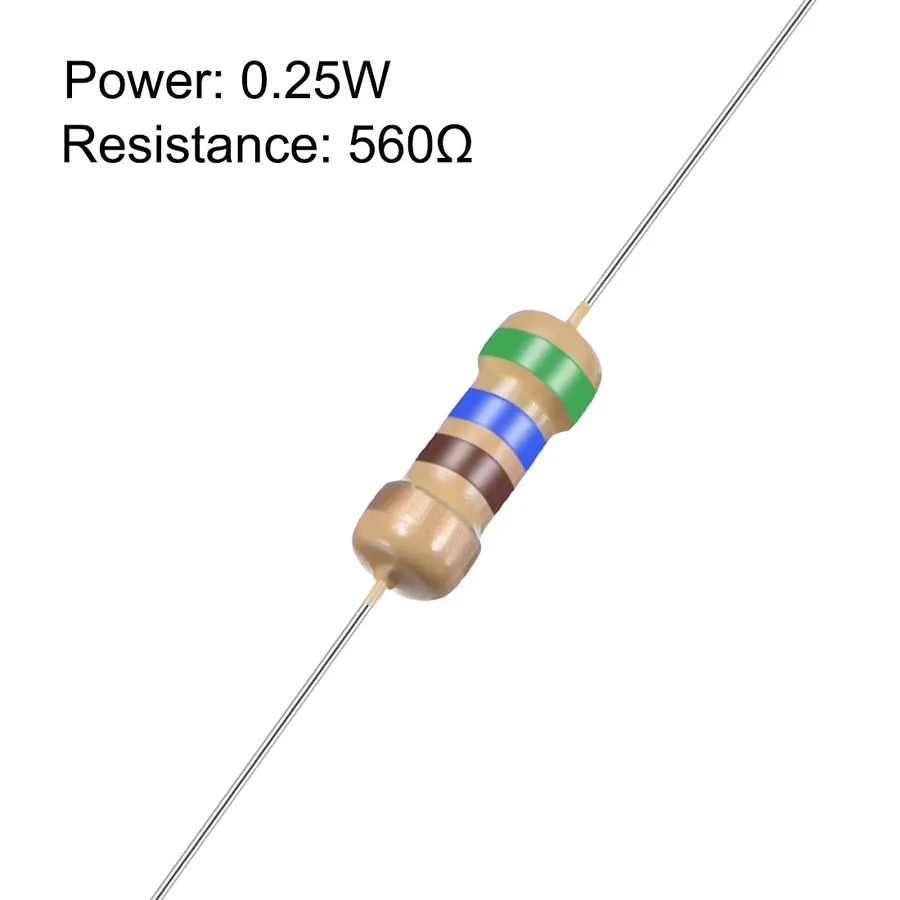
A 560 ohm resistor is a fundamental electronic component designed to impede the flow of electrical current by 560 ohms. This specific resistance value plays a crucial role in various circuit functions, directly influencing current magnitude and voltage distribution within electronic systems. Its primary function is to limit current, preventing damage to more sensitive components and ensuring circuits operate within their specified parameters. In addition to current limiting, these resistors are used for voltage division, biasing, and establishing specific voltage levels within a circuit.
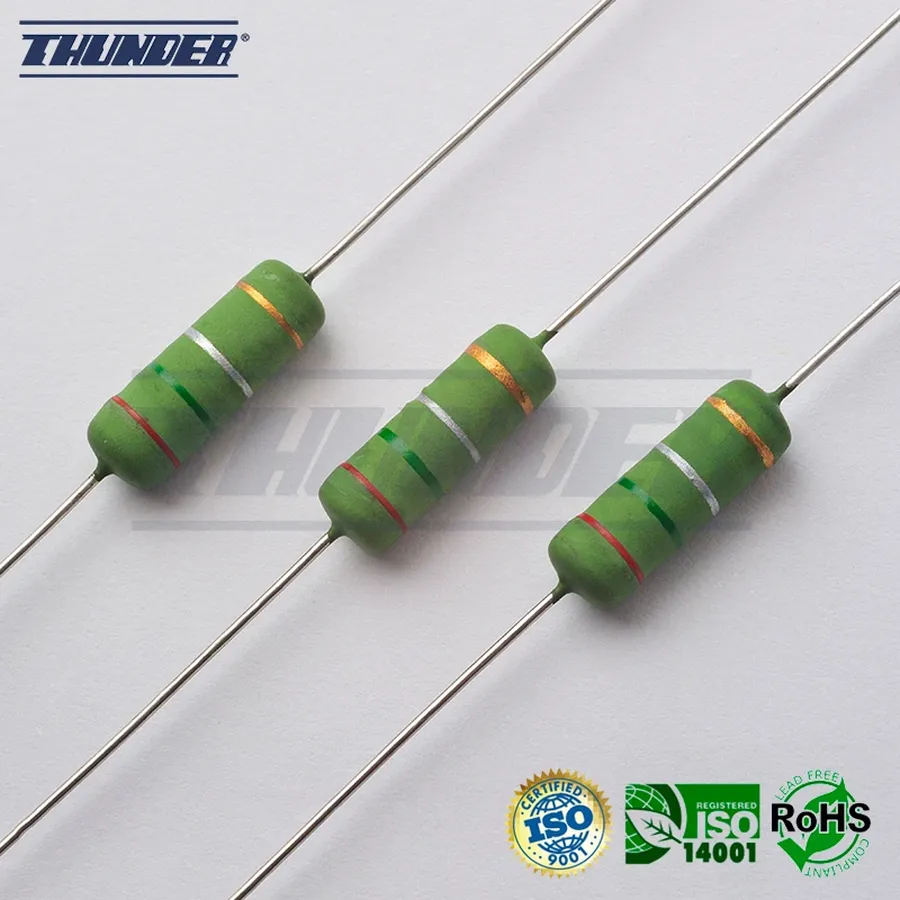
560 Ohm resistors, while sharing the same nominal resistance, are manufactured using different materials and techniques, leading to variations in their performance characteristics. The three primary types are carbon film, metal film, and wirewound resistors, each possessing unique advantages and disadvantages that make them suitable for specific applications.
| Resistor Type | Material | Tolerance | Power Rating | Temperature Coefficient | Cost | Application Scenarios |
|---|---|---|---|---|---|---|
| Carbon Film | Carbon composite film | 5% - 10% | Low to Medium | High | Low | General-purpose, non-critical applications |
| Metal Film | Thin metal film (e.g., nickel-chromium) | 0.1% - 5% | Medium | Low | Medium | Precision circuits, audio equipment, instrumentation |
| Wirewound | Resistive wire wound around a core | 1% - 5% | High | Moderate | High | High power applications, power supplies, braking resistors |
Carbon film resistors are cost-effective and suitable for general-purpose applications where high precision is not a necessity. Metal film resistors offer improved precision and temperature stability, making them ideal for sensitive electronic circuits. Wirewound resistors, capable of handling high power levels, are commonly employed in power supplies and braking applications.
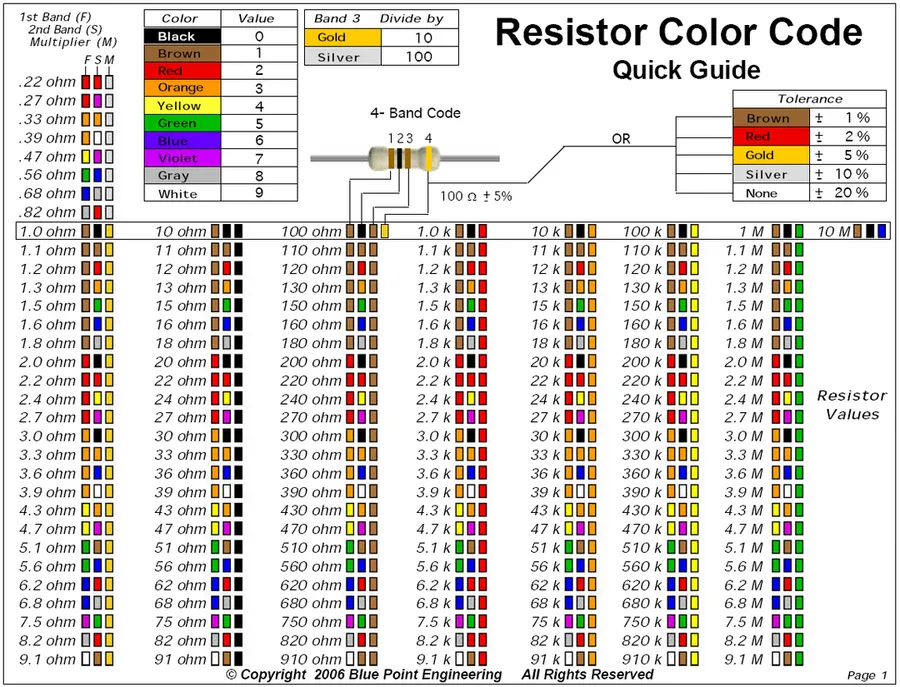
The color code on a 560 ohm resistor is crucial for identifying its resistance value and tolerance. This system uses colored bands to represent numerical values, multipliers, and tolerance levels, ensuring easy identification without needing to measure the component. Understanding this code is fundamental for anyone working with electronics.
Resistors typically use either a 4-band or a 5-band system. In a 4-band resistor, the first two bands indicate the resistance value, the third is the multiplier, and the fourth indicates the tolerance. For a 5-band resistor, the first three bands indicate the resistance value, the fourth is the multiplier, and the fifth indicates the tolerance. The specific colors and their meanings are standardized internationally and are detailed in the table below.
| Color | Digit | Multiplier | Tolerance |
|---|---|---|---|
| Black | 0 | 1 | N/A |
| Brown | 1 | 10 | ±1% |
| Red | 2 | 100 | ±2% |
| Orange | 3 | 1,000 | N/A |
| Yellow | 4 | 10,000 | N/A |
| Green | 5 | 100,000 | ±0.5% |
| Blue | 6 | 1,000,000 | ±0.25% |
| Violet | 7 | 10,000,000 | ±0.1% |
| Grey | 8 | N/A | ±0.05% |
| White | 9 | N/A | N/A |
| Gold | N/A | 0.1 | ±5% |
| Silver | N/A | 0.01 | ±10% |
For a 560 ohm resistor, the color bands are as follows. For a 4-band resistor, the color bands would be: green (5), blue (6), brown (multiplier of 10) and a fourth band depending on tolerance (gold for ±5%). For a 5-band resistor, the color bands would be: green (5), blue (6), black(0) ,black (multiplier of 10), and a fifth band for tolerance (e.g. brown for ±1%). The absence of a tolerance band generally implies a tolerance of ±20%.
The selection of a 560 ohm resistor requires careful consideration of both its resistance and power rating, as well as its tolerance. Resistance (measured in ohms) determines the opposition to current flow, while power rating (measured in watts) specifies the maximum power the resistor can safely dissipate as heat. Tolerance defines the acceptable variation in the actual resistance value from the nominal 560 ohms.
| Parameter | Description | Impact on Circuit |
|---|---|---|
| Resistance (560 ohms) | Opposition to current flow. | Determines current level based on Ohm's Law (V=IR). |
| Power Rating (Watts) | Maximum power the resistor can dissipate without damage. | Insufficient rating can cause overheating and failure. |
| Tolerance (%) | Acceptable deviation from the nominal resistance value. | Impacts precision of circuit operation; tighter tolerances ensure greater accuracy. |
Power rating is critical; resistors convert electrical energy into heat, and exceeding the rated wattage causes overheating, potentially leading to component failure or even fire. Select a resistor with a power rating that significantly exceeds the anticipated power dissipation in your circuit, typically by a factor of two to four, to provide a safety margin. For instance, if a circuit analysis calculates 0.125W dissipation, a 1/4W (0.25W) or 1/2W (0.5W) resistor should be used.
Tolerance affects the actual resistance value and how accurate it is to the desired 560 ohms. Common tolerances are 5%, 1%, and 0.1%. A 5% tolerance resistor may vary between 532 and 588 ohms. While 1% tolerance resistors offer a range of 554.4 to 565.6 ohms. The higher the tolerance, the less accurate the resistance value.
For precise circuits, such as measurement devices or sensitive circuits, a lower tolerance resistor (e.g., 1% or 0.1%) is necessary. For less critical applications like LEDs or basic current limiting, a 5% tolerance resistor is often sufficient.
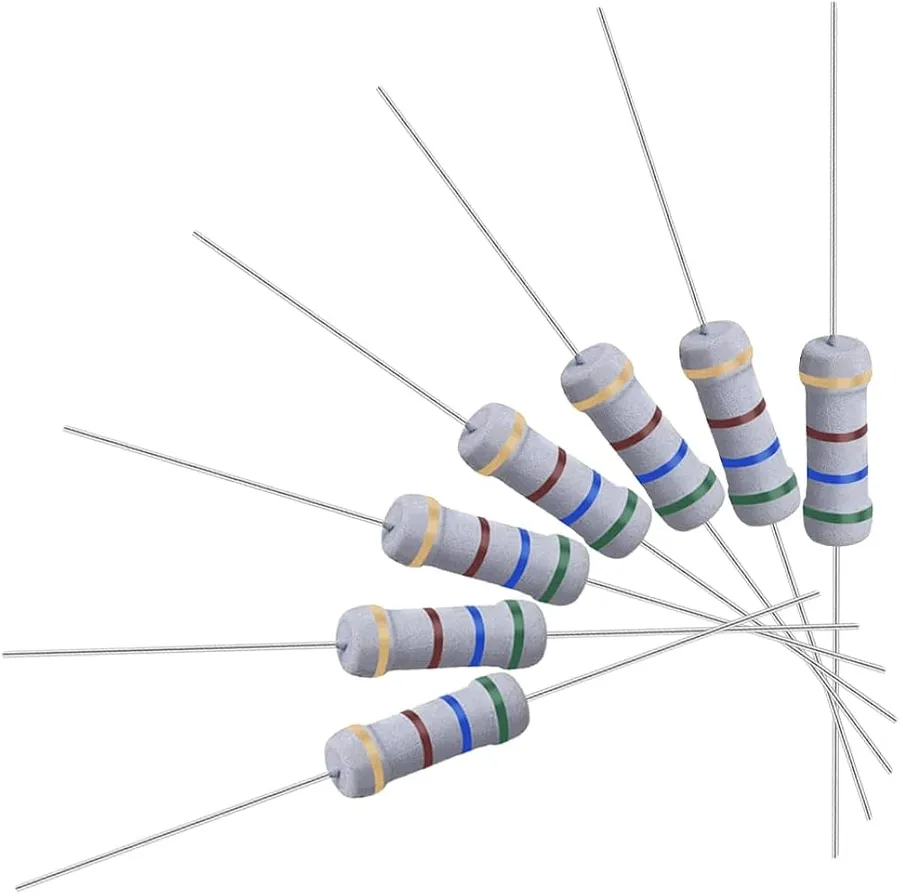
The 560 ohm resistor, a component of modest resistance, finds its niche in a variety of electronic circuits, primarily for current limiting, voltage division, and biasing purposes. Its precise value makes it suitable for applications where specific current or voltage levels are required, contributing to circuit stability and performance.
The 560 ohm resistor is frequently selected because it provides a balance between limiting current, providing adequate voltage drops, and minimizing heat dissipation. Its specific value is well-suited for standard circuits and components, making it a versatile component in many different designs. It is important, however, to always refer to circuit diagrams and component datasheets to make certain that the selection is correct and the wattage rating of the resistor is sufficient.
Selecting the correct 560 ohm resistor for a project involves considering several factors, including where to purchase the component and understanding its specifications. This section offers practical guidance on sourcing, evaluating, and choosing the appropriate 560 ohm resistor for diverse electronic applications.
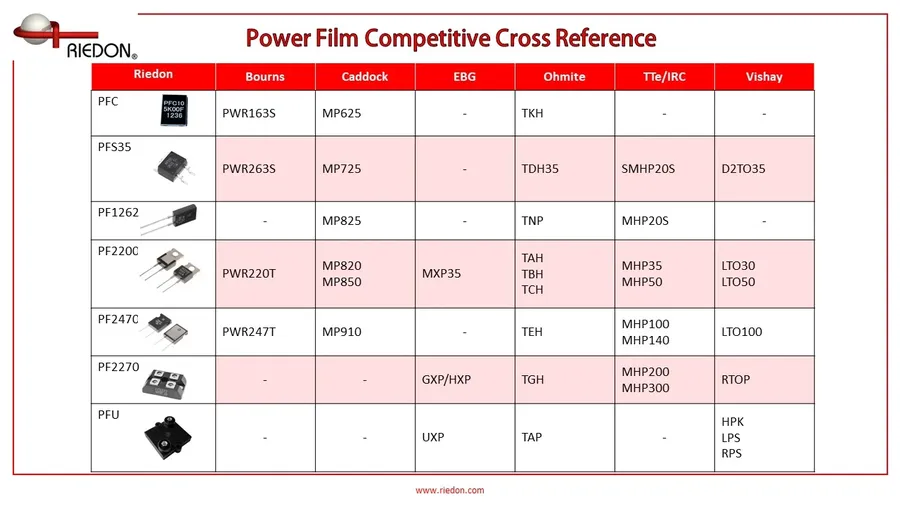
Replacing a 560 ohm resistor often becomes necessary due to damage, unavailability, or design modifications. While a direct replacement is ideal, understanding alternative options and their implications is crucial for maintaining circuit functionality. This section explores practical substitution strategies, emphasizing the critical parameters of power rating and tolerance.
When selecting a replacement resistor, it is critical to consider the requirements of the specific circuit. The primary focus should always be on maintaining the functionality without risking the safety of the overall circuit. An improper substitution can result in the circuit not working as expected or, in some cases, damage to the overall circuit and components.
| Factor | Consideration |
|---|---|
| Resistance Value | While 560 ohms is ideal, values within ± 5% can often be suitable. Check for circuit sensitivity. |
| Power Rating (Wattage) | The replacement must meet or exceed the original resistor's power rating. Using a lower wattage may cause the resistor to overheat and fail. |
| Tolerance | A lower tolerance (e.g., 1% vs. 5%) offers greater precision. Use the same or lower tolerance to avoid altering circuit performance. |
| Resistor Type | Consider factors like noise level, temperature coefficient and stability. Metal film resistors are often a better option in terms of stability than carbon film resistors. |
In cases where a direct 560 ohm replacement is unavailable, combinations of series and parallel resistors may offer practical solutions. For example, two 1.12k ohm resistors in parallel would provide the same 560 ohm resistance. However, it's essential to re-calculate the power rating for any resistor configuration. For example, If two resistors are connected in parallel, the current is now being shared between them, halving the current through each, so a larger value of resistance may be used which can tolerate the required power dissipation of the circuit
Using an incorrect replacement can lead to several issues. Overheating is a significant risk with resistors of insufficient power ratings, potentially causing failure and damage to other components. Furthermore, a high tolerance resistor can deviate more from the desired value, thereby altering the functionality of the circuit. Furthermore, using the wrong type of resistor may also result in the circuit failing to function correctly, as different types of resistors can have different behaviors, temperature dependence, and noise levels.
Always prioritize safety when choosing a replacement. Check the device or circuit specifications to identify the correct resistor's wattage and tolerance required for proper operation. Using an inappropriate resistor has the potential to reduce circuit performance, damage components and increase the chances of failure.
This section addresses common inquiries regarding 560 ohm resistors, clarifying their purpose, color coding, selection criteria, and related considerations. These answers are grounded in fundamental electrical engineering principles to provide a comprehensive understanding.
The 560 ohm resistor, though small, is an essential component in countless electronic devices and projects. From limiting current in a simple LED circuit to playing a vital role in intricate audio amplification systems, understanding its functions and types is crucial for anyone working with electronics. This article has provided an in-depth view, from color codes and power ratings to applications and replacements. Keep the core principles of resistance in mind as you work on future projects, and you'll find that this humble component will be a constant and indispensable part of your electronic endeavors. Remember to always check your specifications to ensure you select the right resistor and to use correct and safe methods for assembly and repair.

