Unveiling the Power of the 1N4148 Diode: Applications, Specs, and More
2025.02.08
The unassuming 1N4148 diode, a small but mighty component, is a cornerstone in electronics, much like a single brick in a skyscraper. This fast-switching diode plays a crucial role in everything from power supplies to signal processing. Like a traffic controller on a busy highway, the 1N4148 ensures current flows in the right direction with precision. This article dives into the 1N4148, exploring its specifications, applications, and how it compares to other similar components, providing a comprehensive understanding for both beginners and seasoned engineers. We'll see how this tiny workhorse, often used to protect sensitive circuits from excess voltage, is an indispensable part of our technological landscape.
What is the 1N4148 Diode?
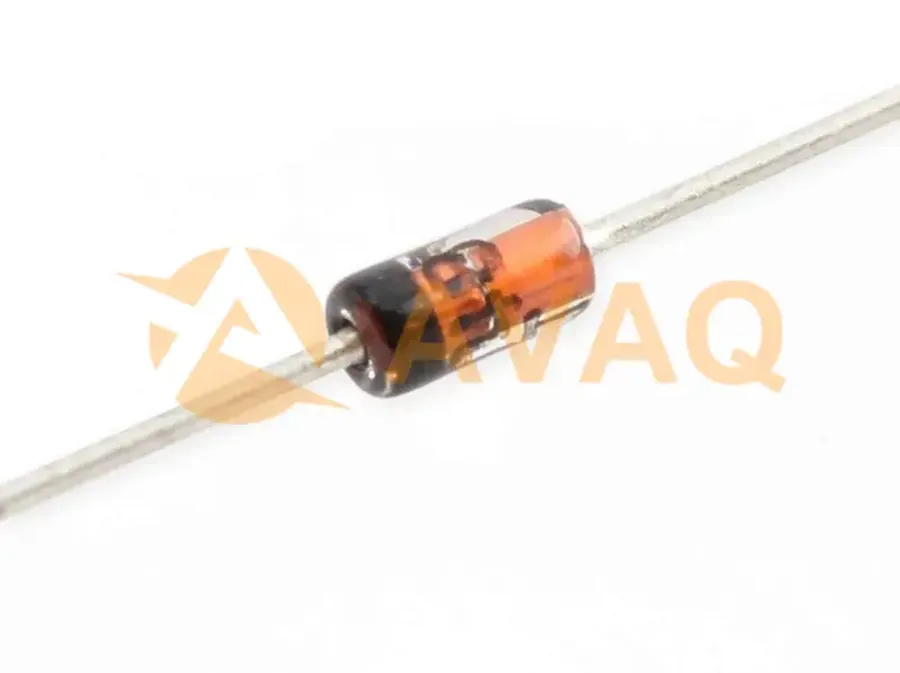
1N4148 Diode
The 1N4148 is a ubiquitous silicon epitaxial planar diode, specifically engineered for fast-switching applications. Its core function within electronic circuits involves rectification, converting alternating current (AC) into direct current (DC). Its rapid response time and reliable performance have cemented its position as a fundamental component in numerous electronic devices and systems. The 1N4148's design allows for effective management of current flow, ensuring signal integrity and contributing to the overall stability of circuits.
It is commonly used in low current and high frequency switching applications.
1N4148 Diode Key Specifications
1N4148 Diode Datasheet Excerpt
The 1N4148 diode, a ubiquitous component in electronics, is characterized by its specific electrical parameters. Understanding these specifications is crucial for proper circuit design and operation. Primarily used for fast switching and signal rectification, the 1N4148 exhibits consistent performance within its operational limits.
Parameter
Typical Value
Unit
Description
Maximum Forward Current (IF(max))
200
mA
The maximum amount of current the diode can safely conduct in the forward direction without damage.
Peak Reverse Voltage (VRRM)
100
V
The maximum reverse voltage that can be applied across the diode without breakdown.
Forward Voltage Drop (VF)
0.7 to 1.0
V
The voltage drop across the diode when it's conducting in the forward direction, varies with current.
Reverse Recovery Time (trr)
4
ns
The time it takes for the diode to switch from the conducting to the non-conducting state.
Operating Temperature Range
-65 to +175
°C
The range of ambient temperatures within which the diode can operate reliably.
Power Dissipation
500
mW
The maximum power that the diode can dissipate safely without overheating
It is important to note that these are typical values, and the actual specifications may vary slightly depending on the manufacturer. Always consult the specific datasheet for the 1N4148 diode you intend to use.
The 1N4148 vs. Other Diodes: A Comparative Analysis
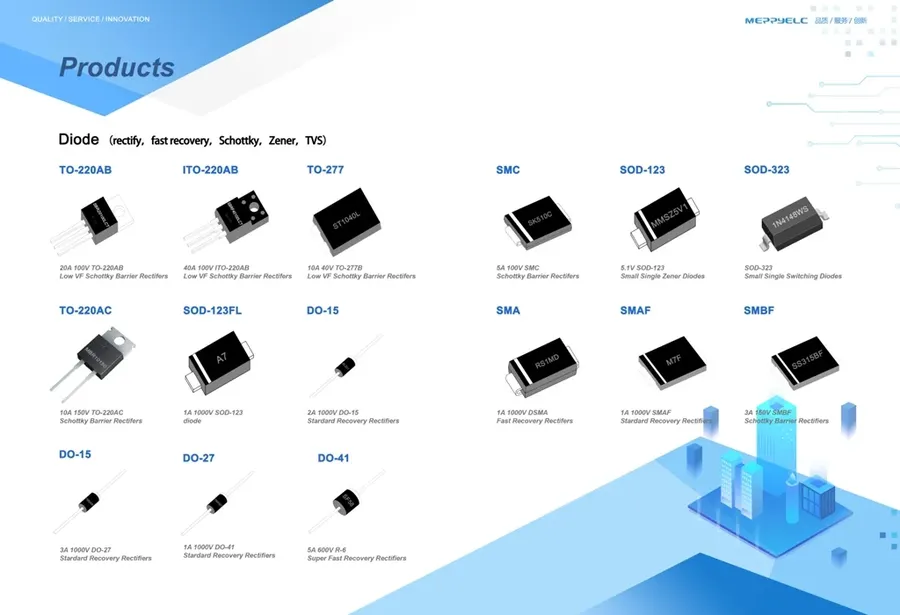
Various Diode Packages
The 1N4148 diode, a ubiquitous component in electronics, is often compared to other diodes to determine its suitability for specific applications. This section provides a detailed analysis of how the 1N4148 stacks up against common alternatives, such as the 1N4001, 1N4007, and Zener diodes, with a focus on their key differences in voltage and current handling capabilities.
Characteristic
1N4148
1N4001
1N4007
Zener Diode (Generic)
Type
Fast Switching Signal Diode
Standard Rectifier Diode
Standard Rectifier Diode
Voltage Regulator Diode
Maximum Forward Current (IF(max))
200 mA
1 A
1 A
Typically defined by power rating
Peak Reverse Voltage (VRRM)
100 V
50 V
1000 V
Defined by breakdown voltage (Vz)
Forward Voltage Drop (VF)
~0.7-1V
~1.1V
~1.1V
~0.7-1V (forward bias)
Reverse Recovery Time (trr)
~4 ns
~2 μs
~2 μs
Not a primary concern
Typical Application
Signal Switching, logic circuits
Power Rectification
Power Rectification
Voltage Regulation
Switching Speed
Fast
Slow
Slow
N/A
The 1N4148 excels as a fast-switching signal diode, suitable for high-speed applications. The 1N4001 and 1N4007 are designed for power rectification, handling higher currents but at slower speeds. Zener diodes, in contrast, are specifically engineered for voltage regulation and are characterized by their defined breakdown voltage (Vz).
Common Applications of the 1N4148 Diode
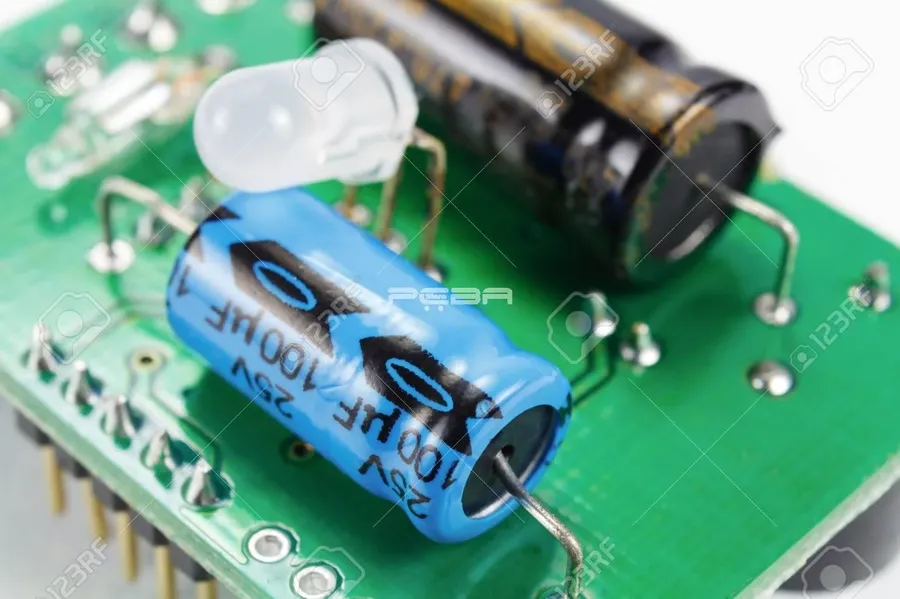
Diodes on a Circuit Board
The 1N4148 diode, a silicon epitaxial planar diode, is extensively utilized in diverse electronic circuits due to its fast-switching capabilities and reliable performance. Its applications span from signal processing to protection circuits, making it a versatile component in electronic design.
Signal Rectification The 1N4148 excels in converting AC signals to DC, a fundamental function in power supplies and signal demodulation. Its rapid switching time is crucial for efficiency in these applications.
Clamping Circuits In clamping circuits, the 1N4148 limits the voltage of a signal to a specific level, preventing overvoltage conditions that could damage sensitive components. This application is vital in signal processing and protection.
Logic Gates In digital logic circuits, the 1N4148 can perform logical operations such as AND and OR functions by combining multiple diodes. These simple gate circuits are used in a variety of applications.
Reverse Voltage Protection The diode is essential in protecting circuits from reverse voltage situations by blocking current flow in the reverse direction, preventing damage from polarity reversals and other errors. This is a critical protection feature.
Current Spike Suppression The 1N4148 diode is also employed to suppress current spikes, which often occur in inductive circuits. These spikes can damage components. By diverting these sudden surges, the 1N4148 improves circuit reliability.
Switching Circuits In various switching circuits, the 1N4148 serves as a fast-acting switch to rapidly control the flow of electricity. This is crucial for applications needing precise timing and high switching speed.
1N4148 Diode Package Types and Mounting Options
1N4148 Package Types
The 1N4148 diode's versatility is enhanced by its availability in multiple package types and mounting options, which directly influence its application suitability. These variations accommodate different circuit designs, space constraints, and production methods, ensuring broad applicability across various electronic systems.
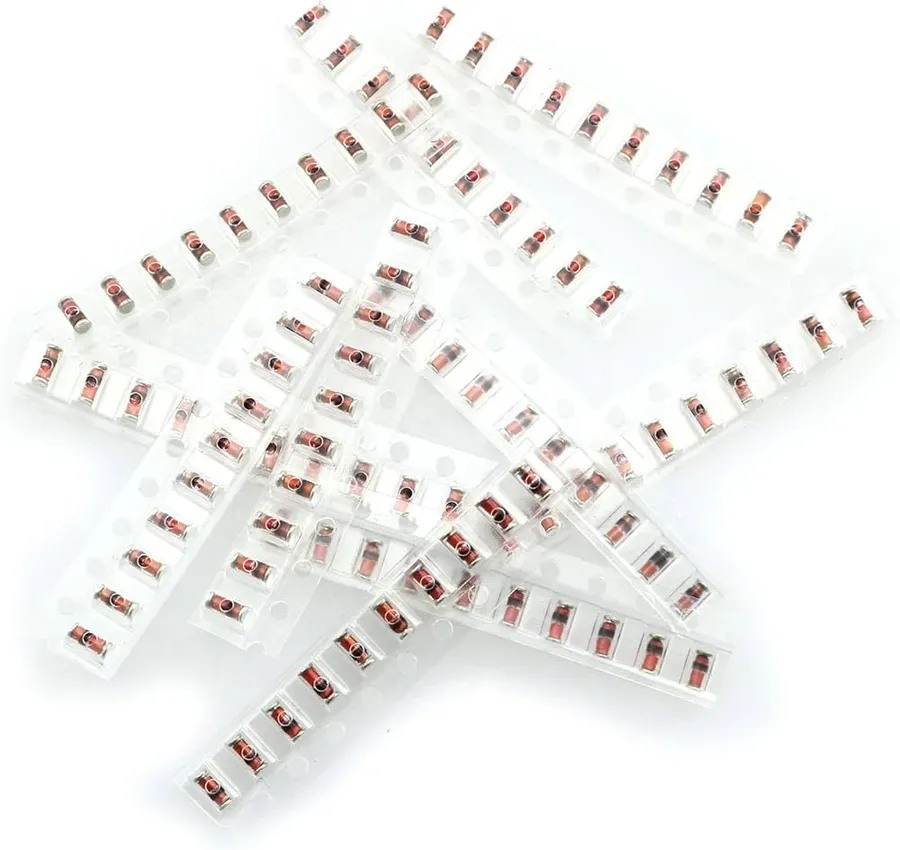
A cylindrical surface-mount package with metal end caps.
Surface Mount (SMT)
Compact designs, automated assembly, small form factor devices.
SMD Variants (e.g., SOD-123)
Various small surface-mount packages.
Surface Mount (SMT)
High-density circuit boards, miniaturized devices, high volume production.
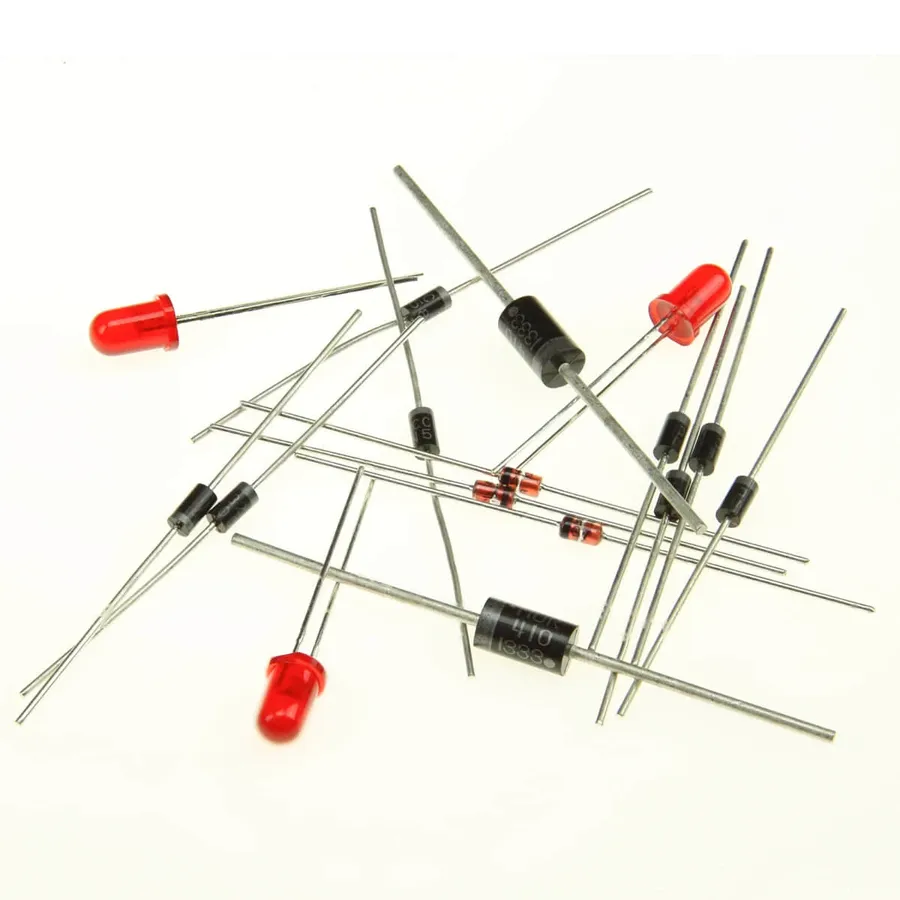
Through-Hole (THT) Mounting Involves inserting the diode's leads into holes on a printed circuit board (PCB) and soldering them on the opposite side. It provides a robust mechanical connection and is suitable for prototyping, hobby projects, and applications where physical durability is critical. The DO-35 package is common for THT mounting of the 1N4148.
Surface Mount (SMT) Mounting Involves placing the diode directly onto the surface of the PCB and soldering it using reflow or wave soldering techniques. This method allows for higher component densities, reduced assembly costs, and is essential for mass production. The SOD-27 and other SMD packages are designed for SMT assembly, and are ideal for space constrained designs.
Frequently Asked Questions About the 1N4148 Diode
This section addresses common questions about the 1N4148 diode, clarifying its function, applications, and differences from similar components. We aim to provide clear, concise answers to help you better understand and utilize this versatile diode.
What is the primary function of a 1N4148 diode? The 1N4148 is primarily a fast-switching signal diode designed for high-speed applications, commonly used for rectification in low-current circuits, signal processing, and protection against reverse polarity. It allows current to flow in one direction while blocking it in the opposite direction.
Is the 1N4148 diode a Zener diode? No, the 1N4148 is not a Zener diode. It is a standard switching diode designed to conduct in the forward direction and block in the reverse direction. Zener diodes are designed to conduct in reverse when a specific voltage (Zener voltage) is reached. They have different doping and construction, and are used for voltage regulation, while 1N4148 is for fast switching and rectification.
What is the key difference between the 1N4148 and the 1N4007 diode? The 1N4148 is a small-signal, high-speed switching diode with a lower current capacity, typically around 200mA, and a fast recovery time. The 1N4007, in contrast, is a general-purpose rectifier diode capable of handling higher current, typically 1A, but with a slower recovery time. The 1N4148 is used for signal processing and protection, while the 1N4007 is for power rectification in circuits with higher currents.
What are some typical applications for the 1N4148 diode? The 1N4148 diode is commonly used in a variety of applications such as signal rectification, clamping circuits, logic gates, protection against reverse polarity, and transient voltage suppression. It's particularly suitable for high-frequency circuits due to its fast switching characteristics and low voltage drop.
Can the 1N4148 diode be used as a protection diode? Yes, the 1N4148 is frequently used for protection purposes in circuits. It can be used to prevent reverse polarity by allowing current flow in only one direction, protecting sensitive components. Additionally, it can be used to clamp voltages to a safe level, thus preventing damage from transient spikes.
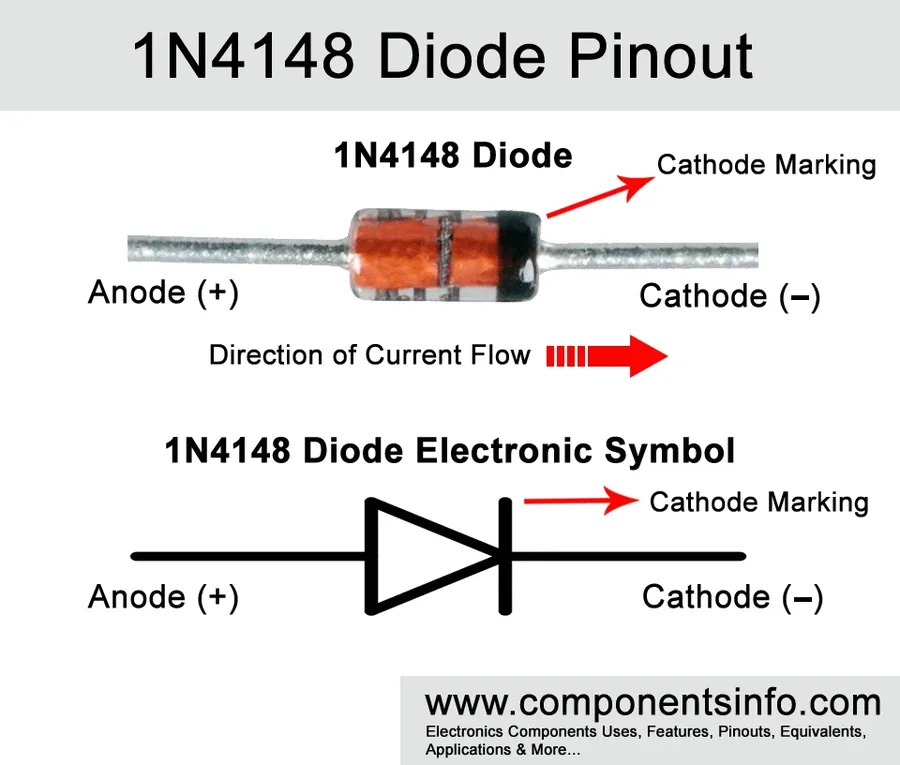
How can I visually identify a 1N4148 diode? The 1N4148 is typically a small glass or plastic cylindrical component with a black or gray body and a colored band (usually black or grey) near one end, which indicates the cathode end. The specific color or marking may vary slightly between manufacturers, but the physical form factor is generally consistent.
What should I check if a 1N4148 diode is not working correctly? If a 1N4148 diode isn't performing as expected, start by ensuring it is correctly oriented in the circuit. Check that the forward voltage drop is within the datasheet specifications, typically around 0.7V. If there is no voltage drop, the diode may be open, or if the voltage drop is unusually low, it may be shorted. Ensure the applied reverse voltage is below its rated maximum. Environmental conditions may affect the performance of the diode and its connection with circuit boards.
Practical Tips for Using the 1N4148 Diode
Successfully integrating the 1N4148 diode into electronic designs hinges on a clear understanding of its datasheet parameters and how these relate to real-world applications. Proper circuit configuration and thermal management are also crucial for optimal performance and longevity. This section delves into practical advice to ensure effective use of the 1N4148 diode in your projects.
Thorough Datasheet Review Before implementation, meticulously review the 1N4148 datasheet. Pay close attention to maximum forward current, peak reverse voltage, forward voltage drop, and reverse recovery time. These parameters define the operational limits and performance characteristics of the diode in your circuit.
Circuit Configuration Select the appropriate circuit topology to match your application needs. The 1N4148 can act as a rectifier, perform clamping, or function in a logic gate. Ensure that the circuit design does not exceed the diode's rated specifications. Series and parallel configurations should be carefully evaluated based on the current and voltage requirements.
Thermal Management During operation, the 1N4148 will generate heat. If not managed effectively, this heat can impair its performance and lifespan. To ensure reliability, always assess the operating temperature and implement measures such as heat sinks and proper ventilation, particularly if the diode is handling high current loads or is in a confined space.
Forward Voltage Drop Consideration Be aware of the forward voltage drop when the diode conducts current. This voltage drop consumes power and can affect the performance of the overall circuit. Consider this voltage drop, especially in circuits powered by low voltage sources.
Reverse Recovery Time Awareness The reverse recovery time, the time it takes for a diode to stop conducting current, is crucial in high-frequency applications. A slower reverse recovery time can degrade performance or cause unwanted effects. Check the datasheet for values to make sure the 1N4148 is suitable for a switching circuit's operation frequency.
Component Placement Ensure proper physical placement and soldering of the 1N4148 diode. Proper soldering prevents damage from heat exposure and guarantees secure electrical connections. Correct polarity alignment is vital, as incorrect alignment can result in the diode's failure and can even damage other parts of the circuit.
1N4148 Diode Alternatives
Alternative Diodes
While the 1N4148 is a versatile and widely used signal diode, certain applications may benefit from or require alternative components. Selecting a suitable alternative depends on specific circuit requirements, including forward current, reverse voltage, switching speed, and application environment. Here, we will explore several alternatives to the 1N4148, highlighting their strengths and optimal use cases.
Alternative Diode
Key Features
Typical Applications
Advantages
Disadvantages
1N914
Similar to 1N4148, lower current rating
Low-current signal rectification, logic circuits
Lower cost, widely available
Lower current capacity than 1N4148
1N4150
Faster switching speed than 1N4148
High-speed switching, signal processing
Higher speed, reduced reverse recovery time
Slightly more expensive than 1N4148, lower reverse voltage rating
BAV70
Dual diode configuration
High-speed clamping, signal limiting
Two diodes in one package
Less versatile for general-purpose applications than 1N4148
BAT41
Schottky diode with lower forward voltage drop
High-frequency applications, power management
Lower forward voltage drop
Lower reverse voltage rating and higher leakage current compared to 1N4148
1N4001/1N4007
Higher current and voltage capacity
Power rectification, general-purpose
Higher power and voltage capabilities
Slower switching speed compared to the 1N4148
When selecting a substitute, carefully consider the application's specific needs and the electrical characteristics of the alternative diode. For high-speed switching applications, the 1N4150 or BAT41 might be a better fit. If higher current handling is required, consider the 1N400x series, while for low-cost, general-purpose replacement the 1N914 serves as a direct equivalent. Always refer to the datasheets for precise specifications.
Troubleshooting Common Issues with 1N4148 Diodes
Diagnosing issues with a 1N4148 diode involves methodical testing and an understanding of its expected behavior within a circuit. This section provides practical guidance on identifying common problems, from simple misconfigurations to complete diode failure, ensuring the 1N4148 operates as intended.
Incorrect Diode Orientation The 1N4148, like all diodes, is a polarized component. Incorrect placement (reversed polarity) will impede current flow or result in damage. Verify the band on the diode (cathode) is aligned with the circuit diagram's polarity.
Short-Circuited Diode A short-circuited 1N4148 will have a near-zero resistance in both forward and reverse bias. This can be checked using a multimeter in resistance mode. Replace the diode if a short is detected.
Open-Circuited Diode An open-circuited diode has extremely high resistance in both forward and reverse bias, effectively blocking current flow. This can be tested using a multimeter in resistance mode; expect a very high value in both directions. Replace a diode that shows this characteristic.
Forward Voltage Drop Outside of Specifications When forward biased and conducting, the 1N4148 should exhibit a forward voltage drop of approximately 0.6 to 0.7 volts for silicon diodes, check the data sheet for the precise parameters. Measure the voltage drop across the diode during normal operation; deviations can indicate damage or a misapplication. This should be verified under normal operation current as forward voltage is a function of forward current.
Exceeding Maximum Ratings Pushing the diode beyond its maximum reverse voltage or forward current ratings can lead to premature failure. Verify your application circuit parameters are within the specified ratings of the 1N4148. A diode damaged in this manner will likely exhibit short or open circuit characteristics.
Thermal Overload Excessive heat can degrade the 1N4148’s performance and lead to failure, especially if it's operating near its maximum temperature limit. Ensure proper heatsinking or adequate spacing if the diode is expected to dissipate significant power. Check the datasheet for maximum operating junction temperature and make sure the diode does not exceed it.
Circuit Design Flaws Sometimes, the fault lies not with the diode itself, but with the surrounding circuit design. A thorough review of the application design should be conducted, including the correct value of any current limiting resistors, to ensure it does not exceed the operational limits of the diode.
The 1N4148 diode, though small, is a giant in the world of electronics, similar to how a single 4148 diode can protect a larger, more complex circuit. Its fast switching speed and reliable performance make it an essential component in a wide variety of applications. Understanding its characteristics and proper usage not only allows us to harness its full potential, but also highlights the critical role of fundamental components like the 1N4148 in the technology that powers our lives. As we move forward, continued appreciation for these building blocks of electronics ensures that future innovations are built on a robust and dependable foundation, a little like how the 4148 diode makes electronic designs so reliable.