In today's rapidly evolving technological landscape, robots are increasingly integrated into various aspects of our lives, from industrial automation to customer service. Among these, welcoming robots stand out as interactive greeters and information providers in commercial and public spaces. At the heart of every welcoming robot lies a sophisticated printed circuit board (PCB), the electronic foundation enabling its functionality. Zero One Solution Limited specializes in providing comprehensive PCB solutions for welcoming robots, facilitating innovation and efficiency in their development and deployment. This article delves into the critical aspects of PCB design, manufacturing, and assembly for welcoming robots, highlighting how Zero One Solution Limited can accelerate your project from concept to reality.
Introduction: The Role of PCBs in Welcoming Robots
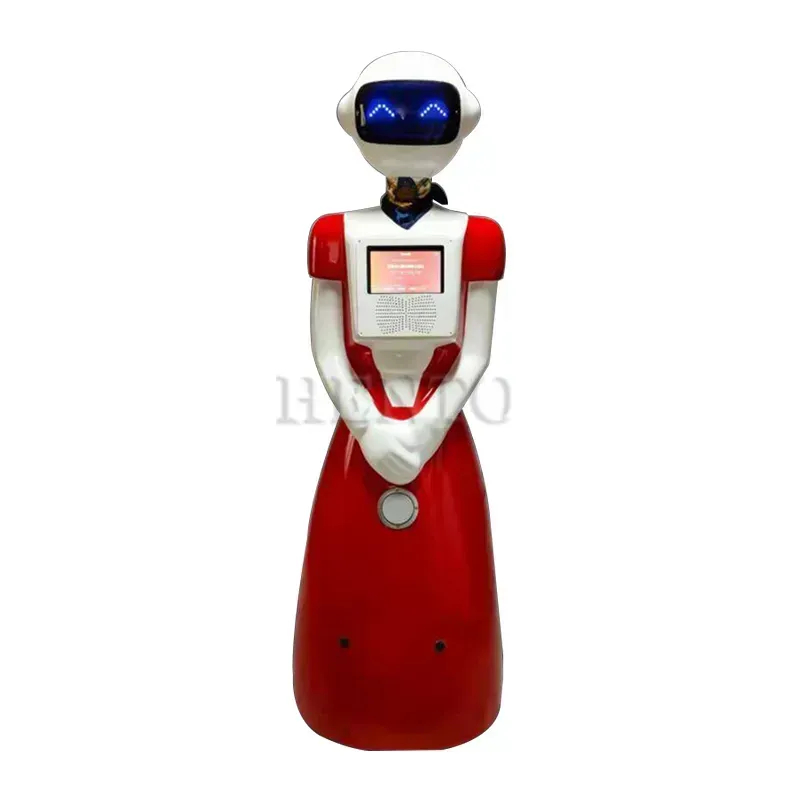
Welcoming robots, once a concept of science fiction, are now integral to enhancing customer experience and operational efficiency across diverse sectors, from hospitality and retail to healthcare and corporate reception. These sophisticated machines serve as more than just automated greeters; they are interactive guides, information providers, and brand ambassadors. At the very core of their functionality, enabling every interaction, movement, and intelligent response, lies the Printed Circuit Board (PCB). The PCB acts as the central nervous system, orchestrating the complex interplay of sensors, actuators, processors, and communication modules that define a welcoming robot's capabilities.
Hospitality and Tourism In hotels and resorts, welcoming robots manage check-ins, provide concierge services, and guide guests to their rooms or amenities, significantly enhancing the guest experience and streamlining operations.
Retail and Commercial Spaces Robots in retail environments offer product information, guide customers to specific departments, and even process payments, transforming the shopping experience and optimizing staff allocation.
Healthcare Facilities In hospitals and clinics, welcoming robots assist with patient registration, provide directions, and offer basic health information, improving patient flow and reducing administrative burden.
Corporate and Educational Campuses These robots manage visitor registration, provide navigational assistance, and disseminate event information, enhancing security and efficiency in high-traffic areas.
The unparalleled growth of the welcoming robot market underscores the critical importance of robust and intelligently designed PCBs. According to a report by MarketsandMarkets, the global service robot market, which includes welcoming robots, is projected to grow from USD 37.1 billion in 2021 to USD 149.7 billion by 2026, at a Compound Annual Growth Rate (CAGR) of 32.3%. This expansion is largely fueled by advancements in AI, sensor technology, and, crucially, the miniaturization and increased sophistication of PCB technology. High-quality PCBs are not merely components; they are the architectural foundation upon which the reliability, performance, and future innovation of welcoming robots are built.
Key Considerations for Welcoming Robot PCB Design
Designing Printed Circuit Boards (PCBs) for welcoming robots demands a meticulous approach, focusing on a synergy of performance, reliability, and form factor. These robots, operating in dynamic environments and often interacting directly with people, require PCBs that can handle complex computational tasks, manage diverse sensor inputs, and ensure robust communication, all within stringent physical and power constraints. A well-engineered PCB is the bedrock of a welcoming robot's seamless operation and user experience.
Enables real-time visual recognition and interactive capabilities
Communication Modules
RF shielding, antenna placement, protocol support (Wi-Fi, Bluetooth, 5G)
Ensures reliable network connectivity for remote control, updates, and cloud services
Why is miniaturization critical for Welcoming Robot PCBs? Miniaturization is paramount for welcoming robot PCBs to achieve compact, aesthetically pleasing designs that allow for greater mobility and integration into smaller form factors. It enables the robot to navigate tight spaces and interact more naturally with humans, without bulky electronics hindering its functionality or appearance. This is often achieved through high-density interconnect (HDI) PCBs and advanced packaging techniques like System-in-Package (SiP).
How does power management impact a welcoming robot's operational efficiency? Effective power management directly influences a welcoming robot's operational efficiency by optimizing energy consumption and extending battery life. This includes implementing efficient voltage regulators, managing power states of various modules, and selecting low-power components. Superior power management reduces the frequency of recharges, minimizes heat generation, and ensures consistent performance throughout extended operating hours, which is crucial for service-oriented robots.
Material Selection for Optimal Performance and Reliability
The selection of appropriate Printed Circuit Board (PCB) materials is a critical factor in ensuring the optimal performance and long-term reliability of welcoming robots. Beyond merely conducting electricity, these materials must withstand the operational stresses inherent in robotic applications, including thermal fluctuations, mechanical vibrations, and potential exposure to environmental factors. A well-chosen substrate forms the backbone of a robust robotic system, directly impacting signal integrity, power efficiency, and overall durability, ultimately defining the longevity and functionality of the welcoming robot.
Material Type
Key Characteristics
Suitability for Welcoming Robots
Disadvantages
FR-4 (Flame Retardant Level 4)
High strength-to-weight ratio, good electrical insulation, cost-effective, widely available.
Excellent for general-purpose rigid PCBs, providing a stable platform for most components.
Limited flexibility, moderate thermal performance, not ideal for high-frequency signals above 1GHz without specialized variants.
Ideal for applications requiring dynamic movement or complex form factors where rigid PCBs are not feasible, such as articulated joints or compact spaces.
Higher cost, more complex manufacturing processes.
.
Superior thermal management, excellent signal integrity at high frequencies, low dielectric loss.
Crucial for high-performance welcoming robots with advanced processing units or high-frequency communication modules, preventing overheating and signal degradation.
Significantly higher cost, can be brittle.
.
Superior mechanical strength, excellent thermal conductivity, good electrical insulation.
Suitable for power-intensive sections or areas requiring robust structural support, aiding in heat dissipation and preventing mechanical stress.
Heavier, can add significant weight to the robot.
Why is temperature resistance crucial for welcoming robot PCBs? Welcoming robots often operate continuously in various environments, leading to potential heat generation from components like processors, motors, and communication modules. PCBs must be fabricated from materials with high glass transition (Tg) and decomposition (Td) temperatures to prevent warpage, delamination, or performance degradation under sustained thermal loads, ensuring consistent operation and extended lifespan.
How does material flexibility impact welcoming robot design? Flexibility is paramount for welcoming robots with complex geometries, articulated limbs, or limited internal space. Flexible PCB materials (e.g., Polyimide) allow for dynamic bending and folding, enabling more compact designs, reducing the need for connectors (which can be failure points), and facilitating more intricate component layouts while minimizing stress on interconnections.
What role does durability play in PCB material selection for robots? Welcoming robots, especially those in public-facing roles, are subjected to mechanical stresses, vibrations, and potential impacts. Durable PCB materials, often reinforced with specific resins or woven glass, provide mechanical robustness to withstand these forces without fracturing or delaminating. This ensures the integrity of the electronic circuitry over the robot's operational lifetime, reducing maintenance and replacement costs.
Are there specific materials recommended for high-frequency communication in robots? For welcoming robots integrating advanced wireless communication (e.g., Wi-Fi 6, 5G) or radar systems, materials with low dielectric constant (Dk) and low dissipation factor (Df) are essential. Materials like PTFE (Teflon) or specialized hydrocarbon ceramics minimize signal loss and distortion at high frequencies, ensuring reliable and fast data transmission critical for real-time interactions and navigation.
Manufacturing Processes: Ensuring Precision and Quality
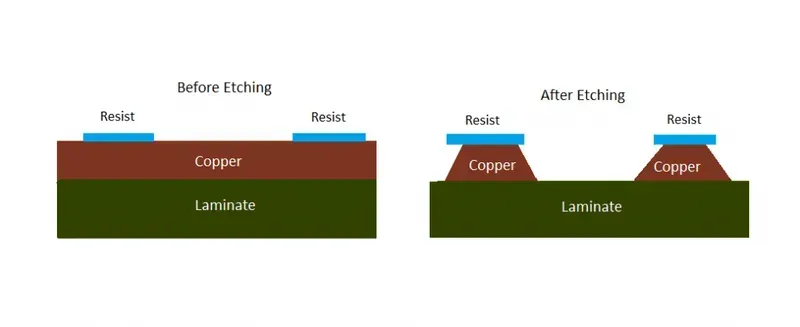
PCB Etching
The performance and reliability of any Welcoming Robot PCB hinge critically on the precision and quality inherent in its manufacturing processes. Each step, from initial design translation to final surface finish, demands meticulous attention to detail to ensure the board functions flawlessly as the robot's central nervous system. Achieving a high-quality PCB that can withstand the operational demands of a welcoming robot requires adherence to stringent quality control measures throughout the entire fabrication cycle, minimizing defects and optimizing electrical integrity.
Drilling and Etching Precision drilling creates vias for electrical connections, while etching precisely removes unwanted copper, defining the circuit traces. Both steps are critical for signal integrity and component placement accuracy.
Plating and Lamination Electroless and electrolytic plating deposit copper within vias and on pads, establishing robust electrical pathways. Multi-layer boards undergo lamination, where layers are bonded under heat and pressure, demanding precise alignment to prevent signal degradation.
Soldermask and Surface Finish Soldermask application protects the copper traces from oxidation and short circuits during assembly. The choice of surface finish (e.g., HASL, ENIG, OSP) ensures solderability and corrosion resistance, crucial for the long-term reliability of components.
Testing and Inspection Automated Optical Inspection (AOI) and Electrical Testing (E-Test) are deployed at various stages to detect defects like short circuits, opens, or incorrect etching. These rigorous checks guarantee the PCB meets design specifications and performance benchmarks before assembly.
Process Step
Key Quality Metric
Impact on Welcoming Robot PCB
Drilling
Hole registration accuracy
Ensures correct component placement and reliable electrical connections for sensors and actuators
Etching
Trace width and spacing consistency
Maintains signal integrity, prevents short circuits, and supports high-speed data transmission for communication modules
Plating
Copper thickness uniformity
Guarantees robust electrical conductivity and heat dissipation, crucial for power management circuits
Lamination
Layer alignment precision
Prevents signal distortion and impedance mismatches, vital for sensitive robotic control signals
Soldermask/Finish
Adhesion and coverage
Protects against environmental factors and ensures optimal solderability for reliable component integration
Assembly Services: Integrating Components for Functionality
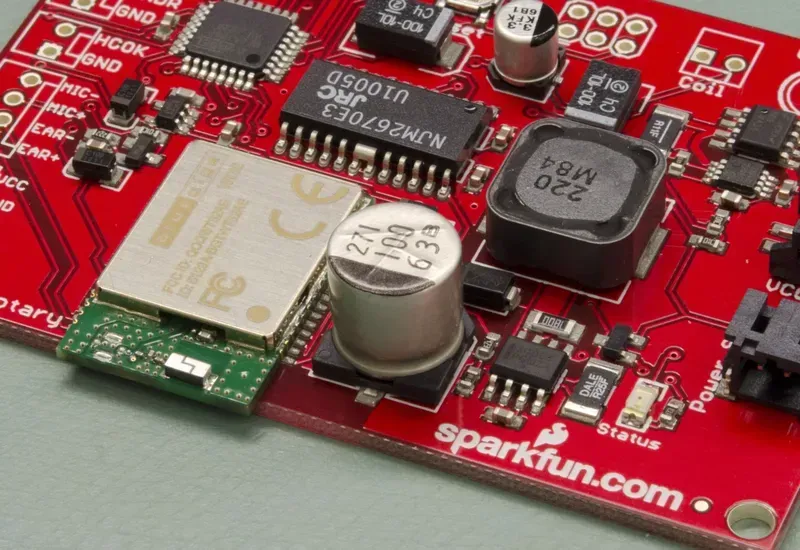
PCB Assembly
The robust functionality of any welcoming robot fundamentally hinges on the precision and quality of its Printed Circuit Board (PCB) assembly. It's at this critical juncture that disparate electronic components are meticulously integrated onto the fabricated PCB, transforming a static board into the dynamic, intelligent core of a robot. This intricate process ensures that every sensor, processor, and communication module functions cohesively, enabling the robot to perform its intended tasks with seamless efficiency and reliability in diverse operational environments.
Surface Mount Technology (SMT) SMT involves mounting components directly onto the surface of the PCB. This technique allows for the placement of smaller components, enabling higher circuit density and more compact designs, which are crucial for the space-constrained nature of welcoming robots. Its automated nature ensures high precision and throughput.
Through-Hole Technology (THT) While SMT dominates modern PCB assembly, THT remains vital for components requiring stronger mechanical bonds or higher power handling. Components are inserted through holes drilled in the PCB and then soldered on the opposite side. This method offers enhanced durability and reliability, often used for connectors or larger integrated circuits in robotic systems.
Component Placement Accuracy Achieving optimal performance requires meticulous component placement. Automated pick-and-place machines ensure components are positioned with micron-level accuracy, aligning them perfectly with solder pads to prevent short circuits or open connections. This precision is paramount for complex robotic functionalities.
Soldering Techniques (Reflow & Wave Soldering) Reflow soldering is predominantly used for SMT, where solder paste applied to pads melts to create electrical and mechanical connections. Wave soldering is typically used for THT, where PCBs pass over a wave of molten solder. Both techniques demand precise temperature control and clean environments to prevent defects and ensure robust joints.
Quality Control and Inspection (AOI, AXI, ICT) Rigorous inspection at every stage is non-negotiable. Automated Optical Inspection (AOI) uses cameras to check for component presence, polarity, and solder joint quality. Automated X-ray Inspection (AXI) is crucial for inspecting hidden solder joints in complex components like BGAs. In-Circuit Testing (ICT) verifies the electrical functionality of individual components and circuits, ensuring the assembled PCB meets design specifications and the robot operates as intended upon deployment.
Rapid Prototyping: Accelerating Development with Zero One Solution
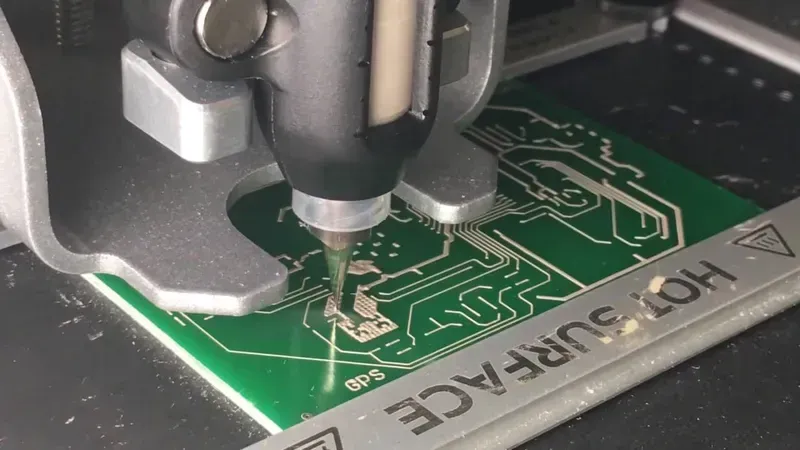
Rapid Prototyping PCB
In the fast-paced world of robotics, the ability to rapidly prototype and iterate on designs is paramount for achieving a competitive edge. Zero One Solution Limited specializes in rapid prototyping services for Welcoming Robot PCB Solutions, empowering developers to quickly translate innovative concepts into tangible prototypes. This agile approach significantly reduces the product development lifecycle, minimizes costs associated with design flaws, and accelerates time-to-market for groundbreaking robotic applications.
What is rapid prototyping in the context of Welcoming Robot PCB Solutions? Rapid prototyping in Welcoming Robot PCB Solutions involves the swift creation of functional PCB samples to test and validate design concepts early in the development cycle. It encompasses expedited PCB design, manufacturing, and assembly processes, allowing engineers to quickly identify and rectify potential issues, refine functionalities, and iterate on their designs with unparalleled speed. This process is crucial for intricate robotic systems where component integration and performance optimization are critical.
How does Zero One Solution's rapid prototyping benefit R&D for Welcoming Robots? Zero One Solution Limited's rapid prototyping services are specifically tailored to accelerate R&D for Welcoming Robots by providing high-quality, quick-turnaround PCB fabrication and assembly. This enables engineers to validate circuit designs, test sensor integration, verify power management schemes, and evaluate overall system performance in real-world scenarios without extensive delays. Our agile methodology fosters innovation and allows for multiple design iterations within a compressed timeframe, leading to more robust and reliable final products.
What are the key advantages of using rapid prototyping for robotic PCBs? The key advantages of rapid prototyping for robotic PCBs include a substantial reduction in development time and costs, enhanced design flexibility, early detection and correction of design flaws, and improved product quality. By facilitating quick experimentation and validation, rapid prototyping minimizes the risks associated with large-scale production, ensuring that the final Welcoming Robot PCB is optimized for performance, reliability, and manufacturability.
Zero One Solution Limited: Your Partner for Welcoming Robot PCB Solutions
Zero One Solution Limited stands at the forefront of PCB innovation, offering comprehensive and reliable solutions tailored specifically for the evolving demands of welcoming robot technology. As a veteran in the PCB solutions industry, our commitment to quality, innovation, and unparalleled customer satisfaction positions us as the ideal partner for bringing your advanced robotic concepts to life. We empower clients to accelerate product development and achieve market success with exceptional efficiency through our deep expertise in robotic PCB design, manufacturing, and assembly.
Why choose Zero One Solution for your Welcoming Robot PCB needs? Zero One Solution Limited is strategically positioned to meet the unique challenges of welcoming robot PCB development. Our core strengths include rapid-response R&D prototype manufacturing, enabling quick iteration and validation of designs. Our extensive experience in handling complex designs, integrating diverse sensors, and ensuring robust power management systems makes us a preferred choice. We also offer a one-stop service from design to manufacturing and assembly, streamlining your supply chain and reducing time-to-market. Our strategic presence in Shenzhen, China, and Dubai ensures global reach and access to the best resources and support.
Aspect
Zero One Solution Advantage
Benefit for Welcoming Robots
Rapid Prototyping
Specialized in rapid-response R&D prototype manufacturing
Accelerates design validation, reduces development cycles and costs
One-Stop Service
Integrated PCB design, manufacturing, and assembly
Streamlines production, ensures seamless coordination, and improves overall quality
Global Supply Chain
Headquartered in Shenzhen, branch in Dubai
Ensures access to diverse, high-quality materials and efficient logistics
Expertise
20 years of experience in PCB solutions, focus on robotics
Guarantees robust, high-performance, and reliable PCB solutions optimized for robotic applications
Quality Control
Rigorous quality checks at every stage
Minimizes defects, ensures long-term operational reliability of welcoming robots
Case Studies: Successful Welcoming Robot Projects with Zero One Solution
Welcoming Robot Application
Zero One Solution Limited consistently delivers robust PCB solutions that enable the successful deployment of advanced welcoming robots across diverse industries. Our expertise in navigating complex design and manufacturing challenges has been pivotal for our clients, transforming innovative concepts into functional, reliable robotic systems. These case studies exemplify our commitment to precision, efficiency, and collaborative problem-solving, showcasing how our tailored PCB solutions overcome specific hurdles inherent in welcoming robot development.
Optimizing Navigation and Sensor Integration for Hospitality Robots A prominent hospitality chain sought a welcoming robot with seamless indoor navigation and precise human interaction capabilities. The core challenge was integrating multiple sensor arrays (LIDAR, ultrasonic, IR) and high-resolution cameras onto a compact PCB, while ensuring signal integrity and minimal power consumption for extended operation. Zero One Solution Limited engineered a multi-layer PCB with optimized routing for high-speed data transmission and intelligent power management, reducing interference and significantly extending battery life. Our rapid prototyping allowed for quick iteration and validation, cutting development time by 20% and leading to a highly reliable navigation system that enhanced guest experience and operational efficiency.
Future Trends in Welcoming Robot PCB Technology
The evolution of welcoming robots is intrinsically linked to advancements in Printed Circuit Board (PCB) technology. As these sophisticated machines become more prevalent and complex, the PCBs that serve as their central nervous systems must also evolve, pushing the boundaries of what's possible in robotics. Key trends like flexible PCBs, miniaturization, and the integration of advanced materials are not just incremental improvements; they represent a paradigm shift that will enable more agile, intelligent, and human-like interactions from welcoming robots, fundamentally reshaping their operational capabilities and potential applications.
What are Flexible PCBs and their Impact on Welcoming Robots? Flexible PCBs (FPCBs) are printed circuit boards designed to be bent or folded, offering unparalleled design freedom. For welcoming robots, FPCBs enable complex anatomical designs, allowing PCBs to conform to irregular shapes and articulate joints. This flexibility facilitates more compact designs, reduces weight, and improves durability by minimizing rigid connections susceptible to stress, ultimately leading to more fluid, natural movements and integrated aesthetics in robot design. They are crucial for highly integrated sensory systems and robotic 'skin'.
How is Miniaturization Driving Welcoming Robot Evolution? Miniaturization in PCB technology involves reducing the size of components and traces, allowing for higher component density within a smaller footprint. For welcoming robots, this trend is critical for developing sleeker, less obtrusive designs that blend seamlessly into environments like hotels, hospitals, and corporate lobbies. Smaller PCBs free up valuable internal space for more powerful processors, larger battery capacities, or additional sensors, enhancing robot intelligence, autonomy, and operational longevity without increasing overall size or weight. This enables more complex functionalities within a compact form factor, crucial for social interaction and navigation.
What Advanced Materials are Shaping the Future of Welcoming Robot PCBs? The adoption of advanced materials is revolutionizing PCB performance for welcoming robots. This includes high-frequency laminates for better signal integrity in wireless communication, thermally conductive substrates for improved heat dissipation in high-performance processors, and specialized polymers for enhanced durability and flexibility in extreme conditions. These materials contribute to faster data processing, increased energy efficiency, and extended operational lifespans, enabling robots to perform more complex tasks reliably and respond to environmental stimuli with greater precision, thereby enhancing user experience and operational reliability.
In conclusion, the PCB is a crucial component of any welcoming robot, and its design, manufacturing, and assembly require specialized expertise. Zero One Solution Limited offers a comprehensive suite of PCB solutions tailored to the unique needs of robotic applications, ensuring performance, reliability, and innovation. By partnering with Zero One Solution Limited, you gain access to cutting-edge technology, experienced engineers, and a commitment to excellence that will bring your welcoming robot project to life. Contact us today to discuss your project and discover how we can help you create the next generation of welcoming robots. Let Zero One Solution Limited be your trusted partner in PCB solutions. Share this article and leave a comment below!