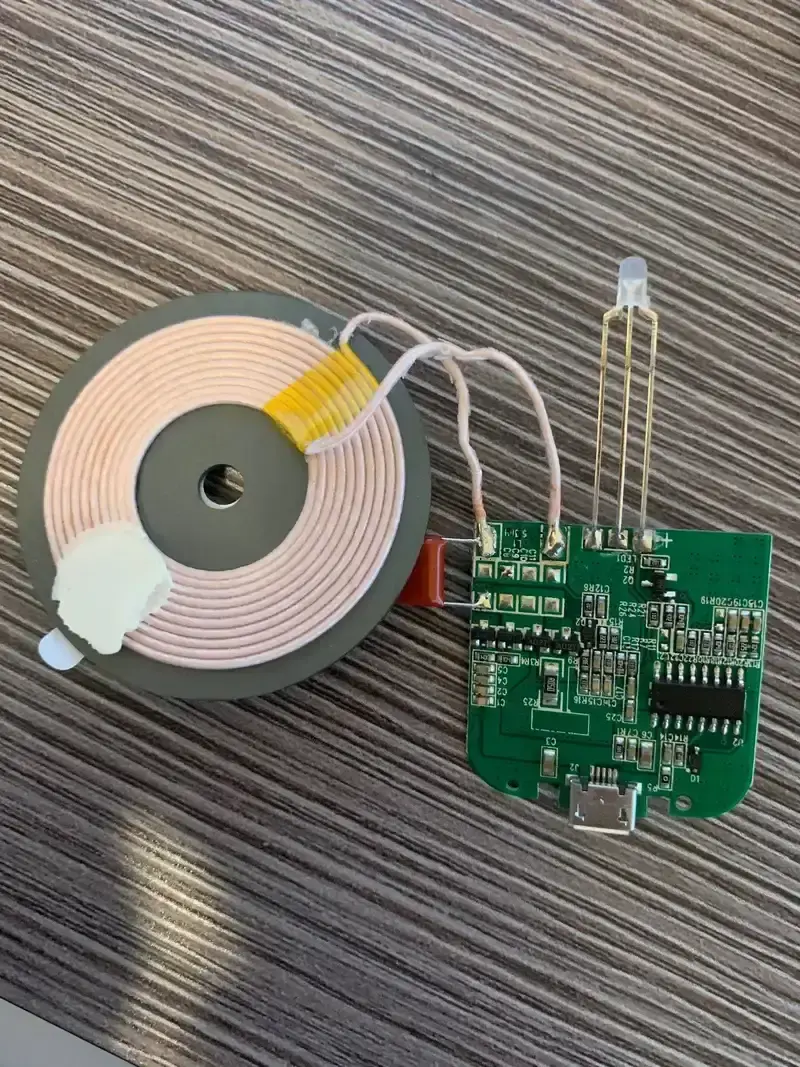
In an increasingly connected world, the convenience of wireless technology has become paramount. From smartphones to wearables and IoT devices, the demand for seamless power delivery without the clutter of cables is driving innovation. At the heart of this revolution lies the wireless charging board, a sophisticated piece of engineering that enables efficient and reliable power transfer. Zero One Solution Limited, a leader in rapid prototyping and one-stop PCB solutions, understands this critical need. This article will delve into the intricacies of our Wireless Charging Board Solutions, demonstrating how we empower businesses to integrate this transformative technology into their next-generation products, accelerating their journey from concept to market.
The Evolution of Wireless Charging Technology
Wireless charging, once a futuristic concept, has rapidly evolved into a cornerstone technology, redefining how devices are powered across consumer, industrial, and medical sectors. Its journey began over a century ago with Nikola Tesla's pioneering work on resonant inductive coupling, laying the theoretical groundwork for wireless power transfer. While early implementations were niche, recent decades have witnessed an explosion in its adoption, driven by advancements in miniaturization, efficiency, and standardization. This progression underscores the critical need for sophisticated wireless charging board solutions that can meet the increasing demands for seamless, robust, and versatile power delivery in an increasingly connected world.
Early Innovations Nikola Tesla’s experiments in the late 19th century demonstrated wireless power transmission over short distances, though practical applications were limited by technology of the era. His vision laid the foundation for modern inductive and resonant coupling methods.
Mid-20th Century Resurgence Interest in wireless power picked up in the mid-20th century with applications in electric toothbrushes and medical implants. These early commercial uses highlighted the convenience and safety benefits of eliminating physical contacts, even with nascent technology.
21st Century Standardization and Growth The early 2000s saw a significant leap with the establishment of industry consortia like the Wireless Power Consortium (WPC) and AirFuel Alliance. These bodies standardized protocols, notably Qi, accelerating widespread adoption in smartphones, wearables, and electric vehicles. This standardization has been pivotal in driving mass-market appeal and interoperability.
Advancements in Efficiency and Power Density Modern advancements focus on improving efficiency, increasing power transfer distances, and miniaturizing components. Resonant inductive charging has gained prominence for its ability to charge over greater distances and through non-metallic barriers, opening doors for embedded solutions in furniture and vehicles. Magnetic resonance technology, in particular, offers greater spatial freedom and multi-device charging capabilities.
Emerging Applications and Future Trends Beyond consumer electronics, wireless charging is expanding into industrial IoT sensors, medical devices (e.g., pacemakers, smart pills), and electric vehicle charging infrastructure. The trend is towards ubiquitous wireless power, integrating charging capabilities into everyday environments, from smart homes to public spaces, and even powering drones and robots autonomously. This continuous expansion signifies wireless charging as not just a convenience, but a fundamental utility.
Understanding Wireless Charging Board Components
Wireless Charging Board Components
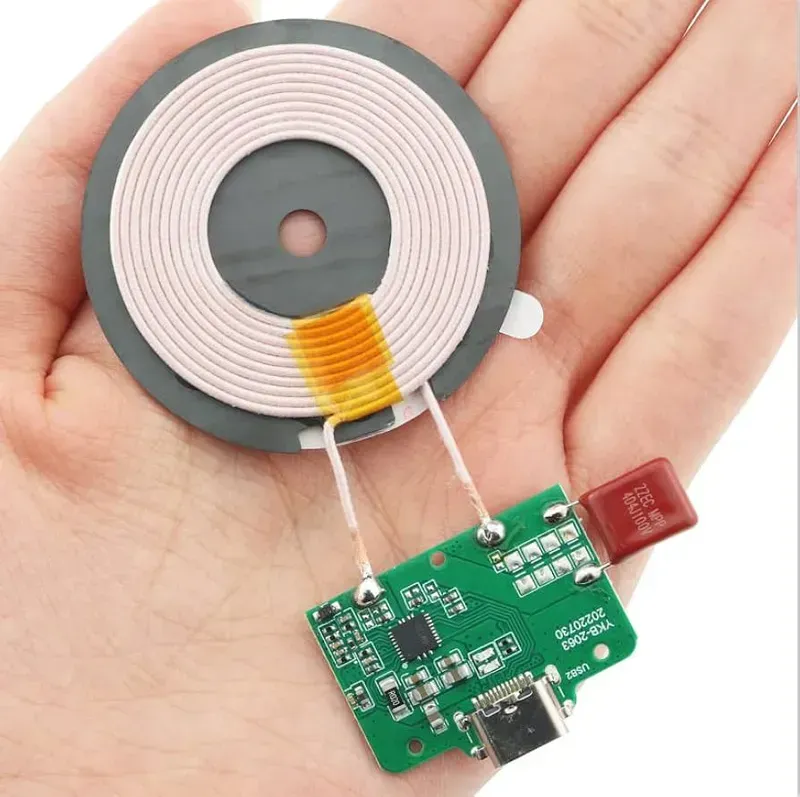
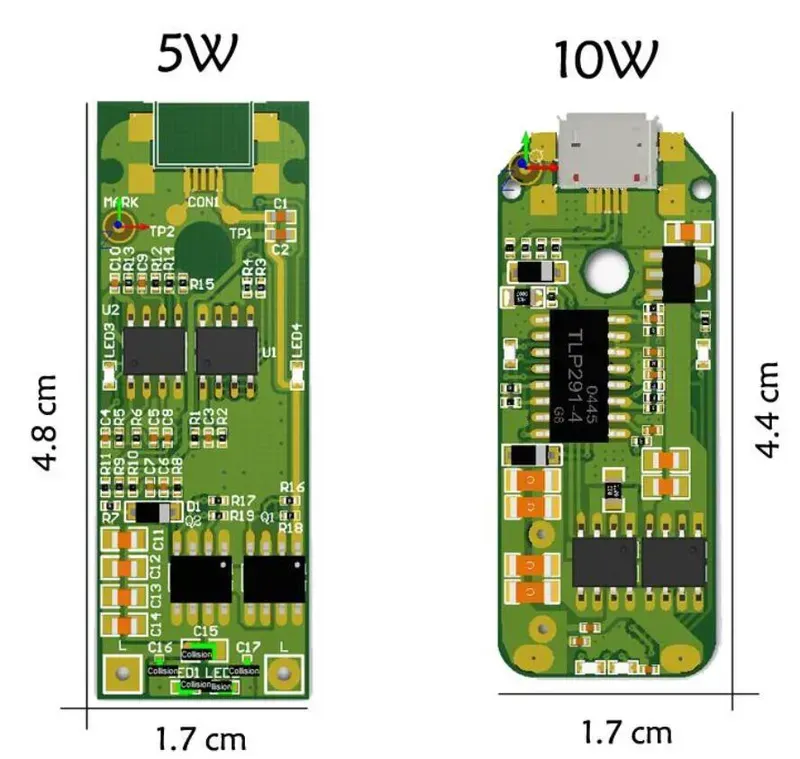
A robust wireless charging board is an intricate assembly of specialized electronic components, each playing a crucial role in the efficient and safe transfer of power without physical contact. Comprehending these core components is fundamental to designing and manufacturing high-performance wireless charging solutions that meet the demanding requirements of modern applications, from consumer electronics to industrial systems. Optimal selection and integration of these parts are paramount for achieving high efficiency, reliability, and compliance with global standards.
Component
Function in Wireless Charging
Importance for Performance
Transmitting Coil (Tx)
Generates a fluctuating magnetic field to induce current in the receiver coil.
Crucial for power output and transfer distance. Design affects coupling efficiency and EMI.
Receiving Coil (Rx)
Captures the fluctuating magnetic field from the Tx coil and converts it back into electrical energy.
Essential for power reception. Material and winding significantly impact harvested power and overall system efficiency.
Power Management IC (PMIC)
Regulates voltage, current, and power flow; often includes rectification, voltage regulation, and protection circuits.
Ensures stable and safe power delivery to the device, manages charging states, and optimizes power conversion.
Resonant Capacitors
Form a resonant circuit with the coils to maximize power transfer efficiency at a specific frequency.
Critical for achieving high efficiency by minimizing reactive power and ensuring optimal power coupling between coils. Improper selection leads to significant energy loss.
Microcontroller Unit (MCU)
Manages the entire wireless charging process, including communication protocols, power control, foreign object detection (FOD), and safety features.
Enables intelligent charging, manages communication between charger and device, and implements critical safety algorithms like FOD and over-temperature protection.
Key Design Considerations for Wireless Charging Boards
Wireless Charging Board PCB Design
Optimizing a wireless charging board solution requires meticulous attention to several critical design considerations. These principles are fundamental to ensuring high efficiency, operational stability, and adherence to global safety standards. Beyond simply transmitting power, a robust PCB design for wireless charging systems must address complex interactions between components, manage thermal outputs, and mitigate electromagnetic interference to deliver a reliable and superior user experience.
Coil Design and Placement The efficiency of wireless power transfer is predominantly dictated by the design and precise placement of the transmitting and receiving coils. Factors such as coil geometry (e.g., circular, rectangular), number of turns, wire gauge, and the distance between coils significantly impact coupling efficiency and power transfer capabilities. Careful simulation and empirical testing are crucial to optimize coil parameters for specific applications, minimizing flux leakage and maximizing energy coupling. Proximity and alignment tolerance also play a critical role; designs must account for practical user scenarios where perfect alignment is not always achievable, ensuring robust performance under slight misalignments.
EMI/EMC Considerations Wireless charging systems operate at high frequencies, making them susceptible to and potential sources of electromagnetic interference (EMI). Effective Electromagnetic Compatibility (EMC) design is paramount to prevent interference with other electronic devices and ensure regulatory compliance. This involves strategic PCB layout practices, such as proper grounding, judicious trace routing, shield placement, and filtering techniques (e.g., common-mode chokes, ferrite beads). Minimizing loop areas, separating analog and digital grounds, and employing multi-layer boards can significantly reduce EMI emissions and improve immunity to external noise.
Thermal Management Power transfer losses in wireless charging circuits inevitably generate heat, particularly in the power amplifiers, rectifier circuits, and coils. Inadequate thermal management can lead to reduced component lifespan, performance degradation, and even system failure. Effective thermal design includes selecting components with low ON-resistance, optimizing PCB copper pour for heat dissipation, incorporating thermal vias, and, when necessary, employing external heatsinks or active cooling solutions. Thorough thermal simulations during the design phase are vital to predict and mitigate hot spots, ensuring the board operates within safe temperature limits.
Thermal vias, copper pours, heatsinks, fan cooling (for high power)
Component Selection
Efficiency, cost, size, reliability
High-Q coils, low-ESR capacitors, efficient power ICs, robust rectifiers
Safety Standards Compliance
Market access, consumer trust, legal implications
Adherence to Qi, WPT, and regional safety regulations (e.g., FCC, CE)
Zero One Solution Limited's Expertise in Wireless Charging PCB Solutions
Wireless Charging PCB Manufacturing
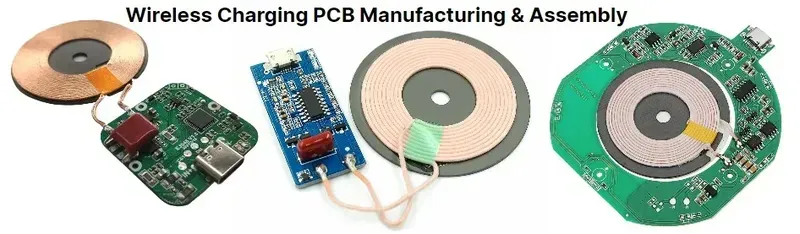
Zero One Solution Limited stands at the forefront of providing exceptional wireless charging PCB solutions, leveraging over a decade of specialized experience to deliver high-performance, reliable, and efficient boards. Our deep understanding of electromagnetic principles, power electronics, and intricate PCB design allows us to navigate the complexities of wireless power transfer, ensuring our clients receive robust solutions that meet stringent industry demands and accelerate their product development cycles. We are committed to precision engineering, utilizing cutting-edge technology and a one-stop service model to transform innovative concepts into market-ready products with unparalleled speed and accuracy.
Service Area
Core Capability
Benefit to Client
Rapid Prototyping
Expedited fabrication of prototype wireless charging PCBs
Accelerated design iteration and time-to-market
Advanced PCB Manufacturing
High-precision multi-layer PCB fabrication for wireless charging applications
Enhanced signal integrity and power transfer efficiency
Component Sourcing & Assembly
Global network for quality components and automated SMT assembly
Cost-effective production and consistent quality
Rigorous Quality Control
Comprehensive testing and validation for performance and compliance
Ensured reliability, safety, and adherence to industry standards
Optimized Coil Design We employ advanced simulation tools and proprietary techniques to design highly efficient transmitting and receiving coils, critical for maximizing power transfer efficiency and minimizing energy loss in wireless charging systems. Our designs consider coupling factors, inductance, and resonance frequencies to achieve optimal performance across various applications and power levels.
Tailored Wireless Charging Solutions for Diverse Applications
Wireless Charging Device Applications
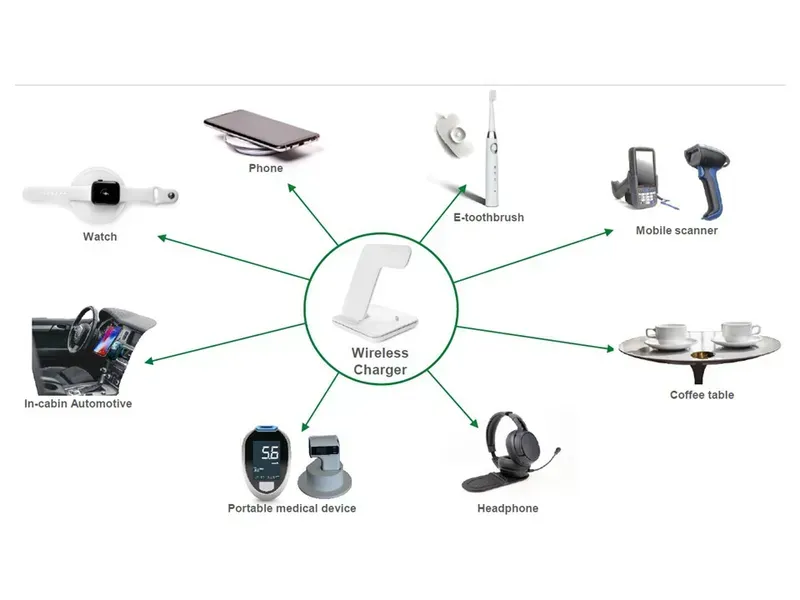
Zero One Solution Limited excels in delivering highly customized wireless charging board solutions, meticulously engineered to meet the unique demands of various industries. Our deep understanding of resonant inductive coupling and precise power management enables us to develop bespoke PCBs that integrate seamlessly into a wide array of applications, ensuring optimal performance, efficiency, and reliability across consumer, medical, industrial, and automotive sectors.
Consumer Electronics For smartphones, smartwatches, and hearables, we design compact, highly efficient wireless charging boards that support fast charging protocols (e.g., Qi standard) while minimizing heat generation and ensuring robust power delivery in space-constrained devices. Our solutions facilitate seamless user experiences and enable sleek, port-free designs for the next generation of personal electronics. For example, a leading smartphone manufacturer utilized our ultra-thin, high-frequency boards to achieve faster charging speeds and improved thermal performance in their flagship models.
Medical Devices In medical applications, reliability, safety, and sterilization compatibility are paramount. We develop specialized wireless charging PCBs for implantable devices, diagnostic tools, and portable medical equipment, focusing on low power consumption, biocompatible material considerations, and strict adherence to medical device regulations (e.g., ISO 13485). Our boards enable hermetically sealed designs, reducing infection risks and extending device lifespan by eliminating physical connectors. A notable project involved developing a waterproof charging solution for a portable patient monitoring device, ensuring reliable power in critical environments.
Industrial IoT (IIoT) For industrial sensors, automated guided vehicles (AGVs), and harsh environment equipment, our wireless charging board solutions offer unparalleled durability and operational continuity. We engineer boards capable of high power transfer over longer distances, resistant to dust, moisture, and vibrations, and optimized for continuous operation in challenging industrial settings. This eliminates the need for frequent battery replacements or wired connections, enhancing efficiency and safety in smart factories and logistics. For instance, we provided a custom charging module for robotic systems, enabling automated recharging without human intervention, significantly increasing operational uptime.
Automotive Applications In the automotive sector, we provide robust wireless charging solutions for in-cabin charging pads, electric vehicle (EV) infrastructure, and advanced driver-assistance systems (ADAS). Our boards are designed to withstand extreme temperatures, vibrations, and electromagnetic interference, meeting stringent automotive quality standards (e.g., AEC-Q100). We facilitate convenient charging for smartphones and wearables within vehicles and contribute to the evolution of smart mobility by enabling efficient power transfer for critical vehicle components. A recent collaboration focused on developing an integrated wireless power solution for an EV's internal accessory charging system, providing both convenience and robust performance.
The Zero One Advantage: From Concept to Production
Engineer Holding PCB Prototype
Partnering with Zero One Solution Limited offers a distinct competitive advantage for bringing innovative wireless charging board solutions to market efficiently. Our integrated one-stop service model, from initial concept to full-scale production, is meticulously designed to streamline your development cycle, significantly reducing lead times and ensuring optimal performance and reliability for your wireless charging products.
Phase 1: Expert Design Consultation Our process begins with an in-depth consultation where our veteran engineers collaborate with your team to fully understand your wireless charging requirements, specifications, and application nuances. Leveraging decades of experience, we provide critical insights into optimal circuit design, component selection, coil integration, and thermal management strategies to lay a robust foundation for your custom wireless charging board solution. This early engagement ensures that your concept is technically sound and aligns with industry best practices for efficiency and safety.
Phase 2: Rapid Prototyping and Iteration As specialists in rapid-response R&D prototype manufacturing, Zero One Solution Limited excels in swiftly transforming your validated design into functional prototypes. Our state-of-the-art facilities and agile manufacturing processes allow for quick turnaround times, enabling rapid testing and iterative refinements. This crucial phase accelerates your product development, minimizing delays and allowing for real-world validation of performance, compatibility, and user experience before committing to mass production.
Phase 3: Advanced Manufacturing and Assembly With the prototype perfected, we transition seamlessly into mass manufacturing and assembly. Our Shenzhen-based production hub, combined with our global supply chain network, ensures access to high-quality components and cutting-edge manufacturing technologies. We employ advanced SMT and through-hole assembly processes, adhering to stringent IPC standards. Each wireless charging board undergoes automated optical inspection (AOI) and X-ray inspection to guarantee solder joint integrity and component placement accuracy.
Phase 4: Rigorous Quality Control and Testing Quality and reliability are paramount at Zero One Solution Limited. Every wireless charging board solution undergoes comprehensive testing, including electrical performance validation, power transfer efficiency measurements, electromagnetic compatibility (EMC) testing, and thermal stress analysis. We utilize specialized test fixtures and procedures to simulate real-world operating conditions, ensuring your boards meet all performance benchmarks and regulatory compliance requirements before shipment. This meticulous quality assurance guarantees robust and dependable products.
Ensuring Quality and Reliability in Wireless Charging Boards
Wireless Charging Board Testing
The successful deployment of wireless charging technology hinges critically on the unwavering quality and reliability of its underlying circuit boards. At Zero One Solution Limited, our commitment to excellence is deeply embedded in a stringent testing and validation framework, meticulously designed to guarantee that every wireless charging board solution we deliver not only performs optimally but also adheres to the highest benchmarks of safety and efficiency. This rigorous approach ensures product longevity and user confidence, addressing a core pain point in a rapidly evolving technological landscape where performance and safety are paramount.
Aspect
Testing Procedures
Zero One Solution Limited's Approach
Efficiency
Power Transfer Efficiency (PTE) Measurement, Load Regulation Tests
Utilizing precision power analyzers and dynamic load testing to ensure peak power delivery with minimal loss, often exceeding 85% PTE for common applications like smartphones and wearables, aligning with industry best practices (e.g., WPC Qi standard).
Implementing multi-layered protection circuits and software algorithms validated against IEC 62368-1 and specific regional safety norms (e.g., UL standards). Comprehensive FOD testing with various metallic and non-metallic objects to prevent hazardous thermal events, ensuring compliance with Qi-compliant EPP specifications for enhanced safety in consumer and industrial devices, including medical applications (e.g., ISO 13485 guidelines for medical device safety).
Conducting full anechoic chamber testing and on-site simulations to mitigate electromagnetic interference (EMI), ensuring compliance with FCC Part 15 and CE directives. Our designs prioritize optimized coil geometries and shielding techniques, achieving typically <15 dBµV/m @ 3m for radiated emissions, significantly below regulatory limits, which is critical for medical devices and sensitive industrial IoT applications, preventing interference with other electronic systems and ensuring data integrity and reliable operation in complex electromagnetic environments. This proactive approach minimizes post-production compliance issues and accelerates time-to-market. Additionally, our rigorous testing ensures robust performance in noisy environments, crucial for automotive and industrial applications where electromagnetic interference is common and can disrupt critical functions. Our commitment to EMC ensures that devices integrate seamlessly into diverse operational settings without compromising performance or safety.
Frequently Asked Questions about Wireless Charging Board Solutions
Navigating the complexities of wireless charging board solutions often raises critical questions regarding design, performance, and implementation. This section addresses common inquiries, providing clear, concise, and authoritative answers to help you better understand the nuances of this rapidly evolving technology and the value of partnering with experienced providers like Zero One Solution Limited for your PCB needs.
What are the primary factors affecting the efficiency of a wireless charging board solution? The efficiency of a wireless charging board is predominantly influenced by coil alignment, resonant frequency tuning, power management IC performance, and the quality of passive components. Optimal coupling between transmitting and receiving coils, precise impedance matching, and minimal losses in power conversion circuitry are crucial for maximizing power transfer efficiency. Material selection for PCB and coil windings also plays a significant role in reducing energy dissipation as heat, ensuring more power is delivered to the end device rather than wasted.
How do safety standards impact the design and manufacturing of wireless charging board solutions? Safety standards are paramount in wireless charging board design and manufacturing to prevent hazards such as overheating, electromagnetic interference (EMI), and electrical shock. Key standards like Qi (Wireless Power Consortium), IEC, and FCC impose strict requirements on power limits, foreign object detection (FOD), thermal management, and EMI/EMC compliance. Adherence to these standards involves robust circuit protection, efficient heat dissipation strategies, and meticulous PCB layout to minimize radiated emissions, ensuring both device and user safety. Compliance is critical for market acceptance and regulatory approval.
What are the common challenges in designing compact wireless charging board solutions for small devices? Designing compact wireless charging board solutions for small devices, such as wearables or IoT sensors, presents challenges related to miniaturization, thermal management, and signal integrity. Smaller form factors necessitate highly integrated components and optimized coil designs to maintain efficiency within limited space. Heat dissipation becomes more critical as component density increases, requiring advanced thermal materials and layout techniques. Additionally, maintaining signal integrity and minimizing interference in tightly packed circuitry is essential for reliable operation, often requiring multi-layer PCB designs and meticulous routing strategies.
Can Zero One Solution Limited provide custom coil designs for unique wireless charging applications? Yes, Zero One Solution Limited specializes in providing highly customized wireless charging board solutions, including bespoke coil designs. Understanding that optimal coil geometry, material, and winding count are critical for specific power requirements and form factors, our expert engineers work closely with clients to develop tailored coil solutions. Utilizing advanced simulation tools and rapid prototyping capabilities, we ensure the custom coils integrate seamlessly with the overall PCB design, achieving maximum efficiency and performance for unique applications ranging from medical implants to industrial sensors and automotive systems.
The future of power is undoubtedly wireless, and Zero One Solution Limited is at the forefront of this exciting evolution. Our comprehensive Wireless Charging Board Solutions, backed by our expertise in rapid prototyping, design, manufacturing, and assembly, offer an unparalleled advantage for companies looking to integrate this transformative technology. By partnering with us, you gain access to a global supply chain network, unparalleled efficiency, and a dedicated team committed to realizing your vision. Don't let power limitations hinder your innovation. Connect with Zero One Solution Limited today to discover how our Wireless Charging Board Solutions can power your next breakthrough product. Visit our website or contact our sales team for a consultation and take the first step towards a truly wireless future.