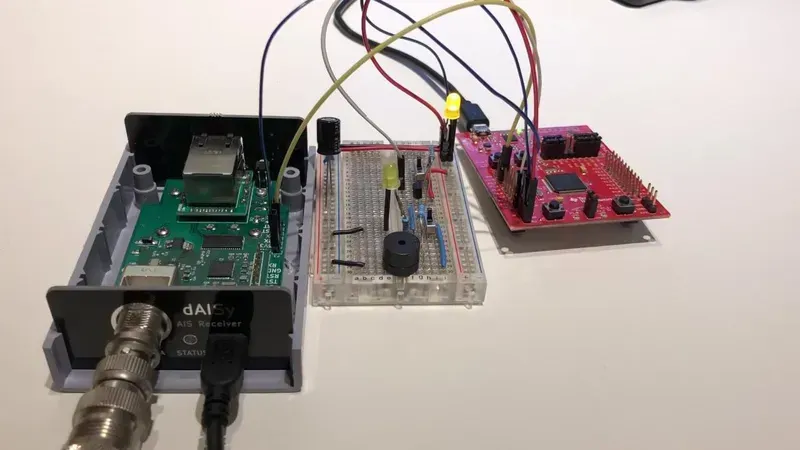
AIS Automatic Identification System Board Solution
2025.10.10
In the ever-evolving maritime industry, safety and efficiency are paramount. The Automatic Identification System (AIS) has become a cornerstone technology for achieving these goals. At Zero One Solution Limited, we understand the critical role AIS plays, and we're dedicated to providing cutting-edge AIS Automatic Identification System Board Solutions that meet the demanding needs of modern marine applications. This article will delve into the intricacies of AIS board solutions, exploring their design, manufacturing, and the crucial role they play in enhancing maritime safety and operational effectiveness. How can a reliable AIS board solution transform your marine electronics and improve safety at sea?
Understanding the Automatic Identification System (AIS)
The Automatic Identification System (AIS) is a crucial short-range broadcast system operating in the VHF maritime band, designed to enhance navigational safety and efficiency. Mandated by the International Maritime Organization (IMO) for all international voyaging ships over 300 gross tonnage, cargo ships over 500 gross tonnage, and all passenger ships, AIS provides vital vessel information dynamically and continuously. At its core, AIS functions by transmitting and receiving vessel data, including identity, position, course, speed, and navigational status, enabling maritime authorities and other vessels to "see" and identify ships in real-time, even beyond the line of sight or in adverse weather conditions. This immediate situational awareness is paramount for preventing collisions, facilitating search and rescue operations, and bolstering overall maritime domain awareness.
What is the primary purpose of AIS? The primary purpose of AIS is to improve maritime safety by allowing vessels and coastal stations to exchange navigational data, thereby enhancing situational awareness, facilitating collision avoidance, and aiding in maritime traffic management and search and rescue operations. It provides real-time identification and tracking of vessels.
AIS Class
Key Characteristics
Typical Use Case
Class A
Mandatory for large vessels; higher power output (12.5W); transmits more frequently and detailed data (static, dynamic, voyage-related).
Large commercial vessels, passenger ships, tankers, cargo ships.
How does AIS contribute to maritime safety beyond collision avoidance? Beyond collision avoidance, AIS significantly contributes to maritime safety by facilitating search and rescue (SAR) operations through precise vessel location data, enhancing maritime domain awareness for security and environmental monitoring, and improving port and waterway management by providing vessel movement information to authorities. It also supports accident investigation and maritime research by logging historical data.
Key Components of an AIS Board Solution
AIS Transceiver Module
At the core of every robust AIS (Automatic Identification System) board solution lies a meticulously engineered collection of interconnected components. These elements work in concert to ensure the precise reception, processing, and transmission of vital maritime data, enabling enhanced navigational safety and situational awareness. Understanding the function and interplay of these key components is paramount for designing and manufacturing high-performance AIS systems that meet stringent industry standards and operational demands.
VHF Transceiver Module The VHF (Very High Frequency) transceiver is the heart of the AIS board, responsible for both transmitting and receiving AIS messages on dedicated maritime VHF channels (161.975 MHz and 162.025 MHz). Its performance, including sensitivity and transmission power, directly impacts the range and reliability of AIS communication. Advanced transceivers feature dual-channel parallel reception for improved data capture and collision avoidance capabilities.
GPS/GNSS Module Accurate position, velocity, and time (PVT) data are critical for AIS functionality. The integrated GPS (Global Positioning System) or more advanced GNSS (Global Navigation Satellite System) module provides this essential information. High-precision GNSS modules enhance the reliability of position reporting, which is fundamental for collision avoidance algorithms and accurate vessel tracking.
Microcontroller Unit (MCU) / Digital Signal Processor (DSP) The MCU or DSP acts as the brain of the AIS board, managing data flow, processing received AIS messages, formatting outgoing messages, and controlling the overall system operation. It handles the complex algorithms for decoding and encoding AIS data, ensuring compliance with international standards like ITU-R M.1371-5. Its processing power and memory capacity are crucial for efficient data handling.
Antenna Interface The antenna interface provides the critical connection between the VHF transceiver and the external VHF antenna. Proper impedance matching and low-loss design are essential here to ensure maximum signal transfer and minimize signal degradation, directly impacting the effective range of AIS reception and transmission. This often includes features like antenna tuning and protection circuits.
Communication Interfaces (NMEA 0183 & NMEA 2000) AIS boards typically feature standardized communication interfaces to integrate with other marine electronics, such as chart plotters, radar systems, and display units. NMEA 0183 (National Marine Electronics Association) is a widely used serial data communication standard, while NMEA 2000 offers a more robust, high-speed, and networked solution based on CAN bus technology, enabling seamless data sharing across a vessel's network.
Power Management Unit Given the critical nature of maritime operations, a robust power management unit is essential. This component ensures stable power delivery to all circuits, handles various input voltages typically found on vessels (e.g., 12V/24V DC), and incorporates protection mechanisms against voltage spikes, surges, and reverse polarity, ensuring the reliability and longevity of the AIS board.
The Importance of PCB Design in AIS Performance
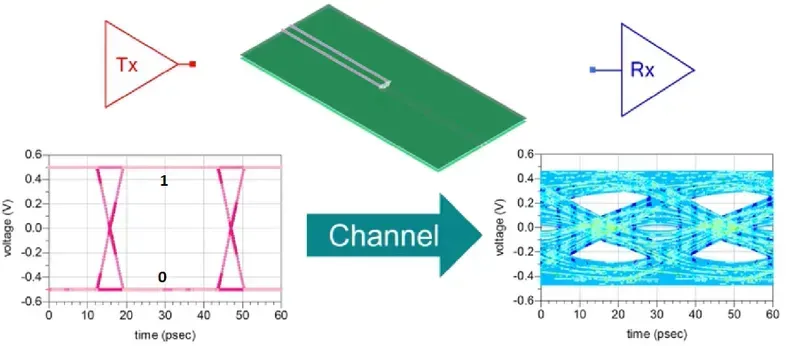
PCB Signal Integrity Testing
The robust and reliable operation of an Automatic Identification System (AIS) is fundamentally anchored in the precision of its Printed Circuit Board (PCB) design. As the central nervous system of any electronic device, the PCB in an AIS board dictates everything from signal integrity to power efficiency, directly influencing the system's ability to accurately transmit and receive critical maritime data. A meticulously engineered PCB ensures that the AIS board can withstand the demanding marine environment, minimize signal loss, and provide consistently accurate positional and navigational information, which is paramount for collision avoidance and maritime safety. Without a superior PCB design, even the most advanced AIS components cannot achieve their full potential, underscoring the critical role of expert PCB engineering in AIS performance.
Signal Integrity and Impedance Matching Maintaining signal integrity on an AIS PCB is crucial for accurate data transmission and reception. This involves precise trace routing, controlled impedance matching (typically 50 ohms for RF signals), and minimizing reflections and crosstalk. Poor signal integrity can lead to data errors, reduced range, and unreliable AIS performance, directly impacting maritime safety. Expert PCB designers employ sophisticated simulation tools to ensure optimal signal paths and impedance control, especially for high-frequency RF sections.
Thermal Management for Sustained Operation AIS transceivers generate heat, and effective thermal management is essential to prevent component degradation and ensure long-term reliability. A well-designed PCB incorporates thermal vias, proper copper pour, and strategic component placement to dissipate heat efficiently. This prevents overheating, which can lead to performance degradation, reduced lifespan of components, and even system failure in demanding marine conditions.
Minimizing Electromagnetic Interference (EMI) In complex electronic environments, AIS boards are susceptible to Electromagnetic Interference (EMI) from other onboard systems. Superior PCB design incorporates techniques such as ground plane optimization, shielding, filtering, and careful component isolation to mitigate EMI. This ensures that the AIS signals remain clear and free from disruption, preventing false readings or missed transmissions, which are vital for accurate situational awareness at sea.
Power Delivery Network (PDN) Optimization A stable and clean power supply is critical for the consistent operation of sensitive AIS components. The PCB's Power Delivery Network (PDN) design must ensure minimal voltage drop and noise, even under varying load conditions. This involves appropriate trace widths, decoupling capacitors, and power plane design to deliver stable power to all integrated circuits, thereby preventing performance fluctuations and ensuring reliable AIS operation.
Component Placement and Layout Efficiency Strategic component placement on an AIS PCB significantly impacts its performance, manufacturability, and overall size. Careful consideration of component proximity, signal flow, and thermal considerations optimizes board space while minimizing signal path lengths and potential interference. An efficient layout not only enhances electrical performance but also contributes to a compact and robust form factor, essential for marine applications where space and durability are key.
Zero One Solution's Expertise in AIS PCB Design
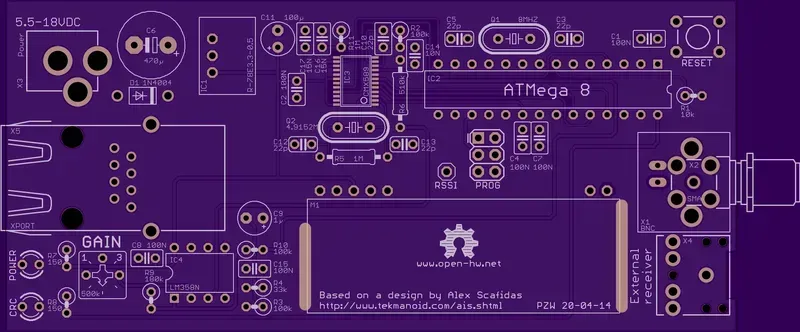
AIS PCB Layout
At Zero One Solution Limited, our deep-rooted experience in high-performance PCB design is a cornerstone of our success, especially in specialized fields like Automatic Identification System (AIS) technology. We understand that the reliability and precision of an AIS board are not merely a function of its components, but fundamentally a result of superior PCB engineering. Our expertise ensures that every AIS PCB we design is optimized for robust signal integrity, minimal electromagnetic interference (EMI), and efficient thermal management, crucial factors for uninterrupted maritime operations and regulatory compliance.
Optimized PCB Layout for AIS Performance Our engineers meticulously design AIS PCB layouts to maximize signal quality and minimize noise. This involves precise trace routing, strategic component placement, and careful consideration of ground planes to ensure stable RF performance for both transmitting and receiving AIS data. We prioritize impedance control and reduce parasitic effects, which are vital for the sensitive RF circuitry found in AIS transceivers.
Strategic Component Selection and Sourcing Leveraging our extensive global supply chain network, Zero One Solution sources high-quality, reliable components specifically suited for the demanding marine environment. For AIS boards, this includes selecting robust RF front-end modules, precise GPS chipsets, and industrial-grade microcontrollers that offer high performance and durability under varying temperature and humidity conditions. Our strategic partnerships ensure access to authentic and high-performance electronic parts.
Advanced Thermal Management Techniques Heat dissipation is a critical factor in the longevity and performance of any electronic system, particularly in enclosed maritime equipment. Our designs incorporate advanced thermal management strategies, such as optimized copper pours, thermal vias, and careful component spacing, to effectively dissipate heat generated by active components. This prevents overheating, extends the lifespan of the AIS board, and maintains consistent operational parameters.
Rigorous EMI/EMC Mitigation In the complex electromagnetic environment of a vessel, effective EMI/EMC (Electromagnetic Interference/Electromagnetic Compatibility) mitigation is paramount for AIS. Zero One Solution employs best practices in shielding, filtering, and grounding techniques to prevent external interference from disrupting AIS signals and to ensure the board itself does not emit harmful interference. Our designs adhere to stringent maritime electromagnetic compatibility standards, guaranteeing reliable communication and navigation.
Manufacturing Process Integration and DFM Our design philosophy integrates Design for Manufacturability (DFM) principles from the outset. This means our AIS PCB designs are not only high-performing but also optimized for efficient, cost-effective, and high-yield manufacturing. We work closely with our manufacturing partners, ensuring seamless transition from design to production, maintaining tight tolerances, and implementing rigorous quality control at every stage to deliver superior AIS board solutions.
Manufacturing Considerations for AIS Boards
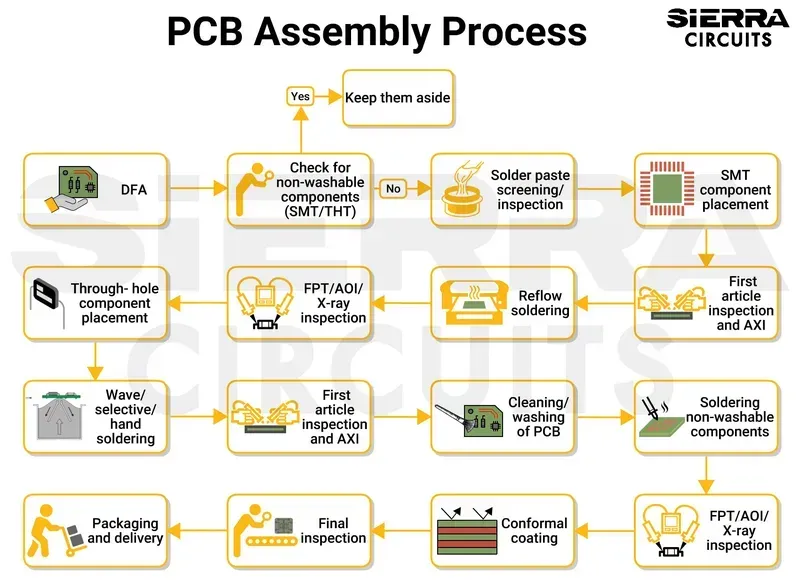
AIS Board Manufacturing Process
The manufacturing process of Automatic Identification System (AIS) boards is a critical phase that directly dictates their reliability and performance in demanding maritime environments. Precision, adherence to stringent industry standards, and meticulous quality control measures are paramount to ensure these boards operate flawlessly, providing essential navigational data for collision avoidance and maritime safety. From initial PCB fabrication to final assembly and testing, every step must be optimized to achieve consistent, high-quality output.
PCB Fabrication The foundation of any robust AIS board is its Printed Circuit Board (PCB). Fabrication involves creating the conductive pathways and pads on a substrate. For AIS, this often means multi-layer PCBs to manage complex signal routing and ensure signal integrity. High-frequency laminates may be required to minimize signal loss, especially for RF components. The choice of material and stack-up is crucial for impedance control and reduced electromagnetic interference (EMI), which are vital for accurate AIS data transmission and reception. According to IPC-6012, Class 2 or 3 standards are typically followed for professional and high-reliability applications like marine electronics.
Component Assembly (PCBA) Once the bare PCB is fabricated, electronic components are mounted onto it. This process, known as Printed Circuit Board Assembly (PCBA), primarily uses Surface Mount Technology (SMT) for its high density and efficiency. Accurate component placement is essential, particularly for sensitive RF front-end components where even minor misalignments can degrade performance. Automated pick-and-place machines ensure precision, followed by reflow soldering to create robust electrical and mechanical connections. For larger or specialized components, wave soldering or selective soldering might be employed.
Soldering Techniques The quality of solder joints is paramount for the long-term reliability of AIS boards. Reflow soldering, often using lead-free solder to comply with RoHS directives, ensures uniform heating and strong bonds for SMT components. Careful temperature profiling is necessary to prevent component damage and ensure complete solder wetting. For through-hole components, wave soldering provides efficient and consistent joints. Inspection techniques like Automated Optical Inspection (AOI) and X-ray inspection are used post-soldering to detect defects such as short circuits, open circuits, or insufficient solder, ensuring every connection is sound.
Zero One Solution Limited employs state-of-the-art manufacturing facilities and adheres to ISO 9001 quality management systems to guarantee the highest standards in AIS board production. Our expertise ensures that every board is manufactured with the precision required for reliable operation in critical maritime applications.
Rapid Prototyping for AIS Board Development
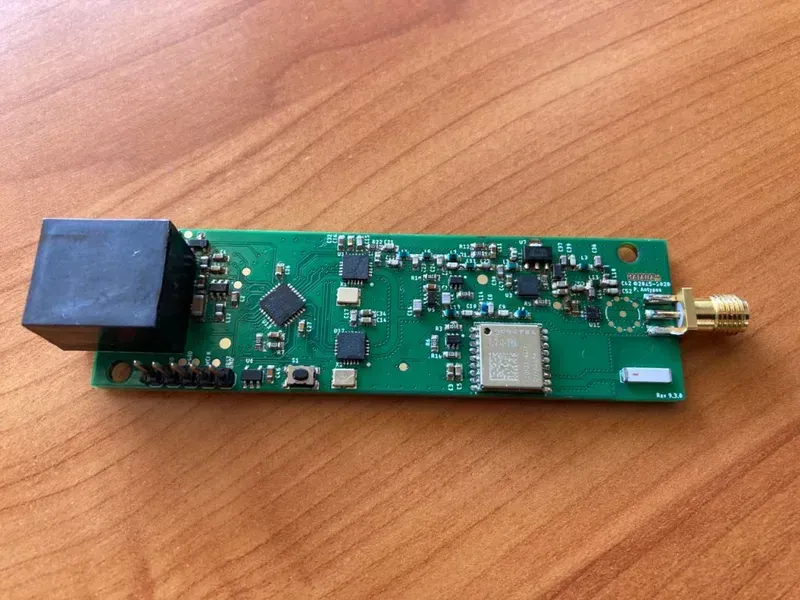
AIS Board Prototype
Rapid prototyping is a cornerstone of agile product development, particularly critical for sophisticated electronics like AIS boards. It significantly accelerates the design-test-iterate cycle, allowing engineers to quickly validate concepts, identify potential flaws, and refine designs before committing to mass production. This iterative approach minimizes risks, reduces overall development costs, and dramatically shortens time-to-market for innovative AIS solutions, ensuring that maritime technology advances at the pace demanded by the industry.
Accelerated Design Validation Rapid prototyping allows for the swift creation of functional AIS board prototypes, enabling immediate testing of design integrity, component compatibility, and overall system performance in real-world scenarios. This hands-on validation process uncovers issues early, preventing costly rework later in the development cycle. For instance, testing a new antenna interface design on a prototype can reveal signal integrity issues that simulation alone might miss, leading to quick adjustments and improved performance.
Enhanced Iteration and Optimization The ability to produce multiple design iterations rapidly fosters a culture of continuous improvement. Engineers can experiment with different layouts, component choices, and material selections, quickly assessing their impact on power consumption, signal quality, and thermal management without extensive delays. This iterative refinement is crucial for optimizing AIS board performance in challenging marine environments.
Reduced Development Costs and Risks By identifying and addressing design flaws early through prototyping, companies can avoid expensive tooling changes, material waste, and production delays associated with late-stage corrections. This proactive approach significantly reduces overall development costs and mitigates financial risks, particularly for complex AIS systems requiring high reliability and stringent compliance.
At Zero One Solution Limited, our rapid prototyping services are specifically tailored to meet the dynamic needs of AIS board development. Leveraging advanced manufacturing technologies and our deep expertise in PCB design and assembly, we provide quick-turnaround prototyping that empowers our clients to bring their cutting-edge AIS products to market with unparalleled speed and efficiency.
How does Zero One Solution facilitate rapid prototyping for AIS boards? Zero One Solution employs state-of-the-art manufacturing facilities and a streamlined process that integrates design review, PCB fabrication, component procurement, and assembly. This integrated approach, combined with our dedicated rapid prototyping lines, allows for exceptionally fast turnaround times for functional AIS board prototypes, often within days, enabling quick testing and iteration cycles for our clients.
What are the key benefits of using rapid prototyping for AIS board development? The primary benefits include significantly reduced time-to-market, early identification and correction of design flaws, lower overall development costs by preventing late-stage rework, enhanced design optimization through iterative testing, and accelerated innovation. It allows for practical validation of theoretical designs, ensuring the final product meets performance and reliability requirements for maritime applications.
Quality Assurance and Testing of AIS Boards
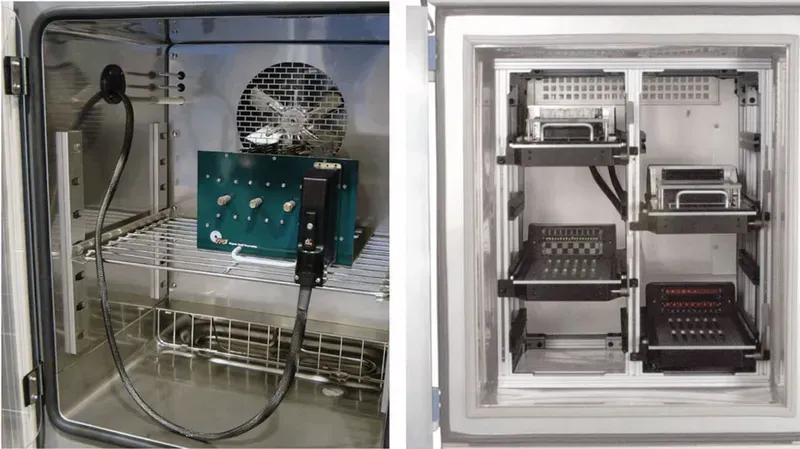
AIS Board Environmental Testing
Ensuring the unwavering reliability and regulatory compliance of AIS Automatic Identification System Boards in demanding marine environments is paramount. This necessitates a stringent regime of quality assurance and comprehensive testing procedures, guaranteeing that every AIS board not only performs optimally but also withstands the harsh conditions of maritime operation. These rigorous processes are fundamental to preventing system failures, enhancing safety, and upholding the integrity of maritime navigation and communication systems.
What are the essential functional tests for an AIS board? Essential functional tests for an AIS board include validating data transmission and reception, ensuring accurate GPS positioning, verifying proper communication protocol adherence (e.g., NMEA 0183/2000), and confirming the integrity of power management circuits. These tests ensure the core operational capabilities of the board.
How do environmental factors impact AIS board reliability, and what tests address them? Environmental factors such as extreme temperatures, high humidity, vibration, and salt spray can severely degrade AIS board performance. To counter this, boards undergo rigorous environmental testing, including thermal cycling, humidity exposure, vibration testing (per IEC 60945 standards), and salt mist corrosion tests, simulating real-world marine conditions to ensure long-term durability and reliability. These tests are critical to identify potential failure points under stress.
What regulatory certifications are crucial for AIS boards in the maritime industry? Key regulatory certifications for AIS boards include those from the International Maritime Organization (IMO), International Electrotechnical Commission (IEC) standards (e.g., IEC 61993-2 for Class A and B AIS), and national telecommunication authorities (e.g., FCC in the US, CE Mark in Europe). These certifications validate compliance with performance, safety, and electromagnetic compatibility (EMC) requirements, ensuring interoperability and legal operation globally.
Applications of AIS Board Solutions
AIS board solutions are integral to a wide array of maritime applications, leveraging their real-time data transmission capabilities to enhance safety, efficiency, and environmental protection across the globe's oceans and waterways. These specialized boards power the core functionality of AIS devices, enabling critical operations from preventing collisions at sea to optimizing port logistics.
Vessel Tracking and Fleet Management AIS boards are fundamental for continuous vessel tracking, providing real-time positional data, speed, and course. This enables efficient fleet management for shipping companies, allowing them to monitor their assets, optimize routes, and improve logistical planning, leading to significant fuel savings and reduced transit times. For example, large commercial fleets rely on AIS data to ensure adherence to schedules and manage supply chains effectively across continents, enhancing global trade efficiency and predictability. Data from platforms like MarineTraffic, which aggregates AIS signals from thousands of receivers worldwide, demonstrates the scale and utility of this application, showing over 200,000 vessels tracked daily across the globe, providing invaluable insights into maritime traffic patterns and individual vessel movements.
Navigation and Collision Avoidance Perhaps the most critical application, AIS board solutions actively contribute to navigational safety by allowing vessels to automatically exchange dynamic and static information with other AIS-equipped vessels and shore stations. This mutual awareness is vital for collision avoidance, especially in congested shipping lanes or poor visibility conditions. The International Maritime Organization (IMO) mandates AIS carriage for most large commercial vessels precisely because of its proven effectiveness in preventing accidents at sea. The system provides crucial data that enables bridge teams to assess collision risks and take timely evasive actions, significantly reducing maritime incidents. This proactive safety measure is a cornerstone of modern maritime regulations, underscoring the indispensable role of AIS in safeguarding lives and assets at sea.
Search and Rescue (SAR) Operations In emergency situations, AIS board solutions are indispensable for search and rescue efforts. AIS-enabled Personal Locator Beacons (PLBs) and Search and Rescue Transponders (SARTs) can transmit distress signals, including precise location data, to nearby vessels and rescue coordination centers. This significantly reduces response times and increases the likelihood of successful rescues. The Global Maritime Distress and Safety System (GMDSS) integrates AIS as a key component for improving maritime safety and facilitating rapid response to emergencies. The ability to quickly pinpoint a vessel or person in distress through AIS signals can be the difference between life and death in vast, open waters, demonstrating its critical role beyond routine navigation.
Port Management and Traffic Control For port authorities, AIS board solutions offer a powerful tool for efficient port management and vessel traffic services (VTS). By continuously monitoring AIS data from vessels entering and leaving ports, authorities can manage traffic flow, assign berths, optimize pilotage, and respond promptly to potential bottlenecks or emergencies. This streamlines port operations, reduces waiting times for vessels, and enhances overall port security. The integration of AIS data into port management systems allows for predictive analytics on vessel arrivals and departures, enabling better resource allocation and minimizing environmental impact from idling ships. This smart port approach, powered by robust AIS technology, is transforming maritime logistics worldwide.
Environmental Monitoring and Security Beyond navigation, AIS board solutions play a crucial role in environmental monitoring, particularly in sensitive marine areas. By tracking vessel movements, authorities can ensure compliance with environmental regulations, monitor fishing activities in protected zones, and track potential oil spills or pollution incidents. Furthermore, AIS data contributes to maritime security by helping identify suspicious vessel behavior or unauthorized entries into restricted waters. This dual capability underscores AIS's utility not just for commercial and safety operations, but also for safeguarding marine ecosystems and enhancing national maritime security frameworks.
The Future of AIS Technology
The Automatic Identification System (AIS) is continuously evolving, driven by advancements in digital communication, satellite technology, and the increasing demand for enhanced maritime safety and efficiency. This evolution promises more sophisticated and integrated systems that will redefine navigation, vessel management, and maritime domain awareness, moving beyond its foundational role as a collision avoidance tool to a comprehensive data and communication platform for the future of the maritime industry.
How is satellite technology impacting the future of AIS? Satellite-based AIS (S-AIS) is expanding global coverage significantly, allowing for the tracking of vessels in remote ocean areas beyond the range of terrestrial stations. This enhanced coverage is crucial for search and rescue operations, environmental monitoring, and tracking vessels in Arctic and Antarctic regions, leading to a more complete global maritime picture. It enables more efficient route planning and reduces blind spots, enhancing overall maritime safety and security worldwide. Data from S-AIS contributes to better understanding of global shipping patterns and environmental impacts.
Future AIS Trend
Description
Impact on Maritime Operations
Enhanced Data Capabilities
Integration of more data points (e.g., cargo information, real-time weather, environmental sensors) beyond basic positional data.
Improved situational awareness, predictive analytics for logistics, and better environmental compliance monitoring for vessels and ports.
What role will AIS play in autonomous vessels? For autonomous vessels, AIS will be a fundamental sensor for situational awareness, providing critical information about surrounding vessel traffic. It will be integrated with other navigation sensors (radar, LiDAR, cameras) and AI-driven decision-making systems to enable precise collision avoidance, route optimization, and remote monitoring. AIS data will be pivotal for both the autonomous operation of the vessel and for shore-based control centers to oversee and intervene if necessary, ensuring safe and efficient autonomous navigation.
Future AIS Trend
Description
Impact on Maritime Operations
Integration with Other Systems
Seamless integration of AIS data with Electronic Chart Display and Information Systems (ECDIS), Vessel Traffic Services (VTS), and broader maritime communication networks.
Creation of a unified operational picture, enabling better collaborative decision-making, optimized traffic flow, and enhanced response capabilities during emergencies.
How will AIS contribute to the concept of 'smart ports'? In smart ports, AIS data will be a cornerstone for optimizing port operations, including berth allocation, traffic management, and logistics planning. Real-time AIS information on vessel arrivals, departures, and movements within port limits will allow for dynamic scheduling, reduced waiting times, and improved throughput. It will also support environmental initiatives by monitoring vessel emissions and optimizing energy consumption, contributing to a more efficient and sustainable port ecosystem.
Why Choose Zero One Solution for Your AIS Board Needs?
Choosing the right partner for your Automatic Identification System (AIS) board development is paramount to ensuring robust performance, regulatory compliance, and a competitive edge in the maritime industry. Zero One Solution Limited stands as a premier choice, leveraging over a decade of specialized expertise in PCB solutions, rapid prototyping, and a comprehensive one-stop service model from design to assembly. Our strategic global presence, coupled with a relentless commitment to innovation and quality, positions us as an indispensable partner for your critical AIS projects.
Unrivaled Expertise in PCB Design and Manufacturing With a rich heritage in high-performance PCB solutions, Zero One Solution possesses deep expertise in designing and manufacturing AIS boards that meet stringent industry standards. Our engineers excel in optimizing signal integrity, managing thermal dissipation, and minimizing electromagnetic interference (EMI), ensuring superior operational reliability for your AIS systems in challenging marine environments. We are adept at handling complex layouts and integrating advanced components essential for precise AIS functionality.
Accelerated Time-to-Market with Rapid Prototyping In the fast-paced maritime technology landscape, speed to market is a significant differentiator. Zero One Solution's rapid prototyping capabilities are specifically tailored to accelerate your AIS board development cycle. We enable quick iteration and validation of designs, transforming your concepts into tangible prototypes with exceptional efficiency. This streamlined process significantly reduces development costs and allows you to introduce innovative AIS products to the market faster than competitors.
Comprehensive One-Stop PCBA Services Beyond design and manufacturing, Zero One Solution offers a seamless, integrated one-stop service for AIS board assembly. From component procurement to advanced soldering techniques and rigorous quality control, we manage the entire production lifecycle. This holistic approach ensures consistency, reduces logistical complexities, and guarantees that your AIS boards are delivered as fully functional, high-quality units, ready for immediate integration into your products.
Global Supply Chain Advantage and Quality Assurance Headquartered in Shenzhen with a Dubai branch, our strategic operational footprint provides unparalleled access to a global PCBA supply chain network. This ensures efficient sourcing of high-quality components and optimized logistics. Coupled with our stringent quality assurance protocols, including comprehensive functional and environmental testing, we guarantee that every AIS board produced adheres to the highest levels of performance, durability, and compliance with international maritime regulations.
In conclusion, Zero One Solution Limited is your trusted partner for AIS Automatic Identification System Board Solutions. Our commitment to rapid prototyping, high-quality manufacturing, and comprehensive design services ensures that your marine electronics are equipped with the best possible foundation. By choosing Zero One Solution, you are investing in safety, efficiency, and innovation in the maritime world. Contact us today to discuss your AIS PCB design, manufacturing, and assembly needs and let us help you navigate the future of marine technology. Together, we can enhance maritime safety and streamline operations across the globe.