In the burgeoning field of augmented reality (AR), the headset is the window to immersive digital experiences. But behind the sleek design and advanced optics lies a critical component: the motherboard. Much like the central nervous system, the motherboard dictates the performance, functionality, and overall user experience of the AR headset. As AR technology advances, the demand for more compact, powerful, and efficient motherboards is increasing exponentially. This article delves into the world of AR headset motherboard solutions, exploring the challenges, innovations, and the pivotal role Zero One Solution Limited plays in this technological revolution. We will explore how cutting-edge PCB design, rapid prototyping, and advanced assembly techniques converge to create the next generation of AR experiences.
The Critical Role of the Motherboard in AR Headsets
The motherboard serves as the unheralded central nervous system of any AR headset, orchestrating the complex interplay between processing, display, sensors, and user interaction. Its design directly dictates an AR device's computational power, graphics rendering capabilities, data transmission speeds, and power efficiency, fundamentally shaping the user experience from immersive visuals to responsive interactions. A meticulously engineered motherboard is paramount for unlocking the full potential of augmented reality, ensuring seamless performance and unlocking innovative functionalities critical for market differentiation and user adoption.
Challenges in Designing AR Headset Motherboards
Designing motherboards for AR headsets presents a unique confluence of engineering challenges, primarily driven by the imperative to deliver high performance within exceptionally confined and thermally sensitive environments. Unlike traditional computing platforms, AR headsets demand a delicate balance of miniaturization, power efficiency, and robust signal integrity to enable immersive, real-time experiences, making the motherboard a nexus of complex design trade-offs.
Miniaturization and Form Factor Constraints AR headsets are inherently compact, requiring the motherboard to fit into an extremely small and often irregular space. This necessitates the use of High-Density Interconnect (HDI) PCBs, micro-vias, and advanced component placement strategies to maximize component density while maintaining crucial clearances.
Thermal Management and Heat Dissipation High-performance processors, GPUs, and display drivers generate significant heat in a tiny enclosure. Effective thermal management is paramount to prevent performance throttling and ensure device longevity, often requiring custom heat sinks, thermal interface materials, and efficient power delivery networks.
High-Speed Signal Integrity AR headsets rely on rapid data processing and transfer for low-latency visual and auditory experiences. Maintaining signal integrity for high-speed interfaces like MIPI DSI, DisplayPort, and PCIe within a compact board with numerous layers and vias is critical to prevent data loss, noise, and electromagnetic interference (EMI).
Power Efficiency and Battery Life For portable AR devices, maximizing battery life is crucial. The motherboard design must prioritize low-power components, efficient power management ICs (PMICs), and optimized power delivery networks to minimize energy consumption without compromising performance.
Electromagnetic Compatibility (EMC/EMI) With numerous high-frequency components operating in close proximity, managing electromagnetic compatibility (EMC) and minimizing electromagnetic interference (EMI) is a significant challenge. Careful shielding, grounding, and component placement are necessary to prevent interference with wireless communications and sensor accuracy.
Component Integration and Sensor Interfacing AR headsets integrate a multitude of sensors (e.g., accelerometers, gyroscopes, depth sensors, cameras) and specialized ICs. The motherboard must efficiently interface with these diverse components, often requiring complex routing for various communication protocols (I2C, SPI, UART, USB) and precise timing.
Mechanical Stress and Durability As wearable devices, AR headsets are subject to daily wear and tear, including potential drops or impacts. The motherboard design must account for mechanical stresses, ensuring the robustness of solder joints, component adhesion, and overall structural integrity for long-term reliability.
Key Considerations for AR Headset PCB Design
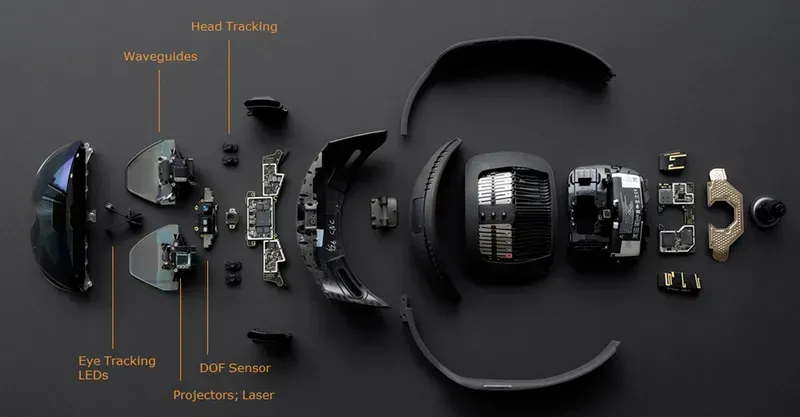
AR headset PCB components
Designing the Printed Circuit Board (PCB) for AR headsets demands a meticulous approach, as every decision directly impacts the device's performance, form factor, and user experience. Unlike conventional electronics, AR headsets require an intricate balance of miniaturization, high-speed data processing, efficient power delivery, and robust thermal management within an extremely confined space. The success of an AR headset's functionality hinges on critical PCB design considerations, from the careful selection of components to the precise execution of layer stackup and signal routing, all aimed at optimizing signal integrity, minimizing power consumption, and ensuring long-term reliability in a high-density environment.
Component Selection for Miniaturization and Performance The choice of components is paramount, balancing performance requirements with the need for extreme miniaturization. This involves selecting System-on-Chips (SoCs) with integrated graphics and processing capabilities, low-power memory solutions (e.g., LPDDR5), miniature sensors, and compact power management ICs (PMICs). Utilizing smaller package sizes (e.g., 01005 for passives, BGA for ICs) is critical, alongside careful consideration of their thermal profiles to avoid localized hotspots. Partnering with suppliers that offer compact, high-performance components specifically designed for wearable technology is essential for pushing the boundaries of AR headset design.
Optimized Layer Stackup for Signal Integrity A well-designed PCB layer stackup is fundamental for maintaining signal integrity and managing impedance in high-speed digital and analog circuits. For AR headsets, this typically involves multi-layer PCBs (e.g., 8-16 layers) to accommodate dense routing and dedicated power/ground planes. Strategic placement of signal layers between ground planes provides shielding, reduces crosstalk, and ensures controlled impedance transmission lines. Implementing appropriate dielectric materials with low loss tangents is also crucial for high-frequency signals, minimizing signal degradation and maximizing data throughput.
Precision Signal Routing for High-Speed Data High-speed data transmission, such as MIPI DSI for displays and PCIe for connectivity, necessitates meticulous signal routing. Differential pair routing with precise impedance matching is critical to minimize noise and maintain signal integrity. Ensuring adequate trace spacing to prevent crosstalk, incorporating proper via transitions, and minimizing trace lengths are all vital. Furthermore, careful consideration of return paths for high-speed signals is essential to prevent electromagnetic interference (EMI) and ensure stable operation, particularly in a device with such sensitive sensors and displays.
Zero One Solution's Expertise in AR Headset PCB Solutions
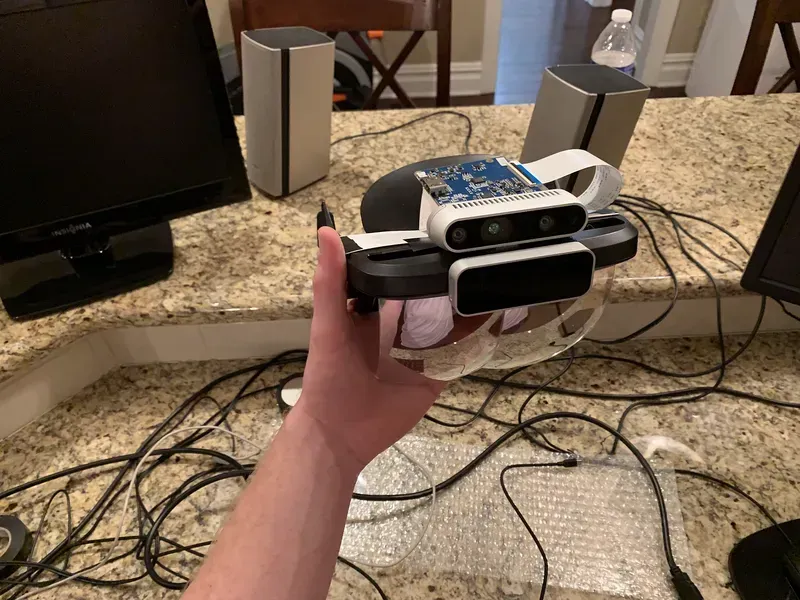
AR headset PCB prototype sample
At Zero One Solution Limited, we understand the intricate demands of AR headset motherboard development. Our decade-long commitment to innovation and precision has established us as a leader in rapid prototyping and one-stop PCB solutions. We empower AR innovators to transform complex designs into tangible, high-performance hardware, navigating the unique challenges of miniaturization, high-speed data transmission, and thermal management inherent in AR technology. Our comprehensive approach ensures that every aspect from design to assembly is meticulously handled, significantly accelerating time-to-market for cutting-edge AR devices.
Rapid Prototyping & Agile Manufacturing We specialize in rapid-response R&D prototype manufacturing, offering unparalleled speed in turning AR headset motherboard designs into functional prototypes. Our agile manufacturing processes are optimized to support iterative design cycles, crucial for the fast-evolving AR landscape. This capability significantly reduces development timelines and costs for our clients.
One-Stop Integrated Services Zero One Solution provides end-to-end services, encompassing AR headset PCB design, manufacturing, and assembly. This integrated approach eliminates the complexities and delays associated with coordinating multiple vendors. From initial concept validation and material sourcing to advanced SMT assembly and rigorous quality control, we manage the entire production lifecycle under one roof, ensuring seamless execution and superior quality.
Global Supply Chain & Strategic Location Headquartered in Shenzhen, China, and with a branch office in Dubai, Zero One Solution leverages a robust global PCBA supply chain network. Our strategic locations provide immediate access to a vast ecosystem of electronic components and manufacturing expertise, ensuring cost-effectiveness, timely material acquisition, and efficient logistics for AR headset solutions worldwide. This global presence enables us to offer competitive advantages and reliable support to our diverse client base.
Advanced Technology & Engineering Prowess Our engineering team possesses deep expertise in the advanced PCB technologies critical for AR headsets, including High-Density Interconnect (HDI) PCBs, flexible and rigid-flex PCBs, and sophisticated signal integrity management. We employ state-of-the-art equipment and adhere to stringent industry standards (e.g., IPC-2581) to ensure optimal performance, reliability, and manufacturability of even the most complex AR motherboard designs.
Commitment to Quality & Reliability Quality is paramount in AR headset components. Zero One Solution implements rigorous quality assurance protocols at every stage, from design verification to final testing. Our commitment to reliability ensures that the AR headset motherboards we produce are robust, stable, and capable of withstanding the demanding operational environments of augmented reality applications, contributing to the longevity and user satisfaction of the end product.
Advanced PCB Technologies for AR Headsets
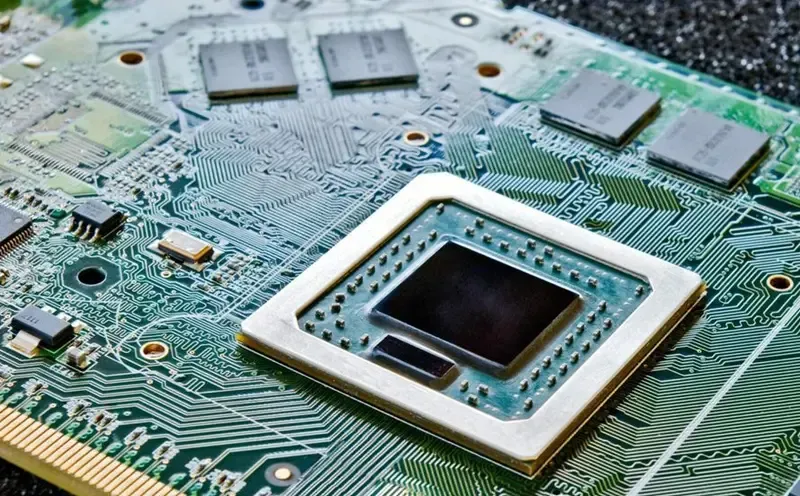
High-Density Interconnect PCB Close-Up
The relentless pursuit of immersive and lightweight AR headsets mandates the adoption of cutting-edge Printed Circuit Board (PCB) technologies. These advanced solutions are not merely incremental improvements but foundational enablers, allowing for unprecedented levels of miniaturization, heightened computational power, superior signal integrity, and robust mechanical integration crucial for delivering a seamless and high-fidelity augmented reality experience within the confines of a wearable device. Leveraging these specialized PCB methodologies is paramount for achieving the compact, high-performance, and reliable designs demanded by the evolving AR landscape.
High-Density Interconnect (HDI) PCBs: The Miniaturization Backbone HDI PCBs are characterized by their finer lines and spaces, smaller vias (microvias), and higher connection pad density, enabling the placement of more components per unit area. For AR headsets, where every millimeter and gram counts, HDI technology is indispensable. It facilitates the integration of complex circuitry, including high-performance processors, advanced sensors, and numerous I/O interfaces, into significantly smaller footprints. This miniaturization directly contributes to lighter, more ergonomic AR devices, while optimizing signal routing to maintain integrity for high-speed data transmission.
Flexible and Rigid-Flex PCBs: Conforming to Complex Geometries Traditional rigid PCBs often struggle to fit into the intricate, often non-planar enclosures of AR headset designs. Flexible PCBs (Flex PCBs) and their hybrid counterparts, Rigid-Flex PCBs, offer a transformative solution. Flex PCBs can bend, twist, and conform to tight, irregular spaces, enabling revolutionary product designs and maximizing internal volume utilization. Rigid-Flex boards combine rigid sections for robust component mounting with flexible sections for interconnectivity, significantly reducing the need for connectors and cables. This leads to improved reliability, reduced weight, and enhanced mechanical stability, which are critical attributes for wearable technology subjected to dynamic user movements.
Embedded Components: The Next Frontier in Integration Moving beyond surface-mount technology, embedded components involve integrating passive or active components directly within the internal layers of the PCB itself. This advanced technique further reduces the overall board size and weight, minimizes signal path lengths, and can significantly improve electromagnetic compatibility (EMC) by shielding sensitive components within the board's structure. For AR headsets, embedding components like resistors, capacitors, or even active ICs directly into the motherboard allows for unprecedented levels of miniaturization and superior electrical performance, contributing to a more compact, efficient, and powerful device with reduced noise and improved thermal dissipation characteristics.
Ensuring Signal Integrity and Power Delivery in Compact Designs
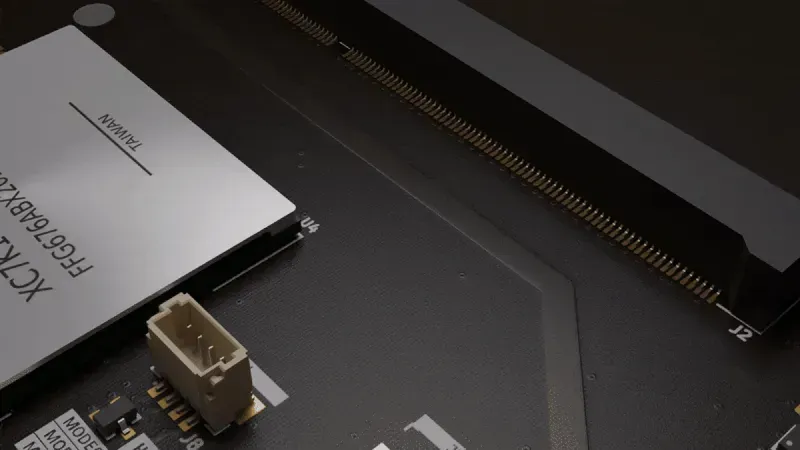
AR headset motherboard signal integrity test
In the incredibly compact and high-performance environment of AR headsets, maintaining impeccable signal integrity (SI) and robust power delivery network (PDN) is not merely a design consideration but a fundamental prerequisite for stable operation and optimal user experience. The relentless miniaturization, coupled with soaring data rates and increasing power demands of advanced AR components, amplifies the challenges associated with electromagnetic interference (EMI), crosstalk, impedance mismatches, and voltage drops, all of which can severely degrade system performance and reliability.
Signal Integrity (SI) Strategies Achieving signal integrity in AR headset motherboards requires meticulous attention to detail. This includes impedance control through precise trace geometry and dielectric materials, minimizing reflections and ensuring clean signal propagation. Crosstalk reduction is critical, implemented via proper trace spacing, ground plane references, and differential routing. Additionally, careful consideration of termination schemes and electromagnetic compatibility (EMC) techniques is vital to prevent interference and maintain high-speed data transmission fidelity.
SI Challenge
Impact on AR Headset
Zero One Solution Strategy
Impedance Mismatch
Signal reflections, data errors, reduced bandwidth
Precise trace impedance control, advanced material selection
Crosstalk
Interference between adjacent traces, data corruption
Power Delivery Network (PDN) Optimization A stable power delivery network is paramount for consistent performance. This involves designing low-impedance power planes to minimize voltage drops and provide stable current to all components, especially high-power processing units and display drivers. Effective decoupling capacitance strategies are implemented to suppress transient noise and ripple, ensuring clean power. Furthermore, power plane segmentation, proper via stitching, and careful selection of voltage regulators are crucial for efficient power distribution and thermal management within the confined space of an AR headset.
PDN Challenge
Impact on AR Headset
Zero One Solution Strategy
Voltage Drop
Component malfunction, performance degradation
Low-impedance power planes, optimized trace width
Power Ripple/Noise
Signal integrity issues, display flickering
Strategic decoupling capacitor placement, stable voltage regulators
Thermal Hotspots
Component failure, reduced lifespan
Efficient power distribution, integrated thermal management solutions
Current Density
Trace damage, excessive heat
Optimized power trace routing and width for high current paths
Thermal Management Strategies for AR Headset Motherboards
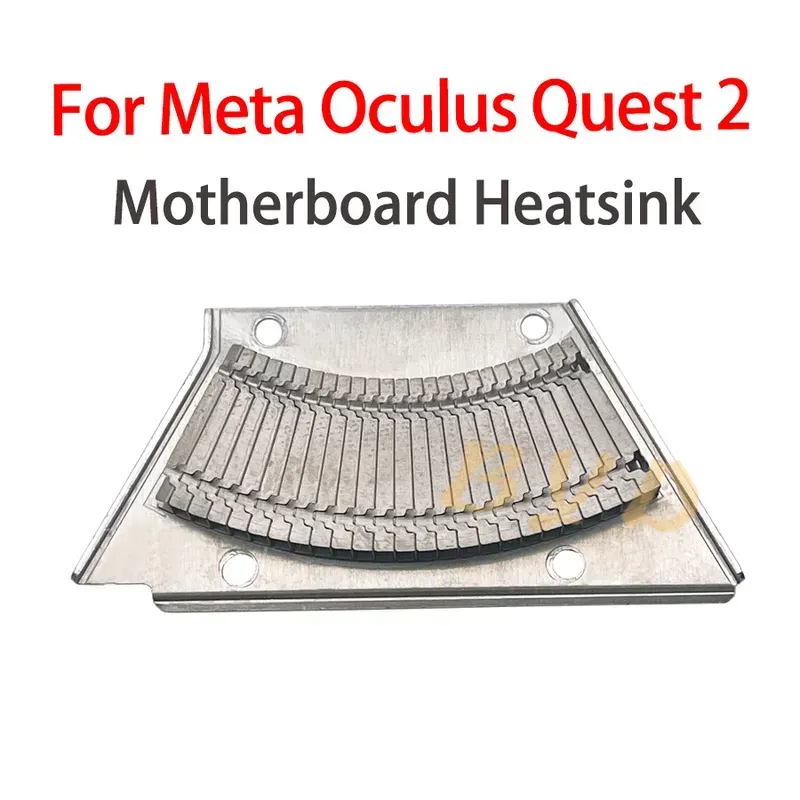
AR Headset Motherboard Heatsink
Effective thermal management is paramount for AR headset motherboards, directly impacting performance, reliability, and user comfort. Given the high-density component placement and demanding processing power required for immersive AR experiences, heat dissipation becomes a critical design challenge. Insufficient thermal management can lead to performance throttling, reduced component lifespan, and potential safety issues, making a robust strategy indispensable for any successful AR headset solution. Zero One Solution Limited prioritizes advanced thermal analysis and design integration from the earliest stages of PCB development to mitigate these risks and ensure optimal operational conditions for the intricate electronics within AR headsets.
Strategy
Description
Advantages
Disadvantages
Passive Cooling (Heat Sinks, Graphite Sheets)
Utilizes materials with high thermal conductivity to dissipate heat away from components through convection and radiation, often enhanced with fins or spreaders.
No moving parts, silent operation, low power consumption, cost-effective for moderate heat loads.
Limited heat dissipation capacity, can add bulk and weight, less effective in enclosed spaces without airflow.
May require specific component placement to maximize efficacy.
Strategy
Description
Advantages
Disadvantages
Active Cooling (Micro-Fans, Piezoelectric Pumps)
Employs miniature fans, blowers, or fluid-based micro-pumps to actively circulate air or liquid, drawing heat away from hot spots.
High heat dissipation capacity, effective in compact spaces, can maintain lower operating temperatures for high-performance components.
Introduces noise, consumes power, adds mechanical complexity, potential for vibration, higher cost, requires space for moving parts.
Strategy
Description
Advantages
Disadvantages
Thermal Interface Materials (TIMs)
Gels, pastes, pads, or phase-change materials applied between heat-generating components and heat sinks/spreaders to reduce thermal resistance.
Improves heat transfer efficiency, fills microscopic air gaps, relatively low cost.
Can degrade over time, proper application is crucial, some materials may have limited thermal conductivity.
Strategy
Description
Advantages
Disadvantages
Advanced PCB Design Techniques
Integrating thermal vias, larger copper pours, optimized layer stack-ups, and specialized substrate materials (e.g., metal-core PCBs) directly into the PCB layout.
Distributes heat more evenly, no additional components needed for basic thermal pathways, improves overall board reliability.
Requires expertise in PCB design, can increase PCB manufacturing complexity and cost, may not be sufficient for extremely high heat densities on its own.
Strategy
Description
Advantages
Disadvantages
Encapsulation and Conformal Coatings
Applying thermally conductive potting compounds or coatings to transfer heat from components to the enclosure or external surfaces.
Protects components from environmental factors, can improve heat spreading within the module.
Adds weight and thickness, can make rework difficult, selection of material is critical for long-term reliability and thermal performance.
The trajectory of AR headset motherboard technology is defined by an relentless pursuit of miniaturization, heightened integration, and the adoption of cutting-edge materials. These advancements are pivotal in enabling more comfortable, powerful, and immersive AR experiences, moving beyond current limitations to unlock new possibilities for widespread adoption. As the industry matures, the motherboard, as the central nervous system, will continue to evolve at an accelerated pace, driven by demands for greater computational density and lower power consumption.
Hyper-Miniaturization and Ultra-Thin Profiles Future AR headset motherboards will leverage advanced manufacturing techniques like fan-out panel level packaging (FOPLP) and system-in-package (SiP) solutions to achieve unprecedented levels of miniaturization. This will enable thinner, lighter, and more ergonomic AR devices, reducing user fatigue and improving wearability for extended periods. Expect multi-chip module (MCM) integration to become standard, consolidating various functionalities onto a single, compact substrate.
Enhanced Heterogeneous Integration The future will see increasingly sophisticated heterogeneous integration, combining diverse components such as CPUs, GPUs, AI accelerators, and specialized sensor processors directly onto the motherboard or within highly integrated modules. This not only reduces physical size but also minimizes latency and improves data transfer speeds, crucial for real-time AR rendering and interaction. Optical interconnects may also emerge to facilitate ultra-fast communication between these integrated components.
Advanced Materials for Performance and Thermal Efficiency The adoption of novel materials is critical for the next generation of AR motherboards. Beyond traditional FR-4, expect widespread use of low-loss dielectric materials for high-frequency signal integrity, and advanced thermal interface materials (TIMs) coupled with liquid metal or vapor chamber technologies for superior heat dissipation in extremely confined spaces. Flexible and stretchable PCB substrates will also become more prevalent, allowing for innovative form factors and seamless integration into wearable designs.
Edge AI and On-Device Processing Future AR motherboards will increasingly incorporate dedicated neural processing units (NPUs) and other AI accelerators, shifting more computational tasks from cloud-based systems to the device itself. This 'edge AI' will enable faster, more private, and more reliable real-time object recognition, spatial mapping, and gesture interpretation, significantly enhancing the autonomy and responsiveness of AR headsets. This reduces reliance on constant connectivity and minimizes power consumption associated with data transmission.
Modular Design and Customization As the AR market segments, future motherboard designs may lean towards more modular architectures. This would allow for easier customization, upgrades, and specialized configurations for various applications—from industrial training to consumer entertainment. Standardized interfaces and interchangeable modules for specific functionalities (e.g., enhanced camera arrays, specialized sensors, or extended battery packs) could become a defining feature, catering to diverse professional and consumer needs.
FAQs about AR Headset Motherboard Solutions
Zero One Solution Limited understands that the complexity of AR headset motherboard design often leads to numerous questions. As a leading PCB solution provider, we aim to demystify the intricacies of these critical components. Below are frequently asked questions addressing common concerns regarding AR headset motherboard solutions, from design principles to manufacturing considerations, ensuring you have a comprehensive understanding of what drives next-generation augmented reality experiences.
What are the primary challenges in designing a compact AR headset motherboard? The primary challenges include extreme miniaturization, managing high-speed signal integrity over very short distances, efficient thermal dissipation within a confined space, and ensuring robust power delivery to multiple power-hungry components. Balancing these factors while maintaining reliability and cost-effectiveness is crucial for high-performance AR headsets.
Why is high-density interconnect (HDI) crucial for AR headset motherboards? HDI technology is crucial because it allows for higher component density and more complex routing within a smaller physical footprint. This is achieved through microvias, finer lines and spaces, and multiple lamination cycles, enabling the integration of powerful processors, memory, and sensors while keeping the motherboard compact and lightweight, which is essential for wearable AR devices.
How do you ensure signal integrity in AR headset motherboard designs with high data rates? Ensuring signal integrity involves meticulous impedance control, careful routing of differential pairs to minimize crosstalk, utilizing appropriate layer stack-ups with optimal dielectric materials, and implementing design techniques like via stub reduction and power integrity analysis. Simulation tools are extensively used to validate signal integrity before physical prototyping.
What thermal management strategies are employed for AR headset motherboards? Effective thermal management in AR headsets typically involves a combination of passive and active solutions. Passive methods include strategically placed thermal vias, heat sinks, and optimized copper pours for heat spreading. Active solutions, though less common due to size and power constraints, might involve micro-fans or advanced thermoelectric cooling, alongside sophisticated power management ICs to reduce overall heat generation.
What role does flexible PCB technology play in AR headset motherboard solutions? Flexible PCB (Flex PCB) technology is vital for connecting rigid board sections in complex, non-planar designs common in AR headsets. It allows for dynamic bending and folding, enabling tighter integration of components into irregular shapes, reducing weight, and enhancing durability in areas subjected to movement or unique form factors, such as display modules or sensor arrays.
In summary, the AR headset motherboard is the unsung hero of immersive digital experiences. Its intricate design and advanced functionality are crucial for delivering the performance and features that users demand. Zero One Solution Limited stands at the forefront of this technological frontier, providing comprehensive PCB solutions that empower AR headset manufacturers to push the boundaries of innovation.
Are you ready to revolutionize your AR headset design? Contact Zero One Solution Limited today to discover how our expert PCB solutions can transform your product development journey. Let's build the future of AR together. Share this article and join the conversation!