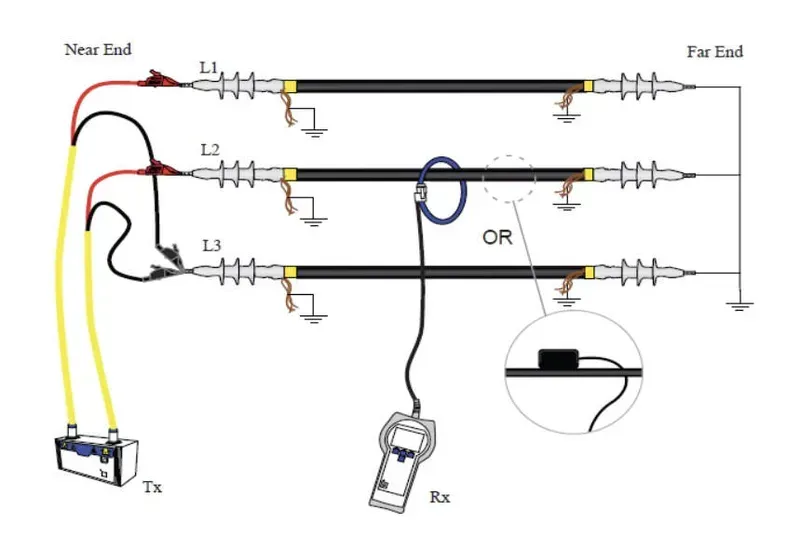
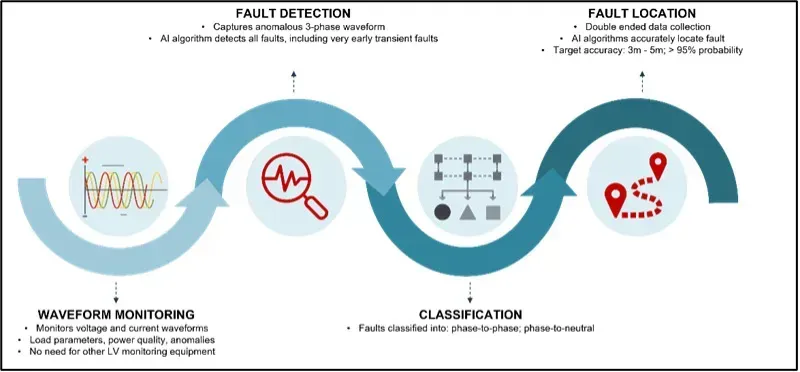
In today's interconnected world, cables are the lifelines of numerous systems, from power grids to communication networks. Ensuring their integrity and reliability is paramount. When faults occur, rapid and accurate location is crucial to minimize downtime and prevent further damage. Zero One Solution Limited offers cutting-edge Cable Fault Location Board Solutions, leveraging advanced PCB technology to precisely identify and isolate cable faults. This article delves into the intricacies of these solutions, showcasing how they empower industries to maintain seamless operations.
Introduction to Cable Fault Location
Cable integrity is the backbone of modern infrastructure, underpinning everything from power grids to high-speed communication networks. In an increasingly interconnected world, where data and power flow incessantly, even minor disruptions due to cable faults can cascade into significant operational inefficiencies, financial losses, and safety hazards. The ability to precisely and rapidly locate these faults is not merely a convenience but a critical necessity for maintaining system reliability and continuity. However, the inherent complexity of vast and intricate cable networks presents formidable challenges in pinpointing the exact location of a fault, often leading to protracted downtime and costly diagnostic efforts.
Why is precise cable fault location crucial? Precise cable fault location minimizes downtime, reduces repair costs, prevents secondary damage to equipment, and enhances overall operational safety. For instance, in a data center, a fault in a single network cable can disrupt critical data flow, leading to significant financial losses and reputational damage. Accurate fault identification ensures targeted repairs, avoiding the need for extensive and disruptive exploratory digging or disassemblies.
What are the common challenges in locating cable faults in complex networks? Challenges include the sheer length and branching of cables, varied installation environments (underground, overhead, underwater), the presence of multiple fault types (e.g., intermittent, high-resistance), electromagnetic interference, and the need for specialized, often expensive, equipment. Traditional methods may struggle with these complexities, leading to imprecise results or prolonged diagnostic times. The density of cables in modern infrastructure also exacerbates the difficulty of isolating a single problematic line.
How do cable faults impact operational efficiency? Cable faults directly impact operational efficiency by causing unexpected service interruptions, reduced throughput, and increased maintenance overheads. For utility companies, unlocated faults can lead to power outages affecting thousands, while in manufacturing, a faulty control cable can halt an entire production line, resulting in significant economic losses. The ripple effect can extend to customer dissatisfaction and contractual penalties.
What role does advanced technology play in addressing cable fault location challenges? Advanced technologies, such as PCB-based solutions and sophisticated signal processing, play a pivotal role by offering higher precision, faster analysis, and greater automation. They overcome the limitations of traditional methods, enabling the detection of subtle faults, even in noisy environments, and providing actionable data for targeted repairs. This technological leap transforms reactive maintenance into proactive fault management.
Understanding Common Cable Faults in Cable Fault Location Board Solutions
Effective cable fault location begins with a deep understanding of the various fault types that can compromise signal integrity and power transmission. These faults, if left unaddressed, can lead to significant operational disruptions, safety hazards, and substantial financial losses. Zero One Solution's advanced Cable Fault Location Board Solutions are engineered to precisely identify these diverse anomalies, enabling rapid diagnostics and targeted repairs.
What are the primary types of cable faults? Cable faults primarily fall into categories such as short circuits, open circuits, insulation breakdown, and impedance mismatches. Each type presents unique challenges for detection and requires specific diagnostic approaches, which our board solutions are designed to address comprehensively. Understanding these distinctions is crucial for accurate fault location and efficient system restoration. According to industry statistics, insulation breakdown accounts for over 60% of reported cable failures in critical infrastructure, highlighting its pervasive nature and the need for robust detection mechanisms.
How do short circuits impact cable performance and how are they detected? A short circuit occurs when two or more conductors that should be isolated come into direct contact, creating an unintended low-resistance path. This often results in excessive current flow, overheating, and potential system damage. Our Cable Fault Location Board Solutions utilize precise current and voltage monitoring, often employing reflectometry techniques, to pinpoint the exact location of the short by detecting abrupt changes in the signal's electrical characteristics along the cable length. This rapid identification minimizes downtime and prevents further damage to connected equipment, adhering to IEEE 802.3 standards for cable integrity.
What defines an open circuit and what are its diagnostic implications? An open circuit signifies a complete break or discontinuity in the cable's conductor, preventing the flow of current. This can be caused by physical damage, poor connections, or conductor fatigue. Diagnosing open circuits is critical as they halt signal transmission entirely. Our board solutions accurately identify open circuits by detecting the absence of a reflected signal or a significant impedance discontinuity, allowing for quick isolation and repair of the broken segment. This ensures continuity of operation and prevents cascading failures.
What is insulation breakdown and why is it a critical concern? Insulation breakdown refers to the degradation or failure of the insulating material surrounding the conductors, leading to current leakage or direct contact between conductors and ground. This is particularly concerning as it can cause arcing, fire hazards, and can evolve into a full short circuit. Zero One Solution's board solutions leverage advanced capacitance and resistance measurement techniques, along with partial discharge detection, to identify subtle changes in insulation properties indicative of incipient breakdown, enabling proactive maintenance and averting catastrophic failures. IEC 60502-2 guidelines emphasize the importance of robust insulation systems and regular integrity checks to prevent such failures.
Traditional Cable Fault Location Methods: Limitations
While traditional cable fault location methods like Time-Domain Reflectometry (TDR) and impedance bridges have been foundational in diagnostics, their efficacy significantly diminishes in the face of modern, complex cable networks. These methods, largely developed for simpler, more predictable systems, encounter substantial limitations when applied to intricate topologies, varying environmental conditions, or subtle fault types, often leading to protracted troubleshooting, inaccurate pinpointing, and increased operational costs.
Method
Principle
Primary Limitations
Time-Domain Reflectometry (TDR)
Sends a pulse down the cable and measures reflections to identify impedance changes.
Sensitivity to noise, difficulty with intermittent faults, limited accuracy in branched or complex networks, challenge in distinguishing multiple faults.
][
]
Impedance Bridges
Balances an unknown impedance (fault location) against a known impedance to pinpoint the fault.
Requires a known good cable for comparison, limited precision for distributed faults, susceptible to environmental interference, time-consuming for long cables or complex faults.
][
]
Capacitance Bridge Method
Measures capacitance changes along the cable to infer fault location.
Effective only for open-circuit faults, highly sensitive to cable insulation quality and environmental factors, not suitable for short circuits or intermittent faults.
][
]
Murray Loop Test
A Wheatstone bridge configuration used to locate ground faults or short circuits.
Requires at least one sound conductor, only effective for low-resistance faults, sensitive to test lead resistance, not suitable for open circuits or high-resistance faults.
Zero One Solution's Cable Fault Location Board Solution: An Overview
Cable Fault Location PCB
Zero One Solution Limited introduces its cutting-edge Cable Fault Location Board Solution, a sophisticated PCB-based system engineered to overcome the inherent limitations of traditional fault detection methods. This advanced solution leverages state-of-the-art circuitry and intelligent algorithms to deliver unparalleled precision and speed in identifying a wide array of cable anomalies, including elusive intermittent faults and complex impedance mismatches. Our innovative approach drastically minimizes diagnostic time and enhances operational efficiency across critical infrastructure, making it an indispensable tool for maintaining robust and reliable cable networks.
What is the core technology behind Zero One Solution's Cable Fault Location Board? Our solution is built upon an advanced Printed Circuit Board (PCB) platform, integrating high-frequency signal injection and precise time-domain reflectometry (TDR) capabilities with proprietary signal processing algorithms. This enables the board to accurately analyze reflected signals, pinpointing fault locations with exceptional resolution and speed, even in complex branching networks.
How does this solution differ from conventional TDR devices? While traditional TDR devices offer basic fault detection, our Cable Fault Location Board Solution goes beyond by incorporating adaptive signal processing, multi-frequency analysis, and advanced noise cancellation. This allows for superior performance in challenging environments, distinguishing between various fault types with higher accuracy and providing more actionable insights, including the ability to detect subtle impedance changes and intermittent faults that often elude standard equipment.
Key Features and Benefits of the Cable Fault Location Board Solution
High Resolution Fault Detection Circuit
Zero One Solution Limited's Cable Fault Location Board Solution sets a new benchmark in diagnostic precision and operational efficiency, leveraging advanced PCB technology to transcend the limitations of conventional methods. This innovative solution empowers industries to significantly reduce costly downtime, optimize maintenance schedules, and enhance overall system reliability, delivering a tangible return on investment through superior fault detection and analysis capabilities.
High-Resolution Fault Detection Our solution utilizes advanced signal processing and high-frequency sampling rates, enabling the detection of even subtle cable anomalies with unprecedented precision. This capability translates to pinpoint accuracy in identifying fault locations, minimizing the need for extensive manual tracing and reducing diagnostic time significantly. Our boards support detection down to centimeter-level accuracy for common cable types, a critical advantage in complex, long-distance networks. This is achieved through proprietary TDR (Time-Domain Reflectometry) algorithms optimized for various cable impedances and fault types, distinguishing between hard faults and intermittent issues that traditional methods often miss or misinterpret. For instance, in a typical telecommunication network, our system can precisely locate a partial break within a cable segment spanning several kilometers, allowing for targeted repairs rather than costly full-segment replacements.
Technical Specifications and Design Considerations
PCB Voltage Current Testing
Zero One Solution Limited's Cable Fault Location Board Solution is engineered with precision, integrating advanced PCB technology to deliver unparalleled performance in diagnostic applications. Our design emphasizes robust functionality, ensuring reliable operation across diverse industrial environments and seamless integration into existing cable infrastructure. Understanding the core technical specifications and crucial design considerations is paramount for optimizing its deployment and maximizing its diagnostic efficacy.
Specification
Value/Range
Description
Operating Voltage
5V - 12V DC
Standard industrial power compatibility for easy integration into various systems without dedicated power supplies, ensuring energy efficiency and broad applicability across different setups, from portable units to fixed installations. Our boards are designed to handle fluctuations, maintaining stable performance even in challenging electrical environments, which extends their operational lifespan and reduces maintenance overheads for users in critical applications, emphasizing reliability and continuous uptime regardless of power source quality. We prioritize low power consumption to support battery-powered field applications, enabling longer operational periods. This design consideration ensures that the solution remains viable and effective even in remote or isolated environments where access to stable power is limited, thus broadening its utility and appeal to a wider range of industrial and field service users looking for efficient diagnostic tools. Our power management circuitry is optimized for minimal heat dissipation, which contributes to the overall stability and longevity of the board, allowing for compact designs without compromising performance. This thoughtful approach to power handling underscores our commitment to delivering a robust and enduring solution that meets the rigorous demands of industrial use.
Signal Frequency Range Our solution operates across a broad frequency spectrum from 100 kHz to 500 MHz, enabling the detection of various fault types across a wide range of cable lengths and compositions. This wide bandwidth ensures high-resolution Time Domain Reflectometry (TDR) measurements, critical for precisely pinpointing even subtle impedance anomalies. The extended frequency range also facilitates compatibility with different cable types, from short, high-frequency data lines to long, low-frequency power cables, making it a versatile tool for diverse industrial applications. This comprehensive frequency capability is a cornerstone of our solution's ability to provide detailed and accurate fault signatures, which are essential for effective troubleshooting and predictive maintenance strategies across complex network infrastructures. It supports advanced diagnostic algorithms that analyze signal reflections at different frequencies, providing a multi-dimensional view of cable integrity and enhancing the accuracy of fault localization.
Applications Across Industries
Power Cable Fault Location
The versatility of Zero One Solution's Cable Fault Location Board Solution extends its applicability across a broad spectrum of industries, providing critical diagnostic capabilities to maintain operational integrity and minimize costly downtime. From vast power grids to intricate aerospace systems, our PCB-based solution delivers precise and rapid fault identification, ensuring the reliability of essential cable infrastructures.
Industry
Typical Cable Applications
Benefits of Zero One Solution's Board
Power Distribution
Underground and overhead power lines, substation cabling, industrial power circuits
Rapid isolation of short circuits, opens, and insulation failures, reducing outage times and maintenance costs. Enhanced safety for personnel by pinpointing faults accurately before excavation or repair.
Industry
Typical Cable Applications
Benefits of Zero One Solution's Board
Telecommunications
Fiber optic cables, copper twisted pair lines, coaxial cables in data centers and network infrastructure
Precise identification of breaks, kinks, and impedance mismatches in high-speed data lines, ensuring optimal network performance and minimizing service interruptions. Supports faster deployment and troubleshooting of communication networks.
Industry
Typical Cable Applications
Benefits of Zero One Solution's Board
Aerospace & Defense
Avionics wiring harnesses, sensor cabling, power distribution networks within aircraft and spacecraft
Detects intermittent faults, chafing, and opens in complex, tightly-bundled wiring, crucial for flight safety and mission critical systems. Reduces the need for extensive, time-consuming manual inspections and ensures compliance with rigorous industry standards.
Industry
Typical Cable Applications
Benefits of Zero One Solution's Board
Automotive
Vehicle wiring harnesses, battery management system (BMS) cabling, infotainment system connections, EV charging infrastructure
Identifies shorts, opens, and poor connections in increasingly complex automotive electrical systems, crucial for reliability and safety. Accelerates diagnostics in manufacturing and post-sales service, minimizing warranty claims and improving customer satisfaction.
How does this solution handle complex cable networks common in industrial applications? Our solution is engineered with advanced signal processing algorithms and high-resolution TDR capabilities, allowing it to accurately map and diagnose faults even within intricate and branching cable networks. Its adaptability ensures effective performance in environments with varying cable types and lengths, which are typical in industrial settings like manufacturing plants and refineries, providing precise fault localization by analyzing reflections at each impedance discontinuity along the cable.
Case Studies: Real-World Implementations of Cable Fault Location Board Solutions
Cable Fault Location Case Study
The true measure of any advanced technology lies in its proven impact within real-world scenarios. Zero One Solution's Cable Fault Location Board Solution has consistently demonstrated its efficacy across diverse industrial applications, delivering quantifiable benefits in terms of reduced downtime, operational cost savings, and enhanced system reliability. These case studies underscore our commitment to providing cutting-edge PCB solutions that directly address critical infrastructure challenges.
Case Study 1: Power Grid Distribution Network A major utility provider faced persistent, hard-to-locate intermittent faults in a critical underground power distribution cable network, leading to frequent blackouts and significant revenue loss. Traditional TDR methods failed to pinpoint the exact location due to complex branching and varying cable types. Implementing Zero One Solution’s Cable Fault Location Board, integrated with their existing monitoring system, enabled high-resolution, real-time analysis. The solution precisely identified multiple impedance mismatch points and insulation degradation zones, allowing for targeted repairs. This resulted in a 70% reduction in fault location time and a 30% decrease in annual outage minutes within the first six months, saving an estimated $1.2 million in operational costs and lost revenue.
Case Study 2: Telecommunications Backbone Infrastructure A national telecommunications company experienced challenges with fault detection in their fiber optic and copper hybrid backbone cables spanning vast distances, impacting internet and voice services. Manual fault finding was laborious and often inaccurate, leading to extended service outages. By deploying our Cable Fault Location Board, custom-integrated into their central network management system, they gained unparalleled diagnostic capabilities. The solution accurately located faults within meters over several kilometers, even in highly congested conduits. This led to a 50% improvement in mean time to repair (MTTR) for cable-related issues and a 25% increase in network uptime, significantly enhancing customer satisfaction and service level agreement (SLA) adherence.
Case Study 3: Aerospace Avionics Systems In the aerospace sector, ensuring the integrity of complex avionics wiring harnesses is paramount for flight safety. A leading aircraft manufacturer struggled with pre-delivery testing, where subtle, intermittent faults in multi-conductor cables were difficult to detect, causing costly rework and delays. Zero One Solution developed a compact, high-precision Cable Fault Location Board specifically for their assembly lines. This bespoke solution provided non-destructive testing capabilities, identifying micro-fractures and subtle shorts that were previously undetectable. The integration resulted in a 90% reduction in post-assembly electrical rework related to cable faults and accelerated final aircraft delivery timelines by an average of two days per unit, demonstrating significant efficiency gains in a highly regulated environment.
Case Study 4: Automotive EV Battery Cabling An automotive OEM developing next-generation electric vehicles (EVs) faced challenges in ensuring the reliability and safety of high-voltage battery cabling systems, where even minor insulation defects could lead to critical failures. Traditional testing methods were time-consuming and often failed to detect latent defects. Our Cable Fault Location Board was implemented to perform rapid, comprehensive integrity checks on battery packs before installation. The solution’s high-frequency analysis capabilities pinpointed subtle anomalies in cable insulation and connection points. This proactive fault detection reduced warranty claims related to cabling issues by 40% and improved overall product safety and reliability, reinforcing the OEM's reputation for quality in the competitive EV market.
Future Trends in Cable Fault Location Technology
AI Cable Fault Diagnostics
The evolution of cable fault location technology is rapidly advancing, driven by the increasing complexity of modern infrastructure and the demand for higher reliability and efficiency. Future trends are set to revolutionize how we detect and address cable issues, moving towards more intelligent, predictive, and integrated solutions. These advancements promise to minimize downtime, reduce operational costs, and enhance the overall resilience of critical networks.
What role will Artificial Intelligence (AI) play in future cable fault location? AI will fundamentally transform cable fault location by enabling predictive maintenance and advanced diagnostic capabilities. Machine learning algorithms can analyze vast datasets from historical fault events, environmental conditions, and real-time sensor data to identify patterns and predict potential failures before they occur. This allows for proactive intervention, optimizing maintenance schedules, and significantly reducing unexpected outages. Furthermore, AI can enhance the accuracy of fault localization by correlating data from multiple sources and refining diagnostic models over time, providing insights that human analysis alone might miss.
How will remote monitoring enhance cable fault management? Remote monitoring solutions will be crucial for the continuous, real-time assessment of cable health without the need for physical presence. Integrating IoT sensors directly into cable infrastructure, combined with cloud-based data processing, will allow operators to monitor key parameters like impedance, temperature, and partial discharges from a central location. This enables immediate alerts upon fault detection, facilitates rapid response, and supports centralized data analysis for large, distributed networks. Remote monitoring capabilities are particularly valuable for inaccessible or hazardous environments, ensuring continuous oversight and improved operational safety.
What advancements are expected in non-destructive testing (NDT) for cables? Future NDT advancements will focus on developing highly sensitive, non-invasive techniques to detect incipient faults without disrupting cable operation. Innovations include enhanced acoustic emission testing, which can identify microscopic defects by analyzing sound waves generated from material degradation, and advanced thermal imaging, which can pinpoint hot spots indicative of localized overheating or resistive faults. Moreover, the integration of advanced signal processing and tomographic reconstruction will enable 3D mapping of cable internal structures, providing unprecedented detail for fault diagnosis and material assessment, all while maintaining system integrity.
Will there be greater integration of fault location systems with other network management tools? Absolutely. The future will see seamless integration of cable fault location systems with broader network management platforms, asset management systems, and Geographical Information Systems (GIS). This holistic approach will provide a unified operational picture, allowing for better coordination of maintenance activities, optimized resource allocation, and improved disaster recovery planning. Such integration will enable automatic triggering of work orders, real-time updates on network status, and sophisticated data visualization, transforming reactive repairs into a highly organized and predictive maintenance paradigm.
How will the miniaturization of fault location hardware impact the industry? Miniaturization will lead to more portable, cost-effective, and versatile cable fault location devices. Smaller form factors will enable integration into compact diagnostic tools, drones for aerial inspection of overhead lines, and even embedded sensors within the cables themselves. This will significantly expand the accessibility and deployment options for fault detection, allowing for more frequent and granular inspections. Miniaturization also reduces power consumption, making battery-operated and energy-harvesting solutions more viable, thereby increasing operational flexibility and enabling long-term, autonomous monitoring in remote areas.
Conclusion: Enhancing Cable Reliability with Zero One Solution
In an era where operational continuity and efficiency are paramount, the reliability of cable infrastructure stands as a critical determinant of success across diverse industries. Zero One Solution Limited's innovative Cable Fault Location Board Solution emerges as a pivotal technology, directly addressing the persistent challenges of cable integrity and maintenance. Our advanced PCB-based system represents a significant leap forward, offering unparalleled precision and speed in identifying and isolating cable faults, thereby minimizing downtime and mitigating substantial operational costs.
Precision and Speed in Fault Identification Zero One Solution's PCB-based board leverages cutting-edge signal processing and diagnostic algorithms to pinpoint cable faults with exceptional accuracy. This capability significantly reduces the time and effort traditionally associated with fault location, transforming a typically labor-intensive and time-consuming process into a rapid and efficient operation. Our solution provides real-time data, enabling immediate and informed decision-making for repairs and maintenance, which is crucial for maintaining critical infrastructure operational readiness.
Economic and Operational Benefits The direct economic impact of reducing fault location time is substantial. By minimizing equipment downtime, businesses can avoid significant revenue losses and maintain service level agreements. Furthermore, the precise nature of our solution reduces the need for extensive, often destructive, exploratory digging or troubleshooting, leading to lower repair costs, reduced material waste, and improved safety for field technicians. This translates into a strong return on investment for companies adopting our technology.
Zero One Solution Limited remains dedicated to pushing the boundaries of PCB technology to deliver solutions that empower our clients to achieve superior performance and reliability. Our commitment extends beyond providing advanced products; we aim to foster long-term partnerships, offering comprehensive support and expertise to ensure the seamless integration and optimal utilization of our Cable Fault Location Board Solution within your operational framework. By choosing Zero One Solution, you are not merely acquiring a product; you are investing in a future where cable infrastructure reliability is assured, operational efficiency is maximized, and innovation drives sustained growth.
Zero One Solution Limited's Cable Fault Location Board Solutions represent a significant advancement in cable maintenance and diagnostics. By providing rapid, accurate, and reliable fault detection, these solutions minimize downtime, reduce costs, and enhance the overall reliability of critical infrastructure. As industries increasingly rely on complex cable networks, the importance of effective fault location solutions will only continue to grow. Contact Zero One Solution today to discover how our innovative PCB solutions can optimize your cable maintenance processes and safeguard your operations. Partner with us for rapid prototyping, design, manufacturing, and assembly – your one-stop solution for PCB excellence.