Choosing the Right Ceramic PCB Manufacturer: A Comprehensive Guide
2025.01.03
In today's rapidly evolving technological landscape, ceramic PCBs stand out for their exceptional thermal and electrical performance. These boards are not just components; they are critical enablers for many high-tech applications. Choosing the right [ceramic pcb manufacturer] is crucial. This article will delve into the nuances of ceramic PCBs, guiding you on selecting a suitable manufacturer, and helping you understand why ceramic PCBs are a game-changer in modern electronics. We will explore key considerations and offer a clear path to identifying the ideal partner for your next project.
Understanding Ceramic PCBs and Their Advantages
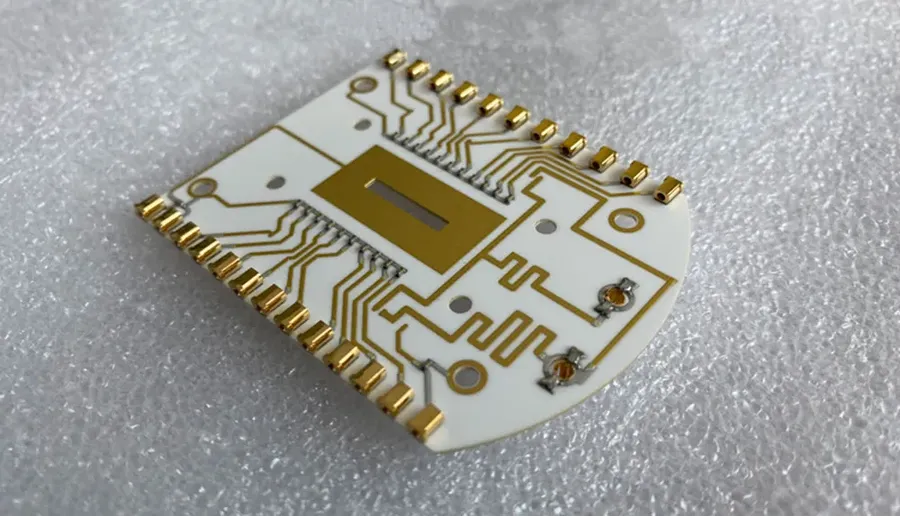
Ceramic PCB
Ceramic PCBs represent a significant advancement in printed circuit board technology, offering superior performance characteristics compared to traditional materials like FR4. Their unique attributes, including exceptional thermal conductivity, high-temperature resilience, and minimal dielectric loss, make them ideal for demanding applications where reliability and performance are paramount. These advantages stem from the inherent properties of ceramic materials, which allow for more efficient heat dissipation, stable operation in extreme temperature environments, and high-frequency signal integrity. This section delves into the fundamental aspects of ceramic PCBs, highlighting their unique benefits and differentiating them from conventional PCB technologies.
Property
Ceramic PCB
FR4 PCB
Thermal Conductivity
High (e.g., Alumina: 20-30 W/mK, Aluminum Nitride: 170-200 W/mK)
Low (typically 0.2-0.3 W/mK)
Operating Temperature
High (up to 350°C or higher)
Lower (typically up to 130°C)
Dielectric Loss
Low
Higher
Dimensional Stability
Excellent
Good, but can be affected by temperature and humidity
Cost
Higher
Lower
Applications
High-power, high-frequency, and high-temperature applications
General-purpose applications
Key Factors to Evaluate When Choosing a Ceramic PCB Manufacturer
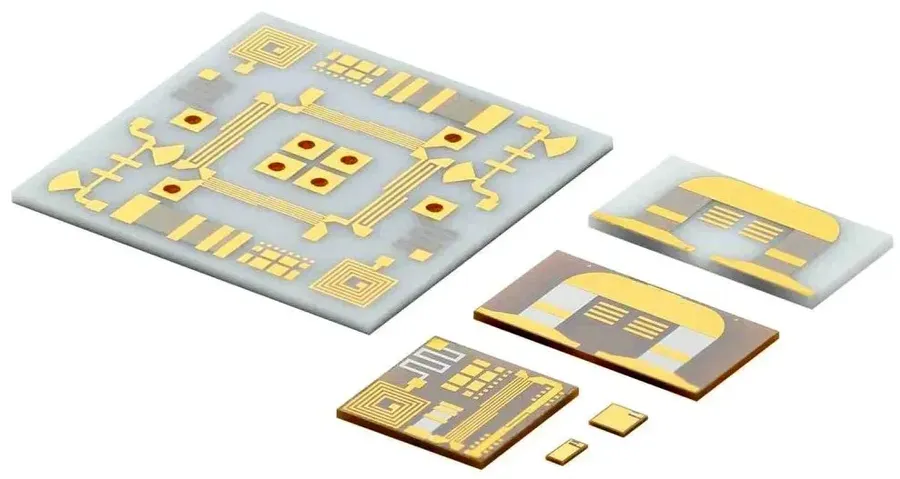
Ceramic Substrate
Selecting the right ceramic PCB manufacturer is crucial for ensuring the success of your project. This requires a careful evaluation of several critical factors that directly impact the quality, performance, and reliability of the final product. These include a manufacturer's material capabilities, manufacturing processes, precision, production volume capacity, quality control, and compliance with relevant certifications and standards.
Material Capabilities A crucial aspect is the manufacturer's proficiency in handling various ceramic materials. Ensure they can work with the specific material you need, such as alumina (Al₂O₃), aluminum nitride (AlN), or other glass ceramics. Each material has unique properties affecting the PCB's performance in thermal conductivity, dielectric constant, and mechanical strength. Verify if the manufacturer has experience with the chosen substrate, as this directly influences processing parameter and consistency.
Manufacturing Processes Evaluate whether the manufacturer utilizes the appropriate manufacturing techniques. Ceramic PCBs are commonly produced using thick-film or thin-film technologies. Thick-film is suitable for simpler designs and higher volumes, while thin-film allows for greater precision in finer line and space applications. Understanding the differences between these methods is important for matching manufacturer capabilities with your PCB needs. In addition, it's important to know which metallization methods are available, like sputtered thin film or thick film deposition.
Precision and Tolerances Ceramic PCBs, especially those used in high-frequency or precision applications, often require strict dimensional control and tight tolerances. Confirm that the manufacturer has the capabilities and quality processes to deliver PCBs within the required specifications. Seek verification data to support their stated tolerances.
Production Volume Capacity Assess the manufacturer's capacity to handle your project's production volume requirements, whether prototyping, small series or large-scale production. Ensure they can deliver on time without impacting the required quality. Consider their scalability, equipment, and labor capabilities to meet future needs.
Quality Control Measures A robust quality control system is essential to ensure that the PCBs meet your standards and performance expectations. Review the testing and inspection protocols used by the manufacturer, such as electrical testing, visual inspection, and other applicable tests. A reliable manufacturer should also conduct in-process inspections to reduce errors before the process reaches its end.
Certifications and Standards Compliance Verify if the manufacturer has achieved relevant industry certifications such as ISO 9001 or other standards specific to electronics manufacturing. These certifications indicate a manufacturer’s commitment to quality, consistency and compliance and provide assurances of their capability to meet industry-specific standards and your requirements. Ask about their testing compliance.
Material Options: Alumina, Aluminum Nitride, and More for Ceramic PCBs
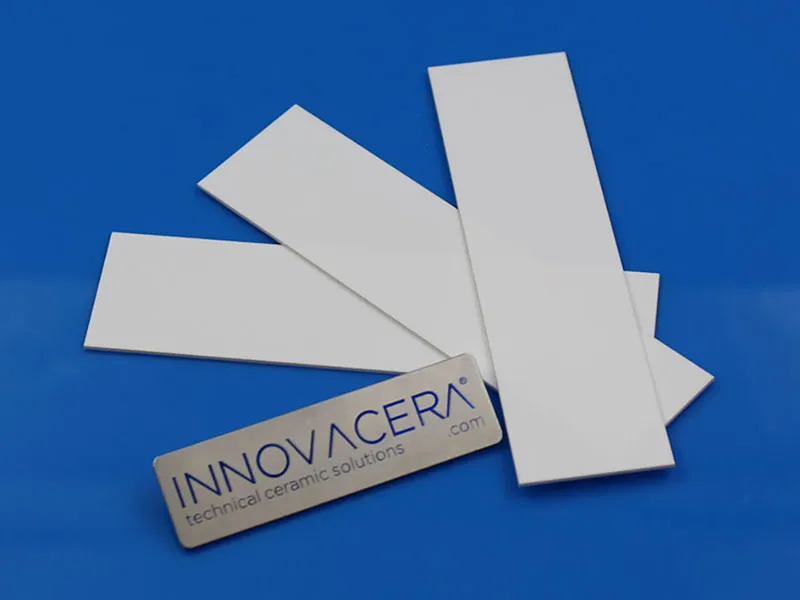
Alumina Substrate
The selection of ceramic materials is pivotal in the performance of a ceramic PCB, influencing its thermal management, electrical properties, and overall reliability. Common choices include Alumina (Al2O3), Aluminum Nitride (AlN), and glass ceramics, each possessing distinct characteristics suited to specific application needs.
Material
Thermal Conductivity (W/m·K)
Dielectric Constant
Coefficient of Thermal Expansion (ppm/°C)
Typical Applications
Pros
Cons
Alumina (Al2O3)
20-35
9-10
6-8
General purpose, power electronics
Cost-effective, good mechanical strength, widely available
Lower thermal conductivity compared to AlN
Aluminum Nitride (AlN)
140-200
8-9
4-5
High-power, high-frequency, LED lighting
Excellent thermal conductivity, high electrical insulation
More expensive than alumina
Glass Ceramics
2-5
4-10
3-8
High-frequency circuits, sensors, MEMS
Low dielectric loss, customizable CTE, good for fine-line circuits
Lower thermal conductivity, can be brittle
Beryllium Oxide (BeO)
250-300
6-7
7-9
High-power applications
Highest thermal conductivity
Toxic, expensive
The choice of ceramic material is a critical design decision and will influence the manufacturing process of a PCB. Considerations of cost, performance, environmental impacts, and the application requirements dictate the final selection.
Manufacturing Capabilities: Thick Film vs. Thin Film Technologies
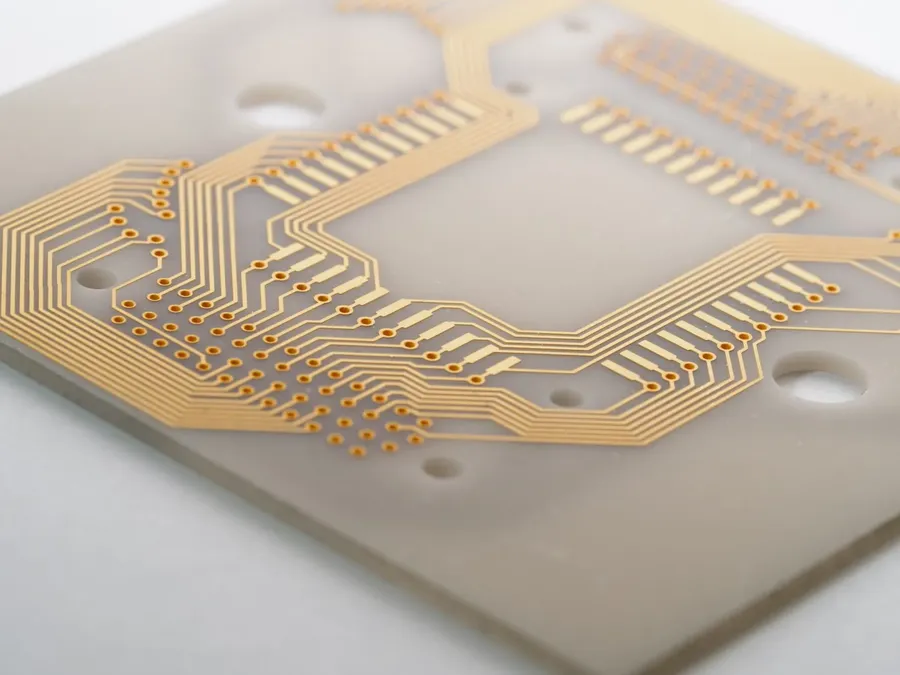
Thin Film Ceramic Circuit
The selection of manufacturing technology—thick film or thin film—is a critical decision in ceramic PCB production, significantly impacting performance, cost, and application suitability. Each method offers distinct advantages and limitations, catering to specific design needs and industry requirements. A thorough understanding of these differences is crucial for engineers when choosing a ceramic PCB manufacturer.
Excellent, due to superior material purity and uniformity
Cost
Lower
Higher
In summary, thick film technology is well-suited for applications where cost-effectiveness and moderate performance are sufficient, such as power electronics and sensors. In contrast, thin film technology is preferred for high-precision, high-frequency applications where superior electrical and thermal performance are paramount, despite the higher manufacturing cost. The selection of a suitable manufacturer requires a deep understanding of both technologies and their respective capabilities to meet specific design and performance objectives.
Quality Control and Certifications: Ensuring Reliability
PCB Quality Inspection
Rigorous quality control and adherence to industry certifications are paramount when selecting a ceramic PCB manufacturer, guaranteeing the reliability and performance of the final product. These measures ensure that the manufactured PCBs meet stringent specifications and are suitable for their intended applications, especially in demanding environments.
Importance of Quality Control Quality control (QC) encompasses all processes and procedures a manufacturer uses to ensure that the final product is free from defects, meets the design specifications, and conforms to industry standards. This includes incoming material inspection, in-process quality checks, and final testing.
Testing and Inspection Protocols Typical testing and inspection methods for ceramic PCBs include visual inspection, dimensional checks, electrical testing (e.g., continuity, isolation), thermal performance assessment, and environmental testing (e.g., temperature cycling, humidity). These tests help to identify potential defects or weaknesses that could impact the PCB's performance and longevity.
Key Certifications and Standards Specific certifications such as ISO 9001 (quality management systems), ISO 13485 (medical device quality management), and industry-specific standards (e.g., IPC standards for PCB manufacturing) demonstrate a manufacturer's commitment to quality and process control. Manufacturers who pursue and maintain these certifications are more likely to produce reliable and high-quality ceramic PCBs.
Certification/Standard
Description
Relevance to Ceramic PCB Manufacturing
ISO 9001
International standard for quality management systems.
Ensures a systematic approach to managing and controlling all processes that impact product quality, from design to delivery.
ISO 13485
International standard for quality management systems for medical devices.
Critical for manufacturers supplying ceramic PCBs to the medical industry, ensuring compliance with specific requirements for product safety and performance.
IPC Standards
Industry standards published by the Association Connecting Electronics Industries.
Sets standards for design, assembly, and performance of PCBs, including specific requirements for ceramic substrates.
By prioritizing manufacturers with robust quality control processes and relevant certifications, customers can significantly mitigate the risks associated with unreliable PCBs and ensure that their final product meets the highest quality and performance standards.
Ceramic PCB Applications Across Industries
Medical Device PCB
Ceramic PCBs, with their superior thermal and electrical properties, are indispensable in applications requiring high reliability and performance across various industries. Their ability to withstand extreme temperatures, coupled with excellent heat dissipation and low signal loss, makes them a superior alternative to traditional PCB materials in demanding environments.
Aerospace In aerospace, ceramic PCBs are critical for systems requiring high reliability under extreme conditions, such as radar systems, satellite communication equipment, and engine control units. Their high-temperature stability and resistance to vibration and shock make them ideal for space missions and aircraft operations. The use of materials like aluminum nitride further enhances thermal management.
Automotive Ceramic PCBs are used in automotive applications, particularly in advanced driver-assistance systems (ADAS), electric vehicle (EV) power electronics, and high-intensity lighting systems. Their high-temperature tolerance and reliability are crucial in the harsh under-the-hood environments. For instance, ceramic PCBs are often found in engine control units (ECUs) and transmission control systems.
Medical Devices In the medical field, ceramic PCBs are utilized in implantable devices, high-resolution imaging equipment, and precision diagnostic tools due to their biocompatibility, low signal noise, and excellent thermal conductivity. These properties are particularly valuable in sensitive applications like pacemakers, MRI machines, and ultrasound systems. The inert nature of ceramic also prevents any unwanted interactions with the body.
Telecommunications Ceramic PCBs are highly valued in telecommunications for their ability to handle high-frequency signals with minimal loss, crucial for RF amplifiers, antennas, and high-speed data transfer equipment. They are widely used in base stations, repeaters, and satellite communication systems, where their low dielectric loss and high thermal performance are paramount to maintaining signal integrity and system reliability. The miniaturization enabled by ceramic PCBs is also a key factor in the design of compact communication devices.
Industrial Automation In industrial automation, ceramic PCBs are found in sensors, control systems, and power electronics due to their durability and resistance to harsh conditions such as high temperatures and corrosive environments. They ensure reliable operation of equipment in demanding industrial settings, enhancing operational efficiency and longevity.
High-Power Electronics Applications in high-power electronics, such as inverters and converters, benefit significantly from the high thermal conductivity of ceramic PCBs, enabling efficient heat dissipation and prolonging the lifespan of electronic components. Ceramic's ability to withstand high voltage and current levels safely makes them ideal for power management systems.
Comparing Ceramic PCBs to FR4 PCBs: When to Choose Which?
Ceramic PCBs and FR4 PCBs represent two distinct approaches to circuit board manufacturing, each with specific strengths and weaknesses that dictate their suitability for different applications. Understanding these differences is crucial when selecting a PCB material.
Feature
Ceramic PCB
FR4 PCB
Thermal Conductivity
High (10-200+ W/m·K)
Low (0.2-0.3 W/m·K)
Temperature Resistance
Excellent (up to 350+°C)
Moderate (up to 130-150°C)
Dielectric Loss
Low
Higher Than Ceramics
Frequency Performance
Excellent, Suitable for High Frequencies
Good, but limitations at Higher Frequencies
Mechanical Strength
Good, but can be brittle
Good, Less Brittle
Cost
High
Low
Manufacturing Complexity
More complex
Less complex
Applications
High-power, high-frequency, high-temperature applications; aerospace, medical, RF, and automotive industries
General-purpose electronics; consumer electronics
The selection between ceramic and FR4 PCBs hinges on the application requirements. FR4, a glass-reinforced epoxy laminate, is the industry workhorse for most electronic applications due to its low cost, good electrical properties, and ease of manufacturing. However, it falls short in applications requiring high thermal dissipation, elevated operating temperatures, or high-frequency performance. Ceramic PCBs, on the other hand, offer superior thermal conductivity, high-temperature resilience, and lower dielectric loss, making them the preferred choice for demanding environments despite their higher cost and manufacturing complexities.
When to choose Ceramic PCBs: Ceramic PCBs are ideal for applications requiring excellent heat dissipation, high-temperature operation, and high-frequency signal transmission. Examples include power electronics, aerospace systems, high-frequency RF circuits, and medical devices. Their thermal performance ensures device reliability and longevity, while their ability to withstand high temperatures ensures stable operation in extreme environments. Furthermore, low dielectric losses make them suitable for high-frequency operation, minimizing signal degradation.
When to choose FR4 PCBs: FR4 PCBs are best suited for applications where cost is a primary concern and where the thermal or frequency requirements are not excessive. Examples include most consumer electronics, general computing devices, and low-power applications. Their relative ease of fabrication and availability of standard production techniques makes them a cost-effective option for prototyping and large-scale production.
Trade-offs: While ceramic PCBs offer superior performance in demanding environments, they come at a higher cost compared to FR4 PCBs, and manufacturing them can be more complex. The additional cost is due to the specialized materials and processes involved in their fabrication, as well as their production volume is much lower. Therefore, the decision to use ceramic PCBs depends on whether the performance benefits justify the extra cost and complexity. In many cases, careful evaluation of the system's operational requirements and cost constraints is essential.
Frequently Asked Questions About Ceramic PCBs
This section addresses common inquiries regarding ceramic PCBs, providing clear and concise answers to help you understand their properties, applications, and practical considerations when working with a ceramic PCB manufacturer.
What factors influence the cost of ceramic PCBs? The cost of ceramic PCBs is primarily influenced by the material type (e.g., alumina, aluminum nitride), the complexity of the design, the manufacturing process (thick film, thin film), production volume, and required precision. Higher performance materials and intricate designs will increase the cost. Choosing a ceramic PCB manufacturer with efficient processes can help to manage these costs.
How durable are ceramic PCBs? Ceramic PCBs exhibit excellent durability due to their robust material properties. They withstand high temperatures, resist thermal shock, and maintain their structural integrity in harsh environments. However, while mechanically robust, they can be brittle. Handling with care during assembly and operation is necessary to prevent fracturing or chipping. This inherent durability is why ceramic PCBs are preferred in demanding applications.
Are ceramic PCBs difficult to assemble? Assembly of ceramic PCBs requires specialized techniques and equipment due to their hardness and thermal properties. Common issues such as soldering difficulties and potential microcracking need to be addressed. However, with proper planning, well-trained assembly staff, and suitable procedures, assembly can be performed reliably. Partnering with a ceramic PCB manufacturer who has experience in assembly can mitigate these challenges.
What are the common ceramic materials used in PCBs? The most common materials used are alumina (Al2O3), known for its cost-effectiveness and good thermal conductivity, and aluminum nitride (AlN), which offers superior thermal performance and is often chosen for high-power applications. Other options include glass ceramics and silicon carbide, each chosen for specific application needs. The performance requirements of the application determine the ideal ceramic material.
What is the typical lead time for ceramic PCB production? Lead times vary depending on the complexity of the design, the chosen manufacturing process, and the current production schedule of the ceramic PCB manufacturer. Simple designs using standard materials may have shorter lead times, while complex multi-layered designs or custom materials will naturally extend this. Contacting the manufacturer early in the design process to accurately estimate lead time is best practice.
Can ceramic PCBs be used in high-frequency applications? Ceramic PCBs are ideal for high-frequency applications due to their low dielectric loss and high thermal conductivity. The stable electrical properties at elevated frequencies and temperatures provide better signal integrity than FR4 materials. These benefits allow for more efficient and reliable performance in high-frequency communication systems and other advanced electronic devices.
What is the best way to find a reliable ceramic PCB manufacturer? A reliable ceramic PCB manufacturer should have certifications for quality assurance such as ISO 9001, experience with the required materials and manufacturing processes, and a willingness to discuss specific design needs and tolerances. Evaluating their manufacturing capabilities, quality control procedures, and customer references are also key elements of due diligence. Engage with potential partners early in the project to allow time to compare their offerings.
Future Trends in Ceramic PCB Manufacturing
The ceramic PCB manufacturing landscape is continuously evolving, driven by the demand for higher performance, smaller form factors, and more efficient thermal management solutions. A forward-thinking ceramic PCB manufacturer must adapt to these trends to remain competitive and meet the ever-changing needs of the industry.
Advanced Materials Research and development into novel ceramic materials with enhanced properties like higher thermal conductivity, lower dielectric loss, and improved mechanical strength are ongoing. This includes exploring new compositions and nano-structured ceramics to further push the boundaries of performance. These new materials will enable higher operating frequencies, increased power density, and improved reliability in demanding environments. For example, research into aluminum nitride composites with enhanced thermal conductivity and modified surface finishes to improve adhesion and reliability is an area of active development.
Additive Manufacturing (3D Printing) 3D printing technologies are emerging as a viable method for producing complex ceramic PCB structures with high precision and customization. This allows for rapid prototyping and the creation of unique designs not achievable through traditional manufacturing processes, such as multilayer structures with integrated cooling channels or custom antenna shapes. This technology is still under development and currently not suitable for high-volume production. The main focus of research is to increase the resolution, accuracy, and robustness of 3D printed ceramic materials for use in high-performance PCB's.
Integration of Functional Materials Future trends include the integration of active and passive components directly into the ceramic substrate itself, leading to highly integrated and compact solutions. This involves the incorporation of materials such as embedded resistors, capacitors, and inductors using thick and thin film technology. This strategy increases reliability and reduces assembly time. The challenges are to find suitable compatible materials and manufacturing processes for the seamless integration of these components.
Miniaturization and High-Density Interconnects The demand for smaller and more densely packed electronic devices drives the need for finer lines and spaces on ceramic PCBs. Advancements in lithography, etching, and via formation techniques are crucial to achieving higher circuit density and reducing the overall size of the PCB. This directly ties to better integration and performance.
Sustainable Manufacturing There is a growing emphasis on environmentally friendly manufacturing processes, including the use of recycled materials, reduced energy consumption, and the elimination of hazardous chemicals. Ceramic PCB manufacturers are exploring alternative materials and manufacturing techniques to minimize their environmental impact. For example, the use of water-based processing methods and recycled ceramic raw materials are gaining traction.
Choosing the right [ceramic pcb manufacturer] is vital for ensuring the success of your high-performance electronic projects. By understanding the unique properties of ceramic PCBs, carefully evaluating manufacturer capabilities, and keeping up with emerging trends, you can leverage the full potential of these advanced materials. This ensures you are making an informed decision when selecting a manufacturer, thus enabling the production of cutting-edge and reliable products.