As vehicle cockpits evolve into complex digital hubs, the underlying printed circuit board (PCB) technology has become the heartbeat of modern automotive performance. From high-speed data transmission to extreme thermal management, selecting the right manufacturing partner is no longer just about cost—it is about ensuring mission-critical reliability in a safety-first industry.
The Evolution of Automotive Infotainment Architectures

From Isolated Modules to Domain Integration
Automotive infotainment has undergone a paradigm shift, transitioning from isolated, function-specific head units to centralized cockpit domain controllers. Early systems were discrete components handling simple radio and navigation tasks. Today, modern cockpits integrate digital instrument clusters, augmented reality head-up displays, and multi-zone entertainment into a singular high-compute environment. This consolidation has exponentially increased the data throughput requirements, necessitating the transition toward High-Density Interconnect (HDI) PCBs to manage complex signal integrity and thermal density within a constrained vehicle footprint.
Architectural Progression Trends
| Era | Architecture Type | PCB Requirements |
|---|---|---|
| Legacy | Distributed Modules | Standard rigid PCBs, low layer counts |
| Transition | Connected Head Units | Multi-layer boards, basic surface mount |
| Modern | Domain Controllers | HDI (Any-layer, Micro-vias), high-speed routing |
Why HDI is Essential for Modern Cockpits
The migration to HDI is not merely a choice but a technical necessity. Modern SoCs (System-on-Chips) used in infotainment processing require high pin densities that traditional PCB fabrication cannot support. HDI technology enables finer lines, smaller vias, and reduced layer counts, which allows for shorter signal paths. This reduction is vital for maintaining signal integrity for high-speed protocols like LPDDR5 and PCIe Gen4, which are now standard in automotive cockpit systems.
Frequently Asked Questions
- Why is HDI critical for signal integrity?
HDI allows for shorter trace lengths and better impedance control, which is essential to minimize reflections and electromagnetic interference in high-bandwidth infotainment data lanes. - How does HDI address thermal management?
By facilitating smaller, more compact designs, HDI permits more effective heat dissipation through optimized copper pour patterns and via-in-pad thermal management strategies that are not possible with traditional manufacturing. - Is HDI reliability sufficient for automotive environments?
When manufactured to IPC Class 3 standards by experienced partners, HDI PCBs provide superior structural integrity against the mechanical and thermal stresses inherent in vehicle operations.
Navigating Industry Standards: Why IATF 16949 Matters
The Necessity of IATF 16949 in the Automotive Ecosystem
In the context of automotive infotainment—where high-speed data processing meets extreme thermal and vibration environments—IATF 16949 is far more than a simple quality credential; it is a fundamental requirement for risk containment. While ISO 9001 provides a general foundation for quality management, IATF 16949 is specifically tailored to the automotive industry's stringent need for continuous improvement, defect prevention, and reduction of variation in the supply chain.
| Feature | ISO 9001 | IATF 16949 |
|---|---|---|
| Primary Scope | General Industry | Automotive Specific |
| Risk Approach | General quality focus | Advanced Product Quality Planning (APQP) |
| Supply Chain | Standard requirements | Stringent tier-management |
| Defect Management | Corrective actions | Zero-defect strategy |
Core Benefits for Infotainment Integration
Integrating HDI PCBs into infotainment modules involves complex, multi-layer interconnects that are susceptible to microscopic failures. A manufacturer holding IATF 16949 certification ensures that every process step—from laser drilling and via-filling to final AOI (Automated Optical Inspection)—is governed by a disciplined, audit-ready framework that drastically lowers the probability of field failures.
- How does IATF 16949 influence HDI reliability?
It mandates standardized processes for high-density interconnects, ensuring that micro-via integrity is maintained through rigorous statistical process control (SPC). - Does certification guarantee project success?
While it does not replace technical capability, it provides the structural assurance that the manufacturer has the institutional rigor to handle complex engineering changes and supply chain traceability. - Why is traceability critical for infotainment?
Infotainment systems are safety-linked systems in modern cockpits; IATF 16949 requires full batch-to-lot traceability, ensuring that any anomaly can be isolated and mitigated immediately.
Prioritizing Reliability and Thermal Management
Thermal Dynamics in High-Density Environments
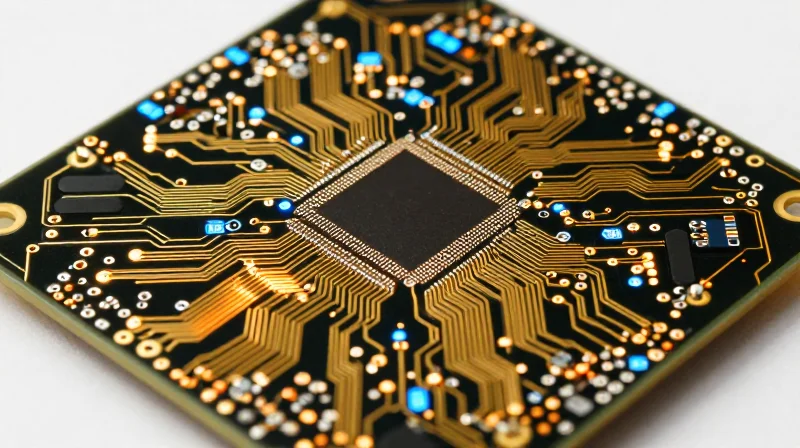
High-Density Interconnect (HDI) boards pack substantial computing power into cramped spaces, creating significant thermal challenges. Unlike standard PCBs, HDI designs feature finer traces and more microvias, which can trap heat if the stack-up design is not optimized. A top-tier manufacturer must prioritize thermal dissipation pathways through high-conductivity dielectric materials and strategic via placement to prevent hotspots that lead to long-term component degradation.
Testing Protocols for Long-Term Durability
Automotive infotainment systems operate in harsh environments defined by fluctuating ambient temperatures and constant mechanical shock. To ensure longevity, manufacturers must implement rigorous testing protocols that mimic the operational lifespan of the vehicle.
| Testing Protocol | Objective | Industry Standard |
|---|---|---|
| Thermal Shock Testing | Assess resistance to rapid temperature changes | JESD22-A104 |
| Highly Accelerated Life Test | Identify weak points via extreme stress | HALT/HASS |
| Vibration/Mechanical Shock | Evaluate structural integrity under movement | ISO 16750-3 |
Critical Questions for Your HDI Manufacturer
- How do you mitigate CTE mismatch?
The manufacturer should match the Coefficient of Thermal Expansion (CTE) of the PCB materials to the surface-mount components to prevent solder joint fatigue during thermal cycling. - What thermal simulation tools do you utilize?
Ensure the partner uses advanced Finite Element Analysis (FEA) to model heat dissipation patterns before prototyping begins. - Do you perform cross-section analysis?
Yes, destructive cross-section testing is vital to verify the quality of microvia plating and ensure no voids exist in the barrel of the vias, which could become failure points.
Evaluating Advanced PCB Material Capabilities
Evaluating Advanced PCB Material Capabilities
As automotive infotainment systems evolve into complex edge-computing hubs, the reliance on advanced substrates becomes paramount. Engineers must prioritize materials that offer low dissipation factors (Df) and dielectric constants (Dk) to mitigate signal attenuation across high-speed data buses. For modern vehicle cockpits, selecting a manufacturer capable of processing low-loss, high-glass transition temperature (Tg) laminates is the primary defense against signal degradation and mechanical fatigue.
Substrate Comparison for Automotive Infotainment
| Material Class | Dielectric Constant (Dk) | Dissipation Factor (Df) | Primary Application |
|---|---|---|---|
| Standard FR-4 | 4.5 | 0.020 | Basic controllers |
| Mid-Loss Laminate | 3.8 - 4.0 | 0.010 | Standard infotainment |
| Ultra-Low Loss | 3.3 - 3.6 | 0.003 | Advanced display hubs/ADAS |
Strategic Material Considerations
- Why is high Tg critical for automotive displays?
A high glass transition temperature (Tg > 170°C) ensures the substrate maintains structural rigidity under extreme ambient cockpit heat, preventing delamination and via failure. - How does surface roughness impact signal integrity?
Lower copper profile roughness reduces conductor losses at high frequencies, which is essential for maintaining the integrity of LVDS and Ethernet signals in modern infotainment. - What should be verified regarding CAF resistance?
Ensure the manufacturer uses Conductive Anodic Filament (CAF) resistant resins to prevent short circuits between tightly spaced vias common in high-density interconnect designs.
Scaling Production: Balancing NPI with Mass Manufacture

The NPI to Mass Production Transition
Bridging the gap between a successful NPI pilot and mass-market production is the most vulnerable phase for high-performance infotainment systems. A manufacturer’s ability to scale hinges on 'Design for Manufacturing' (DFM) maturity, where engineering teams refine stack-ups and trace geometries early to ensure the design remains robust when processed at high throughput.
| Parameter | NPI Focus | Mass Production Focus |
|---|---|---|
| Cycle Time | Rapid Turnaround | Operational Efficiency |
| Tooling | Soft Tooling/Prototype | Hard Tooling/Automation |
| Quality Focus | Functional Verification | Statistical Process Control |
Managing Quality at Scale
As production volumes ramp up, the risk of micro-defects in high-density interconnect (HDI) layers increases. Automotive-grade manufacturers must deploy automated optical inspection (AOI) and X-ray metrology at every step, moving from manual spot-checks to full-panel traceability. This ensures that the high-speed signal integrity validated during the NPI phase is preserved throughout the millions of boards manufactured annually.
Transition Strategy FAQ
- How does DFM affect scaling?
Early DFM implementation identifies potential yield bottlenecks, such as drill registration issues or copper plating thickness variations, allowing for optimizations before expensive mass-production equipment is committed. - What role does traceability play in high-volume production?
Automotive standards require granular traceability. Manufacturers should provide serialization at the board level to track material batches and process parameters, facilitating rapid root-cause analysis if a field failure occurs. - Is NPI equipment different from production equipment?
Yes. While NPI utilizes flexible, multi-purpose lines, mass production relies on specialized, high-speed automated lines that minimize human intervention, thereby reducing the margin for error.
Quality Assurance and Rigorous Testing Protocols
Multilayered Inspection Methodologies
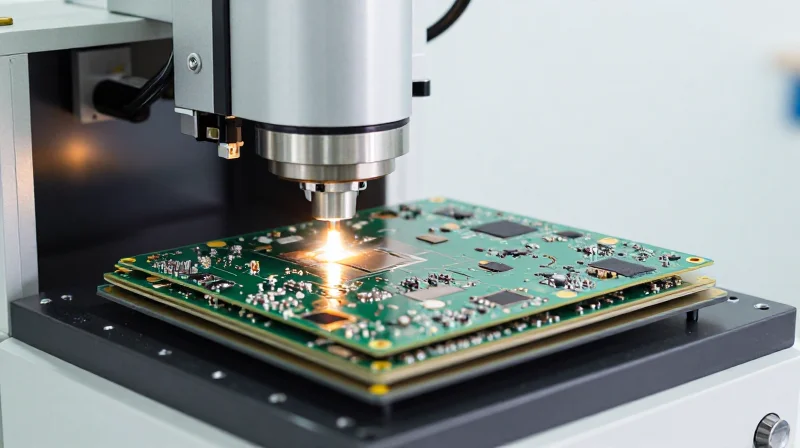
For HDI PCBs in automotive infotainment, visual inspection is insufficient to detect internal manufacturing defects. Manufacturers must employ a multi-modal inspection strategy that combines surface-level automated optical inspection (AOI) with volumetric X-ray analysis to identify latent structural flaws within fine-pitch interconnects and buried vias.
| Inspection Technology | Primary Application | Failure Detection Capability |
|---|---|---|
| AOI | Surface Mounting | Missing components, misalignment, solder bridges |
| Automated X-Ray (AXI) | BGA/HDI Layers | Voiding in BGA balls, internal layer misalignment |
| Flying Probe Testing | Bare Boards | Open circuits, shorts, trace integrity issues |
Ensuring Reliability through Environmental Stress Screening
Automotive electronics operate in fluctuating thermal environments that induce physical stress on solder joints and vias. Environmental Stress Screening (ESS), particularly Thermal Cycling and HAST (Highly Accelerated Stress Testing), is non-negotiable for infotainment systems that must maintain uptime under extreme vibration and temperature gradients.
- Why is thermal cycling essential for HDI boards?
Thermal cycling simulates the expansion and contraction cycles of the vehicle environment, identifying potential fatigue in micro-vias and solder joints before the part reaches the assembly line. - How does HAST validate automotive quality?
HAST uses elevated temperature and humidity under pressure to accelerate potential moisture-related failures and corrosion in high-density insulation materials. - What is the role of IPC Class 3 standards in this process?
Adherence to IPC Class 3 ensures that the manufacturer maintains strict tolerance controls for critical electronic assemblies where high performance and high reliability are non-negotiable.
Supply Chain Resiliency and Global Logistics
The Imperative of Supply Chain Transparency
Automotive infotainment systems now rival high-end consumer hardware in complexity, relying on advanced HDI PCB architectures that are susceptible to global supply chain volatility. A manufacturer’s ability to provide end-to-end visibility is not merely an operational benefit but a safety-critical requirement. Lack of traceability in raw materials—specifically laminate resin grades and copper foil origins—can lead to catastrophic failures in high-vibration, high-heat automotive environments. Choosing a partner with a diversified, audited supply network ensures that production remains insulated from geopolitical shocks and regional logistics bottlenecks.
Logistics and Risk Mitigation Strategies
| Strategy | Impact on Production | Benefit to Infotainment Integration |
|---|---|---|
| Multi-Site Production | High | Reduces dependency on a single geographic node for PCB fabrication. |
| Real-time Inventory Tracking | Medium | Ensures just-in-time delivery for complex HDI board assembly. |
| Long-term Material Agreements | High | Prevents shortages of mission-critical high-Tg laminate materials. |
Key Considerations for Partner Auditing
- How does the manufacturer manage material obsolescence?
A capable partner maintains a proactive component life-cycle management database and notifies clients well in advance of substrate or chemical component discontinuance. - What is the role of blockchain or digital twins in traceability?
Modern manufacturers utilize digital twins of the manufacturing process to record every stage of production, providing an immutable audit trail from raw material intake to final infotainment module shipment. - Can the manufacturer maintain consistent quality during logistics surges?
A resilient partner employs standardized, automated handling and environmental controls across all transport lanes to prevent micro-cracking or moisture ingress in high-density substrates.
Strategic Partnerships vs. Transactional Vendors
Strategic Partnerships vs. Transactional Vendors
In the high-stakes realm of automotive infotainment, treating your HDI PCB manufacturer as a mere transactional vendor—focused solely on per-unit costs—introduces significant risk to product lifecycle and quality. A strategic partner, conversely, serves as an extension of your engineering team, providing collaborative design for manufacturing (DFM) reviews, proactive material sourcing, and shared long-term quality objectives that ensure the longevity of safety-critical systems.
| Feature | Transactional Vendor | Strategic Partner |
|---|---|---|
| Communication | Reactive, request-driven | Proactive, design-focused |
| Design Support | Limited to manufacturing specs | Integrated DFM/DFA collaboration |
| Supply Chain | Transactional, short-term | Resilient, long-term visibility |
| Problem Solving | Blame-shifting on defect | Collaborative root-cause analysis |
Why Collaborative Engineering Matters for HDI
High-Density Interconnect (HDI) PCBs for infotainment systems require complex layer stack-ups and microvia technology that demand precision. A strategic manufacturer performs early-stage design reviews to identify potential signal integrity issues or thermal management bottlenecks before the first prototype is built. This level of technical synergy significantly shortens the NPI cycle and prevents costly mid-production re-spins.
- How do you identify a strategic partner versus a vendor?
Look for manufacturers that offer dedicated engineering support teams during the design phase rather than just a procurement portal for ordering finalized Gerbers. - Why is long-term commitment critical for automotive infotainment?
Infotainment systems have long lifecycle requirements. A strategic partner guarantees long-term material availability and process stability, preventing the need for frequent requalification of your PCB. - Can a transactional vendor handle complex HDI requirements?
While they might have the equipment, they often lack the engineering depth to optimize complex HDI designs for manufacturability, leading to higher scrap rates and lower field reliability.
Selecting an automotive PCB manufacturer is a high-stakes decision that directly impacts vehicle safety and user experience. By prioritizing IATF 16949 compliance, robust thermal design, and scalable production capabilities, you secure your project against future risks. Contact our engineering team today for a comprehensive design-for-manufacturability audit of your next automotive infotainment system.