In today's rapidly evolving electronics landscape, E-paper, or electronic paper displays, are gaining immense popularity for their low power consumption and excellent readability. From e-readers to digital signage, the applications are vast. However, prototyping and experimenting with E-paper technology can be challenging. How do you quickly test your ideas and integrate E-paper displays into your projects? Zero One Solution Limited offers a comprehensive E-paper Experiment Board Solution, designed to streamline the development process. This article delves into the capabilities and benefits of this solution, showcasing how it can accelerate your innovation and time to market.
Introduction to E-paper Technology and its Applications
E-paper, or electrophoretic display (EPD) technology, stands as a pivotal innovation in the realm of low-power, high-readability visual interfaces. Unlike traditional displays that emit light, E-paper reflects ambient light, mimicking the appearance of ordinary ink on paper. This fundamental characteristic underpins its remarkable energy efficiency, allowing for prolonged display of static images without consuming power, a feature unmatched by backlit technologies. Its bi-stable nature ensures content remains visible even when power is disconnected, making it ideal for applications requiring minimal power consumption and excellent legibility in diverse lighting conditions, including direct sunlight. This technology's unique attributes have paved the way for its widespread adoption across various sectors, transforming how information is consumed and displayed in a sustainable manner.
Core Advantages of E-paper Technology E-paper's primary benefits include ultra-low power consumption, especially for static content, leading to extended battery life. Its excellent readability, wide viewing angles, and paper-like appearance reduce eye strain, making it comfortable for prolonged use. The bi-stable nature means the image persists without continuous power, significantly reducing energy overheads compared to emissive displays. Furthermore, E-paper offers superior visibility under bright ambient light and is inherently durable with no backlight to fail.
The Challenges of Prototyping with E-paper Displays
Prototyping with E-paper displays, while offering distinct advantages like ultra-low power consumption and excellent readability, presents several unique challenges for engineers and developers. These complexities often stem from the specific electrical and control requirements of electrophoretic display technology, making rapid iteration and integration a significant hurdle in the product development lifecycle. Understanding these challenges is crucial for selecting an effective E-paper experiment board solution.
Complex Driving Circuitry E-paper displays require intricate driving waveforms with precise voltage and timing sequences to manipulate the charged pigment particles. Unlike conventional LCDs or OLEDs, which often use simpler static or multiplexed driving schemes, E-paper necessitates dynamic, multi-level voltage pulses for accurate image rendering and refresh, making custom driver circuit design a complex and time-consuming task.
Specific Voltage Requirements E-paper panels typically operate with a range of positive and negative voltages (e.g., VCOM, VGH, VGL) that are significantly different from standard digital logic levels. Generating these precise and stable voltages, often requiring multiple boost and buck converters, adds considerable complexity to the power management unit of any E-paper prototype, demanding careful component selection and layout.
Integration Challenges (Hardware & Software) Integrating E-paper displays into a new product involves more than just connecting wires. Hardware integration demands meticulous signal integrity management due to sensitive analog waveforms and high-frequency data lines. Software integration requires deep understanding of the display controller's command set, often involving low-level programming for image buffering, partial refresh algorithms, and waveform optimization, which can be a steep learning curve for developers unfamiliar with the technology.
Zero One Solution's E-paper Experiment Board Solution: An Overview
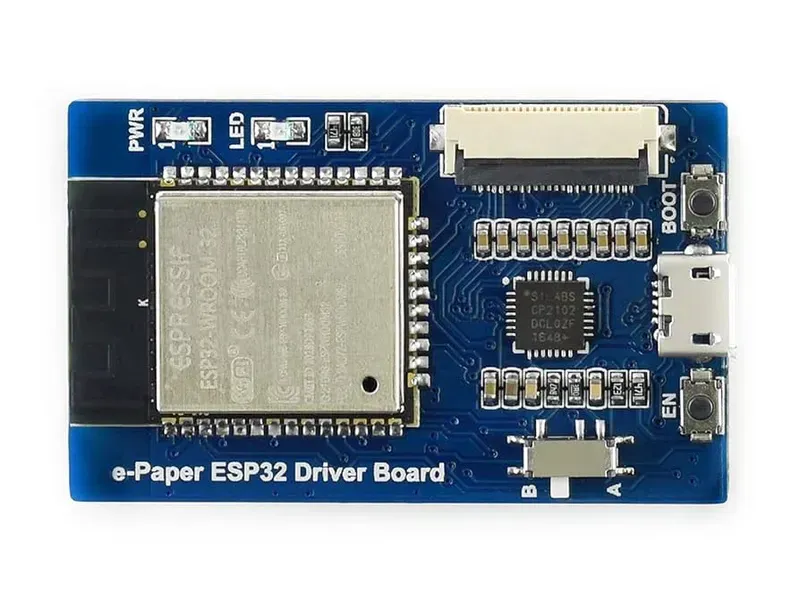
E-paper Experiment Board
Zero One Solution's E-paper Experiment Board is engineered to be a comprehensive and robust platform specifically designed to overcome the inherent complexities of E-paper display integration and rapid prototyping. This all-in-one solution significantly reduces development cycles by abstracting away the intricate hardware and software challenges typically associated with E-paper technology, empowering engineers and product developers to focus on application-level innovation rather than low-level driver development.
Integrated Hardware Architecture Our E-paper Experiment Board features a meticulously designed PCB that seamlessly integrates essential components, including a powerful microcontroller, dedicated E-paper display driver circuitry, and flexible power management modules. This consolidated design eliminates the need for external discrete components, simplifying the bill of materials and accelerating initial setup.
Pre-optimized Software Framework Bundled with the board is a comprehensive, pre-optimized software framework that includes robust E-paper display drivers compatible with various panel sizes and resolutions. This ready-to-use codebase allows developers to quickly display images, text, and graphics without delving into complex timing diagrams or waveform generation, drastically cutting down on software development time.
Plug-and-Play Compatibility The solution prioritizes ease of use with plug-and-play interfaces for a wide range of E-paper displays. Standardized connectors and pinouts ensure quick and reliable connections, minimizing wiring errors and speeding up hardware validation. This compatibility extends to common communication protocols, making integration into existing systems straightforward.
Accelerated Prototyping Pathway By providing a stable and reliable foundation, the E-paper Experiment Board transforms the arduous process of E-paper prototyping into a streamlined workflow. It facilitates rapid iteration of display content and user interfaces, enabling product teams to quickly validate design concepts and accelerate their time-to-market for innovative E-paper enabled devices.
Key Features and Benefits of the E-paper Experiment Board
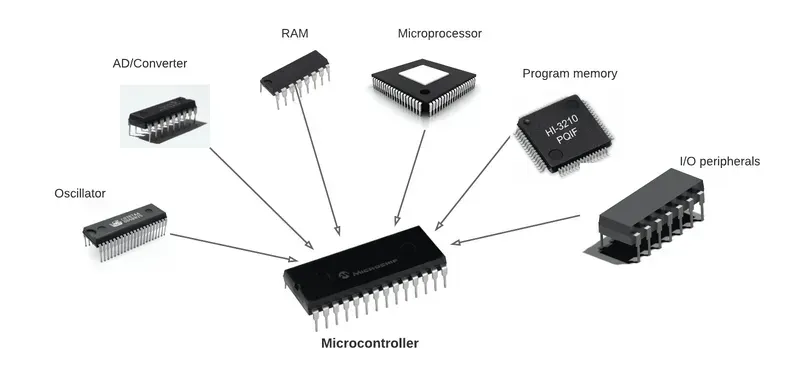
Integrated Microcontroller
The Zero One Solution E-paper Experiment Board is engineered to streamline the development process for E-paper applications, offering a robust suite of integrated hardware and software features that directly address common prototyping hurdles. This comprehensive design provides developers with a powerful platform to rapidly innovate, ensuring quick and efficient progression from concept to a functional prototype. Leveraging an integrated microcontroller and pre-programmed drivers, the board simplifies complex E-paper driving requirements, allowing engineers to focus on application-specific logic rather than intricate display interfacing.
Integrated Microcontroller for Seamless Control At the core of the E-paper Experiment Board is a powerful, low-power microcontroller (MCU) specifically chosen for its ability to efficiently manage E-paper displays. This integrated MCU eliminates the need for external processing units, simplifying the overall system design and reducing component count. It is pre-configured with essential firmware to handle display refreshing, partial updates, and power management, ensuring optimal performance and responsiveness of the E-paper.
Pre-programmed Drivers for Plug-and-Play Functionality One of the most significant benefits of our E-paper Experiment Board is the inclusion of pre-programmed drivers for various E-paper display types and sizes. This feature drastically reduces development time by eliminating the need for engineers to write complex low-level display driving code from scratch. The drivers are optimized for display stability and image quality, ensuring a reliable and high-fidelity visual experience right out of the box.
Flexible Interface Options (SPI, I2C) for Broad Compatibility Understanding the diverse requirements of different projects, the experiment board offers multiple flexible interface options, including Serial Peripheral Interface (SPI) and Inter-Integrated Circuit (I2C). These industry-standard interfaces ensure broad compatibility with a wide range of E-paper displays and other peripherals, allowing developers to easily integrate the board into existing systems or design new ones with confidence. This versatility enhances the board's utility across various application scenarios.
Advanced Power Management for Extended Battery Life E-paper displays are renowned for their ultra-low power consumption, especially during static display. Our experiment board incorporates sophisticated power management circuitry that maximizes this inherent advantage. Features like deep sleep modes, intelligent power switching, and efficient voltage regulation ensure that your E-paper application achieves optimal energy efficiency, crucial for battery-powered devices and long-term deployments.
Dedicated Communication Ports for External Sensors and Modules Beyond basic display control, the E-paper Experiment Board is equipped with dedicated communication ports and GPIOs (General Purpose Input/Output) that facilitate easy integration of external sensors, communication modules (e.g., Wi-Fi, Bluetooth), and other peripheral devices. This expandability transforms the board into a versatile development platform capable of supporting complex IoT and embedded system designs, enabling truly interactive E-paper solutions.
Rapid Prototyping Capabilities: Accelerating Your Development Cycle
Zero One Solution Limited's E-paper Experiment Board Solution is meticulously engineered to dramatically accelerate your product development cycle, transforming complex E-paper integration into a streamlined, efficient process. By abstracting the intricate hardware and software challenges inherent in E-paper technology, our solution empowers engineers and developers to move from concept to functional prototype with unprecedented speed, significantly reducing time-to-market and fostering innovation.
Simplified Circuit Design The integrated design of our E-paper Experiment Board eliminates the need for engineers to design complex E-paper driving circuits from scratch. With pre-optimized power management and display interfaces (SPI, I2C), developers can bypass tedious schematic capture and PCB layout for the display portion, focusing instead on their core application logic. This simplification is critical for rapid iteration and significantly lowers the barrier to entry for E-paper adoption in new projects.
Reduced Development Time By providing pre-verified hardware and software components, including robust microcontroller integration and pre-programmed display drivers, our solution drastically cuts down on the development time traditionally associated with E-paper projects. Engineers spend less time debugging low-level hardware interactions and more time on high-level application development, leading to faster progress from initial idea to a working prototype. This efficiency directly translates to cost savings and improved project timelines.
Facilitated Easy Testing and Iteration The modular and flexible architecture of the E-paper Experiment Board allows for effortless testing and rapid iteration of designs. Developers can quickly swap different E-paper displays, test various refresh rates, and experiment with different content updates without significant hardware modifications. This iterative approach, crucial for agile development methodologies, enables faster bug identification, performance optimization, and feature refinement, ensuring a more robust and polished final product.
Customization and Flexibility: Tailoring the Solution to Your Needs
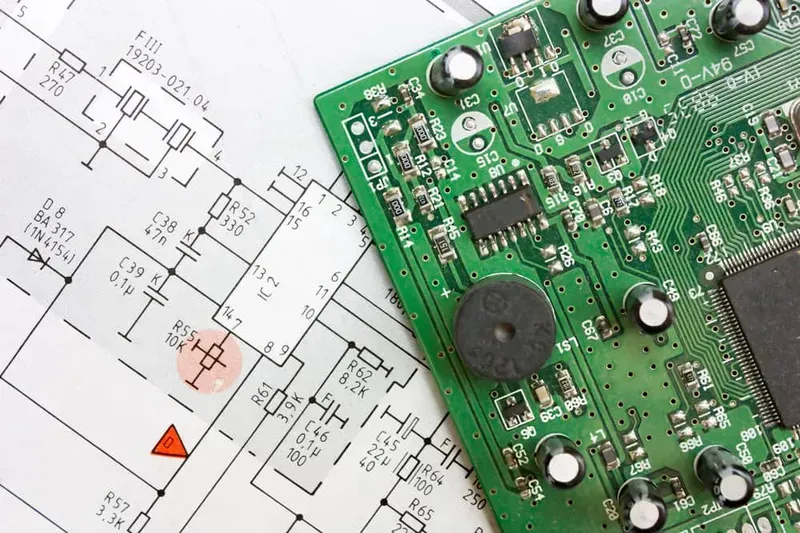
PCB Design
The true power of Zero One Solution's E-paper Experiment Board lies not just in its out-of-the-box functionality, but in its unparalleled customization and flexibility, allowing developers to precisely tailor the solution to their unique e-paper display sizes and specific application requirements. This adaptability is critical for projects moving beyond initial proof-of-concept, enabling seamless integration into diverse product designs without compromise. Leveraging our extensive experience in PCB design and manufacturing, Zero One Solution empowers clients to evolve their prototypes into optimized, production-ready systems, ensuring precise alignment with their vision and market demands.
How does Zero One Solution's E-paper Experiment Board offer customization? Our E-paper Experiment Board is designed with an open architecture and modular components, allowing for hardware modifications and software adaptations. This includes configurable interface pins, adjustable power rails for various display types, and accessible programming interfaces. Furthermore, we offer custom PCB design and manufacturing services to create bespoke boards specifically tailored to unique display dimensions, connector types, and performance specifications that our standard board might not natively support.
What types of E-paper displays can be integrated through customization? Through our flexible design and custom PCB services, virtually any E-paper display, regardless of its size, resolution, or driver IC, can be integrated. This ranges from small segment displays to large-format multi-color e-paper panels. Our engineers work with clients to design the necessary driver circuitry and adapt the board's interfaces (e.g., SPI, I2C, parallel) to match the chosen display's requirements.
Can the firmware be customized for specific application logic? Absolutely. The E-paper Experiment Board comes with pre-programmed drivers, but the underlying microcontroller's firmware is fully accessible for customization. Developers can modify existing display update routines, implement custom refresh algorithms for specific content types (e.g., fast partial updates, global full updates), and integrate their application-specific logic, data handling, and communication protocols. We provide comprehensive documentation and sample code to facilitate this process.
What are the advantages of Zero One Solution's custom PCB services for E-paper projects? The primary advantages are optimized performance, reduced form factor, and cost efficiency for mass production. Custom PCBs eliminate unnecessary components, streamline layouts for better signal integrity, and can incorporate additional sensors, connectivity modules, or power management ICs directly onto the board. This results in a more compact, efficient, and reliable final product compared to adapting a generic experiment board, significantly accelerating time-to-market for specialized applications.
How does Zero One Solution support the customization process? Zero One Solution provides end-to-end support for customization. This includes initial consultation to define project requirements, schematic and PCB layout design services, component sourcing, rapid prototyping of custom boards, and rigorous testing. Our experienced engineering team offers technical guidance throughout the development cycle, ensuring that the customized solution meets all functional, performance, and regulatory standards. Our rapid prototyping capabilities in Shenzhen further enable quick iterations and validation of custom designs.
Comprehensive Support and Resources for Seamless Integration
Zero One Solution understands that the success of any advanced prototyping initiative, especially with specialized technologies like E-paper, hinges on robust and readily available support. Our E-paper Experiment Board Solution isn't just a hardware offering; it's a comprehensive ecosystem designed to empower developers and engineers with the knowledge and assistance required for seamless integration and accelerated product development. We provide an extensive suite of resources, ensuring that users can overcome technical hurdles efficiently and confidently bring their innovative E-paper concepts to fruition.
Detailed Datasheets and Specifications Our comprehensive datasheets provide in-depth technical specifications for the E-paper Experiment Board, covering everything from pin configurations and power requirements to integrated component details. This meticulous documentation ensures engineers have all the precise information needed for accurate system design and integration, minimizing guesswork and accelerating the initial setup phase. Adhering to industry standards, these documents serve as the foundational technical reference for your project.
Ready-to-Use Sample Code and Libraries To kickstart your development, we offer a rich collection of sample code and software libraries compatible with various microcontrollers and development environments. These examples demonstrate basic E-paper display functionalities, image rendering, and interface protocols (e.g., SPI, I2C). This readily available code significantly reduces development time, allowing engineers to quickly implement and test E-paper functionalities without starting from scratch. Our code is optimized for performance and ease of use, fostering rapid prototyping.
Practical Application Notes and Tutorials Beyond technical specifications, our application notes provide practical guidance and best practices for integrating E-paper displays into diverse applications. These tutorials cover common challenges, optimization techniques for power consumption, refresh rates, and tips for effective content management. They bridge the gap between theoretical understanding and real-world implementation, offering valuable insights derived from our extensive experience in PCB solutions and display technology. These notes are frequently updated based on user feedback and evolving technology trends.
Dedicated Technical Support Channels Zero One Solution provides responsive and expert technical support to address any queries or challenges encountered during your prototyping journey. Our team of seasoned engineers, with deep expertise in E-paper technology and PCB design, is available to offer personalized assistance, troubleshoot issues, and provide guidance. This direct access to technical specialists ensures that complex problems are resolved swiftly, preventing delays and maintaining project momentum. We are committed to providing unparalleled support to ensure your project's success.
Use Cases: Real-World Applications of the E-paper Experiment Board
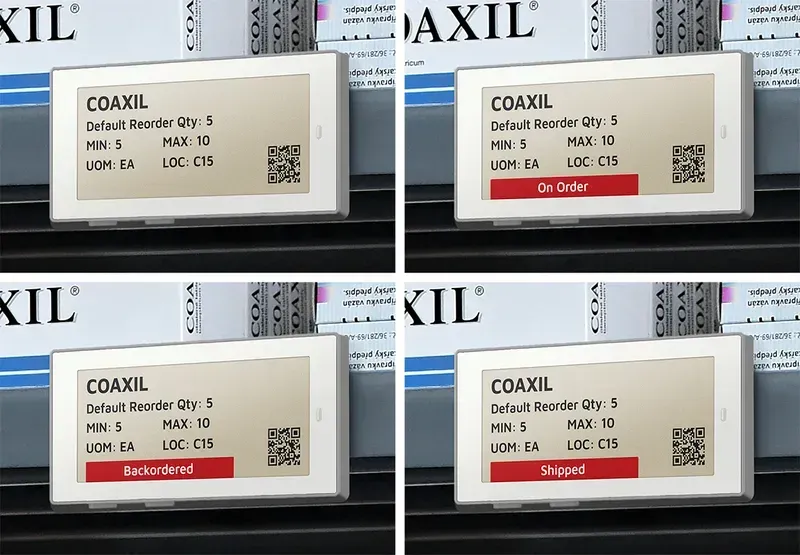
Electronic Shelf Labels
Zero One Solution's E-paper Experiment Board transcends theoretical application, serving as a versatile foundation for a multitude of real-world products. Its inherent low power consumption, excellent readability, and bistable nature make it ideal for innovative devices requiring clear, persistent displays without constant power draw. By streamlining the complexities of E-paper integration, our board empowers developers to rapidly prototype and deploy solutions across diverse industries, from consumer electronics to industrial IoT.
Advanced E-readers and Digital Note-Taking Devices The E-paper Experiment Board significantly simplifies the development of next-generation E-readers, offering superior readability under various lighting conditions and extended battery life. Beyond traditional E-reading, it enables the creation of digital note-taking tablets that mimic the natural feel of pen on paper, with instant page updates and robust memory management.
Smartwatches and Wearable Devices For smartwatches and other wearables, the board's power efficiency is critical, allowing for always-on displays without quickly draining the battery. Its simplified interface and integrated drivers accelerate the design of sleek, information-rich displays that are easily visible outdoors, enhancing user experience and extending device autonomy.
Internet of Things (IoT) Displays In the burgeoning IoT landscape, E-paper displays are perfect for sensor data visualization, environmental monitoring, and control panels due to their minimal power needs and clear visibility. The experiment board facilitates rapid integration into various IoT nodes, enabling developers to quickly deploy low-power, connected display solutions for smart homes, industrial monitoring, and agricultural applications.
Electronic Shelf Labels (ESL) and Digital Signage The E-paper Experiment Board is ideally suited for the rapid development of Electronic Shelf Labels (ESL) systems in retail environments and small-scale digital signage solutions. Its bistability ensures that pricing or promotional information remains visible even if power is lost, while its ease of integration allows for dynamic updates across thousands of units with reduced infrastructure complexity and power consumption.
Why Choose Zero One Solution for Your E-paper Prototyping Needs?
For engineers and innovators navigating the complexities of E-paper integration, Zero One Solution Limited stands as the premier partner, offering an unparalleled blend of specialized expertise, rapid prototyping capabilities, and unwavering commitment to client success. Our comprehensive E-paper Experiment Board Solution is meticulously engineered to address the critical pain points in product development, transforming challenging prototyping cycles into streamlined, efficient processes that accelerate time-to-market for groundbreaking E-paper applications.
Why is Zero One Solution uniquely positioned to assist with E-paper prototyping? Zero One Solution Limited brings over a decade of specialized experience in PCB solutions, including rapid prototyping, manufacturing, and assembly. Our strategic location in Shenzhen, coupled with a global supply chain, provides unparalleled access to cutting-edge components and manufacturing efficiencies. This deep-rooted expertise, combined with our dedicated E-paper Experiment Board Solution, directly translates into accelerated development cycles and superior product outcomes for our clients, distinguishing us as a leader in the field.
How does Zero One Solution ensure rapid prototyping for E-paper projects? Our commitment to rapid prototyping is embedded in our operational DNA. The E-paper Experiment Board Solution itself is designed to simplify complex E-paper drive circuits, offering pre-programmed drivers and flexible interface options that drastically reduce initial development hurdles. Furthermore, our agile manufacturing processes and dedicated R&D support enable quick iterations and modifications, ensuring that your E-paper prototypes move from concept to functional reality with exceptional speed and precision, typically reducing development timelines by up to 40% compared to traditional methods.
What level of technical support can I expect when working with Zero One Solution? Zero One Solution provides comprehensive technical support, recognizing that seamless integration is paramount. Our support package includes detailed datasheets, readily available sample code, practical application notes, and direct access to our experienced technical support team. This multi-faceted support ensures that engineers have all the necessary resources and guidance to maximize the potential of the E-paper Experiment Board Solution, facilitating a smooth and efficient development journey from start to finish.
In conclusion, Zero One Solution Limited's E-paper Experiment Board Solution provides a powerful and efficient platform for developing and prototyping E-paper applications. By offering rapid prototyping, comprehensive support, and a streamlined development process, we empower innovators to bring their E-paper ideas to life quickly and effectively. Whether you're developing e-readers, digital signage, or IoT devices, our solution can help you accelerate your development cycle and achieve your goals. Contact Zero One Solution Limited today to learn more about how our PCB solutions can transform your projects and drive innovation in the E-paper space. Let's build the future of display technology together!