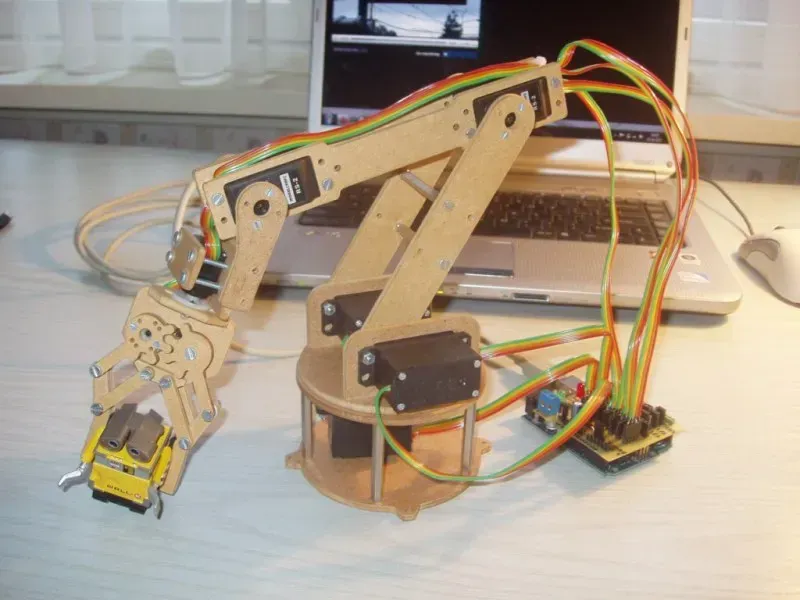
In today's rapidly evolving automation landscape, electric stage robotic arms are at the forefront of precision and efficiency. These sophisticated machines demand equally sophisticated control systems, with Printed Circuit Boards (PCBs) serving as the central nervous system. Zero One Solution Limited, a leading PCB solution provider, understands the critical role PCBs play in the performance and reliability of robotic arms. With over a decade of experience specializing in rapid prototyping and a one-stop service encompassing PCB design, manufacturing, and assembly, Zero One Solution empowers innovators to push the boundaries of robotics. This article will delve into the intricacies of PCB solutions for electric stage robotic arms, highlighting the design considerations, manufacturing processes, and assembly expertise required to achieve optimal performance.
Introduction to Electric Stage Robotic Arms and PCBs
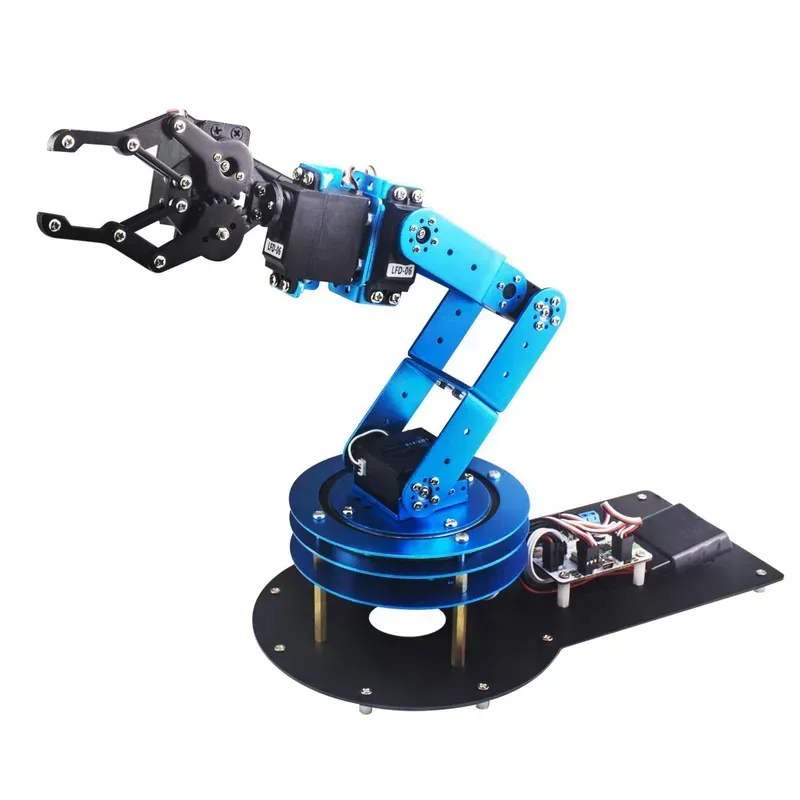
Electric Stage Robotic Arm
Electric stage robotic arms represent the pinnacle of precision automation, revolutionizing industries from advanced manufacturing and medical procedures to entertainment and logistics. These sophisticated systems are engineered for unparalleled accuracy, speed, and repeatability, enabling complex tasks with sub-millimeter precision. At their core, Printed Circuit Boards (PCBs) are the indispensable nervous system, dictating every movement, sensory input, and control signal, making their optimal design and manufacturing paramount to the robotic arm's overall functionality and performance.
What are Electric Stage Robotic Arms? Electric stage robotic arms are advanced robotic manipulators driven by electric motors, offering precise, programmable movement across multiple axes. Unlike hydraulic or pneumatic systems, electric arms provide superior control, quieter operation, and energy efficiency, making them ideal for delicate or high-speed applications requiring exact positioning.
What are the primary applications of Electric Stage Robotic Arms? Electric stage robotic arms are widely applied in diverse fields: in manufacturing for assembly, welding, and material handling; in medicine for surgical assistance and laboratory automation; in entertainment for dynamic stage effects and animatronics; and in logistics for automated sorting and packaging. Their versatility stems from their precise control and adaptability to various end-effectors.
Why are PCBs critical for Electric Stage Robotic Arms? PCBs are the foundational electronic platforms within electric stage robotic arms, housing crucial components like microcontrollers, motor drivers, sensor interfaces, and communication modules. They provide the interconnected pathways for power distribution and high-speed data transfer, enabling the precise coordination of motors, feedback from sensors, and overall system control. Without meticulously designed PCBs, the arm's ability to perform complex, synchronized movements would be severely compromised, leading to inefficiencies and potential failures.
Component
PCB Function
Impact on Robotic Arm Performance
Motor Drivers
Power regulation and precise motor control signal routing
Ensures smooth, accurate, and powerful arm movements, directly influencing speed and payload capacity.
,Sensors (Encoders, Force/Torque)
Signal conditioning and data transmission to the main controller
Provides real-time feedback for precise positioning, collision detection, and force control, critical for delicate tasks.
,Microcontrollers/DSPs
High-density component integration and high-speed signal pathways
Enables rapid computation for kinematics, inverse kinematics, and complex control algorithms, dictating the arm's intelligence.
,Communication Interfaces (Ethernet, CAN)
Robust data lines for external communication
Facilitates seamless integration with other systems, remote control, and data logging, essential for industrial automation.
,Power Management Units
Efficient power distribution and voltage regulation
Ensures stable power supply to all electronic components, preventing brownouts and maintaining consistent operational reliability.
Key Design Considerations for Robotic Arm PCBs
Designing Printed Circuit Boards (PCBs) for electric stage robotic arms presents unique challenges that demand meticulous attention to detail. The integration of high-performance motors, sensors, and control systems within a compact, dynamic environment necessitates a holistic approach to PCB design, prioritizing factors such as minimal footprint, efficient thermal dissipation, robust signal integrity, and strategic component placement to ensure the arm's precision, reliability, and longevity in demanding operational scenarios. This section delves into these critical considerations, offering insights essential for developing cutting-edge robotic arm PCB solutions.
Size and Weight Constraints Robotic arms often operate in confined spaces and require lightweight components to maximize agility and minimize power consumption. PCB designs must be highly miniaturized, utilizing high-density interconnect (HDI) technology, smaller form factor components, and efficient routing to achieve compact layouts without compromising performance. Balancing component count with available board real estate is paramount for overall arm performance and structural integrity. For example, a 6-axis robotic arm often requires multiple interconnected PCBs, where each board's dimensions are critical for fitting within the arm's joint mechanisms or effector.
Thermal Management High-power motor drivers, control processors, and power conversion circuits generate significant heat. Effective thermal management is crucial to prevent overheating, which can lead to performance degradation, component failure, and reduced lifespan. Strategies include incorporating thick copper layers for improved heat spreading, utilizing thermal vias, integrating heat sinks or thermal pads directly onto the PCB, and considering metal core PCBs for superior heat dissipation. Simulation tools are often employed to predict thermal hotspots and optimize heat flow paths, ensuring components operate within safe temperature limits, particularly for continuous operation cycles.
Signal Integrity and Electromagnetic Compatibility (EMC) Robotic arms contain numerous high-speed data lines, motor control signals, and sensitive sensor inputs. Maintaining signal integrity is vital to prevent data corruption, false triggers, and erratic behavior. This involves careful impedance matching, proper trace routing (e.g., differential pairs), strategic grounding, and minimizing crosstalk. Furthermore, the presence of high-current motor circuits can generate electromagnetic interference (EMI). Robust EMC design, including shielding, filtering, and optimized power and ground planes, is necessary to ensure the robot operates reliably without interfering with other electronic systems or being susceptible to external noise, adhering to standards like IEC 61000.
Component Placement and Mechanical Robustness Strategic component placement is not only about electrical performance but also mechanical resilience. Components exposed to vibration or mechanical stress, common in robotic arm movements, must be securely mounted. This involves using robust solder joints, underfill for critical components like BGAs, and proper stress relief. Additionally, the overall PCB stack-up and material selection must withstand the mechanical forces and repeated movements of the robotic arm. Ensuring adequate clearance between components and mechanical structures, especially in joints, is crucial to prevent short circuits or physical damage during articulation.
Material Selection for Enhanced Performance and Reliability
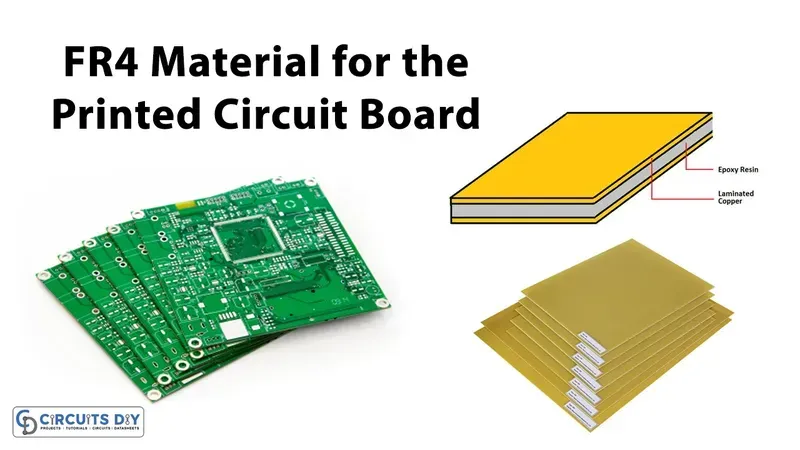
FR-4 PCB Board
The selection of appropriate PCB materials is paramount for the enhanced performance and long-term reliability of electric stage robotic arms. Given the demanding operational environments—characterized by dynamic movements, potential vibrations, and heat generation—the chosen materials must exhibit superior thermal management, robust mechanical integrity, and excellent electrical properties. This critical choice directly impacts signal integrity, power efficiency, and the overall lifespan of the robotic arm, making it a foundational consideration in the design phase.
Material Type
Key Properties
Ideal Applications in Robotic Arms
Advantages
Disadvantages
FR-4 (Flame Retardant 4)
Good balance of electrical, mechanical, and thermal properties; cost-effective.
Control boards, less demanding signal paths.
Economical, widely available, easy to process.
Lower thermal conductivity, higher signal loss at high frequencies.
Rogers / High-Frequency Laminates
Low dielectric constant (Dk), low dissipation factor (Df), excellent signal integrity at high frequencies.
High-speed data transmission, RF communication modules, sensitive sensor interfaces.
Superior high-frequency performance, reduced signal loss, stable Dk.
Higher cost, more complex processing.
Metal Core PCB (MCPCB)
Excellent thermal dissipation due to a metallic (e.g., aluminum) core.
Power amplification stages, motor control units, areas with high heat generation.
Superior heat transfer, improved component reliability, extended lifespan.
Heavier, limited routing flexibility, higher cost for multi-layer designs.
Flexible PCBs (Flex-PCBs)
High flexibility, lightweight, can conform to irregular shapes.
Lower mechanical strength, higher cost for complex designs, delicate handling.
Polyimide
High temperature resistance, excellent mechanical properties, good electrical insulation.
High-stress areas, high-temperature environments, often used in rigid-flex designs.
Robust under extreme conditions, durable, good dimensional stability.
Higher cost than FR-4, can be more brittle than other flex materials.
Manufacturing Processes for High-Precision PCBs
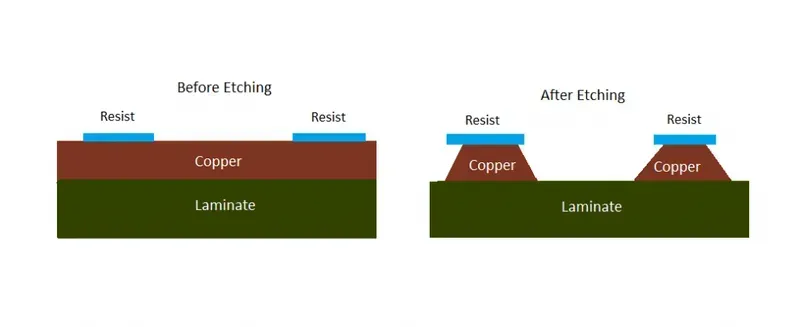
PCB Etching Process
Manufacturing high-precision Printed Circuit Boards (PCBs) for electric stage robotic arms demands rigorous adherence to advanced processes, ensuring the robustness and reliability critical for dynamic, high-performance applications. The meticulous execution of each manufacturing step, from initial material preparation to final surface finishing, is paramount to achieving the necessary signal integrity, thermal management, and mechanical resilience required for sophisticated robotic systems. Precision and stringent quality control are not merely add-ons but foundational pillars of the entire production workflow, safeguarding against defects and guaranteeing the longevity and performance of the robotic arm's core electronics.
Drilling and Etching The process begins with precise drilling of holes for vias, through-hole components, and mounting. Laser drilling is often employed for micro-vias in high-density interconnect (HDI) PCBs. Following this, photolithography and chemical etching remove unwanted copper, defining the circuit traces and pads with sub-micron accuracy. For robotic arms, extremely fine lines and spaces are crucial to accommodate complex circuitry within compact footprints, necessitating advanced etching techniques to maintain trace integrity and prevent short circuits or open circuits, especially for high-frequency signal paths.
Plating and Layer Lamination After etching, chemical and electrolytic plating processes deposit copper onto the drilled hole walls (for through-hole plating) and surface features to enhance conductivity and create robust connections between layers. For multi-layer PCBs, which are common in robotic arm applications due to their complexity, individual layers are meticulously stacked and laminated under high pressure and temperature. This lamination uses prepreg (pre-impregnated dielectric material) to bond layers, forming a unified, rigid structure. Precise alignment during lamination is critical to ensure proper electrical connectivity and mechanical stability, preventing delamination under operational stress.
Process Step
Key Consideration for Robotic Arm PCBs
Impact on Performance
Drilling
Micro-via capability, precise hole registration
Enables higher component density, critical for miniaturization
Etching
Fine line and space definition, controlled impedance
Ensures signal integrity, reduces noise in high-speed data transfer
Plating
Uniform copper thickness, strong adhesion
Improves current carrying capacity, enhances reliability of connections
Lamination
Precise layer alignment, void-free bonding
Maintains mechanical stability, prevents signal distortion
Surface Finishing Techniques The final step involves applying a surface finish to the exposed copper pads. This finish protects the copper from oxidation and ensures excellent solderability during component assembly. Common finishes for robotic arm PCBs include Electroless Nickel Immersion Gold (ENIG) for its flatness and excellent solderability for fine-pitch components, and Organic Solderability Preservative (OSP) for cost-effectiveness in less demanding applications. Hot Air Solder Leveling (HASL) is also used, but ENIG is often preferred for high-precision robotic applications due to its superior coplanarity, which is vital for precise surface mount technology (SMT) component placement.
Assembly Techniques for Robust and Reliable Connections
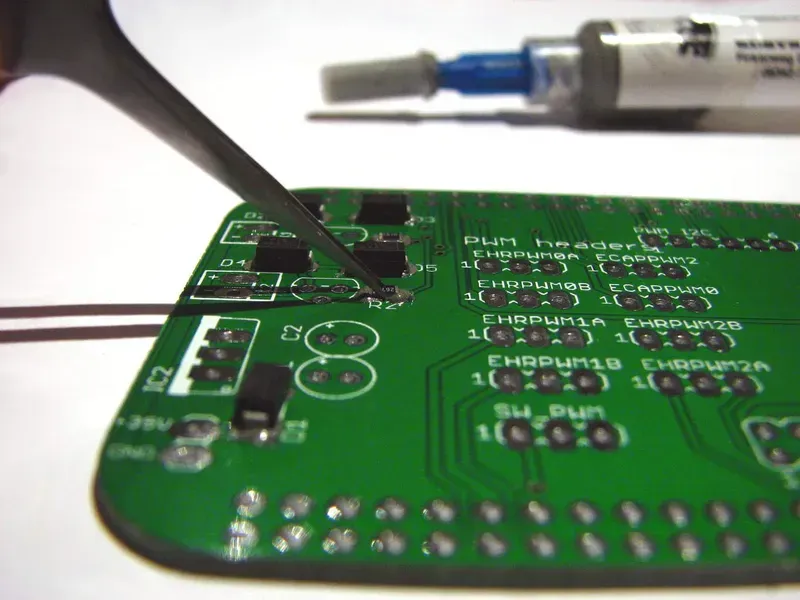
SMT Soldering
Achieving robust and reliable connections in electric stage robotic arm PCBs is paramount for their operational longevity and precision. The assembly phase, particularly component placement and soldering, dictates the final product's integrity. Meticulous adherence to best practices in Surface Mount Technology (SMT) and Through-Hole Technology (THT) soldering, coupled with advanced inspection methodologies like Automated Optical Inspection (AOI), are critical to ensuring the intricate functionalities of these advanced robotic systems.
Component Placement Precision Accurate component placement is the foundational step for any high-performance PCB assembly. For robotic arm PCBs, this necessitates the use of high-precision pick-and-place machines capable of handling fine-pitch components and BGA packages with micron-level accuracy. Software-driven alignment and real-time vision systems are employed to ensure every component is perfectly oriented and positioned before soldering, minimizing errors and maximizing yield. This precision is vital for the dense and complex layouts often found in robotic control systems.
Assembly Technique
Description
Advantages for Robotic Arm PCBs
Surface Mount Technology (SMT)
Components are directly mounted onto the surface of the PCB. Utilizes reflow soldering for electrical connection.
Allows for smaller, denser PCBs; suitable for high-volume production; improved signal integrity due to shorter lead lengths. Crucial for miniaturization in robotic joints and control units.
Assembly Technique
Description
Advantages for Robotic Arm PCBs
Through-Hole Technology (THT)
Component leads are inserted into drilled holes in the PCB and soldered on the opposite side. Typically uses wave soldering or selective soldering.
Provides stronger mechanical bonds, ideal for connectors, bulky components, and parts subjected to high stress or vibration. Ensures durability in dynamic robotic movements.
Soldering Excellence and Inspection Proper soldering techniques are non-negotiable for the reliability of robotic arm PCBs. For SMT, controlled reflow profiles are essential to prevent issues like tombstoning or bridging. For THT, wave soldering and selective soldering ensure complete and consistent solder joints. Post-soldering, rigorous inspection is critical. Automated Optical Inspection (AOI) systems are extensively used to identify defects such as misaligned components, insufficient solder, solder bridges, and lifted leads with high speed and accuracy. For complex assemblies, X-ray inspection may be employed to scrutinize hidden solder joints beneath BGA and QFN packages, ensuring internal connection integrity. These inspection layers are vital to prevent field failures in mission-critical robotic applications.
Testing and Quality Assurance for Robotic Arm PCBs
PCB Functional Testing
The operational integrity and longevity of electric stage robotic arms hinge critically on the rigorous testing and quality assurance of their Printed Circuit Boards (PCBs). Beyond basic functionality, these tests ensure reliability under demanding conditions, preventing costly failures and maintaining precision in robotic movements. A comprehensive quality framework, encompassing various testing methodologies and adherence to industry standards, is paramount for delivering high-performance and dependable robotic arm PCB solutions.
Why is comprehensive testing crucial for Robotic Arm PCBs? Comprehensive testing is crucial for Robotic Arm PCBs because these components are the brain and nervous system of the robotic arm, dictating its precision, speed, and reliability. Failures can lead to significant operational disruptions, safety hazards, and financial losses. Thorough testing ensures that the PCB can withstand the mechanical stresses, thermal variations, and electromagnetic interference inherent in robotic operations, verifying its design integrity and manufacturing quality.
What are the primary testing procedures for Robotic Arm PCBs? The primary testing procedures for Robotic Arm PCBs typically include In-Circuit Testing (ICT) to verify component presence and correct electrical connections, Functional Testing (FCT) to simulate real-world operating conditions and confirm the PCB performs its intended functions, and Environmental Testing (e.g., thermal cycling, humidity testing) to assess the PCB's durability under extreme conditions. Automated Optical Inspection (AOI) and X-ray inspection are also employed for defect detection in early stages.
How do industry standards like IPC impact Robotic Arm PCB quality? Industry standards like IPC (Association Connecting Electronics Industries) are foundational for ensuring the quality and reliability of Robotic Arm PCBs. IPC standards provide uniform guidelines for design, manufacturing, assembly, and testing processes, covering everything from material specifications to soldering requirements. Adherence to these standards, such as IPC-A-610 for electronic assemblies, guarantees a baseline of quality, consistency, and interoperability, reducing defects and improving product lifespan.
What is the role of In-Circuit Testing (ICT) in validating Robotic Arm PCBs? In-Circuit Testing (ICT) plays a vital role in validating Robotic Arm PCBs by rapidly identifying manufacturing defects such as shorts, opens, missing components, incorrect components, and misoriented parts. It uses a 'bed of nails' fixture to access test points on the PCB and apply electrical stimuli, measuring the responses. This allows for early detection of faults at the component level, significantly reducing the cost and effort of rework later in the assembly process.
How does Zero One Solution ensure the quality of its Robotic Arm PCB solutions? Zero One Solution ensures the quality of its Robotic Arm PCB solutions through a multi-faceted approach. We integrate rigorous design-for-testability (DFT) principles, utilize advanced automated inspection equipment like AOI and X-ray, and implement comprehensive electrical and functional testing specific to robotic arm applications. Our adherence to IPC standards, coupled with environmental stress screening, guarantees that every PCB meets the highest benchmarks for performance, reliability, and longevity, backed by our rapid prototyping and expert engineering capabilities.
Zero One Solution's Expertise in Robotic Arm PCB Solutions
Zero One Solution Limited stands at the forefront of providing comprehensive and cutting-edge PCB solutions for electric stage robotic arms, leveraging over a decade of specialized experience since our inception in 2011. Our deep understanding of the unique demands of robotic applications, from high precision and reliability to stringent environmental resilience, allows us to deliver optimized PCB designs and manufacturing services that accelerate product development and ensure exceptional performance in the field. Our one-stop service model, encompassing design, rapid prototyping, manufacturing, and assembly, is specifically tailored to meet the agile needs of R&D and time-to-market objectives for innovative robotic solutions.
Rapid Prototyping and Fast Turnaround We excel in rapid prototyping, enabling clients to iterate and validate their robotic arm designs swiftly. Our streamlined processes and advanced facilities ensure quick turnaround times without compromising on quality, critical for accelerating product development cycles in dynamic industries. This capability is paramount for validating complex robotic arm functionalities and integrating advanced control systems efficiently.
Specialized Design Expertise for Robotic Arms Our seasoned engineering team possesses profound expertise in designing PCBs specifically for electric stage robotic arms. This includes meticulous consideration for signal integrity in high-speed data transmission, effective thermal management for power electronics, miniaturization for compact designs, and robust layouts to withstand mechanical stresses and vibrations inherent in robotic operations. We address challenges such as minimizing electromagnetic interference (EMI) and optimizing power distribution networks (PDN) for stable and precise arm movements.
Advanced Manufacturing Capabilities Zero One Solution's state-of-the-art manufacturing facilities are equipped to handle the most complex PCB fabrication requirements for robotic applications. We utilize advanced techniques for multi-layer PCBs, high-density interconnect (HDI) technology, and specialized material processing, ensuring the production of highly reliable and performant boards. Our commitment to precision manufacturing aligns with the stringent demands of robotic arm control and motion systems.
Case Studies: Successful Robotic Arm PCB Projects
Robotic Arm PCB Project
Zero One Solution Limited consistently transforms complex challenges into successful outcomes, particularly in the demanding field of electric stage robotic arms. Our expertise in rapid prototyping, precision manufacturing, and rigorous quality assurance enables us to deliver bespoke PCB solutions that drive innovation and performance in advanced robotics.
High-Precision Motion Control for Industrial Automation A leading industrial automation firm required ultra-reliable PCBs for a new generation of electric stage robotic arms designed for high-speed, repetitive tasks. Zero One Solution developed multi-layered PCBs featuring advanced signal integrity optimization and integrated thermal management solutions. Through collaborative design and rapid prototyping, we reduced the client's development cycle by 20% and achieved a 15% improvement in robotic arm positional accuracy, surpassing their stringent performance benchmarks. This project showcased our ability to handle complex routing and impedance control for critical motion control applications.
Compact & Lightweight PCBs for Medical Robotics For a medical device company developing a compact surgical robotic arm, the primary challenge was minimizing PCB footprint while maintaining exceptional reliability and signal integrity in a sterile environment. Zero One Solution engineered high-density interconnect (HDI) PCBs using specialized low-loss dielectric materials. Our micro-via technology and precise component placement allowed for significant miniaturization, reducing the overall weight of the robotic arm by 10% and enabling more agile and precise surgical maneuvers. The solution adhered to strict medical device standards (ISO 13485 compliant processes), ensuring patient safety and device longevity.
Enhanced Power Delivery for Heavy-Duty Stage Actuators An entertainment industry client needed robust PCBs for large-scale electric stage robotic arms that controlled heavy lighting rigs and stage props, demanding significant power delivery and thermal dissipation. Zero One Solution designed metal-core PCBs (MCPCBs) with optimized copper pouring and specialized thermal vias to efficiently dissipate heat generated by high-current components. Our solution included robust power plane designs and high-current connectors, enabling sustained peak performance of the robotic arms even under extreme operational loads. The project resulted in a 30% increase in system stability and significantly extended the lifespan of critical power components, ensuring flawless theatrical productions.
Future Trends in Robotic Arm PCB Technology
The evolution of electric stage robotic arms is inextricably linked to advancements in PCB technology, pushing the boundaries of performance, miniaturization, and reliability. Future trends in robotic arm PCB technology are poised to address the increasing demands for more agile, precise, and energy-efficient systems, leading to innovations that will redefine industrial automation and beyond. These advancements prioritize enhanced integration, thermal resilience, and adaptability to complex mechanical designs.
Flexible and Rigid-Flex PCBs for Enhanced Dexterity Flexible and rigid-flex PCBs are becoming pivotal for robotic arms, enabling complex three-dimensional designs and reducing the need for bulky cables and connectors. This integration facilitates more compact and lightweight robotic joints, improving overall dexterity, reducing inertia, and simplifying assembly. The ability to conform to irregular shapes allows for closer integration with mechanical components, minimizing electromagnetic interference and enhancing signal integrity, which is critical for precise motion control in robotic applications.
Embedded Components and System-on-Package (SiP) Solutions The trend towards embedding components directly within PCB layers (embedded passives and actives) and leveraging System-on-Package (SiP) technologies is set to revolutionize robotic arm electronics. This approach significantly reduces board size, improves electrical performance by shortening signal paths, and enhances reliability by protecting sensitive components from environmental stressors. For robotic arms, this means more powerful processing and sensing capabilities can be integrated into smaller footprints, enabling more complex algorithms for motion planning and real-time feedback.
Advanced Thermal Management Solutions As robotic arms become more powerful and operate at higher speeds, thermal dissipation becomes a critical challenge. Future PCB technologies will incorporate advanced thermal management solutions such as integrated heat sinks, thermal vias, and specialized substrates with superior thermal conductivity (e.g., metal core PCBs, advanced ceramic-filled laminates). These innovations are essential to prevent overheating, ensure component longevity, and maintain consistent performance, especially in demanding industrial environments where robotic arms operate continuously under heavy loads.
High-Density Interconnect (HDI) and Miniaturization The continuous drive for miniaturization in robotic arm design necessitates advanced HDI PCB technology. HDI allows for finer traces, smaller vias, and increased component density, enabling more complex circuits to fit into confined spaces. This is crucial for integrating a multitude of sensors, actuators, and communication interfaces required for sophisticated robotic operations. The increased routing capabilities of HDI PCBs also facilitate better signal integrity and power delivery within a compact form factor.
Integration of Sensor and Actuator Control Directly on PCB Future trends involve a deeper integration of sensor and actuator control circuitry directly onto the robotic arm's PCBs. This includes incorporating motor drivers, encoders, and various sensory inputs (e.g., force, vision, proximity) onto localized PCBs within each joint or segment of the arm. This distributed control architecture reduces wiring complexity, minimizes latency, and enhances modularity, making robotic arms easier to design, assemble, and maintain while boosting overall responsiveness and precision.
In conclusion, the PCB is an indispensable element of the electric stage robotic arm, and its design and manufacturing quality directly determine the performance and stability of the robotic arm. Zero One Solution Limited, with its rich experience and professional technology in PCB solutions, is committed to providing customers with high-quality, high-performance PCB products and services. Whether it's rapid prototyping or mass production, we can meet your needs and help you achieve success in the field of robotics. Contact Zero One Solution today to discuss your electric stage robotic arm PCB requirements and discover how our expertise can elevate your robotic solutions. Visit our website or reach out to our sales team for more information and to request a quote.