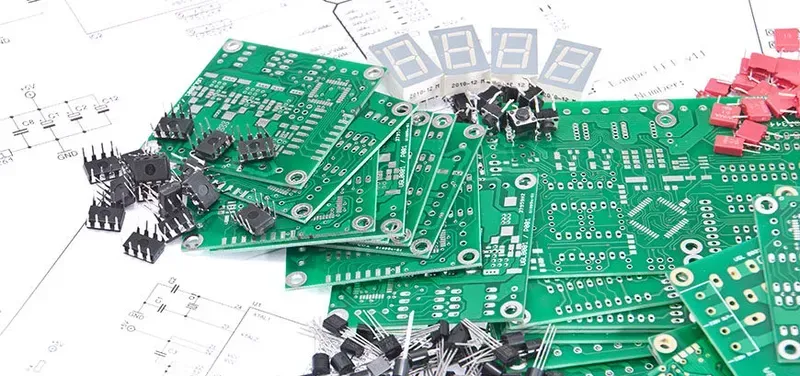
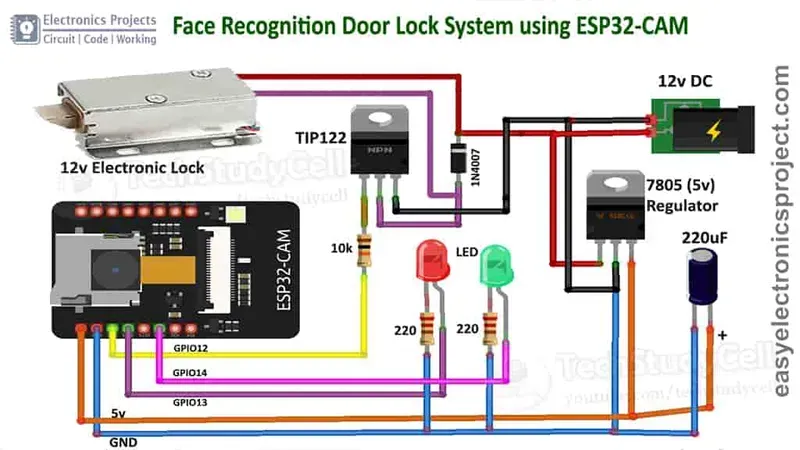
In an era where security and convenience are paramount, face recognition technology stands at the forefront, revolutionizing everything from smartphone security to access control systems. At the heart of these advanced systems lies a sophisticated printed circuit board (PCB), meticulously designed and engineered to handle the complex algorithms and data processing required for accurate and reliable face recognition. Zero One Solution Limited, with its decade-long expertise in PCB solutions and rapid prototyping, is uniquely positioned to provide cutting-edge PCB solutions tailored for face recognition processing. But how exactly do these PCBs function, and what makes Zero One Solution the ideal partner for your face recognition technology needs? Let's delve into the intricate world of face recognition processing PCBs and discover the solutions Zero One Solution offers to drive innovation in this dynamic field.
Introduction to Face Recognition Technology
Face recognition technology, a pivotal component in modern security and interactive systems, leverages advanced algorithms to uniquely identify or verify individuals based on their facial features. This sophisticated capability is increasingly critical across diverse sectors, transforming how we interact with technology and ensuring enhanced security protocols. Its rapid evolution and integration underscore a growing demand for specialized hardware, particularly high-performance Printed Circuit Boards (PCBs), that can reliably process the complex computational demands inherent in real-time facial analysis.
How does face recognition technology work? Face recognition technology operates by capturing a digital image or video of a person's face, then extracting unique facial landmarks and features. These features are converted into a mathematical representation, or a "faceprint," which is then compared against a database of known faces. Advanced algorithms analyze patterns in facial data, such as the distance between eyes, the shape of the jawline, and contour of the nose, to determine identity or verify authentication. This process relies heavily on robust data processing capabilities, often enabled by specialized PCBs.
What are the primary applications of face recognition technology? The applications of face recognition technology are vast and expanding. Key areas include security and access control (e.g., unlocking smartphones, securing buildings), law enforcement and public safety (e.g., identifying suspects, border control), retail and marketing (e.g., personalized advertising, customer analytics), healthcare (e.g., patient identification, medical record access), and smart cities (e.g., smart surveillance, traffic management). Each application demands high precision and real-time processing, necessitating tailored PCB solutions.
What are the key components of a face recognition system? A typical face recognition system comprises several critical components: a camera or sensor for image capture, a processing unit (often a CPU or GPU, with dedicated AI accelerators), memory for data storage, and the foundational PCB that integrates all these elements. Software components include image processing algorithms, feature extraction modules, comparison engines, and a database for facial templates. The PCB's design and manufacturing quality are paramount in ensuring seamless communication and optimal performance between these diverse components.
The Role of PCBs in Face Recognition Systems
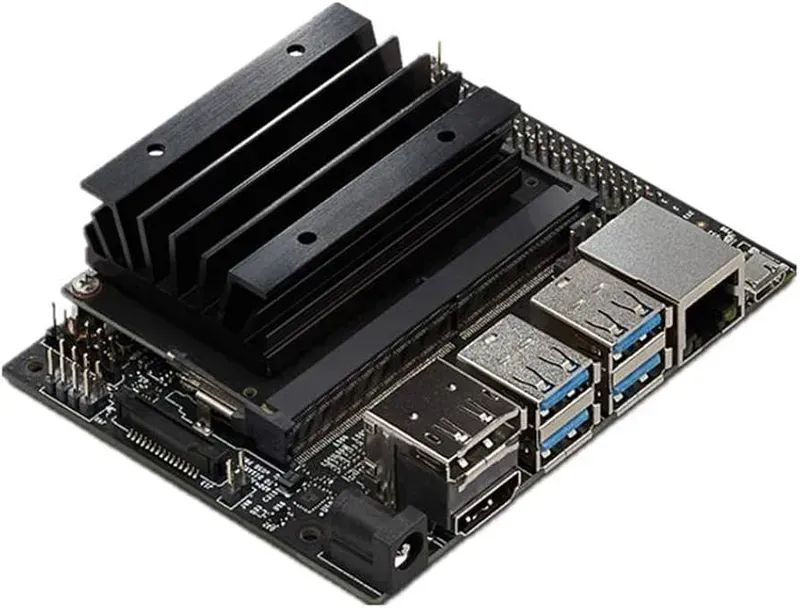
Face Recognition PCB Board
Printed Circuit Boards (PCBs) are the foundational hardware infrastructure that underpins the sophisticated operations of modern face recognition systems, acting as the central nervous system that orchestrates data acquisition, high-speed processing, and seamless system integration. Without meticulously designed and manufactured PCBs, the complex algorithms and advanced sensors crucial for accurate and rapid facial identification would be impossible to implement effectively, thereby making the PCB a critical determinant of system performance and reliability.
Data Acquisition and Pre-processing PCBs facilitate the crucial interface between image sensors (e.g., cameras) and the processing unit. They manage high-speed data transmission from sensors, ensuring signal integrity for accurate image capture. Furthermore, initial pre-processing tasks, such as noise reduction and image stabilization, are often handled by dedicated circuitry on the PCB, optimizing data before it reaches the main processor. This front-end efficiency is paramount for rapid and reliable face detection and feature extraction, directly impacting the system's responsiveness and accuracy in diverse environmental conditions. Signal integrity and minimal latency are critical design considerations at this stage, dictating the quality of the raw input for subsequent processing steps.
High-Speed Data Processing and Analysis The core of face recognition involves computationally intensive tasks like feature extraction, template generation, and database matching. PCBs are engineered to house powerful processors (CPUs, GPUs, FPGAs, or dedicated NPUs) and high-bandwidth memory modules, enabling parallel processing of vast amounts of image data. The PCB's layout must support high-speed data buses and minimize electromagnetic interference (EMI) to ensure stable and efficient operation during these demanding computations. Effective power delivery networks and thermal management solutions integrated into the PCB design are also essential to prevent performance degradation due to heat, ensuring sustained peak performance for real-time recognition applications. This robust processing capability is what allows for the differentiation of individual faces within milliseconds, even in crowded environments, making it a cornerstone of efficient facial recognition systems.
PCB Design Factor
Impact on Face Recognition System
Zero One Solution Approach
Signal Integrity
Ensures accurate image data transmission and prevents errors in processing, crucial for recognition accuracy.
Advanced impedance control, differential pair routing, and meticulous stack-up design for high-speed signals.
Power Management and Efficiency Face recognition systems often operate continuously and may be deployed in power-sensitive environments. PCBs are designed with sophisticated power management units (PMUs) and voltage regulators that ensure stable and efficient power delivery to all components, from image sensors to high-performance processors. This minimizes power consumption, extends battery life in portable devices, and reduces heat generation, contributing to the overall reliability and longevity of the system. Optimized power delivery networks on the PCB are key to maintaining consistent performance without excessive energy drain, which is vital for both fixed installations and mobile applications.
PCB Design Factor
Impact on Face Recognition System
Zero One Solution Approach
Thermal Management
Prevents overheating of high-performance components, maintaining system stability and extending lifespan.
Strategic component placement, heat sinks integration, and optimized copper pour for efficient heat dissipation.
System Integration and Connectivity PCBs serve as the central hub for integrating various peripheral components essential for a complete face recognition system, including display interfaces, network modules (Wi-Fi, Ethernet), storage devices, and communication ports (USB, UART). A well-designed PCB ensures seamless communication and interoperability between these diverse elements, facilitating data exchange, system updates, and integration with broader security or access control networks. This comprehensive integration capability on a single board simplifies system assembly, reduces form factor, and enhances overall system reliability and maintainability, providing a cohesive and functional solution.
PCB Design Factor
Impact on Face Recognition System
Zero One Solution Approach
Component Selection & Placement
Optimizes performance, reduces signal interference, and enables efficient thermal dissipation.
Extensive component library, DFM analysis, and expert placement strategies for optimal routing and thermal performance.
Key Considerations for Face Recognition Processing PCB Design
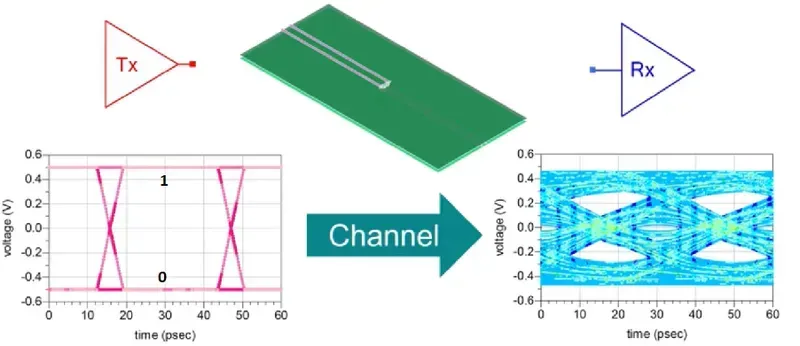
PCB Signal Integrity Testing
Designing Printed Circuit Boards (PCBs) for face recognition processing demands meticulous attention to specific technical considerations to ensure optimal performance, reliability, and efficiency. The complexity of high-speed data processing, sensitive sensor integration, and real-time algorithmic execution inherent in face recognition systems necessitates a robust and precisely engineered PCB foundation. Ignoring these critical factors can lead to signal degradation, thermal issues, and ultimately, system instability or failure.
Signal Integrity and High-Speed Data Paths Face recognition systems process vast amounts of image and biometric data at very high speeds. Maintaining signal integrity is paramount to prevent data corruption and ensure accurate processing. This involves careful impedance matching, controlled trace lengths, minimizing crosstalk through proper trace spacing, and strategic ground plane design. Differential signaling is often employed for critical high-speed interfaces like MIPI DSI/CSI for cameras and PCIe for accelerators, necessitating precise layout and routing to maintain signal quality and reduce EMI.
Thermal Management for Sustained Performance High-performance processors, GPUs, and FPGAs, commonly found in face recognition processing units, generate significant heat. Effective thermal management is crucial to prevent overheating, which can lead to performance throttling, reduced component lifespan, and system instability. Considerations include strategic component placement to distribute heat, the use of thermal vias, copper pours for heat dissipation, and, in more demanding applications, integrated heat sinks or active cooling solutions. Advanced materials with higher thermal conductivity might also be considered for the PCB substrate.
Component Selection and Power Delivery Network (PDN) The selection of components, including image sensors, AI accelerators, memory modules (e.g., LPDDR), and power management ICs (PMICs), directly impacts performance and reliability. Components must meet the specific processing, power, and environmental requirements of the application. A well-designed Power Delivery Network (PDN) is critical for stable operation, providing clean and stable power to all components. This involves proper decoupling capacitor placement, sufficient copper weight in power planes, and efficient voltage regulation to minimize ripple and transient voltage drops, especially during peak processing loads.
Design Aspect
Impact on Face Recognition PCB
Zero One Solution Approach
Signal Integrity
Ensures accurate and reliable data transmission for image capture and processing, preventing data loss or errors.
Advanced impedance control, differential pair routing, and simulation tools for high-speed layout optimization and EMI reduction strategy.
Thermal Management
Maintains optimal operating temperatures for processors and sensors, preventing performance degradation and extending component lifespan.
Strategic component placement, thermal via implementation, optimized copper pours, and material selection for efficient heat dissipation.
Power Delivery Network
Provides stable and clean power to sensitive components, critical for consistent performance and preventing system crashes or erratic behavior.
Robust power plane design, optimized decoupling capacitor placement, and precise voltage regulator integration for stable power delivery.
Component Selection
Determines system performance, power consumption, and overall cost; critical for meeting specific application requirements.
Leveraging extensive component databases and supplier networks, recommending optimal components for performance, cost, and availability.
Layer Stack-up
Influences signal integrity, impedance control, and thermal performance; critical for managing complex high-speed designs.
Expert multi-layer stack-up design, balancing performance requirements with cost and manufacturability for complex high-density interconnect (HDI) PCBs.
Zero One Solution's Expertise in PCB Solutions
PCB Rapid Prototype Sample
At the heart of advanced technological progress, Zero One Solution Limited stands as a beacon of excellence in providing comprehensive PCB solutions. Our expertise is meticulously honed to meet the rigorous demands of modern electronics, particularly in fields as critical as face recognition technology. We specialize in empowering innovators to transform concepts into tangible, high-performance products with unmatched speed and precision, underpinned by our commitment to rapid prototyping and a seamless, one-stop service model.
Rapid Prototyping for Accelerated Development Zero One Solution excels in rapid PCB prototyping, a critical capability for face recognition system developers. Our streamlined processes and advanced manufacturing facilities enable quick iteration cycles, significantly reducing time-to-market for complex designs. This agile approach allows for iterative testing and refinement, ensuring optimal performance and reliability in the shortest possible timeframe.
Comprehensive One-Stop PCB Services Beyond rapid prototyping, we offer an end-to-end suite of PCB services, encompassing design, manufacturing, and assembly. This integrated approach eliminates the complexities of managing multiple vendors, ensuring consistent quality and seamless project execution. Our clients benefit from a single point of contact and unified accountability, simplifying their supply chain and accelerating their development pipeline for face recognition processing PCB solutions.
Strategic Global Footprint for Enhanced Support With headquarters in Shenzhen, China, and a branch office in Dubai, Zero One Solution leverages a robust global PCBA supply chain network. This strategic positioning provides our clients with unparalleled access to resources, talent, and efficient logistics, ensuring timely delivery and responsive support for their critical PCB projects. This global reach is particularly beneficial for face recognition applications requiring diverse component sourcing and international deployment.
Unwavering Commitment to Quality and Reliability Our reputation is built on an unwavering commitment to quality and reliability. Every PCB solution we deliver, especially those for sensitive applications like face recognition, undergoes rigorous quality control and testing. We adhere to stringent industry standards, employing advanced inspection techniques to ensure optimal performance, durability, and compliance, giving our clients complete confidence in their final product.
Custom PCB Design for Face Recognition Applications
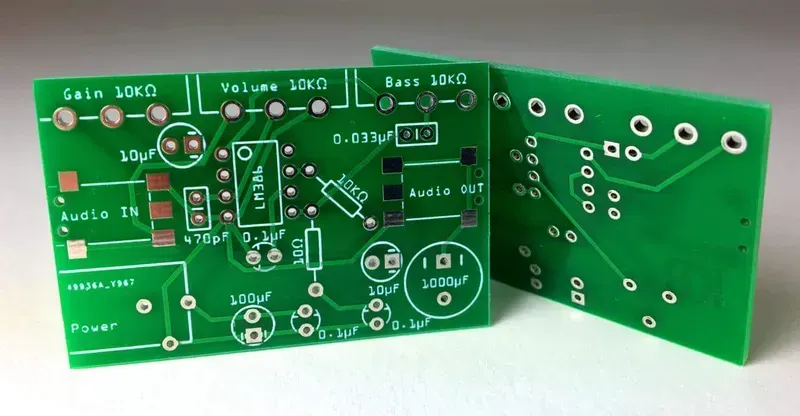
Custom PCB Design Blueprint
Zero One Solution excels in providing bespoke PCB design services, meticulously tailored to the intricate and diverse requirements of modern face recognition systems. Our custom approach ensures optimal performance, reliability, and seamless integration for even the most demanding applications, from compact embedded systems to large-scale surveillance infrastructure. We leverage our deep engineering expertise to transform conceptual needs into tangible, high-performance PCB solutions that drive innovation in the face recognition domain.
Optimized Component Placement Strategic placement of high-speed processors, image sensors, and memory modules is critical to minimize signal path lengths and reduce latency, directly impacting recognition accuracy and speed. Our designs prioritize electromagnetic compatibility (EMC) to prevent interference, ensuring data integrity and system stability in varied operational environments.
Advanced Signal Integrity (SI) and Power Integrity (PI) Analysis High-speed data transmission inherent in face recognition processing demands rigorous SI and PI analysis. We employ advanced simulation tools to predict and mitigate signal reflections, crosstalk, and power fluctuations, guaranteeing stable and clean power delivery to sensitive components. This meticulous approach is vital for maintaining the fidelity of complex algorithms and avoiding system errors.
Thermal Management Solutions The intensive computational loads of facial recognition algorithms generate significant heat. Our custom designs incorporate efficient thermal management strategies, including optimized copper pours, thermal vias, and consideration for heat sink integration, to dissipate heat effectively. This prevents performance degradation and extends the lifespan of critical components, ensuring long-term operational reliability.
Design Consideration
Impact on Face Recognition System
Zero One Solution Approach
High-Speed Data Paths
Ensures rapid image acquisition and processing; minimizes latency.
Provides stable and clean power to sensitive ICs; prevents voltage drops.
Multi-layer board design, dedicated power and ground planes, decoupling capacitors.
Miniaturization and Form Factor
Enables deployment in compact devices (e.g., mobile, access control).
High-density interconnect (HDI) technology, fine pitch component integration, optimized stack-up.
Manufacturing and Assembly Capabilities
PCB Manufacturing and Assembly
Zero One Solution Limited stands at the forefront of PCB manufacturing and assembly, offering advanced capabilities that ensure the highest precision and reliability for Face Recognition Processing PCB Solutions. Our state-of-the-art facilities, combined with a decade of expertise, enable us to transform intricate designs into robust, high-performance physical boards, critical for the demanding requirements of face recognition technology.
Capability Area
Description
Benefit for Face Recognition PCBs
Rapid Prototyping
Specialized in quick-turn PCB fabrication and assembly for R&D and proof-of-concept stages.
Accelerates product development cycles, allowing faster iteration and validation of face recognition algorithms and hardware designs.
Automated SMT Assembly Utilizing high-speed pick-and-place machines and advanced reflow ovens for precise component placement and soldering on complex multi-layer boards. This ensures optimal signal integrity and minimal error rates, crucial for high-density face recognition processing units.
Quality Assurance and Testing for Face Recognition Processing PCBs
For Face Recognition Processing PCBs, uncompromising quality assurance and rigorous testing are not merely an option but a critical imperative. The precision and reliability of these boards directly impact the accuracy and security of facial recognition systems. At Zero One Solution Limited, our comprehensive QA and testing protocols are engineered to detect even the most minute imperfections, ensuring that every PCB we deliver meets the stringent performance demands of advanced biometric applications. This meticulous approach guarantees optimal functionality, longevity, and adherence to industry-leading standards.
How does Zero One Solution ensure the signal integrity of Face Recognition Processing PCBs? We employ advanced simulation tools during the design phase to predict and mitigate signal integrity issues. During manufacturing, we utilize time-domain reflectometry (TDR) and network analysis to verify impedance matching and minimize signal loss, crucial for high-speed data transmission in face recognition algorithms. Our process includes controlled impedance routing and meticulous stack-up design to maintain signal fidelity under operational conditions.
What thermal management testing is performed on Face Recognition Processing PCBs? Thermal management is critical for consistent performance. We conduct thermal cycling tests, subjecting PCBs to extreme temperature variations to simulate real-world environmental stress. Infrared thermography is used to identify hot spots and validate thermal dissipation designs, ensuring that sensitive components operate within optimal temperature ranges, thus preventing performance degradation or premature failure due to heat buildup, particularly under continuous processing loads.
What is the typical lifespan and reliability testing for these specialized PCBs? Reliability testing for Face Recognition Processing PCBs includes accelerated life testing (ALT) and highly accelerated life testing (HALT) to predict their lifespan under various operational stresses. These tests simulate years of use in a condensed timeframe, evaluating durability against factors like vibration, shock, humidity, and temperature fluctuations. Our goal is to ensure a robust and long-lasting product that withstands continuous use in critical security and identity verification applications.
Case Studies: Successful Face Recognition PCB Projects
Face Recognition PCB Project
At Zero One Solution Limited, our commitment to cutting-edge PCB solutions is best exemplified through the tangible success of our clients' face recognition projects. These case studies underscore our expertise in transforming complex design challenges into robust, high-performance hardware, demonstrating our proficiency in rapid prototyping, precision manufacturing, and comprehensive assembly for demanding biometric applications.
Project Name
Client Need/Challenge
Zero One Solution's Contribution
Key Outcome/Benefit
High-Speed Biometric Access System
Client required ultra-low latency PCB for real-time facial authentication in high-traffic environments, demanding high signal integrity for image processing.
Provided multi-layer PCB design with impedance control and optimized component placement; utilized advanced manufacturing for fine-pitch components.
Achieved 99.9% recognition accuracy with <100ms processing time, significantly enhancing security and user throughput for the client's commercial buildings.
Project Name
Client Need/Challenge
Zero One Solution's Contribution
Key Outcome/Benefit
Compact AI Edge Device for Retail Security
Development of a miniature, energy-efficient PCB for AI-driven face recognition at the edge, requiring precise thermal management in a small form factor.
Engineered a compact, high-density interconnect (HDI) PCB with integrated heat dissipation layers; utilized advanced material selection for thermal performance.
Enabled a 30% reduction in device size and a 20% improvement in energy efficiency, allowing seamless integration into existing retail infrastructure and reducing operational costs.
Project Name
Client Need/Challenge
Zero One Solution's Contribution
Key Outcome/Benefit
Robust Industrial Face Verification Unit
Need for a highly durable and reliable PCB solution for face recognition in harsh industrial environments, resistant to vibrations and extreme temperatures.
Designed a ruggedized PCB with enhanced mechanical stability and selected automotive-grade components; implemented conformal coating for environmental protection.
Delivered a system with 5-year operational longevity in challenging conditions, drastically reducing maintenance costs and ensuring uninterrupted security in industrial settings.
Why Choose Zero One Solution for Your Face Recognition PCB Needs?
Choosing the right PCB solution provider is paramount for the success of your face recognition projects, where precision, speed, and reliability are non-negotiable. Zero One Solution Limited stands out as a strategic partner, offering unparalleled expertise and a comprehensive suite of services that directly address the critical demands of this cutting-edge technology. Our commitment to innovation and quality ensures your face recognition systems are built on a robust and optimized hardware foundation.
Unrivaled Expertise in Face Recognition PCB Solutions With over a decade of experience and a team of veteran engineers, Zero One Solution possesses deep knowledge in designing and manufacturing PCBs specifically optimized for the complex computational and signal integrity requirements of face recognition systems. Our expertise spans from high-speed data routing to advanced thermal management, ensuring peak performance and stability for your vision-based applications.
Rapid Prototyping and Accelerated Time-to-Market Our core strength lies in rapid-response R&D prototype manufacturing. We understand the need for quick iterations in product development, especially in fast-evolving fields like face recognition. Our agile processes and advanced facilities enable us to deliver high-quality prototypes with exceptional speed, significantly reducing your time-to-market and providing a crucial competitive edge.
Comprehensive One-Stop PCBA Services Zero One Solution offers a complete end-to-end solution, from initial PCB design and engineering to manufacturing and assembly. This integrated approach streamlines your supply chain, reduces coordination complexities, and ensures consistent quality control across all stages, eliminating the challenges of managing multiple vendors for your face recognition PCB needs.
Strategic Global Presence and Supply Chain Resilience Headquartered in Shenzhen, China's electronic manufacturing hub, and with a branch in Dubai, we are strategically positioned within a robust global PCBA supply chain network. This geographic advantage ensures seamless access to worldwide resources, diverse material options, and optimized logistics, providing both cost-efficiency and resilience in component sourcing for your critical projects.
In conclusion, the face recognition processing PCB solution is critical to modern security and identification systems. Zero One Solution Limited offers comprehensive, high-quality PCB solutions that ensure optimal performance and reliability for your face recognition applications. By choosing Zero One Solution, you gain a partner committed to innovation, quality, and customer satisfaction. Contact us today to discover how our PCB solutions can enhance your face recognition technology and bring your innovative ideas to life. Let's work together to shape a future where security is seamless and technology empowers everyone.