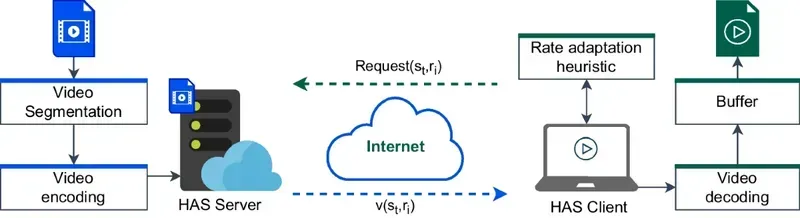
In today's world, where video content dominates digital platforms, efficient video encoding and compression are more critical than ever. From streaming services to surveillance systems, the demand for high-quality video with minimal bandwidth consumption is constantly growing. Zero One Solution Limited understands this need and provides cutting-edge PCB solutions for video encoding and compression boards. This article delves into the intricacies of these solutions, exploring how our expertise in PCB design and manufacturing enables superior video processing capabilities, accelerating product development and ensuring our clients remain at the forefront of innovation.
Introduction to Video Encoding and Compression
Video encoding and compression are the cornerstone of modern digital video, enabling the efficient storage, transmission, and playback of high-quality visual content across diverse platforms. At its core, video encoding transforms raw video data into a compressed format, dramatically reducing file sizes without significant loss of visual fidelity. This process is crucial for everything from streaming high-definition movies and live broadcasts to video conferencing and surveillance systems, making seamless global communication and entertainment possible. The continuous evolution of encoding and compression algorithms directly impacts bandwidth consumption, storage requirements, and ultimately, the user experience. Understanding these fundamental concepts is key to appreciating the complex engineering behind today's ubiquitous video applications.
What is video encoding? Video encoding is the process of converting raw, uncompressed video frames into a digital format that uses fewer bits for storage or transmission. This is achieved through various algorithms (codecs) that identify and remove redundant or less perceptually important information, such as spatial (within a frame) and temporal (between frames) redundancies.
Why is video compression necessary? Video compression is essential because raw video data is extraordinarily large. For example, a single minute of uncompressed 1080p video can consume several gigabytes of storage. Compression drastically reduces file sizes, making it feasible to store vast amounts of video data, stream content over limited bandwidth networks, and reduce transmission costs, thus enabling the widespread adoption of digital video technologies.
What are common video compression standards? Common video compression standards, also known as codecs, include H.264 (AVC), H.265 (HEVC), VP9, and the emerging AV1. H.264 is widely adopted for streaming and broadcasting, while H.265 offers superior compression efficiency for higher resolutions like 4K. VP9 and AV1 are open-source alternatives gaining traction, particularly in web-based video applications, offering competitive compression performance.
How do encoding and compression impact video quality? Encoding and compression inherently involve a trade-off between file size and video quality. Lossless compression retains all original data but offers limited compression ratios. Lossy compression, more commonly used for video, discards some data to achieve significantly smaller files. The goal is to maximize compression while minimizing perceptible quality loss, often measured by metrics like PSNR or SSIM. Higher compression (smaller file size) typically leads to more artifacts or blur, especially at lower bitrates.
What role does a video encoding board play? A video encoding board, often a specialized PCB with dedicated hardware (e.g., ASICs, FPGAs, or powerful GPUs), is designed to accelerate the computationally intensive processes of video encoding and compression. These boards offload the encoding workload from general-purpose CPUs, enabling real-time processing of high-resolution video streams with greater efficiency, lower latency, and reduced power consumption, critical for professional broadcasting, surveillance, and live streaming applications.
Challenges in Video Encoding and Compression Board Design
Designing printed circuit boards (PCBs) for video encoding and compression applications presents a unique set of engineering challenges, primarily due to the intense data throughput, stringent real-time processing demands, and high-density integration required. Overcoming these hurdles is paramount for achieving optimal performance, reliability, and cost-efficiency in modern video systems. These challenges often revolve around maintaining signal integrity at high frequencies, managing significant thermal loads, and ensuring robust power delivery to specialized processing units.
Design Challenge
Impact on Video Board Performance
Zero One Solution Approach
High-Speed Signal Integrity
Data corruption, increased latency, reduced video quality.
Component overheating, performance degradation, reduced lifespan, potential system failure.
Advanced thermal modeling, integration of heatsinks/fans, optimized component placement for airflow, thermal vias, specialized cooling solutions (e.g., liquid cooling for extreme cases).
Power Integrity
Voltage fluctuations, noise interference, unreliable component operation, data errors.
Multi-layer PCB design with dedicated power/ground planes, optimized decoupling capacitor placement, low-ESR capacitors, meticulous power distribution network (PDN) design.
How do high data rates impact PCB design for video encoding? High data rates, often in the Gbps range, necessitate meticulous impedance control to prevent signal reflections and maintain signal integrity. Designers must use differential pairs, length matching, and careful trace routing to minimize crosstalk and electromagnetic interference (EMI). Any impedance mismatch can lead to data loss and degraded video quality, making precise material selection and manufacturing crucial for boards handling technologies like HDMI 2.1 or DisplayPort 1.4.
The complexity is further compounded by the need to support multiple video codecs (H.264, H.265, AV1) and various high-speed interfaces, each with its own electrical and timing requirements. Balancing these demands within a compact form factor while ensuring manufacturability and cost-effectiveness requires deep expertise in PCB design and manufacturing. Zero One Solution Limited addresses these multifaceted challenges through a combination of cutting-edge design methodologies, advanced material science, and stringent quality control, enabling the development of robust and high-performance video encoding and compression boards.
Zero One Solution's Expertise in PCB Solutions
At the core of high-performance video encoding and compression lies a meticulously engineered Printed Circuit Board (PCB). Zero One Solution Limited, a distinguished leader in PCB manufacturing, brings over a decade of specialized expertise to this critical domain. Our robust capabilities and innovative approach ensure that video encoding and compression board solutions are not just functional, but optimized for unparalleled efficiency, signal integrity, and thermal performance, ultimately accelerating time-to-market for our clients.
Why Choose Zero One Solution for Video Encoding PCB? Zero One Solution Limited stands out as a premier partner for video encoding and compression board solutions due to our specialized focus on rapid prototyping, comprehensive one-stop services, and deep technical proficiency. We understand the stringent demands of high-speed video processing and are equipped to address complex challenges such as high-density component placement, power delivery networks, and thermal dissipation, ensuring your designs are realized with precision and reliability. Our strategic location in Shenzhen, with a global supply chain network, further enhances our competitive edge in delivering prompt and cost-effective solutions.
What is Zero One Solution's rapid prototyping advantage? Our rapid prototyping capabilities are a cornerstone of our service, enabling clients to quickly iterate and validate their video encoding board designs. We leverage advanced manufacturing techniques and agile processes to dramatically reduce lead times, from initial design review to final board delivery. This expedited turnaround is crucial for product development cycles, allowing engineers to test theories, identify potential issues early, and bring innovative video solutions to market faster than competitors. Our commitment to speed does not compromise quality, with rigorous testing and inspection protocols in place for every prototype.
How does Zero One Solution provide one-stop services for video encoding boards? Zero One Solution offers a comprehensive, integrated one-stop service for video encoding and compression boards, encompassing every stage from PCB design and layout optimization to manufacturing and assembly. This end-to-end approach eliminates the complexities of managing multiple vendors, streamlining the entire production process. Our expert teams collaborate closely with clients to understand specific requirements, providing DFM (Design for Manufacturability) and DFA (Design for Assembly) insights to optimize performance and reduce costs. This holistic service model ensures seamless project execution and superior final product quality.
Key Features of Our Video Encoding and Compression Board Solutions
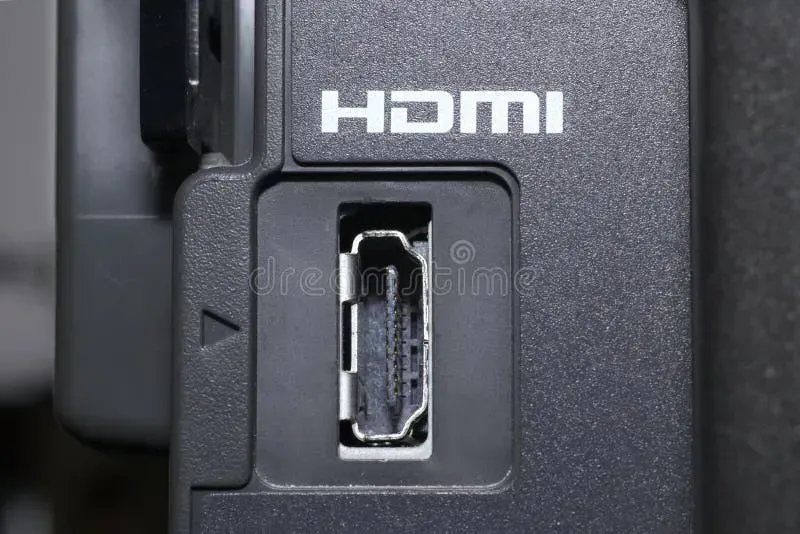
HDMI Port Close-Up
At Zero One Solution Limited, our Video Encoding and Compression Board Solutions are engineered to address the rigorous demands of modern video processing, delivering unparalleled performance, reliability, and efficiency. We leverage our deep expertise in PCB design and manufacturing to provide solutions that are not merely components, but foundational elements for cutting-edge video applications. Our commitment to rapid prototyping and one-stop service ensures that your innovative designs are brought to market swiftly and seamlessly.
Comprehensive Codec Support Our solutions offer native hardware acceleration and optimized software support for a wide array of industry-standard video codecs, including H.264 (AVC), H.265 (HEVC), VP9, and emerging codecs like AV1. This broad compatibility ensures maximum flexibility and future-proofing for diverse application requirements, from broadcast and streaming to surveillance and medical imaging. By offloading complex encoding tasks to dedicated hardware, our boards significantly reduce CPU utilization and power consumption, leading to more efficient system designs and lower operational costs.
Feature
Description
Benefit
High-Speed Interface Integration
Seamless integration of critical high-speed video interfaces such as HDMI 2.1, DisplayPort 1.4, and SDI (12G-SDI, 6G-SDI, 3G-SDI) for robust video input/output.
Ensures pristine signal integrity and reliable data transfer for uncompromised video quality, critical for professional broadcasting and high-resolution displays. Our designs prioritize impedance matching and differential pair routing to mitigate signal degradation even at extreme data rates, crucial for 8K video pipelines. Our HDMI and SDI implementations are compliant with industry standards, minimizing interoperability issues and accelerating development cycles, and our use of advanced multi-layer PCBs and controlled impedance routing guarantees minimal signal loss and crosstalk, providing a robust foundation for your video infrastructure.
Facilitates immediate connectivity with existing video infrastructure, reducing integration complexity and time-to-market. The robust design ensures sustained performance even in demanding, high-bandwidth scenarios.
Advanced Memory Architectures Incorporation of cutting-edge memory technologies, including high-bandwidth memory (HBM), GDDR6, and LPDDR5, meticulously optimized for video processing workflows. Our designs prioritize memory bandwidth and latency to ensure real-time encoding and decoding of high-resolution video streams. This enables support for demanding applications such as 8K video processing, multi-stream encoding, and AI-driven video analytics with exceptional fluidity and responsiveness.
Optimizing PCB Layout for High-Speed Video Signals
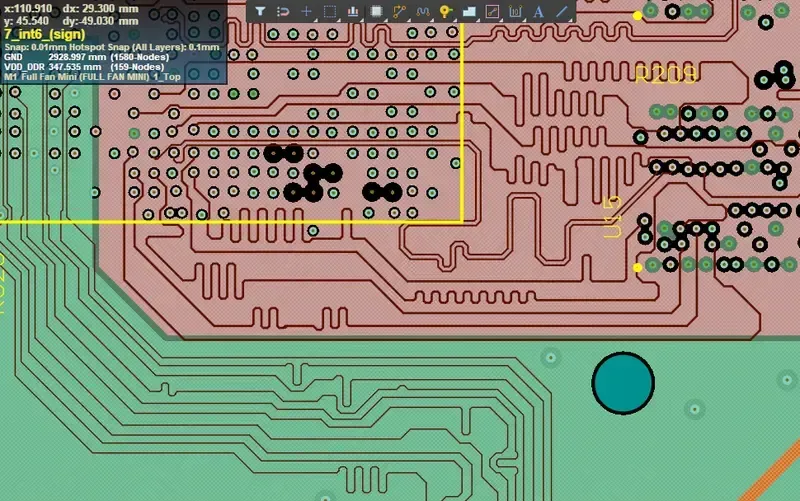
Optimized PCB Layout
Optimizing PCB layout for high-speed video signals is critical to maintaining signal integrity, minimizing electromagnetic interference (EMI), and ensuring robust performance in video encoding and compression boards. The rapid data rates inherent in modern video processing, such as 4K and 8K streams, necessitate meticulous design practices that go beyond conventional PCB methodologies. Achieving this optimization involves a multi-faceted approach, focusing on precise impedance control, intelligent signal routing, and robust grounding strategies. Failure to address these elements can lead to signal degradation, data loss, and ultimately, system instability, directly impacting the quality and reliability of the video output. Engineers at Zero One Solution Limited leverage advanced simulation tools and decades of expertise to implement these intricate design principles, ensuring every board meets the stringent demands of high-speed video applications.
Impedance Control: The Foundation of Signal Integrity Maintaining consistent impedance across high-speed signal traces is paramount. Mismatches can cause reflections, leading to signal distortion and reduced bandwidth. This is achieved through precise control of trace width, dielectric constant, and distance to ground planes. For differential pairs, careful attention is paid to maintaining tight coupling and matched trace lengths to preserve differential impedance, crucial for protocols like HDMI and SDI. Techniques include using specialized stack-ups and calculating trace dimensions with high precision to meet target impedance values (e.g., 50 Ohm for single-ended, 100 Ohm for differential).
Strategic Signal Routing: Minimizing Crosstalk and Attenuation High-speed video signals require careful routing to prevent crosstalk, reduce propagation delays, and minimize attenuation. This involves keeping traces short and direct, avoiding sharp 90-degree bends, and employing serpentine routing for length matching where necessary. Critical signals are often routed on internal layers, shielded by ground planes, to provide isolation from external interference. Differential pairs are routed symmetrically and kept close together to maintain common-mode rejection. Avoiding parallel routing of long traces helps mitigate inductive and capacitive coupling.
Robust Grounding Strategies: The Cornerstone of Noise Reduction An effective grounding strategy is fundamental to high-speed PCB design. A solid, continuous ground plane provides a low-impedance return path for signals, minimizing ground bounce and noise. Multiple vias are used to connect components to the ground plane, especially for high-current or high-frequency components. Separating analog and digital grounds is often employed to prevent digital noise from affecting sensitive analog video signals, with a single-point connection to bridge them. Employing techniques like guard rings around sensitive traces further enhances isolation.
Design Aspect
Objective
Impact on Video Signal Quality
Impedance Control
Match trace impedance to transmission line requirements
Prevents reflections, reduces signal distortion, ensures data integrity
Thermal Management Strategies for Video Processing Boards
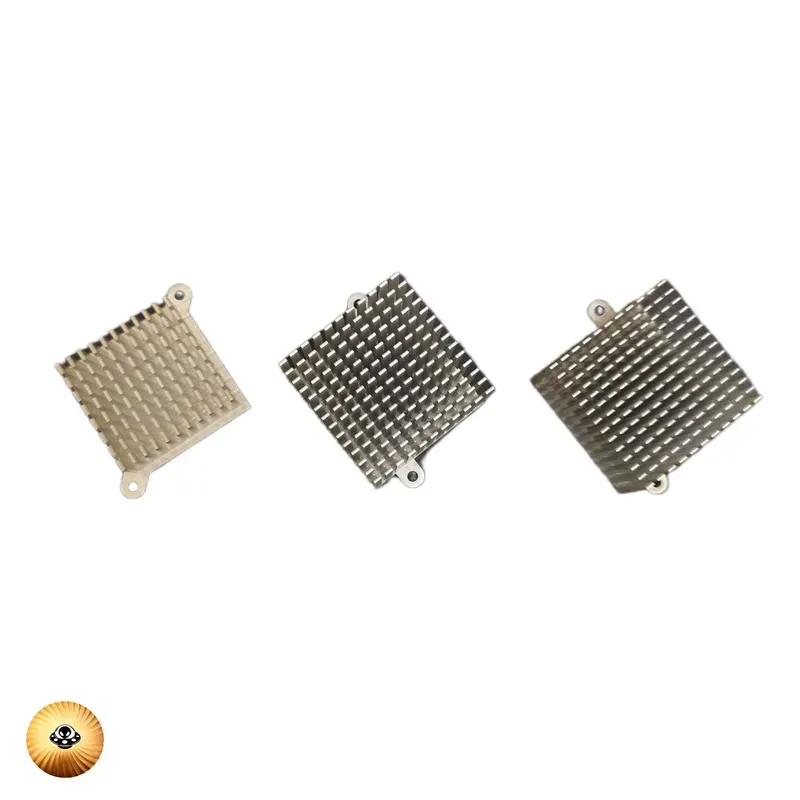
Video Processing Heatsink
Effective thermal management is paramount for the reliability and longevity of video processing boards, which often house high-power components generating substantial heat. Neglecting heat dissipation can lead to performance degradation, component failure, and reduced system stability. Zero One Solution Limited employs sophisticated strategies to ensure optimal thermal performance, mitigating these risks and ensuring continuous, high-performance operation for our clients' advanced video encoding and compression solutions.
Why is thermal management critical for video processing boards? Video processing boards contain high-performance components like GPUs, FPGAs, and ASICs that generate significant heat during operation. Without effective thermal management, this heat can lead to overheating, causing performance throttling, data corruption, reduced component lifespan, and even irreversible damage. Proper thermal control ensures stable operation, maintains signal integrity, and extends the overall reliability of the board, which is crucial for continuous video encoding and compression tasks. For instance, studies by JEDEC have shown that every 10
°C increase in temperature can halve the lifespan of semiconductor devices.
Power Integrity Considerations for Video Encoding Boards
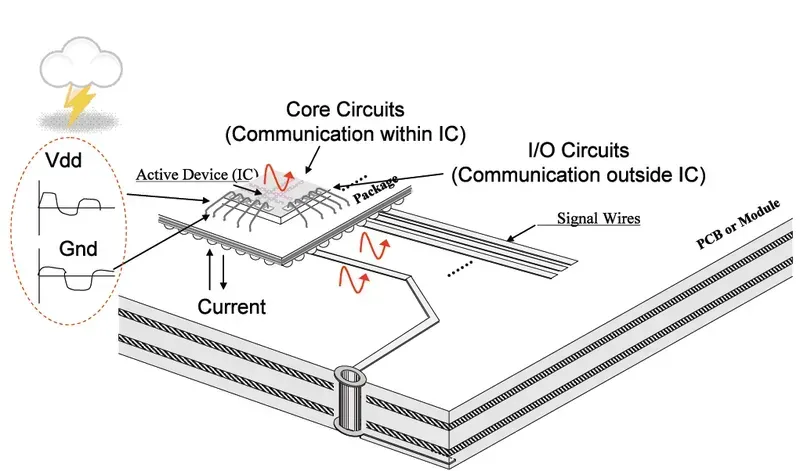
Power Integrity Components
Achieving impeccable power integrity (PI) is paramount in the design of video encoding and compression boards, directly impacting signal fidelity, system stability, and overall performance. Unstable or noisy power delivery can lead to data corruption, timing errors, and reduced video quality, making robust PI an indispensable foundation for high-performance video processing. At Zero One Solution Limited, our meticulous approach to power integrity ensures that every video encoding board we prototype and manufacture operates with maximum reliability and efficiency.
Why is power integrity critical for video encoding boards? Power integrity is critical because video encoding boards handle high-speed digital signals and complex processing tasks. Even minor fluctuations or noise in the power supply can introduce jitter, crosstalk, and data corruption, directly impacting the quality and reliability of encoded video streams. Maintaining stable and clean power is essential to prevent bit errors and ensure the precise operation of sensitive components like FPGAs, ASICs, and high-speed ADCs/DACs.
What are the common power integrity challenges in video encoding board design? Common PI challenges include voltage droop under transient loads from high-speed data processing, power supply noise coupling into sensitive analog or digital circuits, and electromagnetic interference (EMI) originating from power delivery networks. Additionally, the increasing power demands of advanced video processors necessitate efficient power distribution networks (PDNs) to minimize losses and heat generation.
How does Zero One Solution ensure optimal power delivery in video encoding boards? Zero One Solution employs a multi-faceted approach to optimize power delivery. This includes comprehensive power plane design for low impedance, strategic placement of decoupling capacitors to suppress noise across a wide frequency range, and advanced simulation tools (e.g., SPICE, electromagnetic field solvers) to predict and mitigate PI issues early in the design cycle. We also focus on robust VRM (Voltage Regulator Module) selection and layout to ensure stable voltage rails under dynamic loads.
What role do decoupling capacitors play in power integrity for video encoding boards? Decoupling capacitors are crucial for maintaining stable voltage rails by providing localized charge reservoirs that supply instantaneous current demands from switching logic. They mitigate transient voltage droops and suppress high-frequency noise generated by switching circuits, preventing it from propagating across the power delivery network and corrupting sensitive video signals.
How does PCB stack-up influence power integrity in video encoding solutions? The PCB stack-up significantly influences power integrity by defining the characteristics of power and ground planes. Optimal stack-ups utilize multiple, closely coupled power and ground planes to create low-inductance power delivery networks, which are vital for minimizing impedance and effectively distributing current to power-hungry components. This reduces voltage ripple and enhances overall system stability.
Case Studies: Successful Video Encoding and Compression Board Projects
Video Encoding Board Project
At Zero One Solution Limited, our commitment to innovation and rapid prototyping has led to numerous successful video encoding and compression board projects, solidifying our reputation as a leader in high-performance PCB solutions. These case studies underscore our expertise in tackling complex engineering challenges, from ensuring signal integrity in ultra-high-definition video streams to optimizing thermal management for powerful processing units. Our collaborative approach ensures that client-specific requirements are met with precision, delivering robust and efficient solutions that drive their market success.
High-Density 8K Video Encoder Board A client required a compact, high-density PCB for an 8K video encoder, demanding exceptional signal integrity for multiple high-speed interfaces. Zero One Solution developed a multi-layer board with optimized stack-up and impedance control, integrating advanced thermal vias and heat sinks to manage the significant power dissipation from the encoding ASICs. The project resulted in a stable, high-performance board capable of real-time 8K video encoding, meeting stringent broadcast industry standards.
Low-Latency H.265 Compression Module for UAVs For a drone manufacturer, we engineered a lightweight, low-power video compression module utilizing H.265. The primary challenge was miniaturization while maintaining robust performance in harsh environmental conditions. Our solution involved selecting specialized, low-power components and implementing advanced EMI shielding techniques, resulting in a highly reliable, compact board that enabled real-time, low-latency video transmission crucial for critical UAV operations.
Multi-Channel SDI Video Distribution Amplifier with H.264 A media production company needed a robust multi-channel SDI video distribution amplifier with integrated H.264 compression for live event broadcasting. This project necessitated meticulous design for high-frequency SDI signals and efficient power distribution across numerous channels. Zero One Solution designed a highly integrated PCB featuring a sophisticated power plane design and carefully controlled trace lengths, delivering a stable and high-fidelity video solution that significantly enhanced their live production capabilities.
AI-Powered Video Analytics Board for Surveillance We collaborated with a security firm to develop an AI-powered video analytics board, incorporating high-performance GPUs and dedicated video encoders for real-time object detection and compression. The board required exceptional power integrity and thermal management due to the intensive computational demands. Our team implemented advanced power delivery networks and innovative cooling solutions, leading to a highly reliable and efficient board that empowered sophisticated, intelligent surveillance systems.
Customizable Video Transcoding Platform for Cloud Services A cloud video service provider sought a versatile and scalable PCB platform for on-demand video transcoding. The challenge was to support multiple video formats and codecs efficiently within a single, modular design. Zero One Solution developed a reconfigurable board architecture with flexible high-speed interconnects, allowing for easy integration of different processing units and memory modules. This solution provided the client with a highly adaptable and future-proof platform, reducing their time-to-market for new transcoding services.
Future Trends in Video Encoding and Compression Technology
The landscape of video encoding and compression is in constant evolution, driven by the insatiable demand for higher quality, lower latency, and more efficient data transmission. Emerging trends such as the adoption of advanced codecs like AV1, the integration of artificial intelligence (AI) for optimized processing, and the shift towards cloud-based encoding are poised to redefine how video content is created, distributed, and consumed. Staying ahead of these innovations is paramount for delivering cutting-edge video solutions, and Zero One Solution Limited is actively investing in research and development to address these future challenges and opportunities.
How is the AV1 codec impacting future video compression? The AV1 (AOMedia Video 1) codec is an open-source, royalty-free video coding format designed for internet video delivery. It offers significantly better compression efficiency compared to its predecessors (H.264, H.265/HEVC), allowing for high-quality video streaming at lower bitrates. This efficiency translates to reduced bandwidth costs for content providers and a smoother viewing experience for end-users, especially in bandwidth-constrained environments. Its widespread adoption by major tech companies like Google, Netflix, and Amazon signals its strong potential to become a dominant force in future video encoding standards, necessitating hardware support and optimization in new board designs.
What role does AI play in advanced video encoding and compression? Artificial intelligence and machine learning (AI/ML) are increasingly being leveraged to optimize various aspects of video encoding and compression. AI algorithms can analyze video content to dynamically adjust encoding parameters, identify and enhance regions of interest, and predict optimal bitrates, leading to superior visual quality at lower file sizes. Furthermore, AI is crucial in tasks such as super-resolution, noise reduction, and content-aware encoding, which intelligently allocates bits based on content complexity. This paradigm shift enables more intelligent and adaptive video processing solutions, requiring specialized AI acceleration capabilities on video encoding boards.
How is cloud-based video encoding changing the industry? Cloud-based video encoding, also known as transcending as a service (TaaS), offloads the computationally intensive task of video processing from on-premise hardware to scalable cloud infrastructure. This approach offers unparalleled flexibility, scalability, and cost-efficiency, allowing businesses to process vast amounts of video data without significant upfront hardware investments. It facilitates rapid deployment, global reach, and robust disaster recovery. While this reduces the need for dedicated on-premise encoding hardware for some applications, it increases the demand for highly efficient, compact, and specialized edge encoding boards for real-time applications and initial content capture before cloud ingestion. Zero One Solution Limited designs boards optimized for both scenarios.
In conclusion, Zero One Solution Limited offers comprehensive video encoding and compression board solutions that are tailored to meet the evolving demands of the video processing industry. By leveraging our expertise in PCB design, manufacturing, and assembly, we empower our clients to develop high-performance video solutions that deliver superior quality and efficiency. Contact us today to discuss your video encoding and compression board requirements and discover how we can help you accelerate your product development and achieve your business goals. Let's innovate together!