In today's interconnected world, network cameras have become indispensable for security, surveillance, and various monitoring applications. At the heart of every network camera lies its motherboard, a critical component that dictates its performance, reliability, and features. Selecting the right motherboard solution is paramount for camera manufacturers aiming to deliver cutting-edge products to a demanding market. Zero One Solution Limited, with its extensive experience in PCB solutions and rapid prototyping, offers comprehensive network camera motherboard solutions designed to meet the evolving needs of the security and surveillance industry. This article delves into the intricacies of network camera motherboard solutions, exploring their key features, design considerations, and the advantages of partnering with a specialized provider like Zero One Solution.
Understanding the Core of Network Camera Motherboards
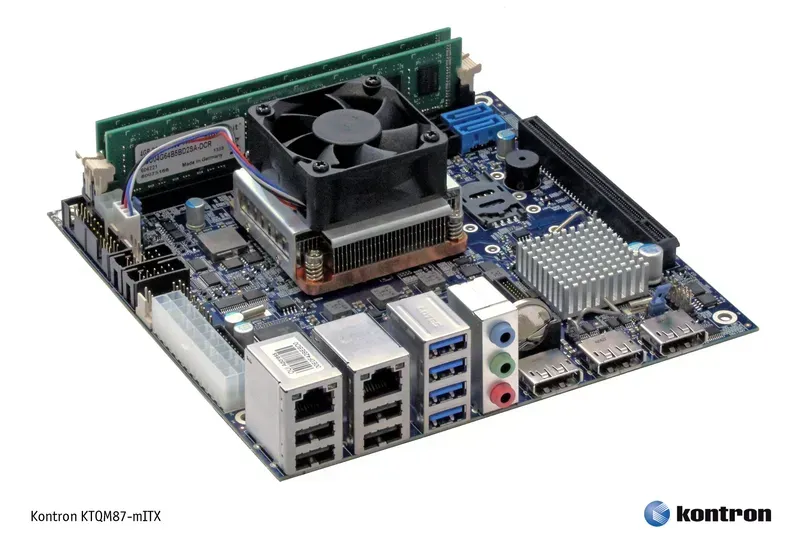
At its heart, a network camera motherboard is the sophisticated central nervous system that orchestrates every function of a modern surveillance camera. Far more than a simple circuit board, it integrates crucial processing power, memory, and specialized hardware for image acquisition, video encoding, network communication, and power management. Its robust design is paramount, as the seamless interaction of these components directly dictates the camera's image quality, real-time performance, connectivity, and overall reliability, making it the bedrock upon which high-performance network surveillance solutions are built.
What are the primary functions of a network camera motherboard? The primary functions include image sensor interfacing, video encoding/compression (e.g., H.264, H.265), network connectivity (Ethernet, Wi-Fi), local storage management (SD card), power management, and running the camera's operating system and firmware for various intelligent functionalities like motion detection and analytics.
How does the motherboard influence image quality and performance? The motherboard houses the Image Signal Processor (ISP) and the main System-on-Chip (SoC). The ISP processes raw image data from the sensor, performing noise reduction, color correction, and dynamic range enhancement, directly impacting image quality. The SoC's processing power determines the frame rate, resolution, and efficiency of video compression, influencing overall real-time performance and responsiveness.
What are the critical components found on a network camera motherboard? Key components typically include a high-performance System-on-Chip (SoC) for processing, DDR SDRAM for temporary data storage, NAND Flash memory for firmware and operating system, an Ethernet controller for wired network connectivity, sometimes a Wi-Fi module, a power management unit (PMU), and various interface connectors for the image sensor, lens, audio, and I/O peripherals.
Why is the interaction between components on the motherboard crucial? The seamless interaction is critical for system stability, data flow, and overall efficiency. For instance, inefficient data transfer between the image sensor, ISP, and video encoder can lead to dropped frames or latency. Similarly, suboptimal power delivery can cause instability or component overheating. Cohesive design ensures optimal performance, reliability, and extends the camera's lifespan.
How does the motherboard enable network connectivity for the camera? The motherboard integrates an Ethernet controller (and often a Wi-Fi module) that handles the physical layer and data link layer protocols. It manages the transmission and reception of video streams, control commands, and other data over the network. This allows remote viewing, management, and integration into larger surveillance systems via IP protocols.
Key Features and Specifications of Network Camera Motherboards
The robust functionality of a network camera hinges on the precise integration and performance of its motherboard. Understanding the key features and specifications of these critical components is paramount for developers and manufacturers aiming to deliver high-performance, reliable, and feature-rich surveillance solutions. These specifications dictate everything from image quality and real-time processing to connectivity options and power efficiency, directly impacting the camera's overall utility and market competitiveness. Selecting the right motherboard with optimized features ensures seamless operation, enhanced security, and superior image acquisition under various operational demands.
Feature
Specification Detail
Importance for Network Cameras
Processor Type
ARM Cortex-A series (e.g., A53, A7), MIPS, or specialized DSPs
Determines processing power for video analytics, AI inferencing, and overall system responsiveness. Higher clock speeds and core counts enable more complex tasks and higher resolution support.
Adequate RAM is crucial for buffering high-resolution video streams and running complex operating systems/applications. ROM size impacts firmware storage, local recording capabilities, and boot times.
][
Video Encoding/Decoding
H.264, H.265 (HEVC), MJPEG, VP9 codecs; up to 4K/8K resolution
Essential for efficient compression and decompression of video data, minimizing bandwidth and storage requirements while maintaining image quality. Hardware acceleration is key for real-time performance.
Enables connectivity to the network for data transmission and remote management. PoE simplifies installation by delivering power and data over a single cable.
][
Image Signal Processor (ISP)
Integrated or dedicated ISP with WDR, DNR, EIS, exposure control
Crucial for optimizing raw sensor data into high-quality images, managing dynamic range, reducing noise, and compensating for motion blur, enhancing visual clarity in diverse lighting conditions.
][
Peripheral Interfaces
GPIO, UART, SPI, I2C, USB, SD Card slot
Allows for integration with external sensors, actuators, audio I/O, local storage expansion, and debugging tools, enabling customization and expanded functionality.
][
Power Management
Low power consumption, wide voltage input range, standby modes
Optimized power management extends camera lifespan, reduces operating costs, and enables deployment in environments with limited power sources, especially for battery-powered or solar-powered solutions.
Why are specialized DSPs sometimes preferred over general-purpose CPUs for network camera motherboards? Specialized Digital Signal Processors (DSPs) excel at highly repetitive, mathematically intensive tasks like video encoding/decoding and image processing, which are core functions of network cameras. They offer superior power efficiency and real-time performance for these specific workloads compared to general-purpose CPUs, which are designed for broader application flexibility. This specialization allows for lower heat generation and extended operational life, crucial for continuous surveillance applications.
How does hardware video encoding/decoding benefit a network camera's performance? Hardware video encoding/decoding offloads the demanding computational tasks from the main CPU to dedicated processing units. This significantly reduces CPU utilization, freeing up resources for other critical operations like video analytics, AI inference, and system management. The result is higher frame rates, lower latency, reduced power consumption, and the ability to support higher resolutions (e.g., 4K or 8K) without compromising real-time performance or overall system stability.
What role does PoE (Power over Ethernet) play in the efficiency of network camera installations? PoE simplifies network camera installations by enabling both power and data transmission over a single Ethernet cable. This eliminates the need for separate power outlets near each camera, reducing cabling complexity, material costs, and installation time. For large-scale deployments, PoE offers significant logistical and cost efficiencies, while also allowing for centralized power management and easier integration with uninterruptible power supply (UPS) systems for enhanced reliability during power outages.
PCB Design Considerations for Optimal Performance
PCB Board Layout
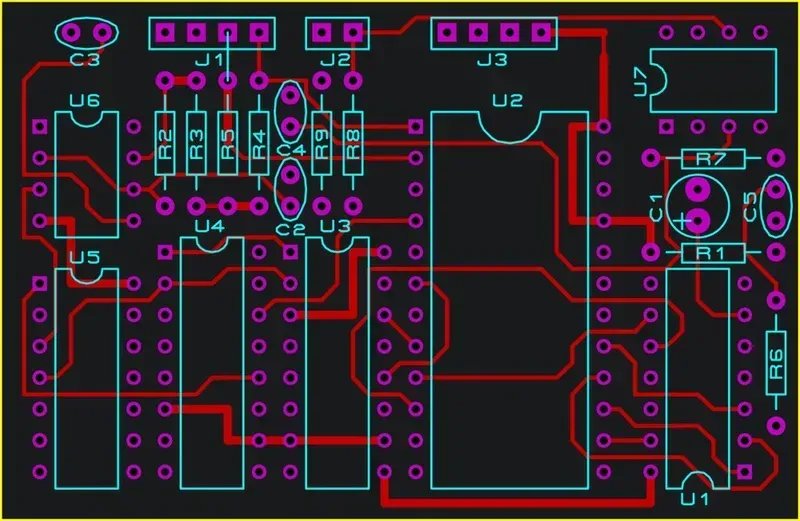
The bedrock of a high-performance, reliable network camera lies within its motherboard's PCB design. Optimal PCB design is not merely about connecting components; it's a meticulous engineering discipline that dictates the camera's stability, signal quality, and longevity. At Zero One Solution, we recognize that mastering PCB layout, ensuring signal integrity, implementing robust thermal management, and selecting appropriate components are paramount to unlocking peak performance and ensuring the unwavering reliability essential for demanding surveillance applications.
Advanced PCB Layout Techniques Strategic layout is the foundation of a robust network camera motherboard. This involves optimizing layer stacking, often utilizing multiple layers (e.g., 6-8 layers) to segregate high-speed signals, power planes, and ground planes, which effectively minimizes electromagnetic interference (EMI) and crosstalk. Precise component placement, ensuring sensitive analog and high-frequency digital sections are appropriately isolated, prevents noise propagation and maintains signal purity crucial for image and audio processing.
Signal Integrity and Power Delivery Network (PDN) Management For network cameras handling high-resolution video streams and complex data, signal integrity (SI) is non-negotiable. Techniques such as controlled impedance routing for differential pairs (e.g., MIPI, USB 3.0, Ethernet), careful trace length matching, and proper termination are critical to prevent reflections, distortion, and data loss. Concurrently, a meticulously designed Power Delivery Network (PDN) ensures stable, low-noise power reaches all components, particularly voltage-sensitive processors and sensors, preventing performance degradation and system instability caused by voltage fluctuations or ripple.
Comprehensive Thermal Management Strategies Network camera motherboards, especially those with powerful SoCs and integrated AI capabilities, generate significant heat. Effective thermal management is vital for long-term reliability and performance. This includes integrating thermal vias directly under heat-generating components to conduct heat away, optimizing component placement for efficient heat dissipation, and considering the overall camera enclosure's airflow. Our designs often incorporate provisions for heat sinks or thermal pads to manage elevated temperatures, ensuring stable operation even in extreme environmental conditions.
Strategic Component Selection for Durability The choice of components directly impacts a network camera motherboard's lifespan and field reliability. We prioritize industrial-grade components that can withstand wider temperature ranges, higher humidity, and mechanical stresses. Key considerations include selecting high-reliability capacitors for stable power filtering, robust connectors for environmental resilience, and high-performance, yet power-efficient, processors that meet computational demands without excessive heat generation. This meticulous selection process ensures the motherboard performs consistently in diverse and often demanding operational environments.
The Importance of Rapid Prototyping in Motherboard Development
PCB Prototype Sample
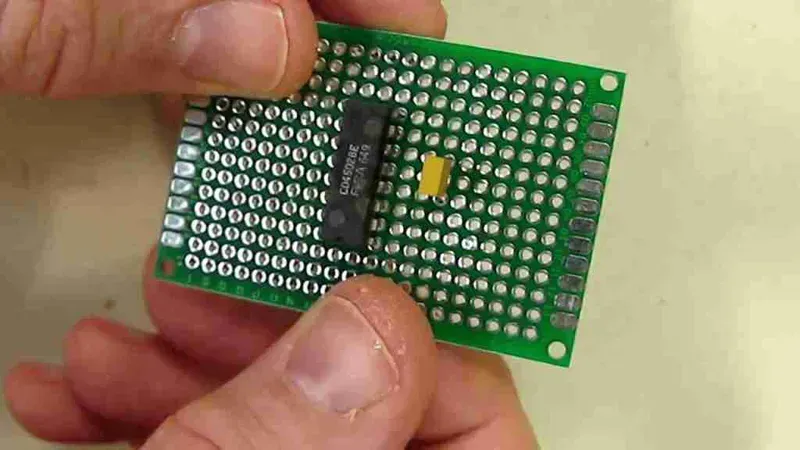
Rapid prototyping is a cornerstone of efficient network camera motherboard development, allowing engineers to quickly transform theoretical designs into tangible prototypes. This iterative process is crucial for accelerating product development cycles, enabling early identification of design flaws, and thoroughly validating performance before committing to mass production. In the fast-paced security and surveillance industry, the ability to rapidly iterate and refine motherboard designs directly translates to a significant competitive advantage, ensuring products meet stringent market demands and regulatory standards with unparalleled speed and precision.
Accelerated Time-to-Market Rapid prototyping significantly reduces the development timeline by allowing parallel testing and refinement of different design aspects simultaneously. This agile approach means products can reach the market faster, capturing early opportunities and responding quickly to evolving customer needs. For network camera motherboards, this speed is vital for staying ahead in a competitive landscape focused on cutting-edge features and performance.
Early Detection and Mitigation of Design Flaws Identifying and correcting design errors late in the development cycle can be extremely costly and time-consuming. Rapid prototyping provides tangible models for early and rigorous testing, revealing potential issues related to functionality, thermal management, signal integrity, and manufacturability before full-scale production. This proactive approach minimizes rework, saves resources, and enhances the overall reliability of the final product.
Performance Validation and Optimization Beyond basic functionality, rapid prototypes enable comprehensive performance testing under various operating conditions. Engineers can assess crucial parameters like video processing efficiency, power consumption, network stability, and component longevity. This validation process allows for fine-tuning and optimization, ensuring the network camera motherboard delivers optimal performance, meets all specifications, and provides a superior user experience.
Zero One Solution Limited excels in providing rapid prototyping services for network camera motherboards. Our advanced facilities and experienced engineering teams facilitate the swift transformation of complex designs into high-fidelity prototypes. We leverage cutting-edge manufacturing techniques and stringent quality control processes to ensure that each prototype accurately reflects the intended design, allowing for precise validation and informed decision-making. Our expertise in rapid-response R&D prototype manufacturing empowers our clients to accelerate their product development and bring innovative network camera solutions to market with exceptional efficiency, minimizing risks and maximizing success.
Zero One Solution's Comprehensive PCB Solutions for Network Cameras
PCB Design and Manufacturing
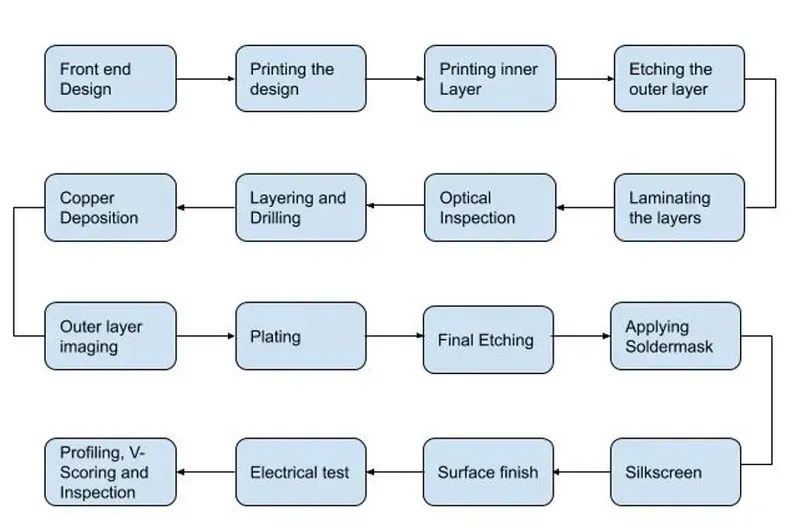
Zero One Solution Limited stands as a premier partner for manufacturers seeking robust and efficient network camera motherboard solutions. Our core strength lies in providing a comprehensive, one-stop service from initial PCB design and meticulous manufacturing to high-quality assembly. We leverage decades of collective expertise in rapid prototyping, enabling us to significantly accelerate your product development cycles while ensuring the highest standards of performance and reliability, specifically tailored for the demanding requirements of network camera systems.
Integrated Design & Engineering Our expert engineers collaborate closely with clients from concept to completion, offering DFM (Design for Manufacturability) and DFA (Design for Assembly) insights to optimize the network camera motherboard layout for performance, cost-effectiveness, and reliability. We specialize in intricate multi-layer designs crucial for high-speed data processing and signal integrity in network cameras. Zero One Solution provides comprehensive PCB design services, ensuring your network camera motherboard is optimized for performance, cost, and reliability from the ground up. Our team excels in complex layouts required for high-resolution video processing and robust network connectivity.
Service Area
Key Offering
Benefit for Network Camera Motherboards
PCB Design
Advanced Schematic & Layout
Optimized signal integrity for HD video, reduced interference, compact form factors.
Precision Manufacturing With state-of-the-art facilities in Shenzhen, we excel in producing high-precision PCBs vital for network camera motherboards. Our manufacturing processes adhere to stringent quality control, ensuring consistent performance and durability for diverse environmental conditions. We handle various material requirements, from standard FR-4 to specialized substrates for enhanced thermal management.
Service Area
Key Offering
Benefit for Network Camera Motherboards
PCB Manufacturing
High-Precision Fabrication
Exceptional reliability and thermal dissipation for continuous operation, even in harsh environments.
Advanced Assembly (PCBA) Our automated SMT and THT assembly lines ensure precise component placement and soldering, critical for the dense integration required in network camera motherboards. We implement rigorous testing protocols, including AOI, X-ray inspection, and functional testing, to guarantee every assembled board meets your specifications and performs flawlessly in its intended application. Our PCBA services ensure the seamless integration of all components, from complex SoC chipsets to delicate sensors, guaranteeing optimal functionality and longevity for your network camera motherboard solutions.
Service Area
Key Offering
Benefit for Network Camera Motherboards
PCB Assembly
Automated SMT & Rigorous Testing
High component density support, reduced manufacturing defects, assured functional performance.
By choosing Zero One Solution, clients gain a partner capable of streamlining their supply chain, reducing time-to-market, and delivering superior network camera motherboard solutions that stand out in a competitive landscape.
Ensuring Reliability and Durability in Demanding Environments
Motherboard in Harsh Environments
For network camera motherboards, reliability and durability are not merely desirable features but absolute necessities, particularly when deployed in challenging outdoor, industrial, or surveillance environments. These boards must withstand a spectrum of harsh conditions, from extreme temperature fluctuations and high humidity to constant vibrations and potential electromagnetic interference. Zero One Solution Limited approaches this critical aspect with a multi-faceted design and manufacturing philosophy, embedding resilience into every layer of the motherboard to ensure uninterrupted performance and extended operational life in the most demanding scenarios.
How does Zero One Solution address extreme temperature challenges? We implement advanced thermal management strategies, including optimized PCB stack-ups, efficient heat dissipation pathways, and the selection of industrial-grade components rated for wide operating temperature ranges (-40°C to +85°C). Our designs prioritize component placement to prevent hot spots and utilize thermal vias and specialized heat sinks where necessary. We also employ rigorous thermal stress testing during prototyping to validate performance under worst-case temperature scenarios, ensuring stable operation from arctic chills to desert heat.
What measures are taken to protect against high humidity and moisture? Zero One Solution employs several techniques to combat humidity. This includes selecting PCB materials with low moisture absorption properties (e.g., FR-4 variants with enhanced moisture resistance), applying conformal coatings to protect sensitive electronic components from moisture and corrosion, and designing enclosures with proper sealing. Our manufacturing processes also include controlled environmental conditions to prevent moisture ingress during assembly, ensuring long-term integrity in humid climates or outdoor installations.
How are network camera motherboards protected from vibration and shock? Protection against vibration and shock is crucial for camera motherboards in vehicles, robotics, or exposed outdoor locations. Zero One Solution designs consider mechanical robustness by optimizing component mounting, utilizing through-hole components for higher mechanical stability where appropriate, and employing specialized connectors that resist dislodgement. We adhere to industry standards like IEC 60068-2-6 (vibration) and IEC 60068-2-27 (shock) during the design validation phase, using simulations and physical testing to ensure the board's integrity under dynamic stress.
What role does material selection play in motherboard durability? Material selection is foundational to durability. Zero One Solution meticulously chooses high-quality PCB laminates, solder masks, and component finishes that offer superior resistance to environmental degradation, including UV exposure, chemical agents, and oxidation. We prioritize materials with excellent dielectric strength and thermal stability, which are critical for maintaining signal integrity and operational reliability over time, especially in fluctuating environmental conditions. This meticulous selection extends to connectors and enclosures, ensuring a robust overall system.
Customization Options and Scalability for Diverse Camera Applications
In the rapidly evolving landscape of network camera technology, the ability to customize motherboard designs and scale production efficiently is paramount. Tailoring a network camera motherboard to specific application needs, from specialized form factors to unique feature sets and performance benchmarks, is crucial for market differentiation and optimal system integration. Zero One Solution excels in providing bespoke PCB solutions, enabling manufacturers to innovate beyond generic, off-the-shelf components and achieve precise functionality for diverse camera applications, ensuring both technical superiority and market agility.
Tailored Design for Unique Requirements Zero One Solution offers extensive customization, allowing clients to specify form factors (e.g., miniature for covert cameras, rugged for industrial applications), component placement, and interface configurations (e.g., specialized sensor interfaces, additional GPIOs, custom power delivery). This ensures the motherboard seamlessly integrates into the intended camera housing and system architecture, optimizing space and performance.
Feature Set Optimization We work closely with clients to define and integrate specific features required for their target applications. This includes selecting appropriate chipsets for desired video resolutions and frame rates (e.g., 4K @ 60fps for high-end surveillance, lower resolutions for IoT devices), integrating specialized AI accelerators for on-board analytics, enabling advanced connectivity options (e.g., Wi-Fi 6, 5G cellular), and implementing specific security modules.
Customization Aspect
Benefits for Camera Applications
Zero One Solution's Approach
Form Factor
Enables compact designs, specialized enclosures, and discreet installations.
Flexible PCB dimensions, multi-layer design, and precise component placement optimization.
Feature Integration
Supports unique functionalities like advanced analytics, specific sensor compatibility, and custom I/O.
Component selection, circuit design, and firmware integration expertise tailored to client needs.
Performance Tuning
Achieves optimal image processing, low-light performance, and power efficiency.
Careful selection of processors, memory, and power management ICs, coupled with optimized PCB layout for signal integrity.
Environmental Hardening
Ensures reliability in extreme temperatures, vibrations, and humidity.
Selection of industrial-grade components, robust material choices, and rigorous testing protocols (e.g., thermal cycling, vibration tests).
Beyond custom design, scalability is a critical factor for manufacturers aiming to transition from prototyping to mass production. Zero One Solution's comprehensive one-stop service model is designed to facilitate seamless scalability, from low-volume R&D prototypes to high-volume manufacturing, maintaining consistent quality and cost-effectiveness at every stage. Our global supply chain network and advanced manufacturing facilities enable us to meet diverse production demands without compromising on lead times or quality, empowering clients to confidently bring their customized network camera solutions to market at any scale.
Future Trends in Network Camera Motherboard Technology
The evolution of network camera motherboard technology is driven by an insatiable demand for smarter, more secure, and higher-performance surveillance solutions. The trajectory points towards significant advancements in AI integration, sophisticated image processing, and robust security protocols, fundamentally redefining the capabilities of next-generation network cameras. These emerging trends are critical for enabling intelligent video analytics, enhancing low-light performance, and safeguarding sensitive data in an increasingly interconnected world.
How is AI integration transforming network camera motherboards? AI integration is revolutionizing network camera motherboards by embedding powerful neural processing units (NPUs) or leveraging cloud-based AI. This enables on-device (edge) analytics such as real-time object detection, facial recognition, behavior analysis, and anomaly detection, significantly reducing network bandwidth requirements and improving response times. Motherboards are designed to support popular AI frameworks like TensorFlow and PyTorch, facilitating seamless deployment of intelligent surveillance applications. This shift from simple recording to proactive intelligence is a game-changer for security and operational efficiency across various sectors, from smart cities to industrial automation. Zero One Solution is actively integrating AI-ready chipsets and optimizing PCB layouts for efficient heat dissipation to support high-performance AI computations on our motherboards, ensuring our clients can deploy cutting-edge intelligent camera systems.
What are the advancements in image processing for future network cameras? Advancements in image processing for network camera motherboards focus on enhancing image quality, especially in challenging lighting conditions, and supporting higher resolutions and frame rates. This includes the integration of more powerful Image Signal Processors (ISPs) that offer features like Wide Dynamic Range (WDR), noise reduction, advanced color correction, and defogging algorithms. The trend is towards 4K, 8K, and even higher resolution support, coupled with improved low-light performance through larger sensors and advanced computational photography techniques. These enhancements provide clearer, more detailed footage, crucial for forensic analysis and real-time monitoring. Zero One Solution's expertise in high-speed signal integrity and precision analog design ensures our motherboards can fully leverage these advanced ISPs, delivering superior image quality for our customers' network cameras.
How are security features evolving in network camera motherboard design? Security in network camera motherboard design is becoming paramount due to the increasing threat of cyberattacks and privacy concerns. Future motherboards will feature enhanced hardware-level security, including secure boot mechanisms, trusted platform modules (TPMs) for cryptographic operations, and hardware-accelerated encryption/decryption engines. Firmware integrity checks, secure key storage, and robust authentication protocols will be standard. The focus is on creating a 'root of trust' that extends from boot-up through continuous operation, protecting against unauthorized access, data tampering, and malicious software injections. These measures are essential for maintaining the integrity and confidentiality of surveillance data. Zero One Solution prioritizes security by design, incorporating hardware-level security features and robust firmware protection mechanisms into our network camera motherboard solutions, safeguarding our clients' systems against evolving cyber threats.
In conclusion, the network camera motherboard is the backbone of any IP camera system, dictating its performance and features. Zero One Solution Limited offers a comprehensive suite of PCB solutions, from design to assembly, tailored to meet the specific requirements of network camera manufacturers. By choosing Zero One Solution, you gain access to cutting-edge technology, rapid prototyping, and a dedicated team of experts committed to delivering high-quality, reliable motherboard solutions. Partner with us to accelerate your product development, enhance your camera's capabilities, and gain a competitive edge in the dynamic security and surveillance market. Contact Zero One Solution today to discuss your project and discover how we can help you bring your innovative camera solutions to life.