In an era driven by insatiable demands for faster data and ubiquitous connectivity, fiber optic transceivers stand as the unsung heroes of modern communication infrastructure. From powering hyperscale data centers to enabling the lightning-fast backbone of global networks, these compact yet powerful devices are the linchpin of high-speed optical interconnects. At Zero One Solution Limited, we understand that the performance of a fiber optic transceiver hinges critically on the quality and precision of its underlying motherboard. As a leading PCB solution provider, specializing in rapid prototyping and one-stop services from design to assembly, we are at the forefront of delivering robust and reliable Fiber Optic Transceiver Motherboard Solutions designed to meet the rigorous demands of today's and tomorrow's optical communication landscape.
The Critical Role of Fiber Optic Transceivers in Modern Networks
Fiber optic transceivers are the indispensable backbone of modern high-speed communication networks, serving as critical components that convert electrical signals into optical signals and vice-versa. Their paramount importance stems from their ability to facilitate rapid and reliable data transmission across vast distances with minimal signal degradation, making them foundational to the infrastructure of data centers, telecommunications, and enterprise networks. This inherent capability directly drives the demand for highly sophisticated and high-performance motherboards designed to support these complex optical modules, ensuring the seamless flow of information that powers our interconnected world.
Data Centers In data centers, transceivers enable the massive bandwidth required for cloud computing, AI, and Big Data analytics. They connect servers, storage arrays, and network switches, ensuring ultra-low latency and high-throughput data transfer essential for efficient operations and scalability. The sheer volume of data necessitates transceivers capable of 100G, 400G, and even 800G speeds, pushing the boundaries of motherboard design for signal integrity and power delivery.
Telecommunications For telecommunications, fiber optic transceivers are the bedrock of long-haul and metro networks, facilitating voice, video, and internet traffic globally. They are crucial for 5G backhaul, FTTx deployments, and submarine cable systems, demanding transceivers that offer extended reach, robustness against environmental factors, and high spectral efficiency. Motherboards supporting these transceivers must withstand diverse operational conditions while maintaining peak performance.
Enterprise Networks In enterprise environments, transceivers underpin high-speed local area networks (LANs) and storage area networks (SANs), enabling efficient data exchange within campuses and offices. They are vital for applications requiring significant bandwidth, such as high-definition video conferencing, large file transfers, and real-time collaborative tools, driving the need for reliable, cost-effective, and easily deployable transceiver motherboard solutions.
Network Type
Key Application
Transceiver Requirement
Motherboard Design Impact
Data Centers
Cloud Computing, AI/ML, Big Data
High Bandwidth (100G+), Low Latency
Advanced Signal Integrity, Thermal Management
Telecommunications
5G Backhaul, FTTx, Submarine Cables
Long Reach, Environmental Robustness
Ruggedized Design, Power Efficiency
Enterprise Networks
LANs, SANs, Video Conferencing
Reliability, Cost-Effectiveness
Compact Design, Ease of Integration
Understanding the Fiber Optic Transceiver Motherboard: Design and Functionality
Fiber Optic Transceiver Motherboard Design and Components
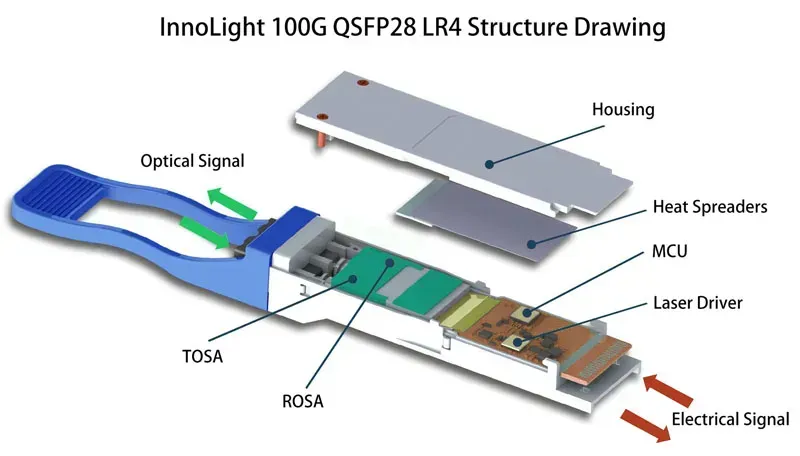
The fiber optic transceiver motherboard stands as the foundational platform for high-speed optical communication modules, meticulously engineered to facilitate seamless data transmission and reception. Its design is a complex interplay of electrical, thermal, and mechanical considerations, all aimed at optimizing signal integrity, ensuring stable power delivery, and managing thermal dissipation for peak performance of integrated optical components and high-speed interconnects. A deep understanding of its architecture is paramount for achieving reliable and efficient optical networks.
Core Components and Their Functions A typical fiber optic transceiver motherboard integrates several critical components. These include high-speed serializer/deserializer (SerDes) ICs for converting parallel data to serial streams and vice-versa, digital signal processors (DSPs) for signal conditioning and error correction, power management units (PMUs) to provide stable voltage rails, and optical sub-assemblies (OSAs) containing the laser diode, photodiode, and optical interface. Additionally, precise clocking circuits ensure synchronization, while temperature sensors and control loops manage the operating environment of sensitive optical components. The meticulous selection and placement of these components are crucial for achieving the required bandwidth and signal quality.
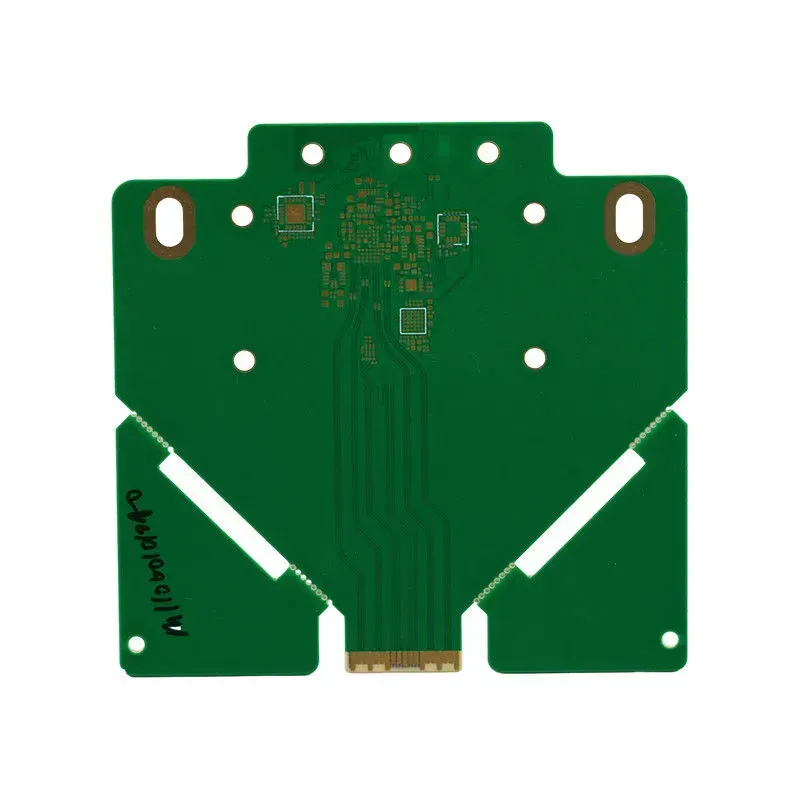
Signal Integrity and High-Speed Routing Maintaining signal integrity is paramount in fiber optic transceiver motherboards, where data rates can reach hundreds of gigabits per second. This necessitates meticulous PCB design, including controlled impedance traces, differential pair routing with tight length matching, and careful consideration of via structures to minimize reflections and crosstalk. Advanced electromagnetic simulation tools are employed to predict and mitigate signal degradation, ensuring that the high-speed electrical signals accurately drive the optical components without loss or distortion across the optical module PCB.
Power Delivery Network (PDN) Optimization A robust Power Delivery Network (PDN) is essential to provide clean and stable power to the various active components, especially the high-speed SerDes and optical drivers. The PDN design involves careful selection of decoupling capacitors, proper plane design for low impedance, and efficient voltage regulation modules. Poor PDN design can lead to voltage droop, ground bounce, and increased noise, directly impacting signal integrity and overall transceiver performance. Thermal considerations also play a role, as inefficient power delivery can generate excessive heat.
Thermal Management Challenges and Solutions Fiber optic transceivers generate significant heat, particularly at higher data rates and power levels. Effective thermal management is critical to ensure reliable operation and extend the lifespan of the optical module. The motherboard design incorporates strategies such as optimized copper distribution, thermal vias, and strategic placement of heat sinks or thermal pads. Materials with good thermal conductivity are often selected for the PCB substrate. Efficient heat dissipation prevents performance degradation, wavelength drift in lasers, and potential component failures.
Key Challenges in Fiber Optic Transceiver Motherboard Design and Manufacturing
Optical Module PCB Manufacturing Challenges
Designing and manufacturing Fiber Optic Transceiver Motherboards presents a unique set of formidable challenges that demand precision engineering and advanced material science. The quest for higher data rates and increased reliability in modern optical communication systems directly translates into stringent requirements for the underlying PCB, making these technical hurdles critical determinants of overall transceiver performance and longevity. Overcoming these complexities is paramount for achieving robust, high-speed optical module PCB designs that can withstand demanding operational environments.
Challenge Area
Description
Impact on Performance
High-Frequency Signal Routing
Managing signal integrity and minimizing crosstalk for multi-gigabit per second data paths.
Degraded signal quality, increased bit error rates, and reduced transmission distance if not properly managed.
Impedance Control Maintaining precise characteristic impedance throughout the signal traces to prevent reflections and signal loss. Deviations can lead to signal distortion, impacting data integrity and causing system instability. This is crucial for optical module PCB design where every picosecond counts.
Thermal Dissipation Effectively managing heat generated by high-speed components and optical modules to ensure stable operation and extend component lifespan. Inadequate thermal management can lead to performance degradation, reliability issues, and premature component failure, especially in compact transceiver form factors.
Material Selection Choosing appropriate PCB laminate materials with low dielectric loss and stable dielectric constant at high frequencies. Poor material choices can lead to signal attenuation, impedance variations, and increased power consumption, directly affecting the efficiency of optical interconnects.
Zero One Solution Limited: Your Partner in Advanced PCB Solutions
Zero One Solution Factory Production Line
In the complex and rapidly evolving landscape of fiber optic communication, selecting the right PCB solution partner is paramount for innovation and market success. Zero One Solution Limited stands as a testament to unparalleled expertise and dedication in advanced PCB solutions, especially for high-performance applications like fiber optic transceivers. Our commitment to rapid prototyping and comprehensive one-stop services empowers our clients to significantly accelerate product development cycles and bring groundbreaking innovations to market with exceptional efficiency and reliability.
Who is Zero One Solution Limited? Founded in 2011, Zero One Solution Limited has rapidly ascended to a leadership position in the PCB assembly solutions industry. With over a decade of specialized experience, we are recognized for our focus on rapid-response R&D prototype manufacturing, enabling clients to meet aggressive timelines and achieve competitive advantages in their respective sectors.
What services does Zero One Solution Limited offer? We offer a complete suite of PCB services, encompassing everything from initial design and schematic development to high-precision manufacturing and final assembly. Our integrated approach ensures seamless project execution and optimal performance for even the most demanding applications, including sophisticated fiber optic transceiver motherboards.
Where is Zero One Solution Limited located? Headquartered in Shenzhen, China, the global epicenter of electronic manufacturing, Zero One Solution Limited benefits from direct access to cutting-edge technologies and a robust supply chain. Additionally, our branch office in Dubai strengthens our strategic position within a global PCBA supply network, facilitating worldwide resources and support for our diverse clientele.
What makes Zero One Solution Limited a strategic partner for fiber optic applications? Our specialized expertise in high-frequency signal routing, impedance control, thermal management, and advanced material selection makes us an ideal partner for fiber optic applications. We understand the critical requirements for signal integrity and reliability in optical modules, offering tailored solutions that consistently exceed industry standards and foster innovation.
Zero One Solution Limited stands as a premier partner in delivering a comprehensive Fiber Optic Transceiver Motherboard Solution, meticulously engineered to address the exacting demands of high-speed optical communication applications. Our end-to-end service encompasses every phase, from the initial conceptualization and schematic design to high-precision PCB fabrication and assembly, ensuring a seamless and integrated approach for optimal performance and reliability in optical modules.
Custom PCB Design and Engineering We offer bespoke PCB design services, utilizing advanced CAD tools and simulation software to create highly optimized layouts for fiber optic transceiver motherboards. Our designs prioritize signal integrity, power efficiency, and thermal management, critical for high-speed data transmission.
Rapid Prototyping and Iteration Leveraging our expertise in rapid prototyping, we accelerate the development cycle of fiber optic transceiver motherboards. This allows for quick iteration and testing, reducing time-to-market for our clients' innovative optical communication products. We ensure that your design is rigorously tested and refined before mass production.
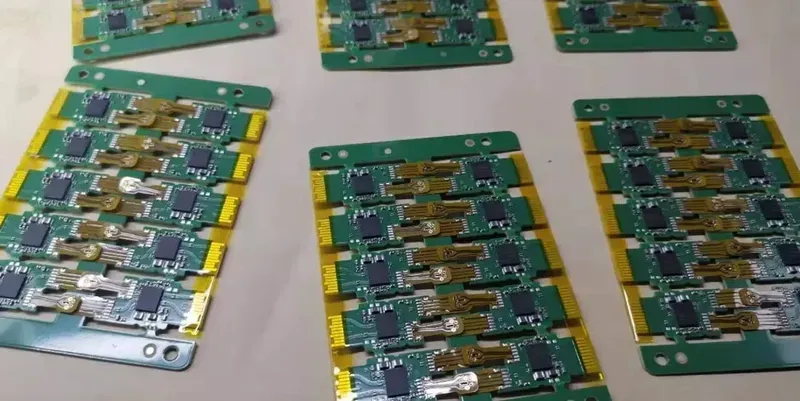
High-Precision PCB Fabrication Our manufacturing facilities are equipped with state-of-the-art machinery to produce high-layer count PCBs with exceptional precision. We employ advanced fabrication techniques to meet the stringent requirements for impedance control, trace width, and layer registration essential for high-frequency optical signals.
Advanced Material Selection We carefully select high-performance PCB materials, such as low-loss laminates and specialized substrates, to minimize signal attenuation and crosstalk. This material expertise is vital for maintaining signal integrity in demanding fiber optic transceiver applications, ensuring long-term reliability and performance consistency.
Advanced Technologies and Processes for Optimal Performance in Fiber Optic Transceiver Motherboards
Multi-Layer PCB Testing Protocols
Achieving optimal performance and unwavering reliability in fiber optic transceiver motherboards necessitates the deployment of advanced technologies and rigorous process controls. Zero One Solution Limited, with its deep expertise, integrates state-of-the-art materials, sophisticated design methodologies, and stringent quality assurance protocols to overcome the complex challenges inherent in high-speed optical module PCB design, ensuring our solutions stand at the forefront of the industry. Our commitment to these advanced practices guarantees the superior signal integrity, thermal management, and overall durability critical for modern network infrastructure.
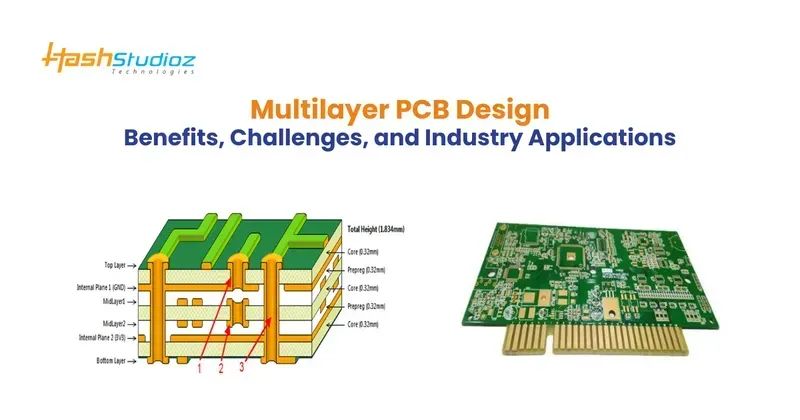
High-Layer Count PCBs We utilize high-layer count PCBs (typically 12-24 layers or more) to accommodate the intricate routing requirements of high-speed differential pairs, power planes, and ground layers. This multi-layer construction effectively minimizes crosstalk, reduces electromagnetic interference (EMI), and provides robust power delivery, which is essential for stable optical transceiver operation and maintaining signal integrity at gigabit speeds.
Advanced Material Selection The choice of PCB substrate materials is paramount for high-frequency applications. We employ advanced low-loss dielectric materials such as Megtron 6, Nelco N4000-13, and Isola I-Terra MT40, characterized by their low dissipation factor (Df) and dielectric constant (Dk) stability across broad frequency ranges. These materials significantly reduce signal attenuation and dispersion, thereby preserving signal quality for optical signals traveling at extreme speeds.
Precise Impedance Matching Maintaining precise 50-ohm differential impedance for high-speed traces (e.g., PCIe, SFP/QSFP interfaces) is critical to prevent signal reflections and maximize power transfer. Our design process includes advanced simulation tools and controlled impedance routing techniques (e.g., microstrip, stripline, coplanar waveguide with ground) combined with strict manufacturing tolerances to ensure impedance uniformity across the entire board, which is verified through Time Domain Reflectometry (TDR) testing.
Optimized Thermal Management Design Fiber optic transceivers generate significant heat, which can degrade performance and reliability if not properly managed. Our designs incorporate optimized thermal dissipation strategies, including the use of thermal vias, copper pours, and strategically placed heatsink mounting features. We also employ thermal simulation software to predict temperature distributions and ensure that critical components operate within their specified temperature limits, preventing thermal runaway and extending product lifespan.
Technology/Process
Key Advantage for Fiber Optic Transceiver Motherboards
Impact on Performance
Controlled Depth Drilling (CDD)
Enables precise blind/buried vias for higher routing density and improved signal paths.
Reduces signal stub length, minimizing reflections and enhancing signal integrity for high-speed data.
import { PCB } from 'zero-one-solution';

const highSpeedTransceiverBoard = new PCB({
  layers: 20,
  material: 'Megtron 6',
  impedanceControl: '50-ohm differential',
  thermalManagement: 'Optimized copper planes and thermal vias',
  qualityControl: '100% AOI, X-ray, TDR testing'
});

highSpeedTransceiverBoard.manufacture();

// Ensuring superior signal integrity and thermal stability for fiber optic modules.
The future of high-speed data communication is undeniably optical, and the foundation of this future rests upon meticulously engineered fiber optic transceiver motherboards. At Zero One Solution Limited, our commitment to excellence, rapid prototyping capabilities, and comprehensive one-stop services position us as your ideal partner in navigating this complex landscape. With our deep expertise in high-frequency design, advanced manufacturing processes, and rigorous quality control, we empower innovators to push the boundaries of optical module performance, accelerate product development, and bring groundbreaking solutions to market with unparalleled efficiency. Choose Zero One Solution Limited for your Fiber Optic Transceiver Motherboard Solution and build the backbone of tomorrow's connectivity, today. Contact us to discuss your specific project needs and discover how our expertise can drive your success.