Finding the Best Cheap PCB Assembly: A Comprehensive Guide
2025.01.02
In today's fast-paced world of electronics, the need for reliable yet affordable PCB (Printed Circuit Board) assembly is paramount for both hobbyists and professionals. From powering our everyday devices to enabling cutting-edge innovations, PCBs are the backbone of modern electronics. This article will guide you through the landscape of cheap PCB assembly options, helping you understand your choices, compare services, and ultimately, find the best fit for your specific needs and budget, without compromising on quality. Through understanding the nuances of PCB assembly, we will explore how to bridge the gap between affordability and performance.
Understanding Your PCB Assembly Needs
Bare PCB
Before embarking on a PCB assembly project, a clear understanding of your specific requirements is crucial for cost-effectiveness and success. This initial assessment will guide your choice of manufacturer and assembly approach. Key considerations revolve around the scale of production, the complexity of the circuit design, the timeframe for completion, and the necessary quality standards.
Production Volume Determine whether your project is a prototype, a small batch, or a large-scale production run, as this drastically impacts pricing and lead times.
PCB Complexity The number of layers, the density of components, and the use of surface mount (SMT) or through-hole (THT) technology influence assembly costs and difficulty.
Turnaround Time Consider your project timeline. Rapid turnaround options often come at a premium, while standard delivery times are more budget-friendly.
Certifications Identify the necessary certifications for your product, which may dictate the assembly processes and materials used, which may influence costs.
Component Selection Consider the type and availability of components, which can significantly affect the overall cost of assembly. Opt for standard parts where feasible.
Comparing Popular Cheap PCB Assembly Manufacturers
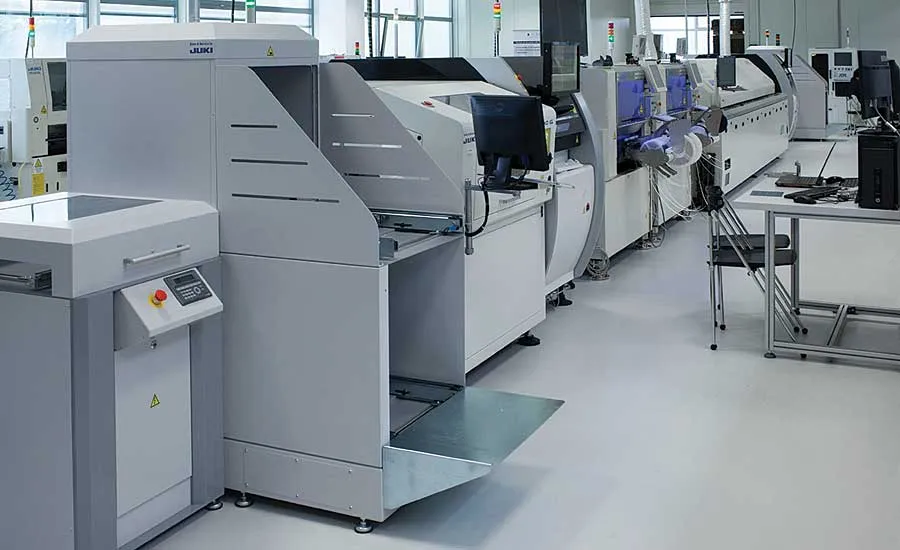
PCB Assembly Line
Selecting the right PCB assembly manufacturer is critical for balancing cost and quality. Several manufacturers specialize in providing low-cost PCB assembly services. This section will analyze key players in the market, highlighting their strengths and weaknesses to help you make an informed decision.
Manufacturer
Pricing
Service Quality
Turnaround Time
Minimum Order Quantity
Strengths
Weaknesses
JLCPCB
Very Competitive
Good
Fast
1-5 boards for prototype
Low cost, rapid prototyping
Limited component selection, potential communication barriers due to language
PCBWay
Competitive
Good
Moderate to Fast
1 board
Good range of services, decent support
Can be slightly more expensive than JLCPCB for small orders
ALLPCB
Moderate
Varies
Moderate
1-5 boards for prototype
Good for larger orders, automated processes
Can have varying service quality, and communication delays
Seeed Studio
Moderate
Good
Moderate
1 board
User-friendly platform, good for hobbyists and prototyping
Component sourcing might be limited, potentially higher cost than JLCPCB for large runs
Elecrow
Competitive
Good
Moderate
1 board
Offers a range of services, decent build quality
Turnaround times can fluctuate and may not be as fast as some competitors, communication delays
Cost Factors in Cheap PCB Assembly
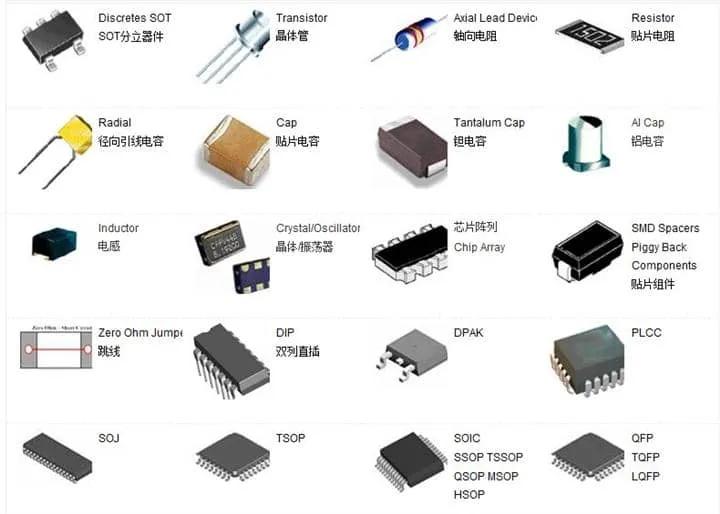
SMT Components
Understanding the cost drivers in PCB assembly is crucial for budget-conscious projects. Several factors interact to determine the final price, ranging from the physical attributes of the board to the complexity of component placement and assembly methods.
Cost Factor
Description
Impact on Cost
Board Size
The physical dimensions of the PCB.
Larger boards require more materials and processing, increasing cost.
Number of Layers
The number of conductive layers within the PCB stack-up.
More layers increase complexity and material usage, leading to higher costs.
Component Type
Surface Mount (SMT) or Through-Hole components.
SMT components are generally cheaper to assemble in volume; through-hole may be cheaper for smaller, simpler boards or prototypes.
Component Quantity
Total number of components placed on the PCB
Higher component count translates to more assembly time and cost.
Design Complexity
Density of traces, number of vias, and intricate routing.
More complex designs require more precise manufacturing and testing, which raises costs.
Assembly Method
Automated assembly (pick-and-place) or manual assembly.
Automated assembly is cost-effective for larger volumes; manual assembly might be used for prototypes or specialized jobs, and might be more expensive.
Order Volume
The total quantity of assembled PCBs ordered.
Higher volumes typically result in lower per-unit costs due to economies of scale.
Turnaround Time
The requested time to complete the assembly.
Rush orders often incur significant additional costs.
PCB Finish
Type of surface finish applied to the PCB pads (e.g., HASL, ENIG).
ENIG can be more expensive than HASL.
Testing Requirements
Level of testing required, including functional or in-circuit testing.
More comprehensive testing increases the overall cost.
Overseas vs. Domestic Cheap PCB Assembly
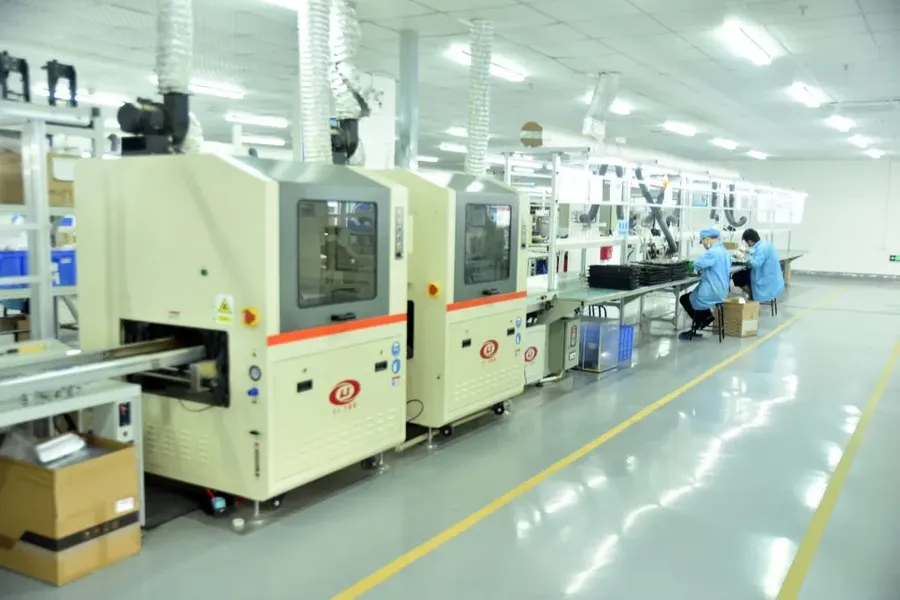
Overseas PCB Factory
The decision between overseas and domestic PCB assembly hinges on a balance of cost, speed, and quality control. Overseas options, particularly those in Asia, often present significantly lower manufacturing costs, while domestic facilities may offer faster turnaround times and potentially easier communication.
Factor
Overseas PCB Assembly
Domestic PCB Assembly
Cost
Generally lower due to lower labor and overhead costs.
Generally higher due to higher labor and operational expenses.
Turnaround Time
Longer lead times due to shipping and potential customs delays.
Shorter lead times, often with faster production and delivery.
Communication
Can be challenging due to language barriers and time zone differences; may require more diligent communication management.
Typically easier due to proximity, shared language, and time zone alignment.
Quality Control
May require more rigorous quality checks before shipping; potential for higher defect rates if not carefully monitored.
Potentially easier quality control processes and faster resolution of quality issues.
Shipping
Higher shipping costs and longer shipping times, plus potential customs clearance issues.
Lower shipping costs and faster delivery times.
Minimum Order Quantity
May have higher minimum order quantities to achieve cost savings.
May accommodate smaller order quantities or prototypes more easily.
Intellectual Property Protection
Potential concerns about intellectual property protection in some regions.
Stronger legal frameworks for intellectual property protection.
Tips for Reducing PCB Assembly Costs
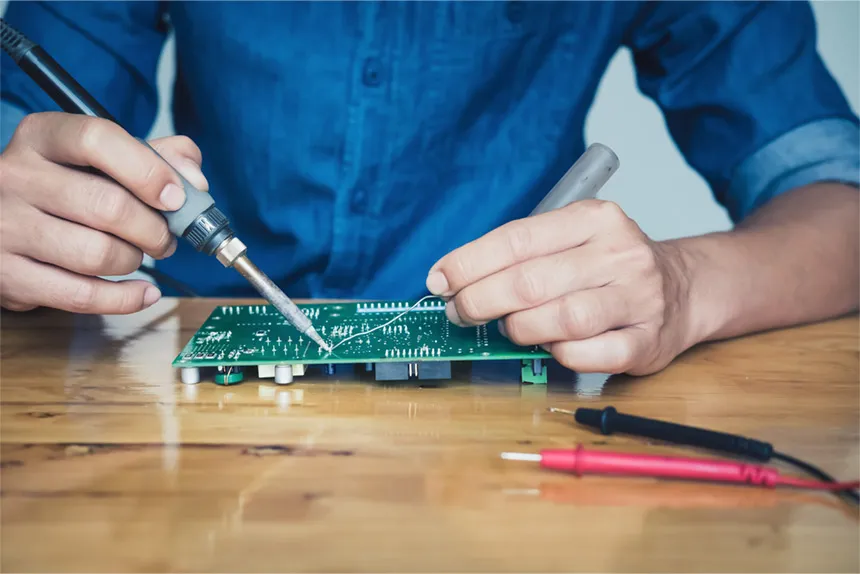
Hand Soldering PCB
Reducing PCB assembly costs is crucial for any project, especially when working within budget constraints. By implementing several strategic design and procurement practices, significant savings can be achieved without compromising on the quality or functionality of the final product. These cost-saving measures include optimizing designs for efficient manufacturability, choosing the right components, and strategic order placement.
Optimize Design for Manufacturability (DFM) DFM involves designing your PCB with the assembly process in mind. This includes ensuring proper component spacing, using standard component footprints, and avoiding small vias which might cause manufacturing issues. Simplifying the layout reduces assembly complexity and minimizes errors, lowering costs and time.
Simplify Component Selection Opt for commonly available components over exotic or specialized ones. Standard parts are produced in higher volumes, leading to lower prices. Also, consider using components with alternative sources to avoid supply chain bottlenecks and secure better prices, and be aware of component obsolescence and end-of-life status.
Avoid Rush Orders Rushing an order typically incurs premium charges due to the need for expedited processing and logistics. Planning ahead and placing orders well in advance gives manufacturers more time to schedule production, which reduces assembly costs, and avoid potential premium pricing from suppliers.
Combine Orders Where Possible Combining multiple smaller PCB assembly projects into one larger order can often result in economies of scale. Manufacturers typically offer discounts for larger volume orders, and by grouping production needs, you can significantly decrease unit costs.
Panelize Your PCBs Panelization involves grouping multiple PCB boards on one larger panel to be handled as one unit through the assembly process. This increases the efficiency of the pick-and-place machines. If your design allows, panelizing can reduce handling costs, speeding up the assembly, and improving efficiency, directly impacting the price.
Use Standardized PCB Materials and Finishes Choosing standard materials and finishes can help lower costs. Uncommon materials and specialized finishes require custom manufacturing processes that can add to the cost. Standard materials are typically in stock, and standard finishes are more widely used which translate into better pricing.
Minimize Layers Where Possible Each layer added to a PCB increases manufacturing complexity and, thus, cost. If your design allows, try to reduce the number of layers by optimizing the board layout or re-evaluating the routing. This is particularly effective when designing for low-complexity boards.
Frequently Asked Questions About Cheap PCB Assembly
Navigating the landscape of budget-friendly PCB assembly can raise several questions. This section addresses common concerns, providing clear and concise answers to help you make informed decisions.
What is the most economical method for PCB fabrication? The most economical approach often involves optimizing your PCB design for manufacturability (DFM), selecting standard components that are readily available, and choosing a manufacturer that offers competitive pricing for your required volume. Furthermore, combining your PCB orders with others, if possible, can significantly reduce costs.
How much should I expect to pay for PCB assembly? PCB assembly costs vary widely, depending on factors like board size, layer count, component quantity and type (SMT vs. through-hole), and the assembly method used. It is crucial to obtain quotes from multiple suppliers and understand all the included costs. Simple boards with minimal components will be cheaper, while complex designs will naturally cost more.
What is the cheapest PCB surface finish? The cheapest PCB finish is typically HASL (Hot Air Solder Leveling), which uses a lead-based or lead-free solder finish. HASL is a robust and cost-effective finish. However, it may not be suitable for very fine pitch components or RoHS (Restriction of Hazardous Substances) compliant assemblies which would require a lead free option. The type of finish should be determined by the application requirements and the components being used on the board.
Why can PCB assembly be so expensive? PCB assembly costs can be high due to several reasons. The precision required for component placement, the cost of materials and components, the complexity of assembly processes, and the cost of specialized equipment all contribute to the overall cost. Additional costs can also be associated with quality control, testing, and certifications.
Is it cheaper to assemble PCBs myself? While assembling PCBs yourself might seem cheaper for very small prototype runs, it quickly becomes uneconomical and impractical for even modest production runs. The cost of specialized equipment, the time investment in the assembly process, the potential for errors, and the reduced reliability of handmade assemblies make outsourcing much more cost-effective at scale. Professional assembly also benefits from robust quality control and testing procedures.
Are online PCB assembly services reliable? Many online PCB assembly services offer reliable and high-quality manufacturing options. However, due diligence is key. Researching reviews, checking for certifications (like ISO), and examining sample boards will help you identify reliable partners. It is also advisable to start with a small order to evaluate the service's quality and communication before committing to larger orders.
Does the complexity of my design affect the cost of assembly? Yes, the complexity of your PCB design is a major cost driver. Factors such as the number of layers, the number and type of components, the use of fine pitch components, the inclusion of complex routing, and specific testing requirements will all impact the overall assembly cost. Simplifying the design when possible can significantly reduce the final cost.
Choosing the Right Cheap PCB Assembly Service: A Checklist
PCB Inspection
Selecting the appropriate PCB assembly service is crucial for project success, especially when cost is a primary concern. A systematic approach using a checklist ensures that no critical aspect is overlooked, leading to a more efficient and reliable outcome.
Online Quote Availability Verify that the manufacturer offers an easily accessible online quoting system. This should allow you to quickly assess costs based on your design specifications (e.g., board size, layer count, component count), without needing lengthy back-and-forth communication.
Design Verification Services Confirm whether the service provider offers design rule checks (DRC) and design for manufacturability (DFM) analysis. These checks are critical for identifying potential manufacturing issues before production, saving time and money.
Assembly Capabilities and Component Sourcing Evaluate the manufacturer's assembly capabilities, including their ability to handle different component types (SMT, through-hole, BGA), board sizes, and complexity. Inquire about their component sourcing process, ensuring they procure genuine, high-quality components, and whether they provide a component substitution service if a component is unavailable.
Quality Assurance Protocols Investigate the quality control measures in place at the manufacturer. They should have rigorous testing protocols at different stages of the process to minimize the chances of faulty assembled boards, such as automated optical inspection (AOI) and X-ray inspection for complex component assembly. Look for evidence of compliance with industry standards like IPC.
Customer Support Responsiveness and Communication Assess the accessibility and responsiveness of their customer support channels. Evaluate if they offer multiple communication channels (email, phone, chat) and whether their customer service team is technically knowledgeable and responsive to queries and issues.
Turnaround Time and Shipping Options Confirm the average turnaround time for your order, considering all stages from design verification to assembly and testing. Assess their shipping options to ensure they align with your project timelines and budget constraints. Note that faster turnaround times often come at a premium cost, so plan accordingly.
Minimum Order Quantity (MOQ) Determine if the manufacturer has minimum order quantities, ensuring that it fits your project needs, especially for prototype stages. If prototyping is your goal, identify if they have a prototype assembly service that may have better costs and timelines for small batches
The Future of Cheap PCB Assembly
The landscape of PCB assembly is continuously evolving, with emerging trends and technologies poised to drive down costs further while improving quality and efficiency. These advancements span across automation, manufacturing processes, and supply chain strategies, heralding a future where PCB assembly is more accessible and cost-effective.
Here's a closer look at some of the key areas shaping the future of cheap PCB assembly:
Advanced Automation and Robotics Increased automation in PCB assembly processes, through the deployment of advanced robotics and automated guided vehicles (AGVs), will significantly reduce manual labor costs. These technologies enhance precision, speed, and consistency in component placement and soldering, leading to fewer errors and higher throughput.
AI and Machine Learning in Optimization AI and machine learning are being integrated into assembly line management to optimize workflows, predict potential failures, and refine processes based on real-time data. This leads to efficient resource allocation and improved production efficiency, which ultimately translates to lower costs and higher product quality.
Additive Manufacturing Technologies The use of additive manufacturing (3D printing) is gradually making inroads into PCB production, promising a shift towards direct fabrication of PCBs and reducing reliance on traditional fabrication steps and associated costs. This technology is expected to become more widespread and cost-effective for rapid prototyping and customization.
Enhanced Supply Chain Optimization Developments in supply chain management are making it possible to procure components more effectively, utilizing data analytics for demand forecasting and establishing resilient global networks to reduce component costs. This ensures stable production and minimized material costs.
Standardization and Modularization Increased standardization of PCB design formats and component footprints will allow for more automated assembly and improve compatibility across various assembly services. The use of modular designs will also enhance assembly flexibility, allowing for more efficient processes.
Collaborative Platforms Cloud-based collaborative platforms are transforming the way PCB assembly services interact with clients. These platforms facilitate more transparent communication, real-time design feedback, and order tracking, which reduces errors and delivery times. They ultimately lead to a better overall service at lower prices.
Real-World Case Studies: Examples of Cheap PCB Assembly in Action
Examining successful implementations of low-cost PCB assembly provides valuable insights into how these services can be leveraged for innovative projects. These case studies not only demonstrate the viability of budget-friendly options but also offer practical lessons for others considering similar paths. By analyzing real-world scenarios, we can highlight effective strategies and potential pitfalls, fostering informed decision-making within the community.
Case Study 1: IoT Prototyping with JLCPCB An independent developer utilized JLCPCB's assembly service to create a prototype for a new IoT sensor device. They designed a two-layer board featuring several SMT components. By carefully optimizing their design for manufacturability and leveraging JLCPCB's component library, they managed to keep assembly costs under $100 for a small batch of boards. This enabled rapid iteration of their design and timely progression to the next development stage.
Case Study 2: Open-Source Hardware Project with PCBWay A community-driven open-source hardware initiative utilized PCBWay to produce a batch of custom controller boards. They opted for a four-layer board due to the integration of advanced components, which are essential for the project. By thoroughly checking the design and engaging in active communication with PCBWay's technical support to resolve any potential manufacturability issues, they were able to achieve a functional and reliable final product, which was made accessible to all their stakeholders at very low cost.
Case Study 3: Educational Robotics Project with ALLPCB A university robotics team chose ALLPCB for assembling custom boards, with a specific focus on components suitable for robotics applications, such as motor controllers and communication modules. They were able to reduce the cost of the boards by selecting commonly used standard components and ensuring adherence to Design for Assembly (DFA) principles. The team also took advantage of ALLPCB's efficient batch ordering option to further decrease the per-unit costs.
Finding the right cheap PCB assembly solution doesn't mean sacrificing quality. By understanding your project's unique needs, comparing available options, and employing cost-saving techniques, you can achieve your electronics goals without breaking the bank. The landscape of cheap PCB assembly is rapidly evolving, presenting exciting opportunities for innovators across the board, from hobbyists bringing their ideas to life, to businesses scaling up production. With informed decision making and thoughtful planning, cheap pcb assembly becomes an enabling force, driving the future of technology and invention.