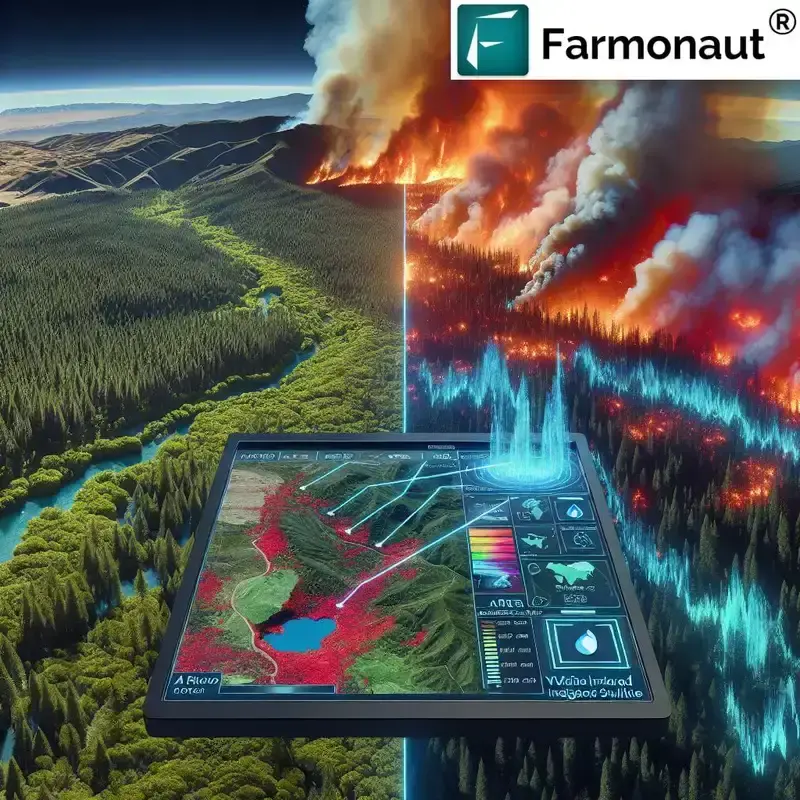
Forest fires pose a significant threat to ecosystems, human lives, and infrastructure globally. Early detection is crucial in mitigating their devastating impact. Traditional methods often fall short in providing timely and accurate information, especially in remote and vast forested areas. Zero One Solution Limited, a leading PCB solutions provider specializing in rapid prototyping, addresses this challenge with an innovative Forest Fire Hazard Monitoring Buoy Solution, leveraging advanced PCB design and manufacturing to enhance wildfire detection and response.
Introduction: The Growing Threat of Forest Fires
Forest fires, once seasonal occurrences, are now a persistent global menace, escalating in frequency and intensity with devastating consequences for ecosystems, economies, and human lives. The increasing volatility of climate patterns, combined with human activities, creates a precarious environment where early detection and proactive monitoring are no longer optional but imperative for effective mitigation. This escalating crisis underscores an urgent demand for advanced detection and monitoring systems capable of providing real-time intelligence to prevent catastrophic blazes and safeguard our planet's vital forest resources.
The Forest Fire Hazard Monitoring Buoy Solution: An Overview
Forest Fire Monitoring Buoy
Zero One Solution's Forest Fire Hazard Monitoring Buoy Solution represents a paradigm shift in proactive wildfire management, leveraging advanced PCB technology to provide unparalleled early detection capabilities. This innovative system is engineered to meticulously monitor vast forest areas, identifying potential fire threats long before they escalate into uncontrollable conflagrations, thereby safeguarding natural ecosystems and human lives. Each buoy acts as a vigilant sentinel, autonomously collecting and transmitting critical environmental data to a centralized analysis platform, facilitating rapid response and mitigation efforts.
Integrated Sensor Array The buoy integrates a sophisticated array of sensors designed to detect the earliest indicators of a wildfire. These include highly sensitive temperature and humidity sensors that can identify abnormal environmental changes, smoke detectors capable of sensing minute particulate matter, and volatile organic compound (VOC) sensors to detect the chemical signatures associated with combustion. Our PCB expertise ensures the compact integration and robust performance of these diverse sensors in harsh outdoor conditions.
Robust Communication Modules Reliable data transmission is critical for effective monitoring. The buoy is equipped with multi-modal communication modules, including LoRaWAN, NB-IoT, and satellite connectivity options, ensuring seamless data transfer even in remote areas with limited cellular infrastructure. This redundancy guarantees that critical alerts reach response teams without delay, enabling immediate intervention. The PCB design optimizes power efficiency for these communication modules, extending battery life in autonomous operations.
This holistic approach, from advanced sensor integration to redundant communication, underscores Zero One Solution's commitment to delivering a comprehensive and highly effective forest fire monitoring system. Our expertise in rapid PCB prototyping and manufacturing is fundamental to the agility and reliability of each buoy, ensuring that every unit deployed is a precision-engineered instrument ready to protect our vital forest resources.
Key Components and PCB Design
Buoy Circuit Board
The efficacy of any advanced monitoring system, especially one designed for critical environmental applications like forest fire detection, hinges entirely on the integrity and precision of its core components and their underlying Printed Circuit Board (PCB) infrastructure. Zero One Solution’s Forest Fire Hazard Monitoring Buoy stands as a testament to this principle, integrating cutting-edge sensors, robust communication modules, and reliable power systems, all meticulously designed and optimized through our rapid PCB prototyping and manufacturing expertise to ensure unparalleled performance and unwavering reliability in the most challenging forest environments.
Environmental Sensors At the forefront of early detection, the buoy integrates a suite of highly sensitive environmental sensors. These include: temperature sensors capable of detecting minute changes, humidity sensors to monitor moisture levels in the air and fuel, smoke detectors sensitive to early-stage combustion byproducts, and optionally, infrared sensors for pinpointing hotspots. The precision and rapid response of these sensors are paramount, demanding a PCB layout that minimizes signal interference and ensures accurate data acquisition under varying conditions.
Communication Modules Reliable data transmission from remote forest locations is crucial. Our buoys incorporate advanced communication modules, often leveraging LoRaWAN (Long Range Wide Area Network) for its low power consumption and extensive range, or satellite communication for truly isolated areas. These modules are carefully selected and integrated onto PCBs designed for optimal antenna performance and signal integrity, ensuring that critical data reaches central monitoring stations without delay, even across vast and challenging terrains.
Power Management Systems Given the remote and autonomous nature of the buoys, an efficient and robust power management system is essential. This typically involves solar panels for continuous recharging, coupled with high-capacity, long-life batteries (e.g., LiFePO4) to ensure uninterrupted operation during prolonged periods of low sunlight or at night. The PCB design for power management prioritizes energy efficiency, stable voltage regulation, and robust charging circuits to maximize operational uptime and system longevity in harsh outdoor conditions.
Microcontroller and Data Processing Unit The brain of the buoy, the microcontroller, processes data from all sensors, manages communication protocols, and executes pre-programmed logic for alert triggering. Our PCB designs for these units emphasize compact size, low power consumption, and thermal management, ensuring stable and reliable operation. Zero One Solution's expertise allows for the integration of custom-designed processing units tailored for optimal performance in data-intensive, real-time monitoring applications.
Component Category
Key PCB Design Considerations
Zero One Solution's Advantage
Environmental Sensors
Signal integrity, noise reduction, precise analog-to-digital conversion
Expertise in high-precision analog and mixed-signal PCB layouts for sensor accuracy
Communication Modules
Antenna impedance matching, RF interference mitigation, power efficiency
Advanced RF PCB design capabilities ensuring robust and long-range wireless communication
Power Management Systems
Efficient power conversion, battery charging and protection, low quiescent current
Optimized power PCB designs for extended battery life and reliable autonomous operation
Microcontroller & Data Processing
Thermal management, component density, reliability in harsh environments
High-density interconnect (HDI) and multi-layer PCB design for compact, durable, and high-performance units
Wireless Sensor Network Integration
The efficacy of the Forest Fire Hazard Monitoring Buoy Solution hinges significantly on its seamless integration with a robust Wireless Sensor Network (WSN). These networks form the backbone for real-time data acquisition, acting as the eyes and ears in vast, often inaccessible, forested terrains. By establishing a dense mesh of interconnected buoys, WSNs enable continuous, comprehensive environmental monitoring, which is paramount for early wildfire detection and prevention. This distributed data collection system transcends the limitations of traditional, localized monitoring methods, providing a holistic view of the forest's health and potential fire risks.
Real-time Data Acquisition WSNs are instrumental in continuously gathering critical environmental parameters such as temperature, humidity, and the presence of smoke or harmful gases. This real-time data stream provides immediate insights into evolving conditions, allowing for rapid response to anomalous readings.
Enhanced Spatial Coverage Unlike point-based sensors, a network of buoys distributed across a large area provides extensive spatial coverage. This allows for the precise localization of potential fire ignition points, even in remote or challenging geographical areas that are difficult to patrol manually.
Resilient and Redundant Communication Modern WSNs are designed with built-in redundancy, meaning if one communication path fails, data can be rerouted through alternative nodes. This ensures the continuous flow of vital information to the central monitoring station, enhancing the overall reliability of the system.
Low Power Consumption for Extended Deployment Optimized for energy efficiency, the wireless sensor nodes in the buoys consume minimal power, enabling prolonged operational lifespans without frequent maintenance or battery replacement. This is crucial for deployments in remote forest environments where access is limited.
Scalability and Adaptability The modular nature of WSNs allows for easy expansion or reconfiguration. Additional buoys can be seamlessly integrated into the network to increase coverage or data density as needed, making the solution highly scalable for diverse forest sizes and topographies.
WSN Feature
Impact on Forest Fire Monitoring
Multi-parameter Sensing
Enables comprehensive environmental profiling (temperature, humidity, smoke, CO2) for accurate fire hazard assessment
Mesh Networking Capability
Ensures robust and redundant data transmission, even in areas with partial node failures
Low-Power Protocols
Extends battery life of buoys, reducing maintenance frequency and operational costs
Remote Configuration & Diagnostics
Allows for system adjustments and troubleshooting without physical access to each buoy
GPS Integration
Provides precise location data for each buoy, facilitating rapid deployment and targeted response
Data Analytics and Alerting Systems for Forest Fire Hazard Monitoring
Effective forest fire hazard monitoring hinges on the sophisticated analysis of real-time environmental data and the rapid dissemination of critical alerts. Zero One Solution's buoy system leverages advanced data analytics to interpret sensor readings, identifying subtle patterns indicative of impending fire risks, and then seamlessly integrates these insights into robust alerting protocols to ensure timely and actionable responses from authorities and stakeholders.
How does the buoy system analyze data to detect fire hazards? The buoy system continuously collects data from a suite of sensors, including temperature, humidity, smoke particulates, and volatile organic compounds (VOCs). This raw data is then transmitted to a central processing unit where proprietary algorithms, often incorporating machine learning models, analyze trends and deviations from normal environmental baselines. For instance, a sudden spike in temperature combined with a rise in VOCs and decreasing humidity would trigger a high-confidence fire hazard alert, distinguishing it from general environmental fluctuations.
What specific data points are critical for fire detection? Key data points include ambient temperature, relative humidity, smoke density (measured by particulate matter sensors), and the presence of specific gases like carbon monoxide (CO) and carbon dioxide (CO2), which are early indicators of combustion. Additionally, wind speed and direction data can be crucial for predicting fire spread. The correlation and rate of change of these parameters are more important than individual threshold breaches.
How are alerts generated and disseminated to relevant authorities? Once the data analytics identifies a high-probability fire hazard, the system automatically triggers multi-channel alerts. These can include SMS notifications to pre-registered personnel, email alerts to command centers, and direct integration with existing emergency response platforms. The system is designed to provide location-specific data, including GPS coordinates of the detected anomaly, and a confidence level for the alert, enabling authorities to prioritize and dispatch resources efficiently.
What are the different levels of alerts and their implications? Alerts typically operate on a tiered system: a 'Pre-Cautionary Alert' might be issued for minor anomalies requiring further observation; a 'Warning Alert' indicates a significant deviation suggesting a high potential for fire, prompting readiness; and a 'Critical Alert' signifies confirmed fire detection, demanding immediate and coordinated emergency response. Each level corresponds to predefined protocols for escalation and action by forestry services, fire departments, and local authorities.
Can the system integrate with existing emergency management infrastructure? Yes, Zero One Solution's buoy system is designed for interoperability. It utilizes standard communication protocols (e.g., MQTT, RESTful APIs) to facilitate seamless integration with existing emergency management platforms, GIS systems, and weather monitoring networks. This ensures that the data and alerts flow directly into the operational workflows of emergency responders, avoiding data silos and accelerating response times. Custom integration capabilities are also available to meet specific client requirements.
Benefits of the Zero One Solution Approach
Zero One Solution's Forest Fire Hazard Monitoring Buoy Solution stands as a paradigm shift in wildfire prevention, offering a suite of unparalleled advantages rooted in advanced PCB technology and meticulous engineering. This innovative approach provides critical early detection, operational efficiency, and long-term reliability, ultimately safeguarding both natural resources and human lives.
Early and Accurate Detection Our buoy solution leverages high-precision sensors and sophisticated algorithms to detect the earliest indicators of fire, such as minute changes in temperature, humidity, and smoke particles. This proactive capability significantly reduces response times, allowing authorities to contain fires before they escalate into uncontrollable conflagrations. The granular data provided ensures a high degree of accuracy, minimizing false alarms and optimizing resource allocation. This is a critical departure from traditional methods that often rely on visual confirmation, which can be too late in rapidly spreading wildfires.
Cost-Effectiveness and Scalability The modular design and efficient power management of our buoys translate into a remarkably cost-effective solution for widespread deployment. Unlike labor-intensive ground patrols or expensive aerial surveillance, our automated system provides continuous monitoring without the recurring operational overhead. Furthermore, the scalability of the wireless sensor network allows for seamless expansion to cover vast and diverse forested areas, adapting to varying topographical and environmental challenges without a prohibitive increase in expenditure.
Effortless Deployment and Maintenance Designed for simplicity, the buoys boast a compact and lightweight structure, enabling rapid and straightforward deployment in even remote and challenging terrains. Their robust construction and low-power consumption minimize the need for frequent maintenance, drastically reducing logistical complexities and operational downtime. This ease of deployment ensures that critical areas can be monitored swiftly, a crucial factor in dynamic fire-prone regions.
Robust Performance in Harsh Environments Engineered with industrial-grade components and housed in resilient enclosures, our buoy solutions are built to withstand the most extreme environmental conditions, from scorching heat and intense humidity to heavy rainfall and strong winds. The PCBs are designed for optimal thermal management and protection against electromagnetic interference, guaranteeing consistent and reliable operation year-round, even in the most unforgiving wilderness settings. This ensures uninterrupted data flow, which is paramount for effective fire hazard monitoring.
Enhanced Situational Awareness By providing continuous, real-time data on environmental parameters, the Zero One Solution approach offers unparalleled situational awareness to emergency responders and forest management agencies. This comprehensive data allows for more informed decision-making, enabling precise resource deployment, targeted suppression efforts, and efficient evacuation planning, thereby significantly mitigating the overall impact of forest fires on ecosystems and communities.
Applications and Case Studies
Buoy in Forest Deployment
The Forest Fire Hazard Monitoring Buoy Solution, engineered by Zero One Solution Limited with advanced PCB technology, offers versatile applications across diverse forest environments, proving instrumental in proactive wildfire management. Its adaptability and robust performance make it an indispensable tool for governments, forestry agencies, and private landholders committed to safeguarding natural resources and human lives.
National Parks and Protected Areas In vast and ecologically sensitive national parks, where human access is limited and fire risks are high, the buoy solution provides continuous, real-time monitoring. For instance, in a pilot deployment within a national park prone to dry season fires, buoys detected a rapid rise in ambient temperature and smoke particles, triggering an alert that enabled park rangers to extinguish a nascent fire before it escalated, saving hundreds of acres of pristine forest. This capability significantly reduces response times, a critical factor in fire suppression success rates according to the National Interagency Fire Center (NIFC).
Commercial Timberlands and Plantations For commercial forestry operations, early fire detection is vital for protecting valuable timber assets and ensuring business continuity. A case study in a large commercial eucalyptus plantation, which had previously suffered significant losses from fast-moving ground fires, demonstrated the buoy system's efficacy. Strategically placed buoys identified a smoldering fire originating from a lightning strike within minutes, allowing rapid deployment of fire crews and minimizing economic damage to under 1% of the affected area, a drastic improvement from previous incidents. This highlights the substantial return on investment from preventing large-scale destruction.
Wildland-Urban Interface (WUI) Zones In areas where wildlands meet residential developments, the risk to human life and property is paramount. The buoy solution serves as a critical early warning system, providing residents and emergency services with precious time to evacuate or prepare. In a WUI community adjacent to a dense forest, the system detected a wind-driven ember ignition, issuing an immediate alert that facilitated the swift evacuation of at-risk homes and the precise targeting of initial attack resources, averting what could have been a catastrophic urban conflagration. This proactive approach significantly enhances community resilience and safety.
Zero One Solution's Expertise in PCB Solutions
PCB Assembly Line
Zero One Solution Limited stands as a beacon of excellence in the Printed Circuit Board (PCB) industry, offering unparalleled expertise in rapid prototyping, manufacturing, and assembly. Our comprehensive, one-stop service from design to final product ensures that innovative solutions like the Forest Fire Hazard Monitoring Buoy are not only conceptualized but brought to fruition with precision, speed, and uncompromising quality.
Rapid PCB Prototyping We accelerate product development cycles by providing rapid PCB prototyping services. This crucial capability allows for quick iteration and testing of designs, minimizing time-to-market for critical solutions such as environmental monitoring systems. Our advanced facilities and skilled engineers ensure that even complex prototypes are produced with high accuracy and efficiency, enabling our clients to validate concepts swiftly and move to production with confidence.
Precision Manufacturing Leveraging state-of-the-art manufacturing processes and stringent quality control, Zero One Solution delivers PCBs that meet the highest industry standards. From multi-layer boards for sophisticated sensor arrays to robust designs for harsh environmental conditions, our manufacturing prowess ensures reliability and durability, critical for applications like the Forest Fire Hazard Monitoring Buoy which operates in challenging outdoor settings.
Seamless PCB Assembly (PCBA) Our end-to-end capabilities extend to professional PCB assembly, where components are meticulously integrated onto the manufactured boards. With advanced SMT (Surface Mount Technology) and THT (Through-Hole Technology) lines, we handle diverse component requirements with precision. This seamless integration from design to assembly ensures optimal performance and reduces potential issues, providing a reliable foundation for all electronic systems.
Commitment to Quality and Innovation Quality is the cornerstone of Zero One Solution's operations. We adhere to international quality management systems, ensuring every PCB and assembly meets rigorous performance and reliability benchmarks. Our continuous investment in R&D and adoption of cutting-edge technologies reflects our commitment to innovation, enabling us to offer solutions that are not only effective today but also future-proof.
Customer-Centric Approach At Zero One Solution, client satisfaction is paramount. We foster strong collaborative relationships, offering tailored solutions and dedicated support throughout the project lifecycle. Our expertise in navigating the global PCBA supply chain, with strategic locations in Shenzhen and Dubai, ensures efficient resource allocation and timely delivery, empowering our clients to achieve their objectives with unparalleled efficiency and support.
Future Developments and Innovations in Forest Fire Hazard Monitoring Buoys
AI Forest Fire Monitoring
The evolution of forest fire hazard monitoring buoys is a continuous journey, driven by advancements in sensor technology, artificial intelligence, and communication protocols. Zero One Solution is committed to pushing these boundaries, exploring innovations that will further enhance the precision, autonomy, and scalability of our monitoring systems, ultimately providing even more robust protection against devastating wildfires.
AI-Powered Predictive Analytics Integration Future iterations of our buoy solution will incorporate advanced AI and machine learning algorithms. This will enable predictive analytics, moving beyond reactive detection to forecast potential fire outbreaks based on complex environmental data patterns, historical trends, and real-time sensor inputs. Such capabilities would allow for proactive mitigation strategies, identifying high-risk areas before ignition even occurs. This is achieved by training neural networks on vast datasets of meteorological conditions, vegetation types, topography, and past fire incidents to identify subtle precursors to wildfire events, offering an unparalleled level of foresight for prevention and resource allocation.
Integration with Drone-Based Monitoring Systems A significant future development involves seamless integration with autonomous drone systems. While buoys provide stationary, continuous ground-level data, drones can offer rapid aerial assessment, visual confirmation of alerts, and detailed imagery of developing incidents. This synergy would create a multi-layered monitoring network, where buoys trigger initial alerts, and drones are then dispatched to verify and provide comprehensive real-time situational awareness, enhancing response times and efficiency. The drones would be equipped with thermal cameras, multispectral sensors, and high-resolution optical cameras, all communicating with the central data platform to provide a holistic view of the forest environment.
Enhanced Energy Harvesting and Power Management To extend operational longevity and reduce maintenance, future buoys will focus on more sophisticated energy harvesting technologies, including advanced solar, wind, and even vibrational energy collection. Coupled with intelligent power management units designed with our rapid PCB prototyping expertise, these systems will ensure sustained operation in remote areas with minimal human intervention, maximizing deployment efficiency and cost-effectiveness. Innovations in low-power wide-area network (LPWAN) technologies and energy-efficient microcontrollers will further reduce the power footprint of the buoy systems, enabling extended field deployments without battery replacement.
Advanced Sensor Miniaturization and Versatility Continued research and development will lead to even smaller, more versatile, and cost-effective sensors. This includes miniaturized gas sensors capable of detecting specific chemical signatures associated with early combustion, high-precision humidity and temperature sensors with reduced drift, and even acoustic sensors to detect early signs of burning. The integration of these advanced, compact sensors into the buoy's PCB will be a cornerstone of our future designs, enhancing detection capabilities while maintaining a compact footprint. This will enable more granular data collection across wider areas with increased spatial resolution.
Conclusion: Protecting Our Forests with Advanced PCB Technology
The escalating global threat of forest fires necessitates proactive, technologically advanced solutions for early detection and prevention. Zero One Solution Limited's Forest Fire Hazard Monitoring Buoy Solution, underpinned by our cutting-edge PCB technology, stands as a testament to this imperative, offering a robust and reliable defense against devastating wildfires. This innovative system embodies the fusion of sophisticated sensor technology, efficient wireless communication, and precise data analytics, all integrated through our unparalleled expertise in rapid PCB prototyping and assembly.
What is the primary contribution of advanced PCB technology to forest fire monitoring solutions? Advanced PCB technology is fundamental to enabling the miniaturization, robustness, and efficient power management required for effective forest fire monitoring solutions. It provides the reliable foundation for integrating diverse sensors, communication modules, and processing units into compact, durable, and energy-efficient devices like the monitoring buoy, ensuring their functionality in harsh environmental conditions and facilitating rapid prototyping for quick deployment and iterative improvements.
How does Zero One Solution's buoy contribute to early wildfire detection? Zero One Solution's buoy contributes to early wildfire detection by employing a suite of environmental sensors (temperature, humidity, smoke, CO, etc.) that continuously monitor critical parameters. This real-time data is transmitted via wireless sensor networks to a central system, which, through sophisticated analytics, identifies anomalies indicative of a nascent fire. This rapid detection capability allows authorities to respond swiftly, often before a small ignition escalates into a large-scale inferno, thereby significantly mitigating damage and risk.
The Forest Fire Hazard Monitoring Buoy Solution represents a significant advancement in early wildfire detection and prevention. By integrating cutting-edge PCB technology and wireless sensor networks, Zero One Solution Limited offers a robust, reliable, and cost-effective solution for safeguarding our forests. As a pioneer in rapid PCB prototyping and assembly, Zero One Solution is committed to delivering innovative solutions that address critical environmental challenges. Contact us today to learn more about how our PCB solutions can contribute to a safer, more sustainable future.