Get Instant PCB Manufacturing Online Quote: A Comprehensive Guide
2025.01.15
In today's fast-paced electronics industry, obtaining a PCB manufacturing online quote quickly and efficiently is crucial. Like ordering custom clothing online, getting a precise quote for your printed circuit board (PCB) needs can feel like a black box without understanding the key factors and available options. This article will guide you through the process, empowering you with knowledge and practical tips to secure the best possible quote and bring your electronic designs to life, all while highlighting the importance of reliable online platforms offering pcb manufacturing online quote services.
Understanding the Basics of PCB Quotes
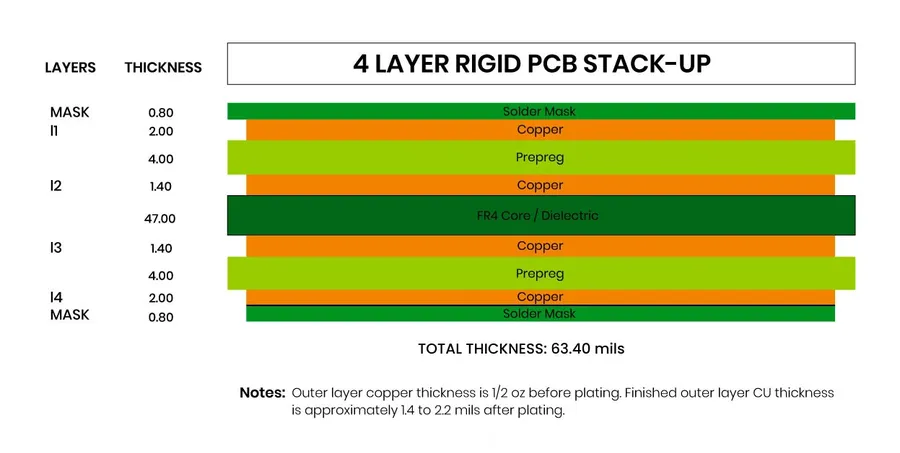
PCB Stack
A Printed Circuit Board (PCB) quote is a detailed estimate of the cost to manufacture a specific PCB design. The final price is a complex function of multiple factors, including board dimensions, the number of layers, the material used, and the complexity of the fabrication process. Even minor changes in these parameters can lead to substantial variations in the final quote, making it crucial to understand the fundamental elements that determine PCB pricing.
Factor
Description
Impact on Quote
Board Size
The physical dimensions of the PCB.
Larger boards generally cost more due to increased material and processing time.
Layer Count
The number of conductive layers within the PCB.
Higher layer counts increase complexity and manufacturing cost significantly.
Material Type
The base material of the PCB (e.g., FR-4, aluminum).
Different materials have varying costs based on performance characteristics.
Fabrication Complexity
The intricacy of the design including trace widths, spacing, and vias.
More complex designs require more precise manufacturing, increasing cost.
Key Factors Affecting PCB Manufacturing Costs
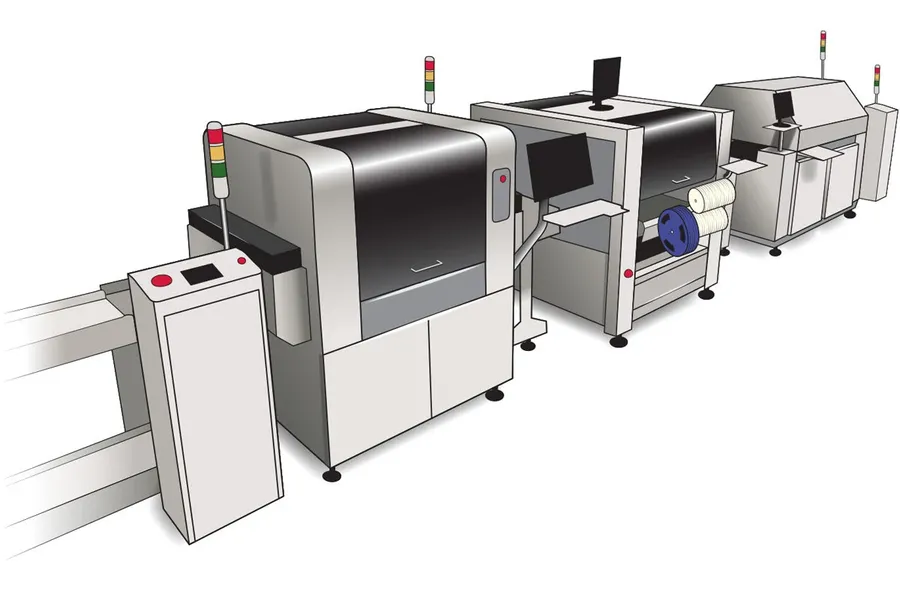
PCB Manufacturing Machines
Understanding the intricacies of PCB manufacturing costs is crucial for effective budgeting and project planning. Several key factors influence the final price, each contributing to the overall complexity and expense of producing a printed circuit board. These factors include layer count, material selection, board thickness, surface finish, copper weight, and the chosen manufacturing technologies.
Factor
Description
Impact on Cost
Layer Count
Number of conductive layers in the PCB. Commonly ranges from single-layer to complex multi-layer boards.
Higher layer counts increase complexity, material usage, and processing time leading to increased cost. A 4-layer board is significantly more expensive than a 2-layer board, especially as the layer count increases further.
Material Selection
Type of substrate used, such as FR-4, aluminum, polyimide. FR-4 is the most common and cost-effective.
Advanced materials like aluminum or polyimide are used for thermal management or high-frequency applications, but are more expensive.
Board Thickness
Overall thickness of the PCB. Standard thicknesses are often cheaper than custom sizes.
Non-standard board thicknesses can increase material and tooling costs. Standard thicknesses typically include 0.8mm, 1.0mm, 1.6mm.
Surface Finish
Protective coating applied to the copper traces and pads, such as HASL (Hot Air Solder Leveling), ENIG (Electroless Nickel Immersion Gold), or OSP (Organic Solderability Preservative).
ENIG provides superior solderability and corrosion resistance, but is more expensive than HASL or OSP. HASL is generally the lowest cost option.
Copper Weight
Thickness of the copper traces, measured in ounces per square foot (oz/ft²). Standard is 1 oz/ft².
Higher copper weights are used for high-current applications, but require more processing and increase material costs. 1 oz/ft² is standard and most cost-effective, with 2 oz/ft² and above adding to the overall cost.
Manufacturing Technology
Techniques employed, such as standard milling, laser drilling, HDI (High-Density Interconnect).
More advanced manufacturing technologies like HDI can significantly increase costs due to specialized equipment and processes.
Navigating Online PCB Quote Platforms
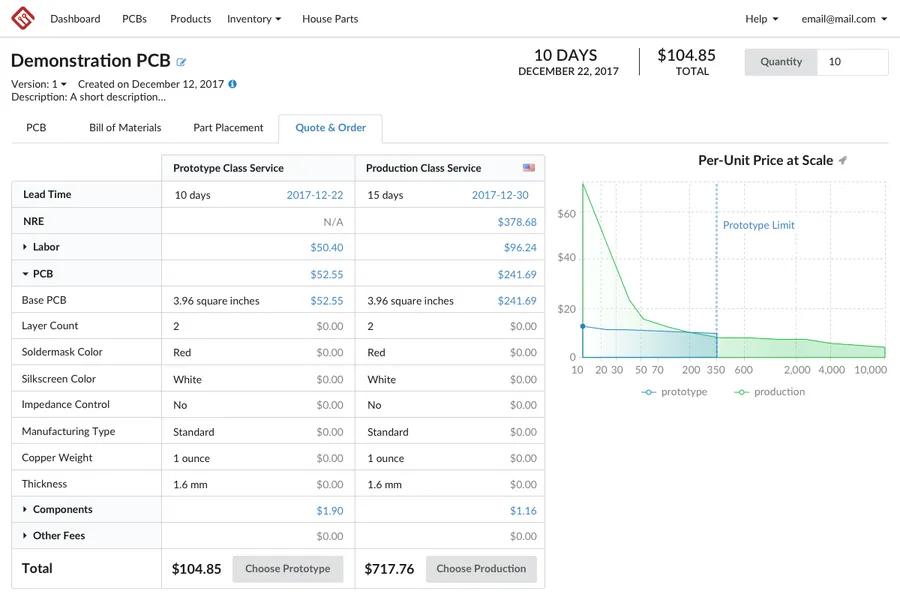
Online PCB Platform
Online PCB quote platforms serve as the initial interface for obtaining pricing for your circuit board manufacturing needs. These platforms vary significantly in usability, features, and the clarity of pricing information they provide. Effectively navigating these platforms is critical to securing the best possible pcb manufacturing online quote for your specific project.
Ease of Use A user-friendly interface is paramount. Look for platforms that offer intuitive navigation and clear instructions. A well-designed platform reduces the likelihood of errors during the quoting process and saves valuable time.
Gerber File Upload Process The process for uploading Gerber files (the standard file format for PCB manufacturing) should be straightforward. Ideally, the platform should support multiple Gerber file formats and provide clear error messages if files are missing or incorrect. Some platforms also offer automatic file verification features.
Real-Time Quote Generation The speed at which a quote is generated is an important factor. Some platforms provide instant quotes based on your uploaded files and specified parameters, while others may require a manual review, leading to a delay in receiving pricing information.
Clarity of Pricing Information The platform should clearly break down all cost components, including setup fees, per-unit costs, tooling charges, and shipping expenses. Transparency in pricing helps avoid unexpected costs and allows for better cost planning.
Range of Options and Customization Check if the platform provides a comprehensive list of options for materials, layers, surface finishes, and other parameters. This is vital for accurately reflecting your design needs in the quote.
Available Support Channels Access to customer support via phone, email, or live chat can be helpful if you encounter issues or have questions while using the platform. Prompt and effective support can prevent project delays and costly mistakes.
Effectively using online PCB quote platforms involves preparing your Gerber files correctly, understanding the various manufacturing options, and utilizing the tools provided by the platforms. Proper preparation and a clear understanding of your requirements will allow you to accurately compare different manufacturers' prices and lead times.
Comparing Different PCB Manufacturers Online
Various Brand PCBs
Selecting the right PCB manufacturer is a critical step in ensuring the success of your project. The online landscape offers a plethora of options, each with its own set of strengths and weaknesses. A thorough comparison across multiple manufacturers is essential for achieving the optimal balance of cost, quality, and turnaround time. This section will equip you with the necessary knowledge to make an informed decision.
Factor
Description
Considerations
Manufacturing Capabilities
The range of PCB types and technologies a manufacturer can produce.
Ensure they can handle your project's complexity (e.g., layer count, material, special finishes).
Lead Times
The time it takes for a manufacturer to complete and ship your order.
Consider your project timeline and choose a manufacturer that can meet your deadlines.
Customer Support
The availability and quality of support provided by the manufacturer.
Look for responsiveness, technical expertise, and clear communication channels.
Certifications
Accreditations that demonstrate a manufacturer's quality and reliability.
ISO, UL, or other relevant certifications can indicate a higher standard of manufacturing.
Range of Services
Additional services offered, such as PCB assembly, stencil production, and testing.
If you need these services, choosing a manufacturer that provides them can streamline your process.
Cost
The overall price of manufacturing your PCBs, including tooling, materials, and shipping.
Compare quotes across different manufacturers, and consider volume discounts for larger orders.
Geographical Location
The physical location of the manufacturer.
Shipping costs and lead times may vary significantly based on location.
Optimizing Your PCB Design for Cost-Effectiveness
PCB Layout Design
Optimizing your PCB design is crucial for minimizing manufacturing costs. By strategically addressing design choices, you can significantly reduce expenses without compromising functionality. This involves focusing on minimizing complexity, material usage, and manufacturing process overhead, directly impacting the final pcb manufacturing online quote.
Several design strategies can drastically reduce costs:
Layer Count Reduction Each additional layer increases manufacturing complexity and cost. Carefully evaluate your design to minimize layer count. For example, by routing more efficiently or using component placement optimization, you can potentially reduce from a four-layer board to a two-layer one, saving a considerable amount of money.
Material Selection While FR-4 is a common and cost-effective material, consider if your application requires specialized materials with enhanced thermal or electrical properties. Unless absolutely necessary, using standard materials like FR-4 will keep costs down.
Board Size Optimization Keep the board as small as possible to use less material, reduce waste and also improve handling efficiency during the fabrication process. Careful component placement and routing optimization helps.
Simplifying Board Layout A simpler board layout with fewer complex routing paths, vias and smaller trace widths reduces the manufacturing complexity and risk of defects. This will also help in lowering the cost. Consider increasing component density rather than adding another layer.
Panelization If ordering multiple PCBs consider using a panel to maximize the manufacturer's efficiency and hence reduce cost per unit. Panelization provides efficiencies of scale when manufacturing multiple PCBs during production.
By applying these strategies, you not only lower your manufacturing costs but also improve manufacturability, leading to faster turnaround times and higher quality boards. Always consider the trade-offs between cost savings and design requirements to achieve the optimal balance for your project.
Frequently Asked Questions About PCB Manufacturing Online Quotes
This section addresses common inquiries regarding PCB manufacturing costs, providing clarity on how to estimate expenses, understand cost drivers, and identify cost-effective production methods. Whether you're a seasoned engineer or a hobbyist, understanding these nuances is crucial for efficient project management.
How much does it cost to get a PCB assembled? The cost of PCB assembly varies greatly depending on several factors, including the number of components, the complexity of the board, the type of components (surface mount vs. through-hole), and the assembly method (manual vs. automated). For simple boards with a few surface-mount components, the cost might range from a few cents to several dollars per board. For complex boards with numerous through-hole components, the cost can be significantly higher. It's best to get a quote from a manufacturer to accurately gauge the expenses.
How can I estimate PCB assembly costs accurately? Estimating PCB assembly costs requires a detailed Bill of Materials (BOM) listing all components, including their cost and quantities. Further, considerations should be given to labor costs, equipment costs, and the manufacturing process itself. Some online platforms offer PCB assembly cost calculators that use these parameters to provide estimates. For accurate results, it is always recommended to consult directly with a PCB manufacturer after you finalize your PCB design and BOM.
What should a PCB typically cost? The cost of a PCB depends on multiple factors, such as board size, layer count, material selection (e.g., FR-4, aluminum), copper thickness, surface finish, and order volume. For instance, a small, single-layer FR-4 board might cost less than a dollar, whereas a large, multilayer board with special materials and surface finishes can cost tens or even hundreds of dollars. A crucial point to remember is that cost per unit dramatically decreases with increased order quantities.
What is the most cost-effective method for PCB production? For prototyping and small runs, using an online PCB manufacturing service is often the cheapest option. These services offer competitive prices, especially if your design meets their standard manufacturing parameters. To reduce costs, adhere to standard board sizes and thicknesses, minimize the number of layers, and avoid overly complex designs. Utilizing panelization also significantly lowers the cost per board. For larger production volumes, consider negotiating with manufacturers for bulk discounts.
What factors influence the cost per square inch of a PCB? Several factors influence the cost per square inch of a PCB. These include the material used (FR-4, high-Tg, etc.), the number of layers (single, double, multi-layer), the thickness of the copper layer, any special finishes needed (e.g., ENIG, HASL), the size and complexity of the board, and the order quantity. Increased complexity and more specialized features will increase the per-square-inch cost. Additionally, tighter tolerances and advanced manufacturing techniques will also increase costs. Larger production volumes tend to bring the cost down significantly.
How can hobbyists find affordable PCB manufacturing options? Hobbyists can find affordable options by choosing online PCB manufacturers that specialize in smaller runs and hobbyist-friendly pricing. To keep costs down, hobbyists should select basic FR-4 materials, standard thicknesses, standard layer counts, and simplified designs. Ordering through group buys or using student discounts (when available) can also further decrease costs. Additionally, focusing on single- or double-layer PCBs can help minimize expenses.
Do PCB assembly cost calculators provide accurate estimates? PCB assembly cost calculators can give a rough estimate but are rarely 100% accurate. These tools typically use pre-programmed algorithms based on common parameters, so they are useful for preliminary budgeting. For more accurate quotes, you need to submit your design to a manufacturer. The actual cost can vary due to specific component availability, labor rates, and manufacturer overheads. Therefore, it's best to use calculators as initial guidance and obtain firm quotes from manufacturers for realistic budgetary purposes.
Actionable Tips for Obtaining an Accurate PCB Online Quote
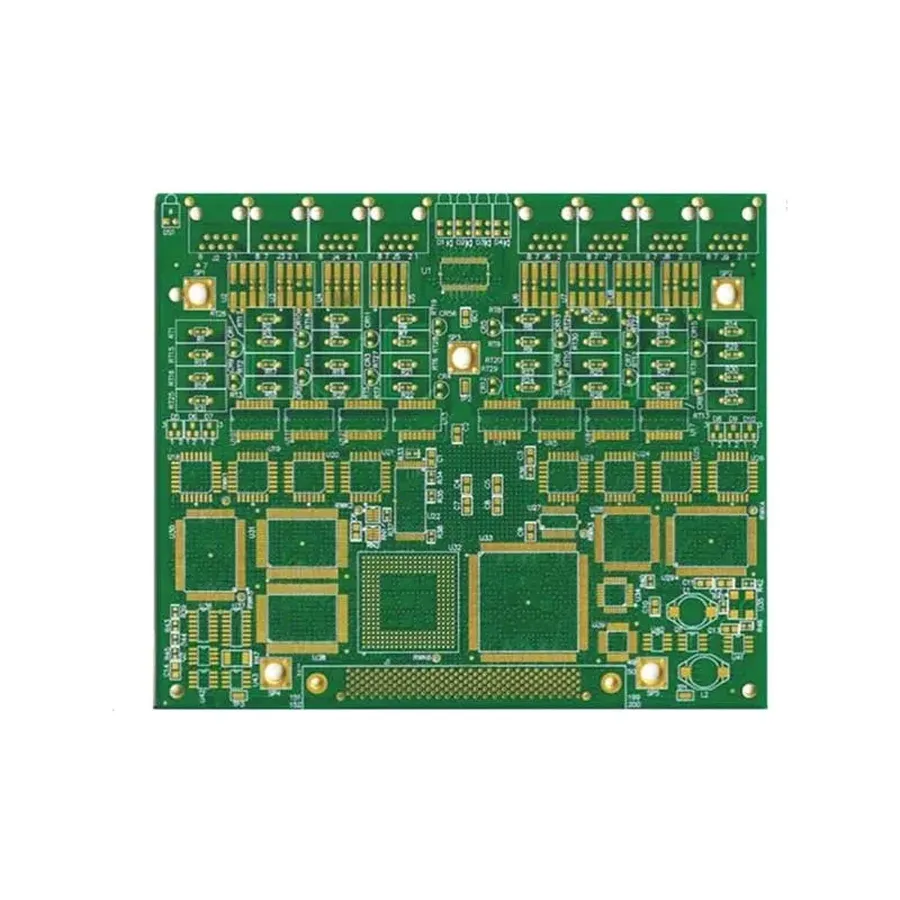
PCB Components
Obtaining an accurate online quote for PCB manufacturing requires meticulous preparation and clear communication with your chosen manufacturer. This section provides a step-by-step guide to ensure the quote reflects your project's exact requirements, thus avoiding unexpected costs and delays.
Prepare Your Gerber Files Gerber files are the standard file format for PCB manufacturing. Ensure that all necessary layers (copper, solder mask, silkscreen, drill data) are included in your files and that they are accurate and up to date. Verify that file naming conventions are consistent and that any instructions are included. Improper gerber files are a significant source of error and can lead to additional costs.
Specify Material Requirements Clearly Clearly indicate your desired PCB material (e.g., FR-4, aluminum, Rogers), its thickness, and copper weight. If your project has specific dielectric requirements, those must be stated also. Different material choices directly impact both performance and cost, so providing accurate information is paramount.
Define Surface Finish Specify the required surface finish, such as ENIG (Electroless Nickel Immersion Gold), HASL (Hot Air Solder Leveling), or OSP (Organic Solderability Preservative). Each finish provides different characteristics regarding solderability, shelf life and cost. The choice of surface finish influences the longevity and performance of your PCB.
Specify Layer Count Clearly state the number of layers your PCB design utilizes. Higher layer counts increase manufacturing complexity and cost. Aim to minimize layers where possible without compromising design function.
Provide Accurate Board Dimensions Provide precise dimensions of your PCB, including the overall size and any cutouts or complex shapes. Accurate dimensions are crucial for correct fabrication and minimize the possibility of errors in production.
Specify Solder Mask and Silkscreen Requirements Indicate the desired solder mask color (e.g., green, red, blue) and any specific requirements for the silkscreen (e.g., color, font, text size). These aspects affect the visual appeal and functional clarity of your PCB. Different colors can also influence the cost of production.
Understand Lead Times and Shipping Options Inquire about the manufacturer's lead times and shipping options. Lead times affect your project timeline, and shipping costs can significantly add to the overall expense. Consider expedited options if necessary but be aware of associated premium costs.
Quantity and Turnaround Time Clearly specify the quantity of PCBs you need and your required turnaround time. Manufacturers often have tiered pricing based on volume and lead time. Knowing your needs allows them to optimize production cost effectively and meet your project deadline. Request a full cost breakdown to understand costs associated with each aspect of manufacturing
Communicate Clearly with Manufacturers Be prepared to answer any questions from the manufacturer about your design or requirements. Clear communication is essential for an accurate quote. If a problem is identified by the manufacturer regarding your files, address them quickly and accurately. Request a written quote that includes all aspects of the job, and be sure to review it for accuracy.
Analyzing Different PCB Quotation Scenarios and Pricing Models
PCB Prototype
Understanding the nuances of PCB quotation scenarios and pricing models is crucial for cost-effective manufacturing. Different order types, such as prototypes, small batch productions, and mass productions, significantly impact the final cost per unit. Volume is a key determinant, where larger projects often benefit from economies of scale, leading to substantial cost reductions. Furthermore, specific customization options like surface finish, solder mask color, and silkscreen requirements also play a vital role in shaping the overall quote.
Order Type
Volume
Typical Cost per Unit
Lead Time
Ideal Use Case
Prototype
Very Low (1-10)
High
Fast (Few days - 1 week)
Testing and validation of a new design
Small Batch Production
Low to Medium (10-100)
Medium to High
Moderate (1-2 weeks)
Pilot runs and limited product releases
Mass Production
High (1000+)
Low
Longer (2-4 weeks)
Large-scale production runs
Beyond order volume, various manufacturing options and specifications influence the final quote. Here's a breakdown of how these factors affect costs:
Surface Finish Options such as HASL (Hot Air Solder Leveling), ENIG (Electroless Nickel Immersion Gold), or OSP (Organic Solderability Preservative) have different material and process costs. ENIG is typically more expensive due to its superior corrosion resistance and solderability.
Solder Mask Color While green is standard, other colors like red, blue, black, and white can add to the cost, especially for smaller orders, due to the need to change ink and setup.
Silkscreen The complexity of silkscreen requirements, such as the number of colors and precision, can affect the overall cost of manufacturing as it involves additional steps and processing.
Panelization Panelizing multiple boards onto one larger panel for manufacturing can reduce per-unit costs for larger orders. However, if your design does not naturally lend itself to panelization you will need to pay for the manufacturer to panelize it, and this will increase the costs.
Specialized Materials Different materials, such as those with high thermal conductivity or low loss, will be considerably more expensive than standard FR-4.
Getting an accurate and competitive pcb manufacturing online quote is essential for the success of your electronics project. This article has provided a comprehensive guide to navigating online platforms, understanding the cost drivers, and optimizing your designs. By applying these insights, you can secure the most cost-effective and suitable manufacturing services to bring your innovative ideas to fruition, ensuring your projects remain within budget and meet your quality standards. Remember to always start with a clear understanding of your requirements and leverage the power of online quoting platforms to your advantage.