
In the high-stakes world of medical diagnostics, a blood glucose monitor is only as reliable as its internal electronics. For manufacturers, scaling production while maintaining precision is a daunting challenge. Choosing the wrong assembly partner can lead to catastrophic regulatory failures and compromised patient safety. This guide provides a strategic framework for evaluating and selecting a manufacturing partner capable of delivering excellence in high-volume medical PCBA production.
The Critical Importance of ISO 13485 Certification
Why ISO 13485 is Non-Negotiable
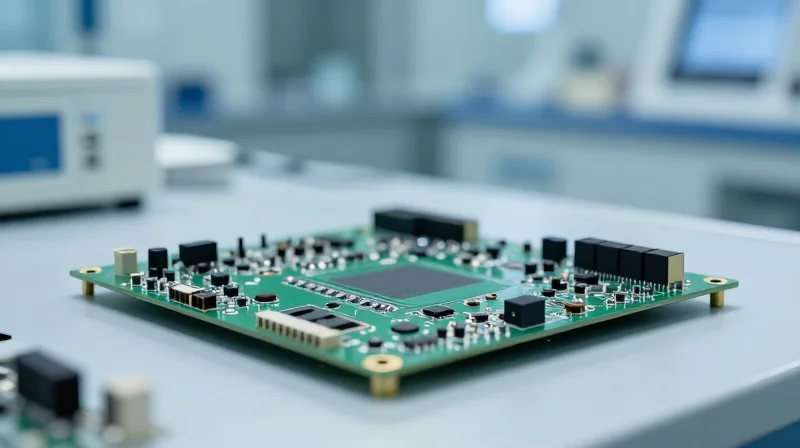
For digital blood glucose meters, the Printed Circuit Board (PCB) acts as the central nervous system of the device. Any failure in component precision or manufacturing consistency can lead to inaccurate blood sugar readings, posing life-threatening risks to patients. ISO 13485 is not merely a label; it represents a comprehensive Quality Management System (QMS) specifically tailored to the medical device industry. Partnering with an ISO 13485-certified manufacturer ensures that every stage of the production process—from raw material procurement to final inspection—is documented, validated, and held to the highest international standards of traceability.
Critical Differences: ISO 13485 vs. General Manufacturing
| Feature | General Manufacturing (ISO 9001) | Medical Manufacturing (ISO 13485) |
|---|---|---|
| Primary Focus | Customer satisfaction and efficiency | Patient safety and regulatory efficacy |
| Traceability | Standard batch tracking | Full serialized unit/component traceability |
| Risk Management | Business-level risk assessment | Clinical-grade failure mode and effects analysis (FMEA) |
| Process Validation | Standard QA protocols | Stringent validation of automated assembly lines |
Frequently Asked Questions
- Does a standard ISO 9001 certification suffice for medical PCB assembly?
No. While ISO 9001 provides a quality foundation, it lacks the specialized requirements for risk management, contamination control, and post-market vigilance required for high-volume medical devices like blood glucose meters. - How does ISO 13485 protect against scaling issues in high-volume production?
The standard mandates strict process validation. This means that as you scale from pilot batches to mass production, the manufacturing parameters remain consistent, preventing 'process drift' that could introduce defects in millions of devices. - Is traceability required for every component on the PCB?
Yes. ISO 13485 requires that for critical medical components, manufacturers must be able to trace a defect back to specific batches, suppliers, and even the timestamps of individual solder stations.
Technical Capabilities: Beyond Standard PCBA Assembly
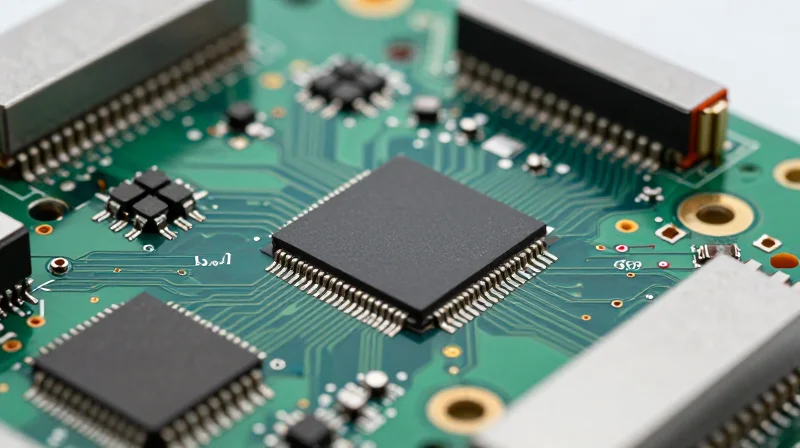
For sensitive medical devices like blood glucose meters, standard PCB assembly processes are insufficient. Manufacturers must offer advanced technical proficiencies that address the unique constraints of point-of-care diagnostics, specifically focusing on contamination control, extreme miniaturization, and rigorous verification of sensor-specific electronics.
Environmental Control and Contamination Management
Glucose sensors rely on precise chemical reactions that are highly susceptible to ionic contamination. A reliable manufacturer must provide controlled assembly environments that mitigate these risks.
| Feature | Standard PCBA | Medical-Grade PCBA |
|---|---|---|
| Environment | Ambient/Factory Floor | ISO Class 7 or 8 Cleanroom |
| Flux Residue | Standard Automated Wash | High-Precision Ionic Cleanliness Testing |
| Material Handling | Standard Anti-static | Biocompatibility-Certified ESD Controls |
Miniaturization and Sensor Integration
Modern glucose meters are increasingly portable, requiring high-density interconnect (HDI) technology, micro-vias, and precise integration of biosensor connectors. Your manufacturer should demonstrate proven success in handling these complex geometries without compromising the signal integrity of low-voltage analog measurements.
Frequently Asked Questions
- Why is an ISO-certified cleanroom mandatory for glucose meter PCBA?
Glucose monitors involve sensitive amperometric sensing. Even microscopic particulate or ionic contamination on the PCB can interfere with the low-current measurements, leading to inaccurate readings and potential safety hazards. - Does the manufacturer offer in-house testing for sensor sensitivity?
A high-level partner should provide functional testing that goes beyond electrical continuity, specifically verifying that the PCB's analog front-end meets the specific impedance requirements for your proprietary glucose test strips. - What role does traceability play in high-volume production?
Beyond simple batch records, a specialized manufacturer provides component-level traceability to ensure that if a specific capacitor or integrated circuit lot fails in the field, every affected device can be identified and isolated instantly.
Supply Chain Transparency and Component Traceability

Mitigating the Risk of Counterfeit Components
In the context of life-critical diagnostic devices, the presence of counterfeit or sub-standard electrical components can lead to inaccurate glucose readings, catastrophic device failure, and severe regulatory liability. Reliable PCB manufacturers must implement a rigorous component procurement strategy that prioritizes franchised distribution channels and enforces strict quality inspection protocols to ensure every microchip and sensor element is authentic and compliant with medical-grade specifications.
End-to-End Traceability Standards
True traceability transcends simple record-keeping. It requires a digital thread that links every component batch, assembly machine operator, and testing timestamp back to the final device. This visibility is essential for performing targeted recalls and identifying root causes in the event of an field-failure report.
| Feature | Standard Procurement | Medical-Grade Traceability |
|---|---|---|
| Supplier Sourcing | Open Market/Brokers | Franchised Distributors Only |
| Component Records | Invoices Only | Lot-Level & Serialized Data |
| Inspection | Random Sampling | 100% Incoming Inspection |
| Recall Capability | Broad Product Recall | Surgical Lot-Specific Recall |
Frequently Asked Questions
- Why should I avoid independent brokers for medical PCB components?
Independent brokers often source from the open market where the risk of counterfeit, refurbished, or incorrectly stored components is significantly higher, lacking the direct chain of custody required for medical compliance. - What is a 'Digital Thread' in medical manufacturing?
A digital thread is a communication framework that provides an integrated view of an asset throughout its lifecycle, ensuring that data from design, procurement, and assembly are immutable and accessible. - How does traceability help during an audit?
During ISO 13485 or FDA audits, end-to-end traceability proves that you have complete control over your supply chain, allowing you to provide documented evidence of component authenticity and process integrity.
Regulatory Compliance and Documentation Excellence
Streamlining Regulatory Hurdles Through Documentation Excellence
For manufacturers of high-volume digital blood glucose meters, the PCB assembly partner acts as an extension of the internal quality team. A reliable manufacturer does not merely deliver hardware; they provide the structured documentation—specifically the Device Master Record (DMR) and Design History File (DHF)—that serves as the foundation for regulatory audits. When your partner maintains rigorous control over these documents, it minimizes the risk of production non-conformance and accelerates the submission process for FDA 510(k) clearances or CE marking under the Medical Device Regulation (MDR).
The Role of DHF and DMR in Medical Device Audits
| Documentation Type | Primary Purpose | Impact on Production |
|---|---|---|
| Design History File (DHF) | Demonstrates the design process meets requirements. | Provides evidence of development validation during audits. |
| Device Master Record (DMR) | Compilation of records for manufacturing the device. | Ensures consistent assembly and testing across high-volume batches. |
Frequently Asked Questions on Regulatory Compliance
- Why is the PCB manufacturer’s quality management system (QMS) critical?
Your manufacturer must adhere to ISO 13485 standards. A certified QMS ensures that every process, from board fabrication to final testing, is documented and repeatable, which is a prerequisite for any medical regulatory approval. - How does proactive documentation shorten time-to-market?
When a partner maintains a robust DMR, you avoid the 'data scramble' during audits. Having pre-validated processes and ready-to-present inspection records significantly reduces the query cycles with regulatory bodies like the FDA or Notified Bodies. - What should I look for regarding traceability documentation?
Demand a system that tracks component lot numbers, machine parameters during assembly, and post-production testing data for every individual serial number. This granular level of detail is vital for potential field actions or post-market surveillance.
Scalability and Production Capacity Analysis
Evaluating Throughput vs. Quality Consistency
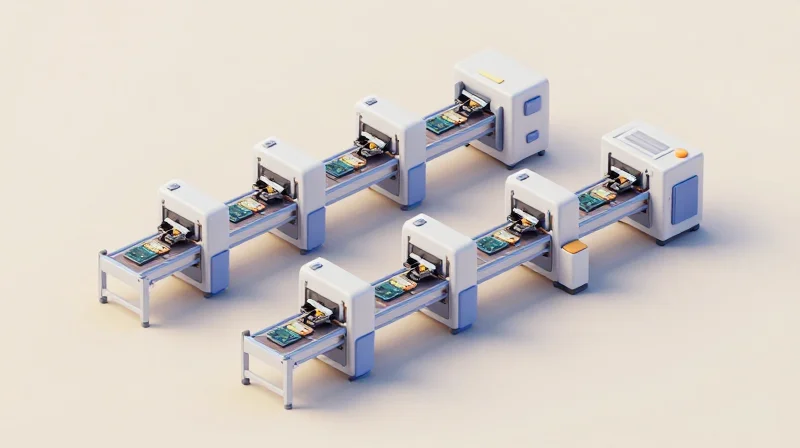
Transitioning from a prototype to millions of units requires a PCB partner who views scalability as a structural commitment rather than an afterthought. For medical-grade digital glucose meters, the primary challenge is maintaining the strict tolerance levels required for precise sensing circuitry while ramping up automated assembly speed. Manufacturers must demonstrate high-density interconnect (HDI) capabilities and high-speed Surface Mount Technology (SMT) lines that are validated for high-volume throughput without sacrificing board-level reliability.
Capacity Assessment Metrics
| Capacity Metric | Key Indicator | Reliability Impact |
|---|---|---|
| Production Speed | Units Per Hour (UPH) | Prevents bottlenecking and ensures lead-time stability. |
| Automation Degree | Percentage of robotic assembly | Reduces human error in delicate sensor contact points. |
| Tooling Redundancy | Parallel production line count | Mitigates risks of localized line failures or maintenance downtime. |
Scaling Considerations for Medical Electronics
- How do you verify a manufacturer's true capacity?
Look for established 'burn-in' periods and proof of past mass-production projects that mirrors the complexity of your device. Request a capacity audit and current plant utilization rates. - Why does factory location matter for high-volume scaling?
Proximity to raw materials and logistics hubs reduces lead times and improves communication responsiveness during critical production ramps. - What role does process control play in scalability?
Automated Optical Inspection (AOI) and X-ray inspection systems must be integrated into the high-speed production line to ensure that 100% of PCBs meet medical-grade quality standards at speed.
Finally, ensure that your manufacturer maintains a flexible production strategy. A reliable partner should be capable of 'elastic manufacturing,' allowing you to adjust production volume in response to market demand shifts without requiring a complete requalification of the PCB manufacturing process.
Quality Assurance Protocols: Ensuring Zero-Defect Outcomes

Multi-Tiered Inspection Strategy
High-volume manufacturing of digital blood glucose meters requires a layered quality strategy to catch defects at the atomic and assembly levels. Because these devices involve sensitive enzymatic strips and precise electronic readings, any failure in PCB assembly can result in inaccurate patient data. A reliable manufacturer must implement an integrated testing workflow that evolves from surface inspection to deep structural analysis.
| Testing Method | Primary Objective | Benefit to Glucose Meter Reliability |
|---|---|---|
| AOI (Automated Optical Inspection) | Surface defect detection | Identifies solder bridges and component misalignment before reflow. |
| X-Ray Inspection (AXI) | Hidden solder joint analysis | Verifies integrity of BGA components and hidden vias critical for accurate signals. |
| Functional Testing (FCT) | Circuit performance validation | Ensures the PCB delivers precise voltage for sensor readings. |
Critical Testing Components for Medical Accuracy
- Why is AOI insufficient on its own?
AOI is excellent at spotting surface-level defects like skewed components or polarity errors. However, it cannot see through components to inspect solder joints under BGAs, which is why X-ray is required for high-density medical circuits. - What role does Functional Testing play in glucose meters?
Functional testing simulates the final environment of the glucose meter, verifying that the PCB communicates correctly with the display and the glucose sensor strip, ensuring the device meets accuracy benchmarks. - How does automated testing impact production scalability?
Automation removes human variability. By integrating AOI and FCT directly into the production line, manufacturers can scale volume without linearly increasing the risk of human-induced inspection errors.
Ultimately, a zero-defect outcome is achieved not by a single test, but by a process-oriented approach. Every batch should be accompanied by detailed test logs, providing the data necessary to satisfy regulatory bodies while ensuring the long-term safety of the patient population.
Communication and Long-Term Partnership Synergy
The Role of Transparent Communication in Medical Device Lifecycle
In the production of life-critical medical devices like glucose meters, communication gaps are not mere inconveniences; they are potential regulatory risks. A reliable partner ensures proactive updates regarding component obsolescence, lead-time volatility, and yield fluctuations. Establishing a shared communication protocol—defined by frequent project reviews, shared digital dashboards, and direct access to engineering teams—prevents the 'black box' phenomenon common in low-tier outsourcing.
Strategic Alignment vs. Transactional Outsourcing
When moving into high-volume manufacturing, you are not just selecting a vendor; you are integrating a partner into your quality management ecosystem. Cultural alignment regarding quality, regulatory compliance, and speed-to-market is essential for long-term scalability.
| Attribute | Transactional Vendor | Strategic Partner |
|---|---|---|
| Feedback Loop | Reactive/Crisis-based | Predictive/Continuous |
| Problem Solving | Blame-focused | Root-cause collaborative |
| Regulatory View | External burden | Shared responsibility |
| Production Scaling | Contract-constrained | Growth-aligned |
Frequently Asked Questions
- Why does cultural alignment matter for medical device manufacturing?
Cultural alignment ensures that the manufacturer's internal quality standards and ethical approach to regulatory documentation mirror your own, reducing friction during audits and quality reviews. - How can I assess if a manufacturer is truly transparent?
Request a pilot project review; evaluate how they handle the documentation of non-conformance. A transparent partner will report issues immediately and present a clear path for corrective action, rather than concealing defects. - What tools facilitate long-term synergy?
Utilizing cloud-based ERP integration, shared PLM (Product Lifecycle Management) access, and formalized quarterly business reviews (QBRs) ensures both parties remain aligned on long-term production and quality goals.
Selecting a manufacturing partner for blood glucose monitors is a decision that impacts both your brand's reputation and patient well-being. By prioritizing ISO certification, rigorous traceability, and a proven track record in medical electronics, you can mitigate risk and accelerate your time to market. Are you ready to scale your medical device production with confidence? Contact our engineering team today to discuss your next PCBA project.
