
The traditional hospital-bound monitoring model is rapidly becoming obsolete. As patient care shifts toward home-based settings, the demand for precision, mobility, and real-time connectivity has sparked a revolution in medical device architecture. This article delves into the technological convergence of IoT and miniaturization, examining how new frameworks are overcoming legacy limitations to deliver superior patient outcomes.
The Legacy Limitation: Why Traditional Systems Stagnate
The Architectural Bottlenecks of Legacy Systems
Legacy patient monitoring devices are built upon closed, proprietary architectures that prioritize stability over agility. Designed during an era where computing power was expensive and network connectivity was tethered, these systems function as isolated islands of data. The primary architectural failure of these legacy platforms is their reliance on monolithic hardware configurations, which makes iterative software updates or peripheral integration nearly impossible without replacing the entire hardware suite.
| Feature | Legacy Systems | Modern IoT Frameworks |
|---|---|---|
| Connectivity | Tethered/Proprietary | Wireless/Universal APIs |
| Scalability | Rigid/Monolithic | Modular/Microservices |
| Data Access | Siloed/Local | Cloud-Native/Real-time |
| Device Form | Bulky/Stationary | Miniaturized/Wearable |
Interoperability and Data Stagnation
A significant limitation of existing infrastructure is the lack of standardized communication protocols. Traditional monitors often utilize custom serial interfaces that do not easily translate into the interoperable formats required by modern Electronic Health Records (EHRs). This leads to 'data stagnation,' where patient metrics are trapped within local device memory or proprietary software, preventing real-time analytics and longitudinal trend monitoring across disparate care environments.
Challenges in Modernizing Legacy Equipment
- Why is hardware modularity currently missing?
Traditional devices were engineered as 'all-in-one' units where sensing, processing, and communication hardware are hard-wired together, preventing the swappable sensor modules required for agile patient care. - Does weight and power consumption dictate current design?
Yes, older circuit designs prioritized raw uptime through bulky internal power supplies, which prevents the miniaturization needed for comfortable, continuous long-term wearable monitoring. - What is the consequence of stationary design?
Stationary design forces clinicians to prioritize spot-checks rather than continuous data streaming, creating significant gaps in patient safety during critical transition periods, such as hospital transport or early discharge.
The Role of Miniaturization in Wearable Sensors
The Convergence of MEMS and Clinical-Grade Diagnostics
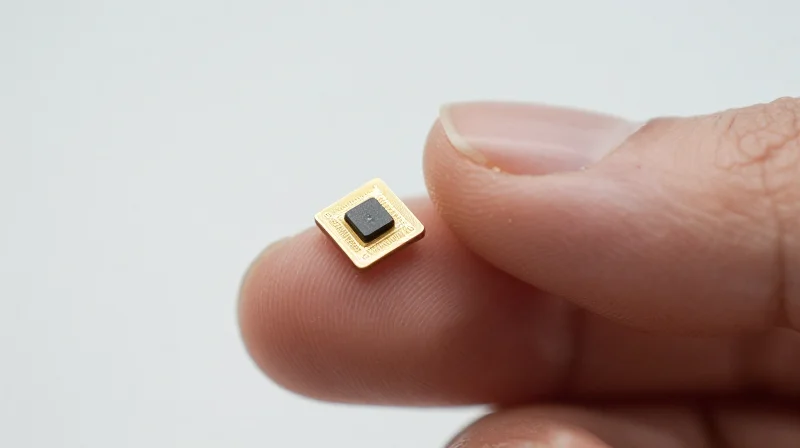
The shift toward miniature wearable architectures is primarily driven by advancements in Micro-Electro-Mechanical Systems (MEMS). By integrating sensing, processing, and communication components onto a single silicon substrate, manufacturers can reduce device footprints by orders of magnitude without sacrificing signal fidelity. This evolution transforms diagnostic devices from cumbersome bedside units into skin-adhesive patches, allowing for longitudinal data collection in a patient's natural environment.
| Feature | Legacy Systems | Modern Miniaturized Sensors |
|---|---|---|
| Form Factor | Stationary/Cabled | Discreet/Wearable |
| Power Consumption | High (Grid-dependent) | Ultra-low (Energy efficient) |
| Data Continuity | Intermittent/Snapshot | Continuous/Real-time |
| Primary Use | Acute Care/Clinical | Longitudinal/Remote Monitoring |
Strategic Advantages of Micro-Scale Integration
- Does miniaturization compromise diagnostic accuracy?
No; modern MEMS sensors leverage advanced signal conditioning and AI-driven noise filtering, often exceeding the precision of older, larger sensors by eliminating movement artifacts and environmental interference. - How does integration impact power management?
By collapsing disparate components into a System-on-Chip (SoC) architecture, signal paths are shortened and parasitic capacitance is reduced, drastically lowering the energy required for data acquisition and wireless transmission. - What is the primary benefit of the smaller footprint?
Increased patient compliance is the main advantage; smaller, unobtrusive devices can be worn for weeks rather than days, providing clinical teams with the comprehensive data necessary to predict health deteriorations before they become acute.
Furthermore, the integration of multi-modal sensing—such as combining heart rate, SpO2, and impedance-based respiratory monitoring into a single chip—allows for a holistic view of patient physiology. This multi-layered data architecture is essential for move-to-cloud strategies, where localized edge processing ensures that only relevant clinical anomalies are transmitted, preserving both battery life and bandwidth.
Architectural Shifts: From Monolithic to Modular Designs

Architectural Shifts: From Monolithic to Modular Designs
The transition toward modular architecture represents a fundamental departure from the legacy 'all-in-one' device paradigm. In traditional monitoring environments, diagnostic capabilities were hard-coded into rigid, proprietary chassis, preventing upgrades without full system replacement. Modern patient monitoring now embraces a modular strategy, decoupling sensing hardware from the processing core, connectivity modules, and application software. By leveraging a 'plug-and-play' approach, healthcare providers can now integrate diverse physiological sensors—ranging from ECG and blood oxygenation to skin impedance—into a unified data gateway, ensuring the architecture evolves alongside technological advancements without necessitating entire system overhauls.
Comparing Architectural Approaches
| Feature | Monolithic Architecture | Modular Architecture |
|---|---|---|
| Hardware Lifecycle | Short (Rip-and-replace) | Extended (Component-based) |
| Clinical Flexibility | Fixed to original purpose | Highly adaptable to new sensors |
| Maintenance | Manufacturer-locked service | Field-replaceable modules |
| System Upgradability | Low | High via hot-swappable I/O |
Benefits of a Decoupled Ecosystem
Decoupling sensor acquisition from processing layers facilitates accelerated innovation. Developers can update a specific monitoring module—such as transitioning from an older pulse oximeter to a high-fidelity continuous sensor—without needing to re-validate the entire host device's regulatory framework. This containerized design pattern allows for smaller footprints, reduced power consumption, and the targeted application of edge computing.
- How does modularity improve regulatory compliance?
Modular designs isolate core safety-critical functions from user-facing modules, allowing manufacturers to update diagnostic sensors while maintaining the certification of the underlying communication hub. - Does a modular design impact data security?
Yes, it shifts security to a hardware-agnostic layer, allowing for consistent encryption and identity verification across diverse sensor inputs through a standardized communication protocol. - Can legacy devices be retrofitted for modularity?
While difficult to retrofit internal circuitry, many legacy systems are being adapted via external 'dongle' interfaces that convert proprietary data streams into standardized IoT protocols like MQTT or Bluetooth Low Energy.
Connectivity at the Core: The Impact of IoT Integration

Seamless Data Flow: The Role of 5G and LPWAN
The transition to 5G infrastructure serves as the backbone for modern IoT medical devices, providing ultra-low latency and high device density support. This architectural shift ensures that telemetry data—ranging from ECG waveforms to continuous glucose monitoring—is transmitted to clinical dashboards without the bottlenecking inherent in legacy cellular or congested local Wi-Fi networks. By leveraging Low-Power Wide-Area Networks (LPWAN) for non-critical vitals and 5G for acute monitoring, devices can maintain persistent connectivity while preserving battery longevity.
Standardizing Protocols for Interoperability
Connectivity is only effective if the data remains actionable and secure. Adopting standardized protocols like FHIR (Fast Healthcare Interoperability Resources) over MQTT (Message Queuing Telemetry Transport) allows miniaturized devices to transmit data directly into Electronic Health Records (EHR) and cloud-based analytics platforms. This standardization eliminates the traditional silos where data was trapped within proprietary hardware, enabling truly holistic telehealth.
| Connectivity Metric | 5G Infrastructure | Legacy Wi-Fi/Bluetooth |
|---|---|---|
| Latency | Ultra-low (<10ms) | Variable/Higher |
| Density Support | High (1M+ devices/km²) | Low |
| Reliability | Mission-critical | Best-effort |
Frequently Asked Questions
- How does 5G impact device power consumption?
5G standards include power-saving modes that allow devices to enter 'sleep' states more efficiently, ensuring that frequent transmissions do not rapidly drain the battery of miniaturized wearable sensors. - What measures ensure data security during transmission?
Secure IoT integration utilizes end-to-end encryption (TLS 1.3), hardware-level root-of-trust authentication, and micro-segmentation within the network to prevent unauthorized access to sensitive patient telemetry. - Can these devices function without cellular coverage?
Modern modular designs utilize local data caching and edge computing, allowing the device to store data and perform initial analytics, syncing with clinical dashboards once a reliable connection is restored.
Balancing Data Accuracy with Power Efficiency
The Engineering Paradox: Precision vs. Longevity
In the landscape of modern patient monitoring, developers face a persistent trade-off: high-frequency sampling provides the clinical accuracy required for real-time diagnostics, but it inevitably accelerates battery depletion. To overcome this, engineers are shifting away from 'always-on' streaming architectures toward intelligent, edge-computing models where data is processed locally before transmission.
Optimization Strategies for Power Consumption
| Strategy | Implementation Method | Impact on Efficiency |
|---|---|---|
| Adaptive Sampling | Adjusting frequency based on sensor input | High: Reduces idle power drain |
| Edge Intelligence | On-device anomaly detection | Very High: Minimizes radio transmission |
| Event-Driven RF | Burst transmission only when critical | Medium: Prolongs connectivity lifespan |
Frequently Asked Questions
- How does edge computing reduce power consumption?
By processing raw sensor data locally on the microcontroller (MCU), devices can filter out noise and only transmit clinically significant 'events' to the cloud, drastically reducing the energy-intensive use of 5G or Bluetooth radios. - Can adaptive sampling affect medical diagnostic quality?
No, if implemented via intelligent triggers; the device remains in a low-power state for baseline monitoring but switches to high-fidelity, high-frequency sampling immediately upon detecting physiological irregularities. - Are there new battery technologies bridging this gap?
Yes, solid-state batteries and flexible thin-film supercapacitors are increasingly being integrated into wearable form factors, providing higher power density without increasing the physical footprint of the device.
Future-Proofing Hardware Architectures
The future of patient monitoring hinges on the adoption of neuromorphic computing—chips designed to mimic neural pathways. These processors excel at pattern recognition with micro-watt power consumption, potentially allowing diagnostic devices to run for weeks rather than days. As miniaturization progresses, the integration of these specialized circuits will define the next generation of truly autonomous, clinical-grade wearables.
Data Security and Regulatory Compliance in Connected Systems
Regulatory Challenges in Connected Architectures
As medical devices transition from standalone monitors to IoT-enabled ecosystems, the attack surface for potential data breaches expands significantly. Managing patient data across cloud-based architectures requires a 'security-by-design' philosophy that harmonizes strict HIPAA requirements for protected health information (PHI) in the United States with the robust data sovereignty and privacy mandates of the GDPR in Europe.
| Compliance Factor | HIPAA Focus | GDPR Focus |
|---|---|---|
| Data Protection | Administrative & Technical Safeguards | Privacy by Design & Default |
| Patient Rights | Access to PHI and Auditing | Right to Erasure and Portability |
| Cross-Border Transfer | Domestic Privacy Standards | Strict Standard Contractual Clauses |
Essential Security Protocols for Miniaturized IoT
Miniaturization presents a paradox: devices must handle heavy encryption while running on extremely constrained power budgets. Developers must implement hardware-level root-of-trust, authenticated end-to-end encryption (TLS 1.3), and secure boot mechanisms to ensure that every byte of data transmitted from the sensor to the cloud is tamper-proof and verified.
- How does end-to-end encryption affect battery life?
Modern cryptographic accelerators integrated into low-power SoCs minimize CPU overhead, allowing for robust encryption with minimal impact on device longevity. - Is cloud storage compliant with international regulations?
Compliance relies on utilizing dedicated healthcare-grade cloud instances that offer regional data residency, ensuring PHI remains within authorized jurisdictional boundaries. - Who holds liability in a connected device breach?
Liability is shared between the device manufacturer (securing the hardware/firmware) and the clinical provider (securing the network access and data management).
Improving Patient Compliance Through Ergonomics

Designing for Human-Centric Integration
Patient compliance is often inversely proportional to the intrusiveness of medical hardware. When miniaturization allows for form factors that mimic a second skin or discreet everyday accessories, the friction between diagnostic necessity and daily life is significantly minimized. Modern device architecture now emphasizes low-profile sensors, biocompatible materials, and intuitive interfaces that accommodate the patient's existing lifestyle rather than demanding significant behavioral modifications.
Factors Influencing Adherence
| Feature | Impact on Patient Experience | Outcome |
|---|---|---|
| Device Weight | Reduced physical strain during movement | Higher continuous wear-time |
| Biocompatibility | Prevention of skin irritation/allergies | Fewer device removals |
| Wireless Connectivity | Removal of tethered cables | Increased mobility and autonomy |
Frequently Asked Questions
- How does miniaturization specifically drive patient compliance?
Smaller components reduce device visibility and weight, making the technology feel less intrusive and more like an unobtrusive health accessory. - Can user-centric design improve data quality?
Yes, by increasing the comfort level, patients are less likely to remove devices prematurely, leading to more consistent, longitudinal data sets that are essential for accurate clinical analysis. - What role do materials play in long-term monitoring?
Using hypoallergenic, breathable, and flexible polymers prevents contact dermatitis and discomfort, which are the primary reasons patients abandon wearable monitoring protocols.
Ultimately, the future of patient monitoring lies in 'transparent technology'—devices so ergonomic and low-maintenance that they disappear into the background of a patient's daily routine while maintaining seamless clinical connectivity.
Future Outlook: AI-Driven Insights and Predictive Analytics

From Reactive Monitoring to Proactive Intervention
The next frontier in patient monitoring is the transition from data logging to automated clinical decision support. By embedding machine learning models directly onto device chipsets, next-generation architecture can process physiological streams in real-time. This minimizes latency and reduces reliance on unstable cloud connectivity for critical alerts, enabling devices to detect subtle health degradation patterns—such as the onset of sepsis or cardiac arrhythmias—long before clinical symptoms manifest.
The Role of Edge Computing in AI Deployment
Edge computing architecture is essential for scaling predictive analytics. By executing inference tasks on the device itself, hospitals can significantly reduce bandwidth consumption and power drain associated with transmitting raw data. This local processing capability ensures that diagnostic insights remain available even in low-connectivity environments, a critical requirement for home-based post-acute care.
| Feature | Reactive Architecture | Predictive AI Architecture |
|---|---|---|
| Data Processing | Cloud-based | Edge-integrated |
| Alert System | Threshold-based | Pattern-recognition |
| Latency | Variable/High | Near-zero |
| Clinical Value | Reporting | Preventative Action |
Frequently Asked Questions
- How does onboard AI affect battery life?
Modern AI-optimized microcontrollers utilize hardware acceleration to perform inference at a fraction of the power cost required for constant wireless data transmission to the cloud. - Will predictive analytics replace clinical judgment?
No, predictive analytics function as a clinical decision support tool, intended to augment medical expertise by surfacing high-risk physiological trends for human review. - How is data accuracy maintained at the edge?
Edge AI uses sensor fusion—combining inputs from multiple biological sensors—to validate data points and filter out noise, ensuring that predictive algorithms operate on clean, actionable signals.
The evolution of patient monitoring is not just about smaller devices; it is about creating a connected ecosystem that prioritizes clinical precision and patient freedom. By embracing modular IoT architectures, stakeholders can bridge the gap between facility-based care and proactive telehealth solutions. Contact our engineering team today to learn how to integrate these next-generation protocols into your medical device roadmap.
