
In the fast-evolving world of Advanced Driver Assistance Systems (ADAS), the PCB is the heartbeat of safety-critical operations like blind-spot detection. With lives on the line, selecting a manufacturing partner isn't just about cost—it's about absolute reliability. This guide provides the strategic framework you need to identify a partner that meets the rigorous demands of the modern automotive industry.
Understanding the High-Stakes Nature of ADAS Manufacturing
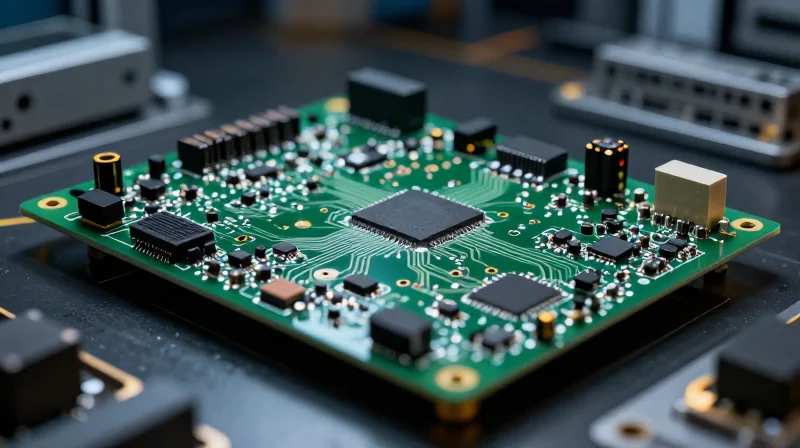
The Criticality of Zero-Failure Hardware
Blind spot detection (BSD) is not merely a convenience feature; it is a mission-critical safety system. In the automotive ecosystem, a PCB failure at 70 mph translates to immediate physical danger, making the selection of a manufacturing partner a decision of liability and life-safety. Unlike consumer electronics where an occasional restart is acceptable, automotive PCBs must operate continuously under unpredictable thermal cycles, high-frequency vibrations, and electromagnetic interference without latency or degradation.
Performance Divergence: Automotive vs. Conventional Electronics
| Requirement Category | Consumer Electronics | Automotive BSD Systems |
|---|---|---|
| Reliability Expectation | High (1-3 year lifespan) | Extreme (15+ year operational life) |
| Thermal Management | Ambient room temperature | -40°C to +125°C exposure |
| Failure Tolerance | Software updates resolve | Zero tolerance (Safety critical) |
| Quality Standards | Standard ISO | IATF 16949 & AEC-Q compliant |
Key Considerations for BSD PCB Reliability
- Why is thermal cycling capability paramount?
Vehicles face rapid temperature fluctuations. An automotive manufacturer must ensure the CTE (Coefficient of Thermal Expansion) of the PCB substrate perfectly matches the components to prevent solder joint fatigue and delamination. - How does vibration impact PCB design?
BSD systems are often mounted in peripheral vehicle areas prone to constant mechanical stress. Manufacturers must utilize advanced copper plating and reinforced through-hole technology to prevent interconnect fractures over millions of cycles. - What role does cleanroom manufacturing play?
Contamination in the microscopic traces of a BSD module can lead to intermittent signal loss. High-reliability partners must utilize certified ISO-class cleanrooms to eliminate ionic contaminants that promote dendrite growth and short circuits.
Prioritizing ISO 26262 Functional Safety Compliance
Why ISO 26262 is Non-Negotiable for ADAS Hardware
Blind spot detection (BSD) systems act as critical sensory extensions for the driver, meaning any failure in the underlying PCB can have life-altering consequences. ISO 26262, the international standard for functional safety in road vehicles, mandates a rigorous lifecycle approach to hardware development. A manufacturer that lacks this certification or a deep-rooted safety culture cannot provide the necessary evidence of process control, risk analysis, and reliability modeling required for Automotive Safety Integrity Level (ASIL) rated components.
Comparing Certified vs. Non-Certified Manufacturers
| Feature | ISO 26262 Certified Partner | Non-Certified Facility |
|---|---|---|
| Failure Mode Analysis | Structured FMEA/FMEDA integration | Standard inspection only |
| Traceability | End-to-end material and process logs | Batch-level tracking |
| Validation | Automated safety testing (HIL/SIL) | Manual electrical check |
| Supply Chain | Documented quality assurance | Ad-hoc quality checks |
Frequently Asked Questions on Compliance
- Does the PCB manufacturer need to be certified even if the final ECU is?
Yes. ISO 26262 requires safety evidence at every stage of the supply chain. If the PCB manufacturer lacks certified processes, your safety case for the complete BSD system will be incomplete and vulnerable to audit failures. - How does ISO 26262 affect PCB design rules?
Certified manufacturers implement stricter design rules regarding trace spacing, thermal management, and via placement to prevent common-cause failures (CCF) that could lead to unintended BSD sensor activation. - Is certification proof of perfect manufacturing?
No, but it is proof of a rigorous methodology to minimize defects. It ensures that when a failure occurs, the root cause is traceable and systemic issues are identified to prevent reoccurrence.
Assessing Thermal Management and Material Science Capabilities

Blind spot detection (BSD) sensors operate in high-frequency regimes where thermal stability is paramount for signal integrity. When evaluating a PCB manufacturer, you must assess their proficiency in integrating high-frequency laminates with thermally conductive substrates to mitigate heat buildup from surrounding engine bay components and the sensors' own processing power.
Thermal Management Strategy
Manufacturers must go beyond basic heat sinking by employing advanced PCB techniques such as embedded thermal vias and metal-backed substrates. A robust partner will provide thermal modeling data to demonstrate how they manage heat paths, preventing localized hotspots that can induce signal drift in millimeter-wave (mmWave) radar systems.
| Thermal Technique | Application in BSD Systems | Key Benefit |
|---|---|---|
| Metal-Core PCB (MCPCB) | Power Management Sections | Superior heat dissipation |
| Thermal Vias | Sensor Processing Units | Effective heat transfer to chassis |
| High-Tg Laminates | High-frequency RF layers | Maintains structural integrity at high heat |
Material Science and Reliability
The choice of substrate material directly dictates the sensor's performance. For BSD applications, low-loss tangent materials are essential to minimize signal attenuation. A high-reliability manufacturer should offer comprehensive testing regarding Coefficient of Thermal Expansion (CTE) matching to ensure the PCB assembly survives thousands of thermal shock cycles.
- How do you verify substrate stability under thermal stress?
Request detailed CTE (Coefficient of Thermal Expansion) reports and evidence of HAST (Highly Accelerated Stress Test) validation to confirm material durability. - Why is material choice critical for high-frequency radar?
Dielectric constants must remain stable across wide temperature fluctuations to ensure the radar's field of vision does not degrade or shift. - Does your manufacturing partner use automated thermal imaging?
Leading manufacturers utilize real-time thermal imaging during production testing to identify potential hot spots before a board leaves the assembly line.
Evaluating Supply Chain Transparency and Traceability
The Imperative of End-to-End Traceability
In the context of blind spot detection systems, a single substandard component or trace defect can lead to catastrophic system failure. Manufacturers must demonstrate total visibility over their supply chain—from raw laminate procurement to the final solder joint inspection. This level of traceability allows for precision recalls, effective root-cause analysis, and verification that every component meets rigorous automotive-grade standards, effectively mitigating the risk of counterfeit parts entering the assembly process.
Traceability Standards Comparison
| Requirement | Standard Level | Automotive Necessity |
|---|---|---|
| Material Lot Tracking | Batch-based | Individual PCB level |
| Component Sourcing | Distributor-level | Authorized OEM-direct |
| Inspection Records | Sample-based | 100% AOI/AXI coverage |
FAQ: Evaluating Manufacturer Transparency
- How can I verify a manufacturer's supply chain integrity?
Demand a bill of materials (BOM) verification process that utilizes only franchised distributors and requires certificates of conformance (CoC) for every critical component batch. - Why is lot-level traceability critical for blind spot sensors?
Blind spot detection relies on consistent impedance and signal integrity; lot-level data allows you to isolate specific manufacturing windows if field failures occur due to material inconsistencies. - What role does digital record-keeping play?
Automated data logging during SMT and testing ensures that every board's production history, including thermal profiles and inspection results, is archived for the mandatory lifecycle of the vehicle.
The Role of Quality Certifications (IATF 16949 and Beyond)

The Necessity of IATF 16949 Certification
IATF 16949 is the gold standard for automotive quality management systems. Unlike general ISO 9001 certification, IATF 16949 focuses specifically on the automotive supply chain, emphasizing defect prevention and the reduction of variation and waste. For a manufacturer building PCB assemblies for blind spot detection, this certification is non-negotiable. It proves they possess the rigorous process controls required to handle high-reliability automotive projects, ensuring that every board produced meets exact automotive-grade specifications consistently.
Beyond IATF 16949: Essential Quality Standards
While IATF 16949 validates the process, other certifications provide deep assurance regarding environmental compliance and specific technical competencies necessary for sophisticated radar and sensor integration.
| Certification | Primary Focus | Benefit for Blind Spot Systems |
|---|---|---|
| ISO 14001 | Environmental Management | Ensures sustainable, compliant manufacturing practices. |
| IPC-A-600/610 | Acceptability of PCBs | Sets strict visual and assembly standards for reliability. |
| AS9100 | Aerospace Quality | Relevant for extreme reliability and complex testing requirements. |
Frequently Asked Questions
- Can a manufacturer be qualified without IATF 16949?
While possible for prototypes, Tier 1 automotive suppliers almost universally mandate IATF 16949 for mass production to mitigate risk and ensure standardized quality systems. - How does IPC certification impact performance?
IPC standards define the acceptance criteria for PCB manufacturing, ensuring that factors like copper thickness, drill registration, and plating integrity are sufficient to withstand the automotive environment. - Does the certification cover the entire supply chain?
IATF 16949 mandates that the manufacturer must also audit their own suppliers, creating a 'cascading' effect of quality that protects the end-user of the blind spot system.
Advanced Testing and Validation Protocols
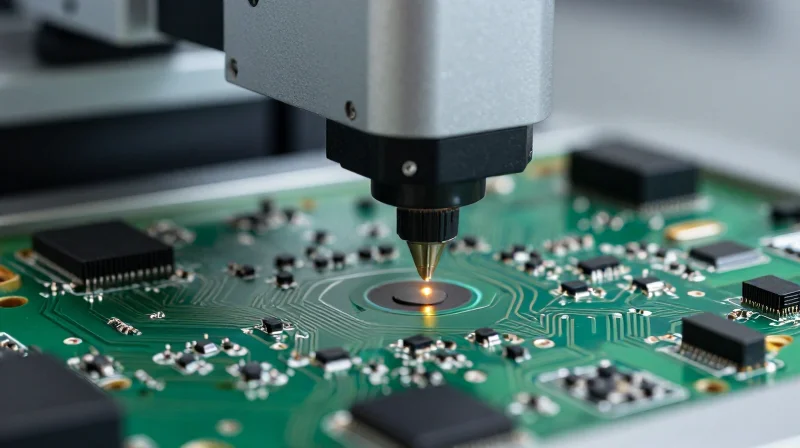
The Necessity of Automated Inspection Protocols
In the context of ADAS and Blind Spot Detection (BSD), human inspection is insufficient. Reliable manufacturers must employ advanced automated inspection technologies to identify microscopic defects that lead to premature failure in safety-critical electronic control units (ECUs).
| Inspection Type | Primary Target | Importance for BSD Systems |
|---|---|---|
| AOI (Automated Optical Inspection) | Surface defects, component alignment | Ensures accurate signal transmission paths |
| AXI (Automated X-Ray Inspection) | BGA/QFN solder joints, hidden shorts | Critical for detecting hidden defects under components |
| Flying Probe / In-Circuit Test | Electrical continuity and resistance | Validates circuit functionality post-assembly |
Environmental Stress Screening (ESS) Requirements
BSD sensors are mounted in exposed locations, subjecting them to extreme thermal cycling and vibration. A partner must demonstrate the ability to perform Environmental Stress Screening (ESS) to replicate these harsh operational environments before the boards leave the facility.
- What specific tests should be mandatory for BSD PCBs?
Thermal shock cycling (-40°C to +125°C), high-humidity acceleration tests, and multi-axis vibration testing are mandatory to ensure solder joint integrity and material stability. - Why is micro-sectioning analysis important?
Micro-sectioning provides a destructive inspection capability that verifies copper plating thickness and internal via barrel integrity, ensuring the board can withstand long-term thermal expansion. - How does ionic contamination testing affect reliability?
Residual fluxes or salts from the manufacturing process can cause electrochemical migration and dendrite growth. Strict ionic contamination testing ensures the PCB remains clean enough to prevent short circuits in high-humidity environments.
Collaborative Engineering and Design for Manufacturing (DFM)
Early Engineering Engagement
Engaging your PCB manufacturer during the conceptual phase of a blind spot detection system is critical. By involving the manufacturer before the layout is finalized, you can leverage their expertise to identify potential signal integrity issues or thermal management constraints that could compromise radar or sensor performance. Proactive collaboration prevents late-stage design iterations, reducing time-to-market and ensuring the design adheres to stringent automotive standards from the outset.
Key Pillars of DFM in Automotive PCB Design
| DFM Pillar | Impact on Blind Spot Detection | Engineering Objective |
|---|---|---|
| Signal Integrity | Maintains radar signal precision | Optimizing trace impedance and vias |
| Thermal Management | Ensures reliable sensor operation | Strategic copper placement and heat sinking |
| Panel Utilization | Reduces total BOM cost | Optimizing board dimensions for batch production |
| Assembly Yields | Prevents field failures | Minimizing solder joint stress through layout refinement |
Frequently Asked Questions
- How does DFM improve reliability for autonomous sensors?
DFM processes identify layout patterns that might struggle with vibration, thermal cycling, or electromagnetic interference, allowing for preemptive design adjustments that harden the system against harsh automotive environments. - Why should I share my design files with the manufacturer early?
Early access allows the manufacturer to run DFM simulations and stack-up analyses, ensuring that your high-frequency radar circuits perform as intended and can be consistently manufactured without yield-loss risks. - Does collaborative DFM increase initial project costs?
While there may be minor front-end investments, this approach drastically reduces total cost of ownership by eliminating expensive re-spins, reducing scrap rates, and accelerating production timelines.
Scaling Production: From Prototyping to Full-Scale Launch
The Transition Challenge: Scaling Reliability
The transition from a prototype to a full-scale automotive launch is often where supply chains fail. For blind spot detection systems, which rely on precise microwave or ultrasonic sensors, the PCB must maintain the same performance integrity at 100,000 units as it did at 10. A reliable partner manages this by standardizing processes across all volume tiers to ensure zero drift in signal performance.
Scaling Metrics: Prototype vs. Mass Production
| Parameter | Prototype Phase | Mass Production Phase |
|---|---|---|
| Process Control | Flexible, manual oversight | Automated, closed-loop systems |
| Supply Chain | Spot purchasing | JIT strategic partnerships |
| Testing Coverage | Functional testing | Full ICT, AXI, and burn-in |
| Yield Focus | Time-to-market | Continuous yield optimization |
Key Indicators of Scalability
- Does the manufacturer offer 'Pilot Run' capabilities?
A true automotive partner offers small-batch production lines that simulate full-scale manufacturing environments to identify potential bottlenecks before global launch. - Is the ERP system integrated with the production line?
Real-time visibility into production status and material traceability is non-negotiable for automotive-grade supply chain management. - How is capacity managed during seasonal surges?
Look for manufacturers with flexible workforce strategies and robust equipment redundancy to ensure production never halts during unexpected high-demand cycles.
Finally, ensure your manufacturer utilizes a clear 'Technology Transfer' protocol. When moving a project from a specialized R&D facility to the main production floor, data integrity regarding stack-ups, material specifications, and drill profiles must remain immutable to avoid costly defects during high-volume assembly.
Selecting an automotive PCB partner is a long-term investment in your brand's reputation and your customers' safety. By focusing on stringent compliance, thermal expertise, and supply chain transparency, you build a foundation for success in the competitive ADAS market. Ready to elevate your manufacturing strategy? Contact our engineering team today to discuss your next high-reliability project.
