
In the rapidly evolving landscape of medical wearables, the reliability of a device is only as strong as its foundation. For ECG monitoring, where signal fidelity is a matter of clinical accuracy, the choice of flexible PCB substrate is not merely a design preference—it is a critical engineering decision that dictates patient safety and device longevity.
Understanding the Demands of Wearable ECG Circuits
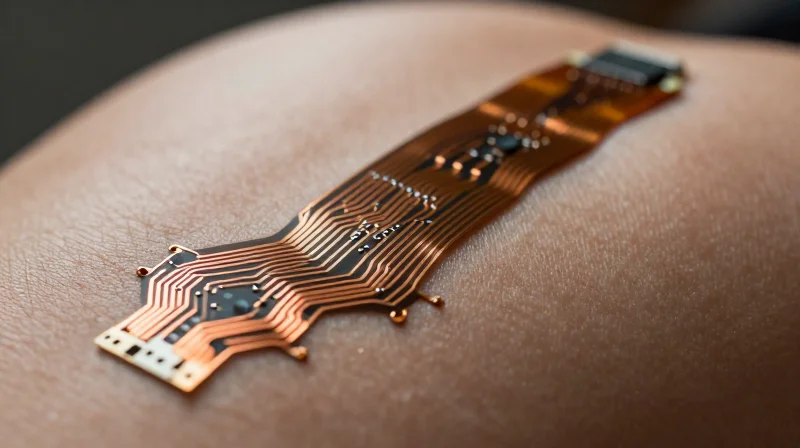
The Mechanical and Electrical Constraints of ECG Wearables
Wearable ECG circuits are subjected to conditions that would cause standard rigid boards to fail prematurely. Because these devices adhere to the skin, they must endure constant flexion, torsion, and stretching caused by human movement. Furthermore, the signal-to-noise ratio in ECG monitoring is exceptionally low, meaning that any micro-cracking in the conductive traces—even those invisible to the naked eye—can introduce debilitating artifacts into the cardiological data stream.
Environmental and Physiological Stress Factors
| Stress Factor | Impact on PCB | Material Requirement |
|---|---|---|
| Dynamic Flexing | Fatigue and conductive cracking | High ductility and flexibility |
| Skin Moisture | Corrosion and signal leakage | Hydrophobic/Low moisture absorption |
| Thermal Cycling | Delamination of copper layers | Matched Coefficient of Thermal Expansion |
Key Considerations for Material Selection
- Why is the substrate's moisture absorption rate critical?
ECG devices are worn against the skin, where sweat and humidity can cause ionic contamination. A material with high moisture absorption will suffer from dielectric constant instability and signal degradation. - How does flexibility affect signal integrity?
If the base material is too brittle, repeated bending alters the width and impedance of the copper traces, causing 'ghost' electrical signals that interfere with the low-amplitude ECG waves. - What role does the adhesive play?
Adhesives must be chemically compatible with the substrate to prevent delamination during the rapid thermal expansion cycles that occur when a device is removed from skin and exposed to room temperature.
Biocompatibility and Skin-Contact Standards
The Imperative of Biocompatibility in Wearable ECGs
When a device sits against the human body for extended periods, the flexible PCB substrate ceases to be just an electronic component and becomes a biological interface. For ECG wearables, the material must be inert, non-irritating, and non-sensitizing to prevent skin inflammation, dermatitis, or systemic toxicity resulting from chemical leaching.
ISO 10993: The Gold Standard
The ISO 10993 series is the internationally recognized framework for evaluating the biocompatibility of medical devices. Designers must ensure that the base film (usually Polyimide or Polyester) and the coverlay adhesive meet these rigorous standards. For skin-contact wearables, the focus is specifically on Part 5 (tests for in vitro cytotoxicity) and Part 10 (tests for irritation and skin sensitization).
| ISO 10993 Part | Focus Area | Relevance to FPCB |
|---|---|---|
| Part 5 | Cytotoxicity | Ensures no cell-killing agents leach into the skin. |
| Part 10 | Irritation/Sensitization | Confirms material does not cause redness or immune reaction. |
| Part 23 | Irritation | Specific evaluation for long-term dermal contact. |
Key Considerations for Substrate Selection
- Is 'Medical Grade' enough?
No; while materials may be labeled 'medical grade,' the manufacturer must provide specific test certificates demonstrating that the material passed ISO 10993 testing in its final, processed form. - How does chemical leaching occur?
Leaching usually happens at the adhesive interface or through degradation of the base polymer when exposed to body sweat, which contains salts, urea, and proteins that act as aggressive chemical agents. - Why is the adhesive just as important as the film?
Adhesives are often the weakest link in biocompatibility. Even if the substrate is inert, a low-grade acrylic adhesive can contain volatile organic compounds (VOCs) that cause contact dermatitis.
Evaluating Dielectric Materials: Polyimide vs. PET
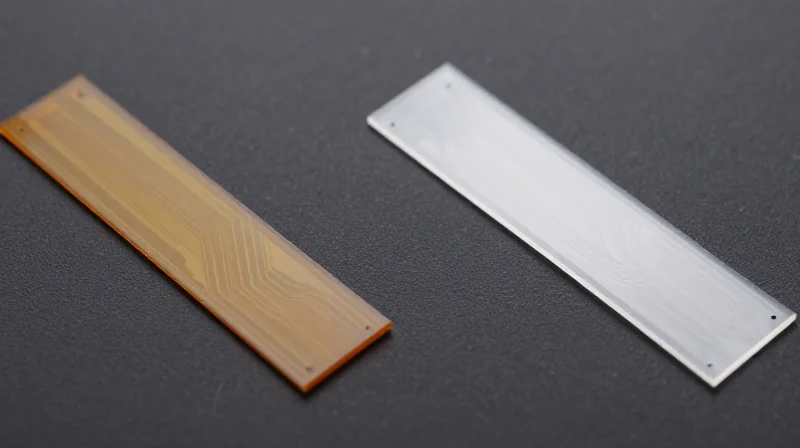
Evaluating Dielectric Materials: Polyimide vs. PET
For wearable ECG monitoring devices, the choice between Polyimide (PI) and Polyethylene Terephthalate (PET) serves as the fundamental design decision. Polyimide offers superior thermal stability, making it the industry standard for high-performance flexible circuits that require surface-mount technology (SMT) and high-density interconnects. In contrast, PET provides a cost-effective alternative for simpler, low-power monitoring solutions, though it is limited by its lower glass transition temperature and restricted thermal processing windows.
| Property | Polyimide (PI) | PET |
|---|---|---|
| Thermal Resistance | High (up to 300°C+) | Low (approx. 80-100°C) |
| Chemical Resistance | Excellent | Moderate |
| Dimensional Stability | High | Low |
| Cost | Premium | Budget-Friendly |
| Ideal Application | Complex Signal Processing | Disposable Sensors |
Key Considerations for ECG Material Selection
- Why is Polyimide preferred for advanced ECG wearables?
Polyimide's high thermal tolerance allows for standard soldering processes, which is necessary for mounting sophisticated microcontrollers and analog front-end chips required for accurate ECG data processing. - What are the limitations of PET in medical devices?
PET cannot withstand traditional soldering temperatures, often requiring conductive adhesives or low-temperature assembly methods, which can introduce reliability issues or signal noise in high-fidelity ECG circuits. - How does moisture absorption impact performance?
While both materials exhibit some moisture sensitivity, PI generally maintains better electrical insulation properties in humid skin-contact environments, reducing the risk of signal drift in wearable ECG patches.
The Criticality of Bend Radius and Flexibility
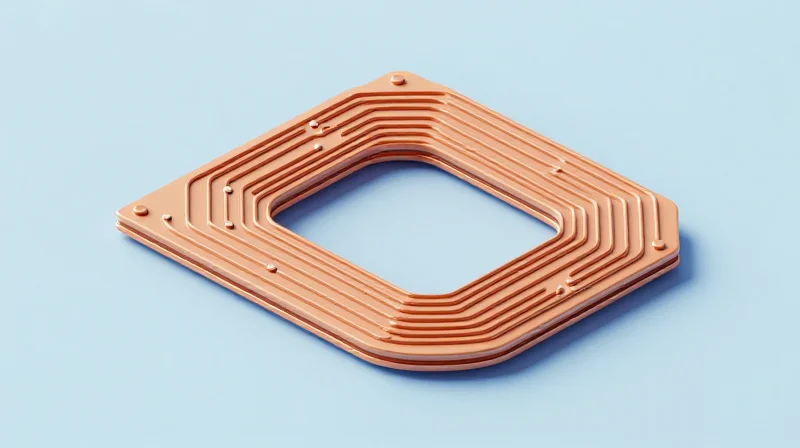
Defining Minimum Bend Radius in ECG Wearables
The minimum bend radius (MBR) represents the tightest curve a flexible PCB can withstand without inducing micro-fractures in the copper traces or delamination of the dielectric substrate. For ECG wearables, which undergo constant dynamic deformation against the human chest, selecting materials with a high elastic modulus and low fatigue threshold is essential. If the MBR is exceeded, stress-induced work hardening occurs, leading to signal discontinuity that can render sensitive cardiac data unreliable.
Calculating Dynamic Flexibility Requirements
To calculate the safe MBR, designers must consider the material's total thickness and its strain limit. The formula often applied is R = K × H, where R is the bend radius, K is the strain factor constant (typically 10 to 20 for polyimide), and H is the total thickness of the laminate stack. Thinner materials significantly lower the MBR, allowing for a tighter fit against the torso while reducing the stress transferred to conductive copper layers during physical exercise.
| Material Type | Typical Thickness (um) | Relative Bend Radius Capacity | Best Use Case |
|---|---|---|---|
| Standard Polyimide | 50-125 | Moderate | Static wearable sensors |
| Ultra-Thin Polyimide | 12-25 | Excellent | Dynamic high-motion ECG |
| Polyester (PET) | 50-100 | Limited | Single-use disposable patches |
- How does substrate thickness impact circuit longevity?
Thinner substrates lower the neutral axis of the PCB, which reduces the internal stress applied to copper conductors when the device is flexed or stretched. - What happens when an ECG wearable exceeds its bend radius?
Excessive bending creates micro-cracks in the copper, leading to increased resistance, intermittent signal drops, or total electrical failure during intense patient activity. - Can I optimize trace routing for flexibility?
Yes, by employing arc-shaped trace patterns rather than sharp 90-degree corners, you distribute mechanical strain more evenly and prevent fatigue points along the bend path.
Ensuring Signal Integrity in High-Flex Environments
In wearable ECG monitoring, signal integrity is often compromised by the physical flexing of the flexible PCB, which can alter the dielectric constant and physical spacing of copper traces. To maintain a stable baseline for low-amplitude biological signals, engineers must employ design strategies that minimize the impact of mechanical stress on electrical performance.
Techniques for Mitigating Impedance Fluctuations
- Differential Pair Routing
Utilize tightly coupled differential pairs to improve common-mode noise rejection, which helps cancel out electromagnetic interference induced by trace deformation during patient movement. - Reference Plane Continuity
Implement hatched or meshed ground planes instead of solid copper to increase mechanical flexibility while maintaining a consistent reference for controlled impedance traces. - Trace Geometry Optimization
Route sensitive traces at an angle to the bending axis and employ arc-shaped routing rather than 90-degree corners to reduce localized stress concentrations that can lead to copper fatigue and impedance discontinuities.
Comparison of Mitigation Strategies
| Strategy | Mechanical Benefit | Electrical Impact |
|---|---|---|
| Hatched Planes | Increases substrate compliance | Moderate rise in inductance |
| Arc Routing | Reduces micro-cracking | Eliminates impedance reflections |
| Differential Pairs | N/A | High noise immunity |
Design Best Practices for Dynamic ECG Signals
To ensure reliable ECG data acquisition, it is imperative to decouple the sensitive analog front-end (AFE) from the high-flex regions of the circuit. Use rigid-flex design architectures where possible to isolate the critical signal processing components from the dynamic, skin-conforming substrate sections.
Material Fatigue Resistance and Long-Term Reliability
For wearable ECG devices, the flexible PCB acts as a dynamic interface between sensitive electronic components and the human body. Because these devices are subject to continuous bending, stretching, and vibration, the fatigue resistance of the substrate—most commonly polyimide—determines the device's operational lifespan. Selecting a material that balances mechanical compliance with high fracture toughness is critical to preventing trace delamination and catastrophic failure of the interconnects.
Assessing Mechanical Durability Under Cyclic Loading
The long-term reliability of a flexible circuit is tested through cyclic bending trials that simulate real-world usage. Materials must resist work hardening and micro-cracking to ensure that electrical pathways remain continuous over millions of cycles. Engineers should prioritize substrates with high elongation-at-break percentages and low modulus values, which allow the material to distribute mechanical strain more evenly across the copper-polyimide interface.
| Material Property | Polyimide (PI) | Polyester (PET) | Impact on Reliability |
|---|---|---|---|
| Flex Life (Cycles) | Very High | Moderate | Determines overall lifespan |
| Thermal Stability | Excellent | Poor | Prevents warping under heat |
| Elastic Modulus | Optimized | High | Affects strain distribution |
Mitigating Fatigue-Induced Failure
- How does copper grain structure influence fatigue?
Using rolled-annealed (RA) copper rather than electro-deposited (ED) copper significantly improves ductility, allowing the traces to withstand repeated bending without micro-fracturing. - What role does the coverlay play in reliability?
A high-performance adhesive coverlay acts as a strain-relief mechanism, securing the conductive traces and preventing localized stress concentrations that lead to copper fatigue. - Can bonding agents affect long-term flexibility?
Yes, selecting flexible, heat-resistant acrylic or epoxy adhesives is vital; brittle bonding agents can fail prematurely, leading to substrate delamination under constant movement.
Thermal Management in Small Form Factors

Thermal Challenges in Small Form Factor ECG Wearables
Wearable ECG devices operate in tight enclosures where convective airflow is non-existent. As these devices shrink, power density increases, forcing heat toward the substrate-skin interface. Choosing materials with high thermal conductivity is vital to prevent localized hotspots that can cause patient discomfort or skin irritation.
Material Selection for Heat Dissipation
| Material Type | Thermal Conductivity | Best Use Case |
|---|---|---|
| Standard Polyimide | Low | General flex circuits where heat is negligible |
| Thermally Conductive PI | Moderate | High-density designs requiring heat spreading |
| Copper-filled Adhesives | High | Thermal vias and ground plane integration |
Engineering Solutions for Thermal Control
Beyond material choice, designers must employ structural techniques to channel heat away from the skin. Integrating localized copper pours under heat-generating components acts as an effective heat spreader. When using flexible PCBs, designers should focus on thin copper foils combined with high-conductivity coverlays to optimize the thermal path.
- How do thermal vias perform in flexible substrates?
While traditional through-hole vias can create stress points, small-diameter blind or micro-vias within the flexible stack-up allow for efficient vertical heat transfer to ground planes without sacrificing board flexibility. - What is the role of the skin-facing side of the PCB?
The side of the PCB touching the patient should utilize materials with low thermal emissivity or be encapsulated in a thermally resistive medical-grade elastomer to prevent direct contact with high-temperature components. - Can thickness impact heat dissipation?
Yes; thinner substrates generally allow for lower thermal resistance, but they must be balanced against the need for structural rigidity to prevent component damage during movement.
Choosing the Right Adhesives and Coverlays
In wearable ECG applications, the choice of adhesive and coverlay is not merely a manufacturing preference but a functional necessity. These materials dictate the neutral axis of the circuit, directly impacting its ability to withstand repetitive bending without inducing fatigue cracks in copper traces.
Adhesive Selection and Mechanical Performance
Most flexible circuits utilize acrylic-based or epoxy-based adhesives. For ECG wearables, acrylics are generally preferred for their superior bond strength and flexibility. It is essential to ensure that the adhesive exhibits a low modulus of elasticity to prevent the material from becoming brittle over time, which would otherwise lead to delamination at the interface between the substrate and the copper.
Coverlay Materials for Wearability
The coverlay serves as the primary environmental barrier against sweat, oils, and moisture—all of which are common in clinical and sports-related ECG monitoring. Polyimide (PI) remains the industry standard, offering excellent chemical resistance and high thermal stability. However, for applications requiring extreme conformability to human skin, ultra-thin coverlays are recommended to reduce the overall stack-up stiffness.
| Material Type | Flexibility | Environmental Resistance | Best Use Case |
|---|---|---|---|
| Acrylic Adhesive | High | Moderate | General flexible interconnections |
| Epoxy Adhesive | Low | High | Rigid-flex interface points |
| Polyimide Coverlay | High | Excellent | Standard ECG sensor patches |
| Photo-imageable Coverlay | Moderate | Good | High-density interconnects |
Frequently Asked Questions
- How do adhesives impact signal integrity?
Improper adhesive thickness can alter the dielectric constant and capacitive coupling between traces, leading to impedance mismatching which may distort weak ECG signals. - Why is coverlay delamination a critical risk?
Delamination exposes the copper traces to moisture, leading to oxidation and electrochemical migration, which can cause short circuits and catastrophic device failure in skin-worn electronics. - Can I use solder mask instead of a coverlay?
While solder mask is cheaper, it is generally too brittle for high-flex applications and lacks the tear resistance required for long-term wearable use.
Selecting the optimal flexible substrate is the defining factor in transitioning a wearable ECG device from a prototype to a reliable, medical-grade diagnostic tool. By prioritizing biocompatibility and fatigue resilience, your design will meet the rigorous standards of modern healthcare. Contact our engineering team today to optimize your material stack-up for your next wearable innovation.
