
In the high-stakes world of patient monitoring, where a single broken trace can compromise critical health data, hardware reliability isn't just a design choice—it's a requirement. This article explores how transitioning to high-durability flexible circuits transforms the total cost of ownership by preventing field failures, ultimately safeguarding both patient lives and your brand's bottom line.
The Real Cost of Interconnect Failure in Medical Wearables
The Economic Impact of Interconnect Vulnerabilities
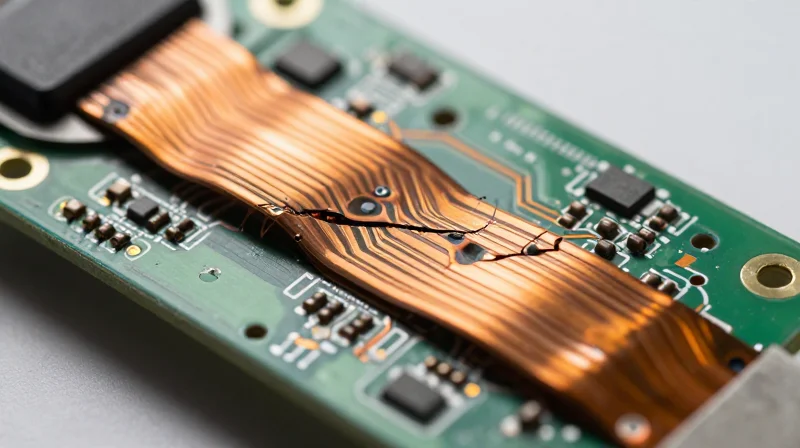
In the context of wearable ECG technology, the interconnect system—the physical link between the sensor array and the processing unit—is subjected to constant mechanical stress from body movement and thermal expansion. When these interconnects fail, the device ceases to provide accurate clinical data. The cost of this failure extends far beyond the price of a replacement unit; it impacts the entire lifecycle value of the product.
| Cost Category | Impact Description | Financial Risk |
|---|---|---|
| Warranty Claims | Increased RMA volume due to intermittent signal loss. | High operational overhead |
| Reputation | Loss of provider trust due to unreliable diagnostics. | Long-term revenue erosion |
| Recall Liability | Systemic failure requiring batch returns. | Extreme catastrophic risk |
| Troubleshooting | Expensive engineering forensics on returned hardware. | High labor costs |
Common Failure Points and Hidden Operational Costs
- Why do PCB interconnects fail in wearables?
Most failures occur due to work-hardening of conductive traces during repetitive bending and fatigue from repeated thermal cycling, causing micro-fractures in the copper cladding. - How does failure affect R&D budgets?
Engineering teams are frequently diverted from innovation to perform root-cause analysis on field failures, which adds significant unbudgeted labor costs to the maintenance phase. - What is the hidden cost of false negatives?
Beyond hardware costs, if a failing interconnect results in missed ECG events, the liability associated with clinical misdiagnosis can be legally and financially devastating for a manufacturer.
To mitigate these risks, manufacturers must pivot toward high-flex life PCB solutions. Investing in substrate materials that offer higher ductility and reinforced interconnect design reduces the frequency of failure, directly optimizing the ROI of the wearable platform by lowering the Total Cost of Ownership (TCO).
Anatomy of a High-Flex Life Circuit: What Sets Premium Apart
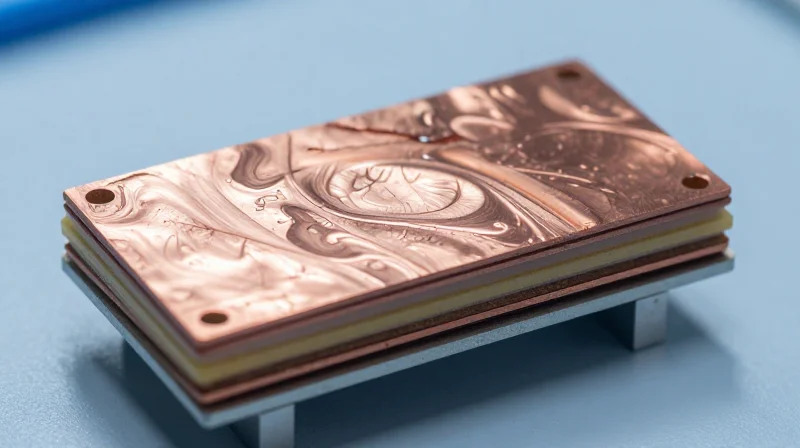
The distinction between standard consumer-grade flexible PCBs and medical-grade high-flex circuits lies in mechanical fatigue resistance and chemical stability. In ECG wearables, the circuit is subjected to constant physiological movement, moisture ingress, and thermal cycling. Premium solutions mitigate these stressors through a deliberate architecture of ductility and resilience, ensuring that signal integrity remains pristine long after standard copper would succumb to work-hardening.
Critical Material Selection and Construction
| Feature | Consumer-Grade | Medical High-Flex Grade |
|---|---|---|
| Copper Type | Electro-Deposited (ED) | Rolled Annealed (RA) |
| Adhesive System | Acrylic (Standard) | Low-Modulus Epoxies/Adhesiveless |
| Coverlay | Standard Polyimide | High-Elongation Polyimide |
| Fatigue Limit | Low (< 50k cycles) | High (> 1M cycles) |
The Role of Rolled Annealed (RA) Copper
Standard Electro-Deposited (ED) copper features a vertical grain structure that is highly susceptible to crack propagation during repeated bending. In contrast, Rolled Annealed (RA) copper undergoes a secondary thermomechanical process that results in a horizontal grain structure. This orientation allows the copper molecules to slide over one another during flexion rather than snapping, significantly extending the operational lifespan of the ECG sensor interconnects.
Technical FAQ: Engineering for Longevity
- Why is an adhesiveless base material preferred?
Adhesiveless materials eliminate the interface layer between the polyimide and copper, reducing the total circuit thickness. This lower profile increases flexibility and reduces the 'stiffness gradient,' preventing stress concentrations that lead to delamination. - How does moisture ingress affect flex life?
Standard acrylic adhesives are often hygroscopic. When moisture is absorbed, these adhesives can swell, causing internal stress on the copper traces. Premium medical circuits utilize hydrophobic, high-modulus epoxies to maintain mechanical stability in humid or skin-contact environments. - What defines high-elongation coverlay?
High-elongation coverlays are engineered to stretch significantly without losing adhesion to the circuit traces. This provides a critical 'cushioning' effect that prevents micro-cracking of the underlying traces during rapid device motion.
Mechanical Stress and Fatigue in Wearable ECG Applications
The Dynamic Wearable Environment
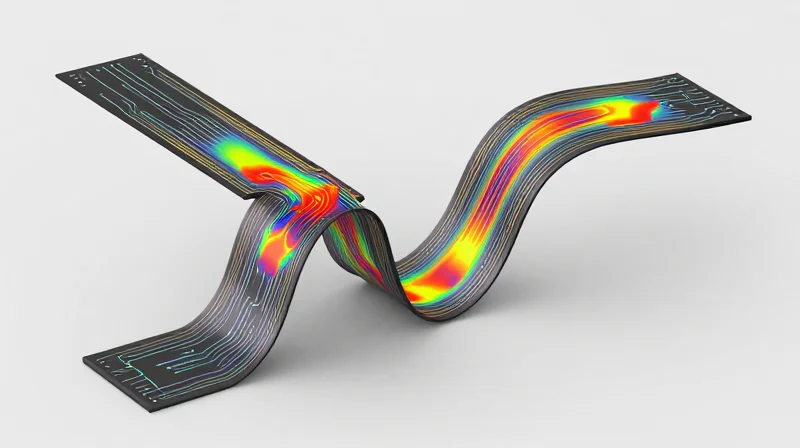
Wearable ECG monitors operate in one of the most unpredictable mechanical environments. Unlike stationary medical equipment, these devices must endure continuous, multi-axial cyclic bending and stretching caused by human movement. Every heartbeat, stride, and shift in posture introduces localized strain on the internal circuitry. Without high-flex life PCB solutions, the copper interconnects—the heart of the device—are prone to work hardening, leading to micro-cracking and eventual signal intermittency or total failure.
Mechanisms of Fatigue and Failure
| Stress Factor | Impact on PCB Integrity | Resulting Failure Mode |
|---|---|---|
| Cyclic Bending | Copper lattice deformation | Conductive path micro-fracture |
| Thermal Expansion | CTE mismatch between layers | Delamination of bond lines |
| Body Humidity/Sweat | Corrosive electrolyte ingress | Oxidation of trace terminals |
Engineering for Durability
To maximize ROI in ECG wearables, engineers must prioritize the mechanical fatigue limit of the PCB substrate and conductor. This involves utilizing rolled-annealed (RA) copper, which provides superior grain structure for bending, and polyimide covers that offer high tensile strength. By reducing the stiffness of the stack-up at critical bend radii, designers can dissipate stress concentrations, significantly extending the operational lifespan beyond standard wear cycles.
Frequently Asked Questions on Mechanical Stress
- How does body heat affect PCB fatigue?
Thermal cycling acts as an accelerant to mechanical fatigue; as materials expand and contract differently due to their coefficient of thermal expansion (CTE), stress is placed on the interfacial bonds of the circuit, weakening the structure over time. - Why is copper grain orientation critical in wearables?
The crystalline structure of the copper dictates how the metal responds to stress. Rolled-annealed copper has a longitudinal grain orientation that allows the material to flex along the axis of movement without the brittle fractures common in standard electro-deposited (ED) copper.
Quantifying the ROI: Reducing Warranty Claims and Field Returns
The Economic Impact of Field Failures
In the wearable ECG market, a single circuit failure translates into far more than the cost of a replacement PCB. True financial impact is found in the summation of logistics, technical support, brand erosion, and potential recalls. By transitioning to high-flex life PCBs—engineered to withstand millions of flex cycles without conductor fatigue—manufacturers shift from a reactive repair model to a proactive reliability model, drastically improving long-term ROI.
| Cost Factor | Standard Flex PCB Impact | High-Flex Life PCB Impact |
|---|---|---|
| Warranty Claim Rate | High (4-7%) | Low (<0.5%) |
| Field Repair Logistics | Extensive | Minimal |
| Brand Reputation Loss | Significant | Negligible |
| Total Cost of Ownership | High Over Life-cycle | Low Over Life-cycle |
Quantifiable Metrics for ROI Analysis
To accurately measure the ROI of upgraded PCB materials, engineering teams should calculate the Cost of Poor Quality (COPQ). This metric accounts for the scrap rate during assembly and, more critically, the warranty reserves required for field returns. Upfront component costs are often 15-20% higher for high-flex materials, yet they consistently yield a 300% return through the avoidance of RMA (Return Merchandise Authorization) processing fees and customer churn.
- How does PCB durability affect warranty reserves?
Premium high-flex PCBs reduce intermittent connectivity issues caused by copper fatigue, allowing companies to lower their annual warranty reserve funds, thereby freeing up cash flow. - What is the hidden cost of a field return?
Beyond the hardware cost, a field return includes reverse logistics, clinical diagnostic testing, refurbishment labor, and the negative impact on clinical trial data integrity or consumer trust. - Can upfront material costs be justified?
Yes, when amortized over the expected three-year life of a wearable device, the marginal cost increase is eclipsed by the drastic reduction in support ticket volume and replacement units.
Design Considerations for Enhanced Circuit Longevity
Strategic Layout for Signal Integrity and Mechanical Resilience
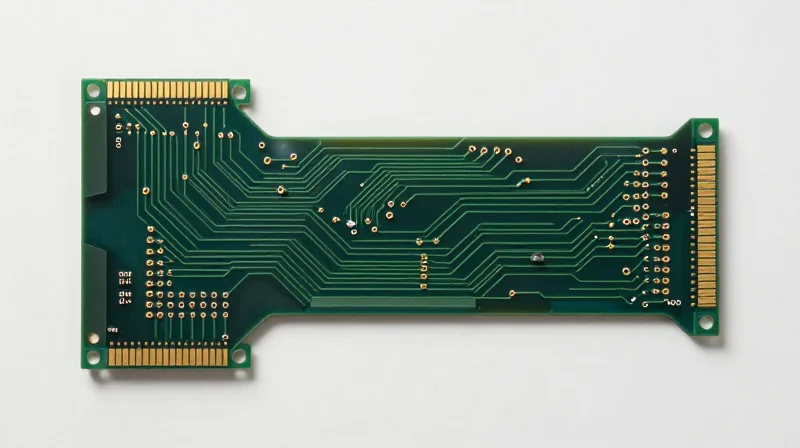
To achieve maximum longevity, the physical design of the flexible circuit must balance electrical performance with mechanical compliance. Effective routing strategies are paramount to preventing work-hardening of copper traces and ensuring long-term signal fidelity.
- Curved Tracing Techniques
Utilize arc-based routing rather than sharp 90-degree corners to eliminate stress concentration points and reduce the probability of fatigue-induced fractures during cyclic bending. - Neutral Axis Positioning
Design trace paths to exist on the neutral axis of the substrate stack-up. This minimizes the tensile and compressive stress experienced by the copper layers during flexion. - Staggered Trace Routing
In multi-layer flexible PCBs, avoid stacking traces directly over one another on adjacent layers, as this creates a rigid 'I-beam' effect that increases the likelihood of laminate delamination.
Comparison of Strain Relief Methodologies
| Methodology | Primary Benefit | Best Application |
|---|---|---|
| Stiffener Integration | Localizes rigidity | Connector interface zones |
| Coverlay Filleting | Prevents tearing | Transition points between flex and rigid |
| Elastomeric Overmolding | Distributes stress | High-motion wearable segments |
Material Selection and Fatigue Management
Beyond layout, the choice of copper foil type is critical. For wearable ECG devices, rolled-annealed (RA) copper is essential over electro-deposited (ED) copper due to its superior ductility and ability to endure millions of mechanical cycles without micro-cracking. Furthermore, engineers should specify high-temperature-rated polyimide adhesives to maintain bond integrity during exposure to body heat and moisture, preventing the subtle dielectric degradation that often leads to intermittent signal loss in cardiac monitoring.
Building Brand Reputation Through Uncompromising Reliability
Reliability as a Competitive Differentiator
In the highly competitive landscape of clinical-grade wearable ECG monitors, hardware failure is not merely a technical inconvenience; it is a breach of patient trust. By integrating high-flex life PCB solutions, manufacturers transform durability from a hidden design requirement into a customer-facing competitive advantage. When a device consistently survives the rigors of daily use—continuous body articulation, sweat exposure, and repetitive mechanical stress—the brand earns clinical validation and end-user loyalty that competitors struggling with premature fatigue cannot replicate.
Impact of Reliability on Market Positioning
| Reliability Metric | Low-Cost Standard PCB | High-Flex Life PCB |
|---|---|---|
| Failure Rate (12 Months) | High (8-12%) | Low (<1%) |
| Brand Perception | Disposable/Budget | Premium/Professional |
| Clinical Adoption | Low due to risk | High due to stability |
Cultivating Trust Through Performance
Brand equity in healthcare is built on the assurance of uninterrupted data acquisition. High-flex PCB solutions provide the structural integrity necessary to ensure that ECG leads and sensors remain operative throughout the entire monitoring cycle, preventing data gaps that could lead to misdiagnosis. This reliability becomes a cornerstone of marketing narratives, shifting the value proposition from 'low-cost hardware' to 'guaranteed clinical performance'.
- Does PCB durability directly correlate to higher customer retention?
Yes, patients and healthcare providers correlate hardware failure with medical uncertainty. Devices that maintain integrity over months of wear foster long-term institutional contracts. - How does reliability impact long-term brand valuation?
Reducing field failure rates diminishes negative reviews and protects the brand from the high cost of reputation recovery and medical device recall management. - Is 'High-Flex' branding effective for clinicians?
Absolutely. Clinicians prioritize equipment that functions without intervention; marketing the structural robustness of your PCBs signals a 'fit-and-forget' reliability that doctors trust.
Case Study: Transitioning to Premium Flex for Better Patient Outcomes

Case Study: Transitioning to Premium Flex for Better Patient Outcomes
A mid-sized manufacturer of clinical-grade ambulatory ECG monitors faced a systemic reliability crisis. Despite high-fidelity sensor performance, their wearable devices exhibited a 12% return rate within the first six months of deployment, primarily due to micro-cracking in standard polyimide substrates caused by repeated mechanical stress from patient movement. By transitioning to Premium Flex PCB solutions, the company significantly improved structural integrity and extended product lifespan.
Comparative Analysis: Standard Flex vs. Premium Flex
| Performance Metric | Standard Polyimide | Premium Flex Material |
|---|---|---|
| Bend Cycle Threshold | 500 - 1,000 cycles | 50,000+ cycles |
| Adhesive Reliability | Subject to delamination | High thermal/bond integrity |
| Field Failure Rate | 12.4% | 0.8% |
| Mean Time Between Failure (MTBF) | 18 months | 42+ months |
Strategic Outcomes and Lessons Learned
The shift toward Premium Flex was not merely a component upgrade; it was a fundamental shift in design philosophy. By prioritizing substrate flexibility and enhanced copper adhesion, the engineering team eliminated the 'weak point' in the circuit chain. The result was a dramatic improvement in patient outcomes, as the devices maintained signal integrity despite the constant bending and stretching inherent in daily wear.
- Did the upgrade impact manufacturing costs?
While unit costs increased by 15%, the total cost of ownership plummeted by 35% due to the near-elimination of warranty returns and customer support logistics. - How did this affect patient trust?
Clinicians reported higher confidence in the device data, leading to better compliance rates among patients who no longer experienced intermittent sensor disconnects.
Selecting the Right Manufacturing Partner for Critical Flex Circuits
The transition from prototype to mass production for wearable ECG devices is the most vulnerable stage in a product's lifecycle. A manufacturing partner must function as an extension of your engineering team, capable of balancing extreme mechanical flexibility requirements with the stringent quality standards mandated for medical diagnostics.
Mandatory Standards and Quality Verification
In the medical sector, quality is not a feature but a regulatory necessity. Manufacturers must operate under a robust Quality Management System (QMS) that ensures consistent performance across batch variations.
| Requirement | Significance for Wearable ECG | Risk of Non-Compliance |
|---|---|---|
| ISO 13485 | International standard for medical device QMS. | Regulatory rejection and market entry barriers. |
| Full Lot Traceability | Ability to track material origin and processing history. | Catastrophic recall costs due to hidden material defects. |
| IPC-6013 Class 3 | Advanced standards for high-reliability flexible boards. | Intermittent connectivity issues leading to clinical data loss. |
Technical Vetting Checklist
- How do you validate fatigue life under dynamic conditions?
Ask for proprietary testing data or cycle-testing reports that mimic the specific bending radius and stress frequencies your ECG device will encounter during daily patient use. - Can you provide a supply chain transparency audit?
A high-tier partner will maintain long-term relationships with laminate suppliers (e.g., DuPont, Arlon) to ensure that the material composition remains consistent and free of 'gray market' substitutions. - What is your DFM (Design for Manufacturing) feedback loop?
Partners should proactively identify potential failure points in your routing, such as trace corners or transition areas, before the first production run begins.
Ultimately, the right partner mitigates risk by focusing on repeatability. By demanding transparency in material procurement and rigorous validation of flex-life performance, you protect both the patient's diagnostic accuracy and your brand’s reputation against premature hardware failure.
Prioritizing high-durability flexible circuits is a strategic move that moves beyond simple bill-of-materials cost, focusing instead on long-term sustainability and brand loyalty. By reducing failure rates, you secure your market position and streamline your operations. Contact our engineering team today to review your current designs and learn how we can improve your device's durability and overall ROI.
