
In the modern vehicle, comfort is inextricably linked to safety. A seat heater control assembly is more than a convenience feature; it is a critical electronic component that must manage significant thermal loads without compromising the vehicle's electrical architecture. This guide explores the essential criteria for selecting components that meet the high-stakes demands of automotive engineering.
Understanding Thermal Management in Seat Heating Systems
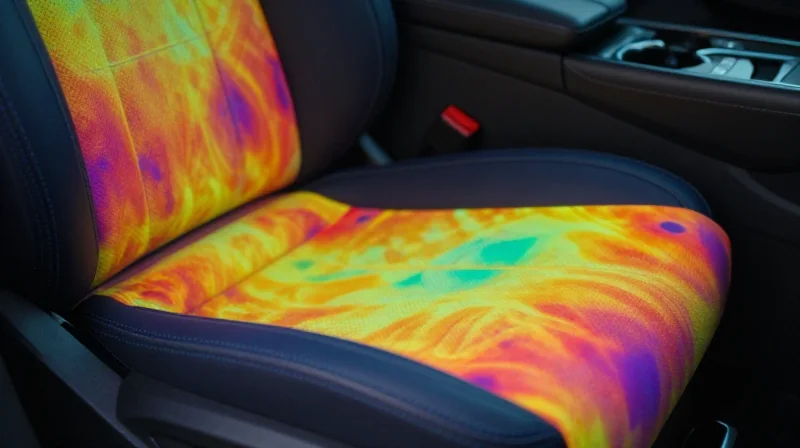
The Physics of Thermal Load in Seat Heating
Thermal management in seat heater control systems is not merely about power delivery; it is about mitigating the risks associated with high-current switching and localized heat generation. As current flows through power MOSFETs and resistive heating elements, power dissipation creates a significant thermal load that can compromise PCB integrity. If this heat is not dissipated efficiently, it can lead to solder joint degradation, component drift, and, in extreme cases, catastrophic thermal runaway.
Key Thermal Management Strategies
- Thermal Vias
Strategic placement of copper-plated thermal vias connects the component pads to inner ground planes, effectively wicking heat away from sensitive semiconductor junctions. - Copper Weight Optimization
Utilizing thicker copper (2oz or higher) reduces electrical resistance and serves as a natural heat spreader across the board surface. - Proactive Monitoring
Integrating Negative Temperature Coefficient (NTC) thermistors near heat-prone components allows for real-time thermal throttling, preventing the system from exceeding safe operating temperatures.
Preventing Thermal Runaway
Thermal runaway occurs when an increase in temperature causes a further increase in current, leading to a feedback loop that eventually destroys the PCB. High-reliability automotive designs must incorporate hardware-based fail-safes alongside firmware protections.
| Feature | Role in Safety | Impact |
|---|---|---|
| Active Throttling | Limits duty cycle based on thermistor feedback | Prevents overheating |
| Hardware Fusing | Disengages load during short-circuit events | Prevents fire hazard |
| Thermal Relief Pads | Manages heat distribution during assembly | Ensures joint reliability |
When selecting high-reliability PCBs, engineers should prioritize substrates with high Thermal Conductivity (TC) and thermal coefficients of expansion that match surface-mount components to prevent mechanical stress during temperature cycling. By standardizing these thermal design principles, manufacturers can achieve the stringent safety benchmarks required for modern vehicle interiors.
Material Selection and Durability Standards
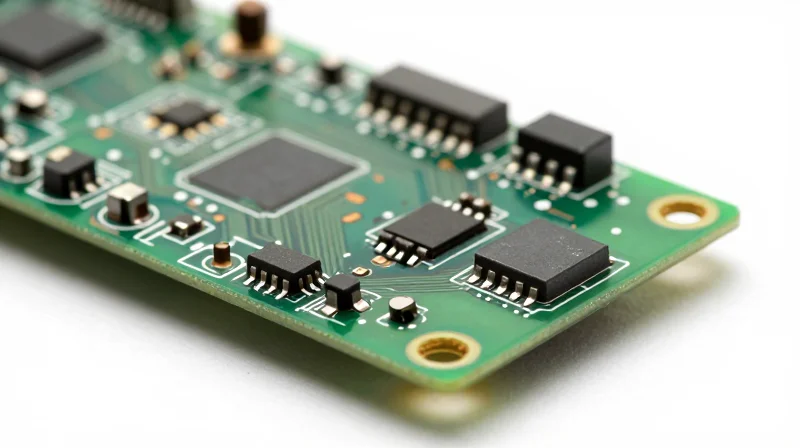
Substrate Material Selection for Harsh Environments
Standard FR-4 is frequently insufficient for the localized high-heat and cyclic thermal stress inherent in seat heater applications. Reliability engineers must prioritize high-Tg (glass transition temperature) materials to prevent structural degradation. When the PCB material approaches its Tg, it becomes susceptible to expansion-induced fractures in copper traces and solder joints, particularly under constant vibrational loading from the vehicle chassis.
| Material Type | Tg (Glass Transition) | Suitability for Seat Heaters |
|---|---|---|
| Standard FR-4 | 130-140°C | Low - Risk of delamination under heat |
| High-Tg FR-4 | 170-180°C | High - Recommended for thermal cycling |
| Metal Core (IMS) | >200°C | Excellent - Best for extreme heat dissipation |
Durability Through Protective Coatings
Automotive seat heaters are exposed to humidity, condensation, and cleaning agents. Conformal coating acts as a critical barrier, sealing the PCB against dielectric breakdown and electrochemical migration. In high-reliability designs, acrylic or silicone-based coatings are preferred due to their ability to maintain flexibility during rapid temperature swings, preventing the stress cracking that occurs with rigid epoxy coatings.
Frequently Asked Questions on PCB Durability
- Why is Tg important for seat heater PCBs?
A high Tg rating ensures that the circuit board retains its mechanical rigidity despite the repeated thermal expansion and contraction cycles generated by the heating elements. - Does conformal coating affect heat dissipation?
While thin coatings provide excellent environmental protection, selecting a thermally conductive coating formulation is advised if the PCB design pushes thermal density limits. - How do vibrations influence material choice?
Vibrational stress can cause fatigue in solder joints. Using high-Tg materials prevents board warping, which significantly reduces the mechanical strain on sensitive surface-mount components.
Load-Handling Capabilities and Circuit Protection
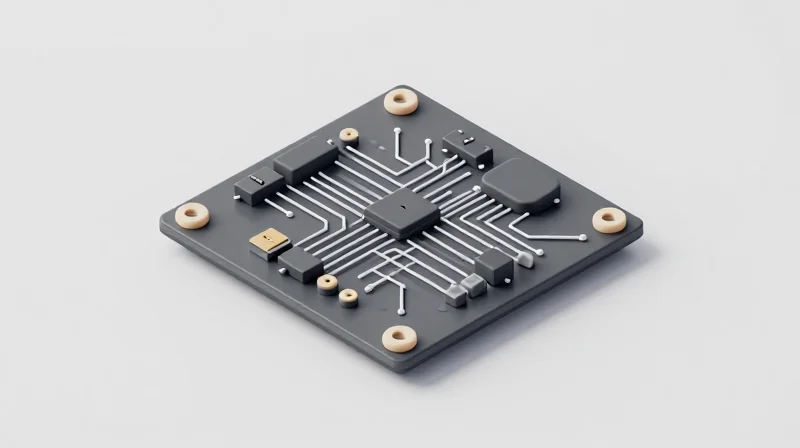
Optimizing Load-Handling and Circuit Protection
To achieve maximum reliability in seat heater control, the PCB must be engineered to handle continuous high-current loads while maintaining precise thermal margins. Selecting the right power stage—typically high-side MOSFETs—is critical to preventing thermal stress and ensuring rapid reaction times during electrical faults.
MOSFET Performance and Current Sensing
The primary challenge in seat heater design is the RDS(on) value of the switching element. A low resistance MOSFET minimizes power dissipation (I²R losses), which prevents PCB hotspots and prolongs the lifespan of the dielectric layers. Precision current sensing, often achieved via shunt resistors or integrated Hall-effect sensors, is mandatory to monitor heating element integrity in real-time.
| Feature | Recommended Specification | Safety Impact |
|---|---|---|
| MOSFET RDS(on) | < 10 mΩ | Reduces thermal stress and heat dissipation |
| Current Sensing | Analog/Digital with <5% margin | Enables detection of open/short circuits |
| Short Circuit Response | < 10 µs | Prevents wire harness melting and fire hazards |
Fault Protection Protocols
- How does the system handle a short circuit?
The controller must detect an overcurrent condition instantly and execute an emergency gate-shutdown of the MOSFET to isolate the heating element from the power source. - What role does thermal shutdown play?
Integrated thermal sensors on the PCB act as a secondary safety layer, disabling the load if the board temperature exceeds critical limits, regardless of what the main microcontroller reports. - Why is reverse polarity protection necessary?
Automotive environments are prone to installation errors; robust clamping diodes or MOSFET-based reverse-blocking circuits prevent catastrophic failure during assembly or maintenance.
Navigating IATF 16949 Compliance
The Role of IATF 16949 in Automotive Reliability
For automotive seat heater control PCBs, IATF 16949 certification is not merely a bureaucratic requirement; it is a fundamental framework for guaranteeing passenger safety. This standard emphasizes the prevention of defects and the reduction of variation and waste in the automotive supply chain. By mandating a process-based approach to quality management, IATF 16949 ensures that every PCB destined for a heating module is manufactured under stringent, repeatable, and documented conditions that mitigate the risk of field failures.
Key Quality Management Pillars
| Quality Pillar | Impact on Seat Heater PCBs | Safety Benefit |
|---|---|---|
| Process Control | Real-time monitoring of reflow and assembly metrics | Prevents latent solder joint defects |
| Traceability | Full component-level tracking from ingot to PCB | Accelerates targeted recalls and risk containment |
| Risk Mitigation | FMEA (Failure Mode and Effects Analysis) integration | Reduces thermal runaway and electrical fire risks |
Frequently Asked Questions Regarding Compliance
- Does IATF 16949 cover sub-tier component sourcing?
Yes, IATF 16949 requires PCB manufacturers to enforce rigorous supplier management programs, ensuring that sub-tier components like MOSFETs and sensors also meet automotive-grade standards. - How does this certification improve long-term thermal reliability?
Through mandatory Design for Manufacturing (DFM) reviews and statistical process control (SPC), manufacturers identify thermal stress points early, ensuring consistent performance over the vehicle's entire lifespan. - Is ISO 9001 sufficient for automotive seat heaters?
No, ISO 9001 provides a general quality foundation, but IATF 16949 adds automotive-specific requirements regarding defect prevention and supply chain integration necessary for high-reliability safety components.
Safety Protocols: Preventing Overheating Risks

Implementing Redundant Thermal Monitoring
To ensure maximum passenger safety, high-reliability seat heater PCBs must utilize a dual-redundant sensing architecture. Relying on a single NTC thermistor is insufficient, as sensor drift or contact failure can lead to catastrophic heating. Engineers should integrate an independent hardware-based secondary cutoff circuit that operates separately from the primary microcontroller (MCU) logic.
- Redundant Sensing Topology
Utilize both primary NTC thermistors for control and secondary, physically separated thermal switches (bi-metal or digital) that trigger a hard-reset or power-cut if temperatures exceed 55°C. - Fail-Safe Firmware Logic
Implement a 'watchdog' timer and sanity-check algorithms that compare expected load currents with temperature rise rates to identify potential sensor short-circuits before they manifest as safety hazards.
Comparing Protective Control Strategies
| Control Feature | Primary Function | Safety Impact |
|---|---|---|
| Active Thermal Throttling | PWM duty cycle reduction | Prevents localized hotspots |
| Hardware Watchdog | MCU heartbeat monitoring | Ensures system reset on software hang |
| Current-Sense Feedback | Real-time load analysis | Detects shorted heater elements instantly |
Firmware Requirements for Fail-Safe Operation
Firmware must be architected following ISO 26262 ASIL-B standards to ensure predictable failure modes. The control loop must prioritize a 'safe-state' command, where a failure of any peripheral (sensor, MOSFET, or communication link) defaults the output to an OFF state. Periodic self-test routines (PST) should be executed upon vehicle startup and continuously during operation to confirm the integrity of the thermal monitoring chain.
if (sensor_data > MAX_THRESHOLD || sensor_open_circuit) { disable_mosfet_gate(); trigger_fault_code(0x0E); }Electromagnetic Compatibility (EMC) Considerations
Mitigating Electromagnetic Interference in Seat Heating Modules
High-reliability seat heater PCBs operate within the densely packed automotive cabin environment, often in close proximity to critical communication buses like CAN and LIN. Ensuring electromagnetic compatibility (EMC) is non-negotiable to prevent conducted or radiated emissions from disrupting infotainment systems, ADAS sensors, or keyless entry modules. Design engineers must prioritize rigorous PCB layout techniques, including proper ground plane stratification, shielding of high-frequency PWM switching nodes, and the strategic placement of decoupling capacitors to suppress noise at the source.
Key EMC Design Strategies
- PWM Frequency Management
Utilize spread-spectrum clocking for PWM signals to distribute electromagnetic energy across a broader frequency band, effectively lowering peak emissions below regulatory thresholds. - Trace Routing and Isolation
Apply strict segregation between low-voltage signal traces and high-current power paths to minimize crosstalk and inductive coupling within the PCB architecture. - Filtering Strategies
Implement common-mode chokes and ferrite beads on input and output lines to filter high-frequency noise before it can propagate through the vehicle wiring harness.
EMC Testing Compliance Matrix
| Standard | Focus Area | Requirement |
|---|---|---|
| CISPR 25 | Radiated Emissions | Limits cabin noise interference |
| ISO 7637-2 | Electrical Transients | Ensures robustness against supply spikes |
| ISO 11452-2 | Radiated Immunity | Protects against external RF fields |
Beyond PCB layout, selecting components with inherently low EMI signatures—such as low-side MOSFETs with optimized gate drive transitions—significantly reduces the board's emission profile. Manufacturers must validate designs through comprehensive Chamber testing to ensure the module does not violate stringent automotive EMC standards, thereby guaranteeing that occupant comfort does not come at the cost of vehicle system stability.
Supply Chain Integrity and Component Traceability
The Imperative of Full Traceability
In the automotive industry, component traceability is not merely a documentation requirement; it is a vital safety mechanism. For seat heater PCBs, which manage high-current power stages and thermal monitoring, the ability to trace every resistor, capacitor, and IC back to its manufacturing lot is essential. This granularity allows manufacturers to isolate potential failures during field reports, effectively managing risks before they escalate into fleet-wide safety recalls.
Supply Chain Risk Mitigation Strategies
| Risk Category | Impact | Mitigation Strategy |
|---|---|---|
| Counterfeit Components | Premature thermal failure | Authorized distributor sourcing |
| Lot Inconsistency | Reliability variance | Strict batch tracking |
| Obsolescence | Supply chain disruption | Life-cycle management analysis |
Frequently Asked Questions
- Why is lot-level traceability crucial for seat heater controllers?
Traceability allows engineers to pinpoint specific batches of semiconductors if a pattern of failure emerges, ensuring that only affected units are addressed rather than performing broad, costly recalls. - How does vendor auditing support board reliability?
Regular auditing of tier-2 component suppliers ensures adherence to automotive quality standards like AEC-Q100, verifying that components meet the thermal and electrical stress requirements inherent to heating applications. - What role does the Bill of Materials (BOM) play in supply chain integrity?
A locked BOM prevents unauthorized part substitutions, which is critical because even minor changes in component tolerance can drastically alter the heating element's thermal response, leading to safety hazards.
Testing Methodologies: Beyond the Standard Benchmarks

Standard qualification is merely the baseline for automotive electronics. To guarantee maximum passenger safety in seat heater systems, engineers must implement supplementary validation methodologies that simulate the cumulative wear and synergistic stressors found in the automotive cabin environment. This approach focuses on uncovering latent manufacturing defects and intermittent failures that static testing often overlooks.
Advanced Environmental Stress Screening (ESS)
Environmental Stress Screening is critical for early detection of design weaknesses. Unlike qualification testing, which validates a design, ESS focuses on identifying process-related flaws in individual production units before they reach the assembly line.
| Screening Method | Primary Goal | Stress Factor |
|---|---|---|
| Thermal Cycling | Identify solder fatigue | Temperature extreme (-40°C to +105°C) |
| Random Vibration | Detection of loose components | G-force spectrum profiles |
| Highly Accelerated Life Testing (HALT) | Find design maturity limits | Combined thermal and mechanical shock |
Validating Against AEC-Q Standards
AEC-Q series standards remain the gold standard for automotive components, particularly AEC-Q100 for integrated circuits and AEC-Q200 for passive components. For a seat heater controller, high-reliability selection requires that all critical components meet these standards specifically for the high-temperature grade (Grade 1 or 0).
- Why is AEC-Q qualification insufficient on its own?
AEC-Q standards define component-level stress, not system-level interaction; real-world safety depends on the interaction between the controller, the heating element, and the vehicle harness. - What is the role of Burn-in testing?
Burn-in testing accelerates 'infant mortality' failures, ensuring that the components that reach the customer are those that have already survived the high-stress early-life period. - How does moisture impact high-voltage seat heaters?
Validation must include humidity-bias testing (THB/HAST) to assess the risk of electrochemical migration and dendritic growth, which can lead to shorts in heated seat assemblies.
Selecting the right control assembly is a critical decision that defines both the luxury experience and the long-term safety profile of your vehicle platform. By prioritizing thermal efficiency, adherence to IATF 16949 standards, and robust circuit design, you ensure lasting performance. Contact our engineering team today to discuss your project requirements and secure high-reliability components for your automotive needs.
