
In today’s hyper-competitive automotive landscape, engineering teams face a relentless squeeze: reduce the Bill of Materials (BOM) cost while simultaneously elevating system performance and reliability. For automotive seat heating modules, this challenge is often met with over-engineered designs. Our analysis shows that by rethinking the PCBA architecture and selecting high-efficiency components, OEMs can drive significant bottom-line savings without compromising safety or user experience.
The Challenge of Balancing Cost and Quality in Automotive Heating
The Engineering Paradox: Cost Pressure vs. Reliability
The automotive industry operates under relentless pressure to optimize bill-of-materials (BOM) costs while simultaneously elevating the safety and comfort benchmarks of seat heating systems. Engineers are tasked with designing PCBAs that must withstand extreme thermal cycling, vibration, and moisture ingress without the luxury of over-engineering with expensive, high-spec components. Achieving ROI in this climate requires shifting focus from simple component selection to sophisticated design-for-manufacturing (DFM) processes.
Performance Trade-offs in Modern Seat Heating
| Constraint | Economic Impact | Performance Risk |
|---|---|---|
| Component Selection | High volume price breaks | Reduced thermal headroom |
| PCB Material | Lower substrate grades | Delamination under stress |
| Manufacturing | Streamlined testing cycles | Higher latent defect rate |
Addressing Market Pressures
- How can designers maintain reliability while reducing costs?
By leveraging advanced simulation tools to identify exact thermal thresholds, engineers can optimize board layout to use smaller, cheaper heat sinks without compromising long-term component life. - What role does DFM play in ROI?
Optimized PCBA design reduces scrap rates and assembly time, which directly mitigates the impact of lower-cost components that might otherwise have tighter manufacturing tolerances. - Is 'automotive-grade' always necessary?
Yes, but cost efficiency is found in avoiding 'over-specifying'—selecting components that precisely match the required environmental profile rather than defaulting to the highest industrial standard for every subsystem.
Design Consolidation: Streamlining the PCBA Architecture
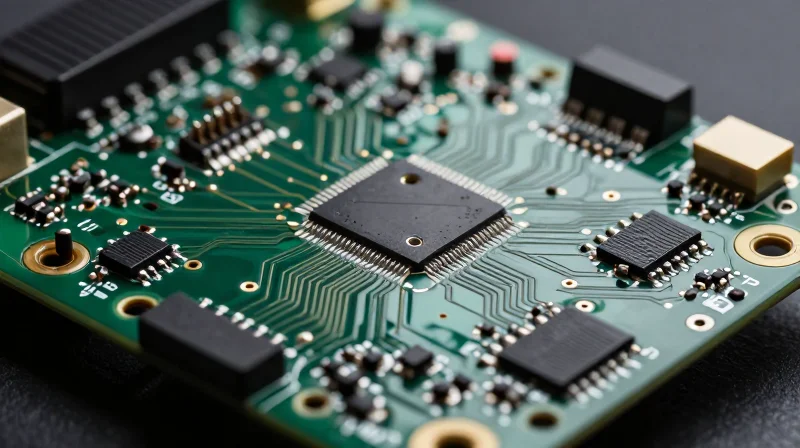
The primary driver for cost reduction in automotive electronics lies in the transition from discrete component layouts to highly integrated, multi-functional architectures. By streamlining the PCBA design, engineers can eliminate redundant power stages and auxiliary controllers, directly reducing the Bill of Materials (BOM) and mitigating risks associated with assembly failure rates.
Strategies for Architectural Simplification
- Multi-Function IC Adoption
Replacing discrete power management components with System-on-Chip (SoC) or integrated driver ICs combines thermal sensing, PWM modulation, and diagnostic feedback into a single package. - Component Count Reduction
Reducing the number of passive components through optimized board layout not only saves space but shortens the pick-and-place cycle time, a major factor in manufacturing throughput. - Thermal Management Integration
Utilizing advanced PCB materials with better thermal conductivity allows for smaller heat sinks or the complete elimination of external cooling components, reducing total weight and material costs.
Impact on Manufacturing ROI
| Metric | Legacy Discrete Design | Consolidated Architecture |
|---|---|---|
| BOM Complexity | High | Low |
| Assembly Time | Base-line | 30-40% Reduction |
| Failure Rate (PPM) | Standard | Significantly Lower |
| PCB Footprint | Large | Compact |
By shifting to a modular, consolidated design, manufacturers achieve higher yields per panel and lower labor requirements. The reduction in soldering points also improves long-term reliability in the high-vibration environment of an automotive seat, further reducing warranty-related expenses.
Strategic Component Selection for BOM Optimization
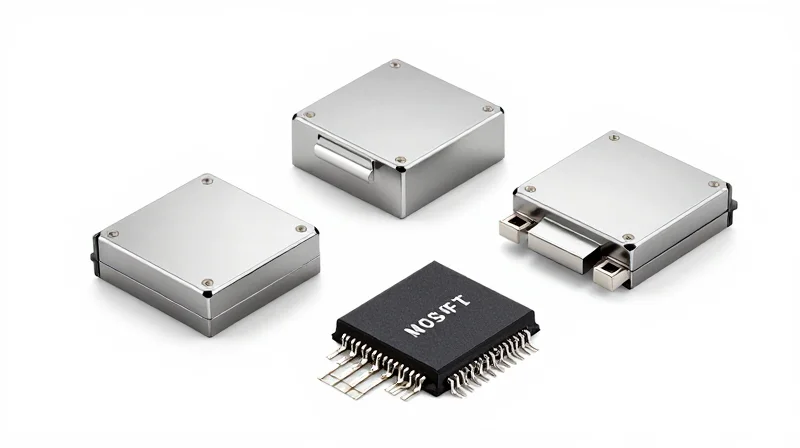
Optimizing Power Stages with Value-Engineered MOSFETs
The power stage is the most critical cost driver in a seat heating PCBA. By shifting from high-margin, over-specified automotive MOSFETs to value-engineered alternatives that still meet AEC-Q101 standards, engineers can capture immediate cost savings. The key is to analyze the specific thermal requirements of the seat heating application—which rarely demands the extreme fast-switching speeds used in traction inverters—and select silicon that prioritizes low RDS(on) over high-frequency performance.
| Component Strategy | Cost Impact | Performance Trade-off |
|---|---|---|
| Premium High-Frequency MOSFETs | High | Excessive thermal margins for low-speed DC control |
| Value-Optimized Power MOSFETs | Low | Ideal for DC-load PWM control at typical heating frequencies |
Integrated Current Sensing Solutions
Traditional shunt-resistor current sensing requires multiple discrete components, including precision op-amps and high-side current sense amplifiers. Replacing this architecture with integrated solutions—such as MOSFETs with built-in sense outputs or single-chip current monitor ICs—reduces component count and minimizes PCB footprint. This consolidation not only lowers raw material costs but also minimizes the failure points inherent in multi-component sensing networks.
Frequently Asked Questions on Component Selection
- Does lower RDS(on) always justify a higher cost?
Not necessarily. When selecting MOSFETs for seat heating, evaluate the total conduction losses against the ambient operating temperature. If a higher RDS(on) component keeps the device within the safe operating area at peak load, the cost-to-performance ratio often favors the less expensive silicon. - How does component consolidation affect long-term reliability?
Integrating functions into single-chip solutions reduces the number of solder joints and interconnections, which are primary failure points in high-vibration automotive environments. Therefore, integration often increases reliability while simultaneously lowering costs. - Is it possible to use standard grade components to save cost?
No. Automotive seat heating systems must remain AEC-Q certified to ensure safety and longevity under extreme thermal cycling. Strategic selection must focus on choosing the 'right-fit' automotive-grade component rather than attempting to bridge the gap with non-automotive parts.
Advanced Thermal Management Without the Premium Price Tag

Advanced Thermal Management Without the Premium Price Tag
Optimized thermal management is not synonymous with oversized heat sinks and complex cooling architectures. By leveraging intelligent PCBA layout and PCB-integrated thermal dissipation, manufacturers can meet rigorous automotive safety standards while significantly reducing per-unit material costs.
Leveraging PCB Copper for Passive Heat Dissipation
Instead of relying on external aluminum heat sinks, engineers should treat the PCB itself as a primary thermal dissipation asset. By strategically increasing copper weight—specifically utilizing 2oz to 3oz copper pours—and employing thermal vias under high-current MOSFETs, heat is efficiently distributed throughout the board's internal layers. This approach utilizes the existing footprint to spread thermal loads, effectively eliminating the need for additional bulky components.
| Strategy | Cost Impact | Thermal Benefit |
|---|---|---|
| Aluminum Heat Sinks | High (Material + Assembly) | High Localized Cooling |
| Thermal Vias + Thick Copper | Low (Standard PCB Process) | High Uniform Distribution |
| Active Cooling Fans | Very High | Excessive for Seat Heating |
Best Practices for Smart Thermal Layout
- How can I maximize heat transfer without adding cost?
Utilize thermal vias directly under the thermal pads of MOSFETs to create a low-resistance path to internal copper planes, effectively transforming the PCB into a natural heat spreader. - Does component placement affect thermal performance?
Yes; by staggering high-dissipation components rather than clustering them in one area, you prevent 'hot spots' that could trigger thermal shutdown, allowing for more stable, long-term operation. - How does PCB material choice influence thermal ROI?
While FR-4 is the industry standard, utilizing thermally conductive prepregs in critical areas can bridge the gap between low-cost board manufacturing and high-end thermal performance requirements.
By shifting the focus from 'add-on' cooling solutions to 'embedded' thermal management, OEMs can successfully lower their Bill of Materials (BOM) while simultaneously improving the overall reliability and thermal envelope of the automotive seat heating system.
Validating Reliability: Maintaining Automotive Grade Standards
Upholding AEC-Q Compliance in Cost-Sensitive Designs
While BOM optimization strategies such as component integration and smart layout techniques are critical for ROI, they must not compromise the integrity of AEC-Q100 (for ICs) and AEC-Q200 (for passive components) qualification. Maintaining high reliability in automotive heating modules necessitates that every cost-saving decision be validated through rigorous stress-testing sequences, ensuring that miniaturized components can withstand the extreme thermal cycling and high humidity characteristic of the vehicle interior environment.
Simulation vs. Physical Validation
| Validation Method | ROI Impact | Primary Objective |
|---|---|---|
| Finite Element Analysis (FEA) | High (Reduces design cycles) | Thermal stress prediction |
| Highly Accelerated Life Testing (HALT) | Moderate (Initial CAPEX) | Identifying weak failure points |
| In-Circuit Testing (ICT) | High (Yield improvement) | Manufacturing defect detection |
Reliability FAQ
- How can we optimize costs without violating AEC-Q200 standards?
Utilize component up-screening for non-critical parts while maintaining strict AEC-Q200 compliance for thermal-sensitive elements like sense resistors and capacitors to ensure long-term stability. - What role does thermal simulation play in cost reduction?
Advanced thermal simulation allows engineers to optimize PCB copper pours and layer stacks, often eliminating the need for expensive external heat sinks without risking thermal runaway. - Is end-of-line testing necessary for every unit?
Yes, automated optical inspection (AOI) combined with electrical test fixtures ensures that the integrity of the design is preserved during high-speed assembly, preventing costly field failures.
Case Study: Achieving 15 Percent Savings in Module Production

Project Overview: Targeting Production Inefficiencies
A Tier-1 automotive supplier recently faced mounting cost pressures on their seat heating modules due to volatile component pricing and suboptimal board real estate utilization. The objective was to achieve a 15 percent reduction in total bill-of-materials (BOM) cost without compromising the stringent thermal reliability or safety mandates required for cabin comfort systems.
Engineering Optimization Strategy
The engineering team focused on three primary levers: integrating discrete functions into multi-purpose power stages, optimizing the copper layer thickness to replace heavy thermal dissipation components, and tightening tolerances to minimize excess shielding materials.
| Optimization Metric | Legacy Approach | Optimized Approach |
|---|---|---|
| Component Count | 48 discrete parts | 39 integrated components |
| Thermal Strategy | External Aluminum Heatsink | Integrated Copper Plane Spreading |
| Assembly Footprint | 75cm² | 62cm² |
Key Results and Performance Metrics
By shifting to high-efficiency MOSFETs with lower R_DS(on) values, the design team eliminated the need for bulky passive thermal components. This not only lowered the direct material spend but also reduced board area by approximately 17 percent, which significantly improved throughput in the SMT manufacturing process.
- How was the 15 percent savings achieved?
Savings were derived from a combination of component consolidation, reduced PCB surface area, and the elimination of secondary mechanical heatsinking through optimized thermal copper routing. - Did performance impact safety compliance?
No; all design modifications underwent rigorous AEC-Q100 verification to ensure that reduced material mass did not negatively affect thermal cycling or long-term durability. - How does this affect manufacturing throughput?
The reduction in component count leads to shorter pick-and-place cycles, increasing hourly unit output on existing production lines.
Future-Proofing Your Heating Modules for EV Integration
Transitioning to Low-Power Architectures
As automotive platforms transition to electrification, the seat heating module must evolve from a simple resistive load to an intelligent, load-managed component. Designing for EVs requires moving away from peak-power spikes toward pulse-width modulation (PWM) control schemes that interface directly with the vehicle's body control module (BCM) to optimize battery range without compromising passenger comfort.
Efficiency Trade-offs: Conventional vs. EV-Optimized Designs
| Feature | Conventional Heating | EV-Optimized Heating |
|---|---|---|
| Power Strategy | Constant High Current | Variable Load Shedding |
| Control Logic | Simple Thermostat | Dynamic PWM/Smart Feedback |
| Energy Impact | High Battery Drain | Range-Neutral Operation |
| Thermal Management | Bulk Heat Sinks | Integrated PCB Tracing |
Strategic Integration Roadmap
Future-proofing is achieved through modularity. By decoupling the heating element controller from the comfort logic, manufacturers can swap the power-stage hardware while keeping the communication layer intact, allowing for rapid adoption of newer, more efficient semiconductors as they reach automotive-grade availability.
- How does EV integration change PCBA thermal requirements?
EV-optimized designs prioritize lower parasitic heat generation through higher efficiency MOSFETs, reducing the need for heavy, expensive heat sinks that occupy valuable module space. - Can current modules be retrofitted for EV efficiency?
While legacy boards are difficult to retrofit, implementing a modular daughter-board architecture allows for upgrading the power stage to support lower quiescent current without re-validating the entire ECU. - What role does software play in future-proofing?
Firmware-based thermal management allows for dynamic power adjustment based on the vehicle's real-time State of Charge (SoC), a capability that hardware-only systems lack.
Strategic Partnerships in Manufacturing and Procurement
Leveraging Early Supplier Involvement (ESI) for Cost Optimization
The transition from transactional procurement to strategic partnership begins with Early Supplier Involvement (ESI). By engaging Electronic Manufacturing Services (EMS) providers during the initial PCBA design phase, OEMs can influence component selection, leverage standardized footprint geometries, and avoid 'vendor lock-in' scenarios that inflate costs. This collaborative approach allows for 'Design for Manufacturing' (DFM) and 'Design for Procurement' (DFP) reviews that happen before any physical prototype is cast, preventing costly design iterations later in the lifecycle.
Comparison: Traditional Procurement vs. Strategic Partnership
| Feature | Traditional Procurement | Strategic Partnership |
|---|---|---|
| Design Influence | OEM-led with limited feedback | Collaborative, DFM-focused |
| Supply Chain Transparency | Opaque, transactional | Open, real-time inventory visibility |
| Long-term Cost | Subject to market volatility | Optimized via long-term supply agreements |
| Innovation Cycle | Slow, vendor-independent | Rapid, technology-sharing focus |
Critical Success Factors for Strategic Alliances
- How does early collaboration impact BOM costs?
By involving EMS partners early, you can switch to preferred, high-availability components, reducing procurement premiums and long-lead time risks during global supply shortages. - Why is shared R&D vital for automotive seat heating?
Sharing R&D roadmaps allows EMS partners to propose modular PCBA updates that accommodate evolving thermal sensor technology without necessitating a total system redesign. - What role does data integration play in these partnerships?
Direct integration between ERP systems of the OEM and the manufacturer enables predictive ordering, which significantly lowers inventory carrying costs and prevents obsolescence.
Ultimately, the goal of these partnerships is to move away from isolated procurement cycles. When the OEM, the PCBA manufacturer, and the semiconductor vendors operate as a singular unit, the resulting synergy ensures that production scales efficiently, quality remains within AEC-Q standards, and the total cost of ownership is consistently minimized throughout the vehicle platform's lifespan.
By moving away from traditional, bulky module designs and embracing a streamlined, performance-oriented approach to PCBA engineering, manufacturers can achieve dramatic reductions in BOM costs. This transition not only improves your current ROI but builds a more sustainable production lifecycle. Ready to optimize your automotive heating modules? Contact our engineering team today to schedule a design audit and see how we can help you achieve market-leading efficiency.
