
In the fast-evolving landscape of connected mobility, Vehicle-to-Everything (V2X) communication isn't just a feature—it's a critical safety requirement. With zero margin for error in data transmission, the underlying printed circuit board (PCB) hardware must meet the highest reliability benchmarks. Selecting a manufacturing partner requires moving beyond simple cost analysis to verify deep technical competence in automotive-grade engineering.
Understanding the High-Stakes Nature of V2X Electronics

Why V2X Systems Demand Uncompromising Reliability
Vehicle-to-Everything (V2X) communication infrastructure is fundamentally distinct from consumer-grade electronics because it functions as the central nervous system for roadway safety. In these applications, the printed circuit board (PCB) is not merely a mounting substrate but a mission-critical component that must sustain high-frequency data transmission under extreme thermal cycling and mechanical vibration. Failure in a consumer device typically leads to inconvenience, whereas a failure in V2X hardware can lead to catastrophic accidents or the total breakdown of intelligent transport networks.
Risk Comparison: Consumer Electronics vs. V2X Infrastructure
| Parameter | Consumer Electronics | V2X Infrastructure |
|---|---|---|
| Design Life Cycle | 1-3 Years | 10-20 Years |
| Operating Environment | Controlled/Indoor | Harsh/Outdoor/Roadside |
| Failure Consequence | Loss of Utility | Human Safety Risk |
| Thermal Requirements | Standard Range | Automotive Grade (-40°C to +125°C) |
The Real-World Implications of PCB Failure
- Why does signal integrity matter more in V2X?
V2X relies on low-latency communication (DSRC or C-V2X). A faulty PCB trace or poor impedance control results in packet loss, causing the system to miscalculate vehicle positioning or ignore emergency warnings. - What are the mechanical risks to roadside units?
Roadside equipment experiences constant vibration and thermal shock. Manufacturers must prioritize high-Tg materials and robust through-hole plating to prevent delamination or barrel cracking. - How does certification influence system security?
Reliability also encompasses security; counterfeit or poorly manufactured components can act as entry points for unauthorized access to the traffic control network, necessitating rigorous supply chain traceability.
Essential Quality Certifications: Beyond ISO 9001
The Necessity of Industry-Specific Quality Standards
While ISO 9001 provides a general framework for quality management, it is insufficient for the life-critical demands of V2X infrastructure. V2X systems operate in harsh automotive environments characterized by extreme thermal cycling, vibration, and the requirement for near-zero failure rates over long lifespans. Manufacturers must demonstrate mastery over domain-specific standards to mitigate the risk of catastrophic system failure.
Key Certifications for V2X PCB Fabrication
| Certification | Primary Focus | Relevance to V2X |
|---|---|---|
| IATF 16949 | Automotive Quality Management | Ensures defect prevention and reduction of variation in the supply chain. |
| IPC-6012 Class 3 | High Reliability Performance | Mandatory for equipment where continued performance is critical. |
| ISO 26262 | Functional Safety | Addresses safety-critical electronic systems and software lifecycle. |
Deep Dive: Why IPC-6012 Class 3 is Non-Negotiable
IPC-6012 Class 3 defines the standards for 'High-Reliability Electronic Products.' For V2X communication, this is not a recommendation but a foundational requirement. Boards certified to Class 3 undergo more stringent inspection criteria regarding copper plating thickness, dielectric spacing, and internal structural integrity. Unlike consumer-grade boards, Class 3 PCBs must withstand 'mission-critical' performance environments where maintenance is impossible and downtime is unacceptable.
Frequently Asked Questions
- Can an ISO 9001 certificate replace IATF 16949 for V2X suppliers?
No. IATF 16949 includes specific requirements tailored to the automotive sector, including core tools like APQP, FMEA, and PPAP, which are essential for managing the high-risk nature of automotive electronics. - Does Class 3 certification guarantee board performance?
Class 3 ensures the board is manufactured to the highest structural standards, reducing the risk of fatigue or delamination, but design-level validation—such as thermal management—remains a shared responsibility between the designer and fabricator. - Are there additional certifications for board assembly?
Yes, look for J-STD-001 (Requirements for Soldered Electrical and Electronic Assemblies) alongside Class 3, as it covers the specific soldering processes required for critical infrastructure reliability.
Advanced Thermal Management Strategies
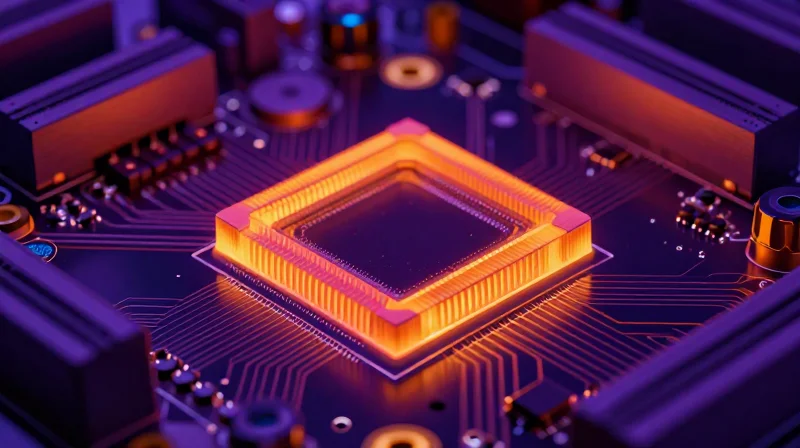
Advanced Thermal Management Strategies
High-reliability V2X modules generate significant heat due to high-frequency processing demands, requiring manufacturers to employ sophisticated thermal dissipation techniques that transcend standard design-for-manufacturability practices.
Critical Thermal Dissipation Techniques
| Strategy | Implementation Method | Benefit for V2X |
|---|---|---|
| Thermal Vias | Copper-filled micro-via arrays under heat-generating components. | Reduces thermal resistance to internal heat-spreading layers. |
| Metal Core PCBs | Aluminum or copper base integration. | Maximizes heat conduction away from power-intensive RF amplifiers. |
| Embedded Heat Sinks | Direct integration of copper coins within the PCB stack-up. | Provides low-impedance thermal path for high-power semiconductors. |
Evaluating Manufacturer Thermal Capabilities
- Can the manufacturer perform thermal simulation during the DFM phase?
A qualified partner must offer pre-fabrication thermal modeling to identify potential hotspots, ensuring that localized temperature increases do not compromise dielectric integrity. - How does the supplier ensure consistent thermal conductivity in high-TG materials?
Ask for documentation on material sourcing and verification testing for High Glass Transition Temperature (Tg) laminates to ensure consistent performance at operational temperatures exceeding 125°C. - Is the manufacturer equipped for Copper Coin integration?
This advanced technique requires precise milling and press-fit assembly; verify their tolerance capabilities to prevent interface air gaps which could create dangerous thermal bottlenecks.
Material Selection and Signal Integrity Performance

Material Selection for High-Frequency V2X Stability
For V2X infrastructure operating at 5.9 GHz and beyond, the choice of substrate material is the primary defense against signal degradation. High-reliability manufacturers must demonstrate expertise in selecting low-loss tangent (Df) and stable dielectric constant (Dk) materials, such as specialized PTFE or reinforced thermoset laminates. These materials minimize insertion loss and phase shift, ensuring that data packets—often conveying life-critical safety information—maintain their integrity across long-distance communication links.
| Material Property | Importance for V2X | Recommended Standard |
|---|---|---|
| Dissipation Factor (Df) | Reduces signal attenuation at high frequency | < 0.002 |
| Dk Stability | Ensures consistent impedance across temperature swings | ±0.05 |
| CTE Alignment | Prevents via cracking during thermal cycling | Low CTE (12-16 ppm/°C) |
Ensuring Signal Integrity (SI) in Complex V2X Architectures
Signal integrity in V2X systems is not just about material selection; it is about the manufacturing precision of trace geometries and stackup symmetry. Manufacturers must employ advanced fabrication techniques to control trace width tolerances and copper roughness, which significantly impact skin effect losses at high frequencies. An audit of a potential manufacturer must prioritize their ability to provide verified impedance testing and TDR (Time Domain Reflectometry) reporting to guarantee that signals remain clean and free from electromagnetic interference.
Frequently Asked Questions on SI and Materials
- Why is copper foil roughness a concern for V2X?
At high frequencies, the 'skin effect' causes current to flow primarily on the surface of the copper. A rough copper surface increases the path length and electrical resistance, leading to significantly higher insertion loss. - How does moisture absorption affect dielectric constant?
Materials with high moisture absorption rates will experience a shift in Dk when exposed to humidity, leading to impedance mismatch and signal timing jitter, which are fatal to V2X synchronization. - Is standard FR-4 sufficient for V2X systems?
No. Standard FR-4 suffers from excessive dielectric loss and unstable Dk at high frequencies, which will degrade the link budget and increase latency in critical communication modules.
Rigorous Testing and Validation Protocols
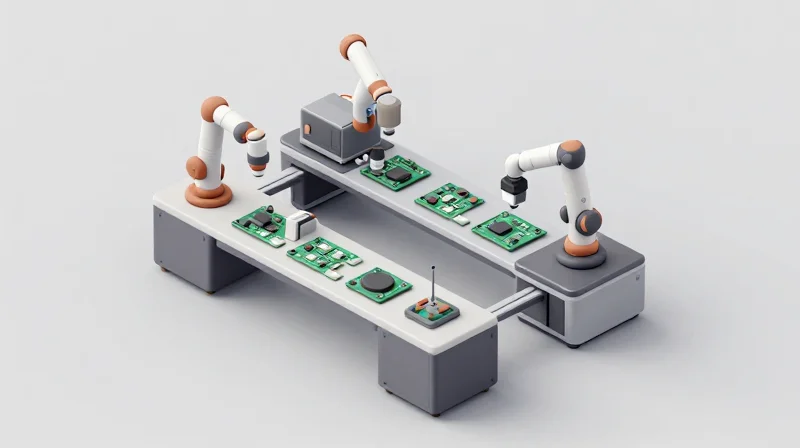
For V2X communication infrastructure, where uptime is a safety-critical requirement, standard visual inspection is insufficient. Reliable manufacturers must implement a multi-layered validation strategy that combines automated optical inspection (AOI), non-destructive internal analysis, and rigorous environmental stress screening to detect latent defects that could lead to field failure.
Advanced Inspection and Verification Methodologies
| Methodology | Primary Objective | V2X Criticality |
|---|---|---|
| Automated Optical Inspection (AOI) | Detect surface-level defects | High - Identifies soldering/component placement flaws |
| Automated X-ray Inspection (AXI) | Inspect internal layer interconnects | Critical - Detects BGA voids and hidden shorts |
| Environmental Stress Screening (ESS) | Expose latent manufacturing defects | Critical - Ensures reliability under extreme weather |
Essential Validation Protocols
- How does AXI impact V2X reliability?
V2X modules often utilize high-density Ball Grid Arrays (BGAs). AXI is non-negotiable for verifying solder joint integrity under these components where visual inspection cannot reach. - Why is ESS critical for infrastructure?
ESS subjects boards to thermal cycling and vibration. This process forces premature failure of 'infant mortality' components, ensuring only stable boards are deployed in harsh roadside environments. - What should be expected in a validation report?
A high-reliability manufacturer should provide full traceability reports including AXI images, thermal profile logs during ESS, and micro-section analysis results from coupons.
Manufacturers that lack an integrated closed-loop feedback system between testing stations and production lines present a risk to V2X projects. The goal is to move beyond simple 'pass/fail' testing toward predictive quality analytics that identify process drifts before they manifest as critical board failures.
Supply Chain Transparency and Traceability
The Imperative of Full Traceability in V2X
In the context of V2X communication infrastructure, a Printed Circuit Board (PCB) is not merely a component; it is a vital node in a safety-critical network. Full lot-level traceability allows manufacturers to map every finished board back to the specific production run, raw material batches, and machine calibration parameters. Should a latent defect emerge in the field, this granularity allows for precise isolation, ensuring that recalls can be surgical rather than catastrophic.
Traceability Maturity Comparison
| Feature | Basic Traceability | High-Reliability Traceability |
|---|---|---|
| Scope | Production Date/Shift | Material Lot/Machine/Operator |
| Data Storage | Short-term (1-2 years) | Long-term (15+ years) |
| Linking | Job-level | Serialized Component-level |
Strategic Risk Mitigation Through Transparency
Transparency extends beyond the factory walls into the upstream supply chain. High-reliability partners must provide visibility into their material procurement process, specifically regarding the provenance of laminates, copper foils, and chemicals. By verifying that every material meets automotive-grade standards (such as IATF 16949), manufacturers reduce the risk of systemic failure caused by counterfeit materials or process variations that could compromise signal integrity in V2X environments.
- Why is 15-year data retention significant?
V2X infrastructure operates in environments where vehicle lifecycles are long. Retaining records for 15+ years ensures that if a field failure occurs, liability and root cause analysis can be performed without speculation. - How does automated traceability reduce human error?
Automated data logging via MES (Manufacturing Execution Systems) eliminates manual input, ensuring that the history of every board is captured in real-time without the risk of transcription errors. - What role does bill-of-materials (BOM) management play?
Strict BOM version control prevents the unintended substitution of materials, which could alter the dielectric properties or thermal expansion rates required for stable high-frequency V2X performance.
Long-Term Design for Manufacturing (DFM) Support
Proactive DFM as a Lifecycle Strategy
In the context of V2X (Vehicle-to-Everything) systems, the cost of failure is exponential once deployed in field infrastructure. High-reliability manufacturers do not treat DFM as a one-time check at the prototype stage; instead, they provide continuous support that addresses latent failure modes. By analyzing thermal dissipation, mechanical vibration resistance, and chemical compatibility, these partners help engineers move beyond basic manufacturing constraints to optimize for the harsh environments these boards will inhabit for a decade or more.
Comparing DFM Approaches: Standard vs. Lifecycle-Oriented
| DFM Feature | Standard Fabrication | High-Reliability DFM |
|---|---|---|
| Scope | Board yield and cost | Field reliability and longevity |
| Material Focus | Low cost availability | Thermal expansion matching |
| Testing | Short-term electrical test | Accelerated life testing alignment |
| Revision Control | Reactive changes | Proactive component obsolescence management |
Frequently Asked Questions
- How does early DFM impact field failure rates?
Early engagement identifies potential stressors such as CTE (Coefficient of Thermal Expansion) mismatches, which, if left unaddressed, commonly lead to solder joint cracking and via-barrel fatigue under extreme temperature cycling in V2X outdoor cabinets. - Should I require DFM feedback for board-level housing integration?
Absolutely. High-reliability partners analyze how the PCB interacts with the final enclosure, providing recommendations on stiffeners and mounting points to minimize resonant frequencies that cause mechanical failure in high-vibration roadside environments. - Does DFM support include component selection advice?
Yes, top-tier manufacturers offer DFM services that flag components prone to premature degradation or obsolescence, ensuring the design remains supportable without expensive re-designs during the product's functional lifespan.
Evaluating Manufacturer Longevity and Financial Stability
Evaluating Manufacturer Longevity and Financial Stability
When selecting a partner for V2X infrastructure, the manufacturer must be viewed as an extension of the system design itself. Because automotive lifecycles far exceed standard electronics churn, a failure in the manufacturer’s financial solvency can result in catastrophic supply chain disruptions, forced design re-qualifications, and potentially dangerous safety gaps in V2X connectivity. Assessing their viability requires deep transparency into their operational maturity, market positioning, and capital investment strategies.
Indicators of Long-Term Manufacturing Sustainability
| Assessment Metric | Strategic Importance for V2X | Risk Signal |
|---|---|---|
| Revenue Diversity | Protects against volatility in consumer electronics | Over-reliance on one industry sector |
| Capex Investment | Indicates commitment to technology roadmaps | Outdated machinery or stagnant upgrades |
| Ownership Structure | Predicts stability and risk appetite | Frequent changes in private equity control |
| Automotive Footprint | Ensures adherence to IATF 16949 standards | Lack of established tier-one partnerships |
Due Diligence: Financial Risk FAQ
- How can I verify a manufacturer's financial stability?
Request audited financial statements, D&B ratings, or bank references. Look for consistent profit margins over a 5-year period rather than singular peaks, which indicate managed growth rather than erratic expansion. - Why does ownership structure matter for V2X projects?
Private, family-owned entities or publicly traded companies with a long-term vision are generally more stable partners than those heavily leveraged by short-term private equity, as the latter may cut corners in quality to boost immediate valuation. - What should I look for in an site audit regarding sustainability?
Evaluate their investment in 'future-proofing.' Observe the age of their automated assembly lines and their ability to sustain production of legacy board technologies that may be required for older V2X infrastructure maintenance.
Ultimately, the vetting process must move beyond unit costs and focus on the manufacturer's ability to maintain operations through economic downturns and technological transitions. A PCB vendor that cannot articulate their five-year strategic plan for capacity expansion and financial maintenance presents an unacceptable risk for critical V2X infrastructure deployments.
Selecting a PCB partner is a strategic decision that impacts the safety and longevity of your entire V2X infrastructure. By prioritizing manufacturers with proven IATF compliance, superior thermal engineering, and transparent supply chains, you ensure your technology remains resilient on the road. Is your current partner equipped for the next generation of automotive connectivity? Contact our engineering team today to review your project specifications.
