
In the fast-paced world of extended reality (XR), your hardware's performance is only as good as its foundation. Selecting the right High-Density Interconnect (HDI) PCB partner is not just about cost; it is about engineering capability, reliability, and precision. This guide navigates the essential factors you must evaluate to ensure your AR and VR devices deliver the seamless experience users demand.
The Evolution of HDI for Immersive Tech
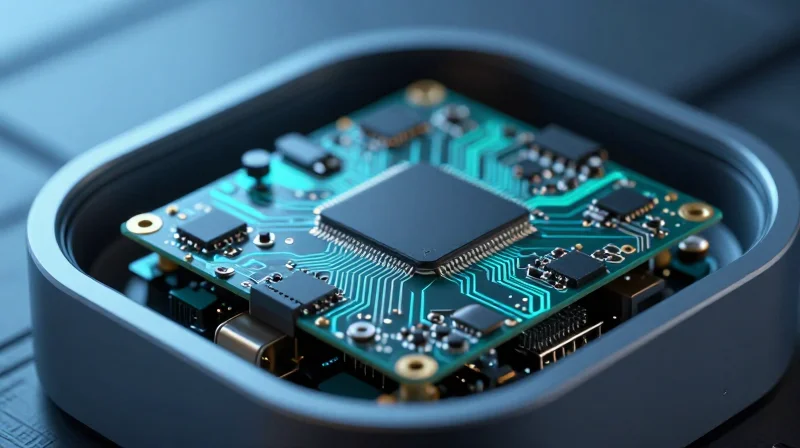
Beyond Traditional PCB Limits
As AR and VR headsets migrate toward lighter, glasses-like form factors, traditional multi-layer PCB design has become a significant bottleneck. Standard manufacturing processes struggle to provide the necessary routing density required to manage complex sensor fusion, high-resolution display drivers, and low-latency processing units in a restricted volumetric footprint. HDI technology overcomes these limitations by utilizing smaller vias, thinner dielectric layers, and finer trace/space geometries, effectively enabling a radical increase in functional density.
Key HDI Advancements for Extended Reality
| Feature | Legacy PCB Capability | HDI/Microvia Advantage |
|---|---|---|
| Via Technology | Through-hole (mechanical) | Laser-drilled microvias (stacked/staggered) |
| Routing Density | Limited to 2-3 traces per channel | High density with ELIC (Every Layer Interconnect) |
| Signal Integrity | Poor performance at high GHz | Optimized impedance and lower crosstalk |
| Form Factor | Bulky and rigid | Highly miniaturized, flexible-rigid hybrids |
Why HDI is Mandatory for AR/VR
- Thermal Management
Advanced HDI designs allow for optimized heat dissipation through strategic copper pour and thermal via placement, crucial for head-mounted devices where proximity to the user necessitates strict heat control. - Signal Speed and Latency
With the rise of high-speed protocols like DisplayPort 2.0, HDI's reduced signal path length drastically lowers electromagnetic interference and latency, ensuring a seamless user experience. - Component Miniaturization
HDI allows for the use of advanced packaging technologies like System-in-Package (SiP) and fine-pitch BGA components, which are essential for cramming desktop-level processing power into a wearable device.
Assessing Advanced Stack-Up Precision
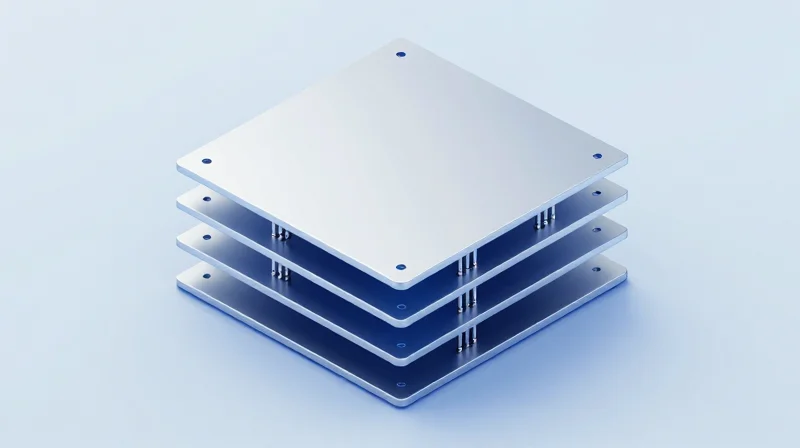
Evaluating HDI Stack-Up Precision
Advanced AR and VR headsets require ultra-high-density interconnect (HDI) PCBs, often utilizing 10+ layers with Any-Layer (ELIC) technology to manage intense signal density. Precision in stack-up is not merely about layer count; it is about the manufacturer’s ability to maintain registration accuracy across sequential lamination cycles, which directly impacts micro-via alignment and, ultimately, long-term device reliability.
Key Metrics for Assessing Manufacturing Capability
| Capability Metric | Threshold for AR/VR | Significance |
|---|---|---|
| Via-in-pad Registration | < 35 microns | Crucial for high-density BGA routing. |
| Sequential Lamination Cycles | 3+ cycles | Essential for complex HDI architectures. |
| Dielectric Thickness Tolerance | +/- 5% | Maintains impedance consistency for high-speed lanes. |
Frequently Asked Questions on HDI Reliability
- Why is Any-Layer (ELIC) technology preferred over standard HDI?
ELIC allows for micro-vias to be placed anywhere on any layer, providing maximum routing flexibility, reducing layer counts, and significantly improving signal integrity by shortening electrical paths. - How does stack-up asymmetry affect device performance?
Asymmetrical stack-ups increase internal stresses, which leads to PCB bowing or warping during the reflow process; this can cause severe micro-via fracture and total assembly failure. - What role does laser drilling play in high-layer-count reliability?
Precise laser drilling is required for consistent via-hole geometry. Poorly controlled parameters can create micro-cracks or incomplete plating, which manifest as intermittent signal failures under thermal cycling.
When vetting a partner, request specific examples of their 'registration accuracy reports' and 'micro-section analysis' from previous production runs. A manufacturer capable of handling high-performance AR/VR boards will have documented proof of how they manage layer-to-layer drift during lamination, providing a transparent look into their process stability.
Prioritizing Signal Integrity and Impedance Control

For AR and VR headsets, the PCB is not just a substrate; it is a high-speed transmission medium where signal degradation can result in motion blur, latency spikes, and system failure. Achieving consistent impedance control across micro-vias and high-density interconnects requires a manufacturer that treats signal integrity as a foundational design discipline rather than an afterthought.
Critical Factors in Impedance Management
Managing impedance in miniaturized HDI PCBs involves strict tolerances on trace widths and dielectric thicknesses. As feature sizes shrink to the sub-50µm level, even minute variations in copper etching or resin distribution can cause impedance discontinuities, leading to signal reflections that degrade high-frequency data streams.
| Parameter | AR/VR Requirement | Manufacturer Capability Check |
|---|---|---|
| Impedance Tolerance | +/- 5% or tighter | Verification of TDR testing reports |
| Copper Etching | Controlled trapezoidal profile | Capability for laser-direct imaging (LDI) |
| Surface Roughness | Ultra-low profile copper | Available advanced laminate materials |
Best Practices for Signal Integrity
- How does via-in-pad technology affect impedance?
Via-in-pad structures minimize stub length, which is crucial for reducing parasitic capacitance and maintaining signal integrity in high-speed data lines for display interfaces like MIPI D-PHY. - Why is material selection critical for AR/VR?
AR/VR devices operate at high frequencies where substrate dielectric loss becomes significant; selecting low-loss, stable-Dk materials is essential to prevent signal attenuation over distance. - How should a manufacturer handle impedance verification?
A high-performance manufacturer must provide Time Domain Reflectometry (TDR) testing results for every production batch to ensure impedance targets are met across complex stack-up layers.
Ultimately, your HDI manufacturer must demonstrate a deep understanding of electromagnetic field behavior in dense routing environments. When evaluating partners, prioritize those who perform comprehensive modeling and offer in-house impedance validation to ensure your AR/VR hardware meets the rigorous latency demands of modern immersive experiences.
Material Thermal Stability in Compact Form Factors
Material Thermal Stability in Compact Form Factors
In high-performance AR and VR hardware, the primary enemy of reliability is uncontrolled thermal expansion. As manufacturers shrink HDI board footprints, the concentration of high-speed processors and display drivers creates localized heat zones that can lead to micro-via fatigue and delamination. Selecting an HDI partner requires verifying their expertise in high glass transition temperature (Tg) materials and low coefficient of thermal expansion (CTE) substrates that maintain structural integrity despite repeated thermal cycling.
Critical Material Properties for Thermal Management
| Material Property | Significance for AR/VR | Target Metric |
|---|---|---|
| Glass Transition Temp (Tg) | Prevents material softening at operating heat | >170°C |
| CTE (Z-Axis) | Reduces stress on micro-vias during expansion | <3.0% |
| Thermal Conductivity | Facilitates heat spreading away from SoC | >0.4 W/mK |
Common Considerations for Thermal Design
- Why is CTE matching essential for HDI?
In multi-layer HDI boards, mismatched CTE between the substrate, copper plating, and micro-vias causes 'barrel cracking' during rapid thermal cycling, leading to intermittent signal loss. - How does the manufacturer validate thermal reliability?
Ensure the manufacturer utilizes accelerated aging tests, such as Thermal Shock Testing and Interconnect Stress Testing (IST), to simulate the lifetime thermal stress of a wearable device. - Can standard FR-4 suffice for high-power headsets?
Standard FR-4 typically lacks the necessary thermal stability and signal loss characteristics for high-frequency AR/VR applications, making specialized high-speed/low-loss laminates mandatory.
Evaluating Manufacturing Capacity and Scalability

Scaling from Prototyping to High-Volume Production
The transition from NPI (New Product Introduction) to high-volume manufacturing is the most common point of failure for high-performance AR/VR devices. A manufacturer must possess not only the equipment to produce advanced HDI boards in small batches but also the robust quality systems to maintain tight tolerances at scale. Look for partners who offer integrated services, such as DFM (Design for Manufacturing) feedback that evolves with your production volume, and ensure they have a proven track record of handling high-layer-count HDI boards without succumbing to yield degradation.
Key Capacity Assessment Criteria
| Capacity Indicator | Low-Volume/NPI Requirement | High-Volume/Mass Production Requirement |
|---|---|---|
| Equipment Redundancy | Single-line capability | Multi-line, automated parallel processing |
| Quality Assurance | Manual inspection focus | Automated Optical Inspection (AOI) & X-ray at scale |
| Lead Time Stability | Agile, fast-turn emphasis | Predictable supply chain & material sourcing |
| Throughput Strategy | Rapid iterative changes | Yield optimization through Statistical Process Control |
Scaling FAQ
- How does facility automation impact HDI reliability?
Advanced automation reduces human error in laser drilling and micro-via plating, which are critical for HDI reliability in high-density AR/VR headsets. - What should I look for in a manufacturer's supply chain transparency?
A scalable partner should provide real-time updates on raw material inventory, particularly for specialized high-speed/low-loss laminates required for high-resolution displays. - Can a prototype specialist handle mass production?
Not always. Prototype shops often lack the high-speed testing equipment and Statistical Process Control (SPC) necessary to sustain high yields across thousands of units.
Quality Assurance and Regulatory Compliance
Testing Protocols for High-Density Interconnects
For AR and VR headsets, standard continuity testing is insufficient. Because HDI designs utilize microvias and ultra-fine pitch components, manufacturers must employ advanced inspection methods to ensure the structural integrity of the build. Reliability is non-negotiable when a failure could lead to overheating or sensor malfunction in a device worn close to the eyes.
| Testing Method | Purpose in AR/VR Context | Frequency |
|---|---|---|
| Automated Optical Inspection (AOI) | Detects surface-level defects and registration issues | Every board |
| X-Ray Inspection | Validates buried via alignment and solder ball integrity | Sample-based |
| Flying Probe | Verification of netlist integrity for prototypes | Per batch |
| Thermal Shock Testing | Ensures via reliability under frequent heat cycling | Qualification phase |
Mandatory Regulatory Certifications
Global distribution of consumer electronics requires strict adherence to environmental and safety standards. Selecting an HDI partner that lacks these certifications will lead to costly product recalls and delays in market entry.
- ISO 9001:2015
The baseline for quality management systems, ensuring consistent manufacturing processes and document control. - IPC-6012 Class 3
Required for 'high-reliability' electronics where performance is critical and downtime is not an option. - RoHS and REACH
Mandatory compliance regarding the restriction of hazardous substances in electronic products. - UL 94V-0
Ensures the PCB material has self-extinguishing properties, essential for devices placed directly on a user's face.
Common Compliance Queries
- Is IPC Class 2 sufficient for a VR headset?
No. Due to the miniaturization and high-stakes nature of near-eye displays, IPC Class 3 is the industry standard for HDI boards to prevent latent failures. - How do I verify a manufacturer's claims?
Always request current, valid certificates of conformance and ask to review their internal quality records or audit reports.
Supply Chain Reliability and Risk Mitigation

Assessing Supply Chain Resilience and Lead-Time Stability
In the high-stakes AR/VR market, lead-time volatility is the primary threat to product launch timelines. A manufacturer's reliability hinges not just on internal throughput, but on their upstream supply chain transparency and ability to mitigate material shortages. You must prioritize partners that employ advanced inventory management systems and maintain diversified sourcing channels to decouple production from regional geopolitical or logistics-related disruptions.
Key Mitigation Strategies: A Comparative Analysis
| Risk Factor | Reactive Approach | Strategic Partner Approach |
|---|---|---|
| Material Shortages | Ad-hoc spot buying | Long-term buffer stock agreements |
| Logistics Delays | Single-port shipping | Multi-modal, regional distribution hubs |
| Scale Fluctuations | Production scheduling backlog | Dedicated capacity reservation |
Evaluating Manufacturer Vendor Management
- How do you verify a manufacturer's secondary sourcing?
Ask for their 'Approved Vendor List' (AVL) policy. A resilient partner should have validated secondary suppliers for mission-critical materials like high-Tg laminates and specialized copper foils to ensure continuity if a primary source fails. - What role does geographic footprint play?
Consider manufacturers with 'China Plus One' or localized regional manufacturing capabilities. This geographic diversification acts as an insurance policy against region-specific natural disasters or regulatory shifts. - How is production transparency maintained?
Look for manufacturers that provide real-time Manufacturing Execution System (MES) access or automated API integration. Transparency into work-in-progress (WIP) levels allows you to forecast potential bottlenecks before they impact your end-customer shipments.
Ultimately, the right partner for AR/VR applications should operate as an extension of your own procurement team. By demanding visibility into their supply chain and assessing their financial stability, you ensure that the complex HDI stack-ups required for your headset are protected from the instability of global material markets.
The Role of Collaborative Engineering Support
Beyond Build-to-Print: The Engineering Partnership Model
In the fast-paced AR/VR market, relying on a manufacturer who only executes build-to-print instructions is a liability. High-density interconnect (HDI) designs push the limits of physics, requiring manufacturers to act as an extension of your internal R&D team. Collaborative partners proactively identify design-for-manufacturing (DFM) optimizations that improve signal integrity, thermal dissipation, and overall yield, effectively turning complex theoretical layouts into reliable, high-volume products.
Critical Engineering Support Capabilities
- Early DFM Consultation
Reviewing stack-up configurations and via-in-pad strategies before the design is locked to prevent costly respins. - Signal Integrity Analysis
Utilizing advanced modeling to ensure high-speed transmission lines maintain performance within the confined space of a headset. - Thermal Management Collaboration
Assisting in the selection of high-Tg materials and localized heat-sinking strategies to protect sensitive components. - Proactive Cost Engineering
Identifying opportunities to reduce layer counts or simplify drill patterns without compromising performance, significantly impacting total cost of ownership.
Manufacturer Engagement Levels
| Engagement Level | Primary Goal | Impact on AR/VR Development |
|---|---|---|
| Build-to-Print Vendor | Adherence to Specs | High risk of manufacturing errors and low yield |
| Strategic Engineering Partner | Optimization & Reliability | Lower per-unit costs and accelerated time-to-market |
| Collaborative Co-Developer | Innovation & Performance | Enables bleeding-edge form factor and feature integration |
By prioritizing a manufacturer with a robust engineering team, you gain access to decades of collective experience in handling complex HDI geometries. This relationship shifts the focus from simply meeting specifications to achieving superior hardware performance, ensuring your AR/VR headset remains competitive in a market defined by rapid innovation.
Selecting an HDI PCB manufacturer for AR/VR is a strategic decision that directly influences your product's time-to-market and field performance. By prioritizing technical mastery, thermal management, and supply chain robustness, you set the stage for long-term innovation success. Are you ready to optimize your hardware roadmap? Contact our engineering team today to discuss your next high-performance project.
