
In the precision-driven world of medical diagnostics, the reliability of an ultrasound machine hinges on its internal architecture. When dealing with high-density interconnect (HDI) PCBs, the margin for error is non-existent. This guide outlines the critical benchmarks engineering teams must verify to ensure their manufacturing partner can deliver the precision and compliance required for life-critical ultrasound systems.
The Critical Role of ISO 13485 Certification

Why ISO 13485 is Non-Negotiable
When sourcing manufacturers for high-layer HDI PCBs in medical ultrasound systems, ISO 13485 is the definitive prerequisite. Unlike generic quality certifications, this standard is specifically tailored to the medical device industry, mandating stringent risk management, design control, and traceability protocols. For ultrasound systems—where signal integrity and long-term reliability are paramount—a certified partner ensures that your supply chain maintains the clinical safety profile demanded by international regulatory bodies.
Core Benefits of Certified Partners
| Quality Aspect | Non-Certified Risks | ISO 13485 Compliance |
|---|---|---|
| Process Control | Inconsistent layer-to-layer registration | Documented, repeatable manufacturing procedures |
| Traceability | Hidden material/batch variations | Full lot-level material tracking |
| Risk Management | High frequency of latent field failures | Proactive mitigation and failure analysis |
Frequently Asked Questions
- Does ISO 9001 substitute for ISO 13485?
No. While ISO 9001 covers general business quality, ISO 13485 incorporates additional, specialized requirements for regulatory compliance, risk management, and clinical performance monitoring essential for medical electronics. - How does this certification impact HDI PCB production?
It forces strict oversight on high-layer count lamination, laser-drilling accuracy, and copper plating consistency, ensuring that the electrical performance of high-density interconnects meets medical-grade sensitivity requirements. - Can a manufacturer be ISO 13485 compliant without being certified?
Compliance without formal certification is insufficient for risk-averse medical OEM sourcing; official certification provides independent audit verification that the manufacturer's quality management system is operational and effective.
Mastering Signal Integrity in High-Density Designs

Managing Impedance Control in Multi-Layer Stacks
Ultrasound systems utilize high-frequency transducers that demand absolute signal fidelity. Maintaining uniform characteristic impedance across thousands of microvias and complex routing layers is non-negotiable. Manufacturers must demonstrate mastery in dielectric material selection and precise copper weight management to minimize signal reflections that degrade imaging clarity.
Key Impedance Control Strategies
- Dielectric Uniformity
Utilizing controlled-dielectric prepregs ensures that the capacitive coupling between layers remains constant across the entire board surface. - Laser-Drilled Microvias
Adopting optimized laser drilling parameters prevents barrel cracking and reduces signal discontinuity at transition points between layers. - Dynamic Impedance Modeling
Selecting a manufacturer that utilizes 3D electromagnetic field solvers to validate impedance models before fabrication begins.
Mitigating Crosstalk in High-Density Interconnects
As component density increases to accommodate advanced beamforming ASICs, crosstalk between high-speed differential pairs becomes a significant risk. Effective suppression requires a combination of geometric isolation and ground plane partitioning.
| Strategy | Mechanism | Impact on Ultrasound Quality |
|---|---|---|
| Broadside Coupling | Offsetting signals between layers | Reduces inter-layer interference |
| Guard Traces | Ground isolation between signals | Prevents noise coupling into sensitive data lines |
| Edge-to-Edge Spacing | Increased gap ratios | Minimizes parasitic electromagnetic coupling |
Technical Validation Requirements
Before finalizing a partnership, ensure your fabricator provides TDR (Time Domain Reflectometry) testing reports as part of their standard DFM (Design for Manufacturing) feedback loop to guarantee the produced impedance matches the design intent within ±5% tolerance.
Advanced Substrate Selection for Diagnostic Clarity
Evaluating Dielectric Performance for Imaging Precision
In ultrasound systems, the PCB substrate serves as more than just a mechanical support; it acts as an active component of the signal path. Selecting materials with a low Dissipation Factor (Df) and a stable Dielectric Constant (Dk) is paramount. High-layer HDI designs, often requiring microvias and thin core materials, demand substrates that exhibit minimal moisture absorption and superior thermal stability to ensure consistent impedance across the entire stack-up.
| Material Property | Requirement for Ultrasound | Impact on Performance |
|---|---|---|
| Glass Transition (Tg) | >170°C | Prevents delamination during multi-cycle thermal stress. |
| Dissipation Factor (Df) | < 0.005 | Reduces signal loss in high-frequency imaging paths. |
| Dk Stability | +/- 0.05 | Ensures precise time-of-flight measurements for beamforming. |
Frequently Asked Questions: Material Selection
- Why is high-Tg laminate mandatory for ultrasound?
Ultrasound systems generate significant localized heat; high-Tg materials prevent z-axis expansion that can rupture internal microvias during thermal cycling. - How does moisture absorption affect imaging quality?
Increased moisture absorption alters the effective Dk of the board, leading to impedance shifts that degrade beamforming accuracy and introduce noise into the processed signal. - Should I prioritize ultra-low loss materials for all layers?
While ideal, it is often more cost-effective to use hybrid stack-ups, applying high-performance low-loss laminates specifically to high-speed signal layers while utilizing standard high-Tg materials for power and ground planes.
Manufacturing Capabilities: Laser Vias and Microvia Reliability
Precision Laser Via Fabrication
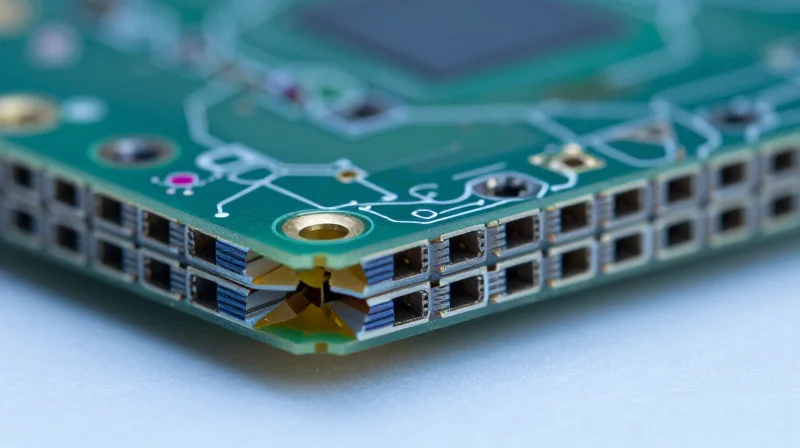
For medical ultrasound systems, the reliability of interconnections depends heavily on the manufacturer's ability to execute precision laser ablation. In high-layer HDI designs, manufacturers must utilize UV or CO2 laser systems capable of drilling microvias with high aspect ratios while minimizing heat-affected zones (HAZ). Proper laser calibration prevents micro-cracking and resin recession, which are critical failure points during the high-thermal stress cycles typical of medical diagnostic equipment.
Enhancing Microvia Reliability
Sequential lamination processes often introduce hidden defects that only surface during field operation. To mitigate risk, leading manufacturers employ advanced plating technologies and rigorous inspection protocols. Focusing on copper plating uniformity within the via barrel is essential to prevent fatigue-induced fractures.
| Reliability Metric | Requirement for Ultrasound | Manufacturing Solution |
|---|---|---|
| Aspect Ratio | Max 1:1 for stability | Advanced laser pulse control |
| Plating Uniformity | >20 micron thickness | Pulse reverse plating bath |
| Thermal Integrity | Reflow survival (6x) | Plasma desmear refinement |
Frequently Asked Questions on HDI Reliability
- How does laser type influence via longevity?
UV lasers provide superior control for smaller, precise blind vias in advanced HDI boards, significantly reducing the brittle fracture risk compared to broader infrared or CO2 drilling methods. - Why is desmear process optimization critical?
Incomplete removal of resin debris (smear) from the via bottom creates an insulating barrier, leading to intermittent signal paths and catastrophic open circuits under thermal expansion. - Can I verify via health without destructive testing?
While cross-sectioning remains the gold standard, manufacturers should utilize high-resolution X-ray inspection and TDR (Time Domain Reflectometry) to non-destructively monitor via impedance continuity.
Supply Chain Stability and Quality Assurance Protocols
Ensuring Component Integrity and Traceability
For medical ultrasound systems, the integrity of the bill of materials (BOM) is as critical as the PCB design itself. Manufacturers must demonstrate a multi-tiered approach to mitigate risks associated with counterfeit components and supply chain volatility. A qualified partner should maintain a documented traceability system that tracks components from the original manufacturer through to the final PCBA level, ensuring that every batch is validated for authenticity and compliance with medical standards like ISO 13485.
Key QA Metrics for Medical HDI Boards
| Quality Metric | Verification Method | Significance for Ultrasound |
|---|---|---|
| Material Lot Traceability | Digital Batch Records | Ensures dielectric consistency for signal integrity |
| Component Sourcing | Authorized Distributor Audit | Prevents counterfeit integration into sensitive imaging paths |
| Process Compliance | IPC-Class 3 Verification | Ensures reliability under high-frequency operation |
Frequently Asked Questions on Supply Chain Assurance
- How does a manufacturer prevent material shortages for long-lifecycle medical products?
Robust manufacturers utilize lifecycle management tools to track component EOL (End of Life) notifications and maintain strategic buffer stocks for critical long-lead-time items. - Why is ISO 13485 certification essential for your PCB manufacturer?
This certification confirms that the manufacturer adheres to strict quality management systems specifically designed for the medical device industry, focusing on risk management and consistent product safety. - What role does X-ray inspection play in QA for high-layer HDI?
Automated Optical Inspection (AOI) combined with X-ray is mandatory to detect internal defects such as microvia alignment, plating voids, and internal layer registration that visual inspection cannot identify.
Ultimately, your manufacturer should act as an extension of your own quality team. By prioritizing suppliers that integrate real-time quality data feeds and maintain transparent communication regarding supply chain constraints, you protect your ultrasound system from unpredictable downtime and performance degradation.
Prototyping to Production: Scaling without Compromise
The Challenge of Scalability in High-Density Interconnects
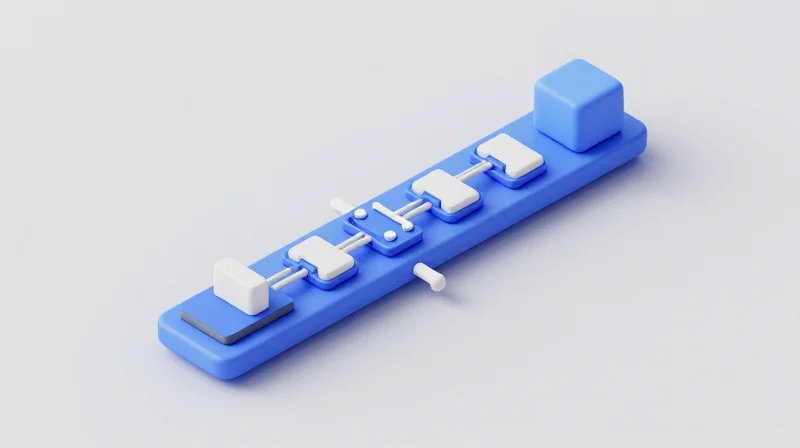
Transitioning from New Product Introduction (NPI) to full-scale manufacturing is where many HDI PCB projects fail. Medical ultrasound systems demand extreme consistency in laser-drilled microvias, copper plating uniformity, and layer-to-layer registration. A manufacturer capable of scaling must demonstrate that their pilot-run precision is not dependent on manual oversight but is instead embedded into their automated high-volume processes.
NPI vs. Mass Production: Key Capability Comparison
| Requirement | NPI Phase Priority | Production Phase Priority |
|---|---|---|
| Tooling | Flexible, low-cost set up | High-durability automated tooling |
| Via Quality | Verification of aspect ratio | Consistency and yield optimization |
| Materials | Availability and lead time | Supply chain longevity and cost-base |
| Inspection | Comprehensive engineering review | Real-time automated optical inspection (AOI) |
Critical Factors for Partner Assessment
- How does the manufacturer manage design-for-manufacturing (DFM) feedback?
A superior partner provides actionable DFM feedback during the prototyping phase to resolve potential yield bottlenecks, ensuring that production designs are fully optimized for their automated lines. - What is the role of process stabilization?
Manufacturers must document 'Golden Board' profiles during NPI to ensure that variables like laser pulse duration and etching times remain locked during volume ramp-up, preventing signal degradation. - Can they demonstrate scalability?
Look for manufacturers who manage their own internal capacity transitions, where the engineering team that oversees the prototype works directly with the production team to transfer technical parameters without knowledge gaps.
Ultimately, your manufacturer must serve as an extension of your R&D team. By choosing a partner with unified processes from NPI to volume production, medical OEMs can avoid the costly delays and redesign cycles that plague projects moving from design labs to the clinic.
Risk Mitigation and Regulatory Compliance Audits
Risk Mitigation through Rigorous Auditing
For medical ultrasound systems, the PCB is a life-critical component where failure is not an option. Effective risk mitigation requires a multi-layered audit process that examines the manufacturer's quality management system (QMS), risk registers, and disaster recovery plans. An authoritative audit goes beyond facility cleanliness to inspect the manufacturer's ability to maintain process stability under pressure, ensuring that even minor changes in material supply or machine calibration are captured and managed without impacting the final board performance.
Compliance Framework Comparison
| Standard | Relevance to Medical Ultrasound | Audit Priority |
|---|---|---|
| ISO 13485 | Core QMS for medical device manufacturing | Critical - Non-negotiable baseline |
| IPC-A-600 (Class 3) | Acceptability standards for high-reliability boards | High - Required for HDI reliability |
| FDA 21 CFR Part 820 | US regulatory control for medical devices | High - Essential for market clearance |
Frequently Asked Questions on Compliance
- How do we verify a supplier’s long-term compliance capability?
Look for a documented CAPA (Corrective and Preventive Action) system that demonstrates how they identify, isolate, and resolve non-conformities without relying on external intervention. - What specific indicators suggest an HDI supplier is high-risk?
High turnover in engineering staff, lack of automated optical inspection (AOI) data logs, and an inability to provide a detailed process capability index (Cpk) for critical microvia parameters. - Why is traceability essential for regulatory audits?
FDA audits require a full history of the device. If a PCB fails in the field, you must be able to trace the exact batch, operator, and raw material lot number used in the HDI buildup.
To ensure long-term success, mandate quarterly business reviews (QBRs) and periodic on-site audits. These interactions build transparency, allowing your team to assess whether the manufacturer is proactively managing shifts in regulatory landscape or merely reacting to them. Prioritize partners who view compliance as a competitive advantage rather than a bureaucratic obstacle.
Selecting an HDI PCB manufacturing partner for medical ultrasound equipment is a strategic decision that impacts product longevity and clinical outcome. By prioritizing ISO 13485 compliance, rigorous signal integrity testing, and proven technical expertise, your team can mitigate risk and ensure high-performance imaging. Contact our engineering team today to discuss your next ultrasound system project and discover how our specialized manufacturing capabilities can meet your exact specifications.
