
The demand for non-invasive, continuous cardiac monitoring has pushed portable medical device design to its physical limits. As engineers strive to create thinner, more comfortable wearables, the debate between traditional rigid-flex architectures and modern high-flex life flexible circuits has become critical. This article explores how advanced PCB technologies are defining the next era of patient-centric diagnostics.
The Evolution of Cardiac Monitoring Tech
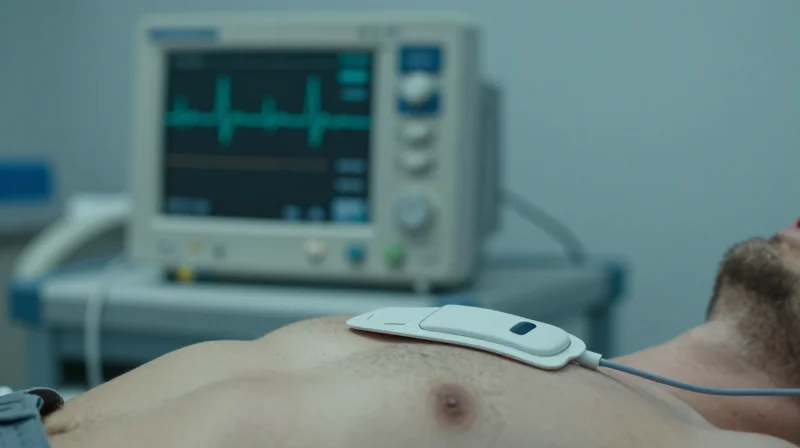
From Hospital Floors to Wearable Ecosystems
Cardiac monitoring has historically been tethered to the clinical environment, relying on bulky electrocardiogram (ECG) systems that prioritized signal processing power over patient mobility. As the demand for continuous, real-time monitoring of chronic conditions and athletic performance has surged, the industry has transitioned toward ambulatory devices. This shift represents a fundamental redesign of electronics, moving from rigid, multi-layered PCBs to sophisticated interconnections that can withstand the mechanical stress of human movement.
Comparative Evolution of Monitoring Hardware
| Generation | Form Factor | Primary Technology | Patient Impact |
|---|---|---|---|
| First-Gen | Stationary | Rigid FR-4 Boards | Hospital-bound, high restriction |
| Second-Gen | Holter Monitor | Rigid-Flex hybrids | Semi-mobile, limited comfort |
| Modern | Wearable Patch | High-Flex circuitry | Continuous, imperceptible monitoring |
Addressing the Mechanical Challenge
The primary obstacle in miniaturizing ECG hardware has always been the fragility of integrated circuits under physical strain. Traditional rigid-flex circuits allowed for some bending, but they were not designed for the constant, repetitive torsion associated with direct-to-skin wear. Today's high-flex life circuits represent a breakthrough, utilizing advanced substrates and serpentine wiring architectures that maintain signal integrity even when subjected to extreme stretching or bending.
Frequently Asked Questions on Circuit Evolution
- Why did rigid-flex circuits prove insufficient for long-term wear?
While rigid-flex offers durability in static components, the rigid portions create localized stress points that can lead to trace fracturing over thousands of cycles of body movement. - What defines a high-flex life circuit?
High-flex life circuitry employs specialized conductive materials and geometric trace patterns specifically engineered to survive millions of flex cycles without degradation in electrical conductivity. - How does this technology improve diagnostic accuracy?
By maintaining consistent contact and electrical signal paths despite patient movement, these circuits reduce motion artifacts—the primary source of signal noise in wearable ECG data.
Anatomy of Rigid-Flex Architectures
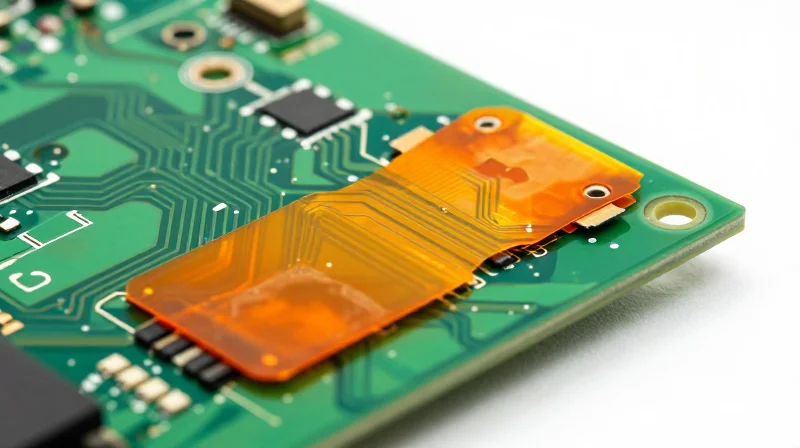
Understanding Rigid-Flex Architecture
A rigid-flex printed circuit board is a hybrid assembly that integrates rigid substrate sections with flexible polyimide layers, seamlessly connected through plated-through holes. This architecture eliminates the need for bulky connectors and fragile ribbon cables, allowing the design to fold or curve to fit the ergonomic contours of a patient's chest or wrist while providing a stable, vibration-resistant foundation for sensitive analog front-end (AFE) components.
Core Advantages for Wearable ECGs
- Structural Integrity
By minimizing interconnect points, rigid-flex designs reduce the risk of mechanical failure caused by human motion or repeated device application. - Signal Integrity
Shorter signal paths between the electrode interface and the processing chip significantly reduce noise, which is critical for high-fidelity ECG signal acquisition. - Space Optimization
The ability to fold the circuit into a 3D volume maximizes internal enclosure space, allowing for larger batteries without increasing the wearable's footprint.
Limitations in Extreme Miniaturization
While rigid-flex offers superior stability, it encounters physical limitations as ECG monitors shrink toward 'smart patch' or adhesive sensor form factors. The rigid portions dictate a minimum bending radius, and the thickness of the multi-layer stack-up can become a liability when the goal is a near-invisible, ultra-thin wearable. For applications requiring extreme flex-to-fit capability, standard rigid-flex often reaches its thermal and mechanical limits sooner than fully flexible high-flex life circuits.
| Feature | Rigid-Flex PCB | High-Flex Circuit |
|---|---|---|
| Mechanical Stability | Excellent | Moderate |
| Component Mounting | High density (Rigid zones) | Low density |
| Form Factor | Static/Folded | Dynamic/Conforming |
| Failure Points | Very Low | Moderate (due to material fatigue) |
The Rise of High-Flex Life Flexible Circuits
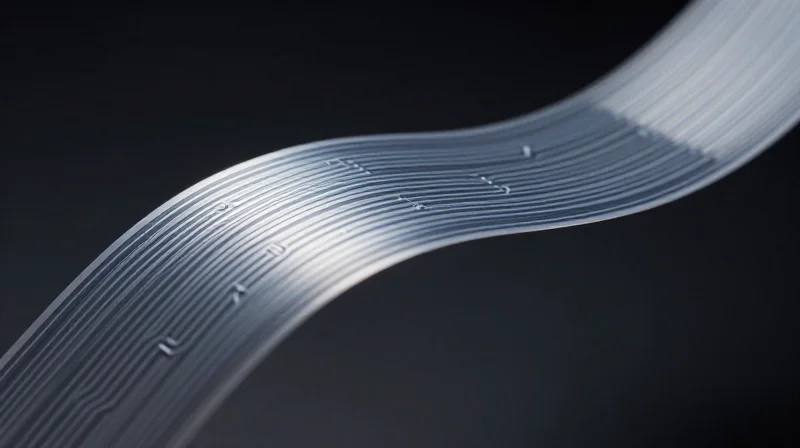
Engineering for Durability: The Mechanics of High-Flex Life Circuits
While rigid-flex PCBs provide essential structural anchors, they are often insufficient for the dynamic, multi-axial stresses inherent in high-performance wearable ECG monitors. High-flex life circuits represent a paradigm shift in interconnect technology, utilizing specialized polyimide substrates and rolled-annealed (RA) copper foils designed to endure persistent kinetic stress. By optimizing the grain structure of the conductive traces and minimizing stress risers within the laminate stack-up, these circuits maintain electrical continuity throughout the device's lifespan, even when subjected to the constant motion of daily patient activity.
Material Science Advancements
The efficacy of a high-flex circuit is determined by its ability to resist fatigue-induced cracking. The integration of adhesive-less laminate technology is critical, as it eliminates the weak interface between traditional acrylic adhesives and copper, which often acts as a catalyst for premature failure under cyclic load.
| Feature | Rigid-Flex PCB | High-Flex Life Circuit |
|---|---|---|
| Flexibility Level | Low to Moderate | Extreme |
| Bending Lifecycle | 100 - 500 cycles | 100,000+ cycles |
| Ideal Application | Static structural support | Dynamic, body-worn monitoring |
FAQ: Understanding Circuit Reliability
- Why is rolled-annealed (RA) copper preferred for high-flex applications?
RA copper features an elongated grain structure that is highly resistant to fatigue, allowing it to bend repeatedly without fracturing, unlike standard electro-deposited (ED) copper. - How does adhesive-less construction improve durability?
Removing adhesive layers reduces the overall thickness and stiffness of the circuit, lowers the neutral axis stress, and prevents delamination caused by thermal expansion or cyclic flexing.
Comparison: Durability and Mechanical Fatigue
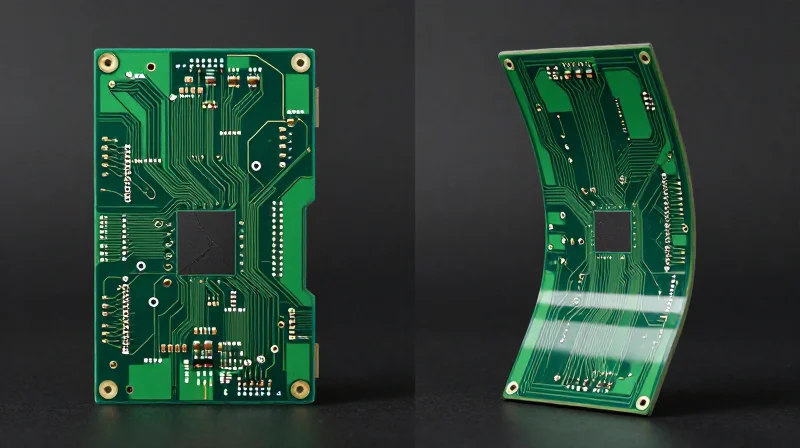
Comparative Durability Analysis
In wearable ECG monitoring, the primary failure mode is mechanical fatigue resulting from cyclical bending and continuous skin-surface movement. While rigid-flex circuits provide excellent structural support for connectors and surface-mount components, they introduce significant stress concentration points at the interface between the rigid board and the flexible interconnect. High-flex life circuits mitigate these risks by utilizing advanced polyimide base layers and rolled-annealed (RA) copper, which exhibit superior grain structures resistant to the micro-fracturing typical of repetitive motion.
| Feature | Rigid-Flex Circuit | High-Flex Life Circuit |
|---|---|---|
| Bending Lifecycle | Moderate (Limited by interface stress) | Extensive (>100,000 cycles) |
| Mechanical Stability | High (Good for SMT components) | Low (Requires specialized support) |
| Failure Mode | Delamination at transition zones | Copper work hardening/fatigue |
| Best Application | Stationary medical monitoring devices | Continuous ambulatory wearable patches |
Mechanical Fatigue and Failure Mechanisms
The susceptibility of a circuit to mechanical fatigue is heavily dependent on copper ductility and the adhesion strength of the coverlay. In high-flex applications, engineers select copper foil grades specifically engineered for high-ductility elongation properties. This prevents the microscopic cracks that often initiate during prolonged patient wear, where the ECG device is subjected to the daily rhythmic motions of chest expansion and body movement.
Frequently Asked Questions
- Why do rigid-flex circuits fail in wearable applications?
The transition zone between the rigid PCB and the flexible section acts as a mechanical fulcrum, causing concentrated shear forces that lead to delamination or trace breakage during constant movement. - What makes high-flex life circuits more reliable?
They utilize specialized rolled-annealed copper and tailored adhesive systems that allow for high elasticity, absorbing kinetic energy without permanent deformation of the conductive pathways. - Can high-flex circuits support heavy components?
Generally, high-flex circuits are not designed for structural component mounting; designers must use external reinforcement or stiffeners to prevent component solder joint fatigue.
Space Optimization and Miniaturization
Redefining Form Factor Through Material Innovation
The mandate for modern wearable ECG devices is clear: smaller, lighter, and virtually imperceptible. Rigid-flex PCBs, while structurally robust, often require bulkier housings to accommodate rigid zones and transition areas. By transitioning to high-flex life circuits—typically utilizing thin polyimide substrates—engineers can eliminate rigid stiffeners entirely, allowing the circuitry to conform to the irregular contours of the human torso without additional volume.
Comparative Impact on Device Profile
| Feature | Rigid-Flex PCB | High-Flex Life Circuit |
|---|---|---|
| Component Z-Height | Moderate to High | Ultra-Low |
| Enclosure Requirement | Rigid Housing | Minimal/Over-molded |
| Weight Efficiency | Lower due to stiffeners | Higher density |
| Conformability | Limited to flex zones | Total surface integration |
Mechanical Integration and User Comfort
Space optimization extends beyond physical dimensions to the biomechanical interface. Rigid-flex architectures suffer from 'hard spots' where rigid segments meet flexible sections, creating potential pressure points on a patient's skin. High-flex life circuits resolve this by distributing weight evenly across a continuous substrate, significantly improving long-term wearability and reducing the likelihood of skin irritation during active motion.
Frequently Asked Questions
- How does eliminating rigid zones affect component mounting?
Engineers must utilize advanced surface mount technology (SMT) optimized for flexible substrates, often employing conductive adhesives rather than standard solder to prevent fatigue-induced cracking. - Does high-flex life circuitry compromise signal integrity in miniaturized ECGs?
No, provided that trace routing accounts for impedance control in flexible materials. The reduced length of interconnections in a fully flexible board often leads to lower parasitic capacitance, potentially improving signal performance.
Reliability Standards in Medical Environments
Navigating Compliance and Safety Standards
Reliability in wearable patient monitoring is governed by stringent international standards such as IEC 60601-1, which dictates the fundamental safety and essential performance of medical electrical equipment. For flexible circuits in ECG devices, the challenge lies in maintaining these safety thresholds while subjected to continuous physical deformation. Manufacturers must ensure that materials used in high-flex circuits—such as modified polyimides and specialized adhesives—do not degrade under heat or humidity, which could lead to insulation breakdown or trace delamination.
Signal Integrity in Dynamic Environments
Signal integrity is the cornerstone of clinical-grade ECG monitoring. Any fluctuation in impedance caused by mechanical fatigue in the circuit can manifest as motion artifacts or noise, potentially resulting in false positives or missed diagnostic events. Ensuring consistent signal path resistance requires precise trace geometry and superior bonding techniques between the copper and the dielectric substrate.
| Parameter | Rigid-Flex Reliability | High-Flex Life Reliability |
|---|---|---|
| Mechanical Fatigue | Moderate; prone to stress at transition zones | Superior; designed for millions of cycles |
| Signal Stability | Excellent in static positions | Optimized for active movement |
| Standards Adherence | Standard IEC 60601-1 compliant | Enhanced durability for long-term patient wear |
Frequently Asked Questions
- How do high-flex circuits minimize motion artifacts?
By utilizing thin-film copper traces and flexible substrates with low fatigue coefficients, high-flex circuits maintain constant electrical properties even as the wearer moves, reducing impedance spikes. - Do these circuits meet ISO 10993 requirements?
Yes, medical-grade high-flex materials are tested for biocompatibility per ISO 10993 to ensure that the materials in contact with skin—or sealed within the device housing—do not cause irritation or toxicity.
Cost-Effectiveness and Manufacturing Scalability
Economic Analysis: Rigid-Flex vs. High-Flex Circuitry
The choice between rigid-flex and high-flex circuits often hinges on the lifecycle expectations of the wearable device. While rigid-flex technology benefits from mature manufacturing processes and established supply chains, high-flex circuits represent a higher capital investment during the prototyping phase but offer superior long-term ROI by reducing device failure rates in high-mobility environments.
| Metric | Rigid-Flex Circuitry | High-Flex Life Circuits |
|---|---|---|
| Tooling Complexity | High (Multi-layer lamination) | Low (Simplified assembly) |
| Manufacturing Throughput | High | Moderate |
| Per-Unit Cost at Scale | Moderate | Higher |
| Replacement Rate | Higher (Stress points) | Very Low |
Scalability Considerations
Manufacturing scalability is inherently different for these technologies. Rigid-flex boards are optimized for high-volume automated assembly, benefiting from standard pick-and-place lines. Conversely, high-flex circuits, which often incorporate specialized polyimide substrates and additive manufacturing techniques, currently face higher barrier-to-entry costs, limiting rapid scaling unless volume reaches a threshold where design durability benefits offset the elevated bill-of-materials.
Frequently Asked Questions
- Does high-flex circuitry increase the final retail price of the wearable?
Initially, yes. However, lower maintenance and device replacement rates often result in a more attractive Total Cost of Ownership (TCO) for clinical environments. - Which technology is better for rapid prototyping?
Rigid-flex boards are significantly faster to iterate due to standardized design rules and ubiquitous PCB manufacturing services. - Are there scalability limits to high-flex life designs?
The primary constraint is the specialized supply chain for advanced flexible materials, which can create bottlenecks compared to the readily available FR-4/flex hybrid materials used in rigid-flex.
Strategic Selection: Choosing the Right Architecture
Strategic Selection Framework for ECG Wearables
Selecting the appropriate circuit architecture requires balancing physiological signal fidelity against mechanical durability. Product developers must evaluate whether the device is intended for short-term clinical observation or long-term ambulatory monitoring, as this dictates the stress tolerance required of the interconnects.
| Feature | Rigid-Flex Architecture | High-Flex Life Architecture |
|---|---|---|
| Target Use Case | Compact clinical patches | Extended-wear cardiac monitors |
| Mechanical Stress | Low-to-moderate | High-repetition dynamic bending |
| Design Complexity | High density, layered | Dynamic, cable-replacement focus |
| Primary Advantage | Space-efficient integration | Unrivaled fatigue resistance |
Decision Factors for Hardware Engineers
When choosing the optimal solution for your ECG wearable, consider these three critical pillars of assessment to ensure the hardware aligns with the intended clinical application.
- Movement Profile
If the device resides on a high-motion area like the chest near the axilla, high-flex circuits are non-negotiable to mitigate metal fatigue. - Integration Density
Rigid-flex excels where complex ICs and batteries must occupy a minimal footprint through vertical stacking and rigid zones for component mounting. - Total Cost of Ownership
While high-flex circuits may have higher upfront fabrication costs, the reduction in warranty claims due to physical failure often offsets the expenditure in long-term monitoring products.
Ultimately, the strategic choice rests on the expected lifecycle of the ECG monitor. Rigid-flex remains the gold standard for miniaturization in disposable diagnostic patches, whereas high-flex life circuits provide the mechanical resilience necessary for next-generation, multi-week continuous cardiac telemetry devices.
Choosing between rigid-flex and high-flex life circuits is not merely a design preference; it is a strategic decision that impacts device longevity and patient compliance. As remote diagnostics continue to advance, prioritizing high-flex materials is becoming the new standard for wearable reliability. Contact our engineering team today to audit your current device design and ensure your medical products are ready for the future of patient monitoring.
