Imagine a world where light itself controls electronic circuits – that's the reality enabled by the humble light dependent resistor, or LDR. This small but powerful component, also known as a photoresistor, changes its electrical resistance based on the amount of light that falls on it. From simple streetlights to advanced camera light meters, understanding how a light dependent resistor works opens up a broad spectrum of electronic possibilities. This article will delve into the core principles of an LDR, exploring its construction, working, types, and applications while also comparing it with other similar devices.
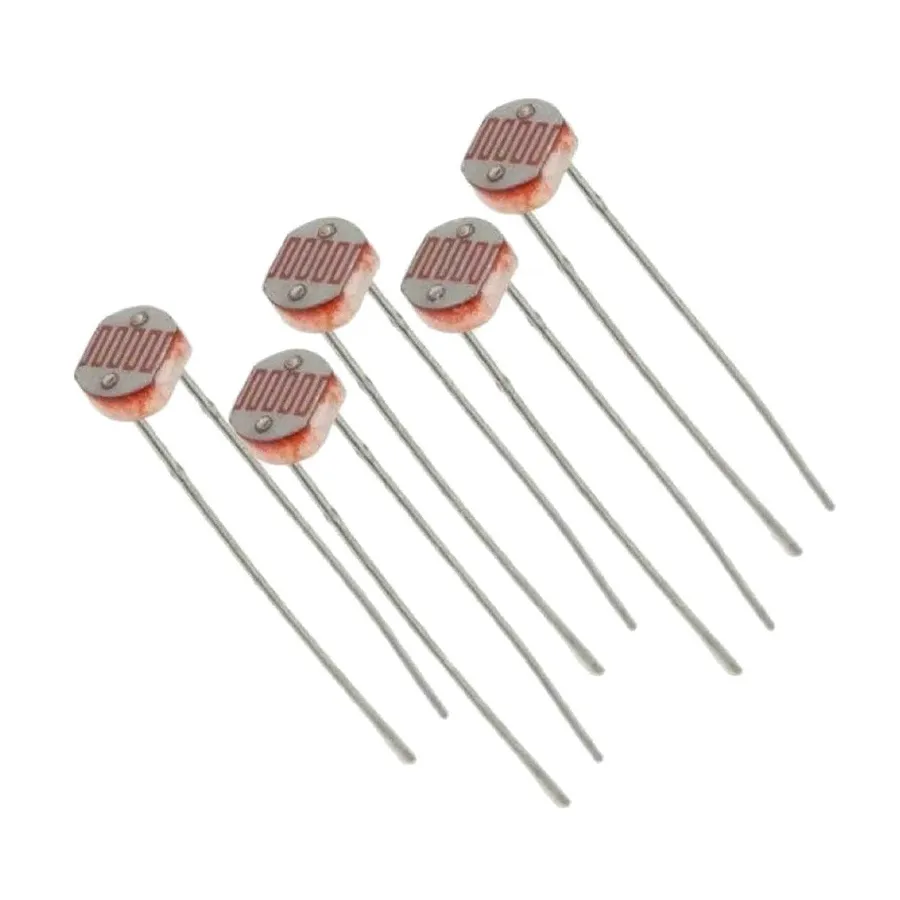
A Light Dependent Resistor (LDR), also known as a photoresistor or photocell, is a semiconductor device whose electrical resistance varies inversely with the intensity of incident light. Essentially, it functions as a variable resistor that is highly sensitive to light, exhibiting a high resistance in darkness and a low resistance in bright light.
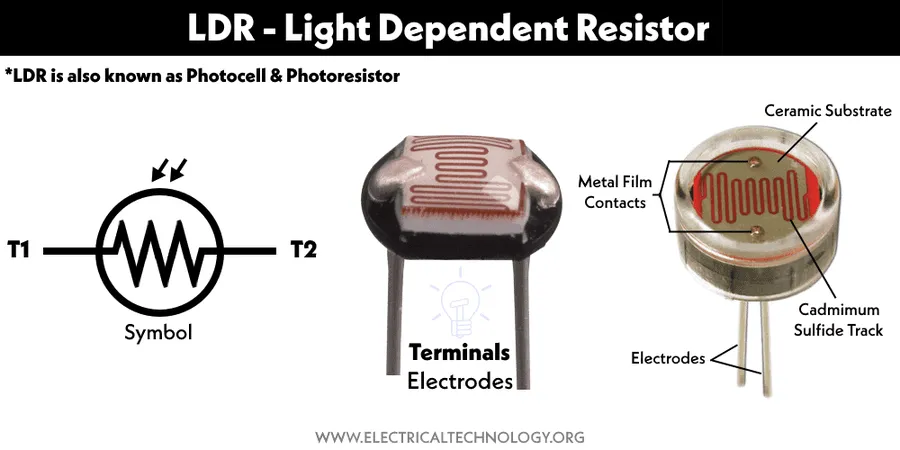
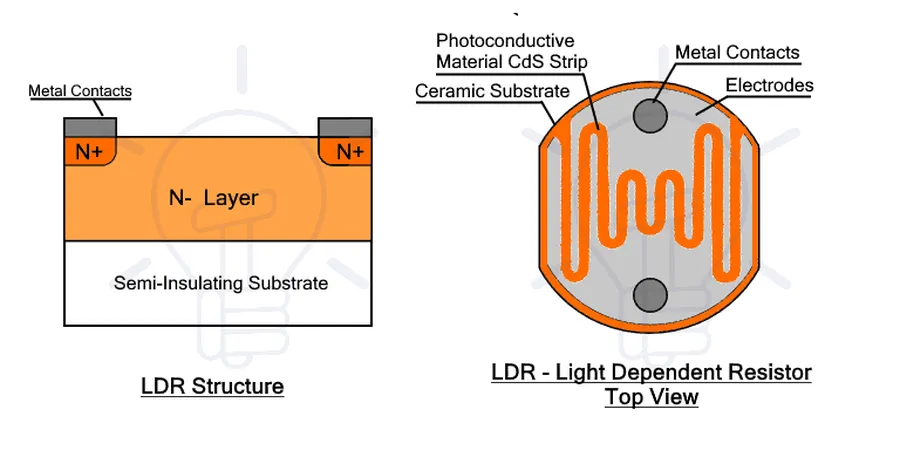
Light Dependent Resistors (LDRs), also known as photoresistors, operate on the principle of photoconductivity, where the electrical conductivity of a semiconductor material changes when exposed to light. Specifically, the resistance of the LDR decreases as the intensity of incident light increases. This phenomenon arises from the interaction between photons of light and the electrons within the semiconductor material, typically cadmium sulfide (CdS) or cadmium selenide (CdSe).
In the dark, these materials exhibit high resistance because very few free electrons are available to conduct electricity. However, when light falls on the material, photons transfer their energy to electrons in the semiconductor. If the energy of the photon exceeds a certain threshold (the band gap energy of the material), an electron can overcome the binding energy and be excited into the conduction band. This results in the generation of electron-hole pairs, substantially increasing the number of charge carriers available for electrical conduction, thereby lowering the resistance of the LDR. The magnitude of the change in resistance is proportional to the intensity and wavelength of incident light. This change is not instantaneous but occurs over a period of time determined by the material's characteristics.
The resistance of an LDR can vary significantly depending on the ambient light conditions. Typically, in complete darkness, the resistance may be in the megaohm range, while in bright light it can drop to a few hundred ohms or even less. This characteristic makes LDRs suitable for light sensing and automatic control applications.
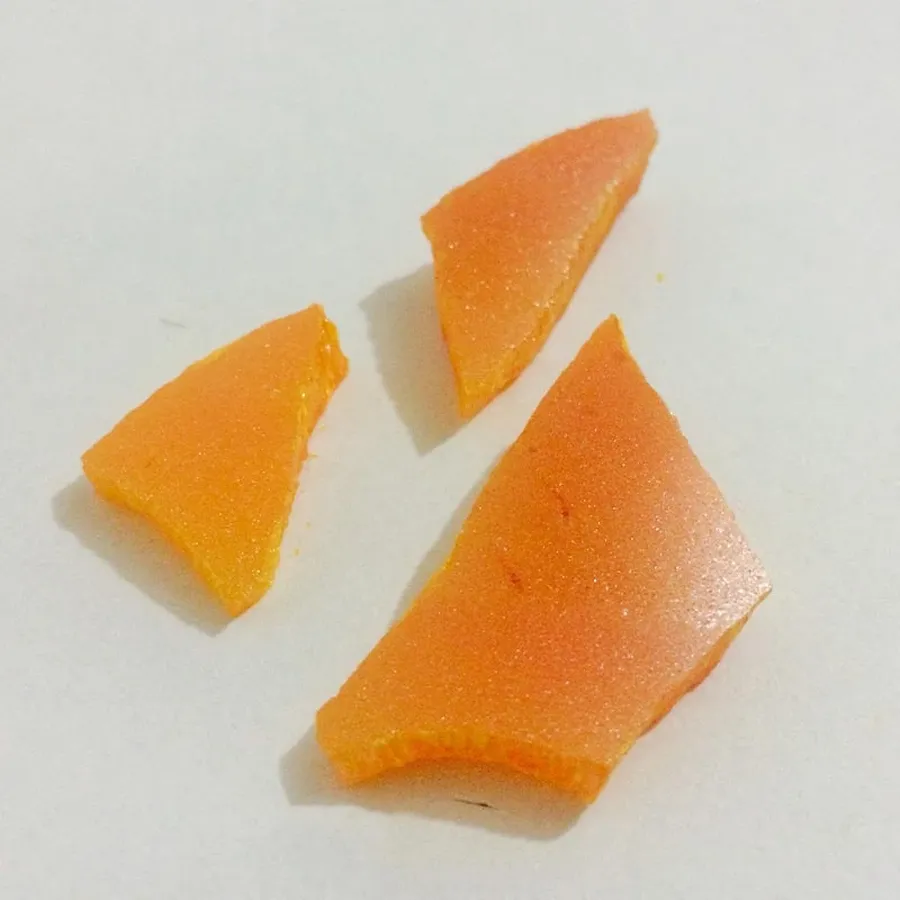
Light Dependent Resistors (LDRs), also known as photoresistors, are fabricated using semiconductor materials that exhibit a change in electrical resistance when exposed to light. The choice of material significantly impacts the LDR's spectral sensitivity, light-to-dark resistance ratio, and response time. Common materials include cadmium sulfide, cadmium selenide, lead sulfide, and indium antimonide, each possessing unique properties.
| Material | Chemical Formula | Spectral Sensitivity Range (nm) | Key Properties | Typical Applications |
|---|---|---|---|---|
| Cadmium Sulfide | CdS | 500-700 (Visible Light) | High sensitivity to visible light, low dark resistance, slower response time | Ambient light sensors, photographic light meters |
| Cadmium Selenide | CdSe | 600-800 (Red and Infrared) | Higher sensitivity to red and infrared, lower dark resistance, faster response time than CdS | Infrared detectors, light-beam interruption detectors |
| Lead Sulfide | PbS | 1000-3000 (Infrared) | High sensitivity to infrared light, good stability, moderate response time | Infrared remote controls, flame detectors |
| Indium Antimonide | InSb | 3000-7000 (Mid-Infrared) | High sensitivity to mid-infrared, fast response time, requires cooling for optimal performance | Thermal imaging, gas analyzers |
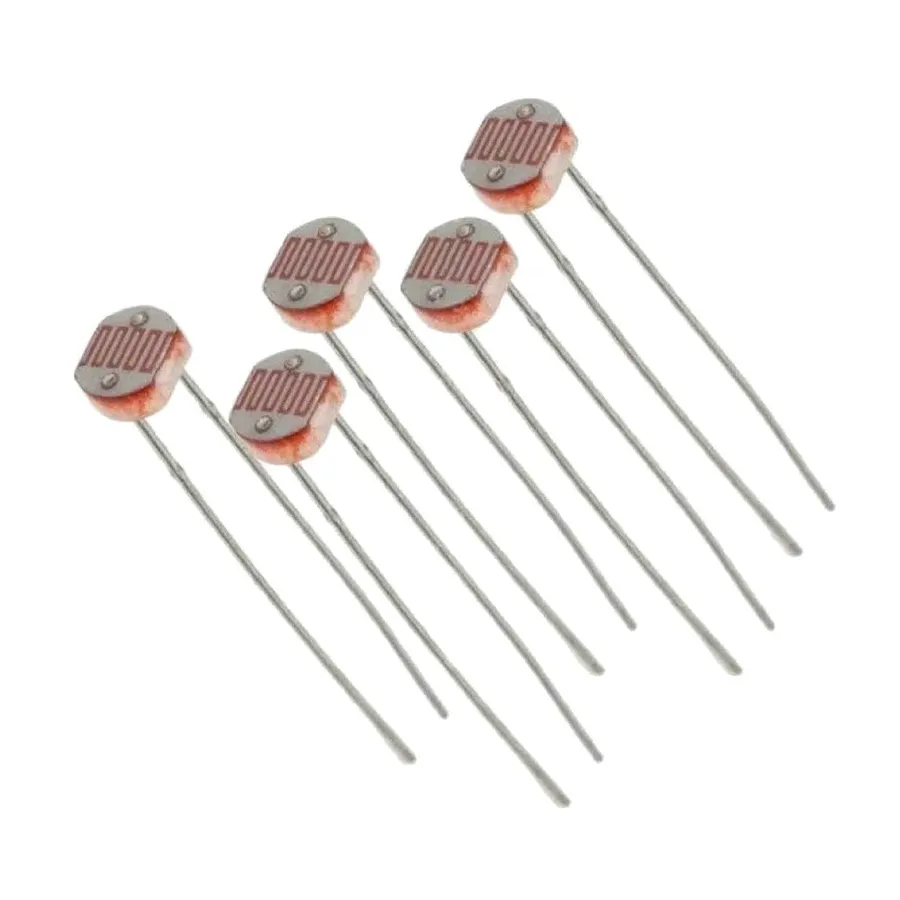
Light Dependent Resistors (LDRs), while fundamentally functioning as light-sensitive variable resistors, exhibit variations in their construction and operational characteristics. These differences lead to classifications primarily based on their underlying physical mechanism of operation, namely photoconductivity and photoresistivity, with each type offering distinct advantages suited to various applications.
| Feature | Photoconductive LDR | Photoresistive LDR |
|---|---|---|
| Mechanism | Change in conductivity due to incident light | Change in resistance due to incident light |
| Material Behavior | Increase in free charge carriers with light exposure | Decrease in resistivity with light exposure |
| Construction | Often utilize polycrystalline semiconductor materials | Use thin film of semiconductor material |
| Response Time | Can exhibit slower response times | Generally have faster response times |
| Typical Application | Light meters, automated lighting systems | Simple light sensing circuits, light-controlled switches |
While the terms 'photoconductive' and 'photoresistive' are often used interchangeably in the context of LDRs, the underlying mechanisms and practical implementations can vary. The term 'photoconductive' refers to an increase in conductivity due to the generation of free charge carriers when the material absorbs light photons. The term 'photoresistive', on the other hand, refers more generally to a change in resistance caused by a similar light-matter interaction, but the specifics of the construction and material properties contribute to its overall performance profile. Photoconductive LDRs, in practice, often use polycrystalline semiconductor materials, while photoresistive LDRs can take advantage of thin films of semiconductor materials.
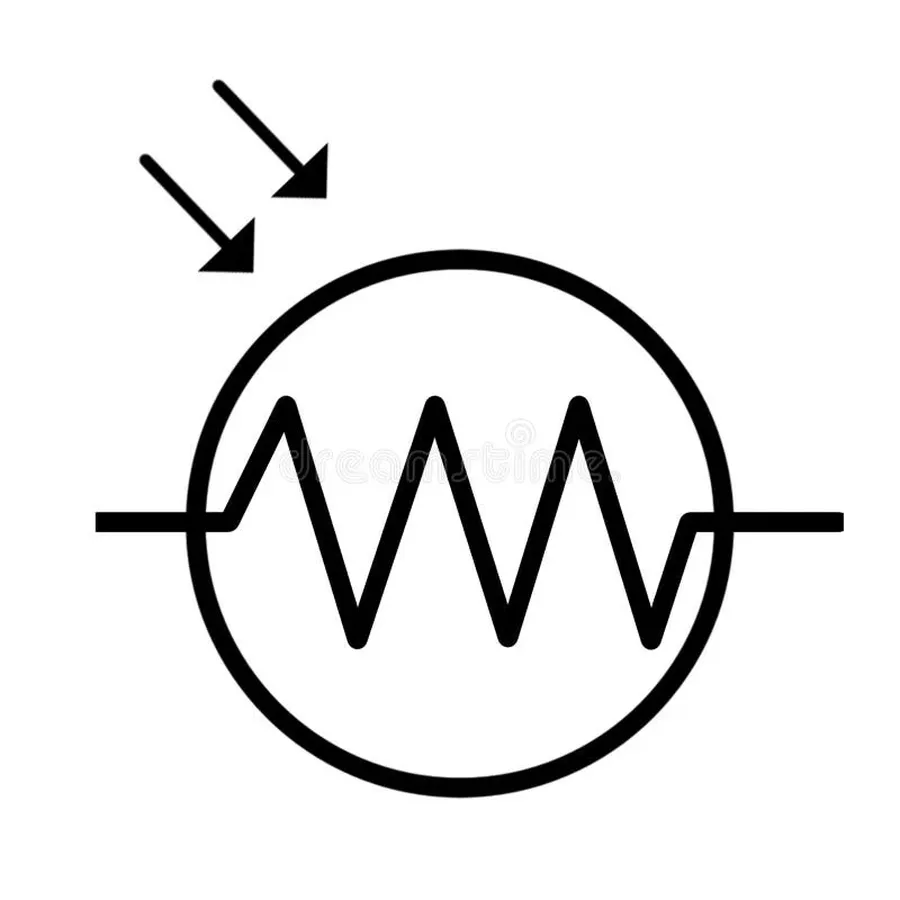
Light Dependent Resistors (LDRs), also known as photoresistors, are represented by a specific symbol in circuit diagrams, which is crucial for understanding and designing electronic circuits that utilize their light-sensitive properties. This section will detail the standard symbol and demonstrate common circuit connection methods.
The LDR symbol typically consists of a resistor symbol with two incoming arrows pointing towards it. These arrows signify the incoming light that changes the resistance of the component. This symbol is universally recognized, which allows engineers and technicians to quickly identify an LDR in circuit diagrams.
Below are some examples of simple circuit connections:
| Circuit Type | Description | Application |
|---|---|---|
| Series | LDR connected in a single path with a resistor. | Simple light-sensitive switch |
| Parallel | LDR connected in a parallel branch with a resistor. | Current-regulating circuits |
| Voltage Divider | LDR placed in a voltage divider configuration. | Light intensity measurement |
Light Dependent Resistors (LDRs) are versatile components widely utilized across various applications due to their ability to change resistance in response to light intensity. Their simplicity, cost-effectiveness, and reliable performance make them ideal for light-sensing applications. These applications span consumer electronics, industrial automation, and scientific instrumentation.
Light Dependent Resistors (LDRs) and thermistors are both variable resistors whose resistance changes based on external stimuli, but they respond to different physical phenomena. LDRs are sensitive to light, whereas thermistors are sensitive to temperature. Understanding their differences is crucial for selecting the correct sensor for a specific application.
| Feature | Light Dependent Resistor (LDR) | Thermistor |
|---|---|---|
| Primary Sensitivity | Light intensity | Temperature |
| Resistance Change | Decreases with increasing light intensity | Decreases with increasing temperature (NTC) or increases with increasing temperature (PTC) |
| Semiconductor Material | Cadmium Sulfide (CdS), Cadmium Selenide (CdSe) | Metal oxides, Polymers, etc. |
| Response Time | Typically slower to react to changes in light | Can be faster to react to changes in temperature. |
| Applications | Streetlights, light meters, automatic lighting controls, solar tracking systems | Temperature sensing, overcurrent protection, thermal compensation. |
| Symbol | Resistor with a light arrow pointing at it | Resistor with a temperature T symbol |
| Cost | Generally inexpensive | Cost-effective, with some precision types being more expensive. |
While both components are used as variable resistors and have a wide range of applications, their fundamental physical properties and response characteristics make them suitable for different purposes. An LDR is primarily for light detection and measurement, and a thermistor is primarily for temperature sensing and control.
This section addresses common questions about Light Dependent Resistors (LDRs), providing concise and informative answers to enhance understanding of their functionality and applications.
Light Dependent Resistors (LDRs), while versatile in light-sensing applications, possess a unique set of advantages and disadvantages that must be considered when designing electronic circuits. These factors relate to their performance characteristics, cost-effectiveness, and operational limitations.
| Feature | Advantages | Disadvantages |
|---|---|---|
| Cost | Generally inexpensive and readily available, making them suitable for budget-conscious projects. | May require additional circuitry for signal conditioning, potentially increasing the overall cost. |
| Sensitivity | High sensitivity to light, allowing them to detect subtle changes in light intensity. | Sensitivity can be affected by temperature and humidity, leading to inconsistent readings if not properly calibrated. |
| Response Time | Response time is adequate for most applications, reacting relatively fast to changes in illumination. | Relatively slow response time compared to other photosensors, making them unsuitable for fast-moving or rapidly changing light conditions. |
| Power Consumption | Low power consumption, making them ideal for battery-operated devices. | Performance can degrade at high power levels, and may require current limiting to prevent overheating, limiting certain applications. |
| Durability | Robust and durable under normal operating conditions, with minimal mechanical parts. | Susceptible to damage from excessive exposure to heat, or direct impact |
| Versatility | Can be used in a variety of light-sensing applications such as streetlights, light meters, and light-sensitive switches. | Limited linearity in resistance change with light intensity which may require complex linearization circuits for accurate readings. |
| Simplicity | Simple to integrate into circuits due to its two-terminal structure. | Requires calibration for consistent and accurate measurements. |
The light dependent resistor, or LDR, exemplifies how a simple electronic component can harness the power of light. Its ability to alter resistance with changing light intensity makes it invaluable in countless applications, from common everyday devices to specialized industrial equipment. Understanding the core principles and diverse uses of an LDR provides a solid foundation for further exploration of electronics and photonics. As technology advances, light dependent resistors will continue to be an important sensor in many future applications.

