Potentiometers, those small but mighty components found in everything from vintage radios to modern gaming controllers, are essential elements in electronics. They're not just simple on/off switches; potentiometers allow for smooth, continuous adjustment of electrical resistance. This makes them indispensable in controlling audio volume, adjusting motor speeds, and even calibrating sensitive equipment. This article dives deep into the world of potentiometers, exploring their various types, working principles, and the diverse applications that make them so crucial in our technological world.
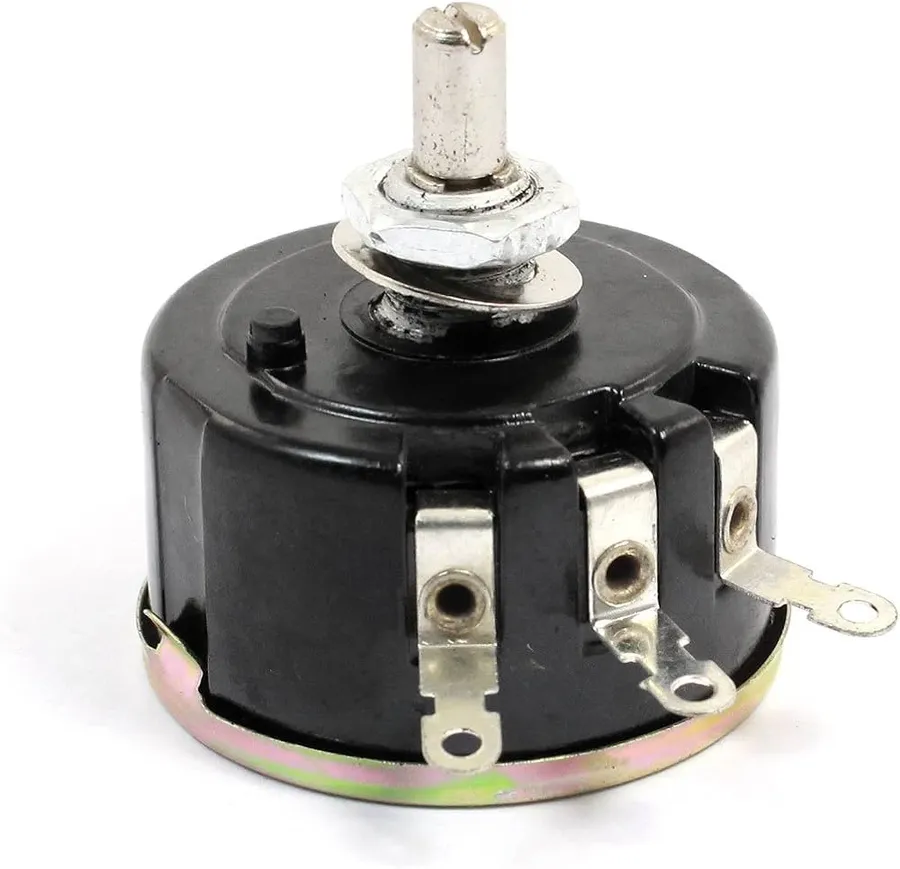
A potentiometer is a three-terminal electromechanical device functioning as a variable resistor, enabling manual adjustment of electrical resistance within a circuit. This adjustment is achieved by changing the position of a sliding contact, known as the wiper, along a resistive element. The fundamental components of a potentiometer include the resistive track, the wiper, and the terminals.
Potentiometers are crucial in a vast array of electronic applications where the capability to vary resistance is paramount. The relationship between the wiper position and resistance output can be linear or logarithmic, enabling diverse functionalities from simple volume control to precision adjustments in industrial equipment.
The precise design and construction of a potentiometer determine its physical size, maximum resistance value, power-handling capacity, and overall reliability. The choice of materials for the resistive element influences the precision and temperature stability of the potentiometer. Therefore, understanding the basic construction and function is critical for specifying the correct component for a given application.
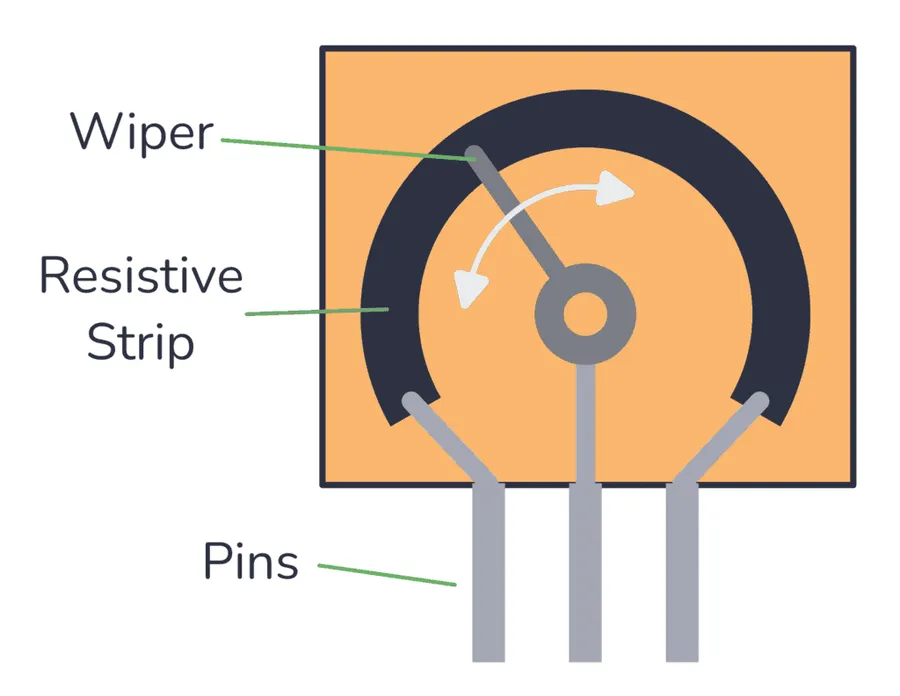
Potentiometers function by manipulating electrical resistance via a mechanical wiper that moves along a resistive track. This action allows for precise control over the division of voltage and the flow of current in a circuit. The fundamental principle relies on Ohm's Law, where resistance variation dictates the relationship between voltage and current.
At its core, a potentiometer includes three key elements: the resistive element, the wiper, and the terminals. The resistive element, typically a track of carbon composition or wire, offers a defined resistance. The wiper, a conductive contact, moves along this track. The terminals provide access to the electrical circuit.
The movement of the wiper divides the resistive element into two distinct sections. The resistance between one end terminal and the wiper changes according to the wiper's position. This change alters the voltage drop across this section, thereby controlling the flow of current. The total resistance between the two ends of the resistive element remains constant. This mechanism enables the potentiometer to function as a variable voltage divider, useful in various electronic applications.
| Component | Function |
|---|---|
| Resistive Element | Provides the track of fixed resistance |
| Wiper | Conductive contact that moves along the resistive element |
| Terminals | Connection points for integrating into a circuit |
Potentiometers come in two primary mechanical configurations: linear and rotary. Linear potentiometers feature a straight resistive track, and the wiper moves along this track linearly. Rotary potentiometers, in contrast, have a circular resistive track, and the wiper rotates around the center axis. Both types are fundamentally based on the same principle of variable resistance but they achieve resistance change through different modes of mechanical motion.
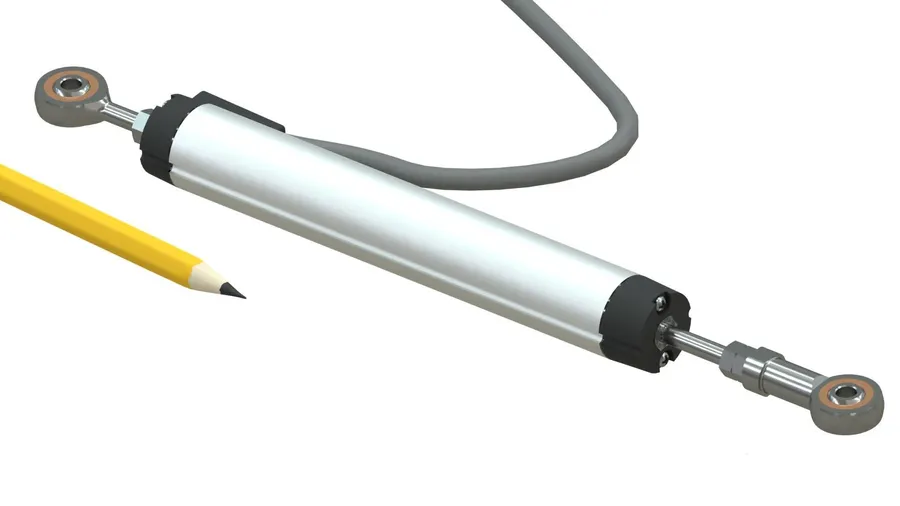
Potentiometers are broadly classified into two main categories based on their mechanical operation: rotary potentiometers and linear potentiometers. This distinction influences their design, application, and suitability for various control tasks. Understanding these differences is crucial for selecting the correct potentiometer for a specific application.
| Feature | Rotary Potentiometer | Linear Potentiometer |
|---|---|---|
| Motion | Rotational motion of the wiper around a central axis | Linear motion of the wiper along a straight path |
| Design | Circular resistive element; wiper rotates via a shaft or knob | Straight resistive element; wiper slides along the length |
| Typical Applications | Volume controls, audio mixing, position sensing in rotating mechanisms | Slider controls, linear displacement sensing, instrument calibration |
| Advantages | Compact for rotational adjustments, intuitive interface for volume/tuning, robust and widely available | Precise linear control, direct representation of the controlled parameter's position, good for haptic feedback |
| Disadvantages | Less intuitive for linear adjustments, can be less precise in linear position sensing | Bulky for some applications, may require a longer space for full range of motion |
Understanding the specifications of a potentiometer is crucial for selecting the correct component for a given application. These specifications dictate how the potentiometer will perform within a circuit and its suitability for different operating conditions. The primary specifications include resistance value, tolerance, power rating, and taper. These parameters determine the potentiometer's ability to control voltage and current in a circuit, its accuracy, and its durability.
| Specification | Description | Impact on Application |
|---|---|---|
| Resistance Value | The total resistance between the two end terminals of the potentiometer, measured in ohms (Ω). | Determines the range of resistance adjustment and the resulting voltage/current control. |
| Tolerance | The allowable deviation of the actual resistance from its nominal value, expressed as a percentage (e.g., ±10%). | Indicates the precision of the potentiometer's resistance; a lower tolerance means higher accuracy. |
| Power Rating | The maximum power the potentiometer can safely dissipate without damage, measured in watts (W). | Limits the amount of current that can flow through the potentiometer; exceeding the rating can lead to failure. |
| Taper | Describes the relationship between wiper position and the resistance, typically linear or logarithmic. | Affects how the resistance changes as the wiper is moved; linear tapers provide uniform change, logarithmic tapers change at different rates (often used for audio). |
The selection of these parameters is application-specific. For instance, a fine-tuning application would require a low-tolerance potentiometer, while a high-power circuit requires a potentiometer with a higher power rating. Understanding these specifications ensures the potentiometer will function effectively and reliably within the intended design parameters.
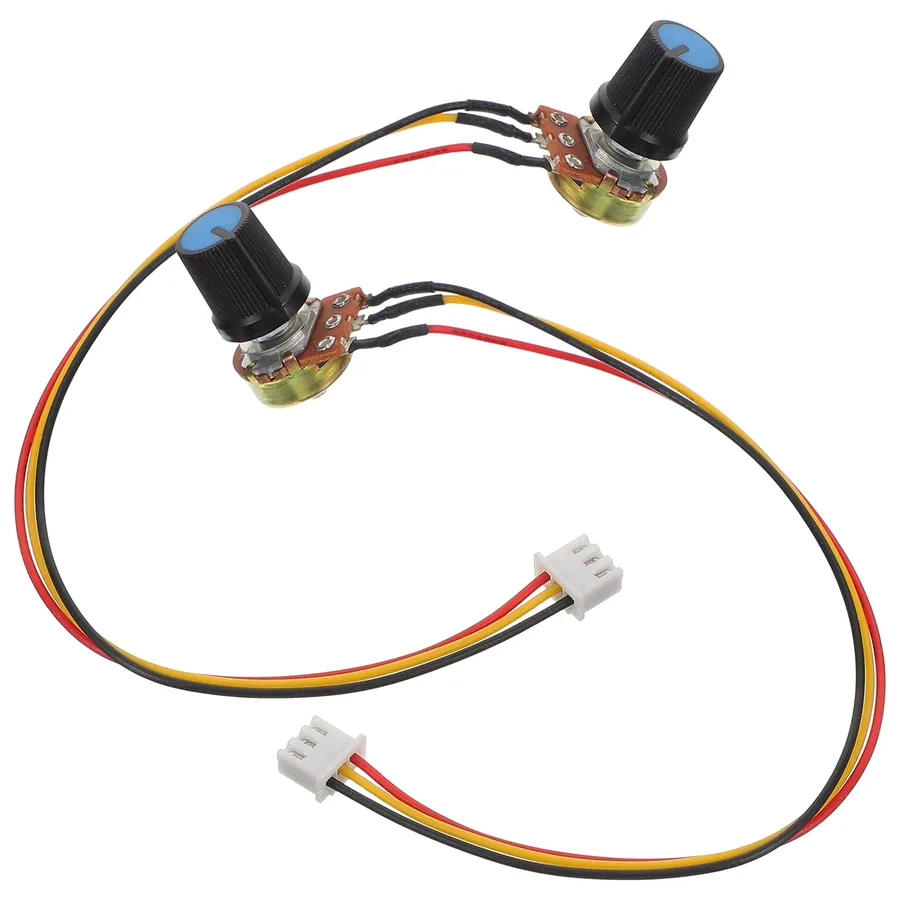
Potentiometers are indispensable components in audio equipment, providing the user with the ability to dynamically adjust signal levels and tonal characteristics. Their primary function is to act as variable voltage dividers, allowing for precise control over audio signals, ultimately influencing the listening experience. In audio systems, potentiometers are primarily used for functions such as volume control, tone adjustment (bass, treble, midrange), and balance.
| Application | Potentiometer Type | Taper Type | Typical Resistance Range |
|---|---|---|---|
| Volume Control | Rotary | Logarithmic | 5 kΩ to 100 kΩ |
| Tone Adjustment (Bass/Treble) | Rotary | Linear | 10 kΩ to 100 kΩ |
| Balance Control | Rotary | Linear | 10 kΩ to 100 kΩ |
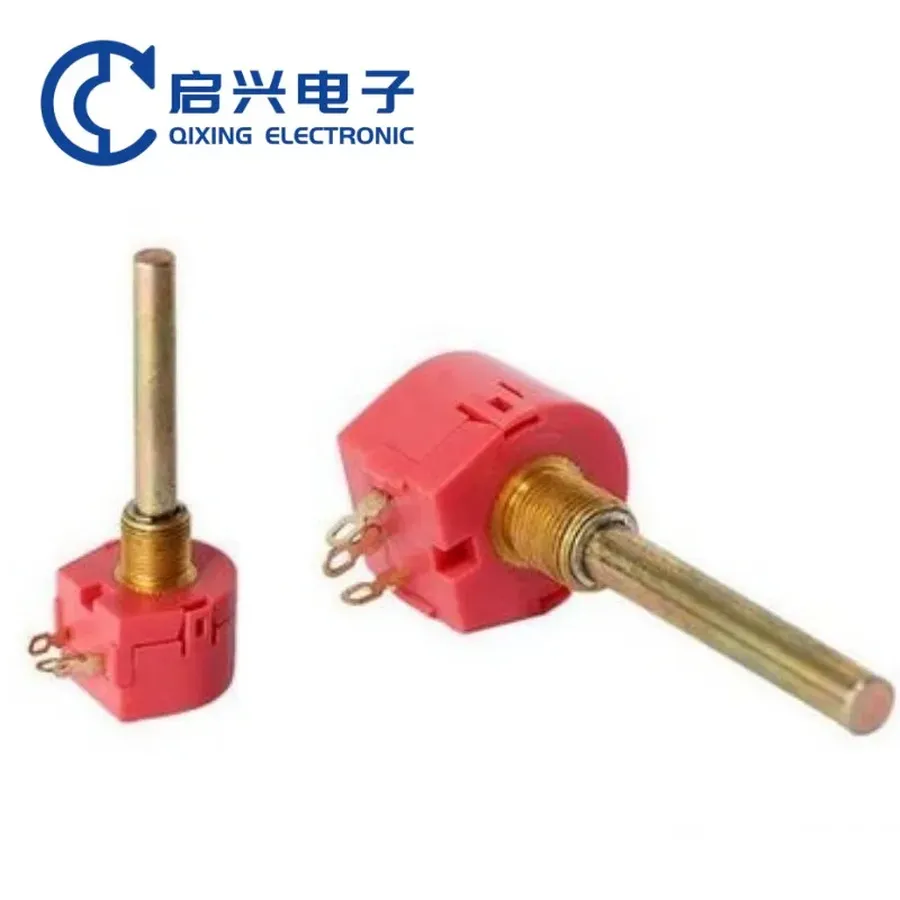
While commonly associated with audio equipment, potentiometers are indispensable components in a wide array of non-audio applications, showcasing their versatility as variable resistors. Their ability to precisely control voltage and current makes them critical in industrial control systems, robotics, and instrumentation. This section delves into these diverse applications, highlighting their role in various technologies.
| Application | Role of Potentiometer | Specific Examples |
|---|---|---|
| Industrial Control Systems | Manual process control | Speed control of conveyor belts, temperature adjustment, flow rate control |
| Robotics | Position feedback and control | Robotic arm joint positioning, servomotor control |
| Instrumentation | Calibration, range selection | Multimeters, signal generators, oscilloscopes |
| Motor Speed Control | Varying current to motor | Adjusting the speed of a conveyor belt motor or a small fan motor |
| Medical Equipment | Precise adjustments and calibration | Patient monitoring equipment and laboratory instruments |
| Lighting Control | Adjusting light intensity | Dimmer switches, stage lighting controls, industrial lighting adjustment |
Selecting the appropriate potentiometer for a given application requires careful consideration of several key factors. This ensures optimal performance, longevity, and compatibility within the intended circuit.
Here's a detailed guide to help in this selection process:
This section addresses common inquiries regarding potentiometers, offering clear and concise answers to enhance understanding of these versatile electronic components.
Potentiometers, while generally reliable, can exhibit issues that affect their performance. Diagnosing and addressing these problems ensures continued accuracy and functionality within the intended application. This section focuses on common issues, their causes, and practical solutions, including replacement procedures.
When troubleshooting, use a digital multimeter to measure the resistance between the potentiometer's terminals. It can indicate if the resistance values match the manufacturer's specifications. Always disconnect the circuit power before testing or working on components.
If a potentiometer is found to be faulty, replacement is often the most effective solution. When selecting a replacement, ensure it matches the original specifications including resistance value, taper, and physical dimensions.
Potentiometers, as we’ve explored, are versatile and essential components in countless electronic systems. Their ability to provide smooth, variable resistance adjustment allows us to control devices with precision and ease. From the delicate volume controls of a vintage radio to the robust speed regulators in industrial machinery, potentiometers play a critical role. Understanding their types, functions, and specifications will help anyone choose the best components for their projects. As technology advances, potentiometers will continue to be a valuable tool in the development of new and innovative applications, solidifying their position as a cornerstone of electronic engineering.

