In the world of electronics, the simple act of turning a light on or off relies on a fundamental component: the switch in an electric circuit. This seemingly small device holds the power to control the flow of electricity, enabling us to power our homes, use our devices, and operate complex machinery. Understanding how switches work is crucial to grasp how our modern world functions. This article will delve into the fascinating world of switches, exploring their different types, functions, and applications in various electrical circuits.
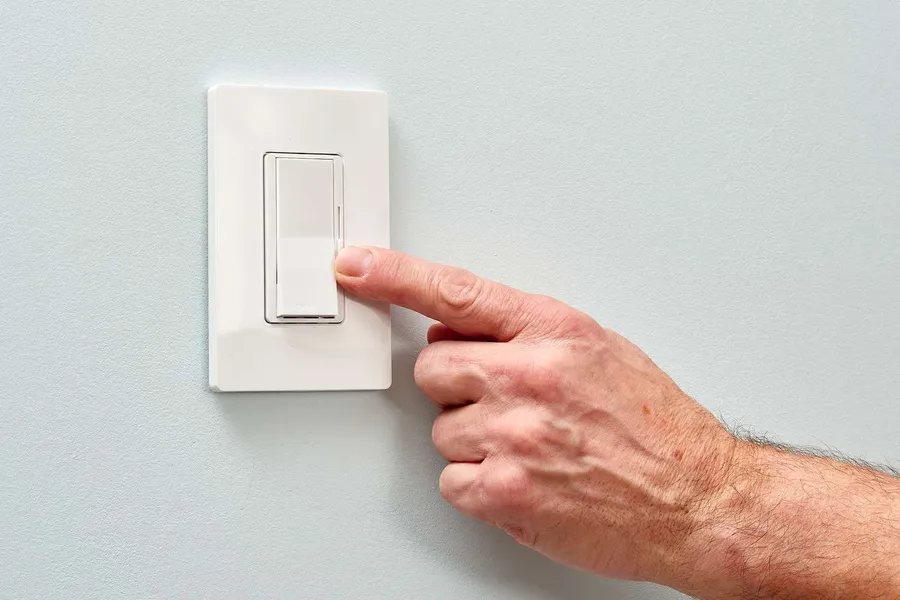
At its core, a switch in an electrical circuit acts as a fundamental control mechanism, governing the flow of electrical current. It operates on a binary principle, either completing the circuit to enable current flow (a closed switch) or interrupting the circuit to halt current flow (an open switch). This basic on/off functionality underpins the operation of countless electrical and electronic devices.
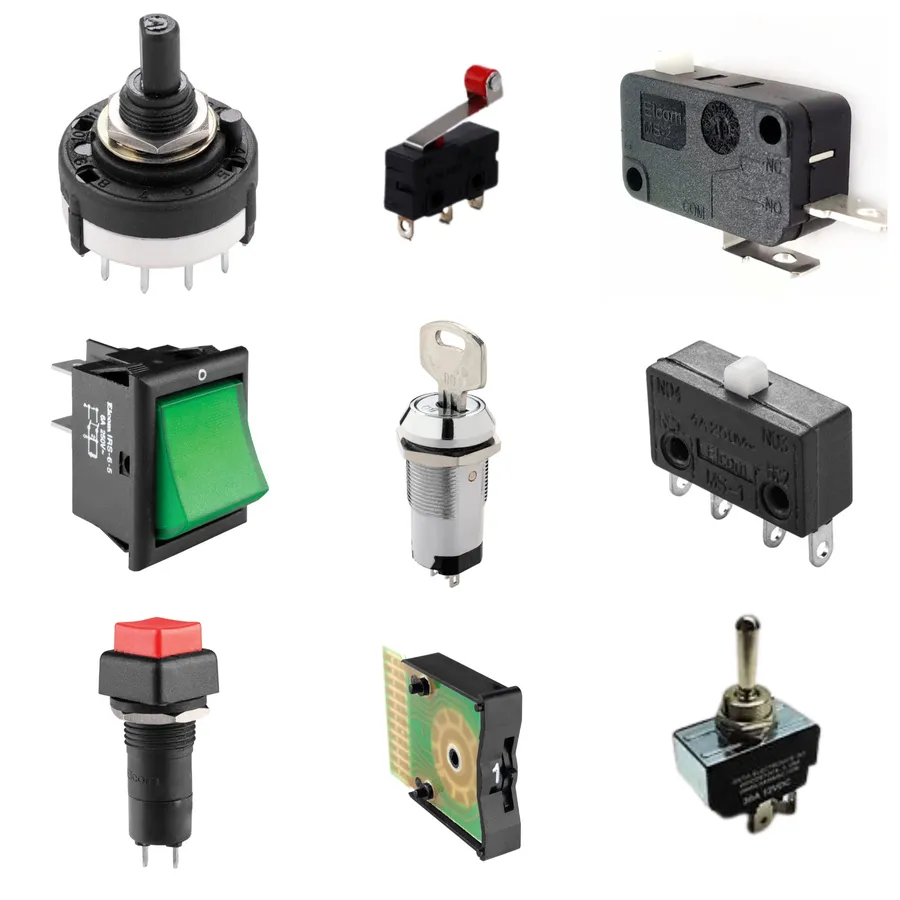
Electrical switches are fundamental components in circuits, providing the means to control current flow. They are categorized based on their number of poles and throws, which dictate their functionality. This section details the key types: Single-Pole Single-Throw (SPST), Single-Pole Double-Throw (SPDT), Double-Pole Single-Throw (DPST), and Double-Pole Double-Throw (DPDT) switches.
| Switch Type | Poles | Throws | Description | Typical Application |
|---|---|---|---|---|
| Single-Pole Single-Throw (SPST) | 1 | 1 | A simple on/off switch. It can either complete the circuit (closed) or break it (open). | Light switches, basic appliance power controls |
| Single-Pole Double-Throw (SPDT) | 1 | 2 | Has one common terminal that connects to one of two other terminals. It can switch between two different circuit paths. | 3-way switches, switching between two different power sources |
| Double-Pole Single-Throw (DPST) | 2 | 1 | Controls two separate circuits simultaneously. Both poles open or close together. | Heavy-duty power controls, high-current devices |
| Double-Pole Double-Throw (DPDT) | 2 | 2 | Simultaneously switches two separate circuits between two different sets of terminals. Provides versatile control. | Motor controllers, complex circuit switching |
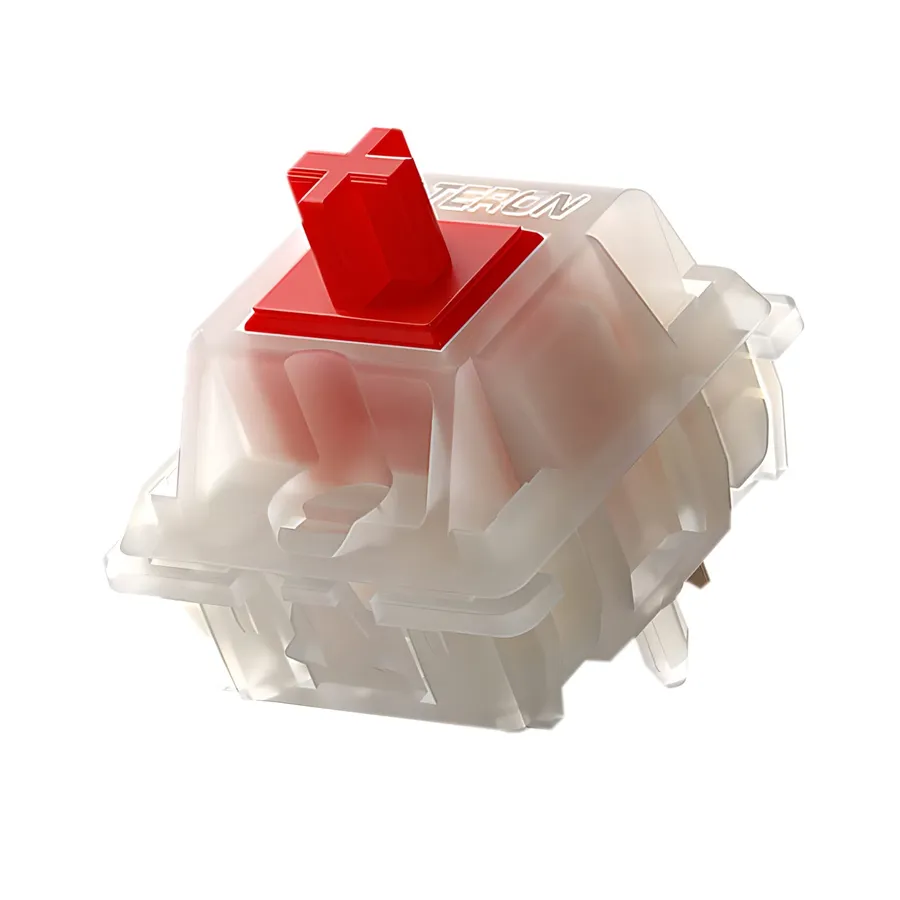
Mechanical and electronic switches are fundamental components in electrical circuits, each employing distinct mechanisms to control current flow. Mechanical switches rely on physical contact to make or break a circuit, while electronic switches use semiconductor materials to achieve the same outcome. This distinction in methodology results in unique characteristics and application scenarios for each type.
| Feature | Mechanical Switches | Electronic Switches |
|---|---|---|
| Operating Principle | Physical movement of contacts | Manipulation of semiconductor properties |
| Mechanism | Lever, button, or slider physically connects/disconnects circuit paths | Use of transistors, diodes, or thyristors to control current flow |
| Response Time | Generally slower due to mechanical movement | Generally faster due to electronic operation |
| Durability | Subject to wear and tear, limited mechanical lifespan | Higher durability with no mechanical parts to wear out |
| Contact Bounce | Common, requiring debounce circuits | Minimal to no contact bounce issues |
| Complexity | Simpler in design and construction | More complex due to semiconductor technology |
| Cost | Lower cost due to simpler design | Higher cost due to use of semiconductor materials |
| Power Handling | Can handle higher current and voltage | Typically handles lower current and voltage, requiring additional circuitry for higher power handling |
| Applications | Light switches, relays, basic control panels | Microcontrollers, solid-state relays, high-speed digital circuits, power conversion |
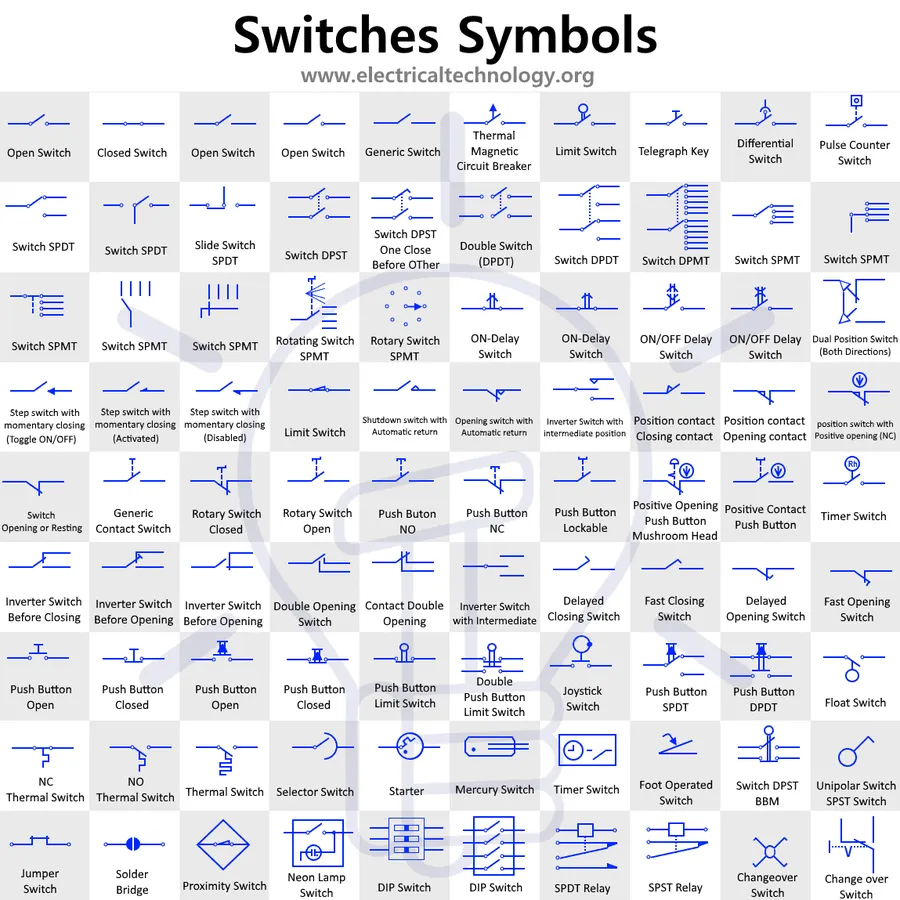
Accurate interpretation of circuit diagrams hinges on understanding the symbols used to represent switches. These symbols are standardized, ensuring consistent communication among engineers and technicians. This section will clarify common switch symbols and how they depict open and closed states within a circuit, providing a foundational skill for anyone working with electrical systems.
| Switch Type | Symbol (Open) | Symbol (Closed) | Description |
|---|---|---|---|
| Single-Pole Single-Throw (SPST) |  |  | A basic on/off switch, controlling a single circuit. |
| Single-Pole Double-Throw (SPDT) |  |  | Routes a single input to one of two output circuits. |
| Double-Pole Single-Throw (DPST) |  |  | Simultaneously controls two separate circuits. |
| Double-Pole Double-Throw (DPDT) |  |  | Routes two separate inputs each to one of two output circuits. |
| Push Button (Normally Open) |  |  | Momentary switch that closes only when pressed, breaking contact when released. |
| Push Button (Normally Closed) |  |  | Momentary switch that breaks contact only when pressed, closing contact when released. |
In a circuit diagram, an open switch is depicted with a gap in the line, indicating no current flow is possible. Conversely, a closed switch is shown with a continuous line, symbolizing that current is able to flow. The transition between these states is how the switch controls the circuit.
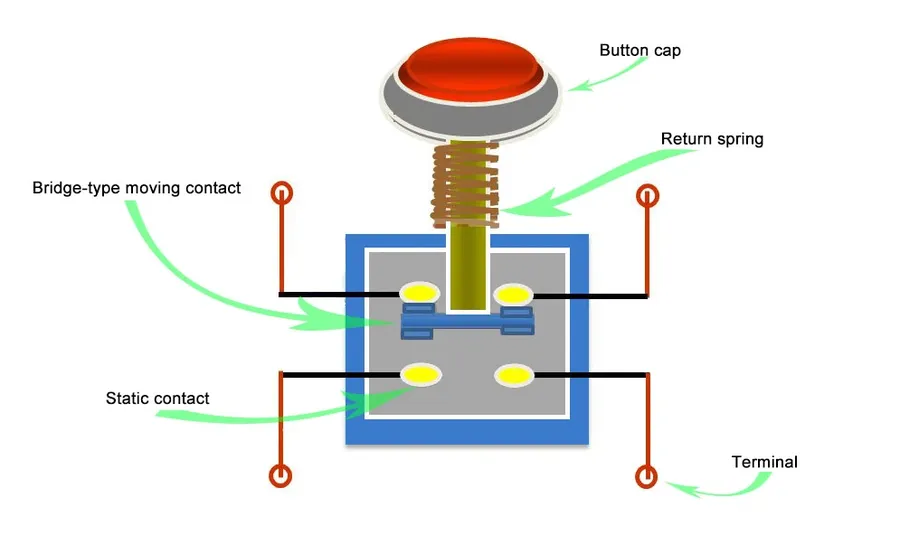
The operational mechanism of a switch fundamentally relies on creating or breaking electrical contact. This action is achieved through physical movement—pressing, sliding, or rotating—that manipulates internal contact points, thereby controlling the flow of electricity. Different switch types employ unique mechanisms to accomplish this on/off function.
In essence, a switch acts as a controlled gate for electrical current. When a switch is in the 'closed' position, the contact points are engaged, creating a continuous pathway that allows current to flow. Conversely, when a switch is 'open', the contact points are physically separated, interrupting the circuit and preventing current flow. The design of these contact points, the materials they are made of, and the mechanical linkage that moves them determine the switch's operational characteristics, including its voltage and current rating, durability, and responsiveness.
The materials used in switches also play a crucial role. Contacts are often made from conductive metals such as copper, brass, or silver, and sometimes are coated to reduce corrosion and improve conductivity. The switch housing is typically made of a durable, non-conductive material like plastic or phenolic resin to provide insulation and protection.
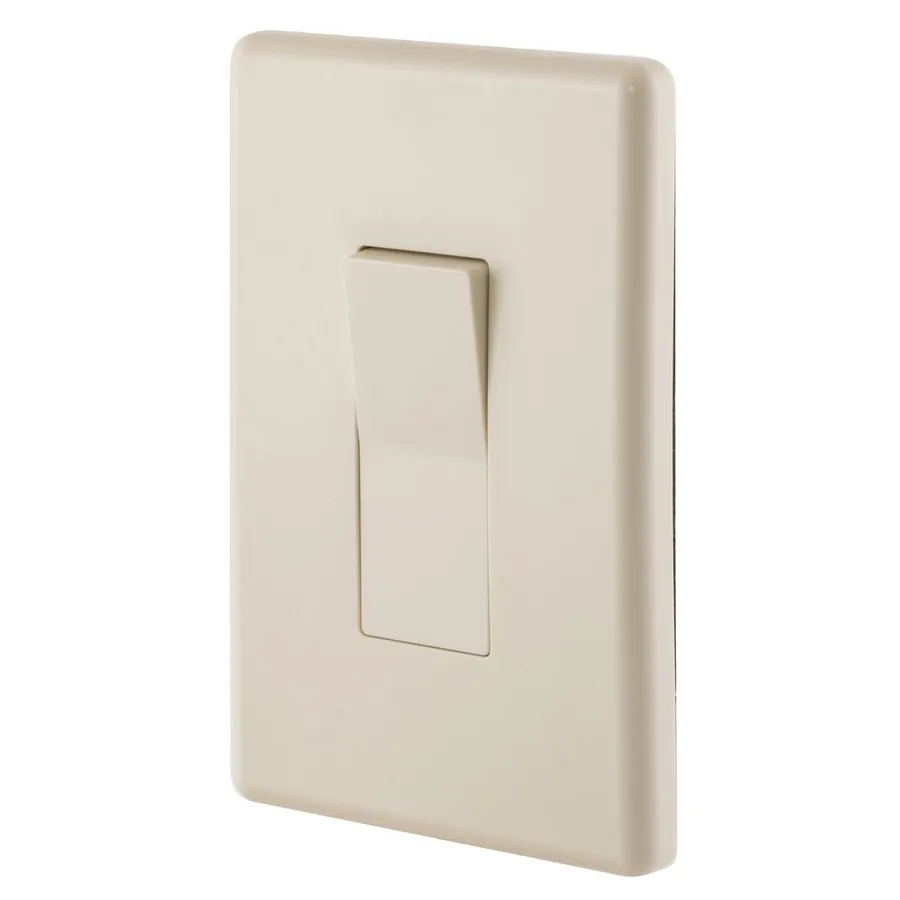
Switches are ubiquitous in electrical and electronic systems, serving as the fundamental control mechanism for a wide array of devices and applications. From the simplest household appliances to the most sophisticated industrial machinery, switches play a critical role in enabling or interrupting the flow of electrical current, thus controlling device operation.
This section addresses common questions regarding switches in electrical circuits, providing clarity on their functions, applications, and behaviors in various circuit states. We'll explore the practical implications of open and closed switches and address some specific switch types.
A comparative analysis of different switch types, categorized by their poles, throws, typical applications, and complexity, provides a structured method for selecting the appropriate switch for specific circuit requirements. Understanding these distinctions is crucial for effective circuit design and functionality.
| Switch Type | Poles | Throws | Typical Applications | Complexity | Description |
|---|---|---|---|---|---|
| SPST (Single-Pole Single-Throw) | 1 | 1 | Simple on/off control, basic lighting circuits | Low | Simplest switch; connects or disconnects one circuit. |
| SPDT (Single-Pole Double-Throw) | 1 | 2 | Selecting between two circuit paths, transfer switches | Low to Medium | Directs a single circuit to one of two available paths. |
| DPST (Double-Pole Single-Throw) | 2 | 1 | Simultaneous control of two separate circuits, power control circuits | Medium | Connects or disconnects two separate circuits simultaneously. |
| DPDT (Double-Pole Double-Throw) | 2 | 2 | Reversing polarity, controlling two separate circuits with two options each | Medium to High | Directs two separate circuits, each to one of two paths. Functionally equivalent to two SPDT switches controlled together. |
| Push Button Switch | Variable | 1 or more | Momentary contact, doorbells, reset switches | Low to Medium | Provides a temporary connection when pressed, then returns to its default state. |
| Rotary Switch | 1 or more | Multiple | Selecting multiple circuit paths, multi-speed fans | Medium to High | Selects one of multiple positions to connect to a circuit path. |
The switch, a fundamental element within any electrical circuit, is far more than a simple on/off mechanism. It is a cornerstone of modern technology, enabling us to control the flow of energy and power countless devices. Understanding the various types of switches, their functionalities, and their appropriate applications allows us to harness the power of electrical circuits safely and effectively. As we move forward, continued innovation in switch technology will only enhance our ability to manipulate and utilize electricity in more efficient and sophisticated ways, further highlighting the importance of the humble switch in our daily lives and technological advancements.

