
In the high-stakes world of automotive manufacturing, every component is a potential point of failure. Electric Power Steering (EPS) systems, in particular, demand uncompromising reliability. This article explores how meticulous PCB design and thermal management are not just engineering requirements, but critical financial levers that protect your bottom line and brand reputation.
The High Cost of Failure in EPS Systems
The Financial Burden of EPS Reliability
In the automotive industry, an Electric Power Steering (EPS) system failure is not merely a technical glitch; it is a significant financial liability. When a Printed Circuit Board (PCB) fails, the cost is not limited to the component's replacement. It encompasses a complex ecosystem of expenses, including diagnostic labor, vehicle downtime, brand erosion, and the extreme costs associated with regulatory-mandated recalls. By investing in high-performance PCB solutions, manufacturers proactively mitigate the risk of these cascading losses, transforming a potential cost center into a strategic ROI driver.
Quantifying the Cost of System Inadequacy
| Cost Driver | Direct Impact | Indirect Impact |
|---|---|---|
| Warranty Claims | Component repair/replacement costs | Increased insurance premiums |
| Recall Campaigns | Logistics, dealer labor, and parts | Severe erosion of brand equity |
| Operational Downtime | Plant stoppage due to supply chains | Loss of OEM contract potential |
Strategic FAQ: Addressing Failure Risks
- Why do standard PCBs often fail in EPS environments?
EPS systems are subjected to extreme thermal cycles, high mechanical vibrations, and electromagnetic interference. Standard PCBs often lack the advanced substrate materials and thermal dissipation capabilities required to withstand these conditions over the vehicle's lifespan. - How does PCB material selection influence long-term ROI?
Utilizing high-Tg (glass transition temperature) laminates and specialized copper plating reduces the likelihood of trace cracking or delamination, significantly lowering the statistical probability of a mid-life system failure. - Can high-performance PCBs prevent recall-level failures?
Yes. Through advanced design-for-manufacturability (DFM) and enhanced signal integrity, manufacturers can detect potential failure patterns during simulation, ensuring that only robust, field-tested architectures reach the production line.
Foundations of Automotive PCB Reliability
Engineering for Zero-Failure Environments
Reliability in EPS systems is not merely a technical requirement; it is a fundamental safety mandate. Because steering systems are classified as ISO 26262 ASIL-D components, PCB architectures must be designed to withstand extreme thermal fluctuations, vibration profiles, and electromagnetic interference without degradation. Establishing a foundation of reliability requires moving beyond basic functional compliance toward a philosophy of 'design for robustness' where every substrate material, trace geometry, and solder joint is optimized to mitigate long-term fatigue.
Benchmarking Reliability Standards
| Standard | Focus Area | Impact on ROI |
|---|---|---|
| AEC-Q100/200 | Component stress qualification | Reduces early-life field failures |
| IPC-6012DA | Automotive rigid PCB performance | Ensures structural integrity under thermal cycling |
| ISO 26262 | Functional safety and redundancy | Mitigates catastrophic failure liability |
Critical Reliability Considerations
- How does Thermal Management influence PCB lifespan?
EPS systems operate in high-heat environments. Effective thermal management via high-Tg materials and optimized copper weight prevents delamination and dielectric breakdown over the vehicle's lifespan. - Why is Solder Joint Integrity paramount?
Constant micro-vibrations from steering columns can cause solder fatigue. Implementing advanced surface finishes and mechanical stress-relief patterns at board edges ensures electrical connectivity remains stable despite cyclical mechanical stress. - What is the role of Redundancy in PCB Design?
High-performance EPS boards incorporate dual-path signal processing and isolated power planes to ensure that a localized fault does not result in a total loss of steering control.
By adhering to these rigorous foundations, manufacturers transition from reactive troubleshooting to proactive reliability. This shift significantly reduces the total cost of quality, effectively maximizing ROI by minimizing rework, scrap, and the devastating financial consequences of system failures in the field.
Power Distribution Networks: The Heart of EPS Performance
Optimizing Power Integrity for EPS Performance
The Electric Power Steering (EPS) system relies on high-current delivery to drive the steering motor with precision and responsiveness. Power Distribution Networks (PDN) within the PCB are not merely pathways for energy; they are critical thermal and electrical infrastructure. By reducing resistance in copper planes and optimizing impedance, manufacturers can significantly minimize Joule heating, which is the primary cause of dielectric breakdown and solder joint fatigue in high-vibration automotive environments.
Comparative Analysis: Thermal Management Strategies
| Strategy | Heat Dissipation Efficiency | Cost-Benefit Profile |
|---|---|---|
| Standard Copper Traces | Low | Low cost, high failure risk |
| Thick Copper (2oz+) | High | Moderate cost, long lifecycle |
| Integrated Metal Core Boards | Superior | Premium cost, extreme performance |
Frequently Asked Questions on EPS Power Distribution
- Why is minimizing heat generation vital for EPS ROI?
Lower thermal loads reduce thermal cycling stress on the PCB substrate, preventing micro-cracks and extending the MTBF (Mean Time Between Failures), which reduces costly warranty claims. - What role does copper weight play in PDN design?
Increasing copper weight directly lowers DC resistance, reducing I2R power losses. This conversion of electrical loss to heat is the main driver of inefficiency in EPS systems. - How does impedance control affect steering precision?
Stable power delivery ensures the motor driver circuit receives consistent voltage transients, which directly translates into smoother torque delivery and improved driver feedback.
Advanced Thermal Management Strategies
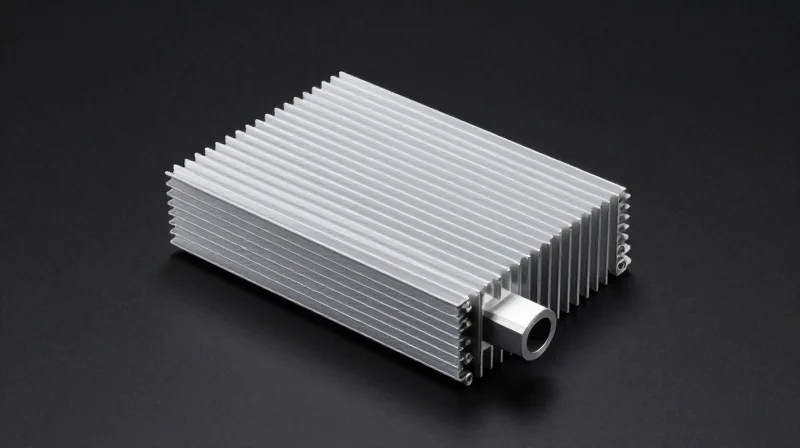
Effective thermal management in Electric Power Steering (EPS) systems is the primary defense against localized heat-induced degradation, directly impacting component longevity and warranty-related costs. As power density in steering control modules increases, engineers must move beyond passive cooling to integrated, high-conductivity PCB design strategies that dissipate heat efficiently before it threatens solder joint integrity.
Engineered Thermal Dissipation Techniques
The integration of high-performance materials and layout strategies allows for superior thermal transfer paths within the PCB assembly.
- Optimized Thermal Via Arrays
Utilizing high-density, copper-filled thermal via arrays directly under MOSFET packages creates a low-resistance path to internal copper planes, drastically reducing junction temperature. - Substrate Selection
Implementing IMS (Insulated Metal Substrates) or high-TG (glass transition temperature) FR-4 laminates ensures structural stability and consistent thermal conductivity under high-torque, peak-current events. - Strategic Heat Sink Integration
Direct-to-case thermal coupling using phase-change interface materials ensures that generated heat is effectively wicked away into the primary chassis heatsink.
Comparative Analysis of Thermal Strategies
| Strategy | Thermal Conductivity | Cost Impact | Application Focus |
|---|---|---|---|
| Standard FR-4 | Low | Lowest | Low-load logic boards |
| Thermal Vias | Moderate | Low | General power components |
| IMS (Metal Core) | High | High | High-current EPS motor drivers |
Frequently Asked Questions
- How do thermal vias influence long-term reliability?
By lowering the operating junction temperature, thermal vias reduce the rate of intermetallic growth in solder joints, significantly extending the Mean Time Between Failures (MTBF) of the EPS module. - When is an IMS substrate justified over standard FR-4?
IMS is recommended when the power density of the EPS steering controller reaches a threshold where standard PCB materials fail to dissipate heat fast enough to stay within the component's safe operating area during prolonged steering maneuvers.
Design for Manufacturing (DFM) and Cost Reduction
Strategic Integration of DFM for EPS PCBs
Design for Manufacturing (DFM) in EPS steering systems is not merely about board fabrication; it is a holistic approach to minimizing material waste, streamlining assembly, and reducing testing cycles. By aligning PCB layout strategies—such as optimized layer stacks and panelization—with mass production capabilities, manufacturers can significantly lower unit costs without compromising the reliability required for safety-critical automotive applications.
Manufacturing Efficiency vs. Engineering Performance
| Design Factor | Performance Impact | Manufacturing Cost Impact |
|---|---|---|
| Standardized Via Sizes | Minimal Impact | Lower Drill Tool Wear/Time |
| Controlled Impedance | High Signal Integrity | Higher Test/Yield Costs |
| Panelization Density | No Impact | Significant Waste Reduction |
| Copper Weight Balancing | Improved Current Flow | Etching Complexity |
Common DFM Implementation Queries
- How does panel utilization affect total PCB ROI?
Maximizing panel utilization directly lowers the cost-per-board by reducing raw laminate waste and increasing throughput speed during the automated pick-and-place assembly phase. - Why is component footprint standardization critical for EPS?
Standardizing footprints reduces the number of unique machine setups required and enhances the flexibility of automated optical inspection (AOI), which drastically reduces cycle times. - Can DFM measures impact long-term thermal reliability?
Yes, effective DFM focuses on optimizing trace routing and thermal via placement to maintain heat dissipation, which prevents premature failure and subsequent warranty costs.
Predictive Reliability Testing and Validation
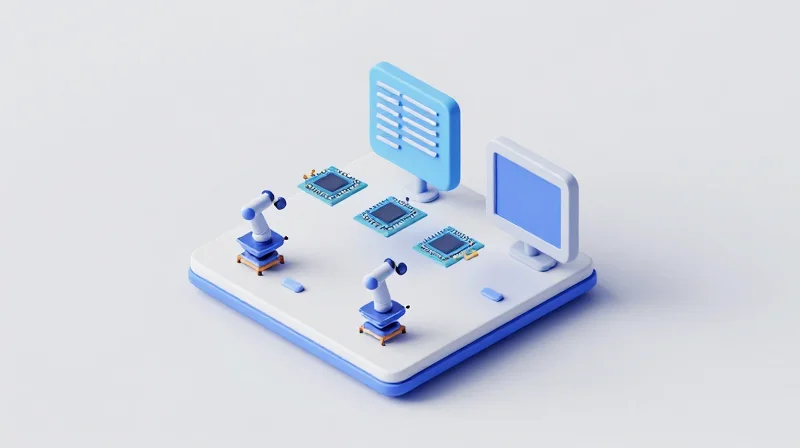
The Role of Predictive Simulation in Early Failure Detection
By shifting validation left in the development cycle, automotive engineers utilize advanced Finite Element Analysis (FEA) and computational fluid dynamics (CFD) to predict how PCBs will perform under extreme operational stress. These virtual models allow for the identification of potential hot spots, solder joint fatigue, and vibrational resonance issues long before physical prototyping begins, ultimately accelerating time-to-market and lowering R&D expenditures.
Comparative Analysis: Traditional vs. Predictive Validation
| Feature | Traditional Validation | Predictive Validation |
|---|---|---|
| Failure Detection | Post-prototype stage | Concept/Design stage |
| Cost Impact | High (re-spins/delays) | Low (virtual optimization) |
| Optimization | Trial and error | Data-driven iteration |
| Time to Market | Extended | Compressed |
Stress Testing and Environmental Qualification
Hardware-in-the-Loop (HiL) testing and Accelerated Life Testing (ALT) are critical for ensuring EPS steering reliability in harsh automotive environments. By subjecting PCB assemblies to thermal cycling, high-frequency vibration, and electrical transients that mimic the vehicle's entire operational lifespan, manufacturers can quantify the MTBF (Mean Time Between Failures) and ensure the system maintains steering authority under all conditions.
Frequently Asked Questions
- How does predictive testing influence the ROI of EPS systems?
Predictive testing minimizes the need for expensive physical design iterations and reduces long-term warranty claims by ensuring that the PCB can withstand the full automotive lifecycle. - Which environmental factors are most critical for EPS PCB testing?
Thermal cycling, electromagnetic interference (EMI) compatibility, and mechanical vibration are the most frequent causes of component degradation in steering controllers. - Can simulation replace physical testing entirely?
No, while simulation dramatically reduces the number of required physical prototypes, physical validation remains a regulatory requirement to confirm the accuracy of digital models in real-world scenarios.
Calculating ROI: Long-Term Financial Gains
The Economics of Reliability in EPS Systems
In automotive manufacturing, the unit cost of a PCB is frequently scrutinized, but this represents only a fraction of the total lifecycle cost. Investing in high-performance PCBs for Electronic Power Steering (EPS) systems—characterized by superior thermal stability, high-frequency signal integrity, and robust material composition—serves as a proactive hedge against the catastrophic financial impacts of field failures. A reliable steering system is mission-critical; failure leads to mandatory recalls, plummeting brand equity, and massive liability exposure, often costing exponentially more than the marginal premium of a high-spec PCB.
| Cost Driver | Low-Cost Standard PCB | High-Performance PCB Investment |
|---|---|---|
| Upfront BOM Impact | Baseline Cost | +15% to 25% Premium |
| Failure Rate (MTBF) | Higher risk over 10+ years | Minimized thermal degradation |
| Recall Exposure | High risk for systematic failure | Negligible risk profile |
| Warranty Claims | Increased long-term liability | Reduced field return rates |
Quantifying the Cost of Avoidance
To calculate the true ROI, stakeholders must employ a Total Cost of Ownership (TCO) model. The cost of a post-market fix includes logistics for recalls, dealership labor hours, reputation management, and legal settlements. By integrating advanced substrates and thermal management early in the design phase, manufacturers can shift failure probability curves to the right, effectively extending the functional lifespan of the steering system beyond the vehicle's standard warranty window.
Frequently Asked Questions on ROI
- How does PCB thermal performance directly impact ROI?
Superior thermal dissipation prevents PCB delamination and solder joint fatigue, directly reducing warranty claim rates and extending the component's operational life in harsh engine-bay environments. - Does higher PCB cost correlate linearly with reliability?
Not strictly linear; however, the shift to high-Tg (glass transition temperature) materials and high-density interconnects (HDI) disproportionately reduces the risk of intermittent failures, yielding an exponential ROI in terms of risk mitigation. - What is the primary factor for calculating long-term EPS ROI?
The primary factor is the 'Cost of Failure' variable. When the cost of a single major recall event is applied as a risk-weighted probability against the board-level unit cost, the ROI of premium high-performance solutions becomes statistically undeniable.
Future-Proofing Automotive Electronic Architectures

Anticipating Higher Current and Power Density Requirements
As Electronic Power Steering (EPS) systems transition toward steer-by-wire and autonomous-ready actuators, the demand for power density is increasing exponentially. Future-proofing requires moving beyond standard copper weights to advanced busbar integration and multi-layer high-current PCB architectures. Manufacturers must prioritize substrates that handle higher thermal loads without sacrificing signal integrity for the sensitive high-speed sensors driving autonomous steering inputs.
Evolution of EPS PCB Architecture
| Feature | Legacy EPS Systems | Future-Proof EPS Systems |
|---|---|---|
| Power Architecture | 12V Standard | 48V/Hybrid High-Voltage |
| Connectivity | CAN/LIN | Automotive Ethernet/TSN |
| Logic Integration | Discrete Hardware | Modular SoC/Domain Controller |
| PCB Materials | Standard FR-4 | Advanced Thermal/Ceramic Composite |
Strategic Considerations for Long-Term Scalability
- How does modular design affect ROI?
Modular PCB design allows manufacturers to upgrade processing power or safety features without a complete board redesign, significantly reducing lifecycle re-tooling costs. - Why is transition to 48V systems critical?
48V systems allow for higher power delivery with lower current, reducing cable harness weight and enabling more responsive, heavy-duty steering motors required for larger autonomous platforms. - What role does software-defined hardware play?
Hardware must be 'over-the-air' (OTA) capable, meaning PCB designs must include sufficient overhead in memory, power delivery, and processing to handle future firmware updates without hardware replacement.
Prioritizing reliability in PCB design for EPS systems is the most effective strategy for mitigating risk and maximizing ROI in automotive production. By integrating advanced thermal management and robust distribution architectures, manufacturers can secure their market position and ensure passenger safety. Contact our engineering team today to discuss how we can optimize your next project for peak performance.
