
In the high-stakes world of automotive engineering, the difference between market leadership and costly recalls often lies beneath the hood—specifically, in the engine control units (ECUs). As vehicle systems become increasingly sophisticated, the reliability of printed circuit boards (PCBs) is no longer just a technical requirement; it is a financial imperative. This article explores how manufacturers can slash warranty claims and drive long-term ROI by prioritizing precision PCB fabrication.
The High Cost of Field Failures in Automotive Engineering
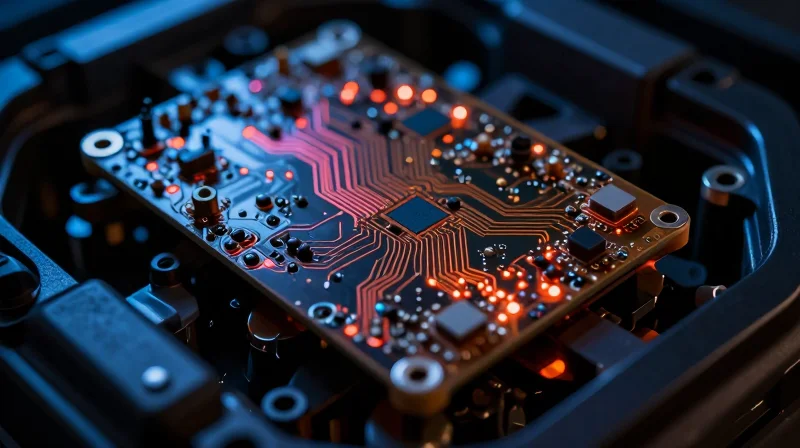
The Financial Anatomy of PCB Failures
In the modern automotive landscape, the Printed Circuit Board (PCB) serves as the nerve center for engine control units (ECUs). When a PCB fails due to inadequate manufacturing standards, the economic fallout extends far beyond the immediate replacement cost. The cost of a field failure in automotive engineering follows an exponential curve: identifying a defect at the board-level costs cents, whereas a recall involving thousands of vehicles can reach into the hundreds of millions of dollars.
Direct vs. Indirect Economic Impact
| Impact Category | Economic Consequence | Recovery Time |
|---|---|---|
| Direct Warranty Claims | Immediate cash outflow for hardware and labor | Short-term |
| Recall Logistics | Supply chain disruption and administrative overhead | Mid-term |
| Brand Depreciation | Loss of market share and diminished resale value | Long-term |
Frequently Asked Questions Regarding Field Reliability
- How does PCB manufacturing quality affect warranty reserves?
Lower-tier manufacturing often leads to premature failure of solder joints or thermal stress fractures, forcing OEMs to increase their warranty reserve provisions, which directly cannibalizes net profit margins. - Why is brand equity considered an at-risk asset in ECU failures?
In an era of connected vehicles and social transparency, recurring electronic failures trigger rapid negative brand perception, impacting customer retention and future model sales performance. - Can investment in high-reliability PCBs be quantified?
Yes; by applying the 'Cost of Poor Quality' (COPQ) model, engineering teams can demonstrate that the incremental cost of premium materials and rigorous testing is significantly lower than the projected expenditure on field warranty claims.
Material Science: Choosing the Right Substrates for Harsh Environments
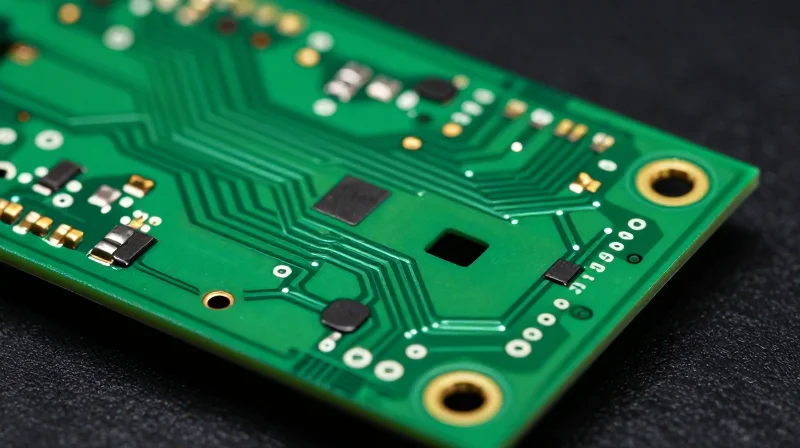
Mitigating Delamination with High-Tg Materials
In the confined space of an engine control unit (ECU), temperatures regularly exceed standard operating thresholds. When a PCB is subjected to thermal cycling, the mismatch between the Coefficient of Thermal Expansion (CTE) of the copper traces and the substrate causes mechanical stress. By utilizing high-Glass Transition Temperature (Tg) laminates, engineers can maintain mechanical integrity even as temperatures rise, effectively preventing delamination and ensuring the structural reliability of the board throughout the vehicle's lifespan.
Thermal Management and Solder Fatigue
Solder joint fatigue remains one of the primary drivers of automotive warranty claims. Beyond just substrate choice, effective thermal management—often achieved through metal-core PCBs (MCPCBs) or advanced thermal vias—dissipates heat away from critical components like MOSFETs and microcontrollers. This reduction in operating temperature directly slows the degradation of intermetallic layers, thereby protecting the integrity of solder joints against thermal fatigue.
| Material Property | Standard FR-4 | High-Tg Polyimide/Ceramic | Impact on ROI |
|---|---|---|---|
| Glass Transition (Tg) | 130°C - 140°C | 170°C - 250°C | Higher resistance to warping |
| CTE Stability | Moderate | Superior | Lower solder joint stress |
| Thermal Conductivity | Low | High | Extended component lifespan |
Strategic Material Selection FAQ
- Why is Tg critical for engine applications?
Tg denotes the threshold where a material changes from rigid to rubbery; exceeding this limit causes expansion that leads to trace fracture and delamination. - How do metal-core substrates improve ROI?
They act as a primary heat sink, reducing the need for bulky external cooling and decreasing failure rates in high-current automotive power electronics. - Is high-Tg material cost-prohibitive?
While unit costs are higher, the reduction in warranty claims and the prevention of catastrophic field recalls offer a significantly higher long-term ROI.
Rigorous Testing Protocols Beyond Industry Standards
Transcending Standard Validation
While industry standards like IPC-A-600 establish the baseline for functional electronics, they are often insufficient for the extreme operational demands of modern engine control modules (ECMs). To maximize ROI, manufacturers must adopt aggressive testing methodologies that simulate the cumulative stress of a vehicle's entire lifecycle. By forcing early failure in a controlled environment, engineers can identify latent design weaknesses that standard QA processes invariably miss.
Comparison of Standard vs. High-Reliability Testing Protocols
| Test Protocol | Standard Industry Practice | High-Reliability Approach |
|---|---|---|
| Temperature Cycling | -40°C to +125°C; 100 cycles | -55°C to +150°C; 1000+ cycles with rapid ramp rates |
| Vibration Stress | Random vibration (standard profile) | Combined multi-axis vibration + thermal shock (ESS) |
| Goal | Baseline functionality check | Destructive failure mode analysis and reliability prediction |
Advanced Stress Testing Methodologies
Highly Accelerated Life Testing (HALT) and Highly Accelerated Stress Screening (HASS) are the gold standards for identifying design margins. Unlike periodic testing, these methods apply incremental, destructive stress—vibration intensity and thermal gradients beyond the actual automotive specifications—to expose the 'weakest link' in the assembly. This iterative feedback loop between the test lab and PCB layout team is essential for preemptive failure mitigation.
- Why invest in HALT/HASS for automotive engine control?
HALT/HASS accelerates potential field failures that would otherwise appear only after years of operation, saving millions in potential recall and warranty costs. - How does vibration testing impact ROI?
By identifying solder fatigue points early in the prototype phase, designers can reinforce structural integrity, preventing catastrophic intermittent signal loss in high-vibration engine environments. - What is the primary benefit of extreme thermal cycling?
It verifies the CTE (Coefficient of Thermal Expansion) compatibility between the PCB substrate and the components, ensuring the integrity of solder joints over wide temperature fluctuations.
The ROI of Premium Manufacturing Processes

The Economics of Reliability: Upfront Investment vs. Long-Term Liability
In the context of engine control units (ECUs), the cost of a PCB failure in the field is rarely limited to the component itself. Instead, it encompasses complex logistical costs, labor-intensive vehicle recalls, and the erosion of brand trust. While premium manufacturing—utilizing superior substrates, advanced plating, and rigorous testing—increases initial production costs by 15-25%, this premium is effectively an insurance policy that yields exponential returns by preventing failure modes during the vehicle's critical service life.
| Cost Variable | Standard Manufacturing | Premium High-Reliability |
|---|---|---|
| Unit Production Cost | Baseline | 1.2x Baseline |
| Early-Life Failure Rate | 2.5% | <0.1% |
| Warranty Reserve Allocation | High (Required for Risk) | Minimal (Optimized Cash Flow) |
| Brand Reputation Impact | Negative (Recall Risk) | Positive (Industry Leadership) |
Key Financial Drivers of PCB Reliability
- How does reduced field failure impact warranty reserves?
Lowering the defect rate through high-reliability processes allows manufacturers to decrease their financial reserves earmarked for warranty claims, freeing up working capital for R&D and strategic initiatives. - What is the true cost of an automotive recall?
Beyond parts replacement, recalls involve massive logistics costs, dealer labor reimbursement, and significant administrative overhead that can exceed the original manufacturing cost of the module by several orders of magnitude. - Does premium material selection offer a direct ROI?
Yes. Using high-Tg materials prevents delamination and solder joint failure, ensuring the ECU maintains performance integrity under the extreme thermal cycles common in modern engine bays, thereby extending the product's functional lifespan.
Ultimately, the strategic transition from a 'lowest-cost-to-procure' mindset to a 'lowest-total-cost-of-ownership' strategy is the defining characteristic of leading automotive suppliers. By minimizing field failures, companies avoid the non-linear expenses associated with service infrastructure, enabling sustainable profitability in the highly competitive engine control market.
Design for Reliability (DfR): Preventing Failures at the Prototype Stage

Shifting Quality Left: The DfR Mandate
In the context of automotive engine control units (ECUs), where reliability is non-negotiable, DfR methodology dictates that reliability is not an afterthought but a design constraint. By integrating simulation tools and rigorous modeling during the prototyping phase, engineers can identify potential points of failure—such as localized thermal hotspots or impedance discontinuities—that would otherwise remain hidden until high-volume production.
Common Prototype Vulnerabilities
| Failure Mode | DfR Identification Method | Impact on ECU Reliability |
|---|---|---|
| Thermal Hotspots | Finite Element Analysis (FEA) | Accelerated dielectric breakdown |
| Impedance Mismatch | Signal Integrity Simulation | Data corruption in engine timing |
| Mechanical Stress | Vibration Modal Analysis | Solder joint cracking |
Frequently Asked Questions on Prototype DfR
- How does early simulation improve ROI?
Simulation replaces physical trial-and-error, drastically reducing the number of prototype board spins and accelerating the time-to-market while ensuring structural robustness. - Why focus on impedance at the design stage?
Automotive signaling requires precision; even minor impedance mismatches can introduce noise that leads to intermittent engine performance failures under varying load conditions. - When is the optimal time to implement DfR?
DfR principles should be applied at the conceptual design phase, immediately following schematic capture and prior to the first physical PCB layout.
Ultimately, the incorporation of DfR during the prototyping cycle transforms reliability from a passive specification into an active engineering deliverable. By front-loading the identification of stress-related failure modes, manufacturers protect their brand reputation and avoid the catastrophic financial impact of field recalls.
Advanced Quality Control: AOI and X-Ray Inspection
The Necessity of Advanced Inspection in Engine Control Modules
In the context of automotive engine control units (ECUs), where operating environments involve extreme thermal cycling and intense vibration, standard visual inspections are insufficient. Micro-fractures in solder joints or hidden voids under Ball Grid Array (BGA) components act as time bombs. By integrating Automated Optical Inspection (AOI) and Automated X-Ray Inspection (AXI), manufacturers can detect sub-surface irregularities that remain invisible to the human eye, ensuring that only high-reliability units reach the assembly line.
Comparing Detection Capabilities
| Inspection Type | Primary Target | Detection Capability |
|---|---|---|
| AOI | Surface-level Solder | Missing components, polarity, bridges, and alignment. |
| AXI | Sub-surface Structures | BGA solder voids, head-in-pillow, and internal layer shorts. |
Strategic Advantages for ROI
Investing in high-resolution AXI equipment represents a significant shift from reactive quality control to proactive reliability assurance. While AOI provides rapid screening for assembly errors, AXI is the gold standard for high-reliability applications where solder joint integrity under the component package is non-negotiable. This multi-layered approach minimizes the 'latent defect' rate, directly reducing the probability of warranty claims and safety recalls.
Frequently Asked Questions
- Why is AXI required if AOI is already in the line?
AOI cannot see underneath components like BGAs or QFNs. AXI penetrates these packages to verify the structural integrity of solder balls, which are the most common failure points in automotive vibration environments. - How does automated inspection impact production ROI?
By identifying defects at the PCBA stage, manufacturers avoid the massive cost of removing and replacing a faulty control module once it is integrated into a vehicle's engine bay. - Does AXI add significant cycle time to manufacturing?
While AXI is slower than AOI, modern 3D-AXI systems use high-speed computed tomography to scan complex boards in seconds, keeping pace with high-volume automotive production lines.
Lifecycle Management and Predictive Maintenance
Transitioning to Data-Driven Lifecycle Management
Modern engine control units (ECUs) now serve as edge-computing nodes, capable of harvesting real-time telemetry from the PCB assembly itself. By embedding diagnostic circuitry and environmental sensors directly onto the board, manufacturers can move beyond traditional mean-time-between-failure (MTBF) estimates to actualized, condition-based maintenance models. This transition significantly lowers the risk of catastrophic field failures by identifying degradation signatures—such as subtle shifts in dielectric constant or thermal cycling fatigue—long before they manifest as engine performance issues.
Predictive Maintenance Strategies vs. Reactive Approaches
| Parameter | Reactive Maintenance | Predictive Maintenance |
|---|---|---|
| Detection Basis | Field failure report | Real-time sensor telemetry |
| Operational Impact | Vehicle recall / Warranty cost | Scheduled service intervention |
| Data Utilization | None | Machine learning trend analysis |
| ROI Contribution | Negative (Loss-driven) | Positive (Risk-mitigated) |
Key Questions in PCB Lifecycle Reliability
- How does board-level monitoring prevent recalls?
By tracking thermal profiles and power integrity in real-time, manufacturers can update firmware to throttle performance or alert users before stress-related micro-fractures lead to total system failure. - What role does digital twinning play in PCB lifecycle?
A digital twin of the PCB captures manufacturing variance data from AOI/X-ray reports, allowing predictive models to simulate how specific board batches will age under real-world automotive stress. - Does predictive monitoring increase hardware costs?
While adding diagnostic circuitry incurs a slight upfront increase in BOM cost, the total cost of ownership is drastically reduced by preventing large-scale fleet recalls and preserving brand integrity.
Prioritizing high-reliability PCB manufacturing is not just an engineering choice; it is a strategic business move that safeguards your bottom line against the volatility of field failures. By investing in quality, testing, and intelligent design today, you solidify your reputation for engineering excellence. Contact our engineering team today to review your current PCB specifications and start optimizing your automotive product lifecycle for maximum ROI.
